苹果

Search documents
4000点失守,能源金属逆市上扬
Yang Zi Wan Bao Wang· 2025-10-30 23:04
Market Overview - The stock market experienced a decline, with the Shanghai Composite Index falling below 4000 points, and a total trading volume of 2.42 trillion yuan, an increase of 165.6 billion yuan compared to the previous trading day [1] Company Performance - Zhongji Xuchuang reported a net profit of 3.137 billion yuan for Q3 2025, a year-on-year increase of 125% and a quarter-on-quarter increase of 30%. The revenue for Q3 was 10.216 billion yuan, up 56.83% year-on-year [2] - Baiwei Storage reported a net profit of 256 million yuan for Q3 2025, a significant year-on-year increase of 563.77%. The revenue for Q3 was 2.663 billion yuan, up 68.06% year-on-year [3] - Luxshare Precision expects a net profit for 2025 to be between 16.518 billion yuan and 17.186 billion yuan, representing a year-on-year growth of 23.59% to 28.59%. The company aims to enhance its global strategy and diversify its business in emerging fields [4] External Market Impact - The US stock market saw all three major indices decline, with the Nasdaq dropping 1.57% and Meta experiencing its largest single-day drop in three years, falling over 11%. Other major tech stocks also saw declines, while some digital currency stocks faced significant losses [5]



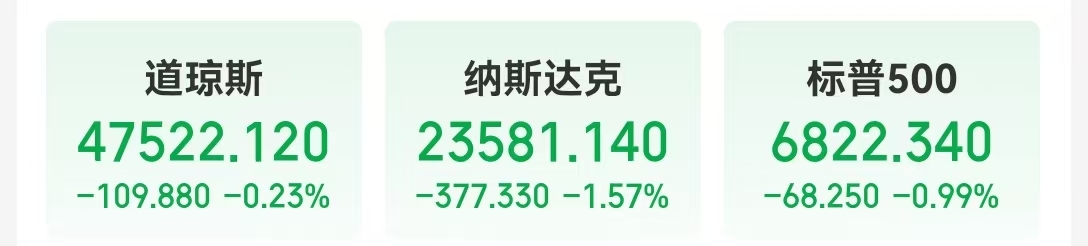
Meta市值一夜蒸发超1.5万亿元,什么情况?苹果预测下一财季销售额将实现“两位数”增长,盘后一度涨超5%!黄金、原油收涨
Mei Ri Jing Ji Xin Wen· 2025-10-30 23:04
Group 1: Meta - Meta's stock dropped over 11%, resulting in a market value loss of $214 billion (approximately 1521.6 billion RMB), marking the largest single-day decline in three years and reaching a new low since June [1] - The company's Q3 net profit was $2.7 billion, significantly below analyst expectations, prompting plans to raise at least $25 billion through bond issuance [1] Group 2: Amazon - Amazon reported Q3 net sales of $180.17 billion, exceeding the forecast of $177.82 billion, with an operating profit of $17.42 billion, below the expected $19.72 billion [6] - The company's Q3 net profit was $21.19 billion, with earnings per share of $1.95, surpassing the expected $1.58 [6] - AWS net sales reached $33.01 billion, a 20% year-over-year increase, above the forecast of $32.39 billion [6] - Amazon's stock surged over 13% in after-hours trading following the earnings report [6] Group 3: Apple - Apple's Q4 revenue was $102.47 billion, a 7.9% year-over-year increase, slightly above the forecast of $102.19 billion [7] - The company's Q4 net profit was $27.47 billion, with earnings per share of $1.85, a 90.72% increase year-over-year, exceeding the expected $1.77 [7] - iPhone revenue for Q4 was $49.03 billion, a 6.1% increase, while the company forecasts "double-digit" growth in iPhone sales for the next quarter, higher than the market's expected 9.8% growth [7] Group 4: Google - Google's stock rose over 2% as the company reported Q3 revenue and profit that exceeded analyst expectations, with multiple key business segments achieving double-digit percentage growth [3] Group 5: Other Companies - Microsoft and Nvidia stocks fell over 2%, while Netflix dropped over 1% [6] - Metsera Inc. (MTSR), a clinical-stage biotech company, saw its stock rise over 22%, reaching an all-time high since its listing [6] - Cryptocurrency-related stocks, including Canaan Inc., Coinbase Global, and Marathon Holdings, experienced declines, with Canaan falling over 9% and others dropping over 5% [6] Group 6: Market Indices - The Nasdaq Golden Dragon China Index fell by 1.88%, with most prominent Chinese concept stocks declining, including Bilibili down over 5% and Alibaba down over 3% [9]


利好出尽必失利空,降息如预期而至,三大指数集体回撤
Ge Long Hui· 2025-10-30 21:11
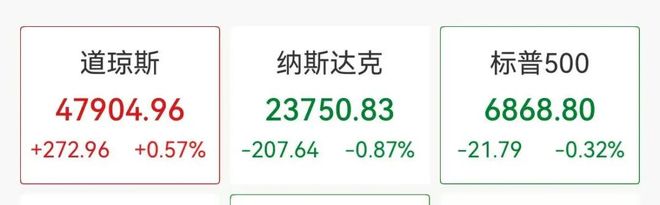
冲高回落,特别是降息消息发布后的直线跳水。截至收盘道指下跌0.16%,纳指上涨0.55%,标指平 盘。盘面上,银行股延续弱势,科技股分化,中概股高开低走,黄金四连跌。 银行股延续弱势,其中阿莱恩斯西部银行大跌3.35%,花旗集团下跌2.24%,联合银行下跌2%,高盛、 齐昂银行、美国合众银行等多股跌幅均在1%上方。 科技股延续分化,其中英伟达上涨2.99%,谷歌上涨2.65%,超威公司上涨2.45%,特斯拉、苹果、亚马 逊、META等股均小幅收涨;高通、英特尔、微软、奈飞等股小幅收跌。 中概股高开低走,截至收盘中国金龙下跌0.03%。其中爱奇艺大涨3.98%,阿里巴巴上涨1.84%,哔哩哔 哩上涨1.39%,蔚来、腾讯控股、百度、拼多多等股均小幅收涨;理想汽车、贝壳等股逆势收跌。 COMEX黄金低开低走延续弱势,截至收盘下跌0.67%报3941.7美元/盎司,盘中最低报3930美元/盎司, 最高报4046.2美元/盎司。 理财就是一场修行,有人修有人度,结果就是看谁踩准了点,把握住了机会。 ...

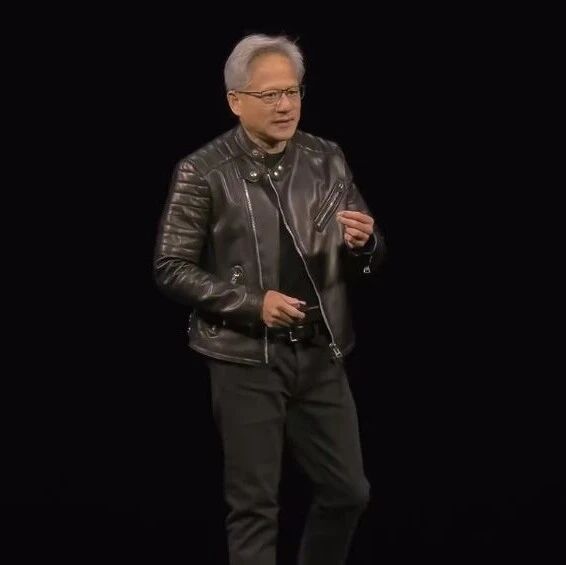
黄仁勋演讲引爆英伟达5万亿美元市值
Bei Jing Shang Bao· 2025-10-30 16:56
Core Insights - Nvidia has emerged as a key player in the AI era since the launch of ChatGPT at the end of 2022, with its stock price rising significantly and market capitalization reaching $5.03 trillion as of October 29, 2023 [1] - Nvidia's market value has seen exponential growth, surpassing $1 trillion in June 2023, $2 trillion in March 2024, and reaching $3 trillion within three months, indicating a rapid increase in investor confidence and demand for AI technologies [1] - CEO Jensen Huang emphasized the end of Moore's Law and the beginning of a new era characterized by exponential growth in AI computing power during his keynote at the GTC conference [1] Financial Performance - Nvidia's upcoming Blackwell and Rubin GPU chips are projected to generate over $500 billion in revenue over the next five quarters, with current orders reaching 20 million units, five times the total shipments of the previous Hopper architecture [2] - Major cloud computing companies, including Amazon, Meta, Google, Microsoft, Oracle, and CoreWeave, are expected to increase their capital expenditures to $632 billion by 2027, highlighting the growing importance of cloud computing in the tech landscape [2] Strategic Initiatives - Nvidia has invested $1 billion in Nokia to develop an AI-native 6G wireless protocol stack, NVIDIA ARC, which will be compatible with Nokia's existing AirScale architecture [3] - The company aims to enhance wireless communication efficiency through AI technology, enabling telecom operators to launch new AI services on existing infrastructure [3] - Nvidia introduced NVQLink, a new interconnect architecture that connects quantum processors directly to Nvidia GPUs, showcasing its commitment to advancing quantum computing [3] Market Context - Huang refuted claims of an AI bubble, asserting that companies are willing to pay for diverse AI models, indicating a strong market demand for AI solutions [4] - As Nvidia's market value surpassed $5 trillion, it positioned itself ahead of other tech giants like Microsoft and Apple, which have also seen significant market capitalization growth [4] Future Outlook - Nvidia's focus on "accelerated computing" remains central to its strategy, with Bank of America raising its target price for Nvidia shares from $235 to $275, suggesting a potential market capitalization of $6.68 trillion [5]

科技股重挫,Meta大跌12%,B站、百度跌超4%,加密货币21万人爆仓
2 1 Shi Ji Jing Ji Bao Dao· 2025-10-30 15:37
Market Overview - On October 30, U.S. stock indices opened lower, with the Dow Jones turning to an increase while the Nasdaq fell over 0.8% [1] - The technology sector saw a decline among major companies, with Nvidia dropping nearly 2% and losing its $500 billion market cap, potentially ending a five-day rally [3] Company Performance - Google (Alphabet) shares rose by 5.3%, with Q3 revenue reaching a record $102.3 billion, and cloud computing revenue increasing by 34% year-over-year [4] - Microsoft shares fell by 2%, with Q1 Azure and other cloud revenues below buyer expectations, while AI spending exceeded expectations [5] - Meta Platforms experienced a significant drop of 12%, reporting a net profit of $2.7 billion for Q3, which was far below analyst expectations. The company plans to raise at least $25 billion through bond issuance [5][6] Chinese Stocks - The Nasdaq Golden Dragon China Index declined, with notable drops in individual stocks: Bilibili down over 5%, Baidu down over 4%, and NetEase down over 3% [6][7] Precious Metals and Cryptocurrencies - On October 30, international gold prices rebounded, briefly surpassing the $4,000 mark after a previous decline [10] - The World Gold Council reported that Q3 gold demand increased by 5% year-over-year to 1,313 tons, marking a record high for the third quarter. The total gold demand exceeded $100 billion for the first time [12] - Cryptocurrencies saw a collective decline, with Bitcoin down nearly 4% and Ethereum down over 4%, while XRP and Solana fell over 6% [12][14] Central Bank Actions - The Federal Reserve lowered interest rates by 25 basis points on October 29, with mixed signals regarding future rate cuts. The next potential cut is not guaranteed for December [16] - The Bank of Canada also reduced rates by 25 basis points, indicating that the current rate-cutting cycle may be nearing its end [16]
深夜暴跌!“AI泡沫”担忧再起
证券时报· 2025-10-30 15:05
Core Viewpoint - The article discusses the recent volatility in the stock market, particularly focusing on the significant drop in Meta's stock price following its earnings report, raising concerns about excessive capital expenditures in the AI sector and the potential for a bubble [2][5][10]. Financial Performance of Tech Giants - Major tech companies, including Alphabet, Meta, and Microsoft, reported a combined capital expenditure of approximately $78 billion in Q3, representing an 89% increase year-over-year. This spending is primarily directed towards data center construction and equipping them with GPUs and other devices [5][10]. - Meta's stock plummeted nearly 12% after its earnings report, attributed to unexpected high capital expenditures and warnings of significantly higher spending in 2026 compared to 2025 [5][9]. - In contrast, Alphabet's stock rose over 5% as investors reacted more favorably to its increased capital spending [5]. Market Sentiment and Concerns - Investors are increasingly questioning whether the substantial investments in AI by these companies are justified or if they indicate a bubble forming in the sector [2][5][10]. - Microsoft reported a record capital expenditure of $34.9 billion in Q3, which surprised investors and led to concerns about the return on investment in AI [10]. Federal Reserve's Monetary Policy - The Federal Reserve's potential interest rate cut in December is uncertain, with differing opinions among committee members. The likelihood of a rate cut has decreased from 90% to 67% according to CME data [4].




英伟达市值飙上5万亿后,AI牛市能否延续至2026?
Jin Shi Shu Ju· 2025-10-30 13:16
Core Viewpoint - Nvidia has become the first company to surpass a market capitalization of $5 trillion, highlighting the unprecedented influence of AI in capital markets and the global economy [1] Group 1: Market Performance - Nvidia's stock price surge reflects the strong demand for AI, with the company reaching a market cap of $2 trillion in March 2024, $3 trillion in just 66 trading days, and $4 trillion by July 2025, surpassing both Apple and Microsoft [2] - The company's market cap now exceeds the combined market values of AMD, ARM, ASML, Broadcom, Intel, Lam Research, Micron Technology, Qualcomm, and TSMC, as well as the total market cap of the utilities, industrials, and consumer staples sectors in the S&P 500 [1] Group 2: AI Industry Dynamics - Nvidia is positioned as a key player in the AI sector, with significant partnerships and investments in companies like OpenAI, Oracle, Nokia, and Eli Lilly, which have contributed to the positive market sentiment [1] - The company has shipped 6 million units of its Blackwell chip and received an additional 14 million orders, indicating strong demand for its products [1] Group 3: Valuation Concerns - Analysts express concerns about Nvidia's high valuation, with a price-to-earnings ratio of 33 times expected earnings for the next year, compared to the S&P 500 average of 24 times [3] - Despite the high valuation, Nvidia's stock is still considered attractive by some analysts, with expectations of total sales reaching $500 billion over the next five quarters [5] Group 4: Investment Risks - There are concerns among investors and analysts about the potential for an "internet bubble" scenario, given the significant investments in data centers and chip production, alongside high debt levels and relatively limited current revenue [2] - Nvidia's access to the Chinese market remains an uncertain factor that could impact future revenue [2]
英伟达,5万亿
半导体芯闻· 2025-10-30 10:34
Core Viewpoint - Nvidia has achieved a significant milestone by becoming the first company globally to reach a market capitalization of $5 trillion, driven by the increasing demand for its chips amid the optimism surrounding artificial intelligence [1] Group 1: Nvidia's Market Performance - Nvidia's stock price surged to a historical high, reaching over $212, with a notable increase of 5.6% in one trading session, reflecting investor optimism regarding its sales prospects in China [1] - The company's market capitalization has grown rapidly, reaching $1 trillion in June 2023 and $4 trillion just three months prior to hitting the $5 trillion mark [1] - Nvidia's stock has increased by over 50% this year, despite previous declines due to geopolitical tensions and trade policies [5] Group 2: AI and Market Dynamics - The AI investment boom has significantly contributed to the overall rise in technology stocks, with 80% of the remarkable gains in the U.S. stock market this year attributed to AI-related companies [2] - Concerns about a potential AI bubble and overvaluation of tech companies are growing, with warnings issued by the Bank of England and the International Monetary Fund [2] - Nvidia's partnerships with leading AI firms like OpenAI and Oracle have solidified its position as a key player in the AI sector, further driving demand for its chips [1][2] Group 3: Strategic Moves and Future Outlook - Nvidia's CEO, Jensen Huang, announced plans for collaboration and projected that AI chip orders could reach $500 billion by next year [5] - The company has navigated challenges in the Chinese market, including a previous ban on selling advanced chips, which was lifted under a new agreement requiring Nvidia to pay 15% of its revenue from China to the U.S. government [5]
英伟达的“10倍股历程”:3年前ChatGPT首发时市值4000亿美元,如今,首家“五万亿美元公司”!
美股IPO· 2025-10-30 07:22
Core Insights - Nvidia's market capitalization has officially surpassed $5 trillion, making it the first company to reach this milestone globally, reflecting unprecedented growth and market influence [3][4][6] - The company's stock price has increased approximately 90% over the past six months, driven by strong demand for its AI chips and optimistic sales expectations in the Chinese market [6][11] Market Position - Nvidia's market value exceeds the combined market capitalization of competitors such as AMD, Arm, ASML, Broadcom, Intel, Lam Research, Qualcomm, and TSMC, as well as entire sectors like utilities, industrials, and consumer staples within the S&P 500 [6][10] - The company's valuation trajectory has outpaced that of major tech giants like Apple and Microsoft, which recently crossed the $4 trillion mark [10] Growth Drivers - The surge in Nvidia's market value is primarily attributed to the skyrocketing demand for GPUs, particularly following the launch of generative AI tools like ChatGPT, which significantly increased the need for training and running large language models [8][11] - Nvidia's CEO, Jensen Huang, has projected substantial sales growth, estimating that total sales could reach $500 billion over the next five quarters, with chip sales expected to exceed $300 billion in the 2026 calendar year [12][13] Demand and Orders - Strong demand is reflected in Nvidia's order data, with 6 million units of the Blackwell chip shipped and an additional 14 million units on order [11] - Major tech companies are investing heavily in data center infrastructure to support AI model operations, driving demand for Nvidia's products [13] Valuation Concerns - Despite the impressive growth, there are concerns about potential market bubbles, with some analysts comparing the current AI stock surge to the early 2000s internet bubble [14] - Nvidia's stock is currently valued at approximately 33 times its expected earnings for the next year, compared to an average P/E ratio of 24 for the S&P 500, raising questions about sustainability [14]
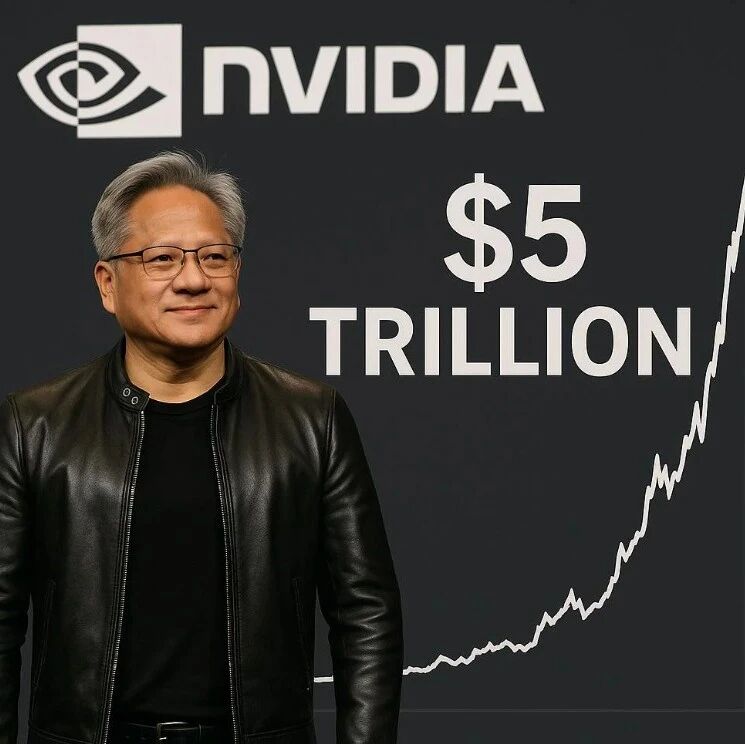
英伟达是怎么被“抬”上5万亿的?
投中网· 2025-10-30 07:22
Core Viewpoint - Nvidia has become the first company in history to surpass a market capitalization of $5 trillion, driven by strong demand for AI and its strategic investments in AI-related companies like OpenAI [5][6][7]. Group 1: Nvidia's Market Position and AI Demand - Nvidia's CEO Jensen Huang highlighted that the revenue from Blackwell and Rubin architecture chips could exceed $500 billion by 2026, which is five times the revenue expected from the Hopper architecture chips between 2023 and 2025 [5][6]. - Nvidia's market value is closely tied to market optimism regarding the future of AI in the U.S., as it holds significant pricing power over GPUs, the core resource for AI [6][7]. Group 2: Concerns Over AI Bubble - The announcement of Nvidia's $100 billion investment in OpenAI raised concerns about an AI bubble, as it involved a significant order of GPUs from Nvidia in return for the investment [8][9]. - IMF President Kristalina Georgieva and the UK's Financial Policy Committee expressed worries about overvaluation in the U.S. stock market, particularly among AI-related tech companies, which could lead to a market correction [9][10]. Group 3: Capital Circulation and Financing Strategies - A capital loop is formed where Nvidia invests in OpenAI, which in turn orders GPUs from Nvidia, while OpenAI also requires cloud services from Oracle, creating a cycle of revenue among these companies [11][12][13]. - Major tech companies are increasingly relying on external financing rather than just free cash flow, with significant declines in free cash flow reported among the "Big Seven" tech firms [18][20]. Group 4: Government Influence and Market Dynamics - The U.S. government views AI as a core strategic competition area, which may lead to continued loose regulations on capital inflow, exacerbating leverage and valuation issues [23][24]. - The U.S. stock market's performance is crucial for maintaining the financial system's stability, as it supports the dollar's dominance and the government's financial strategies [32][33]. Group 5: Profitability Challenges in AI Sector - OpenAI reported a revenue of approximately $4.3 billion in the first half of 2025 but incurred losses of $13.5 billion, primarily due to AI development costs [25][26]. - The commercialization of generative AI applications is lagging, with a report indicating that 95% of investments in this area have not yielded returns, highlighting the challenges in monetizing AI technologies [27][28]. Group 6: Future Implications and Risks - The ongoing AI narrative is critical for the U.S. stock market, as it is seen as a key driver for future growth and financial stability [49][50]. - The potential for an AI bubble to burst poses risks not only to the stock market but also to the broader financial system, reminiscent of the dot-com bubble [53][54].