味之素

Search documents
玻璃,革命芯片?
Zhi Tong Cai Jing· 2026-02-22 02:17
Core Insights - The semiconductor industry is shifting focus from miniaturization of individual chips to the integration of multiple smaller units, known as Chiplets, due to physical limitations in chip size and yield issues [2][6][9] - The demand for larger AI models necessitates an increase in transistor count on chips, leading to a need for larger chip sizes, which is constrained by current lithography technology [5][6] - The industry is exploring new materials and architectures, particularly glass substrates, to overcome the limitations of organic substrates and silicon interconnects [24][28][33] Group 1: Chiplet Architecture - Chiplet architecture allows for the assembly of smaller chips, improving yield and reducing costs while enabling the use of different manufacturing processes for various components [9][10] - The communication between Chiplets must be efficient; otherwise, the benefits of separating chips could be negated [10][11] - Companies like NVIDIA and Intel are already implementing Chiplet designs in their products, such as NVIDIA's Blackwell and Intel's Ponte Vecchio [9] Group 2: Material Limitations - Organic substrates have dominated the market for 25 years but are now facing challenges in high-performance applications, particularly in AI chips [15][16][20] - Silicon interconnects provide superior performance but come with high costs and resource constraints, leading to a bottleneck in production capacity [21][22][49] - Glass substrates are being explored as a potential solution, offering advantages in thermal expansion matching and signal integrity [28][29][30] Group 3: Glass Substrate Development - Two main approaches for glass substrates are emerging: replacing the interconnect layer with glass and using glass as a substrate itself [26][27] - Glass has shown superior performance in thermal expansion and signal loss compared to organic materials, making it a promising alternative [28][29] - However, challenges such as fragility, thermal conductivity, and power noise must be addressed before glass can be widely adopted [31][32][33] Group 4: Competitive Landscape - Intel has invested heavily in glass substrate technology and holds a significant number of patents, but recent leadership changes raise questions about its future in this space [36][38] - Samsung is pursuing a vertically integrated approach to glass substrate production, but quality issues have been reported with their prototypes [39] - Other companies, such as Absolics, are also entering the market but face challenges in securing large customers for their products [40] Group 5: Industry Dynamics - The semiconductor industry is at a crossroads, with multiple technologies competing for dominance in the substrate and interconnect space [52][53] - The future will depend on the ability to achieve high production yields and meet the demands of AI chip growth, with no clear winner emerging yet [35][58] - The ongoing developments in both glass and organic materials will shape the competitive landscape, with significant implications for production capabilities and market dynamics [57][60]


最严重低估的AI芯片新贵
Sou Hu Cai Jing· 2026-02-18 04:53
Core Insights - TOTO is being recognized as a significant player in the advanced ceramics market, which is crucial for semiconductor manufacturing, beyond its traditional reputation for smart toilets [1][2] - Activist investor Palliser Capital has highlighted TOTO as "the most undervalued and overlooked AI memory beneficiary," urging the company to better communicate its business segments and strategically utilize its substantial cash reserves [1][2] - TOTO's advanced ceramics business contributes approximately 40% to its operating revenue, indicating a growing recognition of its importance in the context of rising demand for semiconductor manufacturing tools and components [2] Group 1 - TOTO has been manufacturing precision ceramic components for semiconductor production, which are essential for processes like etching and deposition [1] - The company’s advanced ceramics product line includes components designed for high-precision semiconductor equipment, showcasing its expertise in this field [1] - TOTO's stock has surged nearly 40% this year, driven by increased analyst attention and the influence of activist investors [2] Group 2 - The demand for memory in AI data centers has significantly impacted the pricing and capacity utilization of semiconductor manufacturing, benefiting companies like TOTO [2] - Palliser Capital is advocating for TOTO to simplify its capital allocation and potentially expand its ceramics business ahead of competitors [2] - The narrative surrounding TOTO's growth is tied to broader trends in the semiconductor industry, where traditional manufacturers are being re-evaluated in light of AI advancements [3]
最严重低估的AI芯片新贵
半导体行业观察· 2026-02-18 01:13
公众号记得加星标⭐️,第一时间看推送不会错过。 尽管表面上看来,日本的TOTO公司早已不再仅仅是加热式智能马桶和"卫洗丽"智能马桶技术的代名 词 。 据 《 金 融 时 报 》 报 道 , 总 部 位 于 英 国 的 激 进 投 资 者 帕 利 瑟 资 本 (Palliser Capital) 近 日 出 现 在 TOTO的股东名册上,并致函董事会,称该公司先进陶瓷业务被市场严重低估。换句话说,这家卫浴 制造商如今可能正处于人工智能基础设施和半导体供应链的十字路口。 如今,帕利瑟在信中明确称Toto是"最被低估和忽视的人工智能内存受益者"——这是一种激进的措 辞,而非客观的研究。尽管如此,它确实基于人工智能投资趋势与半导体供应链之间当下存在的现实 联系。 几十年来,Toto 一直致力于精密陶瓷零件的制造。这些零件并非卫浴配件,而是用于半导体制造的 精密工程组件,用于在蚀刻和沉积等加工步骤中固定硅晶圆。这些材料必须能够承受热应力,最大限 度地减少污染,并且加工精度极高。Toto 的先进陶瓷产品目录充分展现了该公司在该领域的专业实 力,其中包括气浮轴承、键合毛细管以及专为高精度半导体设备设计的结构件。 投资者们越 ...


未知机构:国产算力之华正新材继续新高高端覆铜板筑基涨价潮核心受益者东北计算机-20260211
未知机构· 2026-02-11 02:15
Summary of Conference Call Records Company and Industry Involved - **Company**: 华正新材 (Huazheng New Materials) - **Industry**: CCL (Copper Clad Laminate) industry, specifically focusing on high-end CCL materials and their applications in the domestic computing power sector Core Points and Arguments 1. **Price Increase in CCL Industry**: The CCL industry has entered a price increase phase driven by both cost push and demand pull, following price hikes announced by major players like 建滔 (Kingboard) and Resonac [1] 2. **Domestic Computing Power Surge**: The accelerated release of domestic computing power chips, such as Huawei's昇腾910C, is pushing for faster localization of high-frequency and high-speed CCL materials [1] 3. **Low Inventory Levels**: The CCL industry has experienced a prolonged destocking phase, resulting in current low inventory levels, which enhances price elasticity [1] 4. **Improved Bargaining Power**: With rising copper prices and a shortage of glass fiber cloth supply, CCL manufacturers are regaining bargaining power [1] 5. **Profit Margin Expansion**: 华正新材, as a leading domestic CCL manufacturer, is expected to benefit from the current price increase cycle, leading to potential profit margin expansion and performance elasticity [1] 6. **Strong Ties with Huawei**: The company has established deep ties with Huawei, positioning itself as a core supplier of essential materials for the domestic computing power base [1] Additional Important Content 1. **High Standards for PCB Layers**: Huawei's昇腾 servers require an increase in PCB layers and have stringent requirements for signal transmission loss [2] 2. **Ultra Low Loss Material Certification**: 华正新材's Ultra Low Loss materials have passed multiple terminal certifications and are being sold in small batches, directly competing with high-end products from companies like 台光电 (Taiwan Union Technology) and 松下 (Panasonic) [2] 3. **Revenue Growth Projection**: The revenue from CCL is expected to grow by 14.26% year-on-year in 2024, indicating a significant structural upgrade with increasing market share in high-frequency and high-speed boards within the server sector [2] 4. **CBF Film Development**: The company’s CBF laminated insulation film is set to break Japan's ABF monopoly and has been validated by major domestic IC substrate manufacturers, with small batch deliveries already achieved [2] 5. **Valuation Potential**: Given the tight supply of advanced packaging capacity in CoWoS, the need for domestically controlled packaging materials is urgent, and this business segment has high valuation elasticity [2] 6. **Risk Factors**: Potential risks include severe fluctuations in raw material prices and delays in the validation process for domestic computing power PCBs [2]

预警,ABF缺货达42%!ABF胶膜的国产突围与投资机会
材料汇· 2026-02-06 15:54
Core Viewpoint - The article emphasizes the increasing demand for ABF (Ajinomoto Build-up Film) substrates driven by advancements in AI, high-performance computing, and other technologies, predicting a supply-demand gap that will worsen over the coming years, with a projected gap of 10% by the second half of 2026 and potentially reaching 42% by 2028 [2][3]. Group 1: ABF Film Overview - ABF film is a critical insulating material used in semiconductor packaging, developed by Ajinomoto, and is essential for high-density interconnections in advanced microprocessors [8][10]. - The film consists of three layers: a supporting medium (PET), ABF resin, and a protective film, with the resin's components significantly affecting its dielectric and thermal properties [10][12]. Group 2: Market Analysis - The global IC packaging substrate market is projected to grow from approximately 96.1 billion yuan in 2024 to 135.0 billion yuan by 2028, with a compound annual growth rate (CAGR) of 8.8% [31]. - The demand for ABF substrates is primarily driven by high-performance computing, 5G communication, and automotive electronics, with the latter two being the fastest-growing markets [27][41]. Group 3: Competitive Landscape - Ajinomoto dominates the ABF film market with over 95% market share, creating a significant barrier for new entrants due to its extensive patent portfolio and established customer relationships [46][48]. - Other companies attempting to enter the market include a few Japanese firms and some Chinese companies, but they lack the market influence of Ajinomoto [46][48]. Group 4: Future Directions and Investment Logic - The article suggests that the ongoing technological upgrades and the shift in demand structure towards AI applications will create long-term growth opportunities in the ABF film market [2][3]. - The need for domestic production of ABF materials in China is highlighted as a strategic move to mitigate supply chain risks and capitalize on the growing market demand [3].


AI热潮带飞马桶厂?不起眼的日企,控制了芯片命脉
创业邦· 2026-02-06 00:08
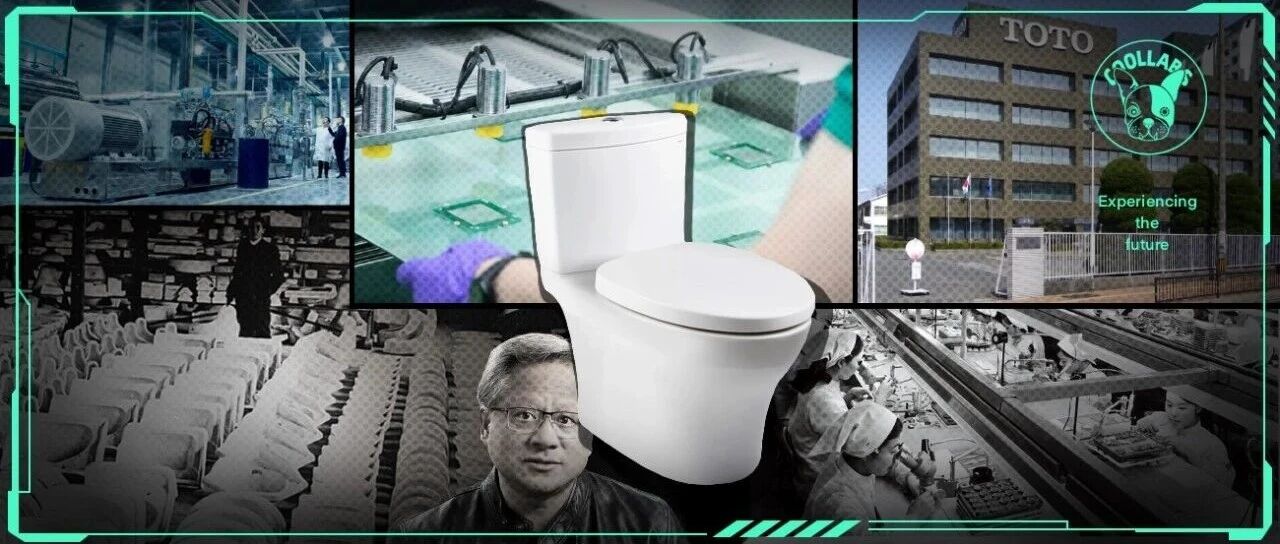
Core Viewpoint - The article discusses how traditional companies, such as TOTO, have successfully transitioned into the semiconductor industry by leveraging their existing technologies and expertise, particularly in ceramics, to meet the growing demands of the AI and semiconductor markets [6][19]. Group 1: TOTO's Transformation - TOTO, a Japanese bathroom products company, saw its stock price surge by 11% due to its involvement in the semiconductor industry, despite its primary business being unrelated to AI [8]. - The company's success is attributed to its expertise in producing high-density, low-porosity ceramics, which are essential for semiconductor manufacturing processes [11][12]. - TOTO's pivot to semiconductor precision ceramics has become a significant growth engine, contributing 42% of its revenue with a profit margin of 40%, far exceeding the average of 7% across all departments [19]. Group 2: Broader Industry Trends - The semiconductor industry is increasingly adopting electrostatic chucks, which TOTO has developed, due to their ability to provide uniform force and reduce contamination risks during wafer processing [12][17]. - Other traditional Japanese companies, such as Ajinomoto and Kao, have also successfully transitioned into the semiconductor sector by utilizing their existing technologies to create essential materials for chip manufacturing [22][30]. - The article highlights that Japan's historical industrial strength and technological reserves have allowed these companies to adapt and thrive in the semiconductor market, even as their traditional businesses face challenges [34][37]. Group 3: China's Potential - The article suggests that China's industrial sectors are beginning to mature, with companies like Xingfa Group and Huitian New Materials emerging as players in the semiconductor supply chain by developing high-purity materials and specialized adhesives [39][43]. - The narrative emphasizes that China's industrial development, although historically delayed, is now gaining momentum, and the accumulated technological expertise will eventually lead to significant advancements in the semiconductor industry [49].

跨界的芯片巨头
半导体芯闻· 2026-02-02 10:32
如果您希望可以时常见面,欢迎标星收藏哦~ 上世纪70年代末,日本著名的调味品公司味之素开始研究副产品的应用。 在对蛋白质和氨基酸(关键调味料成分)进行研究时,味之素研发团队发现副产物可以做出拥有 极高绝缘性的树脂类合成材料,于是创造出了一种具有高耐用性,低热膨胀性,易于加工和其他 重要特征的热固性薄膜,该膜被命名为ABF。 1996年,英特尔与味之素联系,寻求使用氨基酸技术开发薄膜型绝缘子,这两家企业合作研发出 了FC-BGA(Flip Chip Ball Grid Array),最终让ABF成为了FC-BGA产品的主要方案。 那时没人会想到,这种从制作味精时产生的"废料"中提炼出的薄膜,最终会垄断全球99%的高端 CPU和GPU封装市场。到2021年,当全球芯片荒席卷而来时,味之素ABF材料的交付周期长达 30周,英特尔、AMD和英伟达等巨头不得不排队等待这家调味料公司的供货。 而当我们回望半导体行业近百年发展历程,像味之素这样跨界成功的半导体"隐形冠军",远不止 一两家。 从拖拉机到洁净室 上世纪20年代,在美国中西部的农场中,弗兰克·唐纳森(Frank Donaldson)望着自己报废的拖 拉机发动机, ...
AI热潮带飞马桶厂?不起眼的日企,控制了芯片命脉
3 6 Ke· 2026-02-02 04:05
Group 1 - The article highlights the unexpected rise of TOTO, a Japanese toilet manufacturer, whose stock surged by 11% due to its involvement in the semiconductor industry, particularly through its production of specialized ceramics used in semiconductor manufacturing [3][21]. - TOTO's new business in precision ceramics now accounts for 42% of its revenue, with a profit margin of 40%, significantly higher than the average of 7% across all departments [21]. - The company has leveraged its long-standing expertise in ceramics to develop electrostatic chucks, which are crucial for maintaining the precision required in semiconductor manufacturing [11][19]. Group 2 - The article discusses the broader trend of traditional Japanese companies successfully transitioning into the semiconductor industry, citing examples like Ajinomoto, which developed a specialized film for high-performance CPUs from its food production waste [26][28]. - Other companies, such as Kao and Fujifilm, have also found niches in the semiconductor supply chain, with Kao producing cleaning agents for wafers and Fujifilm supplying photoresists and chemicals necessary for semiconductor production [32][38]. - The narrative emphasizes that Japan's historical industrial strength and technological reserves have allowed these companies to adapt and thrive in the high-tech semiconductor market, despite their origins in seemingly unrelated industries [40][42]. Group 3 - The article suggests that China's semiconductor industry is on a similar path, with emerging companies developing high-purity materials and specialized products that could fill gaps in the supply chain, akin to Japan's historical industrial evolution [46][54]. - Companies like Xingfa Group and Huitian New Materials are highlighted for their successful transitions from traditional industries to high-tech sectors, indicating a growing trend of innovation and adaptation within China's industrial landscape [48][51]. - The overall message conveys optimism for China's future in the semiconductor industry, suggesting that with time and continued development, the country can achieve significant advancements [56].
“不务正业”的半导体巨头
3 6 Ke· 2026-02-01 02:51
Group 1 - The core idea of the article is that several companies have successfully transitioned from their original industries to become key players in the semiconductor sector by leveraging their existing technologies and expertise [24][26][28] - Ajinomoto, originally a seasoning company, developed a thermosetting film called ABF from by-products, which now dominates 99% of the high-end CPU and GPU packaging market [1] - Donaldson, initially focused on tractor air filters, adapted its technology to create chemical air filtration systems for semiconductor clean rooms, ensuring high purity levels essential for chip manufacturing [4][19] - DISCO, which started as a manufacturer of grinding wheels, innovated ultra-thin cutting blades and specialized cutting machines, leading to a dominant market share in wafer cutting and grinding equipment [5][9][20] - Fujifilm transformed from a film company to a diversified high-tech group, successfully entering the semiconductor materials market by applying its expertise in photosensitive materials to photoresists [10][14][24] - Gore, known for its waterproof fabric, developed specialized cables for EUV lithography machines, showcasing the versatility of its ePTFE technology [15][17] - TOTO, a toilet manufacturer, leveraged its ceramic technology to produce components for semiconductor equipment, achieving significant profitability in this new sector [19] - JSR transitioned from synthetic rubber to become a leading supplier of photoresists, capitalizing on its polymer chemistry expertise [20] - HOYA, originally a glassware manufacturer, now plays a crucial role in the semiconductor industry by providing high-precision EUV mask substrates [21] - Henkel evolved from a detergent company to a major player in advanced packaging materials for semiconductors, utilizing its knowledge of surface chemistry [22] Group 2 - The common thread among these companies is their ability to understand the essence of their technologies and apply them creatively in new fields, demonstrating a long-term commitment to research and development [24][25][26] - The competition in semiconductor materials is fundamentally about "tacit knowledge," which cannot be easily transferred and requires years of experience to achieve high yield and consistency [25] - These companies often target niche markets rather than competing in larger, more saturated markets, allowing them to establish strong positions and maintain technological and profit barriers [25][26] - Japanese companies tend to rely on the chemical similarities of materials for their transitions, while Western companies focus on pushing existing processes to their limits in new applications [26]

“不务正业”的半导体巨头
半导体行业观察· 2026-02-01 02:25
公众号记得加星标⭐️,第一时间看推送不会错过。 上世纪70年代末,日本著名的调味品公司味之素开始研究副产品的应用。 在对蛋白质和氨基酸(关键调味料成分)进行研究时,味之素研发团队发现副产物可以做出拥有极高 绝缘性的树脂类合成材料,于是创造出了一种具有高耐用性,低热膨胀性,易于加工和其他重要特征 的热固性薄膜,该膜被命名为ABF。 1996年,英特尔与味之素联系,寻求使用氨基酸技术开发薄膜型绝缘子,这两家企业合作研发出了 FC-BGA(Flip Chip Ball Grid Array),最终让ABF成为了FC-BGA产品的主要方案。 那时没人会想到,这种从制作味精时产生的"废料"中提炼出的薄膜,最终会垄断全球99%的高端CPU 和GPU封装市场。到2021年,当全球芯片荒席卷而来时,味之素ABF材料的交付周期长达30周,英 特尔、AMD和英伟达等巨头不得不排队等待这家调味料公司的供货。 而当我们回望半导体行业近百年发展历程,像味之素这样跨界成功的半导体"隐形冠军",远不止一两 家。 在漫长的时间里,唐纳森公司的工程师发现了一个惊人的相似性:半导体工厂面临的问题,本质上和 一百年前的拖拉机一模一样,就是如何防止 ...