
产业革命

Search documents
创东方投资高宇辉:马年的投资机遇将孕育在四个“确定性”之中
Zhong Guo Ji Jin Bao· 2026-02-20 06:45
新春肇启,万象更新。值此甲辰马年春节来临之际,创东方投资全体员工,向您及家人致以最诚挚的祝 福!祝愿您在新的一年里,龙马精神、万事顺遂、阖家安康、事业腾达! 过去一年,中国经济在复杂严峻的外部环境和国内转型压力下,展现出了强大的战略定力和发展韧性。 投资人和创业者与我们一同见证了市场的波澜起伏,也共同分享了结构性机遇带来的惊喜。创东方始终 秉持"稳健投资、创新发展"的理念,在先进制造、人工智能、生物医药、新能源、新材料等关键领域实 现深度布局与价值共创。 2025年,创东方在科技领域的长期布局迎来丰硕成果,多家被投企业成功IPO,行业覆盖新材料、创新 药等高壁垒赛道。截至目前,创东方累计管理规模已近300亿元人民币,累计投资企业超过350家,其中 超已有40余家已通过上市方式退出,持续在硬科技与医疗健康领域构建产业生态。 资本市场向好的确定性:中国经济的稳定增长及高可预期性,使中国成为世界经济发展的压舱石;中国 才是世界正常经贸秩序、正常资本市场秩序维护者的身份,越来越成为全球共识;经济向东、牵手中 国,成为越来越多国家的一致行动。在此大背景下,中国资本市场将迎来更好的发展,进而带动一级市 场迎来新的发展机遇 ...
油价“降温”,金属“发烧”!帮主郑重解读市场分裂逻辑
Sou Hu Cai Jing· 2026-01-15 01:14
Group 1 - The article highlights a contrasting market scenario where oil prices dropped sharply while metal prices, including gold and silver, reached historical highs, reflecting two core anxieties in global capital [1][3]. - Oil prices initially rose but fell dramatically after President Trump's indication of potentially delaying military action against Iran, which eased immediate concerns about supply disruptions in the Middle East [3]. - The surge in metal prices, particularly gold and silver, is driven not only by safe-haven demand but also by increasing long-term concerns regarding the independence and credibility of major central banks, especially the Federal Reserve [3][4]. Group 2 - Investors are advised to adopt a multi-faceted strategy in response to the "cold oil, hot metal" market, recognizing that a single logic cannot explain the current complexities [4]. - It is important to differentiate between short-term trading driven by events and emotions in oil, and the deeper monetary and industrial logic supporting the long-term investment in metals [4]. - Maintaining a balanced investment portfolio is crucial, as the current market split serves as a risk indicator, suggesting the need for diversification across different asset classes [4][5].

刘煜辉:中国在AI及科创产业革命的下半场占据优势
Di Yi Cai Jing· 2026-01-10 12:52
AI竞争的尽头是电力和制造能力。 在全球资产表现方面,刘煜辉强调,2025年美元走弱约10%,但未出现系统性崩塌。与此对应,半导体 和科创相关产业指数普遍上涨:例如,韩国股市半导体类上涨约70%,中国"两创"指数上涨约50%。 "中国通过端到端的产业生态优势,实现大模型训练、硬件应用和数据回流闭环,形成完整的技术与商 业生态,这将决定下半场的国际竞争格局。"刘煜辉说。 1月10日,在"2026年中国首席经济学家论坛年会"上,中国首席经济学家论坛理事刘煜辉在发表主旨演 讲时指出,人工智能(AI)竞争的尽头是电力和制造能力,这一轮AI产业革命将由中国完成。 在演讲中,刘煜辉将AI产业革命分为"上半场"和"下半场"。上半场以算力和技术研发为核心,资本和人 才投入巨大,为未来发展奠定基础;下半场则关注如何将技术势能转化为商业落地,形成完整的产业生 态。 他认为,中国在制造能力、产业生态建设和AI落地方面具有明显优势,而美国更多停留在技术蓝图和 设计层面,难以形成完整产业闭环。 刘煜辉最后提到,尽管短期市场仍存在波动和不确定性,但从长期趋势看,中国在AI及科创产业革命 的下半场中占据优势,"东风压倒西风"已成大势。 ...
试看将来的市场 必立大A的旗杆
Zhong Guo Zheng Quan Bao· 2026-01-04 22:25
Group 1 - The market is shifting from short-term valuation fluctuations to a focus on solid fundamentals, indicating a significant transition towards a new era driven by innovation and change [1] - By 2035, the goal is to achieve a per capita GDP at the level of moderately developed countries, marking a shift from mere economic growth to a qualitative leap in development paradigms [1] - Technological and industrial innovation are essential pathways to achieving future goals, highlighting the importance of a robust foundation for growth [1] Group 2 - Global order is being restructured, with China's manufacturing resilience and foresight emerging as key strengths amid major power competition and supply chain adjustments [2] - The strategy of "self-control" and "going global" has evolved into a balanced approach, reinforcing China's position as a core growth engine and innovation hub [2] - A historical wealth migration is occurring, with a shift from real estate investments to capital markets, which are seen as the most expansive harbor for innovation and future value [2] Group 3 - The greatest risks often stem from cognitive stagnation during significant transitions, emphasizing the need for insight and discipline in investment strategies [3] - Recognizing the historical context and establishing faith in long-term trends are more valuable than chasing short-term market fluctuations [3] - The essence of investment remains unchanged: identifying order amidst chaos and maintaining value during volatility [3]
周周芝道 - 四中全会和中美釜山会晤之后
2025-11-03 02:35
Summary of Key Points from the Conference Call Industry and Company Involvement - The discussion primarily revolves around the impact of U.S. monetary policy, U.S.-China relations, and the implications for global capital markets, particularly focusing on technology and manufacturing sectors. Core Insights and Arguments 1. **U.S. Federal Reserve's Monetary Policy** - After the October rate cut, Powell's hawkish stance on inflation reduced expectations for further cuts in December, leading to rising U.S. Treasury yields [1][3][4] - The probability of a December rate cut decreased from over 90% to around 60% due to persistent inflation and trade uncertainties [3] 2. **Impact of the Fourth Plenary Session and U.S.-China Meeting** - The domestic capital market showed muted performance post the Fourth Plenary Session, with weak economic data and restrained fiscal policy [1][5] - The U.S.-China meeting indicated a shift in competition towards technology and security, moving away from explicit restrictions to competitive investments [1][9] 3. **U.S.-China Trade Dynamics** - The trade war aims to reshape global supply chains, with the U.S. using tariffs to shift production to third countries, benefiting all parties involved [10][11] - The trade conflict is expected to gradually ease by 2025, with technology investments becoming the main pricing driver in global capital markets [12] 4. **China's Manufacturing Sector Evolution** - China's high-end manufacturing has seen significant upgrades, with production shifting to other countries as GDP per capita rises [13] - This rapid upgrade in the industrial chain is a key reason for the swift resolution of recent tariff disputes [13] 5. **Future Economic Policies and Market Predictions** - The upcoming Central Economic Work Conference in December is crucial for domestic asset performance, with expectations of limited policy changes in November [6][7] - The focus on technology and high-quality growth will dominate China's economic planning for the next five years [16][17] 6. **Commodity Market Outlook** - Copper prices are expected to perform well due to increased demand from a new industrial revolution, with significant price increases anticipated in 2025 [20][22] - The outlook for gold remains strong due to ongoing monetary easing, despite potential volatility in 2026 as competition shifts [23] Other Important but Overlooked Content 1. **Global Capital Market Trends** - The transition from uncertainty to a new production order post the U.S.-China meeting is expected to improve the investment environment in 2026 [14] - The focus on technology investments will significantly influence asset pricing and market dynamics [19] 2. **U.S. Midterm Elections Impact** - The 2026 midterm elections will likely shift U.S. policy focus back to domestic economic issues, emphasizing social welfare and inflation concerns [15] 3. **Debt Market Outlook** - The bond market is expected to present trading opportunities in Q4 2025, with a cautious outlook for 2026 as risks are anticipated to rise [24][25]
“双碳”五年如何改变中国贡献世界
Huan Qiu Shi Bao· 2025-10-15 09:14
Core Insights - The "dual carbon" goals have significantly boosted confidence in China's green and low-carbon transition over the past five years, demonstrating that China can achieve its carbon peak by 2030 and carbon neutrality by 2060 [1][6][7] - China's green low-carbon industry has shown that reducing reliance on fossil fuels while maintaining economic growth is feasible, with fossil fuel consumption growth rates consistently below economic growth rates [2][3] - The past five years have coincided with a critical period of energy and industrial revolutions, where China has leveraged innovation to lead in clean energy patents and industries such as photovoltaics and electric vehicles [3][4] Group 1 - China's photovoltaic manufacturing industry has grown at an annual rate of approximately 26%, while the battery industry has grown even faster, contributing to a total installed capacity of 2.2 billion kilowatts of non-fossil energy by 2025, accounting for 60.9% of total capacity [1][6] - As of August 2025, the proportion of new energy vehicles in new car sales has surpassed 50%, significantly exceeding the initial target of 20% [3][4] - China is now recognized as the world's first "electrostate," with its electricity generation expected to reach 10 trillion kilowatt-hours in 2024, accounting for nearly one-third of global production [5][6] Group 2 - China's solar panel production accounts for 80% of the global market, and its lithium battery production is also close to 80%, with new energy vehicles making up about 70% of the global total [6][7] - The global costs of solar and wind energy have decreased by over 80% and 60%, respectively, due to China's advancements in renewable energy technologies [6] - China's commitment to climate change initiatives remains steadfast, with ongoing efforts to provide green public goods and technologies to other countries, particularly in the Global South [6][7]
“双碳”五年如何改变中国贡献世界?
Huan Qiu Shi Bao· 2025-10-15 07:09
Core Insights - The "dual carbon" goals have significantly boosted confidence in China's green and low-carbon transition over the past five years, demonstrating that China can achieve its carbon peak by 2030 and carbon neutrality by 2060 [1][2][4] Group 1: Achievements in Green Development - China's photovoltaic manufacturing industry has grown at an annual rate of approximately 26% over the past five years, while the battery industry has experienced even faster growth [1] - By 2025, China's total installed capacity of green non-fossil energy is expected to reach 2.2 billion kilowatts, accounting for 60.9% of the total energy mix, surpassing fossil energy [1] - Currently, 40% of electricity generated in China comes from green sources, indicating a significant shift towards renewable energy [1] Group 2: Economic Implications - The past five years have shown that economic development can reduce reliance on fossil fuels, with fossil energy consumption growing at a rate lower than economic growth [2] - The transition to renewable and clean energy is proving to be a viable path for sustainable economic development and modernization in China [2] Group 3: Technological Innovation - China has increased its share of global clean energy patents from 5% around 2000 to 75% today, showcasing its strong technological innovation in the green sector [3] - The proportion of new energy vehicles in new car sales in China has exceeded 50% as of August 2025, surpassing the initial target of 20% set five years ago [3] Group 4: Global Contributions - China produces 80% of the world's photovoltaic components and lithium batteries, and its new energy vehicle stock accounts for approximately 70% of the global total [6] - The development of China's new energy sector has led to a reduction in global photovoltaic costs by over 80% and wind power costs by over 60% in the past decade [6] - China's commitment to green technology and solutions has provided significant support to global efforts in combating climate change, particularly for developing countries [6][7] Group 5: Future Outlook - The transition to a "power state" is underway, with China becoming the world's first major economy driven by electricity rather than fossil fuels, producing 10 trillion kilowatt-hours of electricity in 2024, which is nearly one-third of the global total [5] - The shift towards green electricity is expected to accelerate the green and low-carbon transformation across various industries [5]
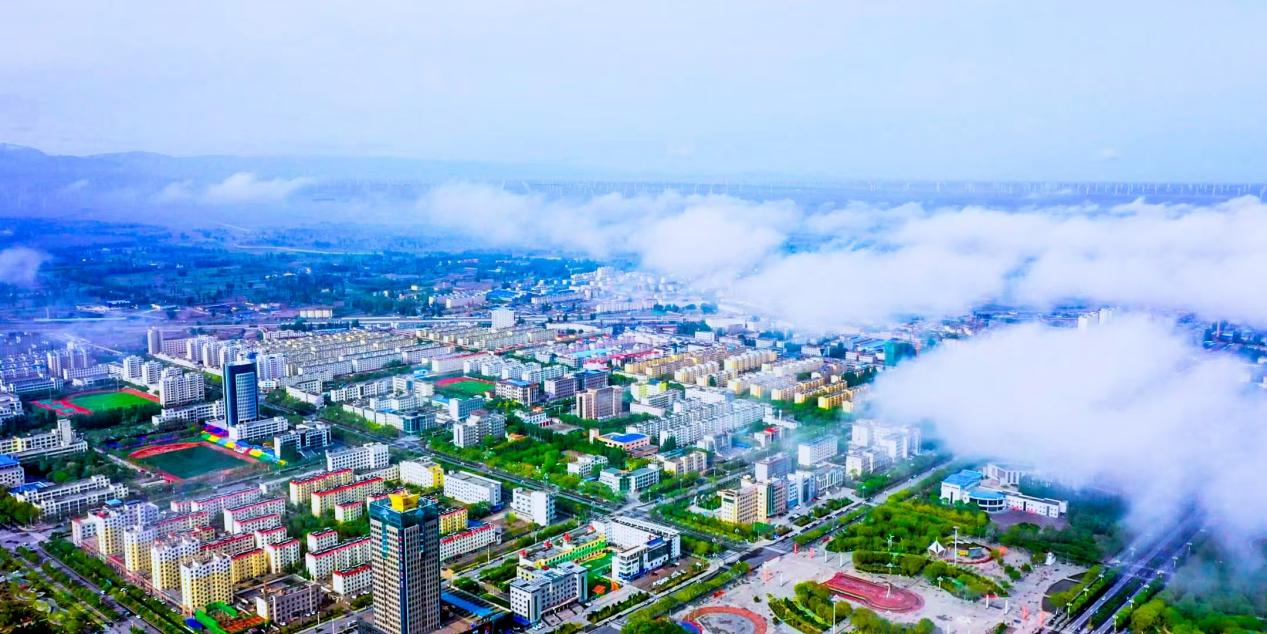
从一滴油到千度电,玉门能源转型的“铁人答卷”
Zhong Guo Fa Zhan Wang· 2025-10-11 07:17
Core Viewpoint - The article highlights the transformation of Yumen from a resource-dependent economy to a diversified energy hub, showcasing resilience and innovation in the face of challenges [1][4][9]. Group 1: Historical Context and Challenges - Yumen's economy was historically reliant on oil, leading to vulnerability when oil production declined, illustrating the risks of a single-resource economy [4]. - The city faced a critical turning point in the 1990s, prompting key decisions to relocate and diversify its economic base before resources were depleted [4][5]. Group 2: Transition and Development - Yumen has leveraged its natural wind and solar resources to become a leading site for renewable energy, establishing itself as a significant player in China's energy transition [5][7]. - By the end of 2024, Yumen's total installed power capacity is projected to reach 7.19 million kilowatts, with cumulative renewable energy generation exceeding 76 billion kilowatt-hours [5][7]. Group 3: Industry and Infrastructure - The city is developing a comprehensive energy infrastructure, including a 750 kV substation and a robust transmission network to facilitate energy distribution [7]. - Yumen has attracted nine renewable energy equipment manufacturing companies, creating a core industrial chain that supports wind, solar, and energy storage technologies [7][8]. Group 4: Broader Economic Impact - The transformation has led to a diversified industrial structure, with investments in modern chemical projects and the growth of the tertiary sector, enhancing economic resilience [8]. - Yumen has received multiple accolades, including recognition as a national garden city and an advanced ecological civilization city, reflecting its commitment to sustainable development [8].
黄金白银铜连番上涨,底层逻辑与未来前景如何?|资本市场
清华金融评论· 2025-09-30 09:41
Group 1: Gold Market Analysis - The current market is characterized by a "golden age of chaos" and an "industrial revolution," with gold remaining the core choice for de-dollarization and risk aversion [2][13] - As of September 29, 2025, gold prices reached historical highs, with London gold at $3827.37 per ounce and New York gold at $3856.38 per ounce, driven by increased demand for safe-haven assets, shifts in monetary policy, and changes in supply-demand dynamics [3][5] - The significant rise in gold prices, over 42% year-to-date, is attributed to heightened market risk aversion, expectations of Federal Reserve rate cuts, and geopolitical tensions [5][6] Group 2: Silver Market Analysis - Silver prices have surged, with London silver nearing $44 per ounce, marking a 40% increase year-to-date, driven by a recovery in the gold-silver ratio and strong industrial demand [8][9] - The dual nature of silver as both an industrial and financial asset has contributed to its price increase, particularly in sectors like photovoltaics and renewable energy [8][9] - The silver market is smaller than gold, making it more susceptible to speculative trading, which can lead to significant price volatility [10] Group 3: Copper Market Analysis - Copper prices have recently surpassed $10,000 per ton, with a nearly 20% increase this year, influenced by an expanding supply gap and surging demand from emerging sectors [12][13] - The supply gap is expected to reach 53,000 tons in 2025 and 87,000 tons in 2026, exacerbated by mining disruptions and limited production growth [12] - The structural bull market for copper is driven by long-term demand from green technologies and AI, while supply growth remains constrained [12]

洪灏:市场对产业革命有新预期,期待科技、人工智能更大投资机会
Di Yi Cai Jing· 2025-09-25 05:01
Group 1 - The core viewpoint is that the current investment landscape, particularly in technology stocks and artificial intelligence, presents significant opportunities despite concerns of potential bubble formation [1][2] - The earnings growth of major US tech companies, such as Nvidia and Apple, indicates that investments in AI are yielding positive results, with some companies experiencing a decline in valuation despite stock price increases [1] - The transition between old and new technologies is expected to create a scenario where stock prices rise initially, but must be validated by subsequent earnings growth, which is already evident in recent financial reports [1] Group 2 - Chinese technology companies are beginning to show progress, with Alibaba making strides in areas like chips and large models, although they still face significant challenges due to technological constraints [2] - The US dollar has depreciated approximately 10% this year, reflecting underlying fiscal and structural issues in the US economy, while A-shares have decoupled from US long-term bond yields and are leading global market performance [2] - The potential for asset bubble formation is a major uncertainty for investors, affecting both US AI-related companies and the Chinese market, where new trends and valuations are difficult to interpret [2] - The unpredictability of former President Trump's actions is highlighted as a significant investment theme, suggesting that his behavior could impact market dynamics [2]