市场集中度

Search documents
美伊冲突风险叠加“有人垄断1/3运力”,全球油轮费率飙升创六年新高
Hua Er Jie Jian Wen· 2026-02-26 03:01
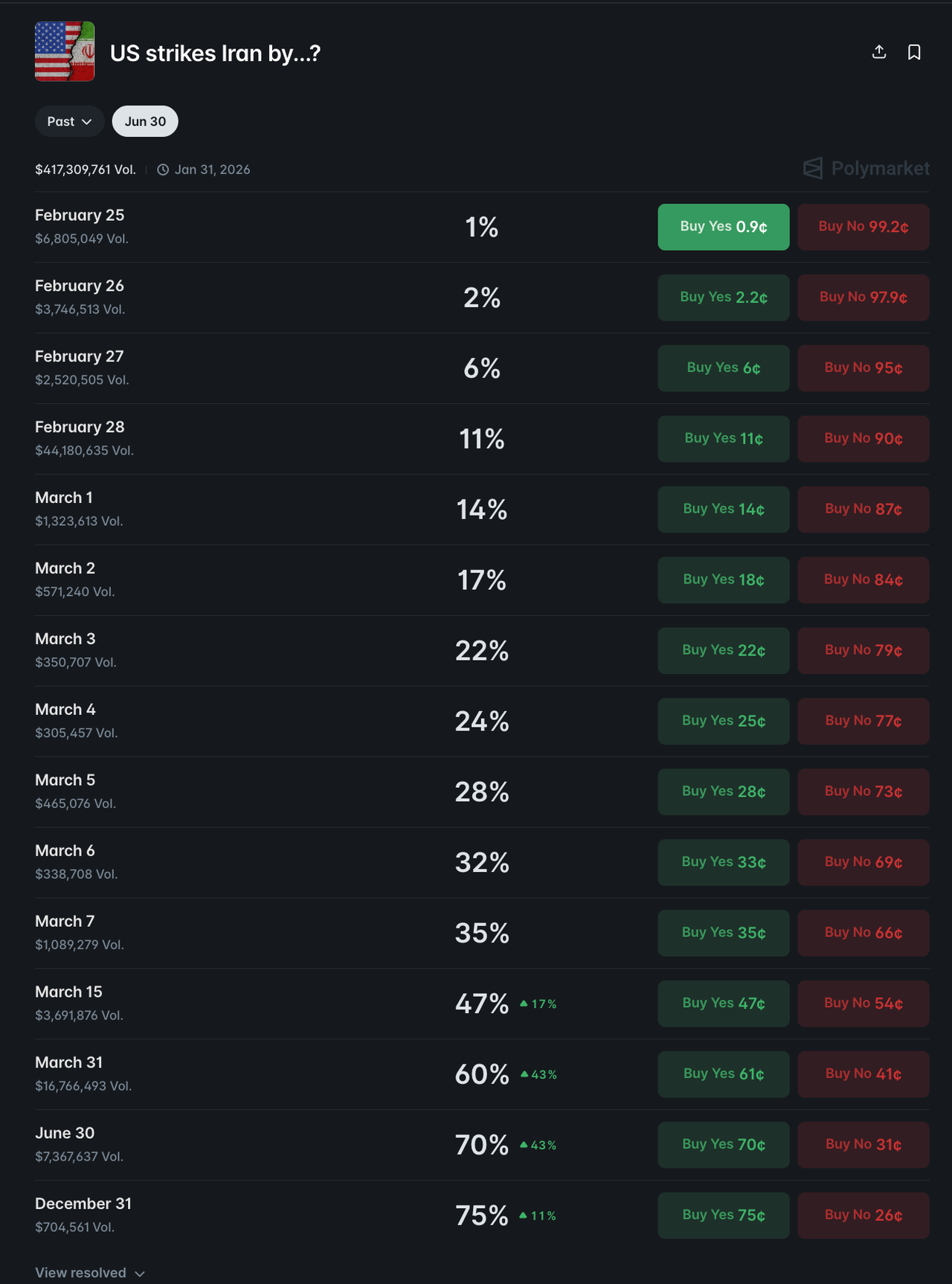
全球超大型原油运输船(VLCC)市场正经历六年来最剧烈的费率冲击。战争风险溢价与史无前例的船队兼并浪潮双重叠加,将运费推至历史高位,并开始 向实物原油价格和整个油轮市场传导。 2月25日,据彭博报道,沙特国家航运公司Bahri近期租用五艘VLCC,日租金高达20万美元,为波罗的海交易所记录的六年最高水平,其中一艘DHT Jaguar 的成交价更达每日20.8万美元。 与此同时,Polymarket数据显示,市场对美国在3月15日前对伊朗发动军事打击的概率定价已升至47%,霍尔木兹海峡封锁风险正被迅速计入运费和布伦特 原油期货价格,后者目前仍维持在每桶70美元上方。 | US strikes Iran by ... ? | | | | --- | --- | --- | | Past V Jun 30 | | | | $417,309,761 Vol. ( ) Jan 31, 2026 | | | | February 25 | 1% | Buy Yes 0.9¢ | | $6,805,049 Vol. | | | | February 26 | 2% | Buy Yes 2.2¢ | | $3,746,513 ...

从海外金属包装发展复盘看行业价值重构机遇:整合创造双寡头格局,优质结构提升利润率
Huaan Securities· 2026-02-09 08:41
Investment Rating - The report does not explicitly state an investment rating for the industry or specific companies. Core Insights - The metal packaging industry is a significant part of China's packaging industry, accounting for approximately 10% of the total output value. In 2023, the revenue from metal packaging containers and materials manufacturing reached 150.56 billion yuan, with a profit margin of 4.76% [6][12]. - The market for three-piece cans is balanced, with a market size of 16.585 billion yuan in 2023, growing by 1.6% year-on-year. The beverage sector is the primary demand driver, contributing 82% of the market size [14][19]. - The two-piece can market is experiencing oversupply, with a total market size of 26.7 billion yuan in 2023, growing at a CAGR of 4.9% from 2017 to 2023. Beer cans account for over 50% of the demand [24][28]. Summary by Sections 1. Industry Overview: Supply and Demand Balance in Three-Piece Cans, Oversupply in Two-Piece Cans - Metal packaging is crucial in China's packaging industry, with significant revenue and profit contributions [6]. - Three-piece cans dominate the non-carbonated beverage market, while two-piece cans are prevalent in beer and carbonated drinks [12][24]. 2. Comparative Analysis: Consolidation Creates a Duopoly, Quality Structure Enhances Profitability - The report highlights the successful consolidation strategies of companies like Ball Corporation, which transitioned from diversification to focusing on core competencies, becoming the largest aluminum can manufacturer globally [42][48]. - The merger of Orijin and COFCO Packaging is expected to increase market concentration in the two-piece can sector, enhancing the bargaining power and profitability of leading firms [34][36]. 3. Related Companies: Orijin, Shengxing Co., Baosteel Packaging - Orijin leads the three-piece can market with a 23% market share, followed by other key players [19]. - The two-piece can market is primarily dominated by Baosteel Packaging and Orijin, with significant market shares expected to increase post-merger [34][36].


美股市场集中度引关注 外媒称无需担忧
Huan Qiu Wang· 2026-02-05 02:09
【环球网财经综合报道】近日,英国Financial Times专栏作者Robert Armstrong发表深度文章,聚焦当前美股市场高度 集中于少数科技巨头的现象,探讨这一市场格局是否意味着风险上升,并结合相关研究指出,市场集中度本身并非风 险核心,高估值才是真正需要警惕的因素,且少数大公司主导市场实为资本市场的常态。 Robert Armstrong称,当地时间周一对美国股市来说是意义非凡的一天。Anthropic公司推出全新人工智能工具,受此影 响,服务于各类白领行业的软件和分析公司股价应声下跌。标普500指数中的软件和专业服务公司股价下跌超过3%。 那么,像Alphabet和微软这样拥有巨额人工智能预算的科技巨头股价上涨了吗?恰恰相反。真正受益的是能源、电 信、必需消费品和材料等传统经济板块。市场格局正在发生变化。 数据显示,目前仅六家公司就贡献了标普500指数总市值的三分之一,其中英伟达一家占比达7%;前62家最大公司的 市值合计占据该指数的三分之二。从净利润维度看,六大巨头贡献了标普500指数27%的净利润,前62家公司则贡献 63%,这也意味着美股头部公司相较中小公司拥有更高的市盈率估值。市场的高 ...

汽车股继续走低,元旦以来超20家车企降价促销
Ge Long Hui· 2026-01-12 02:25
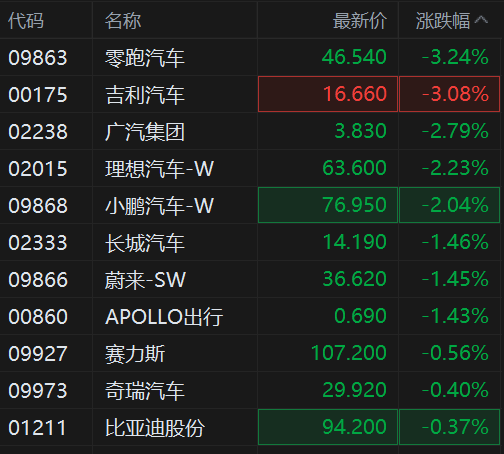
Group 1 - The core viewpoint of the article highlights the ongoing weakness in Hong Kong's automotive stocks, with significant declines observed in companies such as Geely Auto and Li Auto, among others [1] - As of January 12, 2026, over 20 automotive companies have launched promotional activities for more than 75 models, employing various strategies such as cash subsidies and interest-free financing [1] - The Secretary-General of the National Passenger Car Market Information Association, Cui Dongshu, suggests that the current price reductions by car manufacturers are a rational return to pricing rather than a price war, although the trend of price cuts is expected to continue into 2026 [1] Group 2 - Analysts predict that the promotional activities may stimulate sales, potentially leading to a strong start for the automotive market in January 2026, but these promotions are likely to compress profit margins for companies and create significant operational pressure for dealers [1] - It is widely anticipated that the number of automotive companies will decrease by 2026, with market concentration (CR5) expected to rise from 65% to 80%, indicating that brands lacking core competitiveness may face elimination or consolidation [1]



港股异动丨汽车股继续走低 元旦以来超20家车企降价促销
Ge Long Hui· 2026-01-12 02:02
Group 1 - The Hong Kong automotive stocks are experiencing weakness, with companies like Geely Auto and Leap Motor dropping over 3%, and GAC Group down 2.8% [1] - A new round of competition in the Chinese automotive market is set to begin in 2026, with companies launching promotional discounts and new models with added features at no extra cost [1] - Over 20 automotive companies have initiated limited-time promotional activities for more than 75 models since January 1, 2026, employing various strategies such as cash subsidies and interest-free financing [1] Group 2 - The current price reductions by car manufacturers are viewed as a reasonable return to pricing rather than a price war, according to industry experts [1] - While promotions may stimulate sales, they are expected to compress profit margins for companies and create significant operational pressure for dealers [1] - It is anticipated that the number of automotive companies will decrease by 2026, with market concentration (CR5) expected to rise from 65% to 80%, leading to the potential elimination or consolidation of brands lacking core competitiveness [1]
国海证券晨会纪要-20260107
Guohai Securities· 2026-01-07 02:13
Group 1 - The Brunei Refinery Phase II project has been fully launched, with the controlling shareholder's increase in holdings reflecting long-term confidence in development. The project aims for an optimized design capacity of 12 million tons per year, primarily producing diesel, PX, benzene, polypropylene, and other high-value-added products, with completion targeted by the end of 2028 [3][5][9] - The total capacity of the Brunei refinery will reach 20 million tons per year upon completion of both phases, enhancing the company's integrated industrial chain and scale advantages, which will help reduce production costs and stabilize raw material supply [5][6] - The controlling shareholder, Hengyi Group, plans to increase its holdings in the company with a total investment of no less than 1.5 billion yuan and no more than 2.5 billion yuan, with the price range adjusted to not exceed 15 yuan per share [4][9] Group 2 - The automotive industry is set to continue implementing vehicle scrapping and replacement subsidies in 2026, with the Ministry of Industry and Information Technology and other departments issuing a plan to support digital transformation in the automotive sector [11][13] - The automotive sector index outperformed the Shanghai Composite Index in late December 2025, with significant sales variations among major automakers, indicating a mixed performance in the market [11][15] - The report highlights the expected growth in high-end passenger vehicles, particularly for domestic brands, as they capitalize on opportunities in the market [15] Group 3 - The report indicates that the primary market is progressing smoothly, with a total of 20 public REITs issued in 2025, although this is a decrease from the previous year [17][18] - The secondary market for REITs has seen a decline, with the index dropping by 2.93% in December 2025, reflecting reduced market activity [18][19] - The report notes that the average cash distribution rate for property-type REITs is lower than that of concession-type REITs, indicating a potential investment opportunity in the latter [20] Group 4 - The coal industry is expected to see a tightening supply-demand relationship in 2026, with projected average prices for thermal coal and coking coal rising to 750 yuan and 1550 yuan per ton, respectively [21][23][25] - The report discusses the V-shaped price recovery of thermal coal in 2025, driven by production constraints and resilient demand from the power and metallurgical sectors [21][22] - Investment recommendations focus on coal companies with strong cash flow and high dividend yields, suggesting a favorable outlook for the sector [25] Group 5 - The credit bond market has shown strong performance, with yields declining across various maturities, particularly in the short-term segment, driven by increased demand for stable assets [26][27][29] - The report highlights the impact of government bond supply on market liquidity, suggesting that institutions may favor short-duration credit bonds to mitigate volatility [27][28] - The overall market sentiment has improved, with expectations of economic data recovery contributing to a more favorable investment environment [28]

“股票盛世”!全球股市连续第3年“两位数上涨”
华尔街见闻· 2026-01-01 12:20
Core Viewpoint - The global stock market is expected to achieve double-digit growth for the third consecutive year in 2025, despite uncertainties from Trump's trade policies and concerns over AI sector bubbles. The MSCI global index has risen over 20% this year, outperforming most analysts' expectations [1]. Group 1: US Market Performance - After a significant downturn at the beginning of the year, the US stock market rebounded strongly, with the S&P 500 index showing an annual increase of nearly 16.5%. The release of a large language model by DeepSeek shocked Silicon Valley and led to a drop in tech stocks. Trump's announcement of large tariffs in April triggered sell-offs in stocks, bonds, and the dollar, but strong corporate earnings, expectations of Fed rate cuts, and better-than-expected economic growth quickly brought investors back to the market [2]. - Despite strong performance in the US market, other markets such as China, Japan, the UK, and Germany have outperformed the S&P 500 this year, with emerging market stock indices also performing better than US stocks. Investors sought more diversified allocations after experiencing volatility in the US market at the beginning of the year [4]. Group 2: Economic Resilience and Market Support - The resilience of the US economy, combined with the clear outlook for a shift in Fed monetary policy towards rate cuts, has been a core support for market performance, driving significant capital inflows into the stock market and reinforcing long-term bets on AI potential. Additionally, better-than-expected US economic growth data has alleviated market anxieties and boosted risk appetite [8]. Group 3: Valuation Concerns - Market valuations are significantly above historical averages, with analysts warning that the current rally, driven by tech giants, may not be sustainable. The Shiller cyclically adjusted price-to-earnings ratio for the S&P 500 is nearing 40 times, the second highest level since the early 2000s internet bubble [6][10]. - Following such a strong rally, market sentiment has begun to turn cautious, with some investors and analysts warning about the sustainability of the current market conditions. The rally has shown significant structural concentration and valuation divergence, primarily driven by a few tech giants, leading to a substantial deviation from long-term historical averages [10]. Group 4: Concentration Risk - The current market rally, driven by a small number of stocks, is accumulating structural risks. The so-called "seven giants" of US tech have reached about a quarter of the MSCI global developed market stock index, creating a deep binding of global index movements to the performance of these individual giants, thereby increasing overall market fragility [12]. - The increasing concentration trend in the market is prompting a deep examination of the merger frenzy in the AI sector. This trend has created a complex and interdependent financial network, exemplified by OpenAI, which not only holds stakes in key infrastructure suppliers but also receives substantial investments from other industry participants, potentially amplifying systemic risks [14].
AI热潮掩盖了华尔街“老登交易”的大年:多元化回报创多年新高
美股IPO· 2025-12-20 04:18
Core Insights - The traditional stock-bond balanced portfolio has recorded double-digit gains this year, marking its best performance since 2019, yet funds continue to flow into concentrated large-cap tech stocks and thematic trades [1][2] - Despite the strong performance of diversified strategies in 2025, investor focus remains on AI-driven narratives, leading to a neglect of balanced investment strategies [3][4] Diversification Strategy Performance - In 2025, diversified investment strategies achieved their strongest performance in years, but this success has largely gone unnoticed amid the AI hype [3][7] - BCA Research's chief strategist Marko Papic emphasizes that the key to success in 2025 lies in global diversification rather than solely focusing on stocks [4] Fund Flows and Market Trends - According to JPMorgan data, balanced and multi-asset fund categories, including public risk parity funds and 60/40 portfolios, have experienced capital outflows for 13 consecutive quarters until a mild rebound this fall [5] - Funds are increasingly moving towards concentrated large-cap tech exposures and thematic trades, as well as direct hedging tools like gold [6] Market Rotation and Stock Performance - This year has seen a market rotation, with value-oriented stock ETFs attracting over $56 billion in inflows, marking the second-largest annual inflow since 2000 [9] - International stocks have rebounded due to favorable fiscal reforms and a weaker dollar, with small-cap stocks outperforming large-cap stocks in the fourth quarter [10] Future Outlook - Some strategists believe this shift will continue into 2026, with expectations of expanding U.S. corporate earnings and strong performance from small-cap and international stocks [11] - JPMorgan's David Lebovitz is leaning towards emerging market bonds and UK government bonds while maintaining selective exposure to U.S. stocks and AI stocks [12] Cautionary Signals - There are indications of potential bubbles, with Bank of America noting a strong buying impulse in 2025, the second strongest in nearly a century [13] - Manulife John Hancock Investments' Emily Roland warns of increasing disconnection between market performance and fundamentals, suggesting that this year has been a dream year for short-term investors [14]


奈飞拟827亿美元收购华纳兄弟探索影业及流媒体 好莱坞新巨头来了
Xin Lang Cai Jing· 2025-12-05 12:33
Core Viewpoint - Netflix has agreed to acquire Warner Bros. Discovery's television and film production and streaming divisions for $82.7 billion, marking a significant shift in the media landscape as Netflix gains control over valuable Hollywood assets [1][3]. Group 1: Acquisition Details - The acquisition was announced following a competitive bidding process, with Netflix offering nearly $28 per share, significantly higher than Paramount Skydance's all-cash offer of nearly $24 per share [3]. - Warner Bros. Discovery's stock closed at $24.5 per share, giving it a market capitalization of $61 billion prior to the acquisition announcement [3]. - Key assets included in the deal are iconic IP franchises such as "Game of Thrones," "DC Comics," and "Harry Potter" [3]. Group 2: Strategic Implications - This acquisition is expected to reshape the power dynamics in Hollywood, as Netflix has previously established its dominance without major acquisitions, relying on a limited content library [3]. - The deal will help Netflix mitigate competitive pressures from Disney and Paramount, enhancing its content library and reducing reliance on external production companies [3]. - Following successful measures against password sharing, Netflix aims to expand its gaming business and seek new growth avenues, with the acquisition providing necessary support for this strategy [3]. Group 3: Regulatory Considerations - The transaction may face stringent antitrust scrutiny in Europe and the U.S., as the combined entity would control HBO Max, a direct competitor, resulting in a total streaming subscriber base nearing 130 million [4]. - Paramount, led by David Ellison, has raised concerns about the acquisition process, alleging preferential treatment given to Netflix by Warner Bros. Discovery [4]. - To address market concentration concerns, Netflix proposed that the potential merger with HBO Max could benefit consumers through low-priced bundled packages, and committed to continuing theatrical releases for Warner Bros. films to alleviate fears of reduced mainstream film sources [4].



中金2026年展望 | 量化策略:随“集”应变
中金点睛· 2025-11-11 23:41
Core Viewpoint - The report explores whether the advantages of quantitative investment strategies can be sustained in the A-share market environment of 2026, highlighting the cyclical switching between "consensus" and "divergence" market conditions as a key determinant of strategy effectiveness [2][3][5]. Market Environment and Strategy Effectiveness - The A-share market is expected to enter a "central uplift platform period" after returning from historical lows, driven by the long-term trend of market institutionalization and the recovery of incremental funds, particularly from ETFs [3][38]. - The report identifies "institutional holding concentration" as a core indicator linking macro market patterns with micro Alpha sources, suggesting that increased concentration indicates a shift to "consensus" markets, while decreased concentration favors "divergence" markets [2][26][30]. Market Outlook for 2026 - The overall market environment for 2026 is assessed as optimistic, with a focus on structural opportunities due to attractive risk premiums and the absence of extreme overheating [4][44]. - The report anticipates a shift in investment strategies from capturing short-term opportunities in "divergence" markets to identifying core trends in "consensus" markets, particularly with the emergence of AI as a new investment theme [11][41]. Alpha Sources and Market Modes - The evolution of Alpha sources is linked to market modes, with "trading Alpha" being more effective in "divergence" markets and "cognitive Alpha" in "consensus" markets [17][25]. - "Trading Alpha" focuses on capturing short-term pricing inefficiencies, while "cognitive Alpha" emphasizes accurate predictions of future fundamentals [18][19]. Market Concentration Dynamics - High market concentration reflects a consensus-driven environment that rewards depth in research, while low concentration indicates a divergence-driven environment that favors breadth in strategy [27][28]. - The report constructs a market concentration index based on the top holdings of public funds, indicating stronger consensus when the index is high and greater divergence when it is low [30][31]. Investment Strategy Recommendations - In the anticipated "central uplift platform period," strategies that effectively combine depth (through alternative data and machine learning) with breadth (systematic capture of rotation opportunities) are expected to perform better [42][41]. - The report suggests that quantitative strategies may continue to outperform average active equity funds due to their ability to adapt to complex market conditions [42][43].