
软实力

Search documents
2024年中美经济总量差异解析,明年数据预测,实际差距是多少
Sou Hu Cai Jing· 2026-02-01 09:44
Economic Comparison - The economic strength comparison between China and the United States is not a simple race but a complex international chess game [1] - In 2024, China's GDP is projected to reach approximately $18.93 trillion, ranking second globally, while the U.S. GDP is expected to be around $29.18 trillion, with a growth rate of 6.9% [3] - The gap in GDP between the two countries is significant, with the U.S. expected to reach $30.6 trillion by 2025, while China may reach $19.63 trillion, resulting in an $11 trillion difference [3] Industry Structure - The U.S. service sector accounts for over 80% of its economy, with finance, technology, and high-end services contributing nearly half of the global output [5] - China's service sector has increased to 54.6% of its GDP in 2023, but it still lags behind the U.S. in high-value and high-end service industries [5] - The transition from being the "world's factory" to an "innovation engine" is a critical challenge for China, as it faces "bottleneck" issues in technology [5] Technological Innovation - The semiconductor industry is a key battleground in U.S.-China competition, with U.S. companies holding over 60% of the global high-performance chip market [6] - In 2023, the top ten global R&D investors included five U.S. companies and only two from China, indicating a significant gap in innovation capabilities [8] - The future economic fate of both countries will hinge on their ability to innovate and achieve breakthroughs in technology [8] Income Disparity - In 2024, the per capita GDP in the U.S. is expected to exceed $86,000, while China's is around $13,000, representing only about 15% of the U.S. figure [9] - This income disparity reflects significant differences in living standards, healthcare, and educational resources between the two countries [9] Soft Power and Global Influence - The U.S. maintains control over major global financial systems, with the dollar as the world's primary reserve currency [12] - China is expanding its global influence through initiatives like the Belt and Road Initiative and the Asian Infrastructure Investment Bank [12] - The competition for soft power has evolved into a multi-faceted contest, where gaining international support is crucial for future global positioning [12] Trade Relations and Global Supply Chains - Trade tensions and tariff wars between the U.S. and China have led to adjustments in global supply chains, with many manufacturing orders shifting to emerging markets [14] - In 2023, China set a record for foreign direct investment, as companies seek to mitigate external risks [14] - The ongoing trade disputes have direct impacts on consumer prices and employment, affecting ordinary citizens [14] Future Economic Landscape - The global economic landscape is shifting from a U.S.-China dominance to a more diversified and complex structure, with countries like India and the EU seeking to close the gap [16] - The competition between China and the U.S. is not just about GDP figures but encompasses comprehensive national strength, innovation capacity, and the well-being of citizens [16] - The ability to improve technological strength and soft power while ensuring that more people benefit from economic growth is essential for China's long-term success [19]

华尔街日报:“美国优先”让美国被全世界孤立
美股IPO· 2026-01-31 16:03
Core Viewpoint - The article discusses how the "America First" policy under Donald Trump is leading to a perception of America becoming increasingly isolated, with allies feeling disappointed and seeking alternatives to their relationship with the U.S. [1][4] Group 1: U.S. Foreign Policy and Global Perception - Trump's administration has cut foreign aid, withdrawn from numerous multilateral institutions, and threatened military action, which has contributed to a negative perception of the U.S. globally [4][5] - A YouGov poll indicated that the proportion of British people with a negative view of the U.S. has doubled to 64% over the past two years, while 71% of Germans now see the U.S. as an "adversary" [5][6] - In Asia, about half of South Koreans view the U.S. as threatening and dishonest, reflecting a broader decline in America's reputation [7][8] Group 2: Impact on International Relations - The article highlights that many countries are reassessing their reliance on U.S. security guarantees, with discussions about developing their own military capabilities [9][10] - Trump's approach has led to a significant erosion of trust among allies, making it unlikely for them to rely on the U.S. as they did in the past [13][15] - The article notes that the negative sentiment towards the U.S. is not limited to Europe, as two-thirds of Canadians and Mexicans also hold unfavorable views [5][21] Group 3: Economic and Trade Implications - The article mentions that U.S. trade policies have prompted countries like Vietnam to diversify their customer base away from American buyers to mitigate risks from U.S. trade fluctuations [18][19] - The decline in American tourism is evident, with a 6% drop in visitors from Canada and Mexico, attributed to rising tensions and tariffs [18][19] - Countries that previously relied on U.S. markets are now seeking alternatives, as seen in the case of Canadian retailers promoting local products to avoid tariffs [18][19]
不是大国,也能引领:加拿大的中等强国之道
Zhong Guo Qing Nian Bao· 2026-01-28 15:14
Core Insights - The 2026 Davos World Economic Forum highlighted the urgent need for dialogue in the face of global uncertainties, particularly regarding security environments and governance challenges [1] - The complexity of achieving genuine dialogue amidst these uncertainties was underscored by various signals from the conference, revealing the fragility of international cooperation [1] Group 1: Geopolitical and Economic Factors - Major factors contributing to global uncertainty include geopolitical conflicts, trade wars, government changes, and new legislative or strategic developments, creating a unique situation not seen since the Cold War [1] - Canada's military exercises now include scenarios of potential invasion from the U.S., reflecting deep concerns over traditional alliances and defense spending criticisms from the Trump administration [2] - Denmark's Akademiker Pension sold $100 million in U.S. Treasury bonds, signaling a European response to U.S. policies and potentially reshaping the economic alliance between the U.S. and Europe [2] Group 2: Market Reactions and Asset Valuation - The uncertainty has led to a significant rise in gold prices, surpassing $5000, indicating a shift in market sentiment towards gold as a safe-haven asset amid declining confidence in the U.S. dollar [3] - The Federal Reserve's statements have intensified market distrust, challenging the foundational pillars of U.S. soft power, including stability, prosperity, and government authority [3] Group 3: Policy Recommendations and Historical Context - Effective policy must be rooted in a deep understanding of specific social contexts rather than abstract ideals, as demonstrated by Canada's inclusion of a Chinese-Canadian MP in its delegation to China [4] - Historical evidence shows that economic globalization can provoke identity politics and sovereignty anxieties, necessitating a strong cultural identity and national narrative for effective global governance [4] - Canada has historically advocated for middle powers to participate in international affairs based on expertise rather than size, promoting ethical international cooperation focused on peace and development [5][6]
阿联酋强调软实力对经济韧性的作用
Shang Wu Bu Wang Zhan· 2026-01-23 12:20
Core Insights - The UAE participated in a high-level dialogue during the 2026 World Economic Forum to discuss the role of soft power in enhancing economic resilience and rebuilding international trust [1] Group 1 - The dialogue was held for the first time in Davos, gathering multiple international leaders [1] - Participants highlighted that in the context of geopolitical tensions, economic uncertainty, and global perception changes, credible and forward-looking national strategies can enhance a country's soft power [1] - Soft power is viewed as an important strategic capital in the current global landscape [1]
邓正红能源软实力:潜在的地缘溢价依然存在 短期推高油价 加剧能源治理碎片化
Sou Hu Cai Jing· 2026-01-17 13:19
Group 1 - The core viewpoint of the articles highlights the interplay between soft power and hard power in influencing oil prices, particularly in the context of U.S.-Iran relations and U.S. military presence in the Middle East [2][4] - The market is currently assessing a dual scenario where short-term risks have eased due to statements from Trump, while potential geopolitical premiums are driving oil prices higher [2][3] - The U.S. is facilitating Chevron's expansion in Venezuela, allowing it to compensate the Venezuelan government with cash instead of oil, which positions Chevron as a new oil seller in the market [1][2] Group 2 - Trump's statements have temporarily reduced fears of immediate military conflict with Iran, leading to a significant drop in oil prices prior to January 16, where oil prices increased again due to geopolitical signals [2][3] - The dual effects of soft power are evident: while Trump's comments stabilize market expectations in the short term, his unpredictable decision-making erodes international trust, potentially diminishing the long-term value of oil as a strategic asset [3][4] - The essence of the oil market competition is shifting from physical control over resources to the management of circulation rules, financial pricing, and institutional trust, indicating a complex interplay of soft and hard power [3][4]
中国玩具解困:不止于“性价比”,押注文化IP与情感价值
Bei Jing Shang Bao· 2026-01-15 04:22
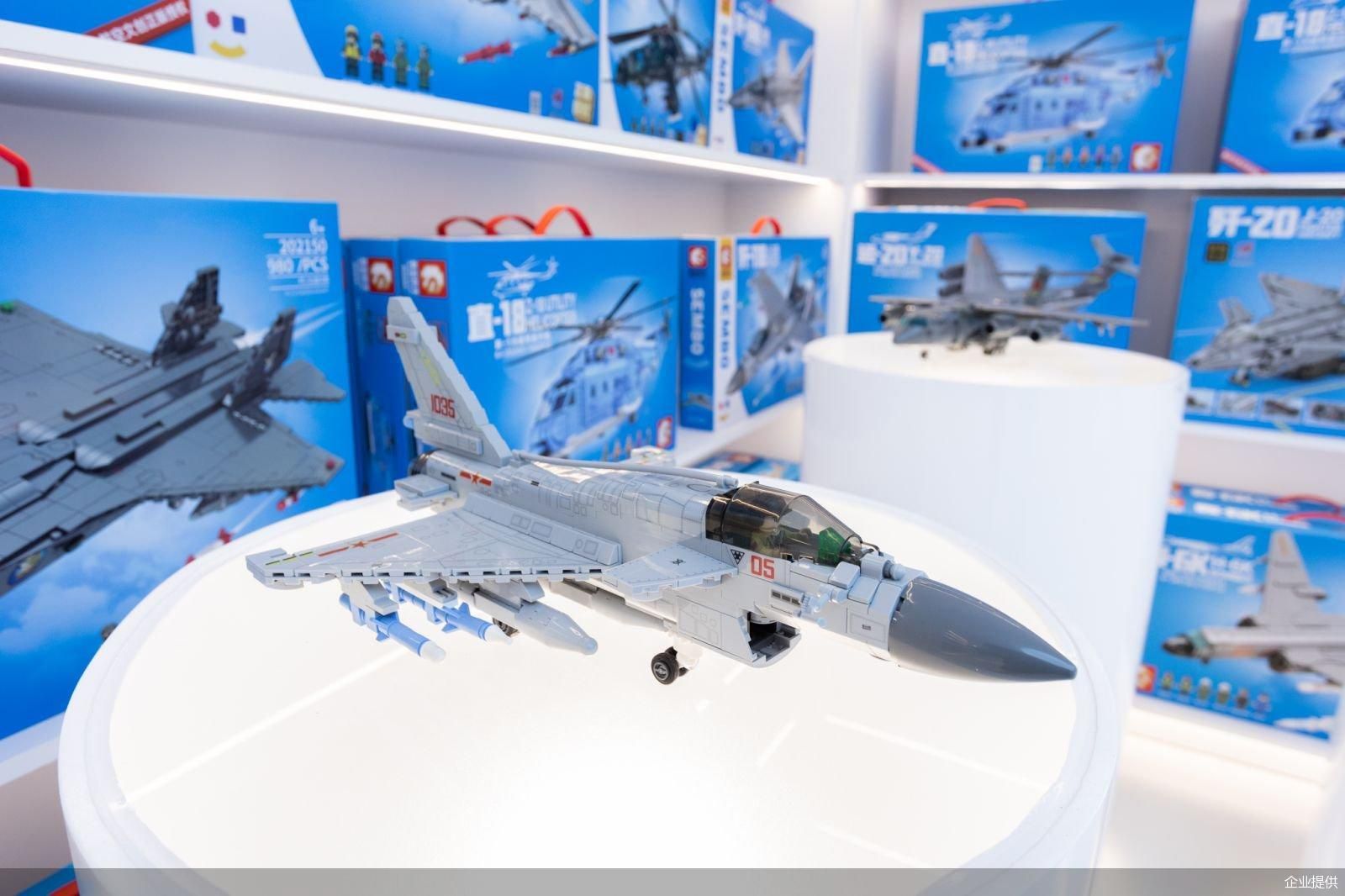
Core Insights - The dominance of LEGO in the toy market is evident, as consumers often equate "buying building blocks" with "buying LEGO," highlighting the brand's strong association with the category [1][13] - Domestic brands face significant challenges, including price competition and limited profit margins, which hinder their ability to invest in materials and innovation [1][12] Market Dynamics - The rise of collectible blind boxes has transformed toys into emotional and social currency, appealing to consumers of all ages [1][16] - The domestic building block market is characterized by a wide price range, with products priced between 9.9 yuan and 399 yuan, often significantly lower than LEGO's prices [3][12] Brand Strategy - Domestic brands like Senbao are focusing on cultural emotional connections and leveraging local IPs to differentiate themselves from LEGO, which relies on global IPs like Marvel [4][12] - Senbao's strategy includes a clear focus on "national trend IPs" and military-themed products that resonate with local consumers [4][7] Production and Quality - The gap in quality between domestic brands and LEGO is primarily due to differences in raw materials, with domestic brands facing a 20%-30% cost disadvantage [8][11] - While domestic companies have made strides in injection molding technology, they still lag in mold precision, which affects product quality [11][12] Consumer Trends - The adult consumer segment is becoming increasingly important, with purchases driven by emotional connections and the desire for collectibles rather than just children's toys [18][19] - The trend of "meaningful consumption" is emerging, where consumers are willing to pay a premium for innovative designs and limited editions [19][20] Future Outlook - The Chinese IP toy market is projected to grow significantly, with expectations of reaching 74.5% market share by 2028 [15] - Domestic brands are encouraged to shift from a manufacturing focus to building brand value, which requires time and a clear differentiation in product innovation and consumer engagement [15][20]
秦朔的出海警示:我们不缺强大,缺“可爱” |卓立出海谈
吴晓波频道· 2026-01-15 00:48
Core Viewpoint - The article emphasizes the necessity for Chinese enterprises to embrace globalization and establish a new supply chain system that integrates both domestic and international markets, moving from merely exporting products to promoting brands globally [2][3][6]. Group 1: Risks and Opportunities - The biggest risk for China is becoming disconnected from the world, while the greatest opportunity lies in fully engaging with global markets [6]. - There is a concern about domestic job losses and potential hollowing out of industries as companies expand overseas, but it is argued that Chinese enterprises must go global to avoid stagnation [4][5][8]. Group 2: Manufacturing and Economic Strategy - The importance of maintaining a robust manufacturing sector is highlighted, especially in light of lessons learned from the U.S. experience of manufacturing hollowing out [10][12]. - It is suggested that China can develop parallel supply chain systems, with one operating internationally and another maintaining domestic manufacturing capabilities [11]. Group 3: Management and Cultural Integration - The article discusses the need for Chinese companies to not only export products but also their management practices and cultural values to be accepted in foreign markets [17][19]. - There is a recognition that soft power and cultural acceptance are crucial for successful international operations, as past failures in markets like Vietnam illustrate the importance of quality and service [18][22]. Group 4: Commercial Civilization - The concept of "commercial civilization" is introduced, defined as value creation centered on people, with a call for leading Chinese enterprises to take a role in promoting this idea as they expand globally [26][28]. - The article stresses that commercial civilization is built through the collective efforts of companies and their products, and it should guide Chinese enterprises in their global endeavors [29].

邓正红能源软实力:地缘推动油价向上震荡 黑箱溢价与规则主导的软实力策略
Sou Hu Cai Jing· 2026-01-13 05:30
Group 1 - The core viewpoint of the articles highlights that the geopolitical situation in Iran is causing investor concerns over potential supply disruptions, leading to an increase in oil prices as a reflection of risk premiums in the market [1][2] - The price of West Texas Intermediate crude oil rose by $0.38 to $59.50 per barrel, marking a 0.64% increase, while Brent crude oil increased by $0.53 to $63.87 per barrel, a rise of 0.84% [1] - The U.S. government's threats against Iran, including potential military action, have heightened fears of supply interruptions, particularly in the context of the ongoing protests within Iran [1][2] Group 2 - The concept of "political black box premium" is introduced, indicating that the market is transforming the risk of supply disruptions from Iran into a risk premium due to geopolitical tensions [2] - Venezuela's uncertain supply outlook is contributing to a structural premium in the market, as its crude oil exports continue to decline, and the U.S. plans to release millions of barrels into the global market [2] - The soft power strategy of the Trump administration is influencing global energy dynamics, with unilateral sanctions and legal actions aimed at controlling energy discourse and pricing [3] Group 3 - The future of the oil market is expected to focus on the balance between "rule power" and "material power," with soft power becoming a critical variable in determining market discourse [3] - Investors are advised to monitor the evolution of U.S. sanctions on Iran, Venezuela, and Russia, as well as the security of key maritime routes like the Strait of Hormuz [3]
邓正红能源软实力:将每桶50美元定为目标油价 重塑全球石油软实力价值版图
Sou Hu Cai Jing· 2026-01-12 12:51
Core Insights - The article discusses President Trump's efforts to control Venezuela's oil supply and shift the market in favor of American consumers, aiming for a target oil price of $50 per barrel and planning a comprehensive initiative to restore Venezuela's oil fields [1][3] - The essence of energy soft power is described as the ability to activate hard power and create value through non-material means, focusing on rule-making authority, expectation management, and business model transformation [2][6] Group 1: U.S. Strategy and Global Oil Market - Trump's initiative to repair Venezuela's oil fields and increase production is seen as an expansion of U.S. soft power, potentially allowing the U.S. to control about 30% of global oil reserves by integrating Venezuelan, Guyanese, and domestic production [3][5] - This strategy could weaken OPEC's market control and reshape the global oil soft power landscape, enhancing U.S. energy security while maintaining lower oil prices to attract consumers [3][5] Group 2: OPEC's Challenges - OPEC faces an internal contradiction between maintaining its interests and avoiding provocation from external forces like the U.S., struggling with the decision to cut production to boost oil prices, which could harm fiscal revenues and market share [4][6] - Saudi Arabia's cautious approach reflects a strategy of long-term investment in Venezuela's infrastructure under U.S. legal guarantees, highlighting the limitations of OPEC's soft power in effectively integrating and creating value from its resources [4][6] Group 3: Soft Power Dynamics - The ongoing decline in international oil prices illustrates the dynamic adjustment of soft power value in response to environmental changes, with OPEC and Russia struggling to formulate effective strategies against Trump's low-price push [5][6] - The article emphasizes the need for oil-producing countries to innovate and adapt their strategies to maintain competitiveness in a low-price environment, as seen in Saudi Arabia's commitment to large investments to establish connections with the Trump administration [5][6]
邓正红能源软实力:机构投资者对石油的看法悲观 地缘溢价的“隐性定价机制”
Sou Hu Cai Jing· 2026-01-09 04:56
Core Insights - The article discusses the geopolitical risks affecting oil prices, particularly focusing on Venezuela, Russia, Iraq, and Iran, leading to an upward trend in oil prices as of January 8 [1][4] - The U.S. administration is planning to exert control over Venezuela's oil revenues, with President Trump indicating a desire to lower oil prices to around $50 per barrel [2][5] - The concept of "soft power" is emphasized, highlighting how the U.S. is using legal and financial mechanisms rather than military force to influence oil markets and control resources [3][6] Group 1: Oil Price Movements - As of January 8, 2021, West Texas Intermediate crude oil rose by $1.77 to $57.76 per barrel, a 3.16% increase, while Brent crude oil increased by $2.03 to $61.99 per barrel, a 3.39% rise [1] - The market is currently facing a supply surplus, yet geopolitical tensions are creating a risk premium that is pushing oil prices higher [4][6] Group 2: U.S. Strategy on Venezuela - The U.S. Treasury Secretary announced the lifting of some sanctions on Venezuelan entities, aiming to stabilize the existing structure in Venezuela [2] - The U.S. is implementing a "non-contact blockade" strategy against Venezuela's oil exports, using legal sanctions and financial restrictions to diminish its export capabilities [3] - The U.S. strategy includes allowing the sale of Venezuelan oil to non-U.S. buyers, which could involve companies like Reliance Industries from India [2][5] Group 3: Geopolitical Risks and Market Sentiment - Geopolitical factors have led to the most pessimistic outlook among institutional investors regarding oil in nearly a decade, as indicated by a Goldman Sachs survey [2][6] - The risks associated with Iran, Russia, and Iraq are not due to actual production cuts but rather uncertainties in the rules governing oil exports, which are being translated into market risk premiums [4] Group 4: Soft Power Dynamics - The article outlines a model of "soft power" where the U.S. does not physically control oil resources but influences the market through financial and legal means [3][5] - The U.S. aims to create a competitive surplus in oil supply by relaxing sanctions on Russia and pressuring OPEC members like Saudi Arabia to increase production [5] - The evolving global energy order is characterized by a shift from unilateral dominance to a multipolar framework, as emerging markets seek to navigate the changing rules of oil trade [6]