TACO交易策略

Search documents
特朗普欲将选民注意力重新聚焦经济领域,此举或令其追悔莫及
Xin Lang Cai Jing· 2026-01-29 09:57
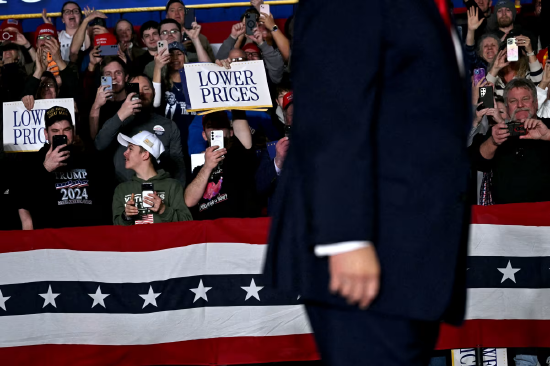
这一幕宛若 "大家看这边" 的刻意转移,特朗普在演讲中基本照本宣科,宣称经济领域取得了毋庸置疑 的胜利,还一再谎称食品杂货价格已出现下跌,并且总在抱怨,并非所有人都认可他治下的经济有多出 色,这实在有失公允。 而造成这一局面的原因,或许正是当前的美国经济状况令人难以捉摸。 不妨看看,当下的美国经济同时呈现出以下种种矛盾的现状: 股市屡创历史新高; 消费者信心跌至谷底;美元汇率持续走低,黄金、白银价格却接连突破历史纪录;就业市场陷入停滞, 尽管总统矢口否认,但通胀水平与他上任时的去年同期几乎毫无二致。 周二,艾奥瓦州克莱夫 市,总统唐纳德・特朗普抵达现场发表经济相关讲话,现场与会者手持标语、欢呼致意。 因移民执法人员的行为引发的反对声浪持续发酵,总统唐纳德・特朗普于周二到访艾奥瓦州,希望借此 转移公众话题焦点。其顾问团队或许认为,当下最佳的应对策略,便是回归经济这一根本议题,提醒选 民当初为何将他再度推上总统之位 —— 正是凭借亮眼的经济表现! 从历史经验来看,这些现象从未同时出现。若股市处于历史高位,黄金价格通常会走低;若就业市场陷 入停滞,股市一般也难创历史新高。而催生这一切乱象的核心因素,不得不说,正是特 ...

TACO策略失效?华尔街发现残酷现实:要让特朗普退缩,或需一次更大市场崩盘
智通财经网· 2026-01-21 13:49
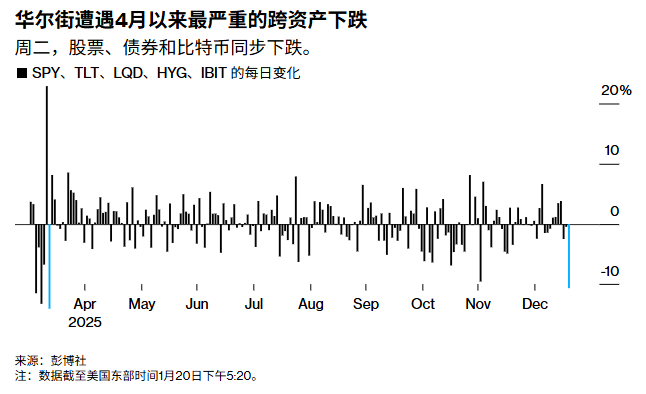
据了解,"TACO"是"特朗普总是退缩"(Trump Always Chickens Out)的缩写,它在去年4月美国总统推出全球关税政策又很快撤销之后出现。这一术语很快成 为投资者的口号,他们选择忽略白宫更极端的威胁,继续购买高风险资产。 智通财经APP获悉,TACO交易策略在华尔街持续展现出稳健的盈利表现,这一局面已维持近九个月之久。然而近期,部分市场参与者开始察觉该策略潜藏 的悖论:若"TACO"的核心理念是让投资者对特朗普反复释放的激进政策信号保持镇定,那么市场将难以出现足以迫使这位总统像去年关税争端时那样被迫 让步的剧烈震荡。 一些人认为,市场跌幅没有更大,关键原因在于投资者对TACO的信心。 如今,特朗普试图吞并格陵兰岛,并威胁要对欧洲盟友加征关税,这些举动让市场对这一事件的紧迫性有了更深刻的认识。周二,市场大幅下挫,标普500 指数下跌2.1%,美元汇率暴跌,市场波动加剧。尽管美国股指期货预示周三将温和反弹,但此次抛售可能不会持续太久。 一些人认为,要想让TACO交易策略继续存在,首先需要出现一次更大规模、更混乱的市场崩盘,以提醒特朗普他曾在4月引发的市场动荡。 "这难道又是TACO在作祟?哦, ...
陶冬:Big MAC成为全球股市新交易主题
Di Yi Cai Jing· 2026-01-19 03:16
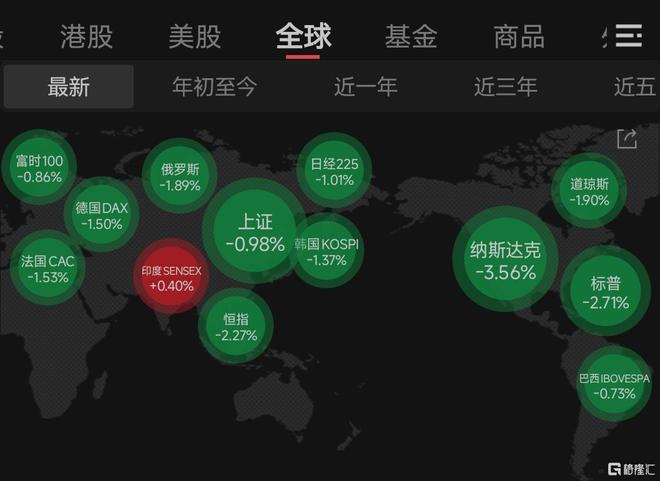
中期选举即将来临。 第二个维度是去监管,这也是特朗普竞选时的承诺,目的是为金融机构和科技企业松绑。笔者认为这一 政策对于企业运营和盈利的利好会慢慢显现。另一方面,特朗普又会通过行政指令来讨好民意。他最近 扬言要将信用卡贷款最高利率限制在10%之下,如果成功推行,对依靠信用卡过活的美国人,是一个很 大的帮助。 Big MAC的重大落笔之处,估计在货币政策。特朗普升级了对鲍威尔的打击,意在影响美联储的货币政 策。笔者认为,新主席上任后,美联储会不动声色地放弃通胀目标,迅速将联邦基金利率下调至2.5% 左右的中性水平,为下滑中的就业市场注入动力。若市场有风吹草动,美联储或许会直接重新扩表。当 然,新的美联储需要一个较大的市场动荡,才可以顺理成章地重祭QE法宝。 特朗普政府能不能在2026年推出足够的Big MAC政策?Big MAC会不会让美股继续上涨?笔者估计白宫 会努力推出政策,但是本届政府本色是劫贫济富,所以效果未必理想。估计美股仍然会在此主题下上 涨,不过必须注意风险。历史上拿下白宫并横扫两院的政党,在两年后的中期选举中大多会失去起码一 院的多数席位,美股在中期选举年的下半年表现多数时候也不理想。 上周,美 ...
再创历史新高,涨幅远超黄金,白银为何也“狂飙”?
Yang Shi Wang· 2025-12-17 01:44
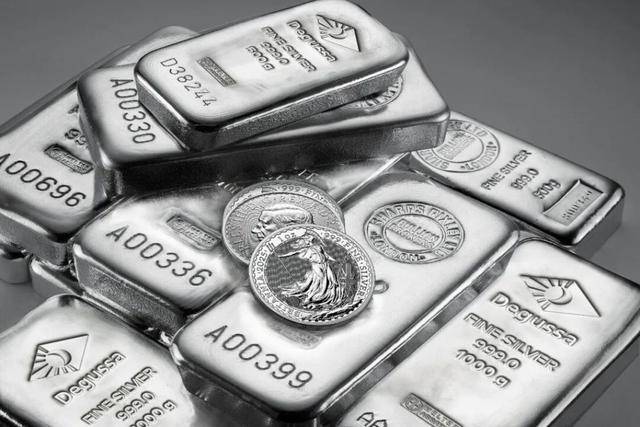
Group 1 - The core viewpoint of the articles highlights the significant rise in silver prices, driven by multiple factors including expectations of Federal Reserve interest rate cuts, global supply constraints, and its inclusion in the U.S. critical minerals list, with silver reaching a historic high of $65.163 per ounce, marking a nearly 110% increase this year, outperforming gold and platinum [1][2][6] Group 2 - The surge in demand for precious metals is attributed to rising debt levels in major Western economies and the risk of currency devaluation, with supply shortages becoming a key support for silver prices [2][5] - The structural supply constraints in the silver market are emphasized, with about 70-80% of silver production being a byproduct of mining for other metals, indicating that supply cannot quickly expand even if prices rise [3][5] - The anticipated interest rate cuts by the Federal Reserve are seen as supportive for precious metals, with a recent slight decrease in the probability of a rate cut to 87.4% not diminishing investor interest in silver [6][7] - Analysts suggest that while silver prices may experience high volatility and potential corrections in the short term, the long-term outlook remains bullish due to structural supply-demand imbalances [8]

财经观察丨涨幅远超黄金!白银首次涨破60美元创历史新高,后市怎么走?
Sou Hu Cai Jing· 2025-12-10 12:21
Core Viewpoint - Silver futures prices on the New York Mercantile Exchange surpassed $60 per ounce for the first time on the 9th, with a year-to-date increase of 102%, significantly outpacing gold's nearly 60% rise [1][3] Group 1: Price Movements - On the 9th, spot silver rose over 3%, reaching a peak of $60.895 per ounce, marking a historical high [3] - As of the morning of the 10th, spot silver was trading at $61.302 per ounce, continuing to set new historical highs [3] - COMEX silver futures also hit a record high of $61.295 per ounce, marking the first time it crossed the $61 threshold [5] Group 2: Supply and Demand Factors - The surge in silver prices is attributed to multiple factors, including a weaker dollar, changes in U.S. tariff policies, and a shortage in silver supply [1] - The World Silver Association forecasts a continued annual deficit in the silver market through 2025 due to limited production and rising industrial and investment demand [7] - Structural supply constraints are highlighted, with approximately 70-80% of silver production being a byproduct of mining for other metals, limiting the ability to increase supply rapidly [7] Group 3: Market Sentiment and Economic Indicators - Expectations of a rate cut by the U.S. Federal Reserve have increased, which may further depress the dollar and support higher silver prices [1][11] - Analysts note a "dual-driven" pattern in the recent price increase, linked to the instability of the global credit monetary system and the dynamic changes in the gold-silver price ratio [9][10] - The demand for precious metals has surged due to rising debt levels in major Western economies and the associated risks of currency devaluation [7] Group 4: Future Outlook - UBS has raised its silver price target for 2026 to between $58 and $60 per ounce, with a possibility of reaching $65 [6] - Market analysts suggest that while silver may experience high volatility, the underlying long-term trend remains upward due to structural supply-demand imbalances [12]
如何利用特朗普谈判策略套利?
Hu Xiu· 2025-10-16 23:37
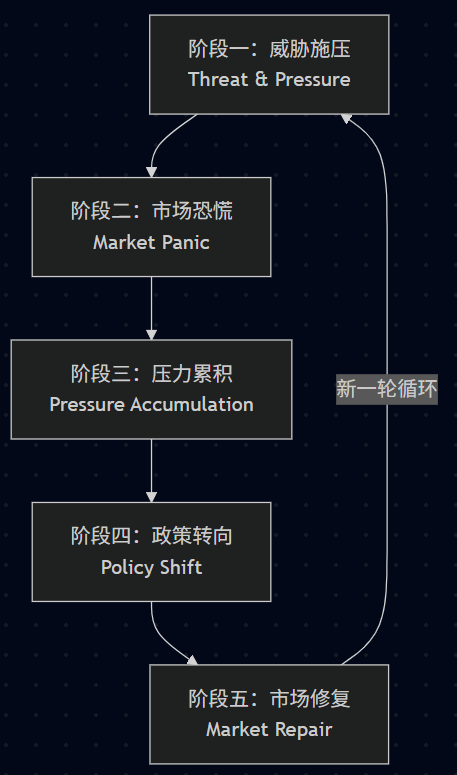
Group 1 - TACO trading, which stands for "Trump Always Chickens Out," is a policy arbitrage strategy based on predicting Trump's behavior of extreme pressure followed by compromise [2][3] - The essence of TACO trading is to capture and utilize market fluctuations caused by the classic "threat-compromise-repair" structure of policy, transforming highly uncertain political games into predictable financial returns [3][4] - The core assumption of TACO trading is that despite initially showing extreme hardline positions, the Trump administration will ultimately yield to more market-friendly stances when faced with significant pressures [4][5] Group 2 - TACO trading features a five-stage cycle: Threat & Pressure, Market Panic, Pressure Accumulation, Policy Shift, and Market Repair [10][11] - The first stage involves the Trump administration using tariff threats as negotiation leverage, while the second stage sees market panic leading to significant adjustments in risk assets [12][13] - The third stage accumulates pressure from declining stock markets and worsening economic data, leading to a policy shift in the fourth stage, where the administration releases signals to ease tensions [15][18] Group 3 - TACO trading has evolved from a simple 1.0 version focused on single tariff threats to a more complex 2.0 version that considers multiple dimensions of pressure [22][24] - TACO 2.0 requires simultaneous pressures from economic, political, and market factors to trigger a policy shift, with a more gradual adjustment process [25][32] - Key indicators for TACO 2.0 include non-farm employment data, unemployment rates, and market thresholds such as stock market corrections and bond yields [26][31] Group 4 - The effectiveness of TACO trading is currently facing three core risks: reduced internal and external constraints on the U.S., structural changes in China's economic fundamentals, and market path dependency creating a risk of inertia [47][48][51] - The U.S. has made progress in trade agreements with Europe and Japan, allowing for a longer maintenance of a hardline stance [48] - China's export dependence on the U.S. has decreased significantly, reducing the necessity for early compromise from the Chinese side [51][54]
【金融观察】又见“TACO”交易 十月市场风向
经济观察报· 2025-10-14 03:33
Core Viewpoint - The article discusses the current volatility in global markets, emphasizing the importance of identifying trends amidst noise and the potential for investment opportunities in the context of geopolitical tensions and economic data resilience [2][22]. Market Reactions - Following the announcement of new tariffs by the Trump administration, global markets experienced significant declines, with the S&P 500 dropping by 2.71% and the tech sector facing severe losses, particularly in semiconductor stocks [3][4]. - The fear of a renewed trade war has led to a "risk-off" sentiment among investors, with a notable spike in the VIX index, indicating increased market volatility [3][4]. Gold Market Dynamics - Gold prices have surged, with New York futures reaching $4060 per ounce, reflecting a 50% increase over the past year, driven by factors such as fiscal deficits, currency devaluation, and geopolitical tensions [5][10]. - The article highlights the divergence in the roles of gold and U.S. Treasury bonds, with gold serving as a "credit hedge" while Treasuries are viewed as a "policy bet" [10]. Investment Trends - The article notes a significant increase in new investor accounts in China, with 2.937 million new accounts opened in September 2025, indicating growing interest in domestic markets [11]. - China's foreign financial assets have surpassed $11 trillion, reflecting a robust inflow of foreign investment, particularly in equities [12]. Economic Indicators - China's manufacturing PMI showed slight improvement, indicating resilience in the economy, although it remains below the expansion threshold [12][16]. - The article discusses the potential for policy-driven growth in key sectors, particularly in technology and resources, as the government focuses on high-quality development [13][18]. Geopolitical and Economic Risks - The ongoing trade tensions and potential for further tariffs pose risks to global supply chains, particularly in technology sectors like semiconductors and AI [17]. - The article suggests that the interplay of global liquidity and domestic policy signals will shape investment opportunities, with a focus on resource and technology chains [18][19].

股指周报:关税政策升级,A股受创-20251013
Guo Mao Qi Huo· 2025-10-13 05:52
1. Report Industry Investment Rating No relevant content provided. 2. Core Viewpoints of the Report - After the holiday, the escalation of Sino - US tariff policies and Trump's threat to impose a 100% tariff on China from November 1st led to a significant decline in Sino - US equity markets. High - tech stocks in A - shares that had strong previous gains fell significantly. The short - term investment strategy should focus on risk - aversion, and large - cap stocks may show more resilience [3]. 3. Summary by Related Catalogs PART ONE: Main Viewpoints and Strategy Overview - **Influence Factors and Driving Forces** - Economic and corporate earnings: Slightly bearish. The manufacturing PMI slightly rebounded but remained below the threshold. In September, the manufacturing PMI was 49.8, the non - manufacturing business activity index was 50.0, and the composite PMI output index was 50.6 [3]. - Macroeconomic policy: Slightly bullish. On the first trading day after the holiday, the central bank conducted an over - subscribed reverse repurchase operation of 11000 billion yuan for 91 days, with a net injection of 3000 billion yuan. There are also expectations for future policies [3]. - Overseas factors: Bearish. After the holiday, the escalation of Sino - US tariff policies led to a sharp decline in Sino - US equity markets. Trump threatened to impose a 100% tariff on China from November 1st [3]. - Liquidity: Neutral. As of October 9th, the margin trading balance in A - shares increased, and the proportion of margin trading purchases in the total market turnover was at a high level. The average daily trading volume last week increased compared to the previous week [3][31]. - **Investment Viewpoints and Strategies** - Short - term investment should focus on risk - aversion. High - tech small - and medium - cap stocks may face greater shocks, and risk - hedging tools such as put options on the CSI 1000 can be considered. Large - cap blue - chip stocks in the CSI 300 and SSE 50 are expected to show more resilience [3]. - Trading strategy: Focus on risk - aversion in the single - side trading, and large - cap stocks may be more resilient [3]. PART TWO: Stock Index Market Review - **Stock Index Performance** - Last week, the CSI 300 fell 0.51% to 4616.8, the SSE 50 fell 0.47% to 2974.9, the CSI 500 fell 0.19% to 7398.2, and the CSI 1000 fell 0.54% to 7533.8 [5]. - **Industry Index Performance** - In the Shenwan primary industry index, non - ferrous metals (4.4%), steel (4.2%), public utilities (3.5%), building decoration (2.8%), and building materials (2.7%) led the gains, while media (-3.8%), electronics (-2.6%), power equipment (-2.5%), computer (-1.8%), and communication (-1.6%) led the losses [9]. - **Futures Volume and Open Interest** - The trading volume of CSI 300 futures was 297998 lots, with a 7.68% increase; the trading volume of SSE 50 futures was 133649 lots, with a 0.34% increase; the trading volume of CSI 500 futures was 325864 lots, with a 12.76% increase; the trading volume of CSI 1000 futures was 447179 lots, with a 10.83% decrease [11]. - The open interest of CSI 300 futures was 278581 lots, with a 6.27% increase; the open interest of SSE 50 futures was 105743 lots, with a 6.60% increase; the open interest of CSI 500 futures was 260074 lots, with a 5.40% increase; the open interest of CSI 1000 futures was 356927 lots, with a 1.50% increase [11]. - **Spread Performance** - The spread of CSI 300 - SSE 50 was at the 95.9% historical quantile level; the spread of CSI 1000 - CSI 500 was at the 31.4% historical quantile level; the ratio of CSI 300/CSI 1000 was at the 35.7% historical quantile level; the ratio of SSE 50/CSI 1000 was at the 28.1% historical quantile level [18]. PART THREE: Stock Index Influence Factors - Liquidity - **Central Bank Operations** - This week, the central bank conducted 11370 billion yuan of reverse repurchase operations and 11000 billion yuan of 91 - day outright reverse repurchase operations. With 26633 billion yuan of reverse repurchases maturing, the central bank achieved a net withdrawal of 4263 billion yuan in the open market [25]. - Next week, 10210 billion yuan of reverse repurchases will mature, along with 1500 billion yuan of treasury cash fixed - deposits and 8000 billion yuan of 91 - day outright reverse repurchases [25]. - **Market Liquidity Indicators** - As of October 9th, the margin trading balance in A - shares was 24380.3 billion yuan, an increase of 14.3 billion yuan from the previous week. The proportion of margin trading purchases in the total market turnover was 14.8%, at the 100% quantile level in the past decade [31]. - Last week, the daily trading volumes of A - shares were 23334 billion yuan and 22454 billion yuan, and the average daily trading volume increased by 3497 billion yuan compared to the previous week [31]. - As of October 10th, the risk premium rate of the CSI 300 was 5.17, at the 47.4% quantile level in the past decade [31]. PART FOUR: Stock Index Influence Factors - Economic Fundamentals and Corporate Earnings - **Macroeconomic Indicators** - In September, the manufacturing PMI was 49.8, up 0.4 from August; the non - manufacturing PMI was 50.0, down 0.3 from August [41]. - In terms of demand, new orders, new export orders, and production all showed marginal improvements, while in terms of price, the main raw material purchase price and ex - factory price decreased marginally [41]. - **Industry - Specific Data** - In the consumer sector, the retail sales of enterprises above the designated size showed different trends in various categories. For example, the sales of gold and silver jewelry, sports and entertainment products, and household appliances and audio - visual equipment had relatively high growth rates [37]. - In the manufacturing sector, different industries had different growth rates. For example, the automobile manufacturing, railway, ship, aerospace, and other industries had relatively high growth rates, while the pharmaceutical manufacturing and electrical machinery and equipment manufacturing industries had negative growth rates [38]. - **Earnings of Major Indexes** - The year - on - year growth rates of net profit attributable to the parent company and the return on net assets (TTM) of major broad - based indexes showed different trends. For example, the growth rate of the GEM index was relatively high, while the growth rate of the Science and Technology Innovation 50 index was negative [45]. PART FOUR: Stock Index Influence Factors - Policy Driving - **Recent Macro - Policy Trends** - Multiple policies have been introduced, including policies to promote service consumption, real estate policies, consumer loan discount policies, and policies to support the capital market [50][51][52]. - The government has also increased the issuance of special bonds and provided funds for consumer replacement [50]. PART FIVE: Stock Index Influence Factors - Overseas Factors - **US Economic Indicators** - In September, the US manufacturing PMI was 49.1%, up 0.4 from the previous value; the non - manufacturing PMI was 50%, down 2 from the previous value [60]. - The US consumer confidence index in October was 55, up 0.1 from the previous value [60]. - In August, the US seasonally - adjusted unemployment rate was 4.3%, and the number of new non - farm payrolls was 2.2 million [64]. - In August, the US PCE increased by 2.74% year - on - year, and the core PCE increased by 2.91% year - on - year; the CPI increased by 2.9% year - on - year, and the core CPI increased by 3.1% year - on - year [66]. - **Trump Team's Statements and Actions** - Trump has made a series of statements and actions regarding tariffs, including threatening to impose tariffs on imports from Mexico, Canada, and China at different times [68].
特朗普又变了?万斯紧急“灭火”,港A股巨震,黄金飙涨!
Ge Long Hui· 2025-10-13 03:54
Market Overview - A-shares opened significantly lower, with the Shanghai Composite Index narrowing its decline to 1% and the ChiNext Index down 2.14%, having previously dropped over 4% at the open. The Sci-Tech 50 Index turned positive, with a strong performance in self-controlled industrial chains, particularly in lithography machines, EDA, operating systems, and rare earths [1] - The Hang Seng Index fell over 2.27%, while the Hang Seng Tech Index dropped 2.71% [2] - The volatility index for the Hang Seng surged by 20%, reaching its highest level since May 2025 [5] Global Economic Sentiment - Following Trump's claim of imposing "100% tariffs," there was a subsequent report of "tariff easing," causing significant global market fluctuations [3] - The FTSE China A50 Index futures opened higher but were down 1.22% after a previous night session decline of 4.26% [7] Commodity Market - Risk assets saw a broad increase, with gold and silver reaching new highs. Spot gold peaked at $4,060 per ounce before retreating to $4,048 per ounce, while spot silver rose over 1% to $50.81 per ounce [9] Cryptocurrency Market - The cryptocurrency market rebounded strongly, with Bitcoin recovering from a low of $101,500 to $115,275, marking a 4.29% increase. Ethereum and other cryptocurrencies also saw significant gains [11][12] Trade Policy and Market Reactions - U.S. Vice President Vance indicated a willingness for rational negotiations with China, suggesting that Trump's tariff threats may not materialize as expected [13][14] - Analysts from Huaxi Securities believe the likelihood of the 100% tariff being implemented is low, citing past experiences that indicate high tariffs could disrupt U.S.-China trade, especially during the holiday season [15][16] - The "TACO" (Trump Always Chickens Out) trading strategy has been identified, highlighting a pattern of Trump threatening tariffs followed by market volatility and subsequent easing signals [18]
全球要闻:美股指期货集体反弹贸易担忧情绪缓和 美股Q3财报季本周揭幕
Sou Hu Cai Jing· 2025-10-13 00:17
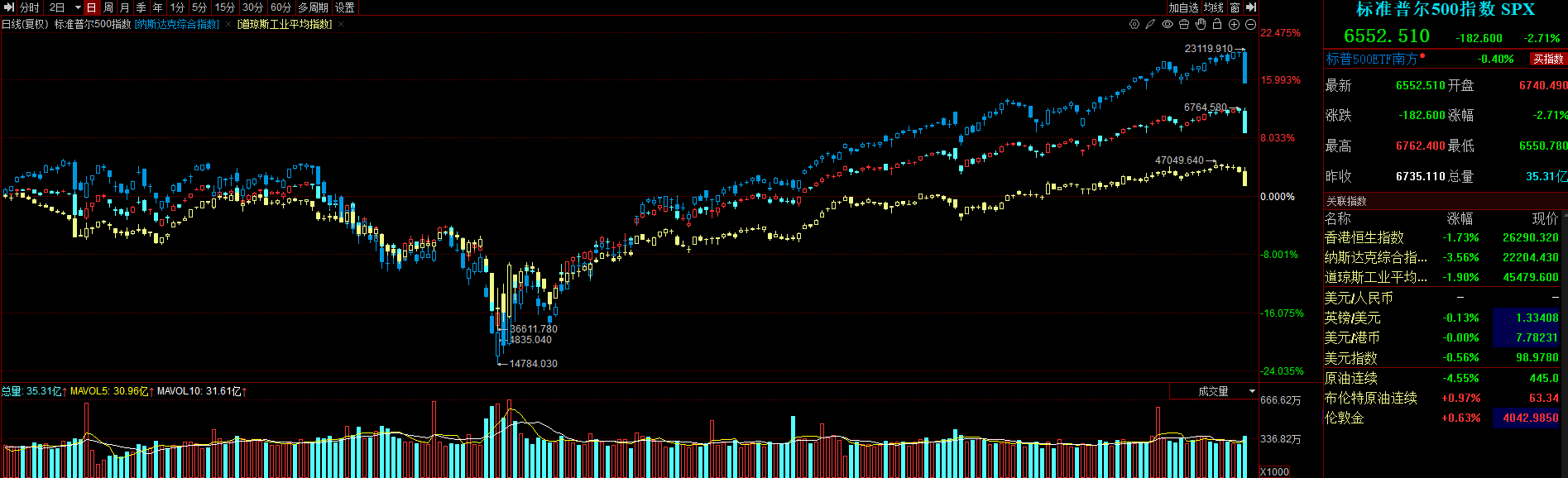
Market Overview - The U.S. stock market experienced significant declines last Friday, with the S&P 500 index falling by 2.71% to 6552.51 points, the Dow Jones down by 1.90% to 45479.60 points, and the Nasdaq dropping by 3.56% to 22204.43 points, marking the largest drop in six months [2][3] - Weekly performance showed the Dow Jones index down 2.73%, Nasdaq down 2.53%, and S&P 500 down 2.43% [3] Trade Relations and Market Sentiment - U.S. Vice President Vance indicated a willingness for rational negotiations with China, following President Trump's announcement of a 100% tariff on certain Chinese goods starting November 1 [5] - Market sentiment improved after Vance's comments, with Bitcoin rising over 2% and Ethereum increasing by over 7%, reflecting optimism about potential negotiations [5] Upcoming Economic Indicators - Investors are closely monitoring developments regarding Trump's tariff statements and the ongoing U.S. government shutdown, which has delayed the release of key economic data, including the September CPI report now scheduled for October 24 [6] - The upcoming earnings season for U.S. companies will be scrutinized for insights into the economic outlook and potential layoffs [6] Federal Reserve Developments - The last week before the Federal Reserve's October meeting is marked by increased communication from Fed officials, including Chairman Powell's scheduled speech [6] Bond Market - U.S. Treasury yields rose sharply, with the 10-year yield closing at 4.036% and the 2-year yield at 3.512% [9] Stock Performance - Notable declines in major tech stocks included Nvidia down 4.89%, Microsoft down 2.19%, Apple down 3.45%, and Amazon down 4.99% [10] - Nvidia's CEO sold 225,000 shares for over $42.8 million during the recent trading period [10][16] Global Market Trends - European and Asian markets also faced declines, with the FTSE 100 down 0.86%, CAC 40 down 1.53%, and Nikkei 225 down 1.01% [10] Chinese Stocks - Chinese stocks listed in the U.S. saw significant drops, with Alibaba down 8.45% and Tencent down 3.55% [11] Commodity Market - Gold prices reached a new high of $4060 per ounce before retreating, while silver also saw gains [14] - Oil prices fell sharply, with WTI crude dropping 5.43% to $58.17 per barrel, marking a five-month low [14]