产品创新

Search documents
买泡泡玛特的都是些什么人?全球买家画像来了
Xin Lang Cai Jing· 2026-01-28 09:48
Core Insights - The consumer base of Pop Mart continues to expand, with 76% of respondents having purchased Pop Mart products for the first time in the past year, and 45% being new buyers in the last three months [2][3] - The survey indicates strong future purchasing intent, with 87% of respondents likely to buy Pop Mart products in the next three months, driven by new series, limited editions, and seasonal releases [2] - Despite a previous decline in the popularity of the LABUBU IP, user growth, repurchase loyalty, and IP appeal remain resilient, supporting a target price of HKD 415 and a buy rating for Pop Mart [3] Consumer Behavior - Approximately 90% of respondents purchased at least two Pop Mart items, with 42% owning between 2 to 5 items, and only 9% indicating they would buy from second-hand platforms [2] - The primary motivations for purchasing include emotional satisfaction, trend-following, gifting, collecting, and personal interest [2] IP Popularity - LABUBU is the most attractive core IP, with 47% of respondents owning LABUBU products, and nearly half of the respondents were introduced to Pop Mart through LABUBU [3] - Other IPs like Twinkle Twinkle, Skullpanda, and Crybaby show higher-than-expected appeal in overseas markets, particularly Twinkle Twinkle leading in ownership in the U.S. [3] Demographics and Spending - 41% of Pop Mart users are aged 18-34, with a balanced gender distribution in the U.S., U.K., and Australia [3] - Average spending varies by country, with Australian respondents spending approximately USD 132 (about RMB 916), followed by China at USD 130, the U.S. at USD 110, the U.K. at USD 108, and Japan at USD 95 (about RMB 659) [3] Recent Developments - Pop Mart's stock price increased by 7.03% to HKD 231.4 following two share buybacks totaling nearly HKD 350 million, aimed at addressing investor concerns about sustainable growth [3][4] - The launch of the new PUCKY series, featuring a sound device that resonates with young consumers' needs for stress relief and blessings, has led to rapid sell-outs and high resale prices on second-hand platforms [4]


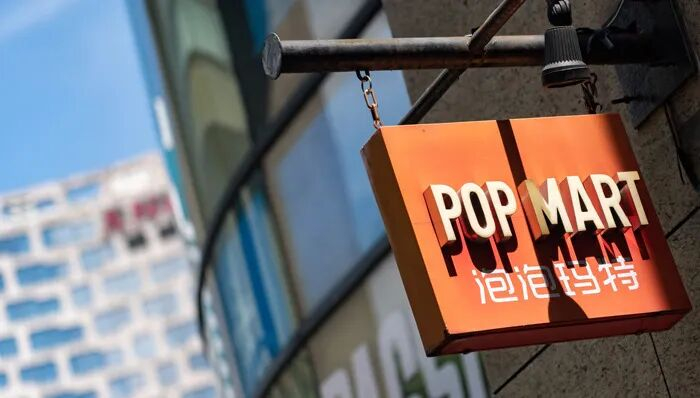
谁在买泡泡玛特?全球买家画像:人均消费超600元、新客扩张快,复购率高
Xin Lang Cai Jing· 2026-01-28 09:09
Core Insights - The consumer base of Pop Mart continues to expand, with 76% of respondents having made their first purchase in the past year, and 45% being new buyers in the last three months [1][4][5] - The survey indicates strong future purchasing intent, with 87% of respondents likely to buy Pop Mart products in the next three months, driven by new series, limited editions, and seasonal releases [1][4] - LABUBU remains the most attractive core IP, with 47% of respondents owning LABUBU products, and nearly half of the respondents first encountered Pop Mart through LABUBU [2][5] Consumer Behavior - Approximately 90% of respondents purchased at least two Pop Mart items, with 42% owning between 2 to 5 items, and only 9% indicating they would buy from second-hand platforms [1][4] - The primary reasons for purchasing Pop Mart products include emotional satisfaction, trend-following, gifting, collecting, and personal interest [1][5] Demographics and Spending - 41% of Pop Mart users are aged 18-34, with a balanced gender distribution in the US, UK, and Australia [2][5] - Average spending varies by country, with Australian respondents spending approximately $132 (about 916 RMB), followed by China at $130, the US at $110, the UK at $108, and Japan at $95 (about 659 RMB) [2][5] Market Performance and Future Outlook - Despite a decline in LABUBU's popularity and secondary market prices, user growth, repurchase loyalty, and IP appeal show strong resilience [2][5] - Citi Research projects that Pop Mart's breakthroughs in IP diversification, product innovation, and multi-field monetization will support continued growth through 2026, setting a target price of HKD 415 and a buy rating [2][5] - On January 28, Pop Mart's stock rose by 7.03% to HKD 231.4, following two share buybacks totaling nearly HKD 350 million [6]
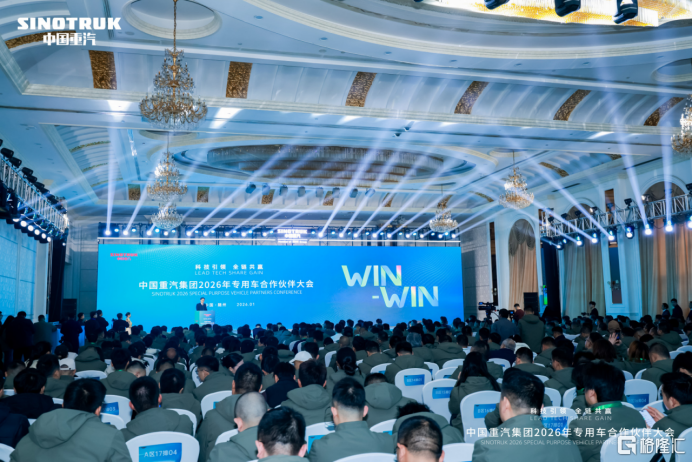
中国重汽集团2026年专用车合作伙伴大会顺利召开 携手共创专用车行业价值共生
Ge Long Hui A P P· 2026-01-28 07:41
Core Insights - The China National Heavy Duty Truck Group (CNHTC) held its 2026 Special Vehicle Partner Conference with the theme "Technology Leads, Full Chain Win-Win," gathering over 700 participants to discuss cutting-edge technology and industry prospects [1] Group 1: Event Overview - The conference featured a comprehensive display of CNHTC's strengths in the special vehicle sector, including brand showcases, market trend forecasts, product interpretations, ecological cooperation dialogues, and recognition of strategic partners [1] - The event highlighted 10 specific application scenarios such as sanitation, firefighting, hazardous materials, and towing, showcasing over 40 complete vehicles and more than 20 key components [1] Group 2: Market Performance - In the past year, CNHTC achieved a record sales volume of 38,000 special vehicles, with a market share exceeding 75% in high-end special vehicles like firefighting and emergency trucks [3] - The company maintained its leading position in various segments, including heavy-duty and light-duty trucks for towing, road work, and powder tankers, demonstrating robust market performance and customer satisfaction [3] Group 3: Competitive Advantages - CNHTC's sustained leadership in the special vehicle sector is attributed to its deep product innovation and full lifecycle service capabilities, focusing on demand-driven development and providing integrated solutions tailored to specific operational scenarios [4] - The company has transitioned from merely selling products to empowering operations, offering customized solutions that enhance user experience and operational efficiency [4] Group 4: Product Innovations - Notable products showcased included the Shandeka G7M pure electric sanitation vehicle, featuring a rated power of 340 kW and peak power of 490 kW, and the HOWO TX pure electric street sweeper, which sets industry benchmarks in reliability and energy efficiency [5] - The HOWO light truck with a 7-ton, 5-section arm crane and the V camping vehicle exemplify CNHTC's commitment to versatile, user-centric designs that expand application boundaries [7] Group 5: Strategic Directions - For 2026, CNHTC has identified four key development pillars: product enhancement, ecological solutions, value marketing, and international collaboration, aiming to optimize reliability, economy, lightweight design, intelligence, and electrification [9] - The conference served as a strategic expression of CNHTC's goals and provided a reference for the industry during a transformative period, emphasizing the importance of market understanding, technical integration, and ecosystem development [9]

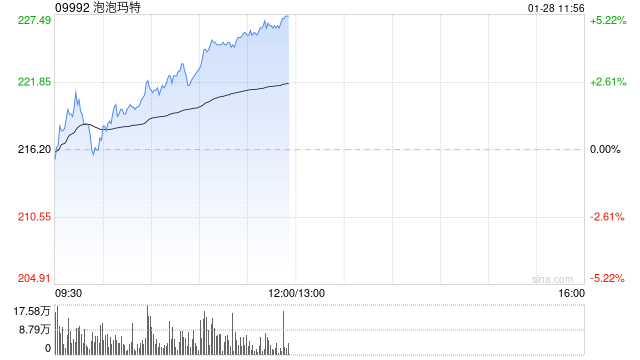
泡泡玛特再涨超4% 连续回购彰显发展信心 花旗看好新品发布与股份回购
Zhi Tong Cai Jing· 2026-01-28 06:17
Core Viewpoint - Pop Mart (09992) has shown strong market performance with a recent stock price increase of over 4%, reflecting investor confidence driven by share buybacks and positive market sentiment [1] Group 1: Stock Performance - As of the latest report, Pop Mart's stock price rose by 3.98% to HKD 224.8, with a trading volume of HKD 1.569 billion [1] - The company has executed share buybacks, purchasing 1.4 million shares for HKD 250 million on January 19 and 500,000 shares for HKD 96.49 million on January 21 [1] Group 2: Analyst Insights - Morgan Stanley notes that the recent share buybacks are the first since early 2024 and are expected to attract more investors, particularly those looking for stock price catalysts [1] - Citigroup has reiterated a "Buy" rating for Pop Mart, forecasting growth momentum through 2026 driven by IP diversification, product innovation, and monetization capabilities [1] - Citigroup believes that the market undervalues Pop Mart's IP vitality and incubation capabilities, with recent product launches and share buyback initiatives likely to boost investor confidence [1] - Pop Mart remains a top buy recommendation in the Chinese consumer sector for Citigroup, with a target price set at HKD 415 [1]
泡泡玛特午前涨超4% 花旗重申“买入”评级
Xin Lang Cai Jing· 2026-01-28 03:56
Core Viewpoint - Pop Mart's stock price has increased by 5.09%, currently trading at HKD 227.20, with a trading volume of HKD 1.569 billion, reflecting investor confidence in the company's recent share buybacks [1][4] Group 1: Share Buybacks - The company has demonstrated its confidence in growth through recent share buybacks, repurchasing 1.4 million shares for a total of HKD 250 million on January 19 and 500,000 shares for HKD 96.49 million on January 21 [1][4] - Morgan Stanley noted that this is the first share buyback since early 2024, which is expected to attract more investor attention, particularly from those looking for stock price catalysts [1][4] Group 2: Analyst Ratings and Growth Potential - Citigroup reiterated a "Buy" rating for Pop Mart, anticipating that breakthroughs in IP diversification, product innovation, and multi-field monetization will support growth momentum through 2026 [1][4] - The market is perceived to undervalue Pop Mart's IP vitality and incubation capabilities, with the recent launch of significant new products outside the LABUBU series generating positive responses [1][4] - The company remains a top buy recommendation in the Chinese consumer sector, with a target price set at HKD 415 [1][4]
Graco(GGG) - 2025 Q4 - Earnings Call Transcript
2026-01-27 17:02
Financial Data and Key Metrics Changes - Graco reported fourth quarter sales of $593 million, an increase of 8% from the same quarter last year, with acquisitions contributing 4%, currency translation 2%, and organic sales another 2% to growth [3] - Reported net earnings increased 22% to $133 million, or $0.79 per diluted share, while adjusted non-GAAP net earnings were $0.77 per diluted share, an increase of 20% [3] - The gross margin rate increased by 80 basis points compared to the same quarter last year, despite higher product costs due to tariffs and lower factory volumes [4] - Operating expenses decreased by $1 million, or 1%, primarily due to the absence of prior year business reorganization and litigation costs [4] Business Line Data and Key Metrics Changes - Contractor segment sales increased 8% in the fourth quarter, with acquisitions contributing 5%, currency translation 2%, and organic sales another 1% [13] - The Industrial segment delivered a strong fourth quarter with sales up 11%, driven by solid organic performance and contributions from acquisitions [15] - Expansion Markets declined 6% in the quarter but grew for the full year, with high single-digit full-year sales growth in the semiconductor business [16] Market Data and Key Metrics Changes - Organic sales at constant currency were up 2% from growth in both the industrial and contractor segments, despite sluggish conditions in core construction markets [11] - The Americas and EMEA regions showed strong organic performance, while Asia-Pacific experienced declines, particularly in China [15] Company Strategy and Development Direction - Graco aims to generate one-third of its long-term revenue growth through strategic acquisitions, with a strong acquisition pipeline [12] - The company is focused on product innovation, pursuing strategic acquisitions, and advancing the One Graco operating model [17] - Revenue guidance for 2026 is projected at low single-digit organic growth on a constant currency basis, with mid-single-digit growth factoring in expected incremental sales from acquisitions [17] Management's Comments on Operating Environment and Future Outlook - Management expressed cautious optimism about the operating environment, noting steady order rates and a cautious outlook for 2026 [33] - Recent order trends support the outlook for low single-digit growth, with some positive developments in the commercial sector [44] - Management highlighted the potential impact of lower mortgage rates on the residential market and the importance of new product launches [119][120] Other Important Information - Cash provided by operations totaled $684 million for the year, an increase of $62 million, or 10% [7] - Significant cash uses included share repurchases of 5.1 million shares totaling $423 million and dividends of $183 million [8] - The company finished the year in a net cash position of $600 million, providing flexibility for long-term objectives [12] Q&A Session Summary Question: Clarification on upfront licensing fees associated with electric pumps - Management explained that the upfront licensing fees are expected to be lumpy and will not be factored into the full-year organic growth outlook [22][25] Question: Geographic conditions for 2026 - Management characterized the geographic conditions as low single-digit growth, with steady order rates but no significant upward momentum anticipated [30][33] Question: Signs of pull-forward demand in the contractor side - Management indicated that there was no pull-forward demand, but noted a slight pickup in the home center channel [41][42] Question: Pricing assumptions in the low single-digit growth guidance - Management expects to realize about 1.5% on the pricing front this year, with price adjustments implemented in late 2025 [47][48] Question: Update on the One Graco initiative - Management highlighted significant inventory reductions and cost efficiencies achieved through the One Graco initiative, with no ongoing restructuring costs [53][56] Question: Backlog trends in the quarter - Management reported that backlogs are at a decent level, with good manufacturing performance in Q4 [106][107]

东北夫妻开餐厅一年低调赚了11.47亿,开店387家,准备上市了
创业家· 2026-01-27 11:04
Core Viewpoint - The article discusses the rise of a local pizza brand, Big Pizza, which is set to become the first self-service pizza stock in Hong Kong, leveraging its competitive pricing strategy to attract young consumers and disrupt the market dominated by international giants [7][8][9]. Group 1: Company Overview - Big Pizza, founded by a couple from Northeast China, has grown from a small store near Beijing Zoo to over 300 locations nationwide, achieving annual revenues exceeding 2 billion RMB [13][14]. - The brand's unique selling proposition is its self-service model priced around 39 RMB, significantly lower than competitors like Pizza Hut, which charges 50-100 RMB per pizza [21][24]. - As of September 30, 2025, Big Pizza has expanded to 387 restaurants across 127 cities, establishing a presence in all provincial capitals [30][32]. Group 2: Product Strategy - Big Pizza employs a "7+2+1" product structure, offering 70% core Western dishes (pizzas, pastas), 20% Chinese dishes (rice, stir-fried dishes), and 10% regional specialties to cater to diverse consumer preferences [35][36]. - The brand adapts its menu based on regional tastes, offering fruit-flavored pizzas in southern cities and meat-heavy options in northern areas, maintaining around 130-140 SKUs per location [40][41]. Group 3: Financial Performance - Big Pizza's revenue for 2023, 2024, and the first nine months of 2025 reached 944.5 million RMB, 1.15 billion RMB, and 1.39 billion RMB respectively, with a self-operated restaurant profit margin exceeding 10% [84][85]. - The company plans to open 610-790 new stores between 2026 and 2028, aiming for rapid expansion while managing supply chain pressures and quality control [95]. Group 4: Market Position and Challenges - The self-service restaurant market is projected to grow, with an expected market size of 1.29 billion RMB in 2024, and Big Pizza is positioned as a leading brand in this segment [79][82]. - However, the company faces challenges such as increasing competition in the self-service market, particularly from hot pot and barbecue brands, and the pressure of higher costs in first-tier cities [89][90]. - The trend of declining average spending in the restaurant industry poses a risk to Big Pizza's business model, which relies on high turnover rates [92].

大博医疗:预计2025年实现净利润约5.8亿元至6.1亿元,业绩增长主因归功于坚持产品创新及国际化发展战略
Cai Jing Wang· 2026-01-27 03:40
Core Viewpoint - The company, Dabo Medical, anticipates a significant increase in net profit for the fiscal year 2025, projecting a range of approximately 580 million to 610 million yuan, representing a year-on-year growth of about 62.55% to 70.96% compared to 357 million yuan in the previous year [1] Financial Performance - The expected basic earnings per share for 2025 are projected to be between 1.43 yuan and 1.5 yuan, which shows a notable increase from 0.86 yuan per share in the same period last year [1] Growth Drivers - The company attributes its performance growth to a focus on its core business, commitment to product innovation, technical services, and international development strategies, which have driven the continuous and stable development of its various business segments [1]

国际高端美妆龙头有何变化
2026-01-26 15:54
Summary of Key Points from the Conference Call Industry Overview - The international high-end beauty market in China achieved high single-digit growth in 2026, but the compound growth rate only returned to 2023 levels, indicating challenges in regaining double-digit growth in the future. The growth drivers include channel recovery and consumer confidence restoration [1][2][3]. Core Insights and Arguments - **Channel Recovery**: The shopping mall channel returned to double-digit growth in 2026, driven by enhanced entertainment experiences and strategic site selection. Online channels, particularly Tmall, saw growth through adjustments in the Double Eleven mechanism, while JD.com performed well with VIP customers. However, Douyin's performance was average due to its business model [1][4][5]. - **Pricing and Promotions**: High-end brands, including Estée Lauder, have increased prices annually but intensified promotional efforts, especially in duty-free channels. This has affected actual demand, leading to a gradual tightening of promotional strategies to improve profit margins [1][6][7]. - **Profit Margins**: Estée Lauder's profit margins in China are higher than the global average, but retail weakness and pandemic impacts have hindered expected improvements. The company aims for healthier growth and increased profit margins moving forward [1][7]. - **8T Strategy**: The new CEO's 8T strategy focuses on stabilization and cost efficiency, but sustained growth remains a challenge. The brand matrix is less robust compared to L'Oréal, relying heavily on La Mer and Estée Lauder, with significant dependence on promotions in online channels [1][7][8]. Additional Important Insights - **Brand Performance**: La Mer is performing well globally, while Estée Lauder faces challenges with brand aging and customer attrition. The company needs to restore growth to offset declines in other brands [1][9][10]. - **Sales and Revenue**: In 2025, Estée Lauder's total revenue was approximately $14 billion, with Estée Lauder and La Mer accounting for 70-75% of total revenue [1][10]. - **Product Innovation Challenges**: Estée Lauder faces significant product aging issues and has been slow in innovation compared to competitors. The new CEO emphasizes product innovation as a key strategy to improve market conditions [1][16][17]. - **Market Dynamics**: The high-end skincare segment is expected to continue growing, while color cosmetics face pressure from domestic brands. The fragrance segment is slowing down, and the competitive landscape is changing rapidly [1][5][33][36]. Future Outlook - The growth of international high-end beauty brands in China over the next 2-3 years will depend on the ability to attract new customers and adapt to changing consumer preferences. High-end skincare products are expected to perform well, while entry-level products may face challenges [1][5][33]. - The online channel's expansion will not be significant, focusing instead on improving the ROI of existing e-commerce operations for sustainable growth [1][24][25]. Conclusion - The international high-end beauty market in China is recovering but faces numerous challenges, including competition from domestic brands, reliance on promotions, and the need for product innovation. Companies like Estée Lauder must navigate these dynamics carefully to achieve sustainable growth and profitability in the evolving market landscape [1][5][33][36].

省政协委员赵慧娟:河南食品企业要重视品牌塑造、聚焦标准制定|两会财经访谈
Sou Hu Cai Jing· 2026-01-26 13:30
Core Viewpoint - The focus of the discussion is on the importance of brand building for food companies in Henan Province, emphasizing the need for these companies to enhance their brand influence to increase product value and meet changing consumer demands [1][4]. Group 1: Brand Building - Zhao Huijuan, a member of the Henan Provincial Political Consultative Conference, highlights that many food companies in Henan have strong supply chain capabilities but struggle with transitioning from OEM to their own brands due to perceived risks and short-term survival concerns [4]. - The shift in consumer habits has led to increased homogenization in the food industry, making brand differentiation essential for high-quality development [4][6]. - Zhao advocates for greater attention and support from the industry and government towards brand development initiatives [4]. Group 2: Product Innovation - The company has successfully embraced new sales channels and rapidly iterated new products, such as the introduction of butter fried chicken, which caters to the preferences of younger consumers for convenience and health [5]. - Zhao emphasizes that brand identity is built through product interactions with consumers, and innovation in product offerings is crucial for brand development [6]. - Food companies should focus on maintaining product quality while innovating in packaging and flavors to engage younger consumers effectively [6]. Group 3: Industry Standards and Youth Engagement - There is a call for food companies to actively participate in standard-setting to help regulate the industry and enhance consumer understanding [6]. - Zhao believes that the revitalization of the Henan food industry will be driven by young entrepreneurs who understand consumer needs and are willing to share their business philosophies [7]. - The industry must shift from a focus on operational tasks to strategic brand building, standard-setting, and product innovation to achieve high-quality growth [8].