
抗通胀

Search documents
Ray Dalio最新文章:我对黄金的思考(中英对照)
对冲研投· 2025-10-20 07:34
Core Views - Gold is not a commodity but a form of money, serving as the ultimate means of settlement rather than an industrial metal [2][4][6] - In the late stages of debt cycles, when the credit system fails and central banks print excessive money, gold's "non-fiat value" becomes prominent [2][4] - The core asset for hedging systemic risks is not about returns but about survival and stability of purchasing power [2] Gold as Money - Most people mistakenly view gold as a metal rather than the most established form of money, while fiat money is often seen as true money rather than debt [4][6] - Gold has historically provided a real return of about 1.2%, similar to cash, and it cannot be printed or devalued [4][6] - Gold serves as a good diversifier to stocks and bonds, especially during economic downturns or when credit is not accepted [5][8] Comparison with Other Assets - Gold occupies a unique position in portfolios as the most universally accepted non-fiat currency and a good diversifier against other assets [12][13] - Unlike fiat currency debt, gold does not carry inherent credit and devaluation risks, acting almost like an "insurance policy" in diversified portfolios [12][13] - Other metals like silver and platinum do not possess the same historical significance or stability as gold for wealth preservation [14][15] Inflation-Indexed Bonds and Stocks - Inflation-indexed bonds, while good inflation hedges, are fundamentally debt obligations and can be affected by the creditworthiness of the issuing government [16][17] - Stocks, particularly in high-growth sectors like AI, have potential for substantial returns but have shown poor performance when adjusted for inflation [18][19] Portfolio Allocation - Gold is an effective diversifier, and a reasonable allocation for most investors is suggested to be around 10-15% of their portfolio [27][28][29] - The expected return of gold is low over time, similar to cash, but it performs well during times of greatest need [30][31] - Investors should consider strategic asset allocation rather than tactical bets when determining their gold holdings [32] Market Dynamics - The rise of gold ETFs has increased liquidity and transparency in the gold market, but they are not the main source of buying or price increases [33][34] - Gold has begun to replace some U.S. Treasury holdings as the riskless asset in many portfolios, particularly among central banks and large institutional investors [36][39] - Historically, gold is viewed as a less risky asset compared to government debt, with a significant portion of currencies having disappeared or been severely devalued over time [40][41]


全球储备巨变!德银公布数据:美元占比下滑,黄金从24%升到30%?
Sou Hu Cai Jing· 2025-10-18 18:15
Core Insights - The proportion of gold in global foreign exchange reserves has surged to 30%, while the dollar's share has decreased from 43% to 40%, marking the first time in 30 years this has occurred [1][3] - Central banks are increasingly viewing gold as a "safe haven" asset, with many countries accumulating gold reserves [5][6] Group 1: Recent Data - Gold's share in global reserves rose from 24% in Q1 to 30% in just six months, indicating a significant shift in central bank strategies [3] - China has increased its gold reserves for 11 consecutive months, holding 2,303 tons, while Poland has raised its gold reserve target from 20% to 30% [3][6] - Italy, despite high debt levels, maintains 2,452 tons of gold, viewing it as a crucial asset [3] Group 2: Reasons for Preference Shift - The primary reason for the shift towards gold is risk aversion, as central banks are wary of the dollar's declining reliability [5][6] - The dollar's global reserve share has fallen to 41%, the lowest since the mid-1990s, prompting a reevaluation of currency holdings [6] - Geopolitical risks and inflation concerns are driving the demand for gold as a hedge against economic instability [7][8] Group 3: Implications for the General Public - Gold prices are expected to rise, with Deutsche Bank predicting prices could reach $3,350 per ounce by year-end, and HSBC forecasting $3,950 [10] - Investment channels for gold are becoming more popular, with Chinese gold ETFs seeing a fourfold increase in holdings compared to two years ago [10] - New investors are advised to consider gold ETFs for lower risk compared to physical gold investments [10] Group 4: Future Trends - While gold is unlikely to replace the dollar in the short term, its status as a reserve asset is expected to strengthen [12] - By 2030, gold may become a major reserve alongside Bitcoin, although the dollar will still play a significant role [12][13] - The future global reserve landscape is likely to be characterized by a combination of dollar dominance and gold as a supplementary asset [13][15]
黄金白银一夜大跌 美国区域性银行“爆雷”恐慌情绪放缓
Shang Hai Zheng Quan Bao· 2025-10-18 01:00
Market Overview - The panic caused by the recent "blow-up" of regional banks in the U.S. has eased, leading to a collective rise in the three major U.S. stock indices. The Dow Jones increased by 0.52%, the Nasdaq by 0.52%, and the S&P 500 by 0.53% on the day, with weekly gains of 1.56%, 2.14%, and 1.7% respectively [2][3]. Banking Sector - Western Alliance Bancorp has filed a lawsuit against Cantor Group V, alleging fraudulent activities. Fifth Third Bancorp reported earnings that exceeded market expectations [3]. - Following the announcement of fraud in lending to funds with poor commercial mortgages, the stock prices of Western Alliance Bancorp and Zions Bancorp experienced significant declines [3]. Technology Sector - Technology stocks showed mixed performance, with Tesla rising over 2% and Apple nearly 2%, while Oracle fell nearly 7%, and both AMD and ARM dropped over 3% [3]. Commodities - Precious metals prices saw a significant decline, with gold dropping over 3% to fall below $4200 per ounce, and silver dropping over 6% to below $51 per ounce, marking the largest single-day drop in six months [2][4]. Federal Reserve Commentary - St. Louis Fed President Musalem indicated a preference for supporting another rate cut in the upcoming October meeting, contingent on labor market risks and inflation rates remaining above 2% being contained. However, he cautioned that further easing may be limited as the anti-inflation task is not yet complete [4].
黄金,全球首个超30万亿美元资产
2 1 Shi Ji Jing Ji Bao Dao· 2025-10-17 06:39
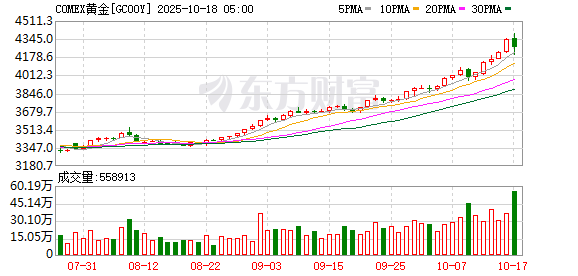
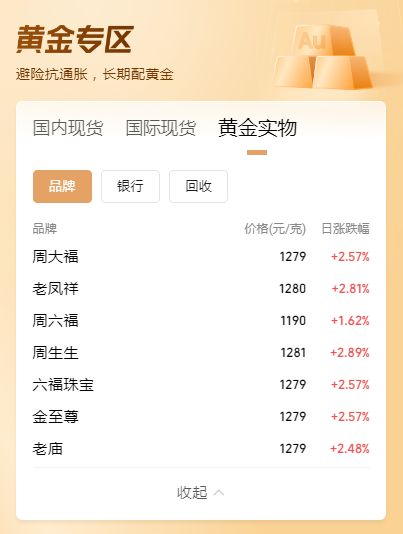
Group 1 - The core point of the article is that gold has reached a total market value exceeding $30 trillion, marking a significant milestone in the global asset market [1] - On October 16, gold prices rose significantly, with London gold closing at $4,326.48 per ounce and COMEX gold futures at $4,344.3 per ounce, reflecting a 2.85% and 3.4% increase respectively [1] - The surge in gold prices has led to an increase in domestic gold jewelry prices, with some brands reaching 1,281 yuan per gram, a daily increase of 36 yuan [1] Group 2 - A recent Bank of America survey indicated that 43% of investors believe "going long on gold" is the most crowded trade, surpassing the 39% for "long on the seven major U.S. stocks" [3] - Despite the crowded trade sentiment, many fund managers have low gold positions, with 39% reporting near-zero gold holdings, suggesting potential for further investment [3][4] - The influx of global funds into the gold market is driven by factors such as the dovish stance of the Federal Reserve and rising geopolitical risks, including increased tariff policies from the U.S. government [4] Group 3 - Experts recommend that ordinary investors consider dollar-cost averaging as a strategy for investing in gold, emphasizing the importance of risk management and avoiding leverage [6] - Gold is viewed as a hedge against inflation and a store of value, making it suitable for long-term investment, although its price volatility poses risks for one-time purchases [6]
金ETF(159834.SZ)涨2.39%
Sou Hu Cai Jing· 2025-10-17 03:42
Core Viewpoint - The article highlights the strengthening medium to long-term investment value of gold amid rising global economic uncertainties, driven by factors such as anticipated interest rate cuts by the Federal Reserve, persistent high inflation, and ongoing geopolitical risks [1]. Group 1: Economic Context - The Federal Reserve's expectation of interest rate cuts by 2025 is becoming clearer, which will lower the actual interest rate and enhance gold's financial attributes [1]. - In a high inflation environment, gold's anti-inflation properties resonate with the weakening demand for fiat currency, leading to increased central bank purchases of gold reserves [1]. Group 2: Geopolitical and Market Dynamics - The normalization of geopolitical risks, global debt expansion, and the diminishing status of the US dollar as a reserve currency are expanding the demand for gold as a ultimate safe-haven asset [1]. - The tightening supply-demand dynamics for gold, influenced by global resource constraints, indicate a clear long-term upward trend in gold prices [1]. Group 3: Investment Opportunities - The Gold ETF (159834.SZ) is identified as an efficient investment tool that can fully capture the benefits of the gold upward cycle, suggesting strategic allocation opportunities [1].
黄金股票ETF基金(159322)逆市上涨!价值风格+业绩确定性强
Sou Hu Cai Jing· 2025-10-17 02:36
Group 1 - Gold prices in New York surged by 3%, reaching a historical high above $4,330, with spot gold rising 2.72% to $4,322.04 per ounce [1] - COMEX gold futures increased by 3.05%, closing at $4,329.80 per ounce, and later peaked at $4,336.70 [1] - The Philadelphia Gold and Silver Index rose by 3.41%, marking a new closing historical high at 329.32 points [1] Group 2 - The Shanghai Futures Exchange (SHFE) gold recorded an 11.01% increase in September 2025, outperforming other major asset classes [2] - The asset allocation strategy based on macro factors yielded a return of 0.48% in the same month, highlighting gold's value as an inflation hedge and safe-haven asset [2] - The China Securities Index for gold industry stocks rose by 0.72% as of October 17, 2025, with notable increases in individual stocks such as Xinhua Jewelry and Silver Nonferrous [2] Group 3 - The gold ETF fund experienced a turnover of 8.74% with a transaction volume of 10.90 million yuan, averaging daily transactions of 25.99 million yuan over the past week [3] - The fund saw a net inflow of 25.76 million yuan over the last five trading days, with an average daily net inflow of 5.15 million yuan [3] - The gold ETF fund's net asset value increased by 45.41% over the past six months, ranking in the top 16.39% among comparable index funds [3] Group 4 - The maximum drawdown for the gold ETF fund over the past six months was 8.52%, with a recovery time of 28 days, the fastest among comparable funds [4] Group 5 - The management fee for the gold ETF fund is 0.50%, and the custody fee is 0.10% [5] - The index tracks 50 large-cap companies involved in gold mining, refining, and sales, with the top ten stocks accounting for 68.2% of the index [5]
港股异动 | 黄金股集体高开 现货黄金一度触及4380美元 机构预计金价有望继续创新高
智通财经网· 2025-10-17 01:27
Core Viewpoint - The surge in gold prices has led to a significant increase in the stock prices of gold-related companies, driven by heightened demand for safe-haven assets amid economic and geopolitical uncertainties [1] Group 1: Gold Price Movement - On October 17, spot gold prices reached a historical high of $4,380 per ounce, currently reported at $4,335.08 per ounce, marking a year-to-date increase of approximately 60% [1] - Factors contributing to the rise include concerns over credit quality in the economy and geopolitical tensions, alongside investor speculation regarding a potential significant interest rate cut by the Federal Reserve this year [1] Group 2: Company Stock Performance - China Silver Group (00815) saw a stock increase of 5.88%, trading at HKD 0.9 [1] - Zijin Mining (02899) rose by 5.39%, with shares priced at HKD 34.8 [1] - Shandong Gold (01787) experienced a 4.97% increase, reaching HKD 39.68 [1] - Chifeng Jilong Gold Mining (06693) gained 4.04%, trading at HKD 33.96 [1] Group 3: Market Analysis - According to a report from China Merchants Securities, the recent surge in gold prices is influenced by the U.S. government shutdown and the announcement of a potential 100% tariff increase on China by Trump on November 1 [1] - The report suggests that both short-term factors, such as inflation hedging and risk aversion, and long-term factors related to monetary and financial conditions indicate that gold prices are likely to continue reaching new highs in the future [1]

10月降息几成定局?鲍威尔:数据真空令美联储面临挑战
Di Yi Cai Jing Zi Xun· 2025-10-15 00:01
Core Viewpoint - Federal Reserve Chairman Jerome Powell indicated that the U.S. economic outlook remains largely unchanged since the September meeting, with a delicate balance between persistent inflation pressures and a weakening labor market. The market widely anticipates another rate cut at the upcoming meeting at the end of October [1][2]. Economic Outlook - Powell emphasized that the U.S. is experiencing a phase of "low hiring, low layoffs," with a decline in job vacancies likely to soon impact the unemployment rate. The unemployment rate rose to 4.3% in August, the highest in a year, and the government shutdown has delayed the release of the September non-farm payroll report, complicating assessments of labor market conditions [2][5]. - Economists are increasingly concerned about the risks to employment, with some suggesting that the Fed is shifting focus from anti-inflation measures to balancing growth and employment [2][6]. Inflation and Monetary Policy - Despite market expectations for continued easing, Powell reiterated that inflation risks have not been fully resolved, with the core Personal Consumption Expenditures (PCE) price index rising 2.9% year-over-year, still above the Fed's 2% target. He indicated that the Fed's task remains to bring inflation back to sustainable levels without harming employment [3][4]. - Powell hinted that the process of reducing the Fed's balance sheet may soon come to an end, suggesting a potential slowdown in quantitative tightening to maintain market liquidity [3][5]. Data Availability and Decision-Making Challenges - The government shutdown has interrupted the release of key economic data, creating uncertainty for the Fed's decision-making process. Powell acknowledged that the Fed may not be able to compensate for the lack of data, particularly for October, which could complicate the situation further [5][6]. - The Fed is relying on alternative data sources to fill the gaps left by the absence of official statistics, but Powell stressed that these cannot fully replace government data [4][5]. Market Expectations - Investors generally expect the Fed to maintain a moderate easing stance in the coming months, with projections indicating a cumulative rate cut of about 50 basis points by the end of the year. The yield on the 10-year U.S. Treasury note recently fell to 4.03%, reflecting increased demand for safe-haven assets [5][6].
立高控股(08472.HK)拟购买加密货币及商品
Ge Long Hui· 2025-10-13 11:11
Core Viewpoint - The company has approved a budget of HKD 24.0 million for purchasing cryptocurrencies and commodities over the next year, indicating a strategic move towards diversifying its investment portfolio in response to market conditions [1] Group 1: Investment Strategy - The budget will be utilized for acquiring cryptocurrencies such as Bitcoin (BTC) and Ethereum (ETH), as well as commodities like gold and silver [1] - The funding for these purchases will come from the company's internal cash resources, suggesting a strong liquidity position [1] Group 2: Market Outlook - The company expresses confidence in the long-term potential of cryptocurrencies and commodities, citing their ability to act as a hedge against inflation and their potential for appreciation [1] - The current market conditions are viewed as an opportune time for investment in these assets, reflecting a proactive approach to capitalizing on market trends [1] Group 3: Business Integration - The acquisition of cryptocurrencies is intended to complement the company's existing online gaming services, indicating a strategic alignment between its investment activities and core business operations [1]
段永平再买茅台
华尔街见闻· 2025-10-13 10:30
Core Viewpoint - The article highlights the continued confidence of investor Duan Yongping in Kweichow Moutai, as he publicly announced his purchase of the stock again, indicating a strong belief in the company's long-term potential [3][6]. Group 1: Investment Actions and Market Performance - Duan Yongping publicly stated on October 13 that he bought more Kweichow Moutai shares, following a similar endorsement in late June [3]. - After Duan's encouragement in June, Kweichow Moutai's stock price rose from ¥1403.9 to a peak of ¥1538.02, marking a 9.6% increase over three months [3]. - As of the latest report, Kweichow Moutai's stock price was down 0.76% to ¥1419.2 per share [4]. Group 2: Long-term Investment Strategy - Duan Yongping has held Kweichow Moutai shares since 2012, experiencing over a 20-fold increase in stock price during this period, and has never sold any shares, even during industry downturns [6]. - His investment philosophy is based on the belief that Kweichow Moutai possesses unique advantages such as brand monopoly, pricing power, and inflation resistance, making it irreplaceable compared to other assets [10]. Group 3: Comparisons with Other Investments - In a response to an investor's query about alternatives to Kweichow Moutai, Duan suggested that while Shenhua may not be as strong as Moutai, it is likely a better investment than keeping money in a bank [8]. - He also emphasized that investing in Tencent would likely yield better returns than bank savings, reinforcing his view on the value of equity investments [8].

