消费分级

Search documents
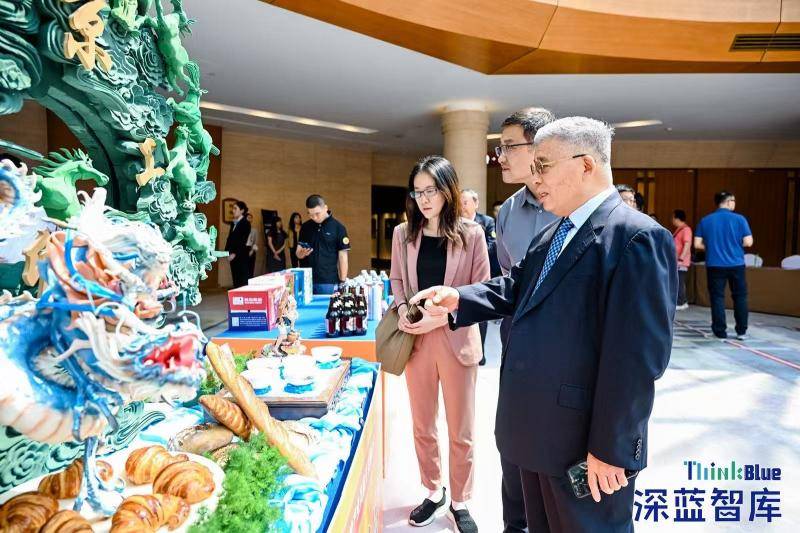
聚焦餐饮消费力 首都餐饮共建国际美食之都提质消费行动启动
Sou Hu Cai Jing· 2025-05-29 12:41
《报告》显示,餐饮消费市场经历深刻变革,消费者价格敏感度持续提升与品质追求同步增强,驱动行业加速向 以"质价比"为核心的竞争格局转型。在餐饮消费者对品牌的倾向性方面,20.6%的消费者选择知名品牌餐饮门 店;27.4%消费者偏好小众、有特点、个性的餐饮门店;另外有23.8%的消费者倾向于选择连锁餐饮品牌门店。调查 显示,29.6%的消费者选择价格合适的新餐厅。另外,随着消费需求的日益多样化和个性化,年轻消费者的健康 轻食需求激增,对"烟火气"场景情有独钟,现炒现做、明档厨房等模式成为新宠。而家庭类消费者更倾向于选择 适合聚餐类的菜品,并聚焦对儿童用餐友好的餐厅。 据了解,本次会议作为2025深蓝媒体智库年度论坛的主题论坛,由北京市商务局指导,北京烹饪协会与北京商报 社联合主办。 今年以来,餐饮行业在消费力重构的浪潮中步入深度转型期,市场呈现出鲜明的"消费分级"特征,高端餐饮持续 释放圈层化消费势能,而大众赛道则围绕性价比展开激烈角逐,"质价比"成为消费力流动的新航标。 本届会议以"寻路餐饮消费力"为主题,设置了多个不同维度的主旨演讲环节,共探餐饮消费提振路径,为餐饮企 业转型和提质增效提供指引。活动现场启动首 ...

2025单身(孤独)经济产业全景分析
Sou Hu Cai Jing· 2025-05-19 14:23
Core Insights - The single economy, characterized by strong autonomy in consumption decisions, high quality demands, and significant emotional value, is emerging as a new consumer force in China, with over 230 million single individuals, of which more than 40% are "self-pleasing" consumers [1][5][18] - This economic trend reflects profound social structural changes and holds immense potential and possibilities for future growth [3][18] Industry Overview - The single economy has given rise to a multi-trillion market ecosystem, encompassing various sectors that cater to the "one-person demand" [5][10] - Key industries include convenience services such as mini home appliances, 24-hour convenience stores, and food delivery services, which meet the needs of single individuals for a "small yet exquisite" lifestyle [5][6] - The pet economy is thriving, providing emotional companionship through pet food, medical care, and supplies, while virtual social platforms like gaming and live streaming serve as important outlets for emotional connection [6][8] Consumer Trends - Individualized consumption is on the rise, with single-person restaurants and customized travel experiences catering to the unique preferences of single consumers [8][12] - The self-improvement sector is booming, with vocational education and health management services helping single individuals enhance their professional competitiveness and maintain well-being [8][12] Market Dynamics - The single economy's industry layout shows a multidimensional integration, with upstream material and technology support, midstream product and service provision, and downstream consumer market engagement [10][12] - Instant consumption scenarios, such as convenience stores and food delivery, are frequently utilized by over 60% of single individuals to meet daily needs [10][12] Future Outlook - The next five years will see a complex landscape for the single economy, characterized by consumer segmentation, upgrades, and inherent risks [12][15] - High-end markets will focus on luxury and customized services, while lower-tier markets will expand affordable essential products [12][15] - Technological advancements will continue to enhance service efficiency, with AI and blockchain playing significant roles in consumer trust and platform reliability [12][15] Societal Implications - The development of the single economy requires collaboration among policies, enterprises, and society to create a supportive ecosystem [16][18] - Policies should focus on protecting the rights of single individuals, while businesses need to adopt differentiated strategies and explore cross-industry collaborations [16][18] - Social initiatives should foster single-friendly communities, providing psychological support and promoting inclusivity [16][18]
深读100:新能源汽车安全红线拉紧!;用户对汽车需求发生变化
Mei Ri Jing Ji Xin Wen· 2025-05-14 15:21
Group 1 - Restaurant location selection is crucial, requiring assessment of target customer demographics, market supply and demand, and infrastructure [1] - The beverage industry in China is experiencing significant price reductions, with major brands lowering prices while smaller brands increase volume without raising prices [2] - The Ministry of Industry and Information Technology is tightening safety regulations for the electric vehicle sector, addressing issues such as smart driving promotions and safety standards [3] Group 2 - Current brand marketing trends focus on creative videos and brand collaborations, but the effectiveness of these strategies is questionable, often yielding low actual value compared to costs [4] - There is a noticeable shift in consumer demand for automobiles in China, with many now viewing cars as a third living space rather than just a means of transportation [5] - The instant retail market is expected to see intensified competition by 2025, with major players establishing barriers that make it difficult for competitors to replicate their models [6] Group 3 - Voice hall live streaming is emerging as a new entertainment sector, projected to reach a market size of nearly 7 billion yuan by 2025, providing emotional value and virtual companionship to users [7] - The PC game "Dark Zone Breakthrough: Infinite" has launched successfully, achieving top rankings on the Wegame platform, supported by a strong foundation and market reputation built over years [8]
“我是股东”活动走进国芳集团
Zheng Quan Ri Bao· 2025-05-09 11:43
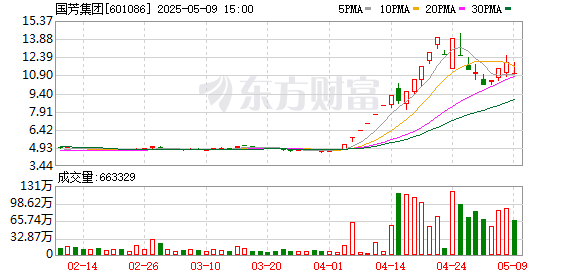
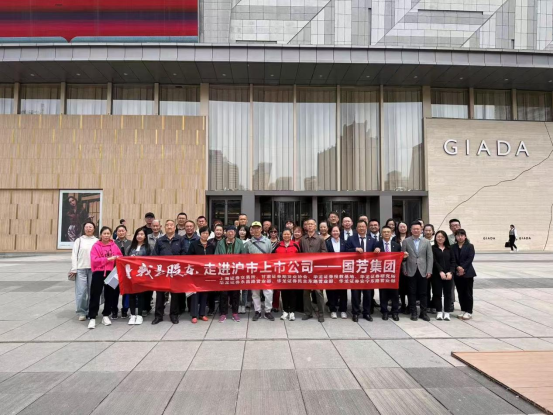
Group 1 - The event "I am a shareholder | Entering the Shanghai-listed company - Gansu Guofang Industrial and Trade (Group) Co., Ltd." was held to encourage investors to exercise their shareholder rights and improve investor relations management [2] - Guofang Group, established in 1996 and listed on the Shanghai Stock Exchange in September 2017, has evolved from a single department store into a regional commercial chain leader covering various formats such as shopping centers, supermarkets, and outlets [2] - During the event, investors visited Guofang Group's headquarters and flagship project, gaining insights into the company's operational details, including planning adjustments, brand layout, refined operations, and digital facility applications [2] Group 2 - In a discussion session, the company emphasized its strategies to enhance profitability and core competitiveness through optimizing business formats and strengthening supply chain management amid consumer recovery [3] - The company believes that regional retail enterprises possess unique investment value due to their local advantages and refined operations in the context of consumer segmentation [3] - The event concluded with positive feedback from participants, highlighting the importance of market feedback for continuous operational optimization and better performance for investors [3]

2025年度“我是股东”投资者走进上市公司国芳集团
Zheng Quan Shi Bao Wang· 2025-05-09 09:50
Group 1 - The event "Walking into Listed Companies" was organized by various financial institutions to enhance the quality and investment value of listed companies, in line with the central government's directives [3] - Guofang Group has evolved from a single department store to a regional commercial chain leader in Gansu, Qinghai, and Ningxia, covering various business formats such as shopping centers, supermarkets, and outlets since its establishment in 1996 [3][5] - During the visit to Guofang Group's headquarters and its flagship store, investors gained insights into the company's operational details, including its refined management and digital facility applications [5] Group 2 - Guofang Group's Secretary of the Board, Ma Lin, highlighted the company's operational performance in the context of post-pandemic consumer recovery, emphasizing measures like optimizing business formats and strengthening supply chain management to enhance profitability and core competitiveness [5] - Investors expressed a deeper understanding of the company's prospects and development, indicating increased confidence in Guofang Group following the discussions [5] - Ma Lin stated that the high-quality development of listed companies relies on the support of the capital market and expressed the company's intention to strengthen ties with investors to witness the company's growth together [5]
旅游消费升温背后的住宿战事:酒店业的短峰高压与长期命题
Zhong Guo Jing Ying Bao· 2025-05-08 13:15
Core Insights - The May Day holiday in 2025 has become a strong indicator for China's cultural tourism market and hotel industry, with domestic tourist numbers reaching 314 million and total tourism consumption exceeding 180 billion yuan, marking an 8% year-on-year growth [1][2][3] Group 1: Hotel Industry Performance - Huazhu Group reported that its hotels received nearly 6.3 million guests during the holiday, a 30% increase from last year, with an overall occupancy rate exceeding 84% [1][3] - The peak occupancy rate reached 103% on May 2, with over 9,600 hotels fully booked, indicating robust accommodation demand [1][3] - Hyatt Hotels' RevPAR in Greater China grew nearly 10% during the holiday, with double-digit occupancy growth in cities like Sanya and Xiamen [1][7] Group 2: Emerging Trends in Accommodation - The homestay market is experiencing explosive growth, with over 90% of destinations seeing a year-on-year increase of over 30% in visitor numbers [2][6] - New travel preferences such as "light travel" and "concert + homestay" are becoming popular, with bookings for stays longer than five days increasing by over 40% [2][6] - High-star hotels are seeing a significant rise in bookings, with four-star and five-star hotels increasing by 54% and 28% respectively, reflecting a trend towards consumption upgrading [2][5] Group 3: Market Dynamics and Consumer Behavior - The accommodation market is witnessing a broad-based growth, with both popular and niche destinations thriving, and occupancy rates in first-tier cities remaining above 80% [3][4] - Second-tier cities are also showing strong performance, with many achieving occupancy rates above 90%, indicating a growing appeal for these locations [3][4] - The trend of "escaping the crowds" in smaller cities is becoming a preference among younger travelers and families [3][8] Group 4: Future Directions for the Industry - The hotel industry is urged to transition from a focus on "full occupancy" to a more rational development model emphasizing "quality and price coordination" [2][8] - Experts suggest that future competition will focus on product innovation, brand positioning, and deepening customer experiences [8][9] - The industry is expected to evolve towards value competition, enhancing service and cultural experiences, while also leveraging digitalization for operational efficiency [8][9]
中国乳业大变局:牧场“倒奶杀牛”,伊利蒙牛降速,黄金时代结束了
3 6 Ke· 2025-05-08 09:50
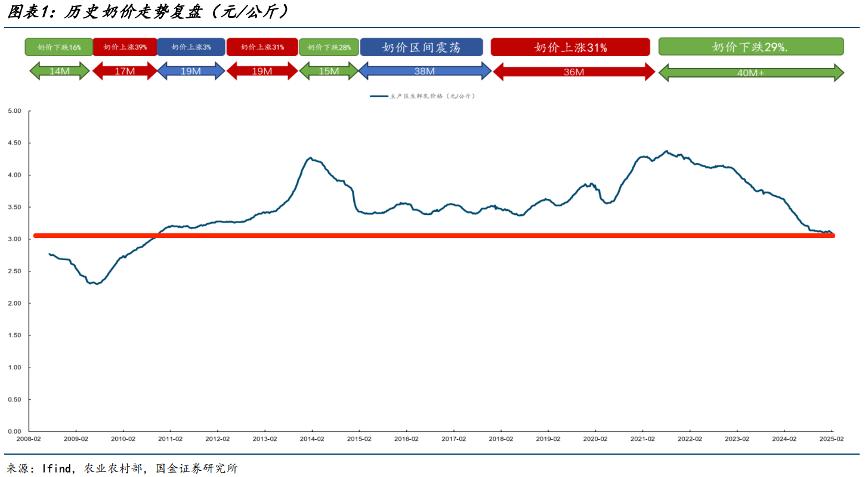
Core Insights - The Chinese dairy industry is undergoing significant transformation due to declining demand and oversupply, prompting urgent structural changes [2][3] Demand and Supply Dynamics - Major dairy companies like Yili and Mengniu are experiencing revenue declines, with Yili facing its first revenue drop in nearly 20 years and Mengniu seeing double-digit declines [1][11] - The liquid milk segment is particularly affected, with Yili and Mengniu's sales dropping by approximately 10 billion yuan each, equivalent to the annual revenue of a second-tier dairy company [1] - The supply side is also under pressure, with reports of "culling cows" due to raw milk prices hitting a 15-year low, severely impacting farm operations [1][3] Raw Milk Price Trends - Raw milk prices have been declining for over 40 months, with the current price at 3.08 yuan per kilogram, significantly below the breakeven point for most farms [3][6] - The oversupply situation is exacerbated by increased production, with national milk output reaching 41.97 million tons in 2023, a 6.7% year-on-year increase [6] - The industry is facing a negative cycle of upstream losses, capacity elimination, and supply imbalance, with over 80% of the industry experiencing losses [6][8] Financial Performance of Major Players - Yili's revenue for 2024 is projected at 115.4 billion yuan, an 8.24% decline, with net profit dropping by 18.94% to 8.45 billion yuan [11] - Mengniu's revenue is expected to be 95.4 billion yuan, down 10.09%, with net profit plummeting by 97.83% to 113 million yuan [11] - The liquid milk segment remains the largest category, accounting for 44% of total dairy consumption, but is experiencing a downward sales trend [11] Consumer Behavior and Market Trends - The decline in dairy consumption is not due to reduced volume but rather falling prices, with Yili's liquid milk sales volume increasing by 2.1% despite revenue losses [12][13] - The market is witnessing a "consumption stratification," where high-end dairy products continue to perform well despite overall price declines [16][18] - Low-temperature fresh milk is emerging as a fast-growing segment, with a market size of 39.2 billion yuan in 2023 and a compound annual growth rate of 5.5% from 2018 to 2023 [17] Opportunities for Second-Tier Brands - The popularity of fresh milk and health-oriented products is creating new opportunities for second-tier dairy companies [23] - Local brands with strong cold chain capabilities are challenging national giants in the fresh milk market, as seen with companies like Guangming Dairy and New Dairy [24] - The shift towards value competition and structural consumption upgrades is driving the industry from scale expansion to specialization [25]


新一轮低价之战,京东胜算几何?
雪豹财经社· 2025-05-07 13:36
Core Viewpoint - The article discusses the strategic initiatives of JD's subsidiary, Jingxi, focusing on its efforts to penetrate the lower-tier market and capitalize on the "200 billion opportunity" through various plans and partnerships aimed at enhancing user experience and expanding its user base [2][5][11]. Group 1: Jingxi's Market Strategy - Jingxi, originally JD's discount shopping platform, aims to cater to price-sensitive consumers in lower-tier markets by providing high-cost performance products [2][3]. - The "200 billion export-to-domestic sales plan" launched by JD in April 2023 has significantly boosted Jingxi's self-operated business, enabling it to collaborate with factories for product selection and rapid sales [5][11]. - Jingxi's "Factory Goods Hundred Supplement" plan will invest 10 billion annually to enhance user experience, logistics services, and factory efficiency, targeting the creation of 1,000 million-unit and 10,000 hundred-thousand-unit popular products [3][16]. Group 2: Competitive Landscape - Since 2018, competition for quality merchants in industrial belts has intensified among major e-commerce platforms, including Alibaba, Pinduoduo, and Douyin, all seeking to tap into these markets [8]. - Jingxi's full-trust model allows small and medium-sized factories to focus on production while Jingxi manages selection, operations, customer service, and logistics, providing a cost advantage [8][16]. - Despite the advantages of Jingxi's model, challenges remain as other platforms also pursue foreign trade businesses transitioning to domestic sales, indicating a competitive environment [17]. Group 3: User Acquisition and Retention - Jingxi's goal is to acquire 150 million new users annually while also focusing on user retention and repeat purchases, reflecting a shift from merely attracting new users to ensuring their ongoing engagement [11][14]. - As of December 2024, JD's monthly active users reached 550 million, with Jingxi's cumulative user count hitting 260 million, indicating significant growth potential in the lower-tier market [11][13]. - Jingxi's self-operated products are positioned to meet the needs of both lower-tier and higher-tier consumers, aiming to balance quality and low prices [13][14]. Group 4: Future Plans and Challenges - Jingxi plans to support 100,000 foreign trade factories in successfully transitioning to domestic sales by 2025, leveraging the current trend of export-to-domestic sales [5][16]. - The "Factory Goods Hundred Supplement" initiative aims to create a cycle of high quality and low prices, but achieving this requires effective supply chain management and product quality control [17]. - The competitive landscape remains challenging, as other platforms are also enhancing their support for foreign trade businesses, indicating that Jingxi must continue to innovate and adapt to maintain its market position [17].


火星人(300894):行业景气持续低迷,公司盈利能力有所回落
Changjiang Securities· 2025-05-04 23:30
Investment Rating - The investment rating for the company is "Buy" and is maintained [9]. Core Views - The company reported a revenue of 1.376 billion yuan in 2024, a year-on-year decline of 35.68%, with a net profit attributable to the parent company of 11.15 million yuan, down 95.49% year-on-year. The adjusted net profit was -2.95 million yuan, a decline of 101.10% year-on-year [2][6]. - In Q4 2024, the company achieved a revenue of 363 million yuan, down 36.15% year-on-year, with a net profit of -3.94 million yuan, a decline of 116.00% year-on-year, and an adjusted net profit of -11.80 million yuan, down 118.30% year-on-year [2][6]. - The decline in revenue is attributed to the weak real estate market, which has suppressed new demand, and a shift in consumer preferences towards more flexible and segmented products, impacting the integrated stove market [12][12]. - Despite the challenges, the company maintains its leading position in the integrated stove market, with a revenue of 1.165 billion yuan from integrated stoves, a year-on-year decline of 37.94%, while still holding the top position in online retail sales [12][12]. Summary by Sections Financial Performance - The company’s gross margin decreased by 3.96 percentage points to 43.03% in 2024, with the gross margin for integrated stove products at 44.07%, down 3.93 percentage points [12]. - The sales expense ratio increased by 5.49 percentage points to 27.73%, while the management expense ratio rose by 3.00 percentage points to 8.70% [12]. - The company reported an operating profit of -36.49 million yuan in 2024, a decline of 114.55% year-on-year [12]. Market Conditions - The overall integrated stove market faced significant challenges, with a total retail sales of 17.3 billion yuan in 2024, down 30.6% year-on-year [12]. - The online retail sales in the integrated stove market were 2.647 billion yuan, down 38.84% year-on-year, indicating pressure in both online and offline markets [12]. Future Outlook - The company is expected to maintain stable growth and operational performance, with projected net profits of 107 million yuan, 111 million yuan, and 117 million yuan for 2025, 2026, and 2027 respectively [12].

上海、深圳出现了4大奇怪现象,开始逐步蔓延,值得大家深思
Sou Hu Cai Jing· 2025-05-02 17:15
Core Insights - The article highlights the stark contrasts in living conditions and consumer behavior in major Chinese cities like Shanghai and Shenzhen, reflecting a broader societal shift and economic pressures [3][10][11] Group 1: Housing Market Dynamics - In Shanghai, high-income professionals are living in capsule apartments with rents as low as 800 yuan, while luxury properties are still being sold at high prices, indicating a growing divide in housing affordability [4][8] - Rental prices are projected to rise significantly, with Shanghai's average rent expected to increase by 12% by 2025, while the demand for smaller rental units has surged by 40% [4][6] - The disparity in housing transactions is evident, with luxury home sales increasing by 15% while affordable housing transactions have dropped by 22% [4][8] Group 2: Consumer Behavior Shifts - There is a notable decline in luxury goods sales, with a reported 8% drop in luxury sales in Shanghai, while fast-moving consumer goods under 100 yuan have seen a 25% increase in sales [5][6] - Young professionals are increasingly opting for budget-friendly options, with 62% of urban white-collar workers engaging in "consumption grading," prioritizing essential spending over luxury items [6][9] Group 3: Employment and Office Space Trends - The vacancy rate for office spaces in Shanghai and Shenzhen has reached record highs of 28.7% and 30.5% respectively, while demand for flexible workspaces is rising, with WeWork's occupancy rate at 92% [7][8] - The shift towards flexible employment is evident, with over 500,000 flexible workers in these cities, indicating a transformation in the job market and workspace preferences [7][10] Group 4: Population Movement and Urban Policy - Despite relaxed residency requirements, population growth in Shanghai and Shenzhen has slowed significantly, with net inflows at their lowest since 2019 [8][10] - Many young professionals are reconsidering their living situations, with a 45% increase in job seekers moving from Shenzhen to second-tier cities, driven by high living costs and better opportunities elsewhere [8][9]