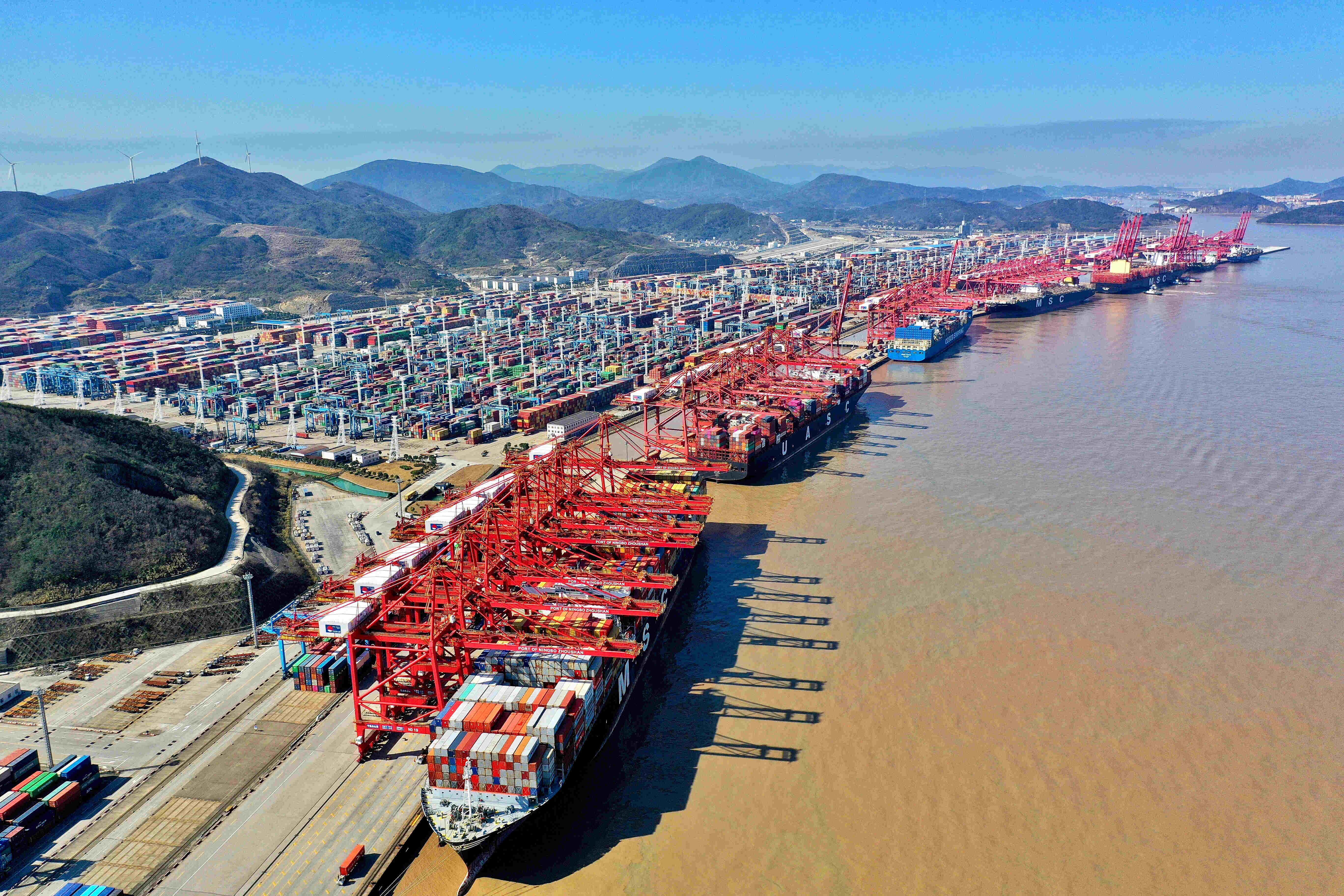
绿色贸易

Search documents
【图解】速览!2026年经济工作八大重点任务
Zhong Guo Jing Ji Wang· 2025-12-11 12:29
Core Viewpoint - The Central Economic Work Conference held on December 10-11 in Beijing outlined eight key tasks for economic work in 2026, focusing on domestic demand, innovation, reform, openness, coordinated development, green transformation, public welfare, and risk management. Group 1: Domestic Demand - Emphasis on leading domestic demand and building a strong domestic market through actions to boost consumption and implement urban and rural income increase plans [1] - Expansion of quality goods and services supply, optimization of "two new" policy implementation, and removal of unreasonable restrictions in the consumption sector to unleash service consumption potential [1][2] - Encouragement of investment stabilization, with an increase in central budget investment scale and optimization of local government special bond usage [1] Group 2: Innovation - Focus on innovation-driven growth by developing a comprehensive plan for education, technology, and talent development [2] - Establishment of international technology innovation centers in key regions such as Beijing, Shanghai, and the Guangdong-Hong Kong-Macau Greater Bay Area [2] - Strengthening the role of enterprises in innovation and improving intellectual property protection in emerging fields [2] Group 3: Reform - Commitment to reform efforts to enhance high-quality development, including the establishment of a unified national market and further deepening state-owned enterprise reforms [3] - Initiatives to clear overdue payments to businesses and promote win-win scenarios for platform enterprises and their operators [3] - Expansion of market-oriented reforms and improvement of the local tax system [3] Group 4: Openness - Promotion of multi-field cooperation and gradual advancement of institutional openness, including the expansion of service sector autonomy and optimization of free trade zone layouts [4] - Encouragement of service exports and development of digital and green trade [4] - Strengthening of foreign investment promotion mechanisms and enhancing overseas service systems [4] Group 5: Coordinated Development - Coordination of urban-rural integration and regional collaboration, focusing on high-quality development in county economies [5] - Maintenance of arable land and food production stability, ensuring reasonable prices for key agricultural products [5] - Support for major economic provinces and enhancement of cooperation among key urban clusters [5] Group 6: Green Transformation - Advancement of energy-saving and carbon reduction initiatives in key industries and the establishment of a new energy system [6] - Strengthening of the national carbon emissions trading market and implementation of comprehensive waste management actions [6] - Promotion of environmental protection initiatives and improvement of disaster response infrastructure [6] Group 7: Public Welfare - Implementation of actions to stabilize employment for key groups such as college graduates and migrant workers, and support for flexible employment [7] - Adjustment of educational resource allocation to increase high school and quality university enrollment [7] - Optimization of drug procurement and deepening of medical insurance payment reforms [7] Group 8: Risk Management - Focus on stabilizing the real estate market with city-specific policies to control inventory and encourage the acquisition of existing housing for social welfare [8]


货物贸易顺差首次超万亿,中央鼓励支持服务出口
Di Yi Cai Jing· 2025-12-11 11:29
Group 1 - The core viewpoint of the articles emphasizes the significant growth in service exports compared to imports, leading to a continuous narrowing of the service trade deficit [1][2] - The Central Economic Work Conference highlighted the importance of "encouraging and supporting service exports" and developing digital and green trade as key tasks for economic work in 2026 [1] - In the first ten months of 2025, China's total service trade reached 65,844.3 billion yuan, with exports growing by 14.3% and imports by 2.6%, resulting in a service trade deficit of 7,663.7 billion yuan, which decreased by 2,693.9 billion yuan year-on-year [2] Group 2 - Knowledge-intensive service exports increased by 9.5% in the first ten months of 2025, with a significant expansion of the surplus by 1,036 billion yuan compared to the previous year [2] - Travel service exports saw a remarkable growth of 52.5%, contributing to a total travel service trade of 18,125.4 billion yuan, which grew by 8.5% [2] - The trade surplus for goods reached a historical high of 1.08 trillion USD in the first eleven months of 2025, with a notable increase in exports to non-US markets, particularly ASEAN, Europe, and Africa [3]
中央经济工作会议:鼓励支持服务出口,积极发展数字贸易、绿色贸易
Xin Lang Cai Jing· 2025-12-11 10:04
专题:中央经济工作会议在北京举行 责任编辑:石秀珍 SF183 中央经济工作会议12月10日至11日在北京举行。会议指出,坚持对外开放,推动多领域合作共赢。稳步 推进制度型开放,有序扩大服务领域自主开放,优化自由贸易试验区布局范围,扎实推进海南自由贸易 港建设。推进贸易投资一体化、内外贸一体化发展。鼓励支持服务出口,积极发展数字贸易、绿色贸 易。深化外商投资促进体制机制改革。完善海外综合服务体系。推动共建"一带一路"高质量发展。推动 商签更多区域和双边贸易投资协定。 责任编辑:石秀珍 SF183 专题:中央经济工作会议在北京举行 中央经济工作会议12月10日至11日在北京举行。会议指出,坚持对外开放,推动多领域合作共赢。稳步 推进制度型开放,有序扩大服务领域自主开放,优化自由贸易试验区布局范围,扎实推进海南自由贸易 港建设。推进贸易投资一体化、内外贸一体化发展。鼓励支持服务出口,积极发展数字贸易、绿色贸 易。深化外商投资促进体制机制改革。完善海外综合服务体系。推动共建"一带一路"高质量发展。推动 商签更多区域和双边贸易投资协定。 ...
下一步,贸易强国
清华金融评论· 2025-12-09 01:15
Core Viewpoint - The article emphasizes the importance of promoting trade innovation development as a key strategy for overcoming challenges and seizing opportunities during the "14th Five-Year Plan" period, aiming to transition from a trade power to a trade strong nation [4][11]. Group 1: Significance of Promoting Trade Innovation Development - The "14th Five-Year Plan" period saw steady progress in China's foreign trade, with an optimized import-export structure and a reinforced position as a trade power. The "15th Five-Year Plan" period is crucial for achieving modernization and transitioning to a trade strong nation [5]. - Promoting trade innovation is essential for high-quality development, as it expands new spaces and advantages for economic growth, meets domestic industrial and consumption upgrades, and enhances the role of foreign trade in stabilizing growth and promoting employment [6]. - Trade innovation supports the construction of a new development pattern, facilitating the dual circulation of domestic and international markets, leveraging China's large market and supply capabilities [6]. - It is necessary to respond proactively to changes in the international economic landscape, maintaining a commitment to free trade and multilateral trade systems while promoting trade innovation for cooperative win-win outcomes [7]. Group 2: Basic Requirements for Promoting Trade Innovation Development - A balanced approach between goods trade and service trade is essential, as service trade is becoming a significant growth driver in the global economy. China aims to enhance both goods and service trade to improve competitiveness [8]. - Expanding both exports and imports is crucial for high-quality development, with a focus on optimizing import structures and enhancing the role of foreign investment in driving trade [9]. - The integration of traditional and emerging trade dynamics is necessary, supporting the transformation of traditional industries while fostering new growth points in trade [10]. Group 3: Main Tasks for Promoting Trade Innovation Development - The focus is on optimizing and upgrading goods trade, enhancing product structure and market layout, and promoting the integration of domestic and foreign trade [12]. - There is a strong emphasis on developing service trade, encouraging exports of knowledge-intensive services, and improving the regulatory environment for cross-border service trade [14][15]. - Innovation in digital trade is prioritized, with efforts to expand market access and establish mechanisms for safe data flow, while also supporting the development of digital products and services [16]. - Strengthening the trade promotion system and enhancing the functions of trade promotion platforms are essential for supporting trade growth and international competitiveness [17]. - A robust trade risk prevention system is necessary to address various risks in the trade sector, ensuring economic security while promoting trade innovation [18].
外贸坚韧 筑牢开放根基
Xin Hua Wang· 2025-12-08 09:19
Group 1 - The core viewpoint is that China's foreign trade has shown resilience and continues to drive economic growth, with a total import and export value of goods increasing by 4% year-on-year in the first three quarters [1] - In the first ten months, exports of electromechanical products reached 13.43 trillion yuan, growing by 8.7%, contributing 5.2 percentage points to overall export growth [2] - New green products, including "new three samples," railway electric locomotives, and wind power generator sets, have seen double-digit export growth, indicating a shift towards new, intelligent, and green trade dynamics [2] Group 2 - China has diversified its trade partners, with total imports and exports to Belt and Road Initiative countries reaching 19.28 trillion yuan, a growth of 5.9% [3] - ASEAN remains China's largest trading partner, with a year-on-year growth of 9.1% in trade with the region [3] - Imports from Latin America, Africa, and Central Asia have increased by 1%, 5.2%, and 23.7% respectively, showcasing a broader market engagement [3] Group 3 - New business models such as cross-border e-commerce and bonded maintenance are becoming significant engines for stabilizing foreign trade, with cross-border e-commerce imports and exports reaching approximately 2.06 trillion yuan, a growth of 6.4% [4] - Major trade exhibitions like the Consumer Expo, Import Expo, and Canton Fair are aiding companies in expanding international markets and trade channels [4] - The bonded maintenance business saw a year-on-year growth of 7.5% in import and export value in the first half of the year, further unlocking foreign trade growth potential [4] Group 4 - The "14th Five-Year Plan" emphasizes market diversification and the integration of domestic and foreign trade, alongside the recent signing of the upgraded China-ASEAN Free Trade Area 3.0 protocol [5] - The Ministry of Commerce has issued the first special policy document on green trade, which will significantly promote trade innovation and international cooperation [5] - New policies from the State Administration of Foreign Exchange aim to facilitate cross-border trade and payment, supporting the stable development of foreign trade [5]
数览中国脉动|外贸坚韧 筑牢开放根基
Xin Hua Wang· 2025-12-06 07:33
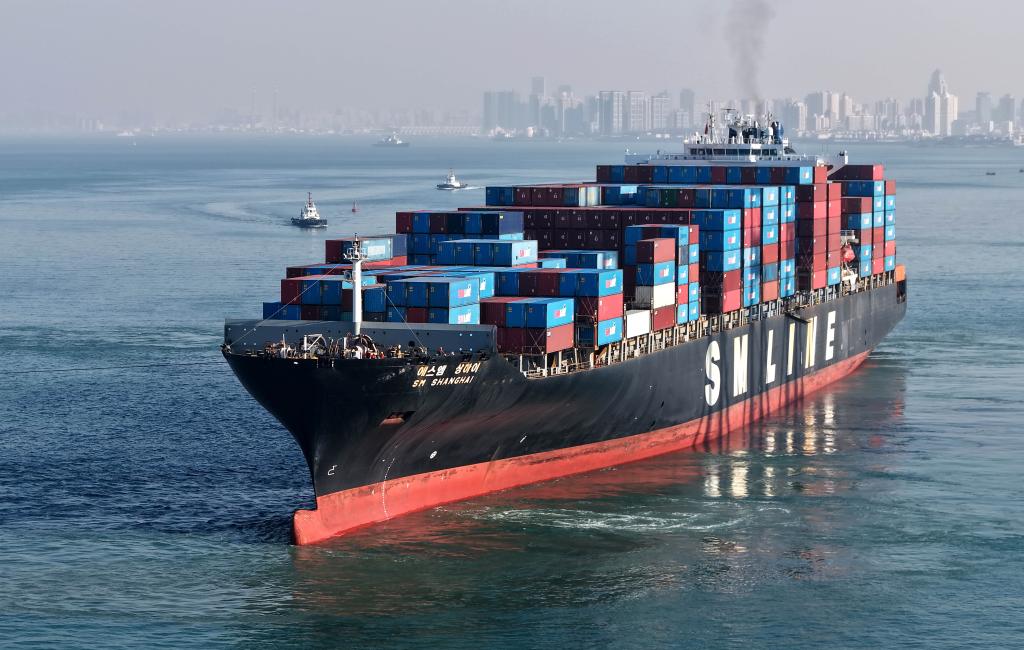
外贸,拉动经济增长的"三驾马车"之一。 前三季度,我国货物贸易进出口总值同比增长4%。上半年,新设外资企业同比增长4.1%。面对复杂严峻的外部环境,我国外贸韧性彰显,外 资持续加码。 12月4日,一艘满载集装箱的货轮驶离青岛港前湾港区码头(无人机照片)。新华社记者 李紫恒 摄 ■外贸产品结构不断优化,出口新动能增势良好 据海关统计,前10个月,我国出口机电产品13.43万亿元,同比增长8.7%,拉动我国整体出口增长5.2个百分点。 10月13日,在江苏省连云港港东方港务分公司码头,大批风电设备集港准备装船出口国外(无人机照片)。新华社发(王春 摄) "新三样"产品、铁道电力机车、风力发电机组等绿色产品出口增速都达到两位数。向新、向智、向绿等新动能不断涌现,持续推动我国外贸 提质增效。 ■不断开拓新兴市场,贸易伙伴更趋多元化 数据显示,前10个月,我国对共建"一带一路"国家合计进出口19.28万亿元,增长5.9%。其中,东盟继续保持我国第一大贸易伙伴地位,对东 盟进出口同比增长9.1%,对亚太经合组织(APEC)其他经济体进出口增长1.5%。此外,我国自拉美、非洲和中亚国家进口分别增长1%、5.2%和 23.7 ...
ESG月报(2025年11月):新能源将与新兴产业融合互促发展-20251204
Huachuang Securities· 2025-12-04 10:16
证 券 研 究 报 告 ESG 月报(2025 年 11 月) 新能源将与新兴产业融合互促发展 ❑ 行业发展动态: 1、政策动态:(1)国务院新闻办公室 11 月 8 日发布《碳达峰碳中和的中国行 动》白皮书,系统阐述中国推进"双碳"工作的战略部署、实践路径与显著成 就。(2)11 月 12 日,国家能源局发布关于促进新能源集成融合发展的指导意 见,旨在推动新能源由单一开发转向集成融合发展。到 2030 年,该模式将成 为新能源发展的重要方式。 2、行业热点:(1)第十五届全国运动会首次实现全过程碳中和,绿色低碳理 念贯穿赛事始终,这一创新实践不仅为粤港澳大湾区注入了绿色动能,更以实 际行动诠释了"体育精神"与"生态文明"的共生共荣。(2)宠物经济的繁荣 伴随显著环境压力,需通过政策监管、行业创新与公众理性消费协同推动其绿 色低碳转型,以实现可持续发展。 3、产业实践:(1)乐高超半数生产线改用纸袋,所有包装纤维材料占 93%, 亚洲工厂已基本完成改造,欧美工厂预计三年内完成,旨在减塑增效,为行业 提供可持续发展范例。(2)谷歌与道达尔能源签署 15 年协议,将从后者的太 阳能电站采购总计 1.5 太瓦时的认 ...
助力中国—东盟命运共同体建设
Ren Min Ri Bao Hai Wai Ban· 2025-12-04 01:00
Core Points - The establishment of the China-ASEAN Free Trade Area 3.0 marks a significant step towards deepening regional cooperation and building a community of shared destiny in the context of global changes [1][2] - The transition from factor-driven to institutional openness is essential for high-quality regional economic cooperation, necessitating updates to trade rules and standards [2][4] - The focus on digital economy and green trade represents new opportunities for cooperation, with Chinese enterprises encouraged to leverage their technological advantages in ASEAN countries [4][6] Group 1: Institutional Openness - The signing of the upgraded protocol for the China-ASEAN Free Trade Area will shift cooperation from factor flow to institutional openness [1] - There is a need for the government to enhance domestic openness while updating trade rules to lower tariffs and eliminate hidden trade barriers [2] - The upgrade of the China-ASEAN Free Trade Area agreement is seen as a key measure to counter Western institutional hegemony and promote multilateralism [2] Group 2: Regional Cooperation - The upgrade of the China-ASEAN Free Trade Area is opening new avenues for regional cooperation, particularly in digital economy and green trade [4] - Chinese enterprises are encouraged to participate in the digital infrastructure development of ASEAN countries, utilizing their strengths in 5G and AI [4] - The complete layout of the new energy vehicle industry chain by Chinese companies aligns with ASEAN countries' urgent need for green transformation [4][6] Group 3: Think Tank Support - The construction of the China-ASEAN community of shared destiny requires robust theoretical research and decision-making support from think tanks [5] - Local universities with overseas Chinese resources are playing a crucial role in deepening China-ASEAN cooperation through research on overseas Chinese communities [5][6] - The collection of oral histories from overseas Chinese in ASEAN countries contributes to the cultural foundation of the China-ASEAN community [6]
于逆风中守护,在大潮中前行(寰宇平)
Ren Min Ri Bao· 2025-12-03 22:29
在历史的十字路口,是筑起隔绝的"墙",还是搭建开放的"桥"?面对经济全球化大势,任何一个国家, 无论大小强弱,一旦背离了潮流大势,终将落后于时代 国际经贸格局正处于深度变革之中。在世界贸易组织成立30周年之际,国际贸易体系呈现出两个突出特 点:一方面,个别国家发起的贸易战、关税战,严重冲击世界经济、损害国际贸易规则;另一方面,各 国面对挑战主动求变,各类区域和多边贸易协定激增。有国际观察人士担忧,全球经贸合作版图正被一 种由地缘政治博弈塑造的"丘陵地貌"所侵蚀。以规则为基础的多边贸易体制,这个曾经的世界经济"稳 定器",正面临前所未有的考验。 破坏多边贸易规则的代价,是有可能回到关贸总协定和世界贸易组织建立之前以权力为基础的以强凌 弱、以大欺小的国际贸易体系。问题随之而来:人类是否会重蹈历史的覆辙? "尽管有'强劲的逆风',世界贸易展现出韧性",世界贸易组织总干事伊维拉指出。放眼全球,各方推动 开放贸易的努力不断加强。中国—东盟自贸区3.0版升级议定书正式签署,欧盟推进与南方共同市场和 墨西哥的贸易协定,巴西和印度宣布力争到2030年将双边贸易额提升至200亿美元……这些努力,共同 构成对单边主义的集体回应。 ...
三大区域外贸领跑:韧性背后的增长密码
Sou Hu Cai Jing· 2025-11-25 14:43
Core Insights - China's foreign trade in the Yangtze River Delta, Guangdong-Hong Kong-Macao Greater Bay Area, and Beijing-Tianjin-Hebei regions has shown strong resilience, with significant growth in exports and imports over the first ten months of the year [1][2][6] Group 1: Trade Performance - The Yangtze River Delta's import and export volume reached 14 trillion yuan, a year-on-year increase of 6% [1] - The Guangdong-Hong Kong-Macao Greater Bay Area's trade volume hit 7.52 trillion yuan, marking a historical high for the same period [1] - The Beijing-Tianjin-Hebei region's exports reached 1.2 trillion yuan, also a historical high, with continuous growth for seven months [2][6] Group 2: Sector Contributions - Private enterprises in the Yangtze River Delta accounted for 55.9% of the region's total trade, with a year-on-year increase of 9.7% in their import and export volume [1] - The Greater Bay Area's export structure has improved, with electromechanical products making up nearly 70% of exports, and significant growth in electronic components and "new three types" products [1][6] Group 3: Regional Advantages - The three regions benefit from strong industrial foundations and innovation capabilities, transitioning from cost advantages to innovation-driven growth [6] - They are deeply embedded in global supply chains, maintaining stable trade relations with over 240 countries and regions [2][6] - Institutional innovation, supported by top-level policies, has fostered a collaborative and competitive open economy [6] Group 4: Future Outlook - The future of foreign trade in these regions is expected to focus on digital trade, green trade, and comprehensive solution exports, with the Yangtze River Delta leading in digital technology and green technology integration [8] - The Greater Bay Area aims to enhance its role as a global service trade hub, while the Beijing-Tianjin-Hebei region will focus on high-end equipment and system integration exports [8]