
风险防控

Search documents
上海同济科技实业股份有限公司发布新版章程 注册资本6.25亿元 聚焦城乡建设与发展领域
Xin Lang Cai Jing· 2025-12-03 12:29
Core Viewpoint - Shanghai Tongji Science and Technology Industry Co., Ltd. has released a new company charter that clarifies its organizational structure, operational objectives, equity management, and governance mechanisms, aiming to enhance corporate governance and operational standards in the urban construction and development sector [1][5]. Company Positioning and Business Strategy - The new charter defines the company's operational objective as "keeping pace with national strategic steps, leveraging Tongji University's academic, talent, and technological advantages to create a comprehensive service enterprise for value enhancement in urban and rural construction and development" [2]. - The business scope includes industrial investment, education industry investment and talent training, real estate investment and development, and investment consulting, highlighting its unique positioning in the integration of production, education, research, and application [2]. Governance Structure and Power Balance - The charter establishes a three-tier governance structure: Shareholders' Meeting, Board of Directors, and Management [3]. - The Shareholders' Meeting is the highest authority, responsible for major decisions such as capital changes and profit distribution, with shareholders holding over 10% of shares able to propose meetings [3]. - The Board consists of 7-9 directors, with a chairman as the legal representative, and includes specialized committees like the Audit Committee, primarily composed of independent directors [3]. - The Management, led by the General Manager, is responsible for operational management and implementing board resolutions [3]. - The charter emphasizes the establishment of a Party organization, with a Party Committee and Discipline Inspection Commission involved in major decision-making [3]. Shareholder Rights Protection Mechanism - The charter comprehensively outlines shareholder rights, including dividend rights, voting rights, and the right to information [4]. - Shareholders holding over 1% of shares can request the Audit Committee to initiate lawsuits if directors or executives harm company interests [4]. - Strict regulations on related party transactions are established, requiring related shareholders to abstain from voting on such matters [4]. - The profit distribution policy prioritizes cash dividends when the company is profitable and has sufficient cash flow, with a commitment to distribute at least 30% of the average distributable profit in cash over the last three years [4]. Risk Control and Compliance Management - The charter imposes strict controls on external guarantees, share buybacks, and fund management [4]. - External guarantees require approval from the Board or Shareholders' Meeting, especially for guarantees exceeding 10% of net assets [4]. - Share buybacks are limited to specific circumstances and must be completed within a designated timeframe [4]. - The controlling shareholder and actual controller are prohibited from misusing company funds or forcing the company into illegal guarantees [4]. Financial and Information Disclosure Standards - The charter mandates the establishment of a sound financial accounting system, with annual reports to be disclosed within four months after the fiscal year-end and interim reports within two months after the first half of the year [4]. - It specifies that information disclosure must be made through media that meet regulatory requirements and the Shanghai Stock Exchange website to ensure timeliness and transparency [4].

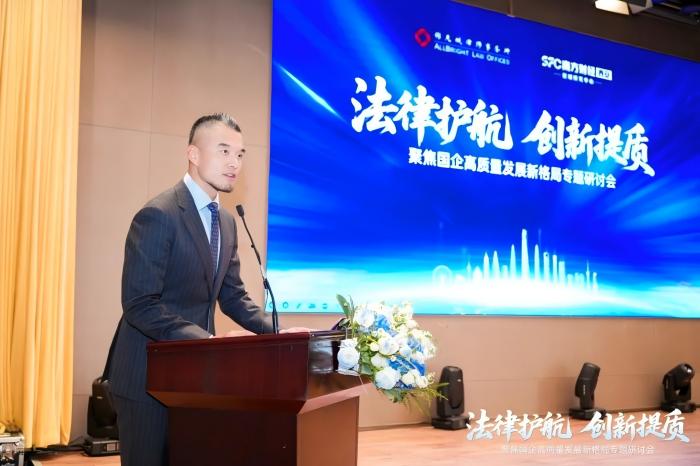
法律护航 创新提质 | 国企高质量发展专题研讨会在西安成功举办
Sou Hu Wang· 2025-12-02 06:53
Core Insights - The seminar focused on the high-quality development of state-owned enterprises (SOEs) and the importance of legal frameworks in facilitating this process [1][3][4] - Key discussions included the integration of legal compliance and risk management into the operational strategies of SOEs, emphasizing the need for a robust legal environment [4][6][10] Group 1: Legal Framework and SOE Development - The year 2025 is highlighted as a critical point for the deepening of SOE reforms, with a focus on enhancing core functions and competitiveness [3] - Legal issues such as state asset legislation and the separation of public goods from commercial entities were identified as pivotal for future reforms [3][4] - The importance of a legal and compliant business environment was emphasized as essential for the successful reform and high-quality development of SOEs [4][6] Group 2: Practical Applications and Risk Management - Legal risks in SOE import-export operations were analyzed, stressing the need for improved internal compliance mechanisms [6] - The establishment of a smart legal framework within SOEs was discussed, showcasing the integration of technology to enhance legal efficiency and reduce disputes [6][8] - New requirements from the revised Company Law necessitate clearer governance structures within SOEs, including the establishment of compliance and risk management mechanisms [8] Group 3: Collaborative Mechanisms - The roundtable discussions emphasized the need for organic collaboration between internal and external legal forces, moving beyond traditional adversarial relationships [9][10] - A unified understanding and regular communication between business and legal teams were identified as crucial for overcoming collaboration barriers [10] - The integration of compliance processes into business operations was highlighted as a way to position legal functions as enablers of high-quality development [10] Conclusion - The seminar concluded with a call for collaboration between legal professionals and the business sector to navigate the challenges of SOE reforms and drive innovation [11][13] - The insights gained from the discussions are expected to inform actionable strategies for enhancing the legal service framework supporting SOEs [13]

(送审)创新服务谋发展,固本守正兴北疆——农行内蒙古分行交出“十四五”高质量金融答卷
Zhong Guo Jin Rong Xin Xi Wang· 2025-12-02 06:38
Core Viewpoint - Agricultural Bank of China Inner Mongolia Branch aims to enhance financial services to support rural revitalization and the real economy during the 14th Five-Year Plan period, focusing on innovation, foundational support, and risk control to promote high-quality economic and social development in Inner Mongolia [1] Group 1: Service Innovation - The bank has implemented a differentiated policy framework to support regional strategies, providing a total of 1,306.6 billion yuan in various financing since the signing of the strategic cooperation agreement with the Inner Mongolia government in June 2022, achieving the 500 billion yuan financing target two years ahead of schedule [2] - The bank has established 281 county-level outlets, 70 township outlets, and 59 agricultural service stations, creating a service network that includes 3,272 financial village directors and mobile party member teams to enhance rural financial services [2] - By the end of October 2025, the bank's county loan balance reached 231.1 billion yuan, doubling from the end of 2020, making it the first state-owned bank in the region to exceed 200 billion yuan in county loans [2] Group 2: Operational Management - The bank is advancing a transformation strategy that integrates branch operations, retail, corporate services, and digitalization, including the addition of 600 customer managers and the streamlining of 74 internal structures [3] - The bank has launched various digital banking products and services, achieving an online loan balance of 144 billion yuan by the end of October 2025, which is over four times the loan scale at the end of 2020 [3] - The bank has introduced innovative services such as online agricultural loans and community dining services to enhance customer experience and support small and micro enterprises [3] Group 3: Risk Control - The bank has strengthened credit risk management by establishing a "white list" review system and a monitoring mechanism for key clients, optimizing management processes continuously [4] - Operational risk management has been enhanced through compliance training and the development of intelligent monitoring models to ensure adherence to regulations and improve overall risk management [4] - The bank is committed to maintaining its "finance for the people" ethos, focusing on service efficiency and proactive risk prevention as it contributes to the new development journey of the 14th Five-Year Plan [4]

筑牢风险控制防线 服务债市高质量发展(附英文版)
Xin Lang Cai Jing· 2025-12-01 23:02
登录新浪财经APP 搜索【信披】查看更多考评等级 ◇ 作者:钟言 ◇ 本文原载《债券》2025年11月刊 防范化解风险是金融工作永恒的主题。近日发布的《中共中央关于制定国民经济和社会发展第十五个五 年规划的建议》对防范化解金融风险作出重要部署。债券市场风险防控可从制度、技术、市场三方面着 手,筑牢体系防线,服务金融高质量发展。 一是夯实风控制度基础。健全的制度规则让风险防控有章可循、有规可依。巩固债市运行的基础制度, 以穿透监管为原则,完善市场风险监测机制。优化信息披露相关机制,压实发行人与中介机构的信息披 露责任,制定绿色、科技等重点领域信息披露标准,降低投资者与发行方之间信息不对称。强化金融机 构债券业务内控和监督,落实中介机构主体责任。适度强化违约处置和违规查处机制,畅通债务重组等 退出渠道,提高违约处置效率,对虚假披露、操纵市场、逃废债等违规行为严格执法,以制度威慑筑牢 风险防线。 二是加强数字技术赋能。大数据、人工智能等数字技术日益发展,使债市风险防控更加智能有效。深化 债市信息披露数字化转型,探索应用可扩展商业语言等数字技术,促进债市信息披露更加结构化,便利 信息披露数据在市场机构间共享利用。加强 ...
金融赋能发展新篇——郑州银行以高质量经营助力地方经济跃升
Sou Hu Cai Jing· 2025-12-01 13:20
Core Viewpoint - Zhengzhou Bank focuses on balancing its development with local economic empowerment amidst narrowing interest margins and intensified market competition in the banking industry [1] Group 1: Financial Performance - As of the third quarter, Zhengzhou Bank's total assets exceeded 740 billion yuan, reaching 743.55 billion yuan, representing a steady growth of 9.93% compared to the end of the previous year [1] - The total amount of deposits reached 459.52 billion yuan, an increase of 13.59% from the end of the previous year, with personal deposits growing by 22.44% year-on-year to 267.14 billion yuan [1] - Net interest income was 7.816 billion yuan, up 5.83% year-on-year, while non-interest income rose to 1.579 billion yuan, contributing to a diversified profit structure [2] Group 2: Credit and Investment Strategy - The total amount of loans and advances reached 406.72 billion yuan, a growth of 4.91% from the end of the previous year, with a focus on advanced manufacturing, urban renewal, and green low-carbon sectors [3] - The bank implemented a "one enterprise, one policy" approach to address financing difficulties for small and micro enterprises, enhancing support for local economic stability [3] Group 3: Service Ecosystem and Community Impact - Zhengzhou Bank has developed four service systems: "Citizen Manager," "Financing Manager," "Wealth Manager," and "Rural Manager," integrating financial services into various social scenarios [4] - Personal loan balances reached 96.31 billion yuan, reflecting a growth of 5.88% from the end of the previous year, catering to diverse needs such as housing, entrepreneurship, and consumption [4] Group 4: Risk Management - The bank maintained a provision coverage ratio of 186.17%, an increase of 19.94 percentage points year-on-year, while the non-performing loan ratio was 1.76%, a decrease of 0.1 percentage points [4] - Zhengzhou Bank emphasizes risk prevention as a core aspect of its operations, combining internal capital accumulation with external capital supplementation to enhance its risk resilience [4] Group 5: Future Outlook - Zhengzhou Bank aims to continue enhancing its comprehensive financial service capabilities and deepen its integration into local economic development, contributing to the rise of the Central Plains and the revitalization of Henan [5]
金融赋能让畜牧业稳定发展更有底气
Zheng Quan Ri Bao· 2025-11-30 15:28
Core Viewpoint - The sustainable development of the livestock industry, which is crucial for people's livelihoods, requires continuous financial support from banks to address the financing challenges faced by farming entities [1][3]. Group 1: Financial Innovation - Banks need to innovate credit products to address the core financing bottleneck in the livestock industry, breaking the traditional perception that "live animals are not assets" [1]. - The implementation of "Internet of Things + live asset collateral" models is essential, utilizing technologies like electronic ear tags and smart collars to transform live animals into financial assets that can be pledged and circulated [1]. - Optimizing the structure of loan terms and interest rates is necessary, with the design of medium- to long-term loans that align with breeding cycles and repayment schedules, such as no-principal renewal loans and revolving loans [1]. Group 2: Comprehensive Service Construction - Banks should abandon a "one-size-fits-all" credit model and provide customized financial solutions covering the entire livestock industry chain, including seedling cultivation, feed procurement, breeding management, slaughter processing, and production-sales connection [2]. - In the production phase, short-term working capital loans should support feed procurement and disease prevention, while fixed asset loans should assist in upgrading breeding facilities and introducing smart equipment [2]. - In the processing phase, increasing credit investment in slaughter processing enterprises is crucial to support cold chain logistics and deep processing projects, thereby extending the value of the industry chain [2]. Group 3: Risk Prevention and Control - Establishing a specialized risk assessment system is vital, integrating multi-dimensional information such as epidemic prevention records, production and sales data, credit status, and insurance coverage [2]. - Utilizing big data and satellite remote sensing technologies can enhance the precision of risk profiling, improving the scientific nature and efficiency of credit approval processes [2]. Group 4: Policy Guidance and Support - Banks should actively implement the agricultural and rural development department's work deployment and the requirements for high-quality development of the livestock industry during the "14th Five-Year Plan" period [3]. - There should be an increase in credit support for major production areas, large-scale breeding bases, and green low-carbon breeding projects to assist in cost reduction, quality improvement, and industry transformation [3]. - Strengthening the construction of financial service teams that understand both financial operations and livestock production is essential for enhancing service precision and targeting actual needs [3].
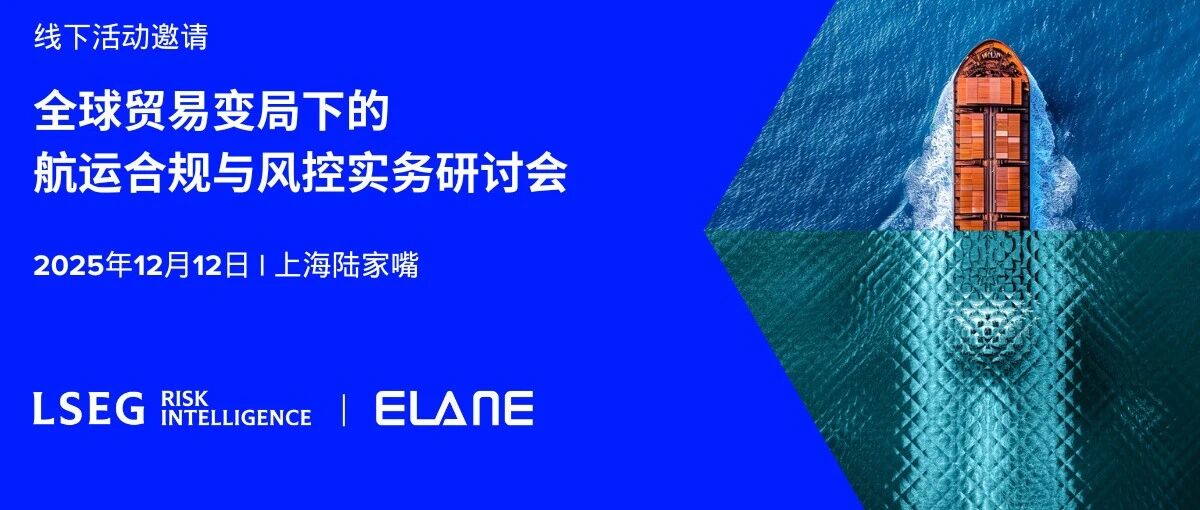
上海活动邀请 | 全球贸易变局下的航运合规与风控实务研讨会
Refinitiv路孚特· 2025-11-28 02:04
Core Insights - The article emphasizes the increasing importance of international trade compliance as a core capability for enterprises in response to evolving global trade dynamics and regulatory pressures [1][4]. Event Background - The event organized by LSEG and partners aims to address the challenges and opportunities in shipping trade and cross-border compliance, highlighting the need for transparency and compliance capabilities in the trade chain [1]. - The event invites professionals from various sectors, including maritime, shipping, trade, logistics, multinational corporations, and banking risk and compliance departments [1]. Event Agenda - The agenda includes a keynote speech on insights and best practices in shipping trade compliance, focusing on risk identification trends, the role of shipping and logistics data in financial compliance, and the latest developments in U.S. sanctions and export control systems [2][4]. - A roundtable discussion will cover the application of shipping logistics and sanctions compliance data in financial risk control, including the latest developments in U.S. sanctions and export control [5][8]. Key Topics - Best practices for verifying trade authenticity and enhancing supply chain transparency will be discussed [4]. - The use of shipping data in cross-border transaction compliance will be explored [4]. - Practical operations for identifying, avoiding, and monitoring sanction risks will be shared, along with collaborative mechanisms among banks, shipping companies, and technology providers [8]. Compliance Framework - The event will address the evolution of export control policies and their impact on enterprises, as well as strategies for navigating complex regulatory environments [8].
【以案说险】990万大额转账暗藏风险 银行多维排查+警银联动成功守护高龄客户资金
Bei Jing Shang Bao· 2025-11-26 09:44
Core Viewpoint - The incident highlights the importance of risk management in banking, showcasing how proactive measures can prevent potential fraud and protect customer funds [1][4]. Group 1: Incident Overview - A customer, Mr. Zhang, attempted to transfer 9.9 million yuan, initially claiming it was for a company equity transfer, but later changed the reason to purchasing property, raising suspicions [2][3]. - Multiple red flags were identified, including the customer's age, the large amount of money, the presence of a non-relative, and inconsistencies in the transaction's purpose [2][3]. Group 2: Risk Management Actions - Bank staff engaged in thorough communication with Mr. Zhang to clarify the transaction details while simultaneously coordinating with local police to assess potential fraud risks [3]. - Upon further investigation, the police advised the bank to suspend all related transactions, which the bank promptly executed, successfully preventing any financial loss [3][4]. Group 3: Commitment to Financial Safety - The successful handling of this case reflects the bank's commitment to prioritizing customer fund safety, demonstrating professional risk signal detection and effective communication [4]. - The bank emphasizes a proactive risk prevention philosophy, particularly for vulnerable groups like elderly customers, ensuring a balance between security and quality service [4].

转型不是“急就章” 十年挥就“时晴帖” 财通资管以多资产策略破局低利率时代
Shang Hai Zheng Quan Bao· 2025-11-25 18:14
Core Viewpoint - The asset management industry is undergoing a profound restructuring of its return logic due to the continuous decline in global interest rates, prompting a shift from "single asset allocation" to "multi-asset allocation" strategies [2][3] Group 1: Business Strategy - The company adopts a dual-driven approach of "active management + risk control" to navigate the low interest rate environment, establishing a robust business structure with a focus on traditional investment research and development (R&D) alongside innovative financing services [2][3] - The business architecture consists of a main body focusing on fixed income, equity, quantitative, fund of funds (FOF), and derivatives, with two wings represented by asset-backed securities (ABS) and real estate investment trusts (REITs) [2][3] Group 2: Investment Strategy - The traditional bond coupon strategy is no longer sufficient to meet investor return demands, with the 10-year government bond yield stabilizing around 1.7%, necessitating a reconstruction of return logic [3] - The company has been systematically developing a multi-strategy product line since 2016, focusing on flexible private equity products to complement its multi-asset strategy [3][4] - The fixed income team is continuously iterating its capabilities and structure, expanding its focus to include innovative investments and international business [3][4] Group 3: Product Development - The company has designed a multi-strategy product system based on investor risk preferences, creating a gradient layout of low, medium, and high volatility products [4] - The fixed income multi-strategy toolbox has expanded from traditional investments to include quantitative strategies, derivatives, and cross-border assets [4] Group 4: Equity Investment - The company's public equity scale grew over 80% by the end of Q3 2025 compared to the beginning of the year, with significant institutional capital inflow [5] - The company focuses on investment themes aligned with national industrial upgrades, achieving top performance in technology, consumer, and healthcare sectors [5] Group 5: Transition to Asset Management - The company is transitioning from traditional investment banking services to asset management, emphasizing deep operational engagement to enhance asset value [6][7] - The company has issued approximately 180 billion in ABS, focusing on high-quality enterprises in Zhejiang province and sectors like green technology [6][8] Group 6: Competitive Advantage - The company emphasizes the importance of active management and risk control as core competitive strategies, with total assets under management exceeding 300 billion by Q3 2025 [8][9] - The company aims to build a sustainable investment culture, focusing on long-term trends and the necessary professional capabilities to navigate market fluctuations [9]

金观平:扩大开放更要统筹好发展和安全
Jing Ji Ri Bao· 2025-11-23 02:50
Core Viewpoint - The emphasis on balancing development and security in the context of expanding openness in the Hainan Free Trade Port is crucial for achieving high-level foreign trade and investment [1][2][3] Group 1: Development and Security - The need to coordinate development and security is highlighted as essential for high-level foreign openness, especially given the complex international political and economic landscape [1] - The concept of "risk exposure" increases with broader and deeper foreign openness, making it more susceptible to external shocks [1] - A systematic approach to risk prevention and control is necessary, requiring a forward-looking and holistic mindset [3] Group 2: Risk Management - Conducting comprehensive pressure tests in specific areas is vital for assessing the feasibility of innovative systems and risk management capabilities [2] - The transition from "strict access and light regulation" to "broad access and heavy regulation" is necessary for effective risk management [3] - Establishing a risk prevention system that aligns with the level of openness is essential, focusing on collaborative efforts across departments [3] Group 3: Economic and Social Security - The free flow of goods, capital, talent, technology, and data introduces both traditional and non-traditional economic security risks [2] - Continuous evaluation and adjustment of risk prevention measures are necessary to avoid the spread of risks [3] - The development of a modern industrial system and diversification of global markets are critical for enhancing resilience and vitality in supply chains [3]