
新消费

Search documents
小劲酒单品冲百亿,白酒的未来是“不做白酒”?
阿尔法工场研究院· 2025-08-05 00:06
Core Viewpoint - The rise of the small Jinjiao brand reflects a shift in the white liquor industry towards younger consumers, emphasizing the need for brands to adapt without losing their core values [2][39] Group 1: Sales Performance and Market Dynamics - The claim of "100 billion sales" for small Jinjiao is based on a linear extrapolation from a sales increase of 42.45% in the first half of 2024, with actual sales of 31.1 billion yuan in the same period [10][11] - The sales of small Jinjiao have been influenced by social media trends, leading to increased attention and temporary spikes in sales, but sustainability remains uncertain [9][12] - The company has not surpassed its historical sales peak of 80 billion yuan since 2017, indicating fluctuations in growth rather than a consistent upward trajectory [11] Group 2: Consumer Trends and Product Innovation - The creative mixing of small Jinjiao with childhood beverages like AD calcium milk reflects a new consumption logic that resonates with younger consumers seeking both enjoyment and health [15][20] - The company has adjusted its product offerings, including lowering the alcohol content from 35% to 28% and introducing sugar-free versions to align with health trends [21][22] - The marketing strategy has shifted to target younger demographics, including women and high-net-worth individuals, moving away from traditional male-centric marketing [25][26] Group 3: Marketing and Channel Strategies - The establishment of a dedicated content marketing team has allowed the company to effectively engage with younger audiences through social media platforms [26] - The sales model has transitioned from a focus on inventory pressure to creating value for end-users, enhancing the authenticity of sales data [27][28] - The brand's differentiation from traditional high-end liquor is a key factor in attracting younger consumers, as it emphasizes social enjoyment over formal occasions [23][24] Group 4: Industry Challenges and Future Outlook - The competition in the health-oriented liquor segment is intensifying, with established brands launching similar products, posing a threat to small Jinjiao's market share [36][38] - The inherent conflict between new consumption trends and the traditional aging process of liquor presents a challenge for brands to innovate while maintaining quality [34][35] - The ability of small Jinjiao to maintain its current popularity will depend on continuous innovation and the preservation of its brand identity amidst changing consumer preferences [32][39]


七成投资者看好三季度A股 市场乐观情绪进一步酝酿
Shang Hai Zheng Quan Bao· 2025-08-04 22:59
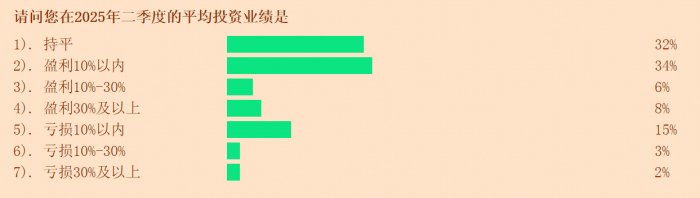
Core Viewpoint - The A-share market has shown strong resilience in the past quarter, leading to a recovery in individual investors' profitability. With index repair and low-risk interest rates, individual investors' willingness to allocate to equity assets has increased. For the third quarter, 70% of investors are bullish on the A-share market, indicating a more optimistic sentiment compared to the previous quarter. However, the performance of the A-share market in the third quarter may exceed the expectations of most investors, as the Shanghai Composite Index has successfully surpassed 3600 points in July [23]. Group 1: Market Performance and Investor Sentiment - In the second quarter, the A-share market experienced a "V"-shaped rebound after a significant drop in early April, with 48% of surveyed investors reporting profitability, an increase of 6 percentage points from the previous quarter [4][5]. - The proportion of investors who believe the Shanghai Composite Index will close positively in the third quarter has risen to 70%, a 12 percentage point increase from the previous quarter [17][19]. - Investors' expectations for the index's upper limit in the third quarter show that 39% anticipate it will reach around 3500 points, while 48% expect the lower limit to be around 3400 points [19]. Group 2: Asset Allocation and Investment Preferences - The proportion of individual investors who have increased their equity asset allocation has risen, with 36% planning to increase their overall equity asset size, a 7 percentage point increase from the previous quarter [8]. - Investors are showing a preference for technology growth stocks, with an average holding of 23.94%, while the average holding for cyclical stocks has increased to 20.21% [12][14]. - The investment sentiment towards new consumption concept stocks has also grown, with 55% of investors participating in this sector, indicating a shift in focus from traditional consumption stocks [15][21]. Group 3: Market Liquidity and External Factors - 44% of investors believe that the liquidity in the A-share market will remain at current levels, reflecting a significant increase in confidence compared to previous quarters [20]. - The expectation for the Federal Reserve's monetary policy remains optimistic, with 42% of investors anticipating continued accommodative policies and potential rate cuts [20]. - The inflow of southbound funds into the Hong Kong stock market has reached a historical high, with net inflows totaling 731.19 billion HKD in the first half of the year [21].
不止于“网红”:新消费如何破局“长红”密码?
Sou Hu Cai Jing· 2025-08-04 10:29
Core Viewpoint - The Chinese consumer market is undergoing profound changes, characterized by a juxtaposition of thriving new consumption trends and traditional giants facing price pressures, reflecting a restructured supply-demand relationship and evolving consumer needs [1][3][5]. Group 1: New Consumption Trends - New consumption is not a fleeting "internet celebrity" phenomenon but a deepening of consumption upgrades and a revolution in business philosophy [1][8]. - The rise of new consumption is supported by government policies encouraging the development of new consumption sectors, such as original IP brands and domestic products [7]. - New consumption is driven by technological and innovative efficiency revolutions, product and scenario upgrades, while maintaining a focus on quality and emotional connections with brands [14][15]. Group 2: Consumer Behavior Changes - Consumers are increasingly valuing emotional satisfaction alongside practical needs, with a notable shift towards experiences that enhance their quality of life [17][19]. - The demand for high-quality, innovative products that address life pain points is growing, while consumers are also sensitive to pricing and quality [19][21]. - The Z generation and Alpha generation, comprising approximately 35% of the total population in 2024, are expected to significantly influence consumption patterns with their unique preferences [23]. Group 3: Market Segmentation - There is a clear segmentation in consumer confidence and spending, with diverse groups presenting structural opportunities for brands [21]. - The aging population is creating new market demands, particularly in areas like smart home innovations and travel experiences for the elderly [23]. - Young urban professionals are exhibiting a trend towards "consumption grading," balancing essential spending with a desire for high-quality experiences [24].

最新基金经理主观投资榜揭晓!童驯、徐红兵等夺冠!梁宏、王文、但斌等上榜!
私募排排网· 2025-08-04 07:00
Core Viewpoint - The article discusses the performance of subjective private equity funds in the A-share market, highlighting the advantages of subjective investment strategies over quantitative approaches in capturing structural opportunities and achieving superior returns [2][4]. Group 1: Performance of Subjective Private Equity Funds - As of July 25, 2023, the average return of subjective private equity funds was 5.74%, compared to 4.74% for quantitative funds [2]. - The average return for subjective long-only products in the top tier (over 5 billion) was 11.91%, with 96.30% of products showing positive returns [2][3]. - The top three fund managers in the over 50 billion category were Tong Xun from Tongben Investment, Lu Hang from Fusheng Asset, and Wang Yiping from Evolutionary Asset [2][3]. Group 2: Fund Manager Rankings by Size - In the 20-50 billion category, the average return was 15.32%, with 91.16% of products showing positive returns. The top managers were Xu Hongbing from Shenzhen Dream Factory Investment, Chen Yu from Shennong Investment, and He Xiao from Orange Capital [5][6]. - In the 10-20 billion category, the average return was 27.08%, with all products achieving positive returns. The leading managers were Sun Jie from Nengjing Investment, Zhai Jingyong from Rongshu Investment, and Ding Yushuang from Chenyao Private Fund [8][9]. - In the 5-10 billion category, the average return was 22.88%, with 91.99% of products showing positive returns. The top managers were Liu Xianglong from Fuyuan Capital, Chen Long from Youbo Capital, and Han Yongfeng from Jiu Private Fund [11][12]. - In the 0-5 billion category, the average return was 18.36%, with 90.24% of products showing positive returns. The top managers were Yao Yong from Qinxing Fund, Xian Lisheng from Weifang Fund, and Li Linkai from Xinjing Investment [15][16]. Group 3: Investment Strategies and Market Trends - Tong Xun and Lu Hang successfully captured the "new consumption" trend, leading to their top performance in the market [4]. - Chen Yu from Shennong Investment focused on innovative pharmaceuticals, benefiting from the sector's strong performance this year [7][8]. - Liu Xianglong from Fuyuan Capital emphasized high-growth new consumption companies, indicating a strategic focus on sectors poised for recovery [12][13].

国泰海通 · 首席大咖谈|轻工刘佳昆:新消费的过去与未来
国泰海通证券研究· 2025-08-04 06:16
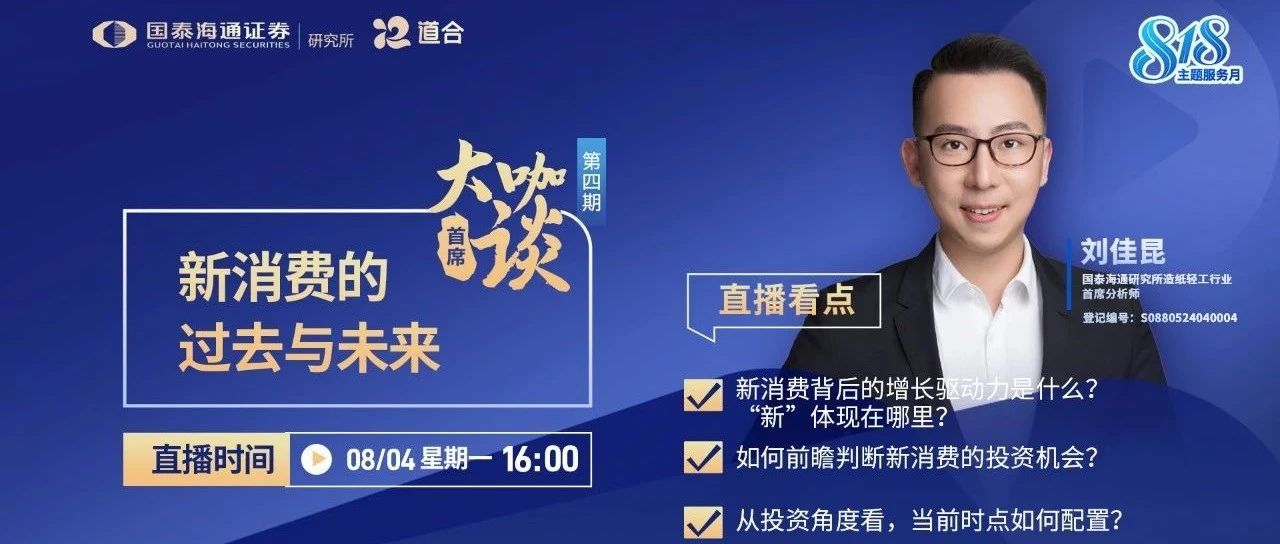
Group 1 - The core viewpoint of the article discusses the growth drivers behind new consumption and how to identify investment opportunities in this sector [2][4]. - The article emphasizes the characteristics of "new" consumption, highlighting the shifts in consumer behavior and preferences that define this trend [4]. - It provides insights on how to forecast and assess potential investment opportunities within the new consumption landscape [4].
高层明晰下半年经济工作重点,扩大内需在列!规模领先的消费ETF(159928)连续大举吸金,近8日累计净流入12.6亿元!
Sou Hu Cai Jing· 2025-08-04 06:15
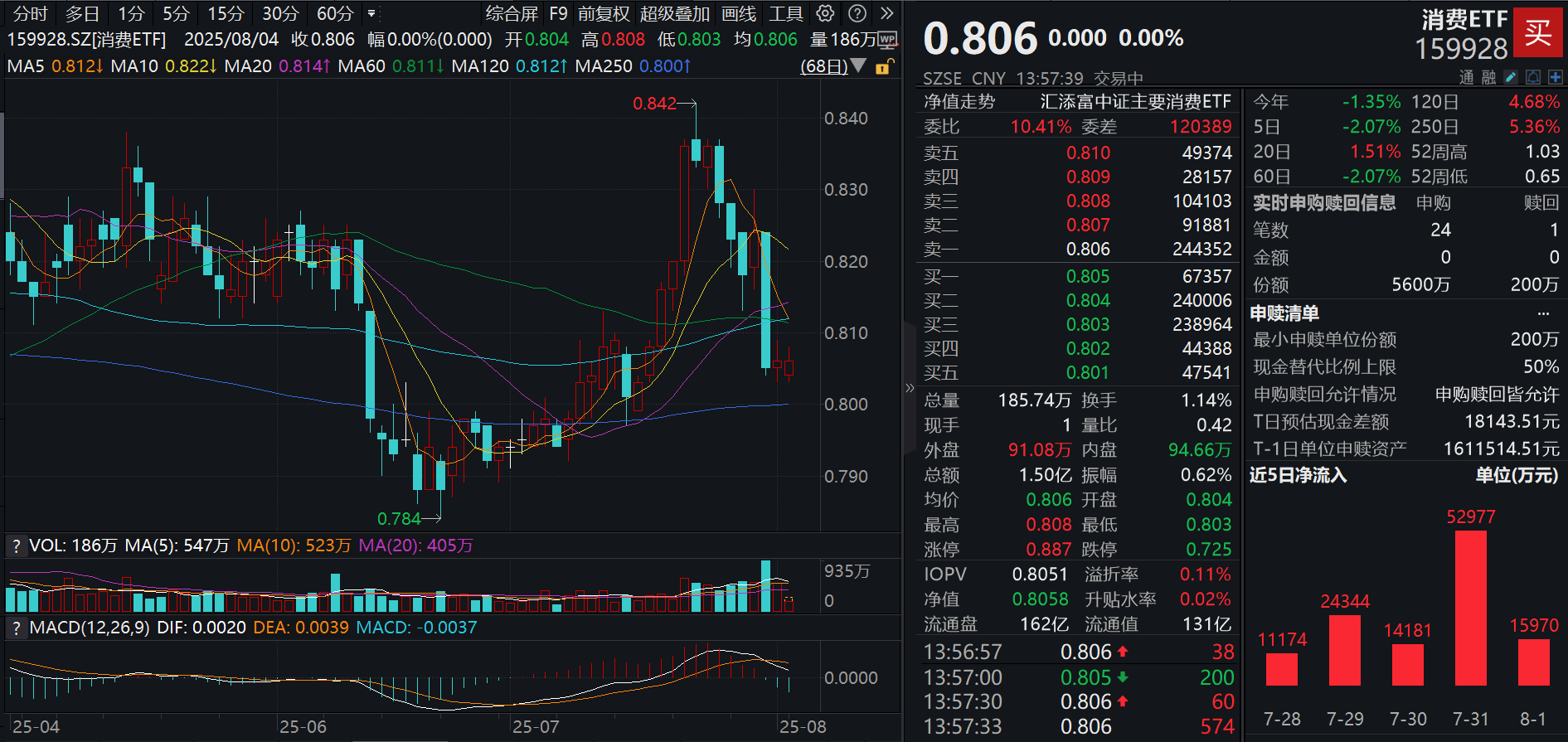
Group 1 - A-shares showed mixed performance today, with the consumption ETF (159928) maintaining a flat position and achieving a trading volume exceeding 1.5 billion yuan, indicating strong investor interest [1] - The consumption ETF (159928) has seen a net subscription of 54 million units during the day, marking its eighth consecutive day of inflow, with a total net inflow exceeding 1.26 billion yuan [1] - The latest scale of the consumption ETF (159928) has surpassed 13 billion yuan, leading its peers significantly [1] Group 2 - After two days of decline, Hong Kong's new consumption sector saw a slight increase, with the Hong Kong Stock Connect Consumption 50 ETF (159268) rising by 0.4% and experiencing net inflows for four consecutive days [3] - Multiple government departments have clarified three key focuses for economic work in the second half of the year: expanding domestic demand, innovation integration, and capacity governance, with domestic demand contributing 68.8% to economic growth in the first half [5] - Major state-owned banks have committed to implementing interest subsidy policies for personal consumption loans and service industry loans, aiming to stimulate domestic demand and enhance market vitality [5] Group 3 - The white liquor sector is expected to perform well during the Mid-Autumn Festival and National Day, with a focus on leading brands and new consumption products [6] - The new consumption sector has experienced a temporary adjustment, primarily due to capital rotation and the pressure of high valuations, but the long-term trend remains positive [6] - The upcoming disclosure period for mid-year reports in the consumer goods sector is anticipated to reveal new investment paradigms, with a focus on rational quality consumption and emotional value [6] Group 4 - The Hong Kong new consumption sector has shown strong performance in the first half of the year, with a shift towards personalized and rational consumption trends supporting the market [7] - Future policy support is expected to further unleash consumption potential, particularly in sectors related to self-satisfaction and cost-effectiveness [7] - The importance of boosting domestic consumption is increasingly recognized, with policies aimed at enhancing effective demand and supporting new consumption development [7] Group 5 - The recent high-level meeting emphasized the implementation of measures to boost consumption, with childcare subsidy policies already in place and further measures expected to enhance consumer confidence [15] - The consumption ETF (159928) is characterized by its resilience across economic cycles, with the top ten constituent stocks accounting for over 68% of its weight [15] - The top four liquor stocks represent 32% of the ETF, indicating a strong focus on this sector within the consumption landscape [15]
新消费,不只是 “新”
Sou Hu Cai Jing· 2025-08-04 03:34
Core Viewpoint - The Chinese consumption industry is at a turning point, with a need for suppliers to adopt more sincere enthusiasm, higher efficiency, and updated products to establish a "buyer solution" in response to changing consumer demands [1] Group 1: New Consumption Trends - New consumption represents a deepening evolution of consumption upgrade trends and an upgrade in business philosophy within the large consumption industry [2] - The "new" in new consumption is characterized by new categories, new scenarios, scarcity, and popularity, driven by technology and innovation [2] - The rise of new media has transformed consumer recognition, with flow economy catalyzing the emergence of popular brands and products through scene-based marketing [2] Group 2: Consumer Experience and Quality Pursuit - Consumers are increasingly valuing emotional needs alongside material needs, reflecting a shift towards emotional consumption [4] - Practical value remains the primary reason for purchases, but the desire for emotional satisfaction is rising, indicating a dual focus on functionality and emotional fulfillment [4] - Consumers are unwilling to accept "unjustified premiums" or "low-quality low prices," emphasizing the importance of value for money [4] Group 3: Cultural Awakening and National Confidence - Economic development has led to a cultural awakening, with rising national confidence contributing to the growth of domestic product consumption [5] - The Z generation shows a higher acceptance of domestic brands, indicating a trend towards national products becoming a major consumption trend in China [5] Group 4: Diverse Consumer Groups and Market Opportunities - Different consumer groups in China exhibit distinct consumption confidence and spending patterns, creating structural opportunities in the market [6] - The Z generation and Alpha generation, totaling approximately 4.8 billion, are increasingly contributing to consumption, with a focus on personalized experiences [6] - The aging population is also driving diverse demands, leading to innovations in smart home products and elder tourism [6] Group 5: Consumption Behavior of Young and Middle-aged Consumers - Young and middle-aged consumers are increasingly cautious in essential spending while still seeking high-quality experiences in discretionary spending [7] - There is a trend towards "consumption grading," with a focus on finding quality products at competitive prices [7] - Companies must accurately understand the consumption psychology of different age groups and innovate products and services to capture market share [7]
太阳岛思客对话丨聚焦“三新”驱动,共话发展新质生产力创新实践
Xin Hua She· 2025-08-04 03:28
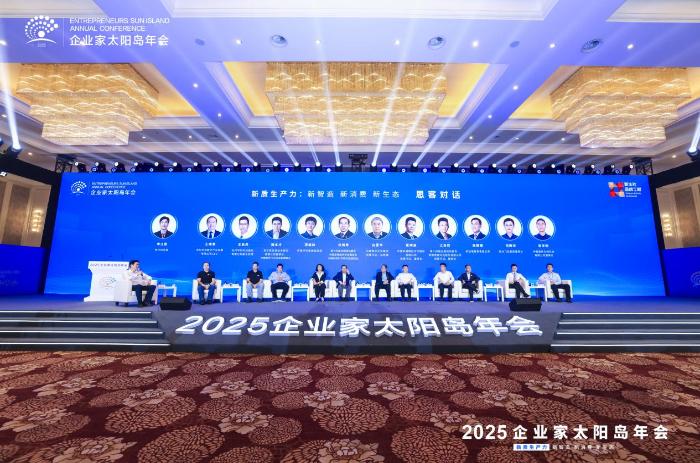
Core Viewpoint - The 2025 Entrepreneur Sun Island Annual Conference emphasizes the importance of developing new quality productivity as a strategic choice for gaining competitive advantages and seizing development opportunities in the context of a global technological revolution and industrial transformation [3][6]. Group 1: New Quality Productivity - The development of new quality productivity is crucial for building new competitive advantages in China, which requires tailored strategies based on local resources and conditions [6][8]. - Local governments should focus on deepening reforms and creating a favorable business environment, while entrepreneurs need to innovate business models to attract innovative elements and generate new technological achievements [8][10]. Group 2: New Intelligent Manufacturing - China has the largest and most complete manufacturing system globally, but transitioning from "manufacturing" to "intelligent manufacturing" necessitates technological innovation as a core element [13][15]. - Key technological breakthroughs, particularly in embodied intelligent robotics, are driving a new wave of industrial innovation and intelligent manufacturing [13][15]. Group 3: New Consumption - The Chinese consumption market is undergoing significant changes, with a notable increase in service-oriented consumption driven by technology [21][23]. - New consumption trends are expected to stimulate domestic demand, with platforms like Alibaba aiming to create new service-oriented e-commerce models [21][23]. Group 4: New Ecosystem - Developing new quality productivity requires a complex system that promotes efficient allocation of resources, with stable financial support being essential for high-risk, long-cycle industries [27][29]. - Attracting both state and private capital to invest in new quality productivity sectors is crucial, along with improving investment exit mechanisms to encourage long-term investments [27][29].
知名私募持仓曝光 聚焦多个热门赛道
Zhong Guo Zheng Quan Bao· 2025-08-03 21:12
Core Insights - Recent disclosures from private equity firms, including notable names like Dongfang Gangwan and Gao Yi Asset, have drawn market attention, particularly their focus on technology stocks and other emerging sectors like innovative pharmaceuticals and new consumption [1][3] Group 1: Dongfang Gangwan's Investment Strategy - Dongfang Gangwan's overseas fund reported a total holding value of $1.127 billion as of the end of Q2 2025, with Nvidia as the largest position [1] - The fund significantly increased its positions in Alphabet and Montreal Bank, now the second and third largest holdings, while also entering new positions in Tesla, Netflix, and Coinbase [1] - The fund reduced its holdings in Nvidia, Amazon, and Apple during the same period [1][2] Group 2: Gao Yi Asset's Position in Hikvision - Gao Yi Asset's Gao Yi Linshan No.1 Fund holds 338 million shares of Hikvision, representing 3.66% of the company, making it the fourth largest shareholder [2] - Since entering the top ten shareholders in Q3 2020, the fund has reduced its holdings by nearly 10 million shares from its peak of 435 million shares [2] - Despite being a top shareholder, Hikvision's stock price did not rise significantly after the fund's holdings peaked [2][3] Group 3: Market Trends and Sector Focus - Multiple private equity firms have highlighted technology, innovative pharmaceuticals, and new consumption as key investment areas in their mid-2025 strategy reports [3][4] - The chairman of Rongshu Investment expressed optimism about the potential of humanoid robots, predicting they will transform human lifestyles and lead to the emergence of leading companies [3] - Ding Ying, chairman of Kangmand Capital, emphasized the unique investment window created by the convergence of long-term technological revolutions and short-term market elasticity [4] Group 4: Overall Market Sentiment - Private equity firms maintain a relatively optimistic outlook for the market, citing factors such as policy support, increased stock buybacks, ample liquidity, and economic recovery as potential drivers for market performance [5]

专家看好北交所板块投资机遇
Zhong Guo Zheng Quan Bao· 2025-08-03 21:12
● 本报记者 刘英杰 今年以来,北交所市场交投活跃,流动性改善。Wind数据显示,北证50指数今年以来累计上涨 36.79%。 投资者持续关注北交所上市公司的投资机遇。分析人士认为,随着北证专精特新指数的推出、新股发行 的稳步推进和更多并购重组项目落地,北交所的交投活跃度和市场关注度有望维持在较高水平,北交所 板块具备长期投资价值。 "展望后市,北交所板块中期逻辑并未改变。"西部证券北交所首席分析师曹森元表示,首先,高质量供 给趋势或延续;其次,北证专精特新指数产品推进,四季度或带动增量资金入市;最后,政策红利蓄 势,产业基金倾斜,专精特新、并购重组活跃度提升。 曹森元认为,短期需警惕高估值压力及其他市场虹吸效应的持续扰动,若中报业绩验证高增长或政策催 化落地,市场有望迎来阶段性修复,建议聚焦创新药械国产化、AI硬件技术迭代、新质生产力领域的 景气赛道,静待量能回暖与基本面拐点共振。 方正证券北交所首席分析师王玉认为,在中报业绩密集披露期,建议投资者自下而上选择强壁垒、估值 相对较低、业绩预期较强的标的;同时,建议关注产业趋势,重点把握固态电池、人工智能、机器人、 商业航天等相关标的。 中国银河证券北交所分析 ...