对等关税

Search documents
英美关税协议,达成一致!为什么是英国?
Zheng Quan Shi Bao· 2025-05-08 14:39
Group 1 - The core point of the article is that the UK and the US have reached an agreement on tariff trade terms, with the UK making concessions on imports of US food and agricultural products in exchange for reduced tariffs on UK car exports [1][2][3] - This agreement marks the first trade deal since President Trump announced the so-called "reciprocal tariffs" and has led to a collective rise in US stock indices, while the UK FTSE 100 index saw a decline [2][3] - The UK government is prioritizing negotiations with the US before the upcoming UK-EU summit, aiming to finalize a deal that could include tariff reductions on steel, aluminum, and cars [9][11] Group 2 - The UK has been subjected to an additional 10% tariff under the "reciprocal tariffs" policy, and Prime Minister Starmer is seeking further reductions [9] - The UK is also negotiating on unresolved issues related to pharmaceuticals and the film industry, with potential tariffs on these sectors being discussed [11][12] - A recent trade agreement with India worth £25 billion has been signed, which reduces tariffs on UK exports to India, indicating the UK's strategy to establish broader economic partnerships [14]
湾区金融大咖说|专访高盛首席中国经济学家闪辉:提振消费需建立长效机制
2 1 Shi Ji Jing Ji Bao Dao· 2025-05-08 14:30
Core Viewpoint - The article discusses the impact of the U.S. tariffs on global trade and China's economic growth, emphasizing the need for China to implement substantial policy measures to achieve its economic growth target of around 5% for the year [1][3]. Economic Growth and Policy Measures - To meet the 5% GDP growth target, China may require an additional 2 trillion yuan in policy measures, considering a fiscal multiplier of 0.5, which corresponds to approximately 1.4 trillion yuan needed for a 1% GDP increase [3]. - The first quarter of 2025 saw China's GDP grow by 5.4%, exceeding market expectations, with exports increasing by 6.9% and industrial output rising by 6.5% [1][4]. Tariff Impact and Manufacturing Challenges - The U.S. tariffs are expected to have a delayed impact, particularly in the second and third quarters, as the effects of previous export surges and new tariffs converge [4]. - The U.S. faces significant challenges in reversing the trend of deindustrialization, primarily due to high labor costs and a lack of complete supply chain infrastructure [2][6]. Consumer Spending and Economic Policy - To stimulate consumer spending, there is a need for systemic adjustments in income distribution and fiscal policies, focusing on increasing residents' income share [7]. - Enhancing social security measures, particularly in rural areas, is seen as a necessary step to improve consumption and economic stability [8]. Currency Stability - The Chinese yuan has shown relative stability against the U.S. dollar, which is crucial for maintaining market confidence and mitigating external trade pressures [9]. Real Estate Market Strategies - The Chinese government is expected to continue focusing on stabilizing the real estate market through various measures, including increasing the supply of high-quality housing, which is vital for economic growth [10].
特朗普关税干扰美欧航空供应链,航空业集体呼吁“免关税”
第一财经· 2025-05-08 14:14
Core Viewpoint - The ongoing US-EU trade negotiations may lead to the EU imposing tariffs on US aircraft if no positive outcomes are achieved, which could significantly impact both the US and European aerospace industries [1][5]. Group 1: Trade Negotiations and Tariffs - Airbus CEO expressed concerns that if the US-EU trade talks do not yield satisfactory results, the EU may impose reciprocal tariffs on US aircraft to encourage higher-level negotiations [1]. - The EU is considering additional tariffs on approximately €100 billion (about $113 billion) worth of US goods, with civil aircraft likely included in the tariff list [1]. - The EU's proposed countermeasures will be shared with member states and will undergo a month-long consultation before finalizing the list [1]. Group 2: Impact on Aerospace Industry - The US aerospace and defense products have a significant trade surplus, with exports nearing $136 billion in 2023, while imports are just below $22 billion [5]. - The potential retaliatory tariffs from the EU could have a more substantial negative impact on the US aerospace industry than the tariffs imposed by the Trump administration on Airbus [5]. - Airlines are concerned about the additional costs associated with tariffs, with some executives stating they are unwilling to pay these costs, which could lead to delays in aircraft deliveries [6][7]. Group 3: Airline Responses and Economic Outlook - Major US airlines, including Delta and American Airlines, have expressed reluctance to absorb the costs of tariffs, indicating that they may delay aircraft deliveries if tariffs are implemented [7][8]. - Airlines are already adjusting their strategies to avoid tariffs, such as rerouting aircraft deliveries to minimize costs [7]. - Economic uncertainty exacerbated by tariffs has led several airlines to withdraw their annual performance forecasts, indicating a cautious outlook for growth [8].



特朗普关税干扰美欧航空供应链,航空业集体呼吁“免关税”
Di Yi Cai Jing· 2025-05-08 10:54
Core Viewpoint - The ongoing trade negotiations between the U.S. and EU are critical for the aviation industry, with potential tariffs on U.S. aircraft looming if negotiations fail [1][4]. Group 1: Trade Negotiations and Tariffs - Airbus CEO Faury indicated that if U.S.-EU trade talks do not yield positive results, the EU may impose tariffs on U.S. aircraft to encourage higher-level negotiations [1]. - The EU is considering additional tariffs on approximately €100 billion (about $113 billion) worth of U.S. goods, which may include civil aircraft [1][4]. - The EU's proposed countermeasures will be shared with member states and will undergo a month-long consultation period before finalizing the list of products [1]. Group 2: Impact on the Aviation Industry - The U.S. aerospace industry executives are lobbying for the removal of tariffs, emphasizing the negative impact on the supply chain and export capabilities [2][6]. - Faury stated that the potential retaliatory tariffs from the EU would have a greater negative impact on the U.S. aviation industry than the tariffs imposed by the Trump administration on Airbus [6]. - The U.S. aerospace and defense products had a global export value of nearly $136 billion in 2023, significantly exceeding the import value of just under $22 billion [6]. Group 3: Airline Responses to Tariffs - Airlines are expressing reluctance to absorb the additional costs associated with tariffs on aircraft, with Delta Airlines and American Airlines indicating they will not pay tariffs on delivered aircraft [7][8]. - Some airlines are adopting strategies to avoid tariffs, such as rerouting aircraft deliveries to delay tariff applicability [7]. - Major U.S. airlines have withdrawn their annual performance forecasts due to macroeconomic uncertainties exacerbated by tariffs, indicating a cautious outlook on growth [8].
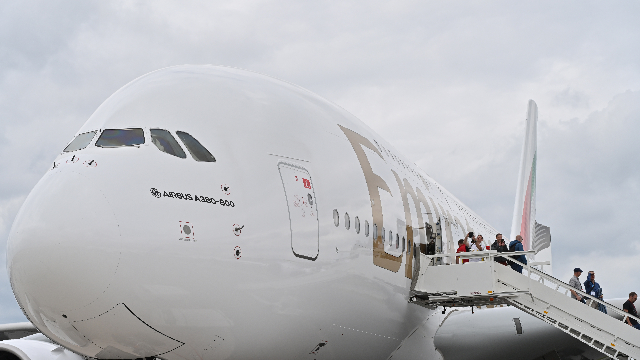
欧盟拟对价值近千亿欧元美国商品征税
news flash· 2025-05-08 10:44
欧盟官员5月7日表示,如与美方关税谈判破裂,欧盟计划对价值近1000亿欧元的美国商品征税,以报复 美国此前实施的关税措施。 目前,欧盟面临美国对钢铁、铝和汽车征收25%的进口关税,以及对几乎所有其他商品征收10%的"基 准关税"。美国此前宣布将对欧盟征收20%所谓"对等关税",后给予90天暂缓期。(新华社) ...
中美关税博弈专题系列(二):贸易战的历史视角、影响和应对
Zhong Cheng Xin Guo Ji· 2025-05-08 10:23
Group 1: Trade War Overview - The current US-China trade war is an escalation of the 2018 trade conflict, with the US imposing an average import tariff of 134.7% on Chinese goods, with some products facing tariffs as high as 245%[11][15]. - Historically, the US has initiated seven rounds of trade wars, with the 1930 Smoot-Hawley Tariff Act being a significant example that worsened the Great Depression[5][8]. - The trade war has led to increased volatility in global capital markets and a restructuring of the global trade system[7]. Group 2: Economic Impact - The trade war is expected to impact China's GDP growth by approximately 0.9-1.6 percentage points under neutral scenarios, with potential declines of 2.0-2.6 percentage points in pessimistic scenarios[6][26]. - China's exports to the US are heavily reliant on specific sectors, with textiles and light industrial products being particularly vulnerable, where over 50% of certain products are exported to the US[27][28]. - The US trade deficit with China decreased from 2.0% of GDP to 1.0% from 2018 Q3 to 2024 Q3, while the deficit with other countries increased from 2.2% to 3.0%[14]. Group 3: Strategic Responses - China has implemented countermeasures, including reciprocal tariffs and diversifying export markets to reduce reliance on the US, with exports to Vietnam increasing by 1.4% over the past five years[27][28]. - The Chinese government is focusing on expanding domestic demand and technological advancements to mitigate the impact of tariffs, emphasizing investment in high-tech sectors[6][26]. - Long-term strategies include reforming state-owned enterprises and enhancing social security to boost consumer spending and economic resilience[6][26].
“对等关税”一个月,美国产业链连锁承压
Zhong Guo Xin Wen Wang· 2025-05-08 07:37
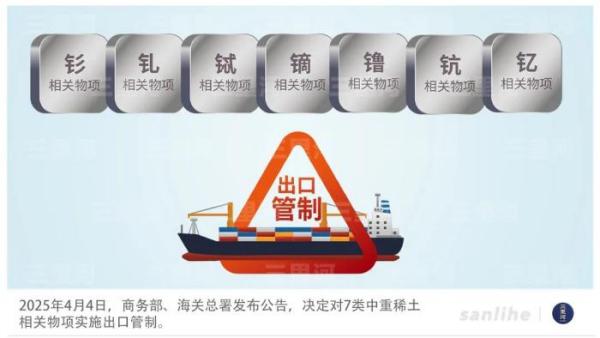
Group 1: Rare Earth Market Dynamics - The international rare earth market has experienced a significant price surge, with dysprosium and terbium prices reaching $850 and $3000 per kilogram respectively, marking a threefold increase and the highest monthly growth since records began in 2015 [1] - The price increase is attributed to China's export controls on seven categories of medium and heavy rare earths, which took effect on April 4, leading to an immediate halt in exports and subsequent price spikes [1][3] Group 2: Impact on Industries - Analysts indicate that the restricted rare earths are difficult to replace through production in other countries, causing immediate impacts on U.S. companies, including Tesla and Ford, which have reported disruptions in their production plans due to the scarcity of key components [4] - The situation highlights China's strategic leverage in the rare earth sector, with U.S. media describing it as a significant blow to American industrial capabilities [4] Group 3: Broader Economic Implications - The export restrictions have broader implications for U.S.-China trade relations, with reports of rising prices for various consumer goods and disruptions in supply chains, as seen with companies like Walmart adjusting their strategies in response to new tariffs [5] - The decline in U.S. imports from China is expected to lead to increased prices for consumers and potential job losses in logistics and retail sectors [5][6] - In contrast, Chinese manufacturers are adapting by expanding their markets to regions like South America and Europe, demonstrating resilience in the face of external challenges [5][6]
又谈崩了!美国施压再次碰壁,石破茂拒签广场协议,对外释放信息量大
Sou Hu Cai Jing· 2025-05-08 07:17
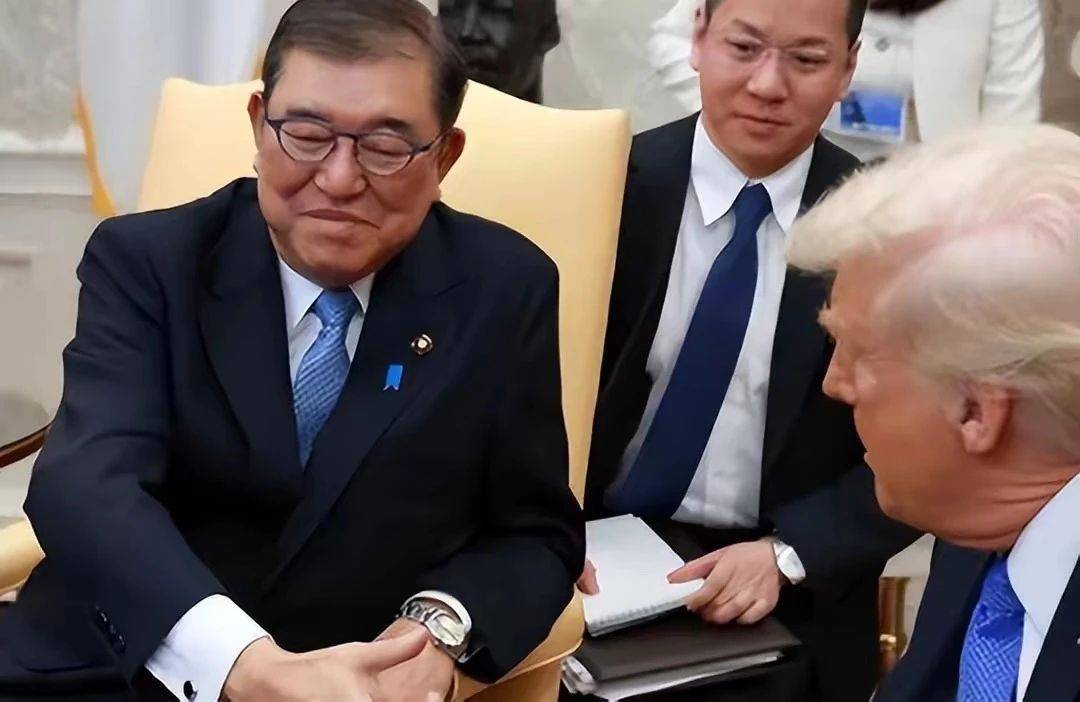
Group 1 - The core point of the article is the ongoing tariff negotiations between Japan and the United States, with Japan urging the U.S. to fully withdraw its tariffs on various products, including automobiles and steel [1][3]. - The second round of negotiations took place in Washington, lasting approximately two hours, with Japan's delegation led by the Minister of Economic Revitalization, Akizumi, and the U.S. delegation including key officials such as the Treasury Secretary and the U.S. Trade Representative [1][3]. - Japan's representatives strongly opposed the U.S. proposal centered on "reciprocal tariffs" and called for a comprehensive review of the tariffs imposed on automobiles, steel, and aluminum [3]. Group 2 - The U.S. has recently implemented a 25% tariff on imported auto parts, indicating a lack of consensus in the negotiations and that Japan's demands have not been met [3]. - Japan's automotive industry is crucial to its economy, and any concessions could significantly impact its economic stability, as evidenced by historical tensions in U.S.-Japan trade relations [3][5]. - Public sentiment in Japan shows significant concern over the potential negative impact of U.S. tariffs on the Japanese economy, with 85% of respondents expressing worry [5]. Group 3 - Japan holds a substantial amount of U.S. Treasury bonds, which could be used as leverage in negotiations, suggesting that Japan may consider selling these bonds if pressured by the U.S. [7]. - Japanese officials have expressed a firm stance against increasing military spending in negotiations, indicating a reluctance to compromise on national interests [7]. - The Japanese government is wary of making concessions that could lead to ongoing demands from the U.S., reflecting a broader concern about the nature of U.S.-Japan trade negotiations [7].
美国人万没料到,中国刚出手,2国就跳反,彻底揭穿美国的谣言
Sou Hu Cai Jing· 2025-05-08 03:40
美国财政部长斯科特·贝森特(资料图) 据金融界报道,韩国产业部副部长Park Sung-taek日前表示,由于所涉及问题的复杂性和政治不确定性,韩国认为在6月3日总统大选之前不可能与美国达成 全面贸易协议。Park表示,韩国政府本周将派代表团前往华盛顿进行工作组级别会谈,以推进上周的进展,但6月初之前就任何一揽子措施达成协议"在理论 上是不可能的"。美国财政部长Scott Bessent上周表示,继上周在华盛顿举行贸易谈判后,两国可能最快在本周达成"谅解协议"。Bessent表示,谈判进展比预 期更快,有望在7月8日关税生效的最后期限前完成。 特朗普上台100天,美国就出现了"债股汇"三杀,经济衰退已经成为了一个极大概率事件。然而,美国一向缺乏解决内部矛盾的智慧,他们惯于向外转移压 力。随着美国认清了我国的现有实力,特朗普政府决定从盟友身上开刀,最大程度地从盟友国家手中攫取利益。特朗普此前要求韩国开放汽车市场,并限制 钢铁出口,而韩方坚持要求特朗普豁免25%汽车关税,和10%铝制品关税。值得注意的是,韩国代表团在首次正式关税会谈后,特意向美方强调了当前"代 总统执政"的特殊政治状态。 据北晚在线报道,日前,日 ...

把握景气主线,首推航空、油运、公路
HTSC· 2025-05-08 02:25
Investment Rating - The report maintains an "Overweight" rating for the transportation sector [7]. Core Views - The report recommends focusing on the improving supply-demand dynamics in the aviation, oil shipping, and highway sectors while advising caution in container shipping, cross-border logistics, express delivery, and railways [1]. Aviation - The aviation sector is expected to benefit from a slowdown in supply growth, with demand for domestic and international flights increasing by 1.7% and 26.9% respectively in March [2][14]. - The report highlights that the overall passenger load factor remains high at 83.3%, with a notable reduction in the year-on-year decline of ticket prices [14][17]. - Recommended stocks include China National Aviation, China Eastern Airlines, and Huaxia Airlines, which are expected to benefit from the improving market conditions [29]. Airports - Airports have seen a steady increase in passenger traffic, with Shanghai's two airports experiencing a 7.5% year-on-year increase in passenger throughput in Q1 2025 [30]. - The report emphasizes the need for airports to enhance their non-aeronautical revenue streams to improve profitability [30][34]. Shipping and Ports - The report notes that the international freight market has been volatile due to tariff policies, with expectations of a decline in container volumes in April and May [3][37]. - Oil shipping rates are projected to improve in May due to OPEC+ production increases, while refined oil shipping rates may remain stable [39]. Highways - The highway sector demonstrated strong performance in Q1 2025, with a notable increase in net profits, making it a favorable sector for dividend plays [4]. - The report suggests that the current low interest rates and risk-averse sentiment support the valuation of dividend-paying stocks in this sector [4]. Logistics and Express Delivery - The express delivery sector is facing intensified price competition, with a significant year-on-year increase in parcel volume but a corresponding decline in average prices [5][61]. - The report advises caution regarding franchise-based express delivery companies while maintaining a positive long-term outlook for well-capitalized and service-oriented leaders in the sector [5][61].