
就业

Search documents
取消外卖和关闭电商,恢复市面繁荣,这种做法你同意吗?
Sou Hu Cai Jing· 2025-10-28 07:16
Core Insights - The rapid growth of China's e-commerce and food delivery sectors has significantly boosted the national economy, with e-commerce transactions reaching 43.8 trillion yuan in 2022, a year-on-year increase of 16.5%, and the food delivery market size hitting 1.1 trillion yuan, growing by 18.6% [1] - The rise of e-commerce and food delivery has posed unprecedented challenges to traditional brick-and-mortar stores, which saw a decline in revenue to 38.1 trillion yuan in 2022, down 3.9% year-on-year, raising widespread concern [1] Group 1 - Some voices suggest canceling food delivery and closing e-commerce to revive traditional markets, but this approach may backfire and lead to economic decline and increased unemployment [2] - The food delivery and e-commerce sectors employ millions, with 4 million in food delivery and 60 million in e-commerce in 2022, making them crucial for job creation [3] - The decline in brick-and-mortar sales is not solely due to e-commerce competition; post-pandemic consumer demand has decreased, and physical stores face intense competition and rising rental costs [5] Group 2 - Food delivery has become a vital revenue source for restaurants, with about one-third of their sales coming from delivery orders, meaning that canceling food delivery could further weaken their profitability [5] - Consumer reliance on food delivery and e-commerce has increased post-pandemic, and eliminating these services would cause significant inconvenience for those unable to cook, such as young people and the elderly [7] - To restore market vitality, a comprehensive approach is needed, focusing on enhancing the competitiveness of physical stores, improving the consumer environment, and stimulating demand rather than resorting to blanket cancellations of food delivery and e-commerce [7]


四季度消费增长有哪些发力点?解读梳理↓
Yang Shi Wang· 2025-10-23 05:52
Core Insights - The article discusses the role of consumption as a key driver of economic growth in the first three quarters of 2025 and explores potential growth points for consumption in the fourth quarter. Group 1: Consumption Policies - The "old-for-new" policy is expected to have both short-term and long-term effects, stabilizing growth while promoting industrial upgrades and green transformation across society [3][4]. - The introduction of new scenarios and business formats aims to stimulate new consumption dynamics and innovation, enhancing the experience of traditional goods and services [5]. Group 2: Economic Support Mechanisms - Maintaining employment and increasing income are crucial for creating a supportive environment for consumption, requiring a coordinated policy effort across all levels of society [7]. - Establishing a virtuous cycle among employment, income, and consumption is essential for sustaining economic growth [8].

我国2025年三季度成绩单究竟如何?|宏观经济
清华金融评论· 2025-10-21 10:56
Core Viewpoint - The article discusses the economic performance of China in the third quarter of 2025, highlighting a slight decline in GDP growth, a recovery in consumption, and ongoing challenges in manufacturing and infrastructure investment [4][6][12]. Economic Growth - In Q3 2025, China's GDP grew by 4.8% year-on-year, slightly lower than the previous quarter, with nominal GDP growth at 3.7% [6][10]. - The total GDP for Q3 reached 354.5 trillion yuan, with a quarter-on-quarter growth of 1.1% [6][10]. - For the first three quarters of 2025, GDP growth was 5.2%, exceeding the annual target of 5% [6][12]. Consumption Trends - Overall consumption growth was slightly below expectations, with retail sales increasing by 3.0% in September, down from 3.4% [16][24]. - The retail sector showed structural differentiation, with categories like communication equipment and furniture experiencing significant growth, while home appliances and cultural products saw declines [20][24]. - Consumer spending growth lagged behind income growth, indicating a weak recovery in consumer confidence [24]. Investment Insights - Fixed asset investment for the first three quarters of 2025 totaled 371.5 trillion yuan, down 0.5% year-on-year, with infrastructure investment growing by only 1.1% [29][44]. - Manufacturing investment saw a significant decline, with a 1.1 percentage point drop to 4% year-on-year, marking six consecutive months of decline [33][34]. - Real estate investment dropped by 13.9%, with new housing sales down 5.5% in the first nine months [50][60]. Industrial Production - Industrial value-added saw a substantial rebound in September, growing by 6.5% year-on-year, driven by seasonal production increases and strong export performance [63][69]. - The "golden September and silver October" period contributed to this growth, alongside policies aimed at boosting domestic demand [69][70]. Employment Situation - The urban unemployment rate averaged 5.2% in the first three quarters, with a slight decrease in September [75][76]. - Youth unemployment remains a concern, with rates for individuals aged 18-24 reaching 18.9%, indicating ongoing pressures in the job market [77].

印尼总统普拉博沃晒执政一周年成绩单
Zhong Guo Xin Wen Wang· 2025-10-21 03:40
Core Insights - Indonesian President Prabowo showcased achievements during his first year in office, highlighting economic stability and growth despite global uncertainties [2] Economic Performance - Indonesia's economic growth rate remains around 5%, ranking among the top in the G20 [2] - Inflation is controlled at approximately 2%, making Indonesia one of the countries with the lowest inflation in the G20 [2] - Actual investment in Indonesia reached IDR 1,434 trillion in the first nine months of the year, a year-on-year increase of 13.7%, creating about 1.9 million jobs [2] - The Jakarta Composite Index surpassed 8,000 points for the first time, marking a historical high [2] Social Development - The national poverty rate has decreased to 8.47%, the lowest in Indonesia's history [2] - The unemployment rate has dropped to 4.76%, the lowest since the 1998 Asian financial crisis [2] - Prabowo emphasized the need to continue expanding job opportunities to address ongoing global challenges [2] Key Social Programs - The "Free Nutritional Meals" program has benefited 36.7 million people, including schoolchildren, infants, pregnant women, and nursing mothers [3] - The "People's School" initiative aims to provide educational opportunities for approximately 500,000 impoverished children, helping to break the cycle of poverty through education [3] International Engagement - Indonesia joined the BRICS cooperation mechanism as a formal member in January [3] - In September, Indonesia signed a comprehensive economic partnership agreement with the European Union [3] - Prabowo attended the 80th United Nations General Assembly for the first time as president, indicating an increase in Indonesia's global influence [3]
50:43,仍未通过!美政府停摆第20天,美核武器储存管理关键机构开始强制休假
Mei Ri Jing Ji Xin Wen· 2025-10-21 01:41
Government Shutdown Impact - The U.S. Senate failed to pass a government funding bill, resulting in the continuation of the government shutdown that began on October 1 [1][2] - The funding bill aimed to extend government funding until November 21 but fell short of the required 60 votes, receiving only 50 in favor [2] - The shutdown has led to the forced unpaid leave of approximately 1,400 employees at the National Nuclear Security Administration, marking the first such occurrence since its establishment in 2000 [4][5] Economic Data and Federal Reserve - The government shutdown has caused a halt in the release of key economic data, complicating the Federal Reserve's assessment of the economy during its upcoming policy meeting [2][6] - There is a widespread expectation that the Federal Reserve will lower the benchmark interest rate by 25 basis points to a range of 3.75%–4.00% at its meeting on October 28-29 [7] - The lack of official employment data has created uncertainty regarding the labor market, with average monthly non-farm job additions from June to August being only 29,000, significantly below pre-pandemic levels [7][8] Stock Market Performance - U.S. stock markets experienced significant gains, with major indices rising over 1%, driven by optimism from quarterly earnings reports and improved risk appetite [3][9] - Apple Inc. saw its stock price reach a historic high of $262.24, with a market capitalization of $3.89 trillion, reflecting a one-day increase of $147.6 billion [12][14] - The strong sales performance of the iPhone 17 series, which outperformed the iPhone 16 series by 14% in early sales, has contributed to positive market sentiment towards Apple [14]


美国经济藏猫腻?GDP涨就业跌,美联储还敢降息,这盘棋咋下的
Sou Hu Cai Jing· 2025-10-18 07:44
Economic Overview - The U.S. economy is experiencing a paradox with a 3.8% annualized GDP growth in Q2 and predictions to maintain this level in Q3, while private sector employment decreased by 32,000 in September [1][3] - The divergence between GDP growth and employment is attributed to the impact of AI on job displacement, with AI spending contributing 0.9% to GDP growth in 2023 [3][5] AI Impact on Employment - Businesses are increasingly investing in AI, with expenditures on AI data centers reaching $40.4 billion in Q2, a fourfold increase since early 2020, contributing 0.77 percentage points to GDP [5][7] - The demand for labor is generally low across industries, with many employers resorting to layoffs or hiring freezes due to increased investment in AI [5][7] Federal Reserve's Monetary Policy - The Federal Reserve is expected to lower interest rates by 25 basis points in its remaining meetings this year, reflecting a consensus among market participants [9][11] - The Fed's decision-making is influenced by the rising risks in the employment sector, with a focus on stabilizing the job market over inflation concerns [11][21] Automotive Industry Challenges - The automotive sector is facing significant challenges, highlighted by a 40% profit drop for CarMax and a 20% decline in its stock price [16] - The delinquency rate for auto loans has reached a five-year high, with over 5% of loans being 90 days overdue, indicating financial strain among consumers [17][19] Consumer Spending and Economic Health - Consumer spending is primarily supported by high-income groups, while middle and low-income individuals struggle with job availability and stagnant wages, leading to reduced purchasing power [19][21] - The combination of high tariffs, vehicle prices, and interest rates is making it difficult for average consumers to afford major purchases like cars, exacerbating industry issues [19][21] Long-term Economic Outlook - The Fed's potential interest rate cuts are seen as a temporary measure to support the weak job market and consumer spending, but they do not address the underlying structural issues in the economy [21][24] - The ongoing effects of AI on employment and the cost pressures from tariffs indicate that the challenges facing middle and low-income groups will persist beyond short-term monetary policy adjustments [22][24]
闪评 | 鲍威尔:通胀与就业9月来无变化 美联储下一步如何走?
Sou Hu Cai Jing· 2025-10-15 10:47
Core Viewpoint - Federal Reserve Chairman Jerome Powell indicated that there has been little change in the U.S. employment and inflation outlook since the September meeting, emphasizing a cautious approach to monetary policy based on evolving economic conditions [1][4]. Economic Status - The U.S. economy is facing a dual challenge: a rising unemployment rate, which reached 4.3% in August, the highest in four years, and persistent inflation expectations among consumers, which have increased to the highest level since May due to trade tensions and Fed policies [4]. - The current economic environment is described as a "soft landing" scenario, where growth is slowing but not in recession, and inflation remains sticky [4]. Fed's Dilemma - Powell stated that there is no risk-free path for the Fed's interest rate policy, highlighting the inherent trade-offs in economic decision-making [5]. - The Fed's dilemma involves balancing the risks of premature rate cuts, which could exacerbate inflation, against the risks of delayed cuts, which could hinder economic growth and employment [6][7]. Upcoming Fed Meeting - The Federal Open Market Committee is set to meet on October 28-29, with Powell's recent comments signaling a cautious approach to future rate decisions [10]. - Analysts suggest that while there is speculation about a potential rate cut, the uncertainty created by ongoing trade issues may lead the Fed to maintain a cautious stance, possibly delaying any cuts until December [10].
鲍威尔最新发声:美国经济比预期更稳,缩表或将接近尾声
Sou Hu Cai Jing· 2025-10-15 10:02
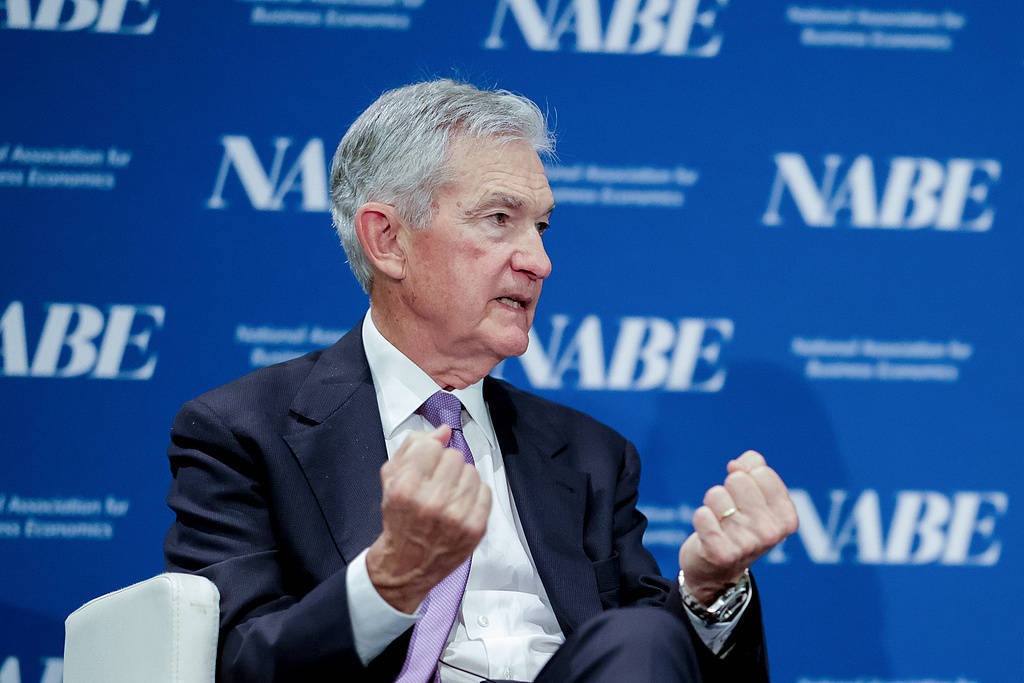
当地时间10月14日,美联储主席鲍威尔出席美国商业经济学会第67届年会时表示,自9月议息会议以来,美国的就业与通胀前景并未出现明显变化,但最新 数据显示,经济增长依然保持在一个"高于预期的稳健水平"。 鲍威尔表示,美联储在9月会议上选择维持中性政策立场,是基于对风险平衡的重新评估。"在通胀与就业目标之间寻找平衡,本身就不存在无风险的选择。 我们会根据经济前景的变化动态调整政策,而不是按既定路线前行。" 关于市场关注的"缩表"进展,鲍威尔透露,美联储或已接近缩表终点。"我们计划在准备金规模略高于'充足'水平时停止缩表。现在看来,这个时点可能就在 未来几个月。"他说,目前,美联储正密切关注多项指标,以确保这一决策的时机恰当。 他提到,在美国政府因预算分歧而短暂"停摆"前,相关经济数据已经显示出一定的韧性。由于政府关门,9月非农就业等关键数据的发布被迫推迟,但现有 迹象仍表明——企业裁员和招聘活动都维持在低位,劳动力市场虽然热度下降,却依旧处于相对健康区间。 鲍威尔指出,劳动力市场的活力正在减弱,招聘难度下降,意味着就业可能面临一定的下行压力。"这种变化让我们在评估风险时更加谨慎,"他说。 在通胀方面,他认为,近期 ...

鲍威尔的balance:不过度降息,但会停止缩表
对冲研投· 2025-10-15 03:32
Core Viewpoint - The Federal Reserve is navigating a complex policy environment, balancing inflation control and employment support, with indications that the current tightening cycle may be nearing its end and a shift towards "measured easing" is possible [2][4][5]. Economic Indicators - Current data suggests that employment and inflation trends remain stable, with economic growth slightly stronger than expected, despite signs of labor market weakness such as hiring slowdowns and reduced job vacancies [5][26]. - The core PCE inflation rate is approximately 2.9%, slightly above the beginning of the year, primarily driven by tariff-induced price increases, while housing service inflation is declining [3][25]. Monetary Policy Strategy - Powell indicated that the Fed may soon halt balance sheet reduction, emphasizing the importance of liquidity management to avoid market volatility similar to the 2019 repo market disruptions [4][7][21]. - The Fed's dual strategy involves cautious interest rate cuts and balance sheet adjustments to alleviate liquidity pressures without overly relying on rate reductions [4][9]. Market Reactions - The market is closely monitoring the Fed's signals regarding potential rate cuts and balance sheet normalization, with expectations of one to two rate cuts this year, though internal opinions within the Fed vary [7][9]. - Investors are advised to focus on understanding the balance of policies rather than betting on a single approach, as the Fed's strategy aims to respond to economic realities and manage market expectations [9][10]. Financial Stability - Powell highlighted the critical role of the reserve system, warning that failure to maintain interest payments on reserves could undermine the Fed's control over rates and financial stability [8][24]. - The Fed's balance sheet, which currently stands at $6.5 trillion, is primarily composed of U.S. Treasury securities and mortgage-backed securities, with a focus on maintaining a stable financial environment [13][14].

鲍威尔10月14日讲话要点总结
Sou Hu Cai Jing· 2025-10-14 17:50
Core Viewpoint - Federal Reserve Chairman Powell indicated that officials may halt the balance sheet reduction in the coming months, acknowledging signs of tightening in the money markets [1] Group 1: Monetary Policy Insights - Powell stated that bank reserves remain "ample," but officials are closely monitoring various indicators to determine when to stop the reduction [2] - Since the September FOMC monetary policy meeting, inflation and employment outlooks appear largely unchanged, although signs of labor market weakness are increasing [3][4] - Powell noted that even without government data during the shutdown, the "downside risks to employment seem to have risen" [5] Group 2: Future Rate Decisions - Powell retained the possibility of a rate cut in October, emphasizing that officials face a challenging choice between prematurely ending the fight against inflation and delaying support for the labor market [6] - Market reactions to Powell's comments were evident in the widening of dollar swap spreads, with the Bloomberg Dollar Index dropping to a daily low and U.S. Treasury yields declining following his remarks [7]