稳增长

Search documents
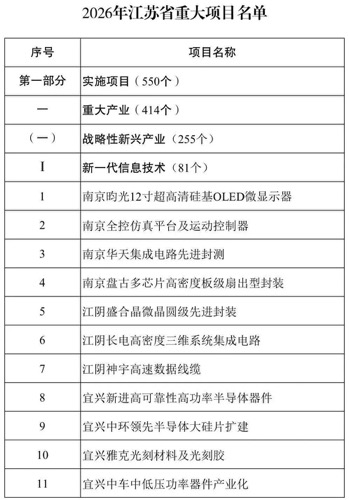
2026年江苏省重大项目清单出炉
Zheng Quan Shi Bao Wang· 2026-01-11 01:57
Core Insights - Jiangsu Province has officially released its major project list for 2026, signaling strong investment intentions and confidence in economic stability [1] Group 1: Major Projects Overview - A total of 670 major projects are planned for the year, with 550 projects set for implementation, an increase of 50 projects year-on-year [1] - The annual planned investment for these projects is 664.6 billion yuan, which is an increase of 12 billion yuan compared to the previous year [1] - There are 120 reserve projects, up by 20 projects year-on-year, ensuring that both the number of projects and investment levels remain stable [1] Group 2: Investment Structure - Industrial projects are the main focus, with 415 projects planned and an investment of 295 billion yuan, highlighting a significant increase in manufacturing projects [1] - Infrastructure projects consist of 114 projects with a planned investment of 323.6 billion yuan [1] - There are 17 livelihood and environmental protection projects with a planned investment of 46 billion yuan [1] Group 3: Strategic Industries - Among the implemented projects, 414 are categorized as major industrial projects, with 255 classified as strategic emerging industries [2] - The new generation information technology sector includes 81 projects, showcasing a strong emphasis on technological advancement [2]

透过亮眼数据看国家水网越“织”越密 “稳增长+促就业”实实在在惠民生
Yang Shi Wang· 2026-01-09 06:42
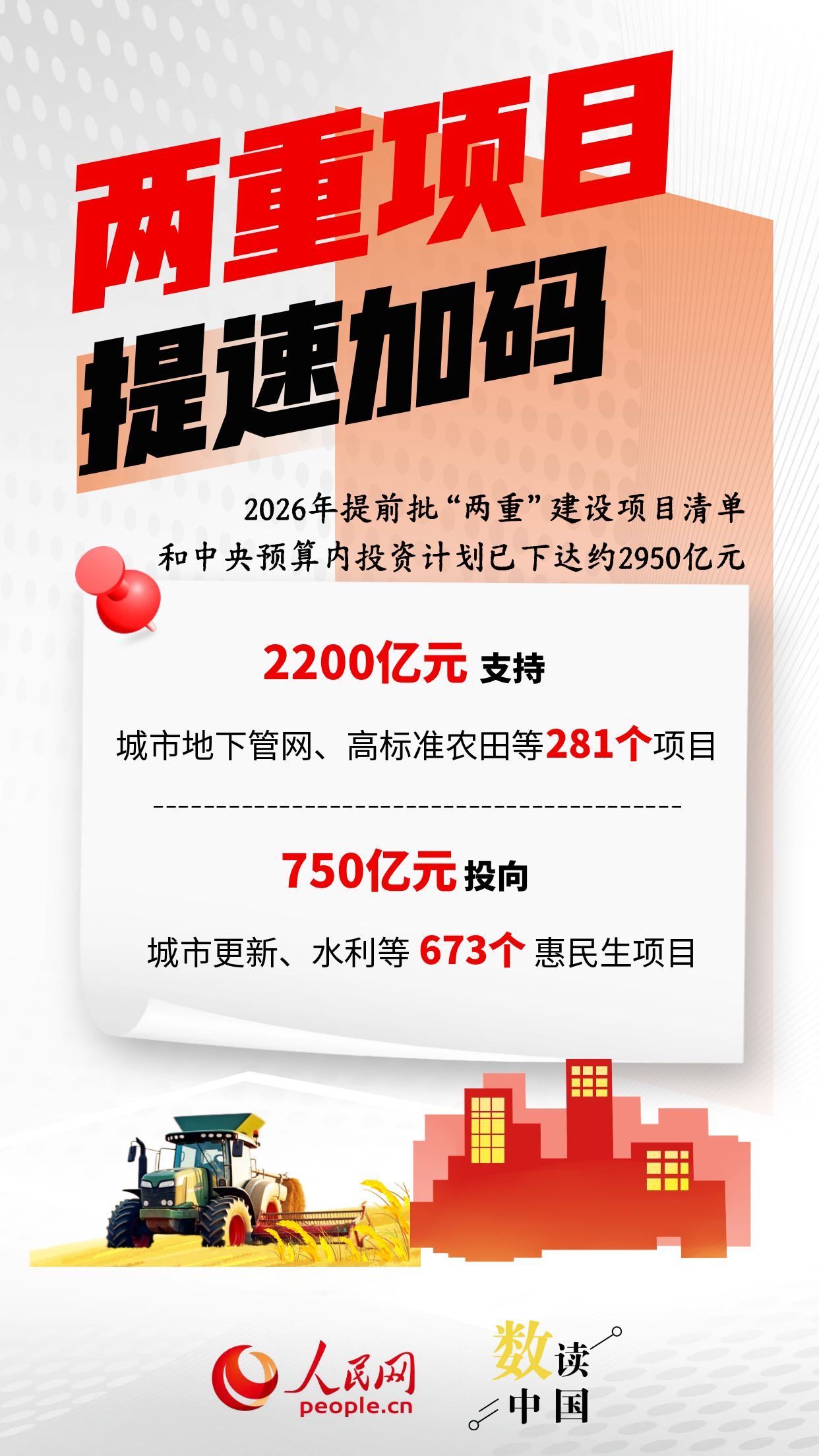
Group 1 - The core viewpoint of the articles highlights the significant progress in the construction of the national water network, which currently covers 80.3% of the country's land area [1][7] - By 2025, 27 major water conservancy projects are set to commence, including large irrigation areas in Jiangxi, Guangxi, and Hunan, along with modernization efforts in Ningxia [1] - A total of 9,420 rural water supply projects will be completed, enhancing water supply security for 134 million rural residents, with a nationwide tap water coverage rate reaching 96% [1] Group 2 - During the "14th Five-Year Plan" period, 181 major water conservancy projects have started construction, which is an increase of 65 projects compared to the "13th Five-Year Plan" [4] - 94 major water conservancy projects have been completed and put into operation, along with the reinforcement of 17,998 dangerous reservoirs and the systematic management of 3,741 small rivers [4] - The total investment in water conservancy construction reached 5.68 trillion yuan, with over 1 trillion yuan invested annually for four consecutive years since 2022 [4]

数读中国 开年政策密集部署 稳增长惠民生齐发力
Ren Min Wang· 2026-01-09 03:14
Group 1 - A series of policies aimed at stabilizing growth, promoting consumption, strengthening industries, and improving livelihoods were released around New Year's Day 2026, indicating a proactive approach to economic development [1] - The first batch of 625 billion yuan in ultra-long-term special government bonds has been allocated to support the consumption of old products, aligning with the peak consumption seasons of New Year's Day and Spring Festival [7] - The government is implementing a subsidy program for the replacement of old consumer goods, including a 12% subsidy for new energy passenger vehicles with a maximum of 20,000 yuan, and a 10% subsidy for fuel vehicles with a maximum of 15,000 yuan [11][12] Group 2 - The subsidy program also includes a 15% subsidy for essential household appliances, with a maximum of 1,500 yuan per item, focusing on products such as washing machines, televisions, air conditioners, and refrigerators [14] - The scope of digital subsidies has been expanded to include smart devices like tablets and smart home products, with a maximum subsidy for items priced at 6,000 yuan or less [20] - In 2026, policies will continue to support equipment upgrades and renovations, with subsidies extending to areas such as the installation of elevators in old residential communities and support for elderly care institutions [21]
国债期货日报:权益回调,国债期货全线收涨-20260109
Hua Tai Qi Huo· 2026-01-09 03:05
Report Industry Investment Rating - Not provided in the content Core Viewpoints of the Report - The bond market fluctuates between stable growth and easing expectations, and short - term attention should be paid to policy signals at the end of the month. The stock market drives the market, the Political Bureau Meeting releases a loose monetary signal, the LPR remains unchanged, and the Fed's interest rate cut expectation continues while the uncertainty of global trade increases the uncertainty of foreign capital inflows. [1][3] Summary by Relevant Catalogs I. Interest Rate Pricing Tracking Indicators - Price indicators: China's monthly CPI has a month - on - month decrease of 0.10% and a year - on - year increase of 0.70%; China's monthly PPI has a month - on - month increase of 0.10% and a year - on - year decrease of 2.20% [9] - Monthly economic indicators: Social financing scale is 440.07 trillion yuan, with a month - on - month increase of 2.35 trillion yuan and a growth rate of 0.54%; M2 year - on - year is 8.00%, with a month - on - month decrease of 0.20% and a decline rate of 2.44%; Manufacturing PMI is 50.10%, with a month - on - month increase of 0.90% and a growth rate of 1.83% [10] - Daily economic indicators: The US dollar index is 98.86, with a day - on - day increase of 0.12 and a growth rate of 0.12%; The US dollar against the offshore RMB is 6.9813, with a day - on - day decrease of 0.002 and a decline rate of 0.02%; SHIBOR 7 - day is 1.46, with a day - on - day increase of 0.01 and a growth rate of 0.83%; DR007 is 1.47, with a day - on - day increase of 0.01 and a growth rate of 0.79%; R007 is 1.51, with a day - on - day increase of 0.00 and a decline rate of 0.31%; The 3 - month interbank certificate of deposit (AAA) is 1.60, with a day - on - day decrease of 0.01 and a decline rate of 0.49%; The AA - AAA credit spread (1Y) is 0.09, with a day - on - day increase of 0.00 and a decline rate of 0.49% [10] II. Overview of the Treasury Bond and Treasury Bond Futures Market - Multiple charts are provided, including the closing price trend of the main continuous contract of treasury bond futures, the price change rate of each variety of treasury bond futures, the precipitation fund trend of each variety of treasury bond futures, the position ratio of each variety of treasury bond futures, the net position ratio of the top 20 in each variety of treasury bond futures, the long - short position ratio of the top 20 in each variety of treasury bond futures, the spread between China Development Bank bonds and treasury bonds, and the issuance of treasury bonds [11][15][18][21] III. Overview of the Money Market Liquidity - Multiple charts are provided, including the Shibor interest rate trend, the maturity yield trend of inter - bank certificates of deposit (AAA), the trading statistics of inter - bank pledged repurchase, and the local government bond issuance [28][33] IV. Spread Overview - Multiple charts are provided, showing the inter - term spread trend of each variety of treasury bond futures and the term spread of spot bonds and cross - variety spreads of futures [32][37][39] V. Two - Year Treasury Bond Futures - Multiple charts are provided, including the implied interest rate and the maturity yield of the main contract of two - year treasury bond futures, the IRR of the TS main contract and the fund interest rate, the three - year basis trend of the TS main contract, and the three - year net basis trend of the TS main contract [41][46][50] VI. Five - Year Treasury Bond Futures - Multiple charts are provided, including the implied interest rate and the maturity yield of the main contract of five - year treasury bond futures, the IRR of the TF main contract and the fund interest rate, the three - year basis trend of the TF main contract, and the three - year net basis trend of the TF main contract [51][54] VII. Ten - Year Treasury Bond Futures - Multiple charts are provided, including the implied yield and the maturity yield of the main contract of ten - year treasury bond futures, the IRR of the T main contract and the fund interest rate, the three - year basis trend of the T main contract, and the three - year net basis trend of the T main contract [55][56] VIII. Thirty - Year Treasury Bond Futures - Multiple charts are provided, including the implied yield and the maturity yield of the main contract of thirty - year treasury bond futures, the IRR of the TL main contract and the fund interest rate, the three - year basis trend of the TL main contract, and the three - year net basis trend of the TL main contract [61][62] Strategy - Unilateral: Repurchase rates decline, and treasury bond futures prices fluctuate [4] - Arbitrage: Pay attention to the decline of the 2603 basis [4] - Hedging: There is a medium - term adjustment pressure, and short - sellers can use far - month contracts for appropriate hedging [4]
赵刚在省发展改革委调研并主持召开重点项目谋划部署会时强调坚持大抓项目抓高质量项目建设不动摇为稳增长和经济社会发展提供坚实支撑
Shan Xi Ri Bao· 2026-01-09 00:39
Core Viewpoint - The provincial government emphasizes the importance of high-quality project construction to support economic growth and social development, aligning with national strategies and policies [1][2]. Group 1: Project Management and Investment - The provincial government has made significant progress in promoting high-quality project construction, with clear direction and effective measures in recent years [2]. - There is a focus on optimizing investment structure and ensuring continuous capacity release, with a call for enhanced collaboration among various departments [2]. - The government aims to improve the dynamic management mechanism of projects, emphasizing the importance of project entry, completion, and operational efficiency [2]. Group 2: Strategic Planning and Policy Implementation - The government plans to leverage opportunities from major policies, including large-scale equipment updates and new financial tools, to reserve high-quality projects [2]. - There is a strong emphasis on enhancing the maturity of projects and ensuring that they align with national strategies to support the province's development [2]. - The government encourages innovation in methods to stimulate private investment, particularly in key industrial chains [2]. Group 3: Monitoring and Support Mechanisms - The government intends to strengthen monitoring and scheduling of key projects, ensuring effective management of resources and project funding [2]. - A leadership support mechanism for major projects will be established to address challenges in project advancement and promote timely completion [2].

省领导调研督导稳增长等工作
Shan Xi Ri Bao· 2026-01-09 00:34
Core Viewpoint - The provincial leaders are actively conducting research and supervision in various regions to promote steady economic growth, address issues, and resolve public grievances, emphasizing the integration of technological and industrial innovation for sustainable development. Group 1: Economic Growth and Development - The focus is on leveraging technological and industrial innovation to enhance agricultural productivity and promote rural revitalization, aiming for common prosperity [1] - Continuous efforts are being made to stabilize economic growth through project construction and investment attraction, while also expanding consumption and effective investments [1] - The leaders are committed to achieving quality and reasonable growth in the economy by accelerating key project construction and addressing identified issues [3][4] Group 2: Problem Rectification and Risk Management - There is a strong emphasis on rectifying issues identified by central inspections and audits, with targeted strategies to address the root causes and improve efficiency [1][3] - The leaders are implementing a comprehensive approach to problem rectification, ensuring quality and sustainability of the solutions while addressing public grievances effectively [2][4] - A focus on maintaining safety and stability includes addressing various risks such as fire hazards, wage arrears, and public health concerns [2][5] Group 3: Public Grievance Resolution - The leaders are prioritizing the resolution of public grievances through regular research, open communication, and legal frameworks to ensure the protection of citizens' rights [1][3] - There is a commitment to addressing corruption and improving the political environment to enhance public trust and satisfaction [3][5] - Efforts are being made to strengthen community governance and enhance the effectiveness of grievance resolution mechanisms [5]


稳中启新程 实干谱新篇丨稳增长·经济大盘筑牢发展根基
Xin Hua Wang· 2026-01-08 13:48
Group 1 - The article highlights the focus on stabilizing growth and strengthening the economic foundation through practical measures aimed at expanding domestic demand and enhancing industrial initiatives [1] - The production scene at Zhongyou Baoshishun (Qinhuangdao) Steel Pipe Co., Ltd. showcases the successful implementation of technological innovations that allow for rapid switching between two production processes, significantly improving production efficiency and capacity [1] - Luozhu Group's wind power bearing production facility has achieved a domestic market share of over 40% for its wind power main bearings, indicating strong performance in the competitive wind energy sector [1] Group 2 - The construction of the Liuzhou to Wuzhou section of the Liuzhou-Guangzhou railway is progressing, with the use of domestically developed CPG500 rail laying machines, marking a significant milestone in enhancing transportation connectivity between Guangxi and the Guangdong-Hong Kong-Macao Greater Bay Area [1] - The successful implementation of various key projects and effective measures is contributing to a more solid economic foundation and increased momentum for the overall economy [2]
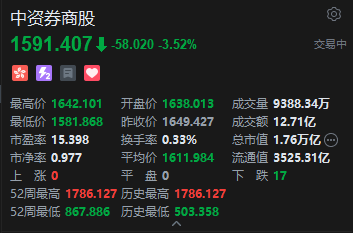
港股券商股集体下挫,机构指券商板块估值处于历史低位
Ge Long Hui· 2026-01-08 03:48
Group 1 - The core viewpoint of the news indicates a collective decline in Hong Kong brokerage stocks, with major firms like CITIC Securities dropping over 4% and others like China Galaxy, CICC, CITIC Construction Investment, and China Merchants Securities falling more than 3% [1] Group 2 - Galaxy Securities states that the national policy goals of "stabilizing growth, stabilizing the stock market," and "boosting the capital market" will continue to define the future direction of the sector [3] - Factors such as a moderately loose liquidity environment, continuous optimization of the capital market, and the rebuilding of investor confidence are collectively driving the improvement in the brokerage sector's prosperity [3] - The valuation of the brokerage sector is currently at a historical low, suggesting a defensive rebound with both offensive and defensive characteristics [3]
国债期货日报:股债跷跷板延续,国债期货全线收跌-20260108
Hua Tai Qi Huo· 2026-01-08 03:26
Report Industry Investment Rating No relevant information provided. Core View The bond market is oscillating between the expectations of stabilizing growth and policy easing. The stock market rally, the broad - money signal released by the Politburo meeting, the stable LPR, the continued expectation of Fed rate cuts, and increased global trade uncertainty have all influenced the bond market. In the short term, attention should be paid to the policy signals at the end of the month [1][2][3]. Summary by Directory I. Interest Rate Pricing Tracking Indicators - China's CPI (monthly) had a -0.10% month - on - month change and a 0.70% year - on - year increase; PPI (monthly) had a 0.10% month - on - month change and a -2.20% year - on - year decrease [9]. - Social financing scale was 440.07 trillion yuan, with a month - on - month increase of 2.35 trillion yuan (+0.54%); M2 year - on - year was 8.00%, down 0.20% (-2.44%); Manufacturing PMI was 50.10%, up 0.90% (+1.83%) [10]. - The US dollar index was 98.74, up 0.14 (+0.14%); USD/CNY (off - shore) was 6.9844, up 0.008 (+0.12%); SHIBOR 7 - day was 1.45, up 0.03 (+1.97%); DR007 was 1.46, up 0.03 (+2.09%); R007 was 1.51, with no change (-0.31%); AAA - rated 3 - month inter - bank certificates of deposit were 1.60, up 0.01 (+0.34%); 1 - year AA - AAA credit spread was 0.09, up 0.00 (+0.34%) [10]. II. Overview of the Treasury and Treasury Futures Market No specific text - based summary information provided, only references to figures such as the closing price trend of Treasury futures' main continuous contracts, the price change rates of various Treasury futures varieties, etc. [12][19][23]. III. Overview of the Money Market Liquidity No specific text - based summary information provided, only references to figures like the trading statistics of inter - bank pledged repurchase and local government bond issuance [26][31]. IV. Spread Overview No specific text - based summary information provided, only references to figures such as the term spread of spot bonds and the cross - variety spread of futures [35][42]. V. Two - Year Treasury Futures No specific text - based summary information provided, only references to figures like the implied interest rate of the two - year Treasury futures' main contract and the Treasury bond's maturity yield [39][44]. VI. Five - Year Treasury Futures No specific text - based summary information provided, only references to figures like the implied interest rate of the five - year Treasury futures' main contract and the Treasury bond's maturity yield [48][52]. VII. Ten - Year Treasury Futures No specific text - based summary information provided, only references to figures like the implied yield of the ten - year Treasury futures' main contract and the Treasury bond's maturity yield [53][58]. VIII. Thirty - Year Treasury Futures No specific text - based summary information provided, only references to figures like the implied yield of the thirty - year Treasury futures' main contract and the Treasury bond's maturity yield [59][65]. Strategy - **Unilateral**: With the decline of repurchase rates, the prices of Treasury futures are oscillating [4]. - **Arbitrage**: Pay attention to the decline of the 2603 basis [4]. - **Hedging**: There is medium - term adjustment pressure, and short positions can use far - month contracts for appropriate hedging [4].
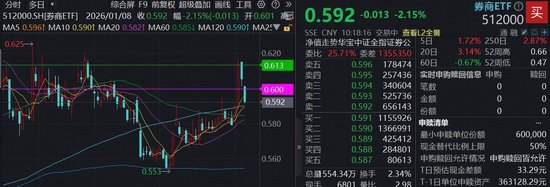
2026开年两融余额增长显著,东方财富获净买入居首!券商短线走弱,顶流券商ETF(512000)单日吸金1.56亿元
Xin Lang Cai Jing· 2026-01-08 02:43
Core Viewpoint - The A-share market is experiencing a significant increase in trading activity, with a notable rise in margin financing and securities lending balances, indicating a bullish sentiment among investors [1][9]. Group 1: Market Performance - On January 7, the A-share market opened lower, with the brokerage sector leading the declines, as the top brokerage ETF (512000) fell by 2.15% [1][7]. - As of January 6, the total margin financing and securities lending balance increased by 39.224 billion to 2.58 trillion, marking a year-on-year growth of 40.93% [9]. - The financing balance reached 2.56 trillion, dominating the market [9]. Group 2: Investment Opportunities - The brokerage ETF (512000) is a passive investment tool that tracks the CSI All Share Securities Companies Index, encompassing 49 listed brokerage stocks, making it an efficient investment option for both large and small brokerages [10]. - The average daily trading volume of the brokerage ETF (512000) exceeded 1 billion, positioning it as a leading liquidity provider in the A-share market [10]. Group 3: Future Outlook - According to Galaxy Securities, the government's policies aimed at stabilizing growth and boosting the capital market will continue to shape the future direction of the brokerage sector, supported by a moderately loose liquidity environment and improved investor confidence [3][9]. - The brokerage sector's valuation is currently at historical lows, suggesting a strong demand for a rebound [3][9]. - The CSI All Share Securities Companies Index only saw a slight increase of 2.54% in 2025, significantly lagging behind the broader market, indicating a strong potential for catch-up growth [3][9].