
货币政策

Search documents
新华指数|2025年12月普惠金融-景气指数:融资精准有力 经营温和回暖
Xin Hua She· 2026-01-22 06:09
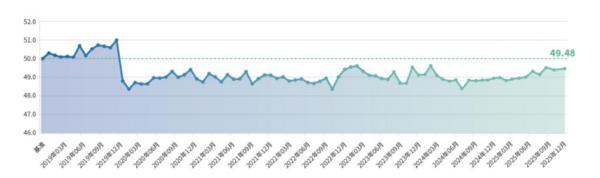
Core Insights - The Inclusive Finance Prosperity Index reached 49.48 points in December 2025, an increase of 0.12 points from November and 0.61 points higher than the same period last year, indicating a stable financial support for small and micro enterprises [1] Financing Dimension - The financing prosperity index stood at 54.82 points in December, a slight decrease of 0.01 points from November, with continuous growth in credit scale and historically low financing costs [2] - In 2025, new loans totaled 16.27 trillion yuan, with corporate loans accounting for 15.47 trillion yuan, reflecting effective credit demand from enterprises and residents [2] Operating Dimension - The operating prosperity index increased to 48.44 points in December, up by 0.16 points from November, with manufacturing and non-manufacturing PMIs indicating expansion [3] - The consumer price index rose by 0.8% year-on-year in December, improving corporate profit expectations and boosting market confidence [3] Industry Prosperity - Among nine major industries, six showed an increase in operating prosperity, particularly in agriculture and transportation due to seasonal demand, while three industries experienced a decline [6] - The real estate sector showed some improvement, while industrial, construction, and wholesale retail sectors saw a decrease in operating prosperity [6] Regional Prosperity - Among seven regions, three experienced an increase in operating prosperity, specifically Northeast, South China, and Southwest regions, while four regions saw a decline [7] - The indices for North China, East China, Central China, and Northwest regions were lower, indicating regional disparities in economic performance [7]

日债连续走低,国债期货大多收涨
Hua Tai Qi Huo· 2026-01-22 05:49
1. Report Industry Investment Rating - Not provided in the content 2. Core View of the Report - The bond market is oscillating between stable growth and easing expectations, influenced by factors such as the stock market, policy signals from the Politburo meeting, unchanged LPR, Fed rate - cut expectations, and global trade uncertainties. Short - term attention should be paid to policy signals at the end of the month [3] 3. Summary by Relevant Catalogs I. Interest Rate Pricing Tracking Indicators - **Price Index**: China's monthly CPI has a 0.20% month - on - month increase and 0.80% year - on - year increase; monthly PPI has a 0.20% month - on - month increase and - 1.90% year - on - year decrease [8] - **Monthly Economic Indicators**: Social financing scale is 442.12 trillion yuan, with a 2.05 - trillion - yuan increase and 0.47% growth rate; M2 year - on - year is 8.50%, with a 0.50% increase and 6.25% growth rate; manufacturing PMI is 50.10%, with a 0.90% increase and 1.83% growth rate [9] - **Daily Economic Indicators**: The US dollar index is 98.78, with a 0.23 increase and 0.23% growth rate; the US dollar against the offshore RMB is 6.9586, with a 0.002 decrease and - 0.03% growth rate; SHIBOR 7 - day is 1.49, with a 0.01 increase and 0.34% growth rate, etc. [10] II. Overview of the Treasury Bond and Treasury Bond Futures Market - **Closing Price and Fluctuation**: On January 21, 2026, the closing prices of TS, TF, T, and TL are 102.43 yuan, 105.88 yuan, 108.20 yuan, and 112.25 yuan respectively, with fluctuations of - 0.01%, 0.01%, 0.03%, and 0.75% [3] - **Net Basis Spread**: The average net basis spreads of TS, TF, T, and TL are - 0.014 yuan, - 0.022 yuan, - 0.039 yuan, and - 0.970 yuan respectively [3] III. Overview of the Money Market Liquidity - **Central Bank Operations**: On January 21, 2026, the central bank conducted 363.5 billion yuan of 7 - day reverse repurchase operations at a fixed rate of 1.4% [2] - **Repo Rates**: The main term repo rates of 1D, 7D, 14D, and 1M are 1.322%, 1.488%, 1.597%, and 1.559% respectively, and the repo rates have recently declined [2] IV. Spread Overview - **Inter - period and Inter - variety Spreads**: There are various inter - period spreads of treasury bond futures and inter - variety spreads between spot bonds and futures, such as 4*TS - T, 2*TS - TF, etc. [30][32] V. Two - year Treasury Bond Futures - **Related Rates**: The relationship between the implied interest rate of the two - year treasury bond futures main contract and the treasury bond yield to maturity, and the relationship between the TS main contract IRR and the funding rate are presented [41] - **Basis Spread**: The three - year basis spread and net basis spread trends of the TS main contract are shown [43] VI. Five - year Treasury Bond Futures - **Related Rates**: The relationship between the implied interest rate of the five - year treasury bond futures main contract and the treasury bond yield to maturity, and the relationship between the TF main contract IRR and the funding rate are presented [45] - **Basis Spread**: The three - year basis spread and net basis spread trends of the TF main contract are shown [52] VII. Ten - year Treasury Bond Futures - **Related Rates**: The relationship between the implied yield of the ten - year treasury bond futures main contract and the treasury bond yield to maturity, and the relationship between the T main contract IRR and the funding rate are presented [51] - **Basis Spread**: The three - year basis spread and net basis spread trends of the T main contract are shown [51] VIII. Thirty - year Treasury Bond Futures - **Related Rates**: The relationship between the implied yield of the thirty - year treasury bond futures main contract and the treasury bond yield to maturity, and the relationship between the TL main contract IRR and the funding rate are presented [56] - **Basis Spread**: The three - year basis spread and net basis spread trends of the TL main contract are shown [61]
氧化铝少量检修,压产过剩格局不改
Hua Tai Qi Huo· 2026-01-22 05:13
1. Report Industry Investment Ratings - Aluminum: Neutral [9] - Alumina: Cautiously Bearish [9] - Aluminum Alloy: Neutral [9] - Arbitrage: Neutral [9] 2. Core Viewpoints - The aluminum market is affected by short - term factors such as transportation disruptions due to snowstorms and downstream production cuts, with prices needing to correct. In the long run, macro factors support price increases. The alumina market has an oversupply situation that remains unchanged despite minor production cuts, and costs provide weak support. The aluminum alloy market is currently in a neutral state [6][7][8] 3. Summary by Related Catalogs Aluminum Spot - On January 21, 2026, the price of East China A00 aluminum was 23,710 yuan/ton, with a change of 30 yuan/ton from the previous trading day. The spot premium and discount of East China aluminum was - 150 yuan/ton, with a change of 10 yuan/ton from the previous trading day. The price of Central China A00 aluminum was 23,610 yuan/ton, and the spot premium and discount changed by 30 yuan/ton to - 250 yuan/ton. The price of Foshan A00 aluminum was 23,740 yuan/ton, with a change of 20 yuan/ton from the previous trading day, and the aluminum spot premium and discount changed by 5 yuan/ton to - 115 yuan/ton [1] Aluminum Futures - On January 21, 2026, the main contract of Shanghai aluminum opened at 23,965 yuan/ton, closed at 24,155 yuan/ton, with a change of 135 yuan/ton from the previous trading day. The highest price reached 24,250 yuan/ton, and the lowest price was 23,660 yuan/ton. The trading volume for the whole trading day was 468,256 lots, and the position was 343,223 lots [2] Aluminum Inventory - As of January 21, 2026, the domestic social inventory of electrolytic aluminum ingots was 749,000 tons, with a change of 13,000 tons from the previous period. The warrant inventory was 138,755 tons, with a change of - 1,196 tons from the previous trading day. The LME aluminum inventory was 507,175 tons, with a change of 24,175 tons from the previous trading day [2] Alumina Spot Price - On January 21, 2026, the price of alumina in Shanxi was 2,615 yuan/ton, in Shandong was 2,560 yuan/ton, in Henan was 2,645 yuan/ton, in Guangxi was 2,700 yuan/ton, in Guizhou was 2,750 yuan/ton, and the FOB price of Australian alumina was 304 US dollars/ton [2] Alumina Futures - On January 21, 2026, the main contract of alumina opened at 2,679 yuan/ton, closed at 2,672 yuan/ton, with a change of - 19 yuan/ton from the previous trading day's closing price, a change of - 0.71%. The highest price reached 2,689 yuan/ton, and the lowest price was 2,651 yuan/ton. The trading volume for the whole trading day was 371,676 lots, and the position was 486,425 lots [2] Aluminum Alloy Price - On January 21, 2026, the purchasing price of Baotai civil - grade primary aluminum was 17,600 yuan/ton, and the purchasing price of mechanical primary aluminum was 18,000 yuan/ton, with a price change of 200 yuan/ton compared to the previous day. The Baotai quotation of ADC12 was 23,300 yuan/ton, with a price change of 100 yuan/ton compared to the previous day [3] Aluminum Alloy Inventory - The social inventory of aluminum alloy was 69,300 tons, and the in - factory inventory was 60,200 tons [4] Aluminum Alloy Cost and Profit - The theoretical total cost was 23,119 yuan/ton, and the theoretical profit was 481 yuan/ton [5] Market Analysis - **Electrolytic Aluminum**: Transportation disruptions due to snowstorms led to a slight decline in inventory in mainstream areas, and the spot discount was slightly repaired. However, downstream enterprises cut production due to factors such as tight funds and environmental protection, resulting in a significant decline in aluminum rod production. The increase in absolute price was difficult to be transmitted downstream, and downstream enterprises may enter the Spring Festival holiday in advance. The early inventory accumulation node and fast inventory accumulation rate put pressure on prices. In the long run, macro factors support price increases, but in the short term, there is a need for price correction [6] - **Alumina**: A 1 - million - ton alumina plant in Guizhou had a phased production cut for 1 - 2 months, and an 1.8 - million - ton alumina plant in Henan had a 10 - day maintenance. Minor production cuts did not change the current oversupply situation. Spot prices continued to decline, and the futures market was at a premium. On the cost side, the import of bauxite was sluggish, prices declined, shipping costs also decreased, and the supply of bauxite was guaranteed in the long run, so cost support was weak. The marginal cash flow of alumina plants was not significantly in deficit, supply pressure remained high, social inventory continued to increase, and there was a possibility of over - inventory in the future [7][8]
2026年01月22日申万期货品种策略日报-国债-20260122
Shen Yin Wan Guo Qi Huo· 2026-01-22 03:26
Report Industry Investment Rating - Not provided in the report Core View - The prices of Treasury bond futures showed mixed trends, with the T2603 contract rising 0.02% and its open interest increasing. The IRR of the CTD bonds corresponding to the main Treasury bond futures contracts was at a low level, with no arbitrage opportunities. Short - term market interest rates also showed mixed trends. Key - term Treasury bond yields at home and abroad had different changes, and the prices of Treasury bond futures stabilized due to factors such as central bank policies and macro - economic conditions [2][3] Summary by Relevant Catalogs Futures Market - Yesterday's closing prices of TS2603, TS2606, TF2603, TF2606, T2603, T2606, TL2603, and TL2606 were 102.430, 102.462, 105.880, 105.875, 108.200, 108.190, 112.25, and 112.36 respectively. The price changes were - 0.014, - 0.008, 0.005, - 0.005, 0.020, 0.085, 0.760, and 0.760, with corresponding percentage changes of - 0.01%, - 0.01%, 0.00%, 0.00%, 0.02%, 0.08%, 0.68%, and 0.68%. Open interest and trading volume varied, and open - interest changes were - 1054, - 262, - 194, 2516, 1698, 2880, - 78, and 1594 respectively [2] - The cross - term spreads of TS, TF, T, and TL were - 0.032, 0.005, 0.010, and - 0.110 respectively, with previous values of - 0.026, - 0.0050, 0.0750, and - 0.1100 [2] - The IRR of the active CTD bonds for each main contract was 1.5505, 1.5706, 1.6019, 1.5664, 1.6297, 1.6116, 1.9417, and 1.4765, and there were no arbitrage opportunities [2] Spot Market - Short - term market interest rates showed mixed trends. SHIBOR 7 - day rate rose 0.5bp, DR007 rate fell 0.33bp, and GC007 rate fell 1.7bp [2] - Key - term Chinese Treasury bond yields also showed mixed trends. The 10Y Treasury bond yield rose 0.57bp to 1.83%, and the long - short (10 - 2) Treasury bond yield spread was 41.78bp [2] - Overseas key - term Treasury bond yields changed. The US 10Y Treasury bond yield fell 4bp, the German 10Y Treasury bond yield fell 2bp, and the Japanese 10Y Treasury bond yield fell 5bp [2] Macro News - On January 21, the central bank conducted 363.5 billion yuan of 7 - day reverse repurchase operations, with a net injection of 122.7 billion yuan after 240.8 billion yuan of reverse repurchases matured [3] - The Minister of Housing and Urban - Rural Development said that the focus in urban renewal this year is on three aspects, and efforts will be made to stabilize the real estate market and build basic systems [3] - The US Trade Representative expressed hope for another round of potential trade negotiations with China, and the Chinese Foreign Ministry responded [3] - The People's Bank of China held a payment and settlement work meeting in 2026, putting forward requirements for payment and settlement work [3] - The Ministry of Finance and other three departments extended the tax policy for the pilot stage of innovative enterprise CDRs to December 31, 2027 [3] - The US President reached an agreement framework on the Greenland issue with the NATO Secretary - General, and the US stock market rose while spot silver fell [3] Industry Information - On January 21, most money - market interest rates rose. The weighted average interest rate of inter - bank pledged repurchase and inter - bank lending had different changes in different tenors [3] - US Treasury bond yields fell collectively, with different declines in 2 - year, 3 - year, 5 - year, 10 - year, and 30 - year yields [3] Comment and Strategy - Long - term Treasury bonds rose, and the yield of the 10 - year active Treasury bond rose to 1.823%. The central bank's net injection of reverse repurchases, stable LPR in January, and other factors affected the market. The market risk appetite declined, US Treasury bond yields fell, and the real estate market was still in adjustment [3] - In 2025, the GDP growth target of 5% was achieved as scheduled. In December, the year - on - year growth rate of social retail sales slowed down, and the year - on - year growth rate of industrial added value of large - scale industries increased. The annual fixed - asset investment decreased year - on - year, mainly dragged down by real - estate development investment [3] - The Ministry of Finance said that the fiscal deficit, total debt, and total expenditure in 2026 would remain at necessary levels, and the central bank would continue to implement a moderately loose monetary policy, with room for reserve - requirement ratio cuts and interest - rate cuts, leading to the stabilization of Treasury bond futures prices [3]
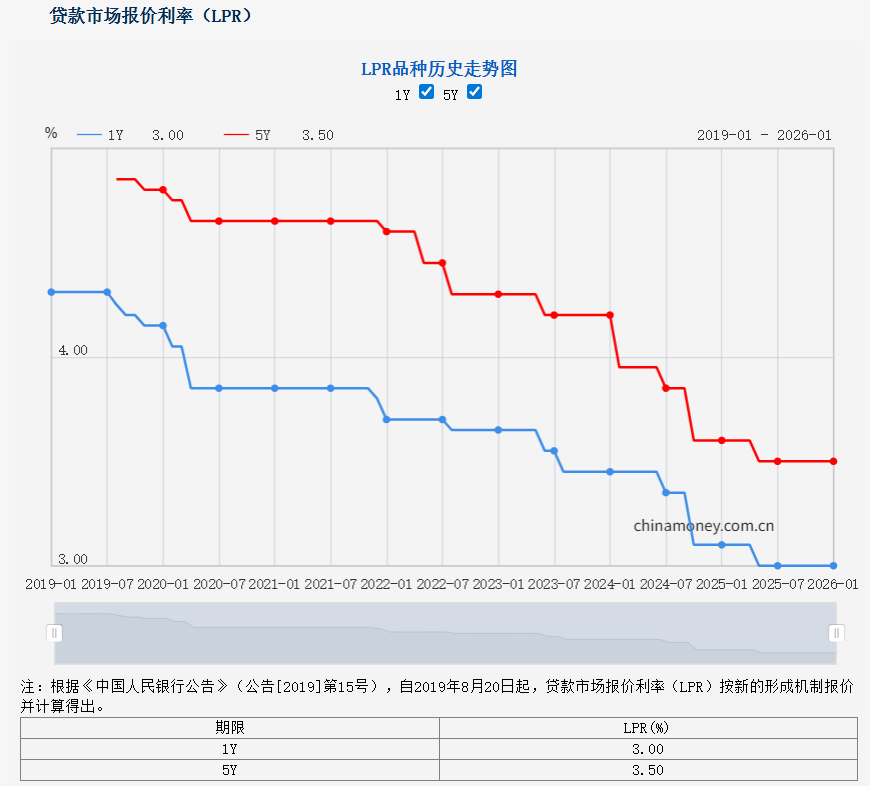
刚刚!央行公布最新房贷利率
Sou Hu Cai Jing· 2026-01-22 02:59
Core Viewpoint - The People's Bank of China (PBOC) is implementing a series of monetary policy adjustments, including lowering the minimum down payment ratio for commercial property loans and maintaining a loose monetary policy to support economic growth and stabilize the housing market [6][15]. Group 1: Monetary Policy Adjustments - The PBOC has lowered the minimum down payment ratio for commercial property loans from 50%-60% to 30%, significantly reducing the entry barrier for purchasing commercial properties nationwide [6][7]. - The PBOC plans to lower the interest rates on various structural monetary policy tools by 0.25 percentage points, which will help increase banks' lending capacity in key areas [9]. - The central bank aims to maintain ample liquidity and will continue to flexibly use various monetary policy tools, including interest rate cuts and reserve requirement ratio (RRR) reductions, to support economic stability [11][12][15]. Group 2: Economic Outlook and Predictions - The PBOC has indicated that there is still room for further RRR and interest rate cuts in 2026, as the banking sector's net interest margin has shown signs of stabilization [10][15]. - International investment bank Goldman Sachs predicts that the PBOC may implement a "double cut" in the first quarter of 2026, which includes a 50 basis point reduction in the RRR and a 10 basis point cut in the policy interest rate [15]. - The overall expectation is that housing loan rates and personal housing provident fund loan rates will likely see further reductions in 2026, aligning with the ongoing easing measures [15]. Group 3: Housing Market Dynamics - Recent reports suggest that a subsidy policy for new home loans may be introduced, covering loans from September 2025 to August 2026, with a potential interest subsidy of 1% or 40-100 basis points [17][18]. - Some cities, like Wuhan, have already trialed interest subsidy policies, but the overall market response has been muted, indicating that the impact of such measures may be limited [20]. - New regulations in cities like Tianjin are being introduced to prevent significant price drops in new homes, with price fluctuations capped at 10% for new projects and 15% for existing ones [23][25].
韩国2025年四季度经济陷入萎缩 货币政策腾挪空间收窄
Xin Hua Cai Jing· 2026-01-22 02:54
根据韩国央行发布的政策声明,决策层一致通过此次利率决议。值得注意的是,声明中删除了此前"为 降息留有空间"及"决定是否以及何时实施任何进一步的基准利率下调"等表述,释放出政策立场趋于谨 慎的信号。 若内需未能有效恢复,且外部环境不确定性持续存在,韩国2026年经济增长或将面临进一步下行压力。 当前,韩国经济面临多重结构性压力。韩元汇率持续承压,金融体系风险上升;与此同时,房地产市场 热度未减,家庭债务水平仍处高位。上述因素共同压缩了政府进一步实施刺激政策的空间。 韩国央行15日宣布维持基准利率在2.50%不变。行长李昌镛在会后记者会上表示,当前货币政策需在支 持经济复苏与应对金融稳定风险之间取得平衡,并强调仅靠提高利率"无法平息房价上涨"。 新华财经北京1月22日电韩国经济在2025年第四季度出现环比收缩,凸显内需疲软对增长动能的拖累。 数据显示,2025年第四季度韩国国内生产总值(GDP)环比下降0.3%,远低于前一季度修正后的1.3% 增幅,且不及市场普遍预期的0.2%增长。 全年来看,韩国2025年实际GDP同比增长1%,与此前官方及市场预测一致。然而,数据同时揭示,此 前由扩张性财政政策和消费复苏所支 ...
IC Markets官网:理想人选难觅?特朗普的“完美”美联储主席
Sou Hu Cai Jing· 2026-01-22 02:29
Core Viewpoint - Trump's selection of the next Federal Reserve Chair is fraught with challenges due to conflicting demands for loyalty to the White House and the need for market trust in the Fed's independence [1][3]. Group 1: Selection Criteria and Challenges - Trump's ideal candidate must be loyal to the White House, able to adjust monetary policy, and gain market trust to lower long-term borrowing costs, but these requirements are difficult to reconcile in the political and economic landscape [1][3]. - The independence of the Federal Reserve is crucial for market trust, and the demand for loyalty to the White House contradicts this independence, making the selection process challenging [3]. Group 2: Candidates and Their Shortcomings - The two leading candidates, Kevin Hassett and Kevin Warsh, have shown weaknesses that limit their viability. Hassett lacks market recognition and is viewed as unable to maintain the Fed's independence, while Warsh's hawkish stance conflicts with Trump's desire for lower interest rates [3][4]. - Rick Rieder and Christopher Waller have emerged as more viable candidates, each representing a compromise in the selection process. Rieder is seen as a "globalist" with a strong market background but lacks formal Fed experience, while Waller is a traditionalist with a strong grasp of economic policy but may not align with Trump's desire to influence the Fed [4][6]. Group 3: Policy Implications and Future Directions - The next Fed Chair will face critical decisions regarding the management of the Fed's balance sheet, which currently stands at $6.6 trillion. Disagreements on this issue reflect differing views on the Fed's policy direction [6]. - The selection of either Rieder or Waller could significantly impact U.S. and global economic policies, with the final decision likely being a compromise between loyalty, market trust, and policy alignment [7].

宏观面:货币政策与避险情绪双重加持
Sou Hu Cai Jing· 2026-01-22 02:17
Core Viewpoint - The expectation of interest rate cuts by the Federal Reserve and the weakening of the US dollar provide financial support for silver, enhancing its appeal as both an industrial and safe-haven asset [1] Group 1: Economic Factors - The easing inflationary pressures and a weak labor market in the US have strengthened market expectations for the Federal Reserve to begin a rate-cutting cycle in March [1] - The anticipated rate cuts are expected to lower real interest rates, reducing the opportunity cost of holding non-yielding assets like silver [1] - A weaker US dollar is pushing up silver prices, which are denominated in dollars [1] Group 2: Geopolitical Factors - Escalating geopolitical conflicts, particularly in the Middle East, are increasing market risk aversion, leading to greater investment in silver due to its dual role as an industrial and safe-haven asset [1] - Silver is attracting capital inflows due to its higher elasticity compared to gold in response to these geopolitical tensions [1] Group 3: Policy Uncertainty - A recent announcement on January 15 regarding a key mineral import investigation in the US has not yet resulted in tariffs on silver but raises concerns about potential future measures, such as negotiating import volumes or setting minimum import prices [1] - This policy uncertainty has led to panic selling in the market, causing significant price drops for silver [1] - Prior expectations of tariff exemptions had briefly boosted silver prices, highlighting the impact of policy uncertainty on market dynamics [1]
1月22日金市早评:北约局势缓和压制避险 金价回调但底部稳固?
Jin Tou Wang· 2026-01-22 02:04
Group 1 - The US dollar index is trading around 98.793, while spot gold opened at $4830.31 per ounce and is currently trading at approximately $4801.69 per ounce [1] - On the previous trading day, the US dollar index rose by 0.22% to close at 98.767, and spot gold increased by 1.45% to $4831.59 per ounce [1] - Other precious metals experienced declines, with spot silver down 1.61% to $93.04 per ounce, platinum down 0.12% to $2478.00 per ounce, and palladium down 1.87% to $1841.00 per ounce [1] Group 2 - As of January 21, COMEX gold inventory increased by 0.22 tons to 1124.17 tons, while COMEX silver inventory decreased by 129.49 tons to 13135.42 tons [2] - SPDR Gold ETF holdings decreased by 4.00 tons to 1077.66 tons, whereas SLV Silver ETF holdings increased by 149.42 tons to 16222.48 tons [2] Group 3 - The US is expected to discuss potential trade negotiations with China, as stated by US Trade Representative Lighthizer [4] - The European Parliament has announced an indefinite freeze on the review of the EU-US trade agreement [4]
国债期货周报:债市情绪修复,但不利因素尚存-20260122
Yin He Qi Huo· 2026-01-22 02:03
Report Industry Investment Rating - Not provided in the content Core Viewpoints of the Report - Recent regulatory cooling of the equity and some commodity markets, along with the unchanged loose monetary policy and the central bank's clear indication of room for increasing aggregate policies this year, have led to a further repair of bond market sentiment. However, the probability of a short - term policy rate cut is low, and the capital side will face more disturbances next week. The long - end is constrained by supply concerns and fundamental expectations, and the downward momentum of yields is insufficient. Therefore, it is recommended that investors wait and see on the single - side and be cautious about chasing up. In terms of arbitrage, the long - end slope has become steeper this week, but at the current term spread level, it is not advisable to over - participate. The spread between new and old 30Y bonds is relatively high, so investors may moderately pay attention to shorting the basis of 30Y active bonds [8]. Summary According to Relevant Catalogs First Part: Weekly Core Points Analysis and Strategy Recommendations - **Comprehensive Analysis** - Last December's foreign trade data showed strong resilience, and the overall financial data was also better than expected. In the financial data structure, the corporate sector performed particularly well, indicating that the corporate sector's expectations may have turned positive first. In contrast, due to weak income expectations and unstable housing prices, the credit expansion of the household sector continued to slow down, and the improvement of the deposit term - deposit trend was also limited [6]. - At the press conference on Thursday, incremental information was released. On the one hand, the structural interest rate cut was implemented, and the central bank lowered the interest rates of various structural monetary policy tools by 0.25 percentage points, increased the quotas of some structural monetary policy tools, and expanded the scope of support. On the other hand, central bank officials clearly stated that there is still room for "reserve requirement ratio cuts and interest rate cuts" this year. The loose tone of monetary policy remains unchanged, and there is still room for increasing aggregate policies, which is friendly to the bond market. However, the implementation of structural "broad credit" reduces the probability of increasing aggregate easing in the short term. The central bank also said it would "guide the overnight interest rate to run around the policy rate," which means the policy rate still restricts the downward movement of short - term bond yields [7]. - **Strategy Recommendations** - **Single - side**: Wait and see [9] - **Arbitrage**: Moderately pay attention to shorting the basis of 30Y active bonds [9] Second Part: Relevant Data Tracking - **Enterprise Sector Social Financing Growth Continues to Recover** - In December, the new RMB loans were 910 billion yuan, 80 billion yuan less than the same period last year; the loan balance increased by 6.4% year - on - year, unchanged from the previous month. Structurally, the household sector continued to "shrink its balance sheet," with loans decreasing by 91.6 billion yuan, 441.6 billion yuan less than the same period last year; enterprises and institutions had new loans of 1.07 trillion yuan, 580 billion yuan more than the same period last year. Among them, medium - and long - term loans related to investment increased by 330 billion yuan, 290 billion yuan more than the same period last year, ending five consecutive months of year - on - year decrease [10][13]. - In December, the social financing scale was 2.2075 trillion yuan, 646.2 billion yuan less than the same period last year; the stock of social financing increased by 8.3% year - on - year, a 0.2 - percentage - point decline from the previous month. Structurally, the government bond financing scale was only 683.3 billion yuan, a significant decrease of 1.0733 trillion yuan compared with the same period last year, which was the main reason for the year - on - year decrease in social financing. The combined financing of corporate bonds, non - financial enterprise stocks, and non - standard financing was 159.5 billion yuan, 246.9 billion yuan more than the same period last year [13]. - **Divergence in M2 and M1 Growth Rates** - In December, M2 increased by 0.5 percentage points year - on - year to 8.5%. In terms of the deposit structure, the seasonal increase in year - end fiscal expenditure led to a significant decrease in fiscal deposits and their conversion into household and corporate deposits, which was one of the important supports for M2. However, the unexpected increase in M2 growth is likely related to the increase in the settlement of foreign exchange by the private sector at the end of the year after the reversal of exchange - rate expectations [18]. - In contrast to the rise in M2 growth, M1 increased by 3.8% year - on - year in December, a 1.1 - percentage - point decline from the previous month. The relatively high base in the same period last year was one of the reasons for the decline in M1 growth. Considering the credit data structure, the decrease in the degree of currency activation may reflect that there are still blockages in the domestic currency circulation in the household sector [18]. - **Foreign Trade Performance Exceeds Expectations** - According to the customs statistics in US dollars, in December last year, China's goods exports increased by 6.6% year - on - year, a 0.7 - percentage - point increase from the previous month; imports increased by 5.7%, a 3.8 - percentage - point increase; the trade surplus rose to 114.14 billion US dollars. Foreign trade continued to show resilience and performed better than expected [25]. - **Regulatory Authorities Guide the Cooling of the Equity Market** - Compared with the relatively high price - earnings ratio, the risk premium shows that compared with the 10 - year Treasury bond yield, the current valuation of the Wind All - A Index is roughly at a neutral level since 2017 and is not overvalued. With the lack of profit elasticity at the numerator end, the low market risk - free rate at the denominator end is an important support for the equity market valuation [27]. - This week, the increase in the margin ratio for margin trading in the equity market and the "anti - monopoly" measures for some commodities last week are specific measures to cool down the risk - asset market at the policy level, which is relatively favorable for the bond market. However, from the perspectives of A - share trading volume, leveraged funds, and rolling price - earnings ratio, the expectations in the equity market are still positive and have not fundamentally changed [32]. - **The Capital Side Tightens First and Then Eases** - This week, the market capital price first rose and then fell. After the central bank's continuous large - scale net injection of short - term liquidity, the capital side became loose again starting from Thursday. As of the close on Friday, DR001 and DR007 were at 1.3199% and 1.4430% respectively. The overnight and 7 - day non - bank capital spreads were 5.35bp and 7.07bp respectively. In terms of long - term funds, the issuance rate of 1 - year inter - bank certificates of deposit of joint - stock banks was generally in the range of 1.63 - 1.65% this week [39]. - Next week, the market capital side will face dual disturbances. First, next Wednesday and Thursday are the peak periods for tax payments, and January is a large tax - paying month, so the potential capital gap is relatively large. Second, local bond issuance will reach a small peak again, and the announced data shows that the net financing scale for the week is about 217.219 billion yuan [39]. - **Change in the Spread between New and Old Ultra - long - term Bonds** - Recently, the spread between the CTD bond of the TL main contract and the active bond of the same term (including tax) has generally fluctuated between 6 - 8bp. It tended to decline in the first four trading days of this week but widened again to above 7bp on Friday. After excluding the impact of value - added tax, the current spread between new and old ultra - long - term bonds is relatively high, which may be related to the relatively large subsequent supply of ultra - long - term government bonds [44]. - **Valuation of the Treasury Bond Futures Market** - Calculated based on the ChinaBond valuation and futures settlement price, as of the close on Friday, the IRRs of the TS, TF, T, and TL main contracts were 1.4206%, 1.5414%, 1.3811%, and 1.9495% respectively. Static analysis shows that the IRR of the TL main contract is significantly high, which may be related to the divergence of its CTD bond's trend from the active bond of the same term on Friday. The valuations of other - term main contracts are relatively reasonable [50].