
硬科技

Search documents
成长退潮,风格切换还是倒车接人?
Sou Hu Cai Jing· 2025-10-10 11:15
Core Viewpoint - The A-share and Hong Kong markets are under pressure, exhibiting a structural characteristic of "growth retreat and cyclical defense" with significant declines in technology and new energy sectors, while cyclical sectors show resilience [1] Market Performance - A-share indices experienced a "strong Shanghai, weak Shenzhen" divergence, with the Shanghai Composite Index closing at 3897.03 points, down 0.94%, and the Shenzhen Component Index dropping 2.7% [2] - The ChiNext Index fell 4.55%, and the STAR 50 Index plummeted 5.61%, marking the second-largest single-day decline of the year [2] - In the Hong Kong market, the Hang Seng Index closed at 26290.32 points, down 1.73%, and the Hang Seng Tech Index fell 3.27% to 6259.75 points [2] - There was a significant net outflow of funds, with a single-day net outflow of 929.6 billion yuan in A-shares, primarily from the technology growth sector [2] Industry Highlights and Driving Logic - The cyclical sectors in A-shares demonstrated strong defensive characteristics, with the building materials sector leading gains due to policy support and expectations of increased infrastructure construction in Q4 [3] - Coal, oil, and petrochemical sectors benefited from price fluctuations and stable profitability, showing upward movement [3] - In the Hong Kong market, beverage stocks surged due to peak customer traffic during the holiday season and expectations of consumption recovery [3] Underperforming Sectors and Driving Logic - The technology growth sector faced collective sell-offs, with significant declines in sub-sectors like photolithography machines and lithium batteries, driven by supply chain concerns from export controls and high valuation pressures [4] - The precious metals sector experienced a high-level correction, influenced by a decrease in geopolitical risk aversion, although the long-term upward logic remains intact due to the anticipated easing cycle of the Federal Reserve [4] Investment Strategy Recommendations - The current market is at a critical juncture of "Q3 report verification + policy preheating," suggesting a focus on industry trends and policy benefits for Q4 opportunities [5] - Long-term investments in the technology growth sector should be based on fundamental industry logic, particularly in the AI supply chain and innovative pharmaceuticals [5] - Cyclical and resource sectors should leverage "policy + supply-demand" dual driving opportunities, with precious metals providing a configuration window amid global central bank easing [5] - Focus on opportunities driven by the "14th Five-Year Plan," particularly in new productivity and technology innovation sectors, while monitoring consumer demand recovery [5]
全球交易所四类图谱与资本竞合:从上市特点看大国竞争中的产业主导权
Sou Hu Cai Jing· 2025-10-10 10:16
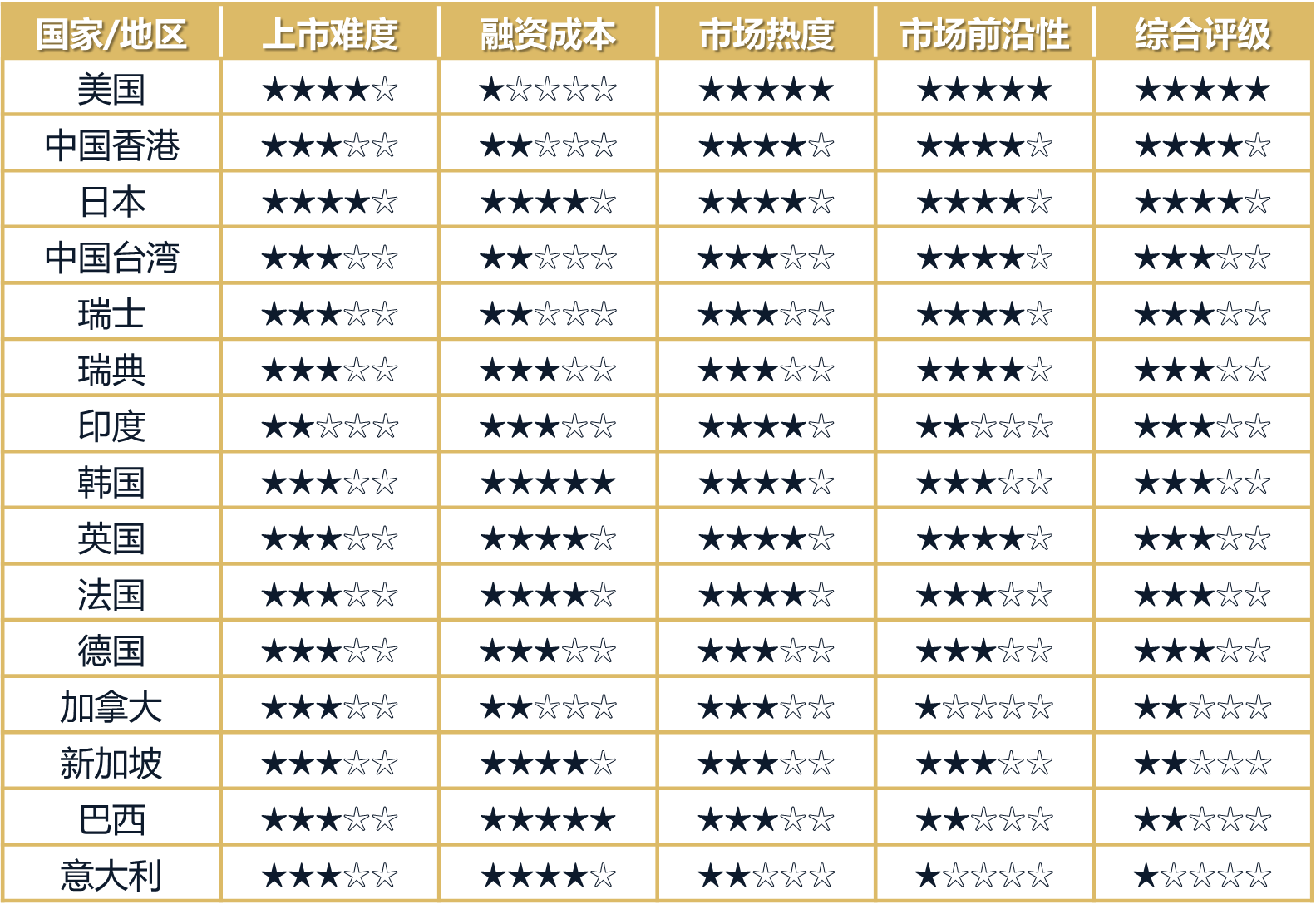
Core Insights - The article discusses the rise of the Chinese stock market, particularly the A-shares, in the context of global capital flow and industrial competition, highlighting the strategic positioning of various global exchanges [1][2][3]. Group 1: Global Exchange Characteristics - Major exchanges have evolved beyond mere trading venues to reflect national economic strategies and support industrial upgrades [1][2]. - Developed countries exhibit two main paths: some focus on leading global technology (e.g., the US, UK, Nordic countries), while others aim to become global consumption and entertainment hubs (e.g., Italy) [2][3]. - Developing countries also show two strategies: attracting external capital to strengthen foundational industries (e.g., Brazil, India) or merely using stock markets to support existing advantages (e.g., South Africa) [3]. Group 2: Exchange Classification - Global exchanges can be categorized into four types: 1. **Forward Technology Exchanges**: Includes Shanghai, Shenzhen, Hong Kong, and major US exchanges like NASDAQ and NYSE [3]. 2. **Entertainment and Consumption Exchanges**: Primarily the French and Italian exchanges [3]. 3. **Resource and Infrastructure Exchanges**: Includes Canadian and Indian exchanges [3]. 4. **Regional Support Exchanges**: Such as the Johannesburg Stock Exchange [3]. Group 3: A-share Market Overview - The A-share market has seen 50 companies listed from early 2025 to July 2025, primarily in information technology and industrial sectors, showcasing strong support for advanced manufacturing [6][7]. - Notable companies include Huazhi Technology (lithium battery management), Sikan Technology (3D vision systems), and Hanbang Technology (chromatography equipment) [6][7]. Group 4: Hong Kong Stock Exchange - The Hong Kong Stock Exchange serves as a bridge for Chinese capital to go global and for foreign capital to enter China, with a focus on industrial, consumer, financial, real estate, and technology sectors [8][10]. - From early 2025 to July 2025, 16 companies were listed, with significant contributions from healthcare and industrial sectors, including major fundraising from companies like Heng Rui Pharmaceutical and Ningde Times [10][11]. Group 5: Taiwan Stock Exchange - The Taiwan Stock Exchange has three boards: main, innovation, and emerging, focusing on large enterprises and startups, with a strong emphasis on technology and healthcare sectors [14][15]. - In the same period, 11 companies were listed, primarily in information technology, healthcare, and consumer sectors [15][16]. Group 6: US Exchanges - The NYSE and NASDAQ serve distinct roles, with NYSE focusing on traditional industries and NASDAQ on technology and innovation [18][21]. - From early 2025 to July 2025, 12 companies were listed on NYSE, mainly in finance and real estate, while NASDAQ saw 16 listings, emphasizing technology and healthcare [19][23]. Group 7: European Exchanges - The London Stock Exchange attracts global capital, focusing on finance and healthcare, with 20 companies listed from 2024 to July 2025 [25][26]. - The Frankfurt Stock Exchange supports traditional and high-tech industries, with a focus on transparency and regulatory standards [29][31]. - The Swiss Exchange is becoming a hub for international companies, particularly in high-tech sectors, while the Swedish Exchange emphasizes healthcare and technology [32][35]. Group 8: South Korean Exchange - The Korean Exchange mirrors the US structure, with a focus on industrial and internet sectors, and has seen 12 companies listed in 2025, primarily in healthcare and finance [39][40].



中欧瑞博董事长吴伟志: 资本市场深化改革质效提升明显
Zheng Quan Shi Bao Wang· 2025-10-09 23:21
Group 1 - The current Chinese stock market exhibits a structural slow bull characteristic, indicating a foundation for a slow bull market [1] - Key driving factors for the positive market trend include a low interest rate environment, implementation of institutional reforms, accelerated institutional entry of long-term capital, and marginal improvement in profitability [1] - The deepening reform of the capital market is transforming it from a financing-focused model to a balanced investment and financing model centered around hard technology and new productive forces [2] Group 2 - The ongoing A+H listing trend is expected to attract international capital inflow as more outstanding Chinese companies list in Hong Kong, benefiting the internationalization of the Renminbi [2] - The introduction of policies aimed at guiding long-term and professional investment, such as encouraging institutional investors and long-term funds to enter the market, enhances the rationality of stock pricing and overall stability of stock valuations [2] - The structural nature of supply in the market and the total volume focus on the investment side expand the range of selectable companies while increasing the difficulty of discerning quality, which is beneficial for bottom-up selection by institutional investors [2]
中欧瑞博董事长吴伟志:资本市场深化改革质效提升明显
Zheng Quan Shi Bao· 2025-10-09 18:23
Group 1 - The current Chinese stock market exhibits a structural slow bull characteristic, indicating a foundation for a slow bull market [1] - Key driving factors for the positive market trend include a low interest rate environment, implementation of institutional reforms, accelerated institutional entry of long-term capital, and marginal improvement in profitability [1] - The deepening reform of the capital market is transforming it from a financing-focused model to a balanced investment and financing model centered around hard technology and new productive forces [2] Group 2 - The ongoing A+H listing trend is expected to attract international capital inflow as more outstanding Chinese companies list in Hong Kong, benefiting the internationalization of the Renminbi [2] - The introduction of long-term and professional institutional investors, such as public funds, insurance funds, and pension funds, is expected to enhance the rationality of stock pricing and overall stability of stock market valuations [2] - The current environment increases the range of selectable companies for investors while also complicating the process of distinguishing quality companies, which is beneficial for bottom-up selection by institutional investors [2]
私募大佬但斌成为中国香港居民,东方港湾:身份变更申请在走流程
21世纪经济报道· 2025-10-09 12:19
Core Viewpoint - The recent identity change of Dan Bin, a prominent figure in the private equity industry, has sparked market speculation regarding its implications for his investment firm, Dongfang Gangwan [1][5]. Company Overview - Dongfang Gangwan, founded in 2004, is one of the earliest sunshine private equity funds in China, headquartered in Shenzhen, focusing on discovering outstanding companies and investing at reasonable prices for the long term [4]. - The firm has a cumulative management scale exceeding 10 billion yuan and manages over 100 private equity funds [4]. Recent Developments - On August 26, 2025, Dongfang Gangwan changed its investor information, with Dan Bin's identity shifting from "China" to "Hong Kong," while he remains the chairman and actual controller of the company [1][5]. - The firm is currently processing a change in its actual controller's personal identity information with the China Securities Investment Fund Industry Association [1]. Investment Strategy - Dan Bin's investment focus has shifted towards the U.S. stock market, with significant holdings in technology giants such as Nvidia, Apple, and Google [7]. - As of the second quarter of 2025, Dongfang Gangwan held 13 U.S. stocks with a market value of $1.126 billion, a notable increase from $868 million in the previous quarter [7]. - The firm is also a leading holder of ETF shares among private equity funds, with substantial investments in Nasdaq index ETFs [7]. Market Insights - Dongfang Gangwan's recent investment outlook suggests that the next phase may focus on application companies in various verticals rather than just large models in AI [8]. - The firm believes that the rise of hard technology will play a crucial role in upgrading market structures and aligns with global trends led by technology giants [8].

讯飞创投徐景明:双向赋能,以生态共赢对抗不确定性
创业邦· 2025-10-09 10:30
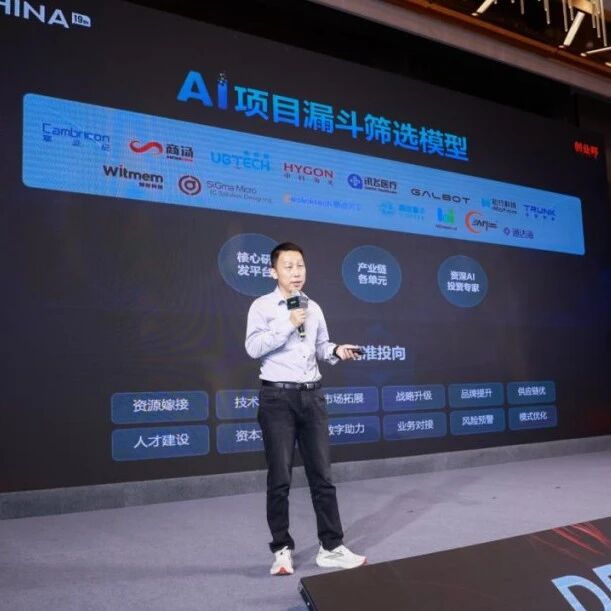
Core Viewpoint - The article emphasizes the importance of empowering startups through collaboration and long-term value creation in the hard technology era, moving away from traditional internet methodologies [2][4]. Investment Logic - The investment logic focuses on "core strength and future orientation," advocating for embracing core capabilities and the AI main track, utilizing a funnel model to filter projects based on traffic, clear algorithms, and genuine empowerment [7][8]. - The layout strategy is defined as "1+3," where "1" represents the AI main track and "3" includes three "AI+" directions: AI + new hardware, AI + life sciences, and AI + energy revolution [8]. Investment Practice - The concept of "dual empowerment and ecosystem co-construction" is highlighted, showcasing specific cases like Zhichun Technology and Chengling Microelectronics, where collaboration and resource sharing led to successful project outcomes [9][10]. - The article mentions that over 70% of the invested companies have achieved business synergy, enhancing their success probability through multi-dimensional collaboration [10]. Industry Ecosystem Construction - The essence of investment is framed as building a large industrial ecosystem, adhering to the investment philosophy of "industry + technology + capital" to support the construction of an AI ecosystem [12]. - The article encourages entrepreneurs to unite and prepare for long-term efforts in the evolving hard technology and AI landscape [12].


科创板50指数半日大涨5.6%,科创板50ETF(588080)助力布局“硬科技”龙头企业
Mei Ri Jing Ji Xin Wen· 2025-10-09 06:44
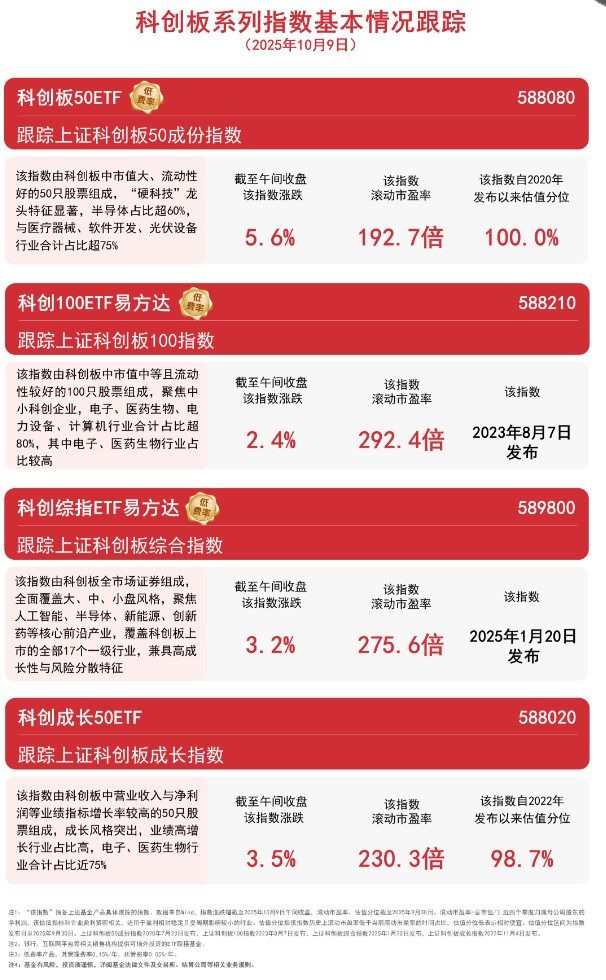
Core Viewpoint - The semiconductor, memory chip, and advanced packaging sectors have shown strong performance, with significant increases in various indices related to the STAR Market, indicating a bullish trend in the technology sector [1]. Group 1: Market Performance - The STAR Market 50 Index rose by 5.6%, aiming for a third consecutive day of gains [1]. - The STAR Market Growth Index increased by 3.5%, while the STAR Comprehensive Index and STAR 100 Index rose by 3.2% and 2.4%, respectively [1]. - The STAR Market 50 ETF (588080) recorded a half-day trading volume of nearly 1.5 billion yuan, with its latest scale reaching 76.7 billion yuan, making it the largest ETF related to the STAR Market [1]. Group 2: Index Composition - The STAR Market 50 Index consists of 50 stocks with high market capitalization and liquidity, prominently featuring "hard technology" companies, with over 60% in the semiconductor sector and more than 75% combined in semiconductor, medical devices, software development, and photovoltaic equipment [3]. - The STAR 100 Index includes 100 stocks with medium market capitalization and good liquidity, focusing on small and medium-sized innovative enterprises, with over 80% in electronics, biomedicine, and electrical equipment sectors [3]. - The STAR Comprehensive Index covers all market securities, focusing on core frontier industries such as artificial intelligence, semiconductors, new energy, and innovative pharmaceuticals, encompassing all 17 primary industries listed on the STAR Market [3].
向“新”而行丨向往之城,“圈”出幸福
Zhong Guo Jing Ji Wang· 2025-10-09 06:40
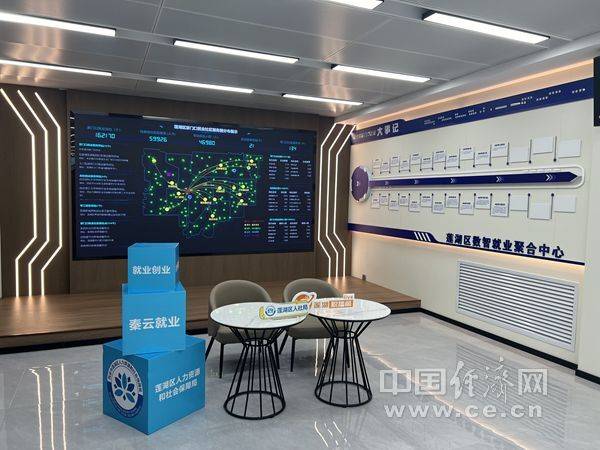
Core Insights - Xi'an is focusing on urban renewal and infrastructure improvement to enhance its appeal as a desirable city [1] - The city is implementing a 5G smart employment service to facilitate local job opportunities [3][4] - New commercial complexes like the "Wanda City" are emerging, enhancing consumer experiences and attracting various brands [6][7] - The establishment of the Future Information Port aims to integrate technological and educational resources to boost innovation [9][10] Employment Initiatives - The 5G smart employment service includes high-frequency online recruitment activities and a digital platform for job seekers [3][4] - The employment service has monitored the job status of 866,000 individuals, covering 85% of the area, and provided services to 100,000 people [4] Consumer Experience - The opening of Wanda City features a landmark structure and hosts nearly 200 flagship stores, enhancing the shopping experience [6] - JD Mall in Qujiang offers a seamless online and offline shopping experience with various interactive zones [7] Technological Development - The Future Information Port is positioned as a core platform for regional innovation, focusing on key industries such as semiconductors and artificial intelligence [9][10] - The project aims to create a collaborative innovation platform by integrating resources from local universities and high-tech industries [9]
【深度】杭州六小龙后,深圳硬科技新星“群狼”涌现
Xin Lang Cai Jing· 2025-10-09 02:00
Core Insights - Shenzhen is witnessing a surge of high-growth hard technology companies, marking a new wave of innovation in the region following the listing of YingShi Innovation on the Sci-Tech Innovation Board [1][5] - The emerging companies are characterized by strong revenue and profitability capabilities, with several achieving significant valuations and market presence [4][9] Company Valuations and Business Focus - Yuanxiang XVERSE: Valuation of $1.8 billion, focusing on VR/AR, established in 2021 [2] - YunJing Intelligent: Valuation of $1.4 billion, specializing in robotics, founded in 2016 [2] - YuanRong QiHang: Valuation of $1.4 billion, engaged in autonomous driving, founded in 2019 [2] - YunBao Intelligent: Valuation of $1.2 billion, focusing on integrated circuits, established in 2020 [2] - 10H HaiRou Innovation: Valuation of $1.2 billion, specializing in robotics, founded in 2016 [2] - SiMou Technology: Valuation of $1.2 billion, focusing on artificial intelligence, established in 2019 [2] - ChuangXiang SanWei: Valuation of $1 billion, specializing in 3D printing, founded in 2014 [2] - ZhengHao Innovation: Valuation of $1 billion, focusing on clean energy, established in 2017 [2] - ZhongJing Robot: Revenue of approximately 4.5 billion yuan, specializing in robotics, founded in 2023 [2] - ZhuJi Power: Valuation between 2 billion to 5 billion yuan, focusing on robotics, established in 2020 [2] - ZhiPing Fang: Valuation of approximately $1 billion, specializing in robotics, founded in 2023 [2] - TuoZhu Technology: Valuation exceeding 10 billion yuan, focusing on 3D printing, established in 2020 [2] - YingShi Innovation: Valuation exceeding 120 billion yuan, specializing in smart imaging devices, founded in 2015 [2] Revenue Growth and Market Dynamics - YingShi Innovation reported a revenue of 5.6 billion yuan for 2024 [4] - YunJing Intelligent's overseas revenue surged nearly 7 times year-on-year, driven by its sweeping robot products [7] - TuoZhu Technology achieved over 5 billion yuan in revenue, showcasing rapid growth in the 3D printing market [7] - ZhengHao Innovation reported revenue exceeding 8 billion yuan, driven by portable energy storage products [9] Global Market Orientation and Innovation - Shenzhen's new tech companies are targeting global markets from inception, creating a positive feedback loop of R&D and market demand [6] - The global tech wave, driven by AI, is creating a "demand release window" that benefits Shenzhen's enterprises [6] - TuoZhu Technology exemplifies the trend of industrial-grade technology democratization, achieving high product quality at lower prices [7] Talent and Supply Chain Dynamics - The emergence of "big factory" founders from companies like Huawei and DJI is a notable trend in Shenzhen's tech landscape [10] - Founders with backgrounds in large corporations bring valuable experience and resources, enhancing the survival and growth prospects of startups [11] - The unique supply chain ecosystem in the Pearl River Delta supports rapid prototyping and iteration, crucial for hard tech companies [12][15] Investment Trends and Market Support - Investment focus has shifted towards hard tech projects with clear market potential and strong technical advantages [17] - Market-driven investment institutions like Tencent and Sequoia Capital are playing a significant role in supporting Shenzhen's tech unicorns [17] - Recent policies in Shenzhen aim to foster innovation and support risk-taking in the tech sector, although implementation challenges remain [18][20]

1829亿,港股IPO“爆了”
3 6 Ke· 2025-10-08 23:58
今年前三季度的港股IPO可以用"火爆"来形容,赴港上市的企业名单长的写不下。 仅9月29日及30日两天,就有长春高新、贝达药业、百利天恒、晶合集成、极米科技、聚芯微电子等29 家公司递表港交所,其中有不少是A+H双重上市。 港交所网站显示,截至9月30日,2025年受理的新申请高达286家,是去年的两倍有余。与此同时,今年 前三季度,港股共迎来66只新股IPO上市,新股首发募集资金累计约1829亿港元(含超额配售),折合 1673.7亿元人民币,募资额同样已超2024年全年的两倍。 对于一级市场来说,港股变成了"香饽饽"。 有双币投资机构的负责人对创投日报记者表示,港股是手上的国内项目IPO的首选目的地,最近已经把 适合的项目都盘了一遍,催着项目尽快推进。华中地区的某国资机构则告诉创投日报记者,近期一直在 尝试拿下港股IPO项目的基石份额。他们都提到,"港股行情已经起来了,要把握住这轮窗口期。" "A+H"与硬科技 今年港股IPO行情的热离不开"A+H"。 位居募资额榜首的是宁德时代,募了约410亿港元;在9月底上市的紫金黄金国际,以249.84亿港元排在 第二。 此外,恒瑞医药、三花智控、海天味业的募资额都 ...