AI泡沫

Search documents
英伟达、特斯拉大跌
财联社· 2025-11-05 00:14
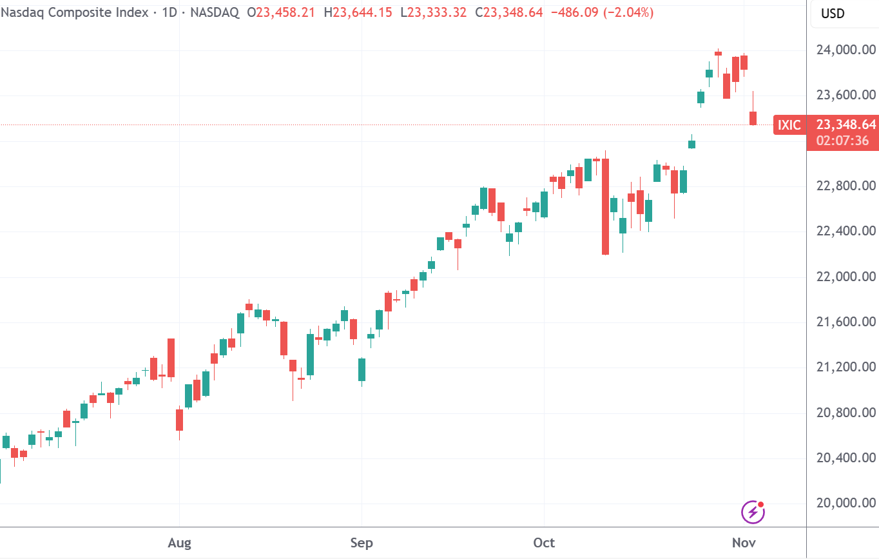
Core Viewpoint - The article discusses the recent decline in U.S. stock markets, highlighting concerns over high valuations and potential market corrections, particularly focusing on the performance of AI-related stocks like Palantir and the broader implications for retail investors and market sentiment [1][4][5]. Market Performance - The S&P 500 index fell by 1.17% to 6771.55 points, the Nasdaq Composite dropped by 2.04% to 23348.64 points, and the Dow Jones Industrial Average decreased by 0.53% to 47085.24 points [1]. - Retail investor sentiment, as measured by Goldman Sachs' retail preference index, declined by 3.6%, significantly underperforming the S&P 500 index [4]. Company-Specific Insights - Palantir, despite reporting earnings that exceeded expectations and raising its guidance, saw its stock price drop by 7.94%, reflecting concerns over its valuation after a 400% increase over the past year [3][4]. - Michael Burry, known for his role in "The Big Short," disclosed that he purchased put options on Palantir and Nvidia, further intensifying market fears [4]. Technical Analysis - Jonathan Krinsky, a chief market technician, indicated that the S&P 500 has not tested its 50-day moving average since April, currently around 6654 points, and suggested a potential decline to the 6400-6500 point range due to extreme market divergences [4][5]. Broader Market Trends - Similar to U.S. equities, commodities, including oil and gold, experienced declines, with Bitcoin and Ethereum dropping by nearly 6% and over 10%, respectively, indicating a broader risk-off sentiment in the market [6]. - The Nasdaq Golden Dragon China Index fell by 2.05%, with notable declines in major Chinese stocks such as Alibaba (-2.02%) and JD.com (-2.93%) [10]. Notable Stock Movements - Among major tech stocks, Nvidia fell by 3.96%, while Apple rose by 0.37%. Other significant declines included Tesla (-5.15%) and TSMC (-3.55%) [9].



Wall Street grows worried about an AI bubble
Youtube· 2025-11-04 23:12
Group 1: Market Sentiment and Valuations - Hedge fund manager Michael Bur has targeted Nvidia and Palantir by purchasing put options, indicating a bet on price declines for these stocks [1] - Palantir's stock has surged 170% year-to-date, trading at approximately 250 times earnings, raising concerns about lofty valuations in the tech sector [3][27] - The market is experiencing a "risk-off" sentiment, with investors wary of high valuations, particularly in AI-related stocks [58] Group 2: Investment Strategies and Recommendations - Investors are advised to scale back on large-cap tech stocks due to high valuations and potential downside risks, suggesting a cautious approach rather than outright selling [5][7] - Diversification is emphasized, with recommendations to invest in sectors like healthcare and consumer staples, which are less reliant on tech momentum [9][10] - The current market environment suggests that any hiccup in growth rates could lead to significant corrections in tech stocks, with potential declines of 20-30% not uncommon [14][37] Group 3: Company-Specific Insights - Palantir reported strong earnings, exceeding expectations with a 63% growth rate and a 50% increase in government business, yet the stock still faced selling pressure [46][47] - Despite Palantir's impressive fundamentals, its valuation remains a concern, with a price-to-sales ratio of around 85, making it difficult to justify its high multiple [49][50] - The company is positioned well in the AI space, with a significant total addressable market and unique capabilities that set it apart from competitors [52][55] Group 4: Broader Market Trends - The tech sector is experiencing volatility, with major companies like Amazon, Google, and Meta showing strong earnings but still facing sell-offs due to broader market concerns [66][70] - The market's reaction to earnings reports indicates a potential shift in investor sentiment, with a focus on sustainable growth rather than speculative valuations [62][63] - The ongoing discussions about interest rates and their impact on tech valuations highlight the uncertainty in the market, with expectations for further volatility [32][34]

“大空头”点燃估值忧虑,纳指跌超2%,中概股难逃市场拖累
Feng Huang Wang· 2025-11-04 22:40
Market Overview - The S&P 500 index fell by 1.17% to 6771.55 points, the Nasdaq Composite dropped by 2.04% to 23348.64 points, and the Dow Jones Industrial Average decreased by 0.53% to 47085.24 points, reflecting concerns over high valuations in the U.S. stock market [1] Company Performance - Palantir, a leading AI stock, reported earnings that exceeded expectations and raised its guidance, yet its stock fell by 7.94%, highlighting its status as a representative of the "AI bubble" after a fourfold increase in the past year [2] - Nvidia's stock declined by 3.96%, while other major tech stocks like Apple and Microsoft saw mixed results, with Apple rising by 0.37% and Microsoft falling by 0.52% [8] - Chinese stocks also faced pressure, with the Nasdaq Golden Dragon China Index dropping by 2.05%, including Alibaba down by 2.02% and JD down by 2.93% [8] Economic Indicators - Goldman Sachs and Morgan Stanley executives expressed concerns about a potential 10% to 20% market pullback over the next 12 to 24 months, which has contributed to investor anxiety [6] - The retail investor sentiment index compiled by Goldman Sachs fell by 3.6%, indicating a significant drop in retail investor confidence [5] IPO and M&A Activity - Beta Technologies, an electric aircraft company, completed its IPO at $34 per share, raising over $1 billion, and saw its stock rise by 5.88% despite the overall market downturn [16] - Pfizer and Novo Nordisk are in a bidding war for Metsera, with Pfizer raising its offer to $8.1 billion and Novo Nordisk offering up to $10 billion, leading to a 20.5% increase in Metsera's stock [12] Corporate Developments - IBM announced plans to lay off thousands of employees in Q4, affecting a low single-digit percentage of its global workforce [15] - Amazon has issued a cease-and-desist order to AI startup Perplexity, demanding it stop using its AI browser for shopping on Amazon's platform [10] - Apple is reportedly preparing to enter the low-cost laptop market to attract consumers currently using Chromebooks and entry-level Windows laptops [11]
‘Big Short’ investor Michael Burry follows up cryptic AI bubble warning with bearish stock activity on Nvidia and Palantir
Yahoo Finance· 2025-11-04 16:43
Storied investor Michael Burry has talked the AI-bubble talk, and now he’s walking the walk. Burry, made famous in the 2015 film The Big Short for his prescience on the 2008 housing market collapse, disclosed some cynical bets against tech giants Nvidia and Palantir amid concerns of AI company valuations swelling beyond their true worth. Scion Asset Management, Burry’s hedge fund, bought more than $1 billion in put options on the two tech companies, according to regulatory filings released on Monday for ...
签下OpenAI大单 亚马逊股价创历史新高
Bei Jing Shang Bao· 2025-11-04 16:13
Core Insights - The partnership between Amazon and OpenAI, involving a seven-year cloud service procurement agreement worth $38 billion, is driving significant interest and investment in AI, leading to a surge in stock prices for major players like Amazon and Nvidia [1][2]. Company Developments - Amazon's stock rose by 4% to reach a historic high, adding over $100 billion to its market capitalization following the announcement of the OpenAI deal [1]. - OpenAI is set to receive hundreds of thousands of Nvidia GPUs through this agreement, which is a strong endorsement for Amazon Web Services (AWS) amidst concerns about its competitiveness against Microsoft and Google [1]. - AWS reported robust growth in its third-quarter earnings, alleviating investor concerns about its position in the AI market [1][3]. AI Infrastructure Investments - OpenAI has committed to investing $1.4 trillion to develop 30 gigawatts (GW) of computing resources, which could power approximately 25 million American households [3]. - Nvidia announced a potential investment of up to $100 billion to assist OpenAI in building and deploying AI data centers with at least 10 GW of capacity [2]. - OpenAI is also exploring partnerships with other GPU manufacturers like AMD and is working on developing custom ASIC chips for AI acceleration [2][3]. Market Outlook - Citigroup forecasts that global AI industry revenue will reach $975 billion by 2030, reflecting a compound annual growth rate of 86% from $43 billion in 2025, driven by accelerated adoption and commercialization of AI technologies [4]. - There is ongoing debate in the market regarding the potential for an AI bubble, with concerns about whether the substantial investments in AI infrastructure will yield the expected returns [4].

Why are Some Market Pundits Talking About the 1929 Wall Street Crash?
Yahoo Finance· 2025-11-04 16:12
Market Overview - The S&P 500 has gained 2.3% in October, nearing new highs, while the Nasdaq 100 has seen a nearly 5% increase, raising concerns about a potential parabolic trajectory [1] - There is speculation about a possible market correction, with some analysts predicting a 5% pullback [2] Bubble Concerns - The term "bubble" has been frequently mentioned by both the public and notable figures in tech and finance, although opinions vary on whether a bubble exists [3] - Fed Chairman Jerome Powell suggests that the current market dynamics differ from previous bubbles, indicating a more stable environment [3][4] AI Market Dynamics - The current AI boom is compared to past market bubbles, with the assertion that it is not directly analogous to the internet bubble or the 1929 crash [4][6] - Despite concerns about AI spending, particularly highlighted by Meta Platforms' significant stock drop of nearly 15% in two sessions, the broader market remains relatively unaffected [5] Investment Strategies - The article emphasizes the importance of understanding different investment strategies, as the AI market may present unique opportunities compared to past market behaviors [6]
A股晚间热点 | 高盛、大摩警告全球股市或回调至少10% 中国股票再获看好
智通财经网· 2025-11-04 14:48
Group 1 - The Chinese government has announced a 9-day Spring Festival holiday from February 15 to February 23, 2026, marking the longest Spring Festival holiday in history [1] - Following the announcement, there was a significant increase in search volume for train and international flight tickets, indicating a surge in travel interest [1] Group 2 - Goldman Sachs and Morgan Stanley have warned that global stock markets may experience a correction of at least 10% within the next 12 to 24 months, following a strong market rally [2] - Despite the warning, Goldman Sachs remains optimistic about investment interest in China, highlighting it as one of the world's largest and most important economies [2] Group 3 - The People's Bank of China announced a 700 billion yuan reverse repurchase operation to maintain liquidity in the banking system, indicating a commitment to monetary easing [3] - The operation is set for November 5, 2025, with a term of 3 months, reflecting the central bank's intention to support the market [3] Group 4 - In October 2025, the number of new A-share accounts opened in Shanghai fell to approximately 231,000, a 66% decrease year-on-year, indicating a slowdown in market participation [4] - The total number of new accounts opened in the first ten months of 2025 reached approximately 22.46 million, a 10.57% increase compared to the previous year [4] Group 5 - Investor Michael Burry has disclosed that approximately 80% of his fund's positions are short on Nvidia and Palantir, reflecting concerns about an AI bubble [5] - Despite the short positions, both stocks have seen price increases since the end of September, resulting in paper losses for Burry [5] Group 6 - High-dividend assets have shown strong performance as technology stocks have faced a pullback, suggesting a shift in investor sentiment towards more stable income-generating investments [6] - The contrasting performance of sectors before and after the holiday indicates significant market dynamics, with concerns about the sustainability of technology stock rallies [6] Group 7 - Following the implementation of a new tax policy, gold jewelry prices have increased by 7% to 8%, with some retailers reporting price hikes of up to 13% [7] - The market response to the tax changes suggests volatility in gold prices, with some retailers pausing sales to assess market conditions [7] Group 8 - The 2025 6G Development Conference is scheduled for November 13-14 in Beijing, aiming to release key research results and provide guidance for 6G standardization and industrialization [8] - The conference is expected to highlight the integration of artificial intelligence with communication technology, potentially enhancing the development of both fields [8]

纳指低开1.58%,英伟达跌超2%,Palantir跌超8%
Ge Long Hui· 2025-11-04 14:38
Core Viewpoint - Multiple CEOs on Wall Street have warned that U.S. stocks may experience a correction of over 10% due to high valuations [1] Market Performance - Major U.S. stock indices opened lower, with the Nasdaq down 1.58%, the S&P 500 down 1.15%, and the Dow Jones down 0.75% [1] Company-Specific Developments - Tesla shares fell by 3.3% after the Norwegian sovereign wealth fund rejected Elon Musk's $1 trillion compensation plan, and October shipments to China decreased by nearly 10% year-over-year [1] - Nvidia's stock declined by 2.4%, while Palantir's shares dropped over 8%, amid rising concerns about an AI bubble, with "big short" Michael Burry revealing an 80% short position in both Palantir and Nvidia [1] - Uber's stock fell by more than 8% as Q3 operating profits fell short of expectations, and the CEO projected that Robotaxi would remain unprofitable for the next few years [1]
2026年美股展望,最值得关注的板块以及一些建议
Sou Hu Cai Jing· 2025-11-04 14:36
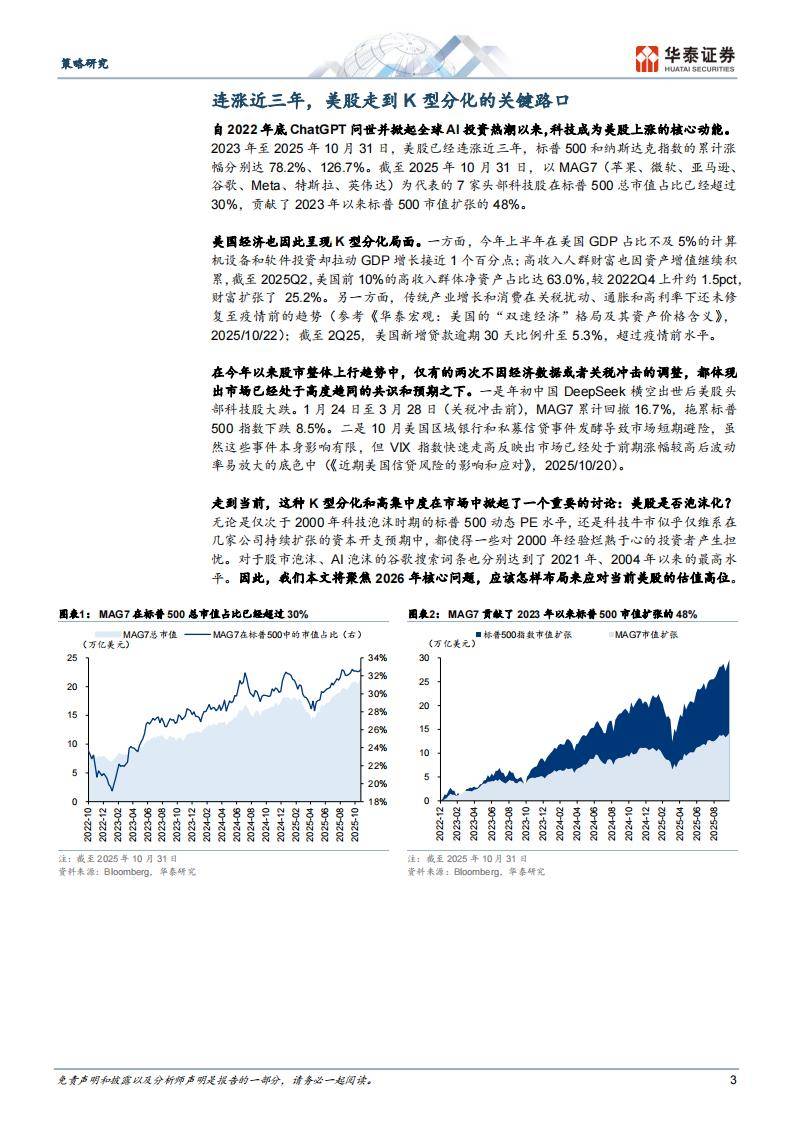
Group 1 - The U.S. stock market has experienced significant growth over the past three years, with the S&P 500 index rising by 78.2% and the Nasdaq index by 126.7% from 2023 to October 2025. The MAG7 companies (Apple, Microsoft, Amazon, Google, Meta, Tesla, Nvidia) account for over 30% of the S&P 500's total market capitalization and contributed 48% of the market expansion since 2023 [1][6][7]. - There are concerns about a potential tech bubble, as the current market concentration resembles the tech bubble of 2000. The price-to-earnings (PE) ratio is nearing its highest level since 1990, and the leverage ratio in the market has increased to 1.7%, surpassing the 1.5% level seen during the 2000 internet bubble [2][3][23]. - The K-shaped economic recovery is evident, with high-income households seeing a net worth share of 63.0% by Q2 2025, up 1.5 percentage points from Q4 2022. Meanwhile, traditional sectors have not fully recovered to pre-pandemic trends [7][8]. Group 2 - The Federal Reserve is expected to continue its accommodative monetary policy into the first half of 2026, with interest rates potentially dropping to the 3.00-3.25% range. However, the scope for further easing is limited, and historical trends suggest that the S&P 500 typically performs poorly in the months leading up to the end of a rate-cutting cycle [2][29]. - Capital expenditures (CAPEX) for MAG7 companies are projected to slow significantly, from a growth rate of 48.8% in 2025 to 18.8% in 2026, and further down to 6.0% in 2027. The future performance of tech stocks will depend on the successful deployment of AI applications and technological breakthroughs [3][34]. - The U.S. economy is expected to show resilience, with real GDP growth projected to rebound to 2.3% in 2026, supported by reduced trade policy uncertainty and accommodative fiscal and monetary policies [3][34]. Group 3 - Investment strategies for 2026 should balance liquidity, fundamentals, and sector structure, focusing on tech leadership in the first half and gradually increasing exposure to cyclical sectors in the latter half of the year [4][45]. - Global diversification is recommended, with high allocation value in developed markets like Germany and Switzerland, and emerging markets such as Saudi Arabia, South Korea, and India [5][47]. - Historical data indicates that after the end of a rate-cutting cycle, sectors like information technology, consumer discretionary, energy, and real estate tend to perform well, making them attractive for investment [5][48].




“大空头”伯里警示AI泡沫后 披露Q3大幅做空英伟达(NVDA.US)Palantir(PLTR.US)
智通财经网· 2025-11-04 13:14
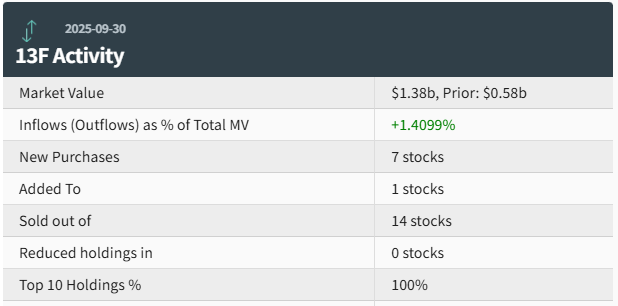
Core Insights - Michael Burry's Scion Asset Management has disclosed significant bearish positions on AI stocks Nvidia and Palantir, indicating a cautious outlook on the AI-driven market rally [1][3][5] - The total market value of Scion's holdings increased to $1.38 billion in Q3 2025, up 138% from $0.58 billion in the previous quarter, with a focus on a concentrated portfolio [2][3] Holdings Summary - Scion Asset Management reported holding 1 million put options on Nvidia and 5 million put options on Palantir, which together account for 80% of the fund's positions [3][4] - The fund made 7 new stock purchases and added to 1 existing position while completely selling out of 14 stocks, maintaining a concentrated portfolio with the top 10 holdings comprising 100% of total market value [2][8] Stock Performance - Nvidia's stock has risen 54% year-to-date, while Palantir's stock has surged over 173% [4][5] - Despite strong quarterly results and an upward revision of guidance from Palantir, its stock fell 7.2% in pre-market trading, while Nvidia's stock dropped 1.9% [4][5] Investment Strategy - Scion has established bullish positions in Pfizer, Halliburton, Molina Healthcare, and Lululemon Athletica, indicating a diversified approach beyond bearish bets on AI stocks [8][9] - The fund's new positions include 6 million call options on Pfizer and 2.5 million call options on Halliburton, reflecting a strategic pivot towards sectors with potential growth catalysts [8][9] Market Commentary - Burry has expressed concerns about the sustainability of the AI stock rally, citing slowing growth in cloud services from major players like Amazon, Alphabet, and Microsoft [5][7] - He has drawn parallels between current capital expenditure trends in the tech sector and those observed during the 1999-2000 internet bubble, suggesting a cautious stance on tech investments [5][7]