避险资产

Search documents
特朗普:若俄乌冲突无法解决,或会供乌“战斧”;法国总理勒科尔尼复职后再次组阁
Di Yi Cai Jing Zi Xun· 2025-10-13 01:09
本周内计划发布但同样可能延迟的数据包括:9月零售销售数据、9月生产者价格指数PPI(均于周四发 布),以及当周初请失业金人数;周五则将公布9月新屋开工数据与9月工业产出数据。 花旗分析师在报告中指出:"受停摆影响,新数据供应稀缺,本月降息的可能性较大,且市场已完全消 化这一预期。"伦敦证券交易所集团(LSEG)数据显示,市场定价暗示美联储有望在10月29日的会议及 12月进一步降息。 编辑 | 格蕾丝 本周外盘看点 上周国际市场风云变幻,关税阴云再起,黄金再迎里程碑。美股全线下挫,道指周跌2.73%,纳指周跌 2.53%,标普500指数周跌2.43%。欧洲三大股指表现不佳,英国富时100指数周跌0.67%,德国DAX 30 指数周跌0.56%,法国CAC 40指数周跌2.02%。 本周看点颇多,市场持续关注美国政府停摆的相关进展以及美联储是否会释放进一步降息的信号。若停 摆持续,更多经济数据可能会延迟发布,此外多位美联储官员将发表例行讲话。在欧洲,通胀数据将影 响未来政策路径走向,英国与澳大利亚将公布关键就业数据。世界银行和国际货币基金组织(IMF)的 秋季年会召开,届时将公布最新经济展望。美股新财报季拉开帷 ...


TACO交易?亚洲市场开盘,风险资产全新走高:美股反弹,数字货币大涨
Hua Er Jie Jian Wen· 2025-10-13 00:26
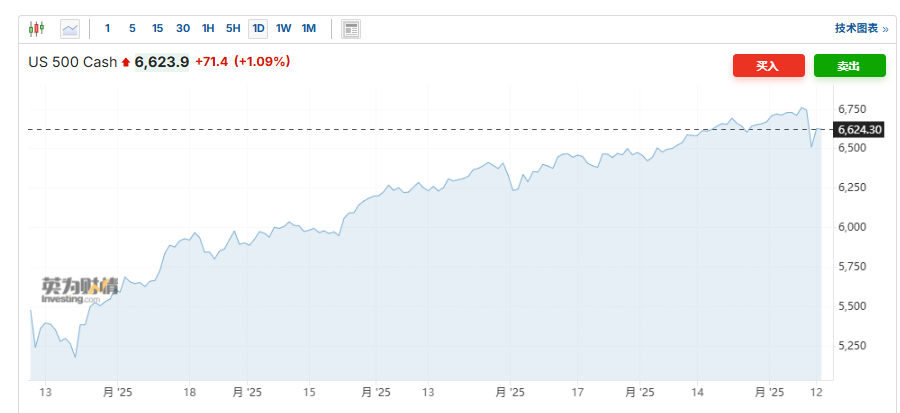
Market Overview - Risk assets across Asia rebounded, reversing the pessimistic sentiment from the previous week, with investors returning to stocks, oil, and digital currencies, while gold continued its upward trend [1] - U.S. stock index futures rose, with the S&P 500 futures climbing nearly 1% [1][3] - Oil prices increased by over 1%, with WTI crude oil rising 0.9% to $59 per barrel [4] - Spot gold rose 0.7% to $4045 per ounce [1] - The cryptocurrency market saw a strong rebound, with Bitcoin surpassing $115,000 [1][8] Economic Relations - The Chinese Ministry of Commerce reiterated its stance on the trade war, stating that China does not wish to engage in conflict but is not afraid to do so [2] - The Ministry urged the U.S. to correct its erroneous practices and maintain stable and healthy economic relations through dialogue [2] - Analysts from Minsheng Securities believe that the fundamental tone of U.S.-China relations remains unchanged and will not become a turning point for the market [2] Cryptocurrency Market - The cryptocurrency market experienced a significant rebound after a historic large-scale liquidation, with Bitcoin rising 4.2% to around $115,180 and Ethereum increasing by 10.8% to $4,143 [8] - Other major cryptocurrencies also saw gains, with Solana up 6.3% and Dogecoin soaring 7.6% [10] - The total market capitalization of cryptocurrencies rebounded to $3.85 trillion, up nearly 10% from two days prior [10]
金价刷新纪录高点 轧空行情推动白银价格延续涨势
Sou Hu Cai Jing· 2025-10-13 00:17
Core Viewpoint - Silver prices are fluctuating near record highs, driven by historic short squeezes in the London market and trade tensions, while gold prices have reached new all-time highs [1] Group 1: Precious Metals Performance - Silver prices rose by 1.1%, approaching $51 per ounce, while platinum and palladium prices increased by over 2% [1] - Gold prices surpassed $4,060 per ounce, marking a new record high and achieving a weekly gain for the eighth consecutive week [1] - Precious metal prices have surged between 50% to 80% this year, dominating the commodity market [1] Group 2: Influencing Factors - The rise in gold prices is supported by central bank purchases, increased holdings in exchange-traded funds, and interest rate cuts by the Federal Reserve [1] - Recurrent trade tensions, threats to the independence of the Federal Reserve, and the potential for a U.S. government shutdown have heightened demand for safe-haven assets [1]
贵金属周报:关税黑天鹅再临,避险溢价逻辑持续兑现-20251012
Hua Tai Qi Huo· 2025-10-12 11:58
Report Industry Investment Rating - Gold: Cautiously bullish [3] - Silver: Cautiously bullish [3] - Arbitrage: Short the gold-silver ratio at high levels [4] - Options: Put on hold [4] Core View of the Report - The resurgence of tariff risks and the continuation of easing expectations have jointly pushed the gold price to continuously hit new historical highs. The U.S. federal government shutdown, although causing the delay of important economic data releases, is itself regarded as an obvious manifestation of fiscal risks, prompting the market to seek safe-haven assets and boosting the gold price. The uncertainty of the Fed's interest rate cut path remains high, but the market still expects a rate cut in October, which also supports the gold price. The silver price is currently strong, hitting a new historical high. There is a need to repair the gold-silver price ratio. However, due to the relatively large volatility of silver, more attention should be paid to position control and strict stop-loss execution when operating [3]. Summary According to Relevant Catalogs Market News and Important Data Macroeconomic Aspects - In the week of October 10, 2025, gold and silver continued their strong performance. U.S. President Trump announced that starting from November 1, a new 100% tariff would be imposed on Chinese imports, an additional part on top of the existing paid tariffs. The U.S. will also implement export controls on "all key software" on the same day, significantly increasing tariff risks. The bill proposed by the U.S. Republicans to end the government shutdown failed to obtain enough votes in the Senate, and the overall U.S. fiscal risk remains prominent. The minutes of the September FOMC meeting showed that there were increasing differences within the Fed regarding the future interest rate cut path. Although most officials supported further rate cuts this year, 7 officials believed that no further cuts were needed, and only Fed Governor Milan supported a larger 50-basis-point cut. The market has strengthened the pricing of a rate cut in October, with the Fedwatch showing a 98.3% probability of a 25-basis-point cut in October [1]. Fundamental Aspects - In the week of October 10, 2025, the Shanghai Futures Exchange's gold warehouse receipts remained unchanged at 70,728 kilograms from the previous week, while silver warehouse receipts decreased by 23,221 kilograms to 1,169,061 kilograms. In the Comex inventory, this week's Comex gold inventory decreased by 170,212.58 ounces to 39,940,669.57 ounces, and Comex silver inventory decreased by 9,409,653.79 ounces to 522,463,797.41 ounces. In the precious metal ETFs, in the week of October 10 (currently the latest), the gold SPDR ETF holdings increased by 2.28 tons to 1,017.16 tons, and the silver SLV ETF holdings increased by 274.06 tons to 15,444 tons. As of September 23, 2025, in terms of CFTC positions, the net long speculative positions in gold increased by 0.13% to 266,749 contracts, and the net long positions in silver increased by 1.43% to 52,276 contracts. In the week of October 10, 2025, the CSI 300 Index fell by 0.51% from the previous week, the electronic components sector index related to precious metals fell by 2.49%, and the photovoltaic sector fell by 0.05%. As of September 29, 2025 (the latest), the photovoltaic price index was reported at 15.74, up 0.01 from the previous period. As of September 15, 2025, the photovoltaic manager index was reported at 119.66, a month-on-month decrease of 5.43 [2]. Strategy - Gold: Cautiously bullish. The resurgence of tariff risks and the continuation of easing expectations jointly push the gold price to continuously hit new historical highs. The U.S. federal government shutdown, although causing the delay of important economic data releases, is itself regarded as an obvious manifestation of fiscal risks, prompting the market to seek safe-haven assets and boosting the gold price. The uncertainty of the Fed's interest rate cut path remains high, but the market still expects a rate cut in October, which also supports the gold price [3]. - Silver: Cautiously bullish. The silver price is currently strong, hitting a new historical high. There is a need to repair the gold-silver price ratio. However, due to the relatively large volatility of silver, more attention should be paid to position control and strict stop-loss execution when operating [3]. - Arbitrage: Short the gold-silver ratio at high levels [4]. - Options: Put on hold [4].
有色及贵金属周报合集-20251012
Guo Tai Jun An Qi Huo· 2025-10-12 11:01
Report Industry Investment Rating No relevant content provided. Core Viewpoints of the Report - Gold: The resurgence of the tariff war has led to increased risk aversion, potentially pushing up the gold price. After the interest rate cut in September, the pricing logic of gold has shifted from α-driven to β-driven, opening up upward space for long - term narratives [8][9]. - Silver: The price of silver is expected to remain strong. Although there may be resistance around the $50 level, it still has the opportunity to outperform gold in the medium term. Attention should be paid to the overseas short - squeeze situation [8][10]. - Copper: Trade risks have become more apparent, supply disruptions have intensified, and price fluctuations have widened. The market is currently bearish, but the tightening supply - demand fundamentals may provide opportunities for long - term bullish positions [89][95]. Summary by Related Catalogs Gold and Silver Price Performance - This week, London gold rose 2.29%, and London silver rose 6.63%. The gold - silver ratio dropped from 82.2 to 79.1. The 10 - year TIPS fell to 1.75%, and the 10 - year nominal interest rate fell to 4.05%. The US dollar index was 98.82 [9]. - After the holiday, Shanghai gold opened higher, reaching a maximum of 921 yuan/gram, hitting a new record high [9]. Market Drivers - Overseas events during the holiday, such as the US government shutdown, French political turmoil, China's continuous increase in gold reserves, and Tether's plan to hoard gold - backed tokens, have all contributed to the rise in gold prices [9]. - Trump's resumption of the trade war over the weekend has increased market volatility, but the impact on gold has been relatively stable [9]. - For silver, the continuous inversion of the spot - futures price difference overseas, high lease rates, and tight inventory have supported the price [10]. Transaction - related Data - **Price Difference**: Overseas, the London spot - COMEX gold主力 spread fell to - 17.655 dollars/ounce, and the COMEX gold continuous - COMEX gold主力 spread was - 49.3 dollars/ounce. The London spot - COMEX silver主力 spread rose to 2.611 dollars/ounce, and the COMEX silver continuous - COMEX silver主力 spread was - 0.12 dollars/ounce. Domestically, the gold spot - futures spread was - 3.82 yuan/gram, at the lower end of the historical range; the silver spot - futures spread was - 23 yuan/gram, at the upper end of the historical range. The gold monthly spread was 8.14 yuan/gram, and the silver monthly spread was 55 yuan/gram, both at the upper end of the historical range [16][19][23][25][29][34]. - **Inventory and Position**: COMEX gold inventory decreased by 0.17 million ounces, and the registered warrant ratio rose to 53.2%. COMEX silver inventory decreased by 9.41 million ounces to 522 million ounces, and the registered warrant ratio dropped to 35.1%. Gold futures inventory increased by 5094 kilograms, and silver futures inventory increased by 12.21 tons to 1192 tons. COMEX CFTC non - commercial net long positions in gold and silver both increased slightly. Gold SPDR ETF inventory increased by 1.42 tons, and silver SLV ETF inventory decreased by 289 tons [44][46][49][51][57][59]. Copper Price and Market Situation - The copper market is currently bearish, with a price range of 80,000 - 85,000 yuan/ton. The VIX index has risen rapidly, indicating increased market uncertainty [89][91]. - Copper concentrate spot TC is weak, and smelting losses have widened [93]. Market Drivers - The US tariff increase has put pressure on copper prices, but the tightening supply fundamentals may limit the decline. Major copper mines such as Grasberg have supply disruptions, and recycled copper supply is also tight. China's refined copper production is expected to decline in October [95]. - Total global copper inventory increased this week, with a significant increase in domestic inventory. However, as the supply - demand imbalance intensifies, there is still a possibility of inventory reduction in the future [95]. Transaction - related Data - **Volatility**: The volatility of Shanghai copper, international copper, LME copper, and COMEX copper has all increased. COMEX copper price volatility is around 22%, and Shanghai copper volatility has risen to around 25% [102]. - **Term Spread**: The term structure of Shanghai copper has weakened, and the LME copper spot discount has narrowed. COMEX copper has changed from a near - end C structure to a B structure [104][106]. - **Position**: The positions of Shanghai copper, international copper, LME copper, and COMEX copper have all increased, with Shanghai copper positions increasing by 32,200 lots to 578,300 lots [107]. - **Fund and Industry Position**: LME commercial short net positions have increased, while CFTC non - commercial long net positions have decreased slightly [113].
金价3年猛涨123% 买100g黄金一年多花3万!还能买吗
2 1 Shi Ji Jing Ji Bao Dao· 2025-10-12 09:19
(原标题:金价3年猛涨123% 买100g黄金一年多花3万!还能买吗) 一场席卷全球的避险浪潮,正在将贵金属市场推向沸腾的顶点。 在全球多重风险因素叠加下,黄金价格突破每盎司4000美元的历史性关口。 尤其值得关注的是,金价在今年4月22日首次突破3500美元/盎司大关后,仅用169天便一举冲上4000美 元关口,如此惊人的涨速,堪称"火箭式"上涨,引发全球投资者高度关注。 而市场的"沸腾"并不仅限于黄金。现货白银涨势更为迅猛,年内涨幅超70%跑赢黄金,价格破50美元。 据21财经工作室测算,若投资者在一年前购入100g黄金并持有不动,一年收益高达3万元,收益率妥妥 超50%。 截至10月10日,据21财经工作室统计,自2022年以来,国际金价累计涨幅已达123%,展现出强劲的上 扬势头。进入2025年,这一涨势愈发迅猛,年内涨幅已突破53%。 100克黄金售价突破11万 一年多花超3万 10月10日,国内多家品牌金饰克价突破1180元。老庙黄金足金饰品报价1183元/克;周生生足金饰品报 价1176元/克;老凤祥足金饰品报价1172元/克。周大福足金(饰品、工艺品类)克价冲上1180元。 图源/21财经客户 ...
金银周报-20251012
Guo Tai Jun An Qi Huo· 2025-10-12 08:38
1. Report Industry Investment Rating No relevant content provided. 2. Core Viewpoints of the Report - Gold and silver are both showing a relatively strong trend. Gold is driven by factors such as the resurgence of the tariff war and various overseas events, while silver is affected by overseas short - squeeze situations and tight spot supplies. The report maintains a positive outlook on the prices of both gold and silver, expecting silver to potentially outperform gold in the medium term [3][4]. 3. Summary by Relevant Catalogs 3.1 Price Performance - This week, London gold rose by 2.29%, and London silver rose by 6.63%. The gold - silver ratio dropped from 82.2 in the previous week to 79.1. The 10 - year TIPS fell to 1.75%, the 10 - year nominal interest rate fell to 4.05% (2 - year 3.52%), and the US dollar index was recorded at 98.82 [3][4]. - After the holiday, Shanghai gold opened higher, reaching a maximum of 921 yuan/gram, hitting a new record high. COMEX silver reached a maximum of 49.965 US dollars, and London silver reached 51.221 US dollars, breaking historical highs [3][4]. 3.2 Price and Spread Analysis - **Overseas Price - Spread**: This week, the spread between London spot and COMEX gold主力 fell to - 17.655 US dollars/ounce, and the spread between COMEX gold continuous and COMEX gold主力 was - 49.3 US dollars/ounce. The spread between London spot and COMEX silver主力 rose to 2.611 US dollars/ounce, and the spread between COMEX silver continuous and COMEX silver主力 was - 0.12 US dollars/ounce [10][13]. - **Domestic Price - Spread**: This week, the gold futures - spot spread was - 3.82 yuan/gram, at the lower end of the historical range; the silver futures - spot spread was - 23 yuan/gram, at the upper end of the historical range. The gold monthly spread was 8.14 yuan/gram, at the upper end of the historical range; the silver monthly spread was 55 yuan/gram, at the upper end of the historical range [17][19][23][28]. 3.3 Inventory and Position Analysis - **Inventory**: This week, COMEX gold inventory decreased by 0.17 million ounces, and the registered warehouse receipt ratio rose to 53.2%. COMEX silver inventory decreased by 9.41 million ounces to 522 million ounces, and the registered warehouse receipt ratio dropped to 35.1%. Gold futures inventory increased by 5094 kilograms, and silver futures inventory increased by 12.21 tons to 1192 tons [37][39][42]. - **Position**: This week, the non - commercial net long position of COMEX CFTC gold increased slightly, and the non - commercial net long position of silver increased slightly. The gold SPDR ETF inventory increased by 1.42 tons, and the silver SLV ETF inventory decreased by 289 tons [44][50][52]. 3.4 Core Drivers of Gold - This week, the correlation between gold and real interest rates returned, and 10YTIPS continued to decline [62]. - The report also analyzed factors such as inflation, retail sales performance, non - farm employment performance, industrial manufacturing cycle, financial conditions, economic surprise index, inflation surprise index, and the probability of Fed rate cuts [67][70][75][77][79].
160万人一夜爆仓,比特币“史诗级大跌”背后的高杠杆惨案
Hu Xiu· 2025-10-12 06:55
Core Insights - The cryptocurrency market experienced a significant crash on October 11, with Bitcoin plummeting over 13% in 24 hours, reaching a low of approximately $105,930, marking a 20% drop from its recent peak of $126,250 [2][5] - The crash led to over 1.6 million investors being liquidated, resulting in a total liquidation amount of approximately $19.36 billion, the largest single-day liquidation in cryptocurrency history [8][12] - The volatility and high leverage in the market have raised concerns about Bitcoin's suitability as a reserve asset, as it lacks the stability required for such a role [3][21] Market Reaction - The crash was likened to previous significant downturns in the cryptocurrency market, with analysts noting that high leverage and speculative capital contributed to the rapid sell-off [7][14] - Ethereum and other major cryptocurrencies experienced even steeper declines, with Ethereum dropping over 20% and smaller altcoins facing drastic price reductions [6][12] - The market's reaction was characterized by a swift transition from greed to fear, as leveraged positions were forcibly liquidated, exacerbating the downward pressure on prices [17][19] Impact on Stablecoins - The crash also affected stablecoins, particularly the synthetic stablecoin USDe, which saw its price drop to as low as $0.62, a 38% de-pegging from the dollar [4][9] - The de-pegging was attributed to panic selling, insufficient liquidity, and the collapse of leveraged positions that relied on USDe for borrowing [10][11] - Ethena Labs, the issuer of USDe, confirmed that the protocol's minting and redemption functions remained operational despite the market volatility [13] Historical Context - The recent Bitcoin crash has drawn parallels to past market crashes, highlighting a recurring pattern where high leverage leads to rapid liquidations and market instability [14][17] - Historical events such as the "312" crash in March 2020 and the "519" crash in May 2021 demonstrate similar market dynamics, where external factors triggered significant sell-offs [15][16] Future Outlook - Despite the recent downturn, there are indications of a potential recovery, with Bitcoin's price rebounding to around $112,000 shortly after the crash [18] - However, the overall sentiment in the market has shifted to a more cautious stance, with investors reassessing the risk associated with Bitcoin as a high-risk asset rather than a safe haven [19][20] - The possibility of Bitcoin being recognized as a reserve asset by central banks remains distant, as it continues to be viewed as a speculative investment rather than a stable store of value [21][24]
史诗级大跌!比特币闪崩13%,稳定币脱锚,160万投资者爆仓离场
Mei Ri Jing Ji Xin Wen· 2025-10-12 06:55
Core Viewpoint - The cryptocurrency market experienced a significant crash on October 11, with Bitcoin dropping over 13% within 24 hours, highlighting the volatility and risks associated with high-leverage trading in the crypto space [1][2][3]. Market Reaction - Bitcoin's price fell from approximately 12.625 million to a low of about 10.59 million, marking a 20% retracement from its recent peak and the largest sell-off since April [1][2]. - Ethereum and other major cryptocurrencies faced even steeper declines, with Ethereum dropping over 20% and smaller altcoins experiencing drastic price drops [2][3]. - The crash led to over 166,000 traders being liquidated, with total liquidations reaching approximately 19.358 billion USD, potentially exceeding 30 to 40 billion USD when accounting for incomplete data from exchanges [3]. DeFi Impact - The crash also affected decentralized finance (DeFi), particularly the synthetic stablecoin USDe, which saw its price drop to as low as 0.62 USD, a 38% deviation from its peg to the dollar [4]. - The price drop was attributed to panic selling, insufficient liquidity, and the collapse of leveraged positions, which exacerbated the selling pressure [4]. Historical Context - The recent crash has drawn comparisons to previous significant downturns in the cryptocurrency market, such as the "312" crash in March 2020 and the "519" crash in May 2021, where high leverage and panic selling led to rapid price declines [6][7]. - Historical patterns indicate that each major downturn is triggered by different factors but exhibits similar market reactions, particularly the rapid liquidation of leveraged positions [6][7]. Investment Sentiment - Following the crash, Bitcoin's market sentiment shifted from greed to caution, with some investors attempting to capitalize on the dip, as indicated by a surge in bullish options orders [8][9]. - Despite a brief recovery to around 11.2 million, the overall sentiment remains cautious, reflecting the high volatility and risk associated with Bitcoin as an asset class [9][11]. Future Outlook - Deutsche Bank's report suggested that Bitcoin could potentially become a significant reserve asset by 2030, akin to gold, but the recent volatility raises questions about its stability and suitability for such a role [12][14]. - Experts emphasize that Bitcoin's high leverage, risk, and volatility do not support its candidacy as a reserve currency, and its market structure remains fragile [14][15].
史诗级大跌,“这简直是残酷的一天”!比特币闪崩13%,稳定币脱锚,160万投资者爆仓离场,发生了什么?
Mei Ri Jing Ji Xin Wen· 2025-10-12 05:44
Core Viewpoint - The cryptocurrency market experienced a significant crash on October 11, with Bitcoin dropping over 13% within 24 hours, reaching a low of approximately $105,900, marking a 20% decline from its recent peak of $126,250. This event triggered a massive sell-off, reminiscent of previous market crashes [1][3][10]. Market Dynamics - The crash resulted in over 1.6 million investors being liquidated, with a total liquidation amount reaching $19.358 billion, the largest single-day deleveraging in cryptocurrency history [5][10]. - Major cryptocurrencies like Ethereum saw even steeper declines, with Ethereum dropping over 20% to around $3,380, while other notable tokens like XRP, BNB, and Dogecoin fell by more than 30% [3][5]. Causes of the Crash - Analysts pointed to high leverage and speculative capital as primary factors contributing to the crash. Many investors had shifted from spot markets to high-leverage contracts, amplifying risks [4][5]. - The market's rapid decline triggered a chain reaction of forced liquidations as key technical support levels were breached, leading to a snowball effect of selling pressure [3][4]. Impact on Stablecoins - The crash also affected stablecoins, particularly the synthetic stablecoin USDe issued by Ethena Labs, which saw its price drop to as low as $0.62, a 38% depeg from the dollar [1][5]. - The depeg was attributed to panic selling, insufficient liquidity, and the collapse of leveraged positions that relied on USDe for borrowing [6][10]. Historical Context - The recent crash has drawn comparisons to previous significant downturns in the cryptocurrency market, highlighting a pattern where high leverage leads to rapid liquidations and market instability [7][10]. - Historical events such as the "Black Thursday" in March 2020 and other notable crashes in 2021 illustrate the recurring theme of high volatility and structural weaknesses in the cryptocurrency market [8][9]. Future Outlook - Despite the recent downturn, there are indications of a potential recovery, with Bitcoin's price rebounding to around $112,000 shortly after the crash. However, market sentiment has shifted from greed to caution [10][12]. - The narrative of Bitcoin as a safe-haven asset is being questioned, as its price movements have shown a strong correlation with risk assets like U.S. tech stocks, rather than traditional safe havens like gold [12][16].