价值重估

Search documents
中信建投:紫金矿业(02899)业绩续创新高 子公司分拆上市创多项矿企IPO纪录
智通财经网· 2025-10-22 06:21
Core Insights - The report from CITIC Securities indicates that Zijin Mining (02899) benefited from rising gold and copper prices, achieving a revenue of 86.49 billion yuan in Q3 2025, a year-on-year increase of 8.1%, and a net profit attributable to shareholders of 14.57 billion yuan, a year-on-year increase of 57.1% and a quarter-on-quarter increase of 11.0% [1] Group 1 - The production of gold significantly exceeded the annual plan's progress [1] - Copper production decreased quarter-on-quarter due to the flooding incident at the Kamoa-Kakula copper mine in the Democratic Republic of Congo, but the company is actively working on resuming production in the eastern section of the Kamoa mine [1] Group 2 - On September 30, Zijin Gold International (02259) successfully listed on the Hong Kong Stock Exchange, setting multiple IPO records for mining companies [1] - As the controlling shareholder of Zijin Gold International, the company stands to benefit from future high growth and potential value re-evaluation, which may enhance its overall market value [1] Group 3 - Zijin Gold International has completed the acquisition of 100% equity in the Raygorodok gold mine in Kazakhstan, with all conditions for the delivery agreement being met or waived as of October 10, 2025 [1]


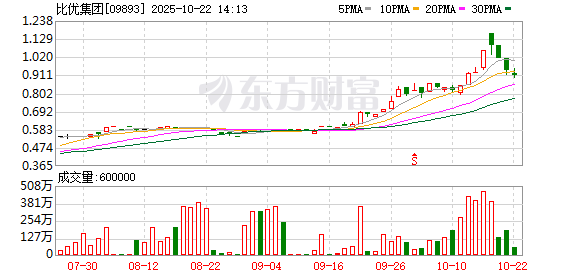
比优集团双轮驱动模式受关注 进一步完善产业链
Zheng Quan Ri Bao· 2025-10-22 06:13
Core Insights - The market is increasingly focused on the dual-driven model of Biyou Group Holdings Limited, particularly its "civil explosives + mining" strategy, amid fluctuations in international gold and copper prices [2] - Biyou Group's indirect non-wholly owned subsidiary, Inner Mongolia Juliy Engineering Blasting Co., Ltd., has upgraded to a first-class qualification in mining engineering construction, enabling it to undertake large and complex engineering projects independently [2] - The company is recognized for its potential as the "Molybdenum-Copper Prince," leveraging its resources in the Tibet Tianren project, which has not yet been fully valued by the market [2][3] Company Overview - The Tibet Tianren project is located in the Mêdog County of Lhasa, Tibet, and is characterized by a "molybdenum-copper dual core" resource endowment, with over 400,000 tons of molybdenum metal resources and confirmed copper metal reserves [3] - The project has significant exploration potential, with advancements in deep exploration technologies suggesting the possibility of discovering additional independent molybdenum, copper, gold, silver, and lead-zinc deposits [3] - The development progress of the Tianren project is on track, with geological exploration and infrastructure planning proceeding as scheduled, supported by favorable policies for resource development in Tibet [3] Market Dynamics - Recent increases in molybdenum prices are expected to further elevate Biyou Group's value potential, driven by a strong growth in demand and constrained supply in the global molybdenum market [4] - The demand for copper, particularly in the renewable energy sector, is also on the rise, contributing to the company's growth narrative [4] - The market has not fully recognized the "molybdenum-copper logic" of Biyou Group, indicating substantial room for valuation upgrades in the future [4] Future Outlook - The Tianren project is currently in the infrastructure phase and has not yet entered the actual mining and profit release cycle, which affects its current market valuation [4] - The approval and initiation of infrastructure for the Tianren project, combined with rising molybdenum and copper prices, are expected to significantly enhance market interest [4] - In the medium to long term, the company aims to establish a sustainable development cycle through resource development and service support, bolstered by the ongoing capacity release from the Anhui Jinding project [4] Investment Opportunity - The current valuation misalignment due to the market's lack of awareness of the company's substantial resource value presents an investment opportunity [5] - As the market gains a more comprehensive understanding of the molybdenum and copper resources at the Tibet Tianren project, the core value of the company is expected to solidify [5]

AI驱动科技主线行情,三大核心动能支撑四季度行情
Mei Ri Jing Ji Xin Wen· 2025-10-21 01:40
Core Insights - The article emphasizes that the global technology cycle is currently being led by AI, which is rapidly penetrating various aspects of the economy and society [1] - China's economy is in a transitional phase, where technological innovation is crucial for upgrading industrial structures, making the tech industry a key focus for policy support [1] - The Hong Kong stock market is experiencing a profound value reassessment, driven by three main forces: transformation of the industrial landscape, global capital reallocation trends, and the restructuring of valuation systems [2] Group 1 - AI is accelerating its integration into the economy and society, marking a new wave of technological advancement [1] - The Hong Kong stock market is becoming a pioneer in the revaluation of Chinese assets, particularly in the AI sector, which includes core assets across the entire industry chain [1] - The market structure has fundamentally changed, with technology and consumer industries now accounting for a significant portion of market capitalization, altering the previous dominance of finance and real estate [1] Group 2 - Chinese assets are becoming a safe haven for international capital as it moves away from dollar-denominated assets, leading to a surge in high-quality company listings in the Hong Kong market [2] - The proportion of overseas funds allocated to Chinese assets remains historically low, indicating potential for significant inflows once market sentiment stabilizes [2] - The influx of southern capital has led to a continuous repair of Hong Kong stock valuations, which still have considerable room for growth compared to previous peaks in early 2018 and early 2021 [2]
中信建投:中短期2025-2026年或将迎来政策落地期的板块轮动
Xin Lang Cai Jing· 2025-10-17 00:01
Core Insights - The article highlights that the capital market may experience a policy implementation period from 2025 to 2026, leading to sector rotation opportunities [1] Group 1: Short to Medium Term Opportunities - Focus on sectors such as elderly care, childcare, and infrastructure value chain adjustments as key areas for investment [1] Group 2: Long Term Trends - Long-term investment themes include the big health and big childcare economy, human capital services, and new consumption and family services [1] - Leading companies in these sectors are expected to undergo value reassessment [1]
2025年三季报业绩前瞻报告:周期向上,重估持续
ZHESHANG SECURITIES· 2025-10-09 05:23
Investment Rating - The industry rating is "Positive" (maintained) [7] Core Views - The report highlights that the domestic innovative drug sector is entering a phase of "engineer dividend" realization, with improved profitability and valuation breakthroughs expected [1] - The CXO sector is showing signs of recovery, with a positive outlook on CDMO commercialization orders and clinical CRO investment opportunities [2] - The upstream research sector is anticipated to benefit from a downward interest rate cycle and a recovery in global new drug development demand, with recommended stocks including Haoyuan Pharmaceutical and Bid Pharma [3] - The medical device sector is expected to experience a recovery cycle, particularly for high-value consumables and medical equipment companies, with recommendations for companies like Aikang Medical and Mindray Medical [4] - The traditional Chinese medicine sector is projected to see an earnings inflection point, with a favorable outlook for the second half of 2025 [5] - The report favors leading pharmacy chains with superior management capabilities, recommending companies such as Dazhonglin and Yifeng Pharmacy [6] - The pharmaceutical distribution sector is expected to improve, with a focus on low-positioned value and innovative business opportunities [7] Summary by Sections Innovative Drugs - Positive outlook on profitability improvement and valuation breakthroughs due to recognition by multinational corporations [1] CXO - Recovery in the sector with ongoing commercialization of small and large molecule CDMO orders [2] Upstream Research - Anticipated performance elasticity and new business expansion opportunities [3] Medical Devices - Significant growth potential in high-value consumables and medical equipment sectors [4] Traditional Chinese Medicine - Expected earnings growth and increased market interest due to improved fundamentals [5] Pharmacies - Favorable view on pharmacy chains with strong management and adaptability [6] Pharmaceutical Distribution - Positive trends in the sector with potential for operational improvements and value re-evaluation [7]
开启金色未来 紫金黄金国际登陆港股
Xin Hua Cai Jing· 2025-10-03 02:26
Core Viewpoint - Zijin Mining's subsidiary, Zijin Gold International, successfully listed on the Hong Kong Stock Exchange, marking a significant step in its global strategy and capital operations [1][2] Group 1: IPO Highlights - The IPO was highly successful, with international placements achieving a subscription rate of 20.4 times and Hong Kong public offerings reaching 240.7 times [2] - A total of 349 million shares were issued at a price of HKD 71.59 per share, raising approximately HKD 25 billion, with a market capitalization of HKD 187.9 billion at listing [2] - The IPO set multiple records, including the largest IPO in the global gold mining industry to date and the largest overseas IPO for a Chinese mining company [2] Group 2: Company Strategy and Operations - Zijin Gold International focuses on high-potential gold mines and undervalued resources, with operations in key mineral belts across Central Asia, South America, Africa, and Oceania [4] - The company employs a unique mining management model and advanced resource development technologies to enhance operational efficiency and cost control [4] - The company aims to create a sustainable value creation system through a comprehensive process from acquisition to value enhancement [4] Group 3: Financial Performance and Growth - In 2024, the company is projected to produce 1.3 million ounces of gold, ranking 11th globally, with revenues of USD 2.99 billion [5] - The company has a return on equity (ROE) of 21.4%, significantly higher than the industry average of 17.4% [5] - The compound annual growth rate (CAGR) for gold production from 2022 to 2024 is expected to be 21.4%, the highest among the top fifteen gold mining companies [5] Group 4: Resource Reserves - As of the end of 2024, the company's gold reserves are expected to reach 27.5 million ounces (approximately 856 tons), ranking 9th globally [6] - The company has achieved over 14 million ounces (450 tons) in gold resource additions, with a CAGR of over 20% in reserves [6] Group 5: Market Position and Future Outlook - The listing in Hong Kong is seen as a strategic move to capitalize on global gold market opportunities and enhance the company's valuation [7] - The global demand for gold is projected to grow at a CAGR of 3.2% from 2024 to 2030, providing a favorable market environment for Zijin Gold International [8] - The company aims to fill the gap in the market for a globally influential gold listing from China, which is the largest gold consumer and producer [8]
本月18家A股上市公司筹划赴港上市,恒生科技ETF天弘(520920)明日上市,机构:看好港股科技公司AI驱动的价值重估
2 1 Shi Ji Jing Ji Bao Dao· 2025-09-29 03:19
Group 1 - The Hang Seng Technology ETF Tianhong (520920) is set to be listed on September 30, 2025, with a total of 6,018 account holders and an average holding of 202,728.32 shares per account as of September 23, 2025 [1] - The ETF closely tracks the Hang Seng Technology Index, which consists of the top 30 Hong Kong stocks related to technology, covering sectors such as information technology, consumer discretionary, and communication services [1] - The Hang Seng Technology Index shows superior earnings growth, with a revenue year-on-year growth rate of 14.43% and a net profit growth rate of 16.18% in Q2 2025, outperforming other major Hong Kong indices [1] Group 2 - There is a continuing trend of A-share companies planning to list in Hong Kong, with 18 companies disclosing plans to do so as of September 28, including notable names like Five Fragrance Zhai and East Mountain Precision [2] - Short-term market fluctuations are expected due to seasonal effects, but the overall bull market is anticipated to continue, supported by ample micro liquidity and policies aimed at stabilizing the stock market [2] - Chinese companies are demonstrating global competitiveness in sectors such as artificial intelligence, biomedicine, and high-end manufacturing, maintaining a high level of activity in the technology sector [2] Group 3 - The initiation of a Federal Reserve rate cut cycle is expected to support a continued upward trend in the Hong Kong stock market, which has strong overall profitability and relatively low valuations [3] - The scarcity of assets in sectors like internet, new consumption, and innovative pharmaceuticals contributes to the attractiveness of long-term investments in the Hong Kong market [3] - The ongoing development of the AI industry is likely to drive further value reassessment of Hong Kong-listed Chinese technology companies [3]
774只,翻倍!
Zhong Guo Ji Jin Bao· 2025-09-24 02:15
Group 1 - The A-share market has entered a bull market since September 24, 2024, with major indices significantly rising, such as the North Exchange 50 Index increasing by 158.01% [1] - The average daily trading volume in the market surged from less than 500 billion to over 2 trillion [1] - 13 mutual funds have seen a net value growth rate exceeding 200%, while 774 funds have surpassed 100% [1][2] Group 2 - The performance of equity mixed funds has rebounded, with the index rising by 57.88% since September 24, 2024 [2] - Notable funds include Debon Xinxing Value Mixed Fund, which achieved a net value growth of 280.31% [2] - The strong performance is attributed to the robust market rally and the significant returns from technology stocks [2] Group 3 - Key factors driving the market's rise include ongoing stock market reforms, improved policy expectations, and breakthroughs in various sectors such as innovative drugs and robotics [3] - The market's risk appetite has notably increased, with more retail investors entering the market since June [6][7] Group 4 - The A-share market has shown significant improvement in valuation, liquidity, and investor structure, with the overall valuation rising from 15.63 times to 22.16 times [6] - The market is expected to maintain a "slow bull" trend, supported by continuous policy backing and structural upgrades in industries [7] Group 5 - Investment opportunities are seen in sectors like AI, innovative drugs, and electric new energy, driven by supportive industrial policies and technological breakthroughs [8][9] - The focus on sectors such as AI computing, electric new energy, and innovative pharmaceuticals is expected to yield significant returns [9][10]
华泰证券:看好证券板块中长期价值重估机会
Xin Lang Cai Jing· 2025-09-24 00:09
Group 1 - The report from Huatai Securities indicates that the market stabilization mechanism is continuously improving, and the positive policy tone remains unchanged, suggesting to seize structural financial opportunities [1] - In the securities sector, there is optimism about medium to long-term value reassessment opportunities, particularly for brokers with more cost-effective valuations [1] - In the banking sector, recent trends show a weaker dividend style, prompting attention to rebound opportunities under the shift of funds [1]

A股慢牛,不靠宽松
Jing Ji Guan Cha Bao· 2025-09-23 12:28
Core Viewpoint - The market is transitioning from a "loose illusion" to a "realization" of certainty in trading logic following the September 22 press conference, where key financial regulators presented the achievements of the financial sector during the 14th Five-Year Plan period [3][15]. Group 1: Market Performance - On September 22, the A-share market experienced a significant rally, with all major indices closing in the green despite no changes to the Loan Prime Rate (LPR) [4][5]. - The total market capitalization of A-shares increased from 68 trillion yuan to 104 trillion yuan, adding 36 trillion yuan, with over 3,000 stocks rising more than 50% [8]. Group 2: Economic Indicators - In August, the Consumer Price Index (CPI) fell by 0.4% year-on-year, while the Purchasing Managers' Index (PMI) stood at 49.4%, indicating a contraction in manufacturing [5][6]. - The industrial added value for large-scale enterprises grew by 5.2% year-on-year, and retail sales reached 3.97 trillion yuan, up 3.4% year-on-year, reflecting a mixed economic recovery [5][6]. Group 3: Monetary Policy and Liquidity - The LPR remained unchanged at 3.0% for one year and 3.5% for five years, indicating a stable monetary policy stance [6][7]. - Factors contributing to a sense of liquidity include coordinated fiscal and monetary efforts, structural tools mitigating total volume silence, and enhanced global price comparisons due to the Fed's easing cycle [6][7]. Group 4: Investment Trends - High-growth sectors such as semiconductor equipment, new energy batteries, and innovative pharmaceuticals are benefiting from a "Davis double hit" effect, while state-owned enterprises are offering stable dividends [9][10]. - The share of technology companies in the A-share market capitalization has surpassed 25%, with a notable increase in the number of tech firms among the top 50 companies [12]. Group 5: Financial System Resilience - The Chinese financial system has shown significant resilience, with total banking assets nearing 470 trillion yuan and a second-place ranking globally in stock and bond market size [10][11]. - The proportion of direct financing has increased to 31.6%, indicating a shift away from reliance on bank credit towards capital market financing [10]. Group 6: Risk Management and Regulatory Environment - The number of local government financing platforms has decreased by over 60%, and financial debt has been reduced by more than 50%, indicating a controlled approach to systemic risk [11][13]. - Regulatory measures are evolving, focusing on enhancing market rules and ensuring orderly market operations, which supports the current market valuation restructuring [11][13].