
种业振兴

Search documents
农林牧渔行业周报:腌腊渐入旺季支撑猪价上行,犊牛价格上行彰显牛周期景气-20251214
KAIYUAN SECURITIES· 2025-12-14 08:11
Investment Rating - The industry investment rating is "Positive" (maintained) [1] Core Viewpoints - The pork price is expected to rise due to limited supply before the New Year, with the average price of live pigs at 11.43 yuan/kg as of December 12, 2025, showing a week-on-week increase of 0.22 yuan/kg but a year-on-year decrease of 4.33% [12][13] - The beef market is showing signs of a bullish cycle, with the wholesale price of beef at 66.24 yuan/kg, up 10.22% year-on-year, and calf prices at 32.23 yuan/kg, up 33.68% year-on-year [24] - The pig farming sector is facing accelerated losses, leading to a potential increase in the pace of pig culling, while the pet sector is benefiting from domestic brand growth due to consumption upgrades and tariff barriers [27][31] Summary by Sections Weekly Observation - The cold wave is boosting pork consumption as the pickled meat season approaches, with limited supply expected before the New Year [12] - The average weight of pigs slaughtered is 129.63 kg, with a decrease in the proportion of smallholder sales [12][13] Weekly Market Performance (Dec 8-12) - The agricultural sector outperformed the market by 0.26 percentage points, with the Shanghai Composite Index down 0.34% and the agricultural index down 0.08% [32] - Leading stocks included *ST Zhengbang (+19.40%), Biological Shares (+17.16%), and Luoniushan (+13.73%) [32][39] Price Tracking (Dec 8-12) - The average price of live pigs was 11.48 yuan/kg, up 2.50% week-on-week, while the price of piglets was 19.04 yuan/kg, down 1.14% [41] - The average price of beef was 66.13 yuan/kg, showing a slight decrease [48] Key News (Dec 8-12) - China's soybean imports for the first 11 months of 2025 reached 104 million tons, an increase of 6.9% year-on-year, with a price drop of 10.7% [40]
6000多个新优奇特品种亮相广东种业博览会
Zhong Guo Xin Wen Wang· 2025-12-14 07:31
Core Insights - The 24th Guangdong Seed Expo showcased over 6,000 new and unique agricultural varieties, highlighting the advancements in the seed industry in Guangdong [1][2] - The Guangdong Seed Industry Revitalization Action has achieved significant results within five years, with the implementation of the "Yueqiang Seed Core" project and the "Hundred Thousand Million Project" [1] - The event emphasized the integration of technology and collaboration across the agricultural supply chain, featuring exhibitions on various agricultural innovations and applications [1] Group 1 - The Guangdong Seed Expo featured edible fruit peppers, sweet "nest corn," and multi-harvest white flower vegetables, demonstrating the diversity of new agricultural products [1] - The Guangdong Provincial Department of Agriculture and Rural Affairs reported that the province's seed industry has stronger foundations, more new varieties, higher technological content, and improved service and communication [1] - The expo included a comprehensive exhibition of the entire agricultural industry chain, promoting a collaborative development system that integrates production, learning, and research [1] Group 2 - During the expo, agreements were signed to establish the Guangdong Yufeng National Swine Seed Industry Innovation Base and the Guangdong Tianhe Seed Industry Breeding and Promotion Base, enhancing collaboration among government, enterprises, and academic institutions [2] - The event featured 19 sub-venues with a demonstration area exceeding 1,400 acres, creating a platform for showcasing and promoting agricultural industry achievements across the province [2] - The Guangdong Provincial Department of Agriculture and Rural Affairs is innovating a three-level linkage mechanism to enhance agricultural technology services, establishing a unique agricultural achievement promotion system in Guangdong [2]
把创新成果化作田间福利,广东种博会远不只是“品种秀”
Nan Fang Du Shi Bao· 2025-12-13 15:19
Core Viewpoint - The 24th Guangdong Seed Industry Expo aims to connect innovation in seed industry with practical benefits for farmers and the agricultural sector, showcasing over 6,000 new and unique crop varieties [1][3][4]. Group 1: Event Overview - The expo has displayed more than 130,000 global new and unique crop varieties and attracted over 1.3 million attendees, becoming a pivotal platform for transforming seed industry innovations into field benefits [3][4]. - Guangdong's "Yueqiang Seed Core" project has made significant progress, with the implementation of 11 national seed industry enhancement projects leading to notable achievements in seed industry revitalization [3][4]. Group 2: Innovations and Products - The expo featured over 6,000 new and unique crop varieties, including sweet fruit peppers, barbecue eggplants, and "nest corn," which are expected to drive significant economic value [4][10]. - The focus on high-quality, taste-oriented vegetables is evident, with companies adapting breeding directions towards more appealing products [6][10]. Group 3: Agricultural Equipment - The modern agricultural equipment exhibition showcased over 200 new machines, including high-speed grafting machines and intelligent pest monitoring systems, aimed at enhancing efficiency and productivity for farmers [10][11]. - The introduction of self-propelled sweet potato harvesters and other mechanization solutions addresses labor-intensive challenges in agriculture, promoting higher efficiency [10][11]. Group 4: Economic Impact - The introduction of new seed varieties and agricultural equipment has led to increased income for farmers, with specific examples showing average income increases of 2,750 yuan per acre from new chili varieties [9][11]. - The expo serves as a bridge connecting innovation with practical applications, resulting in improved earnings for local farmers and contributing to the overall agricultural economy [13][16]. Group 5: Collaborative Efforts - The event fosters collaboration between government, enterprises, and research institutions, exemplified by various agreements signed to establish innovation bases and integrated agricultural development models [16][17]. - The expo's structure promotes a three-tiered collaborative mechanism, enhancing agricultural technology services and creating a platform for showcasing and promoting agricultural achievements [16].

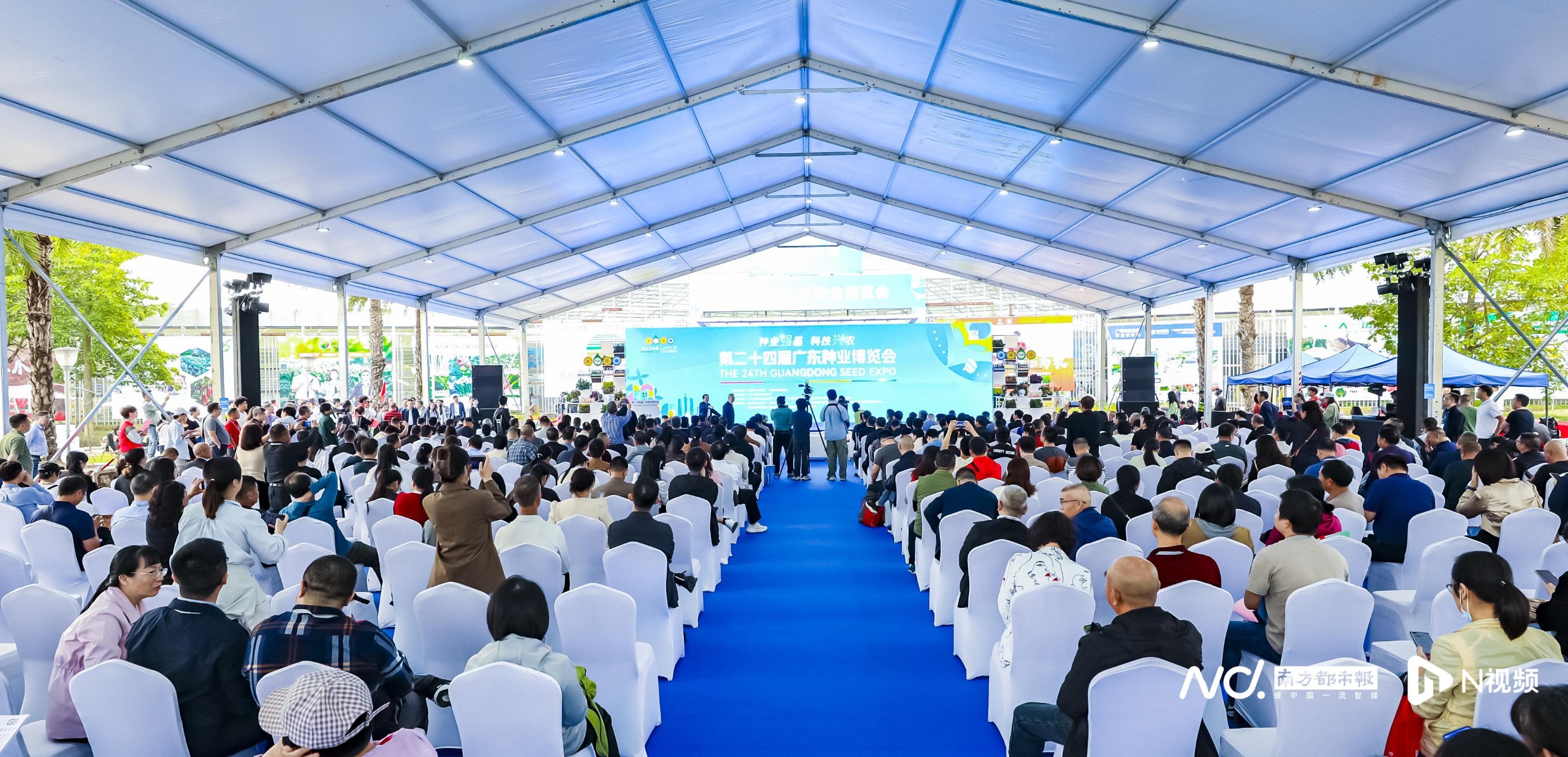
全力打造种业高地! 第二十四届广东种业博览会开幕
Nan Fang Nong Cun Bao· 2025-12-12 16:01
Core Viewpoint - The 24th Guangdong Seed Industry Expo aims to promote the collaborative development of the entire seed industry chain and enhance agricultural technology in Guangdong, aligning with national seed revitalization initiatives [4][5][10]. Group 1: Event Overview - The Guangdong Seed Industry Expo, hosted by the Guangdong Provincial Department of Agriculture and Rural Affairs, opened on December 12 in Guangzhou, attracting representatives from government, academia, and the seed industry [2][3]. - The theme of the expo is "Strengthening Seed Industry, Advancing Agricultural Technology," focusing on the transformation of scientific achievements in major agricultural production areas [4][5]. Group 2: Achievements and Goals - Guangdong has implemented the "Yueqiang Seed Core" project and the "Hundred-Thousand-Ten Thousand Project," achieving significant results in seed industry revitalization, including 11 national seed enhancement projects [10][11]. - The province aims for major breakthroughs in seed revitalization within ten years, with a focus on high-quality development in the upcoming "15th Five-Year Plan" [12][13]. Group 3: Innovations and Exhibitions - Over 6,000 new and unique seed varieties were showcased, reflecting a trend towards "fruitification" in vegetable breeding, with increasing popularity for quality-oriented crops [23][24]. - The expo featured various exhibitions, including the Guangdong Potato Industry Chain Exhibition and modern agricultural equipment, showcasing over 200 new agricultural machines and technologies [35][56]. Group 4: Collaborative Efforts - The event established a three-tiered collaborative mechanism among provincial, municipal, and county levels to promote agricultural technology services effectively [60][61]. - Agreements were signed to build innovation bases for pig breeding and integrated seed breeding and promotion, enhancing cooperation between government, enterprises, and research institutions [71][78].

科技赋能兴农路,实干担当谱新篇!广东农技推广工作会议成功举行
Nan Fang Nong Cun Bao· 2025-12-12 16:01
Core Viewpoint - The Guangdong Province's agricultural technology promotion system has made significant progress in enhancing agricultural productivity and ensuring food security, with a focus on integrating technology into rural development and planning for future advancements in the sector [7][12][40]. Group 1: Achievements and Progress - Over the past five years, Guangdong's total grain production has consistently exceeded 13 million tons, with a yield of 391.5 kg per mu [19]. - The coverage rate of high-quality seeds for major crops remains above 98%, with rice mechanization rates reaching 99.43% for tilling and 97.46% for harvesting [20]. - The province has successfully organized over 2,000 crop variety trials and approved 370 new varieties of rice and corn, ensuring a robust genetic resource base [25][26]. Group 2: Future Plans and Strategies - The agricultural technology promotion system aims to address existing gaps and enhance service mechanisms, focusing on food security, crop revitalization, and agricultural machinery [40][51]. - Plans include the establishment of a high-quality agricultural technology promotion plan for the 14th Five-Year Plan, emphasizing rapid response and long-term management mechanisms [55]. - The integration of digital transformation is a priority, with initiatives to upgrade smart agricultural service platforms and expand AI technology applications [59][60]. Group 3: Community Engagement and Innovation - The event highlighted successful case studies from various regions, showcasing innovative practices in agricultural technology that can be replicated [74]. - Local experts shared impactful stories of how practical technologies have improved livelihoods, emphasizing the role of grassroots talent in agricultural promotion [73]. - Interactive sessions and product showcases facilitated the exchange of quality agricultural products and technologies, enhancing collaboration between producers and consumers [78][80].
种质资源家底更厚实 2025年我国种业振兴行动取得积极成效
Yang Shi Xin Wen· 2025-12-12 13:23
Group 1 - The Ministry of Agriculture and Rural Affairs aims to achieve significant results in seed industry revitalization by 2025, with over 95% of crop varieties being independently bred and domestic market shares for livestock, aquatic products, and vegetables exceeding 80%, 85%, and 91% respectively [1] - The total amount of preserved agricultural genetic resources in China has reached the highest in the world, with the establishment of a national livestock genetic resource bank and the completion of a genetic resource improvement plan for corn [1][2] - The safety level of agricultural production seeds has steadily improved, with a seed supply guarantee rate of 80%, an increase of 10 percentage points since 2020, and a seed quality compliance rate maintained at over 98% [3] Group 2 - The seed industry technology innovation has entered the world's top tier, with significant advancements in core technologies and the development of high-quality crop varieties such as water-saving wheat and high-yield soybeans [2] - The cultivation system for seed industry enterprises has been established, with over 60% of technology research tasks led by enterprises, and R&D investment in crop seed companies doubling since 2020 [2] - Regulatory measures have been implemented to enhance the management of plant varieties, resulting in a 20% decrease in seed-related cases compared to 2020, fostering a better market environment for innovation [3]
端稳中国饭碗!农作物自育品种超95%
Xin Hua She· 2025-12-12 03:31
Core Insights - The "14th Five-Year Plan" emphasizes the implementation of seed industry revitalization actions, with significant improvements in seed source security and domestic breeding varieties accounting for over 95% of crop varieties [1] - The seed industry has transitioned from reliance on foreign imports to achieving over 80% and 85% market share for domestic sources in livestock and aquatic products, respectively [1] - The "15th Five-Year Plan" aims to further enhance the innovation and competitiveness of China's seed industry, with a focus on transforming agricultural genetic resources into innovation advantages [3] Group 1 - The seed industry is likened to the "chip" of agriculture, highlighting the historical dependency on foreign imports for key breeding stock, which posed risks to domestic supply and increased production costs [1] - Since the implementation of the "Seed Industry Revitalization Action Plan" in July 2021, there have been breakthroughs in breeding research, resulting in the development of several urgently needed crop varieties [1] - A comprehensive national agricultural genetic resource survey has been completed, establishing three national gene banks that rank first in the world in terms of resource preservation [1] Group 2 - A favorable environment for innovation and protection has been established, with revisions to the Seed Law and Plant Variety Protection Regulations, leading to a 20% decrease in seed-related legal cases compared to 2020 [2] - For the first time in 2024, China's seed export value is expected to exceed import value, achieving a trade surplus, with exports reaching over 40 countries [2] - The industry is focusing on accelerating the identification of agricultural genetic resources and enhancing support for breeding efforts to ensure food security [3]
新华鲜报·“十四五”发展亮点丨端稳中国饭碗!农作物自育品种超95%
Xin Hua Wang· 2025-12-12 01:28
Core Insights - The article emphasizes the significant progress in China's seed industry, highlighting the goal of transforming from a major seed producer to a strong seed nation through the implementation of the "14th Five-Year Plan" and the "Seed Industry Revitalization Action Plan" [1][3]. Group 1: Seed Industry Development - China's self-bred crop varieties now account for over 95% of the total, with domestic sources for livestock and aquatic species exceeding 80% and 85% respectively, enhancing food security [1]. - The country has made breakthroughs in breeding, developing essential varieties such as disease-resistant wheat and high-yield soybeans, which are crucial for agricultural productivity [1][3]. Group 2: Agricultural Resource Management - A comprehensive national agricultural germplasm resource survey has been completed, marking the largest and most extensive effort since the founding of the People's Republic of China, resulting in the establishment of world-class germplasm banks [3]. - The identification and utilization of germplasm resources have accelerated, leading to a more dynamic use of stored resources [3]. Group 3: Innovation and Regulation - A favorable environment for innovation has been fostered through the revision of the Seed Law and the Plant Variety Protection Regulations, alongside a 20% reduction in seed-related legal cases since 2020 [3]. - The government aims to enhance the precision in identifying agricultural germplasm resources and convert these advantages into innovation strengths, thereby accelerating the pace of seed industry innovation [5]. Group 4: International Trade and Competitiveness - In 2024, China's seed exports surpassed imports for the first time, achieving a trade surplus, with hybrid rice, cotton, and vegetable seeds being exported to over 40 countries [5]. - The article highlights the increasing global competitiveness of Chinese seeds, with various domestically bred livestock and aquatic species also entering international markets [5].
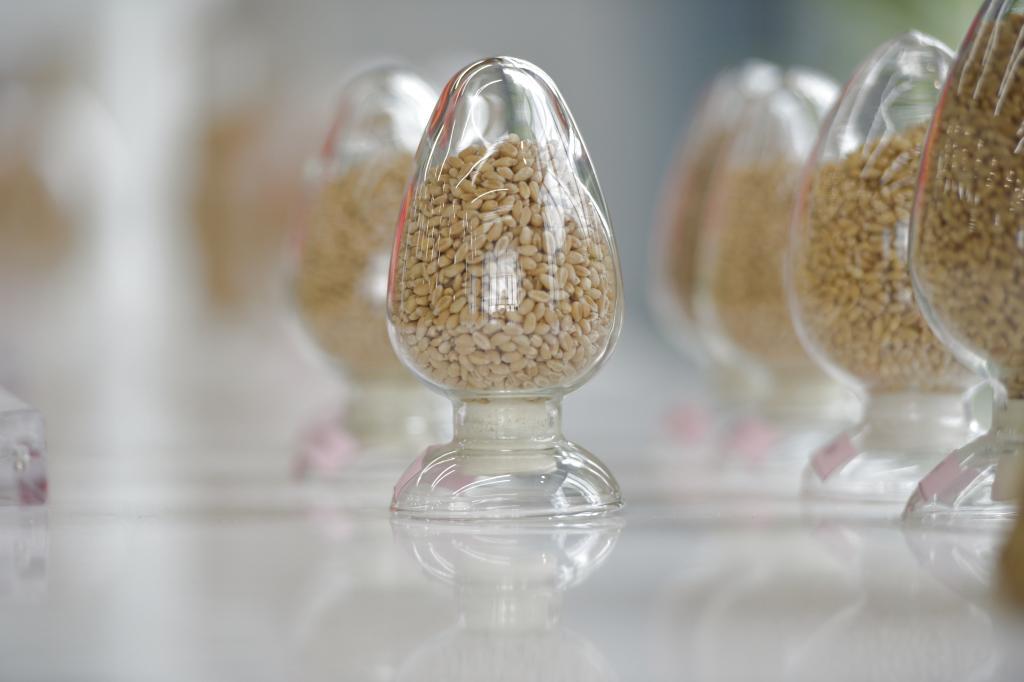
新华鲜报·“十四五”发展亮点|端稳中国饭碗!农作物自育品种超95%
Xin Hua She· 2025-12-12 01:23
Core Viewpoint - The article emphasizes the significant progress in China's seed industry, highlighting the country's efforts to enhance seed source security and achieve self-sufficiency in agricultural seeds, with over 95% of crop varieties being independently bred [1] Group 1: Seed Industry Development - The "14th Five-Year Plan" has led to a marked improvement in seed source security, with domestic breeding varieties now accounting for over 95% of crops, and domestic market shares for livestock and aquatic seeds exceeding 80% and 85% respectively [1] - The Central Committee's "Seed Industry Revitalization Action Plan" was approved in July 2021, outlining a roadmap for transforming China from a major seed producer to a strong seed nation [1] - Significant breakthroughs in breeding have been achieved, including the development of high-resistance wheat and rice varieties, as well as high-yield soybeans, which are accelerating the update of seed varieties [1] Group 2: Agricultural Resource Management - A comprehensive national agricultural germplasm resource survey has been completed, marking the largest and most extensive effort since the founding of New China, resulting in the establishment of three national germplasm banks that rank first globally in resource preservation [1] - The identification and utilization of germplasm resources have been expedited, leading to a more active use of stored resources [1] - A favorable environment for innovation has been fostered through the revision of the Seed Law and the Plant Variety Protection Regulations, alongside a 20% decrease in seed-related legal cases since 2020 [1] Group 3: International Trade and Future Outlook - In 2024, China's seed exports are projected to exceed imports for the first time, achieving a trade surplus [1] - Chinese hybrid rice, cotton, and vegetable seeds are being exported to over 40 countries, with domestically bred livestock and aquatic species also entering international markets [1] - The Ministry of Agriculture and Rural Affairs plans to enhance the precise identification of germplasm resources and convert these advantages into innovation, aiming to accelerate the pace of seed industry innovation [1]
“把当家品种牢牢攥在自己手里”——种业振兴行动五年成效回望
Huan Qiu Wang· 2025-12-11 07:27
Core Viewpoint - The Chinese government emphasizes the importance of seed industry development for food security, with significant initiatives and policies aimed at revitalizing the seed industry and ensuring self-sufficiency in seed production [1][2]. Group 1: Seed Industry Development - The seed industry is recognized as a cornerstone of food security, with a focus on self-reliance in seed production and the cultivation of domestic varieties [1]. - The "14th Five-Year Plan" has seen the implementation of the Seed Industry Revitalization Action Plan, leading to notable achievements such as over 95% of crop varieties being independently bred and domestic market shares for livestock and aquaculture seeds exceeding 80% and 85%, respectively [1][2]. Group 2: Resource Management - A nationwide agricultural germplasm resource survey, the largest since the founding of New China, has collected 139,000 crop resources and 1.07 million livestock genetic materials, aiding in the recovery of endangered species [2]. - The establishment of a national information service platform has facilitated the sharing and utilization of germplasm resources, benefiting over 1,500 breeding innovation entities [2]. Group 3: Crop and Livestock Innovations - New crop varieties such as disease-resistant wheat and high-yield soybeans have been developed, significantly contributing to increased grain production [3]. - The domestic market share for white feather broiler breeds has surpassed 28%, with successful exports to countries like Tanzania and Pakistan [3]. Group 4: Base Construction and Upgrades - The establishment of national seed production bases has been prioritized, with significant improvements in high-standard farmland coverage, reaching 86% for major crops [6][7]. - Advanced technologies such as IoT systems for rice seed production have been implemented, enhancing efficiency and traceability in seed production [8]. Group 5: Enterprise Support and Market Dynamics - The government has identified 270 key seed enterprises to strengthen the industry, with significant investments in R&D leading to improved competitiveness in international markets [9][10]. - The seed industry has seen a doubling of R&D investment since 2020, with a notable shift towards achieving a trade surplus in seed exports for the first time [10]. Group 6: Regulatory and Legal Framework - The government has strengthened the legal framework for seed protection, including revisions to the Seed Law and enhanced intellectual property protections [11]. - Continuous enforcement actions have led to a 20% decrease in seed-related infringement cases since 2020, improving market integrity [11].