科技牛

Search documents
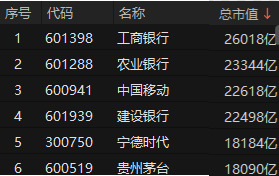
盘中,宁德时代市值再超贵州茅台
Shang Hai Zheng Quan Bao· 2025-09-30 03:14
Core Viewpoint - Contemporary market dynamics indicate that CATL has surpassed Kweichow Moutai in market capitalization, reflecting a significant shift in investor sentiment towards technology-driven companies in China [1][4]. Group 1: Market Capitalization - As of September 30, CATL's market capitalization reached 1,818.4 billion yuan, while Kweichow Moutai's was at 1,809.0 billion yuan, marking a notable lead for CATL [1][2]. - CATL's stock price hit a historical high of 408.88 yuan per share, with an increase of 2.90% during trading [2]. Group 2: Historical Context - CATL first surpassed Kweichow Moutai in market capitalization on September 25, marking a historic moment in the A-share market [4]. - Following this initial surpassing, CATL's closing market value did not exceed Kweichow Moutai's from September 25 to September 29, leading to speculation about the sustainability of this lead [4]. Group 3: Market Trends - Analysts suggest that the current A-share market is experiencing a "structural bull market" in technology, with expectations of a potential transition to a "full bull market" driven by strong trends in the technology sector and a reallocation of market funds [4]. - The National Development and Reform Commission and the National Energy Administration have outlined plans for new energy storage, projecting an installed capacity of over 180 million kilowatts by 2027, which is expected to stimulate direct investments of approximately 250 billion yuan [4].



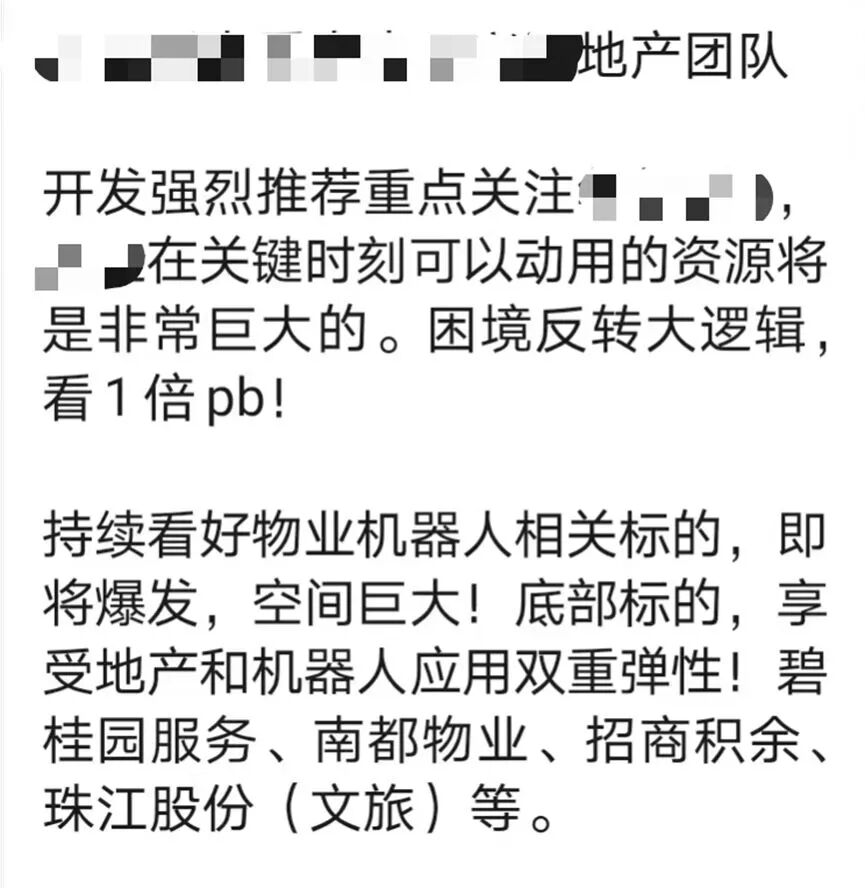
地产首席看好物业机器人 建材首席推荐AI产业链……“科技牛”特征明显 传统行业分析师转型成“刚需”?
Mei Ri Jing Ji Xin Wen· 2025-09-29 14:05
Core Insights - The trend of traditional industry analysts shifting towards emerging technologies like AI and robotics has become a necessity for career development in the current market environment [1][3][5] - Since the "9·24" market event, emerging technology themes have dominated the market, while traditional cyclical industries have been neglected [2][3] Group 1: Market Trends - Emerging technology sectors, including electronics, computers, and medical biology, have seen significant trading volumes, with the average trading amount of the top five sectors being 19 times that of the bottom five sectors [3] - The average increase in share prices for the top five sectors since "9·24" is 80%, surpassing the average increase of nearly 40 percentage points for the bottom five sectors [3] Group 2: Analyst Behavior - Analysts from traditional sectors are increasingly incorporating emerging technologies into their research, with some even organizing field research on robotics applications in property management [2][5] - The speed at which traditional industry analysts respond to technology news has improved, matching that of their counterparts in the tech sector [2][3] Group 3: Cross-Industry Trends - The trend of analysts crossing into new fields is seen as a necessary adaptation, with some analysts stating that without this shift, they would struggle to remain relevant [5][6] - The historical context shows that traditional industries can still hold investment value, as evidenced by past performance in sectors like coal and cement during market recoveries [6] Group 4: Future Outlook - Despite the shift towards technology, there remains a demand for in-depth research in traditional sectors, as some analysts continue to produce well-received reports [6] - The overall trend indicates a decline in the number of analysts focused on traditional industries, as newer firms concentrate on technology and biotech sectors [6][7]

地产首席看好物业机器人,建材首席推荐AI产业链……“科技牛”特征明显 传统行业分析师转型成“刚需”?
Mei Ri Jing Ji Xin Wen· 2025-09-29 13:59
Core Insights - Emerging technologies have become the main theme in the market, overshadowing traditional cyclical industries since the "9·24" market event [2][3] - Analysts from traditional sectors are increasingly incorporating AI and robotics into their research, reflecting a necessary shift in their professional development [1][5] Group 1: Market Trends - Since "9·24", the average increase in technology-heavy sectors such as electronics, computers, and medical biology has been around 80%, significantly outperforming traditional sectors like coal and steel, which lagged behind by nearly 40 percentage points [3] - The top five sectors by transaction volume are all technology-oriented, with an average transaction amount 19 times greater than the bottom five sectors [3] Group 2: Analyst Behavior - Analysts from traditional industries are adapting to the new market dynamics by focusing on emerging technologies, with some even organizing field research on robotics applications in property management [2][5] - The trend of traditional analysts crossing into tech research is becoming a necessity for career survival, as indicated by a notable shift in their focus areas [5][6] Group 3: Industry Dynamics - The historical performance of traditional industries like coal and cement shows that they still hold investment value, especially in a low-interest-rate environment where dividend-paying assets are in demand [7] - Despite the rise of new research forces focusing on technology and biotech, there remains a market for in-depth studies from seasoned analysts in cyclical industries [7][8]
杨德龙:A股港股目前仍处于本轮牛市的前半场
Xin Lang Ji Jin· 2025-09-29 08:39
Market Overview - The A-share and Hong Kong stock markets have shown strong upward trends as the National Day holiday approaches, alleviating previous concerns about a potential significant correction after nearly three months of gains since late June [1] - The current market is believed to be in the second phase of a bull market, following the "924 market" last year, which was initiated by substantial policy support [1] Bull Market Characteristics - The Shanghai Composite Index is nearing the 3900-point mark, indicating a gradually established bull market driven by both policy and capital [2] - Margin trading balances have surpassed 2.4 trillion, a historical high, but the overall leverage ratio remains low compared to the total market capitalization of 100 trillion [2] Sector Performance - The ongoing market rally is characterized as a "technology bull market," with significant focus on sectors such as humanoid robots, chips, semiconductors, and innovative pharmaceuticals, which have become hot topics this year [4] - Traditional industries have shown mixed performance, with sectors like energy storage, lithium batteries, and new energy vehicles experiencing significant gains, while consumer sectors like liquor and food and beverage have lagged due to declining income growth [4] Future Outlook - The current market is still a structurally driven technology bull market, with expectations for a transition to a comprehensive bull market next year as capital flows into the market increase [5] - The depreciation of the US dollar by approximately 10% has led to the appreciation of non-US currencies, enhancing the attractiveness of Chinese assets [6] - International investment banks are increasingly optimistic about Chinese assets, raising target points for A-shares and Hong Kong stocks, indicating a potential influx of international capital [6]
科技牛,还远没有结束
大胡子说房· 2025-09-28 10:31
Core Viewpoint - The technology sector is experiencing a significant rally, with various related concepts seeing substantial gains, indicating a strong bullish trend that is expected to continue [2][3][8]. Group 1: Market Performance - The semiconductor and chip sectors have recently seen a surge, with net capital inflow exceeding 15 billion [4]. - The CPO optical module index rose by 10% last week, while AI computing power and PCB concepts have also seen consecutive limit-up performances [5]. - Human-shaped robots and consumer electronics, which have adopted technology concepts, have outperformed other sectors, indicating a broad-based rally in technology stocks [6]. Group 2: Historical Context - Historical data shows that every bull market in the A-share market has been driven by technology stocks, with notable examples from 2005-2006 and 2015 [10][12][14]. - Specific stocks like Hengsheng Electronics and Dongsoft Co. saw increases of 1120% and 905% respectively during the 2005-2006 bull market [13]. - The 2015 bull market was similarly led by internet-related stocks, with companies like Baofeng Technology and Yishang Display achieving gains of 1950% and 1325% respectively [15]. Group 3: Future Outlook - The technology sector is essential for the continuation of the current bull market, as it has historically been the main driving force [17]. - The need for technological breakthroughs necessitates capital market support for financing, as many tech companies currently lack profit backing [18][22][25]. - The capital market plays a crucial role in enabling technology companies to secure funding based on future expectations rather than current profits [26][27]. Group 4: Market Dynamics - The current bull market in technology is seen as a necessary development for the future of the industry, not a coincidence [29]. - Although the technology sector may experience short-term corrections, this does not signify the end of the bull market [30][35]. - The market's goal is to surpass the ten-year peak of the A-share market, with technology stocks expected to lead this charge [36]. Group 5: Investment Opportunities - A recent report indicated that the market capitalization of technology stocks has reached 25% of the total A-share market capitalization, reflecting a significant achievement [33]. - Any potential corrections in the technology sector should be viewed as opportunities for new investments rather than signs of a market downturn [38].

富国基金“双面镜”透视 真正投资者回报为王
Sou Hu Cai Jing· 2025-09-28 10:14
Core Viewpoint - The launch of the Kexin 100 ETF by Fuguo Fund is positioned to capitalize on the strong performance of the A-share market, particularly in the technology sector, which has seen significant growth and investor interest [3][4]. Group 1: Market Performance - Since 2025, the A-share market has been driven by policy and capital, with the Shanghai Composite Index breaking through 3700 and 3800 points, reaching a nearly ten-year high [3]. - The Kexin 100 Index has risen over 40% year-to-date, making it a leader in the current market rally [3]. Group 2: ETF Growth and Strategy - Fuguo Fund's total scale reached 1166.41 billion yuan as of September 24, 2025, with ETFs being the main growth driver, increasing by over 750 million yuan [7]. - The Kexin 100 ETF targets 100 mid-cap growth stocks on the Sci-Tech Innovation Board, focusing on companies with strong R&D capabilities and mature business models [4][9]. Group 3: Competitive Positioning - Fuguo Fund has strategically positioned itself in high-growth sectors, with ETFs like the North Exchange 50 and the Chip Industry ETF showing impressive one-year gains of over 112% [8]. - The Kexin 200 ETF, launched on September 8, has also performed well, with a year-to-date increase of over 50% [9]. Group 4: Financial Performance - Fuguo Fund reported a net profit of 924 million yuan for the first half of 2025, a year-on-year increase of 19.46%, with revenue growth of 14.09% [11]. - The fund's QDII fund scale reached 15.39 billion yuan, ranking second among 40 fund companies, showcasing its strength in global asset allocation [16]. Group 5: Challenges and Considerations - The company faces challenges such as frequent personnel changes, which may impact stability and performance continuity [17][18]. - Some equity products have underperformed, with certain funds showing negative returns compared to industry averages [19][20]. Group 6: Industry Trends - The public fund industry is undergoing a transformation, with a focus on enhancing investor returns rather than merely expanding scale [20][21]. - New regulations emphasize performance-based management fees and long-term investment strategies, which could benefit firms like Fuguo Fund with strong research capabilities [21][22].

研究房地产的推机器人,研究建材的推AI……“科技牛”太热闹,传统行业分析师纷纷跨界
Mei Ri Jing Ji Xin Wen· 2025-09-25 13:57
Group 1 - Traditional industry analysts are increasingly incorporating AI and robotics into their research focus, reflecting a shift in market dynamics and professional necessity [1][2][10] - The "technology bull market" has significantly outperformed traditional industries since September 24, with new technology sectors attracting more market attention and investment [10][14] - Analysts from traditional sectors, such as real estate and building materials, are now actively promoting technology-related stocks, indicating a broader trend of cross-industry research [4][8][15] Group 2 - The performance of various sectors since September 24 shows a stark contrast, with technology-heavy sectors like electronics and computers leading in both trading volume and price appreciation [11][12][14] - Despite the trend towards technology, traditional industries still hold value, particularly in high-dividend sectors like coal and utilities, which are seen as attractive investment options in a low-interest-rate environment [16][17] - The decline in the number of analysts covering traditional sectors suggests a shift in focus towards technology and high-growth industries, with some smaller firms eliminating positions in cyclical industries [17][18]
杨德龙:政策利好叠加资金推动 本轮慢牛长牛行情行稳致远
Xin Lang Ji Jin· 2025-09-24 11:26
Group 1 - The A-share market has experienced significant changes over the past year, with total market capitalization increasing from 68 trillion to 104 trillion, surpassing the 100 trillion mark [1] - The bull market was initiated by the "924" policy, leading to a rapid rise in the Shanghai Composite Index, which increased by nearly 1000 points within a few trading days [1] - The second wave of the bull market began in late June, driven by sectors such as chips, semiconductors, AI, and innovative pharmaceuticals, further solidifying the bull market trend [1][2] Group 2 - The technology sector has become the new market leader, with the total market capitalization of the electronics industry surpassing that of the banking sector [2] - Over a thousand stocks have doubled in value, primarily in industries like machinery, electronics, and biomedicine, indicating a strong performance in the tech sector [2] - The shift of household savings from real estate to the stock market, along with increased foreign investment, has fueled the liquidity-driven bull market [2] Group 3 - Technology innovation is now a core national strategy, with the market capitalization of technology companies exceeding 25% of the A-share market [3] - The number of technology firms among the top 50 companies has increased from 18 to 24, highlighting the growing importance of tech companies in the market [3] - Financial resources are increasingly directed towards technology sectors, particularly in areas benefiting from domestic substitution policies [3] Group 4 - The channels for long-term capital entering the market are expanding, with various types of long-term funds holding approximately 21.4 trillion in A-shares, a 32% increase since the end of the 13th Five-Year Plan [4] - Regulatory efforts are being made to accelerate the entry of long-term capital, which is expected to favor stable cash flow and high dividend yield companies [4] Group 5 - Financial support for the real economy has intensified, with banks and insurance companies providing 170 trillion in new funds over five years, particularly for high-end manufacturing [5] - Companies with core technologies aligned with new productive forces are likely to receive more resource support, benefiting sectors like high-end equipment and new energy vehicles [5] Group 6 - The capital market is expected to continue its bull market trajectory, with a significant increase in the proportion of technology companies among newly listed firms [6] - The market has seen a notable increase in companies returning value to investors, with total distributions reaching 10.6 trillion over the past five years, an increase of over 80% compared to the previous period [6] Group 7 - Regulatory bodies are actively improving mechanisms for capital formation and long-term capital entry, enhancing market resilience and risk management [7] - The annualized volatility of the Shanghai Composite Index has decreased from 19% to 15.9%, indicating improved market stability [7]
774只,翻倍!
Zhong Guo Ji Jin Bao· 2025-09-24 02:15
Group 1 - The A-share market has entered a bull market since September 24, 2024, with major indices significantly rising, such as the North Exchange 50 Index increasing by 158.01% [1] - The average daily trading volume in the market surged from less than 500 billion to over 2 trillion [1] - 13 mutual funds have seen a net value growth rate exceeding 200%, while 774 funds have surpassed 100% [1][2] Group 2 - The performance of equity mixed funds has rebounded, with the index rising by 57.88% since September 24, 2024 [2] - Notable funds include Debon Xinxing Value Mixed Fund, which achieved a net value growth of 280.31% [2] - The strong performance is attributed to the robust market rally and the significant returns from technology stocks [2] Group 3 - Key factors driving the market's rise include ongoing stock market reforms, improved policy expectations, and breakthroughs in various sectors such as innovative drugs and robotics [3] - The market's risk appetite has notably increased, with more retail investors entering the market since June [6][7] Group 4 - The A-share market has shown significant improvement in valuation, liquidity, and investor structure, with the overall valuation rising from 15.63 times to 22.16 times [6] - The market is expected to maintain a "slow bull" trend, supported by continuous policy backing and structural upgrades in industries [7] Group 5 - Investment opportunities are seen in sectors like AI, innovative drugs, and electric new energy, driven by supportive industrial policies and technological breakthroughs [8][9] - The focus on sectors such as AI computing, electric new energy, and innovative pharmaceuticals is expected to yield significant returns [9][10]

774只,翻倍!
中国基金报· 2025-09-24 02:12
Core Viewpoint - The "9·24" market rally has marked a significant turning point for the A-share market, leading to a bull market characterized by substantial index gains and a resurgence in public fund performance [2][12]. Market Performance - Since the "9·24" rally began, the North Securities 50 Index has risen by 158.01%, while the Sci-Tech 50 Index and the ChiNext Index have both more than doubled, increasing by 118.85% and 103.50% respectively [2]. - The average daily trading volume in the market surged from less than 500 billion to over 2 trillion [2][12]. Fund Performance - A total of 13 funds have achieved a net value growth rate exceeding 200%, and 774 funds have surpassed 100% growth since the rally began [2][5]. - The Wind data indicates that the mixed equity fund index has increased by 57.88% since September 24, 2024 [4]. Key Fund Performers - The top-performing fund, Debon Xinxing Value Mixed Fund, recorded a net value growth of 280.31% [5][6]. - Other notable funds with over 200% growth include China Europe Digital Economy Fund (266.27%) and CITIC Construction Investment North Exchange Selection Fund (263.38%) [5][6]. Market Drivers - The market's significant rise is attributed to three main factors: ongoing stock market reforms, improved policy expectations, and milestone events in various sectors such as innovative pharmaceuticals and robotics [7]. - The core drivers of the A-share market's rise include supportive policies, rapid breakthroughs in technology industries, and a notable increase in market risk appetite [7][12]. Structural Market Changes - The A-share market has seen substantial improvements in valuation, liquidity, and investor structure since the "9·24" rally [12]. - The average valuation (PE-TTM) of the Wind All A Index has risen from 15.63 times to 22.16 times [12]. Future Outlook - The "9·24" rally is viewed as a critical turning point, with expectations for a sustained "slow bull" market trend supported by continuous policy support and structural upgrades in industries [13]. - Investment opportunities are anticipated in sectors such as AI, innovative pharmaceuticals, and electric power, driven by industry policy support and technological breakthroughs [15][16].