新能源

Search documents
嘉实基金唐俊:稳健理财需求的固收投资新逻辑与新策略
Xin Lang Cai Jing· 2026-01-23 11:46
Core Insights - The current financial market is entering an "investment good season" with a significant demand for stable fixed-income products due to approximately 50 trillion yuan of time deposits maturing this year, particularly appealing to risk-averse investors [3][7] - The Chinese economy is undergoing a "K-shaped recovery," where new economic drivers such as artificial intelligence, robotics, and renewable energy are becoming crucial for enhancing international influence and economic growth, while traditional economic sectors are transitioning [3][7] - The traditional macroeconomic indicators are losing their influence on monetary policy, necessitating an adjustment in the bond research and analysis framework [3][7] Market Changes - Since 2025, the fixed-income market has experienced three profound changes: divergence between traditional macro data and bond yield trends, significant influence of cross-sector investors like bank wealth management and insurance asset management on bond market trends, and substantial impacts of policy environment changes on the supply and demand of fixed-income subcategories [3][7] - Core allocation institutions that adhere to bond investments continue to increase their bond holdings, supported by a systematic decline in liability costs, which provides solid backing for the bond market [3][7] Bond Market Dynamics - There is a clear differentiation in the supply and demand structure of bond subcategories; long-term interest rate bonds face ongoing pressure, while the credit bond market is experiencing structural improvement opportunities due to supply contraction [4][8] - The net financing of urban investment bonds continues to shrink, and while industrial bonds have seen a temporary increase due to technology innovation bonds, the net issuance is expected to decline [4][8] - Demand for credit bonds remains strong from institutional investors and various product holders, suggesting a favorable environment for tools like ETFs based on credit bond indices in 2026 [4][8] Investment Strategy Adjustments - The company is undergoing a systematic adjustment in its fixed-income research and investment system, emphasizing the integration of macro research into collective wisdom, focusing on actual capital flows rather than changes in risk appetite, and maintaining a conservative approach while seizing short-term opportunities [4][8] - The company has established three new investment principles: emphasizing macro research, focusing on actual capital flows, and integrating duration risk into a unified risk management system [4][8] Future Outlook - In the context of the K-shaped recovery and transformation of wealth management, the fixed-income market in 2026, despite facing structural differentiation, presents significant opportunities, including a substantial demand for wealth migration and favorable conditions for allocation due to declining liability costs [5][9] - The company aims to leverage its upgraded research and investment system along with stringent risk control to capture certain returns under the trend of "stable wealth management" [5][9]

热点追踪周报:由创新高个股看市场投资热点(第228 期)-20260123
Guoxin Securities· 2026-01-23 11:37
Quantitative Models and Construction Methods 1. Model Name: 250-Day New High Distance Model - **Model Construction Idea**: This model tracks the distance of stock prices or indices from their 250-day high to identify market trends and momentum. It is based on the principle that stocks or indices closer to their recent highs tend to exhibit stronger momentum and potential for future gains[11][19]. - **Model Construction Process**: The 250-day new high distance is calculated as follows: $ 250\text{-day new high distance} = 1 - \frac{Close_t}{ts\_max(Close, 250)} $ Where: - $ Close_t $ is the latest closing price - $ ts\_max(Close, 250) $ is the maximum closing price over the past 250 trading days If the latest closing price reaches a new high, the distance is 0. If the price has fallen from the high, the distance is a positive value representing the percentage drop[11]. - **Model Evaluation**: The model effectively captures momentum and trend-following characteristics, aligning with prior research on the predictive power of stocks near their 52-week highs[11][19]. 2. Model Name: Stable New High Stock Selection Model - **Model Construction Idea**: This model identifies stocks with stable price movements and consistent new highs, leveraging the idea that smoother price paths and sustained momentum yield better returns[27][29]. - **Model Construction Process**: Stocks are selected based on the following criteria: 1. **Analyst Attention**: At least five "Buy" or "Overweight" ratings in the past three months 2. **Relative Strength**: Top 20% in terms of 250-day price performance 3. **Price Stability**: - **Price Path Smoothness**: Measured by the ratio of price displacement to total price movement over the past 120 days - **Momentum Consistency**: Average 250-day new high distance over the past 120 days 4. **Trend Continuation**: Average 250-day new high distance over the past five days Stocks meeting these criteria are ranked, and the top 50 are selected[27][29]. - **Model Evaluation**: The model emphasizes the importance of smooth price paths and consistent momentum, which are less likely to attract excessive attention and thus may yield stronger returns[27]. --- Model Backtesting Results 1. 250-Day New High Distance Model - **Indices' 250-Day New High Distance**: - Shanghai Composite: 0.70% - Shenzhen Component: 0.00% - CSI 300: 1.84% - CSI 500: 0.00% - CSI 1000: 0.00% - CSI 2000: 0.00% - ChiNext Index: 1.15% - STAR 50 Index: 0.00%[12][13][34] 2. Stable New High Stock Selection Model - **Selected Stocks**: 50 stocks were identified, including Jiangbolong, Shengda Resources, and Yuanjie Technology. - **Sector Distribution**: - Cyclical Sector: 23 stocks (e.g., Basic Chemicals) - Technology Sector: 18 stocks (e.g., Electronics)[30][35] --- Quantitative Factors and Construction Methods 1. Factor Name: 250-Day New High Distance - **Factor Construction Idea**: Measures the proximity of a stock's price to its 250-day high, capturing momentum and trend-following characteristics[11]. - **Factor Construction Process**: $ 250\text{-day new high distance} = 1 - \frac{Close_t}{ts\_max(Close, 250)} $ Where: - $ Close_t $ is the latest closing price - $ ts\_max(Close, 250) $ is the maximum closing price over the past 250 trading days[11]. - **Factor Evaluation**: The factor is widely supported by academic research and practical applications, demonstrating strong predictive power for momentum strategies[11][19]. 2. Factor Name: Price Path Smoothness - **Factor Construction Idea**: Quantifies the smoothness of a stock's price movement, as smoother paths are associated with stronger momentum effects[27]. - **Factor Construction Process**: $ Price\ Path\ Smoothness = \frac{Price\ Displacement}{Total\ Price\ Movement} $ Where: - $ Price\ Displacement $ is the absolute change in price over 120 days - $ Total\ Price\ Movement $ is the sum of absolute daily price changes over 120 days[27]. - **Factor Evaluation**: This factor highlights the importance of consistent price movements, which are less likely to attract excessive attention and thus may yield stronger returns[27]. --- Factor Backtesting Results 1. 250-Day New High Distance Factor - **Indices' 250-Day New High Distance**: - Shanghai Composite: 0.70% - Shenzhen Component: 0.00% - CSI 300: 1.84% - CSI 500: 0.00% - CSI 1000: 0.00% - CSI 2000: 0.00% - ChiNext Index: 1.15% - STAR 50 Index: 0.00%[12][13][34] 2. Price Path Smoothness Factor - **Selected Stocks**: 50 stocks were identified, including Jiangbolong, Shengda Resources, and Yuanjie Technology. - **Sector Distribution**: - Cyclical Sector: 23 stocks (e.g., Basic Chemicals) - Technology Sector: 18 stocks (e.g., Electronics)[30][35]
麦克奥迪:公司智能电气业务专注于环氧绝缘件的研发与制造
Zheng Quan Ri Bao Wang· 2026-01-23 11:12
Core Viewpoint - The company, MacAudie, focuses on the research and manufacturing of epoxy insulation components, covering voltage levels from 10kV to 1100kV, making it one of the few manufacturers with full voltage level capabilities [1] Group 1: Business Focus - The company is dedicated to the development of smart electrical business, specifically in epoxy insulation components [1] - The voltage range of the products includes 10kV to 1100kV, indicating a comprehensive manufacturing capability [1] Group 2: Market Strategy - The company aims to seize historical opportunities for industrial upgrades and actively respond to the demands of power system construction [1] - The focus will be on medium voltage, high voltage, and insulated pull rods, providing safer and more environmentally friendly products for downstream switchgear companies [1] Group 3: Product Development - The company is committed to developing products that are more suitable for the growth of renewable energy [1]

黄宏生家族,330亿的生意退市
商业洞察· 2026-01-23 09:35
Core Viewpoint - The article discusses the strategic move by the Huang Hongsheng family to privatize Skyworth Group and spin off its solar energy business for independent listing, reflecting a shift in focus towards renewable energy and the potential for significant growth in this sector [4][5][10]. Group 1: Privatization and Spin-off Strategy - On January 21, Skyworth Group announced plans for privatization and the spin-off of its solar business, offering shareholders two options: a share swap or cash payout, leading to a 37% increase in stock price [5][12]. - The estimated valuation of Skyworth Solar is around 10 billion RMB, with the Huang family retaining a 46.52% stake post-transaction [7]. - The privatization involves repurchasing 635 million shares from other shareholders, with the cash option providing a 96% premium over the previous closing price [14][15]. Group 2: Financial Performance and Growth - For the first half of 2025, Skyworth Group reported a revenue increase to 36.26 billion RMB, with the solar business contributing 13.84 billion RMB, a 53.5% year-on-year growth [23][24]. - The solar segment is expected to surpass traditional television revenue by mid-2025, driven by the saturation and competitive pressures in the traditional appliance market [26]. - The management highlighted that the current market valuation does not reflect the intrinsic value of the solar assets, prompting the need for an independent listing to enhance brand image and facilitate international expansion [29]. Group 3: Market Position and Future Plans - Skyworth entered the solar market in 2020, focusing on distributed solar solutions tailored to user needs, leveraging its extensive distribution network from its home appliance business [30][34]. - The company has established over 800,000 solar power stations, generating more than 41 billion kWh of electricity, with operational capacity exceeding 27 GW [22]. - Future plans include expanding the solar business internationally, with significant contracts already signed in Europe and Southeast Asia, aiming to capitalize on the higher electricity prices abroad [39][41].

政策+涨价+资金共振!化工行业ETF易方达(516570)一键打包“三桶油”与基础化工龙头,精准捕捉行业红利
Sou Hu Cai Jing· 2026-01-23 09:05
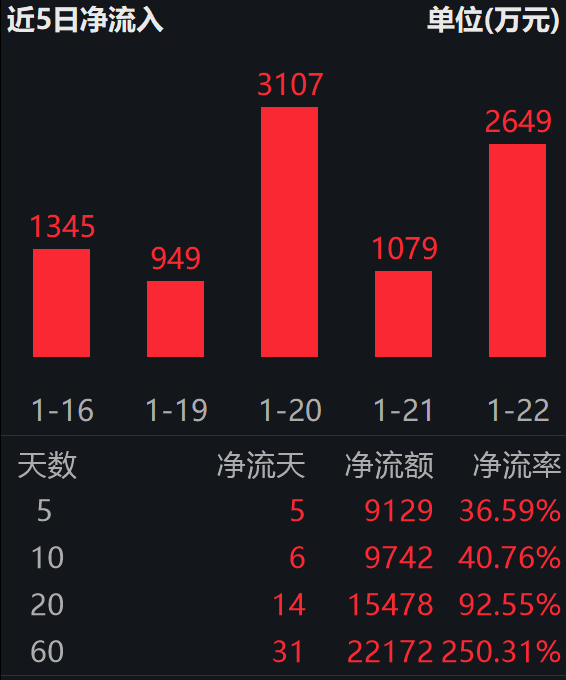
1. 化工行业迎政策暖风,5%年增长目标定档 当前全球化工产业正经历一场由供需共振驱动的景气反转,全球化工涨价潮持续蔓延,陶氏化学等巨头 密集提价,叠加国内化工"反内卷"政策深化,共同构成了化工板块的核心投资主线,化工行业ETF易方 达(516570)凭借龙头持仓优势,精准捕捉行业红利。 化工行业ETF易方达(516570)作为跟踪中证石化产业指数的核心工具,近期凭借化工板块供需格局优 化、政策利好加持及资金持续流入,走出强势上涨行情。数据显示,该基金连续5日获资金净流入,合 计超9100万元,近20日获1.5亿资金净流入。 业绩层面,中证石化产业指数近一个月回报达17.57%,近一年涨幅50.19%,大幅跑赢同期沪深300指 数,化工行业ETF易方达(516570)在化工行业景气回升周期中精准捕捉收益。 从最新持仓来看,化工行业ETF易方达(516570)前十大重仓股涵盖万华化学、中国石油、中国石化、 盐湖股份、中国海油等行业标杆,合计持仓占比具备集中度优势,精准受益于近期化工品涨价潮。 总的来说,化工行业ETF易方达(516570)近期行情主要反映了市场对政策托底、供给格局优化及行业 龙头盈利能力修复的积 ...
长江有色:23日锡价大涨 锡价飙涨高端抢货普货遇冷
Xin Lang Cai Jing· 2026-01-23 08:34
Core Viewpoint - The recent surge in tin prices is driven by a combination of macroeconomic factors, geopolitical issues, and strong industrial demand, leading to a structural supply-demand imbalance in the market [2][3]. Group 1: Market Performance - The Shanghai tin contract 2603 experienced a significant increase, closing at 429,570 yuan/ton, up 19,310 yuan, or 4.71% [1]. - The trading volume for the main contract reached 378,618 lots, with an open interest of 56,254 lots, an increase of 7,129 lots from the previous day [1]. - The average price for 1 tin in the Changjiang market rose by 20,000 yuan, reaching 423,300 yuan/ton [1]. Group 2: Supply and Demand Dynamics - The current tin price increase is attributed to simultaneous structural tensions on both the supply and demand sides [2]. - Supply constraints are exacerbated by natural disasters and policy issues in major producing regions like the Democratic Republic of Congo, Myanmar, and Indonesia, alongside a long-term bottleneck with only 16 years of static resource reserves left [2]. - Demand for tin is surging due to its critical role in AI and renewable energy sectors, leading to a significant increase in high-end demand [2]. Group 3: Market Sentiment and Behavior - The tin market is currently characterized by a deep interplay of industry structure, market sentiment, and financial behavior, moving beyond simple price speculation [3]. - Leading companies in the industry, such as Yunxi Co. and Shengtun Mining, are positioned to benefit significantly from the high-price cycle due to their resource advantages and strategic market positioning [3]. - There is a notable divergence in the spot market, with high-end tin experiencing tight supply and limited negotiation space, while ordinary tin materials see weaker demand and trading activity [3]. Group 4: Future Outlook - The short-term outlook suggests a continuation of high price volatility, supported by ongoing supply disruptions and pre-holiday stocking demands [4]. - However, there are accumulating risks in the market, including potential regulatory responses to rapid price increases and the possibility of reduced speculative activity if short-term favorable conditions change [4].

国信证券:新能源车险长期增长空间与战略价值明确 传统龙头更有望享受超额成长
智通财经网· 2026-01-23 07:54
Core Viewpoint - The new energy vehicle insurance sector is transitioning from initial rapid growth to a high-quality competitive stage centered on technology and ecology, with clear long-term growth potential despite short-term profitability pressures [1] Group 1: Industry Cycle and Growth - The new energy vehicle insurance market in China has entered a "golden development period" characterized by simultaneous increases in volume and price, driven by national strategies and policy incentives [2] - By 2024, the sales of new energy vehicles are expected to account for 40.9% of total new car sales, with retail penetration nearing 50%, significantly outpacing traditional fuel vehicles [2] - The penetration of Advanced Driver Assistance Systems (ADAS) exceeding 50% and the adoption of Usage-Based Insurance (UBI) are reshaping risk management and pricing logic in the insurance industry [2] Group 2: Challenges and Cost Pressures - The high growth in new energy vehicle insurance is accompanied by significant "high cost, high claim" pressures, stemming from the fundamental differences in risk structure between new energy vehicles and traditional fuel vehicles [3] - The costs associated with the "three electric systems" (battery, motor, and electronic control) are high, and the complexity of accident liability due to smart components leads to increased claim frequency [3] - The industry is projected to face an underwriting loss of 5.7 billion yuan in 2024, highlighting the mismatch between traditional insurance models and the structural characteristics of new energy vehicles [3] Group 3: Industry Profitability Model and Competitive Barriers - The profitability model of the industry needs reconstruction, focusing on risk reduction, ecological integration, and international standardization to build competitive barriers [4] - Leading insurance companies, represented by the "old three" (Ping An, PICC, and China Life), are developing risk reduction services to enhance risk management and optimize operational efficiency [4] - Strategic collaborations between insurance companies and manufacturers are evolving from zero-sum games to symbiotic relationships, addressing data silos and repair cost challenges [4] - Chinese insurance companies are expanding internationally, leveraging domestic data and risk management capabilities to support the global expansion of local new energy vehicle brands [4]

毛利率下滑并加速转型,东风股份2025年预亏3.9亿至4.8亿元
Ju Chao Zi Xun· 2026-01-23 07:07
Core Viewpoint - Dongfeng Motor Corporation is forecasting a significant net loss for the year 2025, with expected net profit attributable to shareholders ranging from -480 million to -390 million yuan, indicating a challenging financial outlook for the company [2]. Group 1: Financial Performance - The company reported a total profit of -233.97 million yuan for the year 2024, with a net profit attributable to shareholders of 29.16 million yuan, and a net profit of -689.96 million yuan after excluding non-recurring gains and losses [2]. - Basic earnings per share for the previous year were reported at 0.0146 yuan per share [2]. Group 2: Reasons for Performance Changes - The main reasons for the performance changes include intensified competition in the light commercial vehicle market, leading to sales pressure and a decline in overall gross margin [3]. - The company is in a critical transition period from traditional fuel to new energy, prompting adjustments in operational pace, marketing reforms, and increased channel support to reduce inventory and expand retail [3]. - The company has reassessed the collection of certain receivables due to extended payment cycles, resulting in additional provisions for credit impairment [3]. Group 3: Future Strategies - To overcome short-term adverse impacts, the company plans to increase investment in research and development in new energy and intelligent driving technologies, enhance channel construction and expansion, and build a customer-centric value marketing system [3]. - The impact of non-operating gains and losses on the net profit attributable to shareholders is expected to decrease in 2025 compared to the previous year, primarily due to a reduction in government subsidies received [3].

500辆纯电冷藏车打进上海 谁家车?
第一商用车网· 2026-01-23 06:58
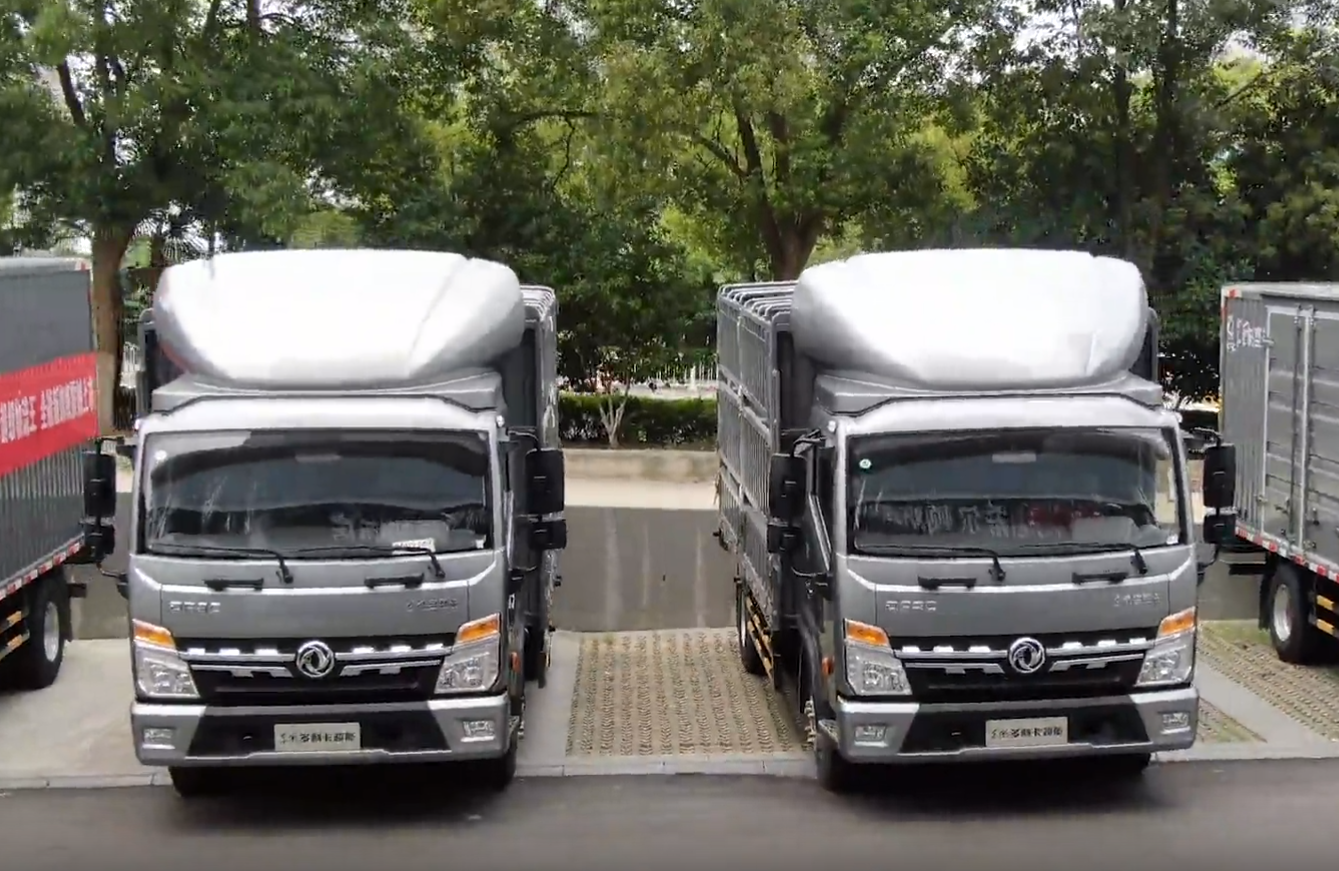
Core Viewpoint - The collaboration between YuanCheng and ShiQuan Cold Chain aims to enhance operational efficiency and reduce costs in the cold chain logistics industry through the delivery of advanced electric refrigerated vehicles [1][4]. Group 1: Industry Trends - The cold chain logistics industry is transitioning from "scale expansion" to "quality and value enhancement," driven by policy guidance, market demand, and technological innovation [2]. - The industry is focusing on low-carbon and intelligent solutions as essential trends for upgrading cold chain transportation [2]. Group 2: Company Overview - ShiQuan Cold Chain is a national 5A-level logistics enterprise specializing in cold chain logistics services, providing comprehensive supply chain solutions across various sectors, including cold chain food and low-temperature dairy [2]. - ShiQuan has established 25 self-operated companies and owns over 1,300 cold chain vehicles and 30 regional warehouses, with a multi-temperature storage area exceeding 600,000 square meters [2]. Group 3: Technological Advancements - YuanCheng has developed a dual-core technology route of "hydrogen + electric" and has achieved digital and intelligent coverage in the light truck sector, enhancing low-carbon transportation capabilities [4]. - The new YuanCheng Star H8E refrigerated vehicle features a payload capacity of 2.4+4 tons, an 18m³ cargo volume, and can quickly reach -18°C within 20 minutes, ensuring precise temperature control [9]. Group 4: Product Features - The YuanCheng refrigerated vehicle is designed to meet diverse urban cold chain logistics needs, offering a full range of refrigerated products suitable for various scenarios [6][11]. - The vehicle is equipped with a self-developed 133-degree battery, providing a warranty of 10 years or 800,000 kilometers, ensuring safety and durability [9]. Group 5: Strategic Collaboration - The partnership between YuanCheng and ShiQuan aims to integrate green intelligent transportation, digital temperature control technology, and specialized operational resources to create a zero-carbon cold chain logistics ecosystem [4][7]. - This collaboration is expected to set a benchmark for the industry's transition to renewable energy solutions [4].

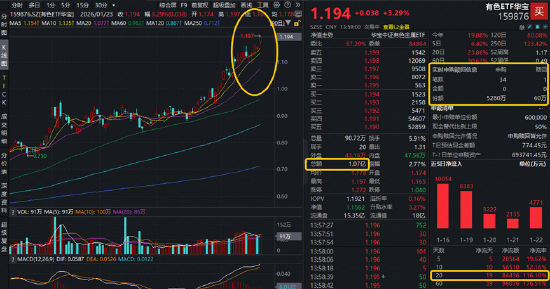
史诗级黄金牛市!金价直逼5000美元大关!白银有色四连板,有色ETF华宝(159876)飙涨3.5%放量突破上市高点
Xin Lang Cai Jing· 2026-01-23 06:18
Core Viewpoint - The non-ferrous metal sector is experiencing a strong rally, with the popular ETF, Huabao Non-Ferrous ETF (159876), reaching a historical high and significant trading volume, indicating potential investment opportunities [1][11]. Group 1: Market Performance - The non-ferrous metal sector has shown a robust performance, with the Huabao Non-Ferrous ETF (159876) rising by 3.29% and achieving a trading volume of 1.07 billion yuan, surpassing the previous day's total [1][9]. - Major stocks in the sector, such as Baiyin Non-Ferrous and Tongling Non-Ferrous, have seen significant gains, with Baiyin Non-Ferrous up by 9.97% and Tongling Non-Ferrous by 9.94% [2][14]. - The overall market sentiment is positive, with the non-ferrous metal sector leading among 31 primary sub-industries in the A-share market [5][13]. Group 2: Gold Price Surge - International gold prices have surged, with spot gold reaching 4,950 USD per ounce, marking a new historical high, while COMEX gold futures peaked at 4,970 USD per ounce [2][10]. - The rise in gold prices is attributed to factors such as geopolitical tensions, U.S. risks, and central bank gold purchases, which are expected to support gold prices in the future [3][13]. Group 3: Investment Trends - The Huabao Non-Ferrous ETF has seen a net subscription of 52.2 million units, accumulating 844 million yuan over the past 20 days, indicating strong investor interest [1][11]. - The ETF covers a wide range of metals, including copper, aluminum, gold, rare earths, and lithium, allowing investors to capture various market cycles [6][16]. - Analysts predict that the demand for basic metals like copper, aluminum, and tin will continue to perform well due to emerging needs in AI, electricity, and new energy sectors [3][13].