
电动化

Search documents
中国汽研:持续加大科研投入,强化客户合作与市场开拓
Zheng Quan Ri Bao Wang· 2026-02-06 12:45
Core Viewpoint - The automotive industry in China is steadily advancing towards an era characterized by electrification, intelligence, low carbon emissions, and internationalization, with a continuous increase in the number of new products as indicated by the Ministry of Industry and Information Technology's announcements [1] Group 1: Industry Trends - The demand for technology services in the automotive sector is consistently growing, driven by the industry's transition towards new technological paradigms [1] - The number of new products in the automotive sector is on the rise, reflecting a positive trend in the industry [1] Group 2: Company Strategy - The company plans to focus on three main technological lines: safety, green technology, and user experience, while increasing research and development investments [1] - The company aims to strengthen customer collaboration and market expansion, concentrating on its core business and emerging sectors [1] - The company is committed to enhancing business synergy across various segments to improve its technological innovation and operational capabilities, thereby elevating its market position [1]

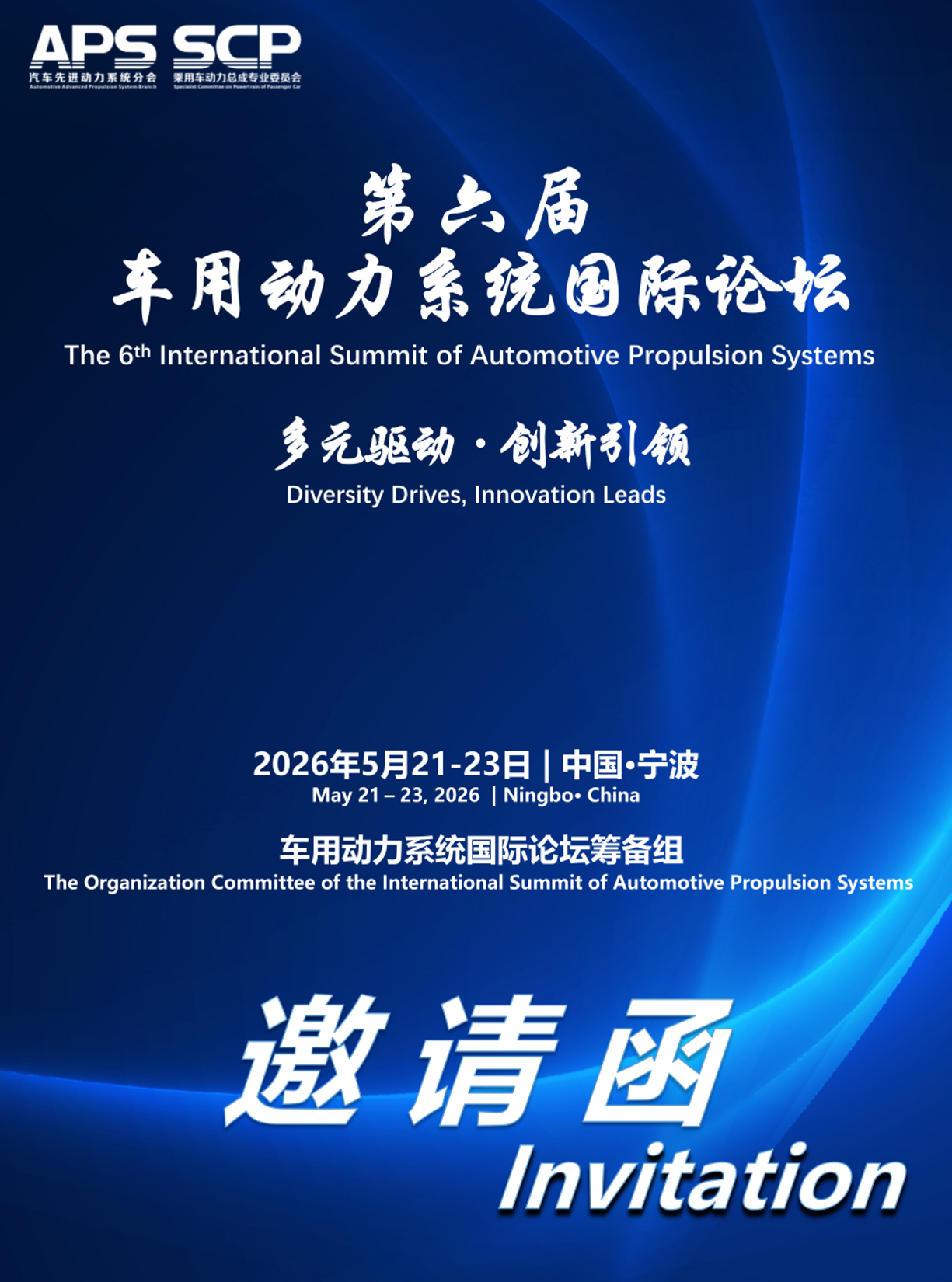
第六届车用动力系统国际论坛将于5月21日开幕
Zhong Guo Qi Che Bao Wang· 2026-02-06 09:32
Core Insights - The 6th International Summit of Automotive Propulsion Systems will be held from May 21-23, 2026, in Ningbo, China, focusing on the theme "Diversity Drives, Innovation Leads" [6][7][8] - The summit aims to explore emerging trends in the automotive industry, particularly in vehicle powertrain systems, which are undergoing significant transformation towards electrification, hybridization, and multi-energy synergy [6][7][8] Industry Overview - The global automotive industry is currently experiencing a profound transformation, with vehicle powertrain systems recognized as the core engine of this transition [6][7] - There is a broad industry consensus on the importance of electrification and hybridization, leading to significant achievements and continuous innovation in the sector [6][7] Event Details - The summit will gather experts and leaders from governments, enterprises, academia, and research institutions worldwide to discuss key topics and foster collaboration [8] - Parallel sessions will cover various subjects, including hybrid and electric drive technologies, battery innovation, high-efficiency engines, carbon-neutral fuels, digitalization, and propulsion systems for low-altitude aircraft [8][12] Participation and Impact - The summit has previously attracted over 50,000 participants and has been recognized for its broad influence and appeal within the automotive industry [13][14] - The event will provide an international platform for OEMs and suppliers to engage in dialogue and cooperation, driving innovation across the global powertrain supply chain [8][14]

逆势狂飙!现代摩比斯 2025 年海外第三方订单达 91.7 亿美元,超目标 23%
Zhong Guo Qi Che Bao Wang· 2026-02-06 08:39
Core Insights - Modern Mobis has achieved a remarkable performance amidst a slowdown in the global electric vehicle market, with total orders from overseas automakers reaching $9.17 billion in 2025, exceeding the initial target by 23% [1][3] - This achievement reflects the company's successful transition from a local supplier to a global core component partner, gaining recognition from major international automakers [1][3] Group 1: Strategic Initiatives - The company's success in securing orders during an industry downturn is attributed to its three global strategies: targeting large clients for long-term partnerships, leveraging advanced technology to penetrate high-end markets, and adapting to local demands in emerging markets [3][4] - Modern Mobis has signed long-term supply agreements with top North American and European automakers for battery systems, showcasing the trust and commitment from clients [3] - The company has successfully entered the high-end market by providing superior human-machine interface (HMI) products and high-quality audio systems, breaking through brand barriers [3][4] Group 2: R&D and Future Goals - Modern Mobis has significantly increased its investment in electric and intelligent technology, creating a high-value product portfolio across various domains such as batteries, chassis, and safety [4][5] - For 2026, the company aims to achieve overseas third-party orders of $11.84 billion, a 30% increase from 2025, focusing on North America, Europe, China, and India [4] - The company plans to deepen collaboration with core clients and expand sales of high-profit electronic components, further solidifying its technological leadership in the global automotive supply chain [4][5] Group 3: Market Adaptability - Modern Mobis has demonstrated strong technical resilience and market adaptability during the industry adjustment period, shifting from passive supply to proactive co-creation [5] - The company emphasizes the importance of innovation, quality, and understanding user needs to navigate industry uncertainties and contribute positively to the sustainable development of the global automotive industry [5]
丰田汽车(TM.US)上调全年利润指引 CFO近健太接掌CEO帅印
Zhi Tong Cai Jing· 2026-02-06 08:01
Core Viewpoint - Toyota Motor Corporation reported a mixed financial performance for the third quarter of fiscal year 2026, with a significant increase in sales revenue but a notable decline in net profit [1] Financial Performance - Sales revenue for the third quarter reached 13.46 trillion yen, an increase of 8.6% year-on-year [1] - Net profit for the same period was 1.26 trillion yen, a decrease of 43% year-on-year [1] - The company raised its full-year sales revenue forecast to 50.00 trillion yen from a previous estimate of 49.00 trillion yen [1] - Full-year net profit is now expected to be 3.57 trillion yen, up from the prior forecast of 2.93 trillion yen [1] - Operating profit forecast for the year was increased by 11.8%, attributed to a weak yen and cost-cutting measures offsetting the impact of U.S. tariffs [1] Electric Vehicle Sales - Electric vehicles accounted for nearly half of Toyota's retail vehicle sales in the first three quarters of the fiscal year [1] - Growth in sales was primarily driven by strong demand for hybrid models in regions such as North America and China [1] - The company anticipates sales in Asia for the fiscal year 2025/26 to be 1.82 million units, slightly down from the previous estimate of 1.84 million units [1] Leadership Changes - CEO Akio Toyoda will step down, with CFO Koji Sato set to take over as CEO [1] - This marks the second CEO change for the company in three years [1] - The leadership transition will take effect on April 1, with Toyoda becoming Vice Chairman and Chief Industry Officer [1] - The board restructuring is scheduled for June 2026, when Sato will join the board as a director, and Toyoda will resign from his board position [1]

U-Haul pany(UHAL) - 2026 Q3 - Earnings Call Transcript
2026-02-05 16:02
Financial Data and Key Metrics Changes - The company reported a third-quarter loss of $37 million compared to earnings of $67 million in the same quarter last year, resulting in a loss of $0.18 per non-voting share versus earnings of $0.35 per share previously [9] - Adjusted EBITDA for the moving and storage segment decreased by 11%, approximately $42 million, reflecting a similar decline in operating cash flows for the quarter [9][10] - A significant loss of $26 million was reported on the disposal of retired rental equipment, contrasting with a $4 million gain in the previous year [10] - Total capital expenditures for new rental equipment in the first nine months of the year were $1.748 billion, an increase of $162 million compared to the same period last year [12] Business Line Data and Key Metrics Changes - Equipment rental revenues increased by $8 million, just under 1% compared to the same time last year, primarily from the in-town portion of the business [11] - Storage revenues rose by $18 million or 8% for the quarter, with average revenue per foot improving by just under 7% [13] - Same-store occupancy decreased by 490 basis points to just over 87%, attributed partly to the removal of delinquent units [13][14] Market Data and Key Metrics Changes - The company added 65 new company-operated locations and had a net increase of 365 independent dealers, which is expected to help distribute the larger fleet and increase transactions [11][12] - U-Box presence expanded to over 700 locations in North America, with over 200,000 containers in service [6][7] Company Strategy and Development Direction - The company is working on a plan to open more U-Haul dealership locations to utilize excess fleet capacity while earning a return [4] - There is a focus on improving the rate of rented units through various initiatives, especially in the self-storage segment [5] - The company continues to invest heavily in digital tools to meet customer expectations [7] Management's Comments on Operating Environment and Future Outlook - Management acknowledged that excessive acquisition costs of vans and pickups have significantly impacted earnings, leading to increased depreciation and losses on sales [4] - The company is optimistic about future cargo van purchases being at a lower average cost, which may help mitigate some financial pressures [11] - Management expressed confidence in the self-storage industry, noting that they have been adding units faster than they are renting them, but are implementing strategies to improve occupancy rates [5][13] Other Important Information - Operating expenses for moving and storage increased by $66 million for the third quarter, with personnel costs and self-insurance liability costs being significant contributors [17] - The company has $1.475 billion in cash and available loan facilities as of December 2025 [17] Q&A Session Summary Question: Discussion on pressures in the one-way market and U-Box program - Management noted that consumer anxiety leads to shorter transaction distances, affecting the one-way rental market and U-Box usage [23][24] Question: Clarification on depreciation changes - Management explained that depreciation rates for box trucks decrease over time, while adjustments for pickup and cargo vans are made based on resale market conditions [26][27] Question: Capacity reductions from competitors - Management indicated that competitors are reducing fleet and locations, positioning the company to fill demand when the market improves [31][33] Question: Expense management and future structure - Management is focused on budget control and expects to see results in the current and next calendar year, while also addressing rising personnel costs [39][40] Question: U-Box warehouse capacity in major markets - Management confirmed ongoing construction and property ownership in key metro areas to enhance U-Box capacity [46][51] Question: Thoughts on crystallizing value for shareholders - Management acknowledged the proposal to sell well-occupied facilities to realize value but expressed caution about potential future market conditions [78][80]

崔东树:2025年中国汽车销量占全球份额达35.6% 同比提升1.4个百分点
智通财经网· 2026-02-05 12:34
Core Insights - China's automotive market share is increasing, reaching 40% in November and stabilizing at 37% in December, with a projected share of 35.6% for the full year of 2025, an increase of 1.4 percentage points year-on-year [1][13]. Global Automotive Sales Trends - Global automotive sales are expected to grow by 5% in 2025, with China contributing significantly by selling 34.35 million units, a 9% increase. Other markets like the US, India, Japan, and Germany are also experiencing growth, albeit at lower rates [5][6][10]. - The global automotive market is projected to reach 96.47 million units in 2025, with a year-on-year growth of 5% [6][15]. Performance of Major Automotive Markets - The Chinese automotive market is currently the most dynamic, with a growth rate of 9%, while markets like Russia are experiencing significant declines [1][10]. - In 2025, the US automotive market is expected to sell 16.72 million units, reflecting a modest growth of 1% [5][15]. Chinese Automotive Companies' Market Position - Among the world's top 10 automotive companies, three are Chinese: BYD ranks 5th, Geely 7th, and Chery 10th, indicating a strong upward trend in their market shares [1][24]. - The electric vehicle sector is contributing to the decline of some international automotive brands, while Chinese companies are gaining market share [1][10]. Yearly Sales Data Overview - The global automotive sales data from 2019 to 2025 shows fluctuations, with a notable recovery in 2023 and a projected steady growth through 2025 [5][6][15]. - The share of Chinese automotive sales in the global market has consistently increased from 30% in 2016-2018 to an expected 35.6% in 2025 [10][13].



销量连跌两年,中国区CEO黯然离开,宝马中国战略大溃败?
Sou Hu Cai Jing· 2026-02-05 07:11
Core Viewpoint - BMW Group announced a significant leadership change in its Greater China region, appointing a new CEO, which comes at a time of declining sales and market challenges in China [1][4]. Group 1: Leadership Change - The announcement of the leadership change was made two months in advance, which is unusual for the company [1]. - The outgoing CEO, Gao Xiang, served for only two years, while the new CEO, Ke Ruichen, has 27 years of experience within BMW but lacks prior experience in the Chinese market [1][3]. Group 2: Sales Performance - BMW's sales in China have seen a dramatic decline, with 2024 sales dropping to 714,500 units, a 13.4% decrease year-on-year, and further falling to 625,500 units in 2025, a 12.5% decline [5][7]. - Over two years, BMW lost nearly 200,000 units in sales in China, a figure comparable to the annual output of a medium-sized joint venture car company [5]. Group 3: Market Context - The decline in BMW's sales in China is unique compared to its global performance, where total sales increased slightly by 0.5% in 2025 [7]. - The luxury German automotive sector, including competitors like Mercedes-Benz and Audi, is also facing significant challenges in the Chinese market, with declines of 19% and 5.6% respectively [9]. Group 4: Pricing Strategy - BMW attempted to exit the price war in mid-2024, citing concerns over profit erosion and brand value, but this strategy did not stabilize sales and led to further market share loss [10][13]. - In January 2026, BMW announced significant price cuts on 31 models, with reductions up to 300,000 yuan, marking a rare move in its history [13][16]. Group 5: Electric Vehicle Strategy - BMW is betting on electric vehicle (EV) development under the new leadership, with plans to launch around 20 new BMW and MINI models in 2026, including a long-wheelbase version of the BMW iX3 tailored for the Chinese market [19][21]. - The shift in consumer preferences towards EVs and smart features is a critical factor for BMW's strategy in China, where the penetration rate of new energy vehicles exceeds 50% [19]. Group 6: Challenges Ahead - Ke Ruichen's lack of experience in the Chinese market poses significant challenges, as previous attempts to appoint leaders without local experience have not been successful [21][23]. - The competitive landscape in China is increasingly complex, with local brands like BYD and Li Auto rapidly advancing in product quality and marketing strategies [23][25].


宝马集团2026年产品攻势将启 密集推出约20款新产品
Zheng Quan Ri Bao Wang· 2026-02-05 02:48
Core Insights - BMW Group has announced its strategic plan for 2026, focusing on the launch of the new generation BMW iX3 long-wheelbase version and approximately 20 new or updated models across its brands to cater to Chinese customers' demand for driving pleasure and personalization [1][2] Group 1: Product Development and Innovation - The new generation BMW iX3 long-wheelbase version is positioned as one of the most localized models in China, set to be produced in Shenyang, showcasing BMW's strategic upgrade in system capabilities [2][3] - BMW Group has established the largest R&D network outside Germany in China, with four innovation bases and three software companies, aiming to enhance business efficiency and customer experience through the deployment of its self-developed AI platform "Gaia" by 2025 [1][2] Group 2: Market Strategy and Cultural Integration - BMW plans to launch around 20 new products in 2026, covering almost all market segments, with special editions like the "Year of the Horse" models that incorporate local cultural elements into their design [3][4] - The "Year of the Horse" edition models will feature unique design elements inspired by Chinese culture, such as the "Horse" embroidery from Dunhuang murals, enhancing cultural resonance with Chinese consumers [3] Group 3: Value Enhancement and Competitive Positioning - The 2026 BMW X5 will undergo a value upgrade, including standard features like advanced driving assistance, ventilated seats, and a premium sound system, adopting a strategy of "high configuration from entry-level" to enhance product competitiveness [4] - MINI and BMW Motorrad will also introduce differentiated products, with electric MINI models and new BMW Motorrad offerings to strengthen their market presence in China [4] Group 4: Strategic Focus and Market Positioning - BMW Group aims to leverage its investments in R&D, manufacturing, and local collaboration to translate into tangible product strength and system capabilities by 2026, marking a significant acceleration in its electrification and intelligence strategy [5][6] - The company's focus on a "product year" is intended to establish a solid foundation for its future development in the competitive Chinese market, shifting from single product competition to a focus on systemic capabilities and long-term endurance [6]
Timken(TKR) - 2025 Q4 - Earnings Call Transcript
2026-02-04 17:02
Financial Data and Key Metrics Changes - Adjusted earnings per share for Q4 2025 was $1.40, exceeding the high end of guidance range [6] - Total sales in Q4 increased by 3.5% year-over-year, with organic revenue growth of more than 1% driven by higher pricing and volume in the Industrial Motion segment [6][7] - Free cash flow reached $141 million in Q4, allowing the company to return $36 million to shareholders and reduce debt by over $100 million [7][8] - The company ended the year with a net leverage of 2 times, indicating a strong balance sheet [8] Business Segment Data and Key Metrics Changes - Engineered Bearings sales were $714 million in Q4, up 0.9% year-over-year, with organic sales down 1% due to lower volumes offsetting higher pricing [15] - Industrial Motion sales were $397 million in Q4, up 8.4% year-over-year, with organic sales increasing by 5.6% driven by higher demand and pricing [16] - Adjusted EBITDA margins for Engineered Bearings were 16.1%, down from 17.2% the previous year, while Industrial Motion margins improved due to operational execution and higher volumes [16][17] Market Data and Key Metrics Changes - In the Americas, sales were flat, with growth in North America offset by declines in Latin America [12] - Asia Pacific saw a 4% increase in sales, driven by growth in India, while EMEA also experienced a 4% increase led by the Industrial Motion segment [12] - The company reported a backlog increase at the end of 2025, indicating encouraging order activity across several industrial markets [8] Company Strategy and Development Direction - The company is focusing on strategic initiatives such as the 80/20 portfolio work to exit underperforming businesses and prioritize high-impact actions for margin and growth [9] - New leadership appointments, including a Chief Technology Officer and Vice President of Marketing, aim to align the organization with primary growth drivers and enhance innovation [10] - The company plans to continue integrating acquisitions and driving synergies through global expansion [10] Management's Comments on Operating Environment and Future Outlook - Management expressed cautious optimism for 2026, expecting organic revenue growth of 2% driven by higher pricing and modest volume growth despite ongoing trade volatility [8][38] - The company anticipates adjusted EPS to increase by around 8% at the midpoint of guidance for 2026, with a focus on generating stronger top and bottom line performance [19][22] - Management acknowledged macroeconomic uncertainties but emphasized the importance of executing strategic initiatives to improve performance [9][23] Other Important Information - The company plans to host an Investor Day on May 20, 2026, to provide further insights into its strategy and performance [5] - The company expects to generate around $350 million in free cash flow for the full year 2026, representing approximately 105% conversion on GAAP net income [20] Q&A Session Summary Question: Order trends in Q4 and January outlook - Management noted that Q4 orders were better than expected, with a strong order book contributing to optimism for 2026 despite some seasonal declines [30][32] Question: Segment contribution to full year guidance - Management explained that the difference in performance between Engineered Bearings and Industrial Motion was largely due to mix issues, with expectations for improved margins moving forward [35][36] Question: Headwinds from distribution inventories - Management indicated that distribution inventories are in good shape, with expectations for low single-digit growth next year [45][46] Question: Volume growth expectations for 2026 - Management expects volumes to be slightly lower in Q1 2026 due to a challenging comparison from the previous year, with pricing expected to offset this decline [50][51] Question: Impact of 80/20 strategy on revenue - Management clarified that the 80/20 strategy aims to simplify operations and focus on growth, with potential upfront costs before benefits materialize [55][56] Question: M&A strategy and portfolio focus - Management emphasized that M&A remains a priority, with plans to clarify the strategy at the upcoming Investor Day [97][98]

混动产能两年上调30%!丰田汽车(TM.US)抛出670万辆增产计划
Zhi Tong Cai Jing· 2026-02-04 11:40
受此利好消息提振,丰田汽车在资本市场的表现表现活跃,截至发稿,丰田汽车盘前涨近3%,报 238.21美元。 从整体产能布局来看,丰田汽车预计到2028年其全球汽车总产量将达到约1130万辆,较2026年计划增长 约10%,这意味着混合动力车型将占据公司总产出的近六成,成为支撑集团产销量增长的核心驱动力。 目前,丰田已开始就该中长期增产计划与主要供应商进行深度对接,以确保供应链在关键零部件及原材 料保障上能与产能扩张同步,并强调这些数字仅供参考,并非生产或销售计划。 据报道,丰田汽车(TM.US)计划到2028年将混合动力及插电式混合动力汽车产量提升至约670万辆,较 其2026年约500万辆的预估产量目标高出30%。 市场分析人士指出,丰田此番大规模扩产不仅是为了应对日益严苛的碳排放准则,更是利用其成熟的技 术护城河在电动化博弈中寻求最优的利润平衡点。 ...