
财政政策

Search documents
为什么是这些目标?为什么是这些改革?|两会时间
和讯· 2025-03-05 06:29
Core Viewpoint - The government work report emphasizes the need to boost domestic demand and consumption as a primary strategy for economic growth, with a GDP growth target of around 5% for the year [1][3][9] Economic Growth Targets - The GDP growth target is set at approximately 5%, balancing the need for employment stability, risk prevention, and improved living standards, while aligning with long-term development goals [3][4] - The report indicates that achieving a 5% growth rate is feasible due to a large domestic market and recent positive economic indicators [4][11] Fiscal Policy and Debt Management - The fiscal deficit rate is proposed at around 4%, with a total new government debt scale of 11.86 trillion yuan, reflecting a significant increase in fiscal spending to support economic growth [6][7][8] - The report outlines plans for issuing special bonds and local government bonds to finance infrastructure and support consumption [6][10] Consumption and Domestic Demand - The report prioritizes boosting consumption and investment efficiency, aiming to make domestic demand the main driver of economic growth [9][11] - Specific measures include implementing special actions to enhance consumption, improving the consumption environment, and increasing residents' income [9][12] Investment Strategies - The government plans to enhance effective investment by focusing on key projects and ensuring proper funding allocation to prevent inefficient investments [10][11] - The report emphasizes the importance of private investment and encourages public-private partnerships in infrastructure and social services [10][16] Reforms and Market Environment - The report highlights the need for significant reforms to create a fair and vibrant market environment, particularly in supporting the private economy and improving the fiscal and tax systems [14][15][16] - It stresses the importance of addressing barriers to market entry and competition, particularly in the context of "involution" in various industries [18][19] Future Industries and Technological Development - The government work report outlines plans to advance future industries, particularly in artificial intelligence and digital economy sectors, to enhance consumer experiences and drive economic growth [20][21] - There is a focus on integrating new technologies into traditional industries to create new employment opportunities and stimulate economic activity [20][21]

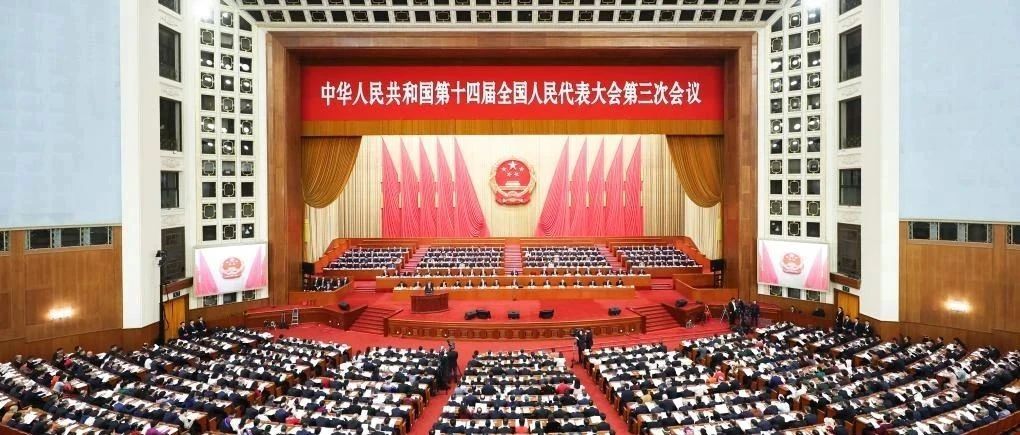
中国2025经济增长目标仍为5%左右
日经中文网· 2025-03-05 03:48
Core Viewpoint - The Chinese government aims to maintain a GDP growth target of around 5% for 2025, continuing a three-year trend, while expanding fiscal spending to support economic growth amid external pressures such as tariffs from the U.S. [1][2] Fiscal Policy - The government plans to increase the deficit ratio to approximately 4.0%, up from the 3.0% set for 2024, and will issue 500 billion yuan in government bonds to inject capital into state-owned banks to mitigate financial risks from a sluggish real estate market [1][2] - Special government bonds will be issued, with a total of 1.3 trillion yuan in ultra-long-term bonds (over 10 years), an increase of 300 billion yuan compared to 2024 [1] Local Government Financing - The issuance quota for local government special bonds will be expanded to 4.4 trillion yuan for 2025, an increase of 500 billion yuan from the previous year, focusing on investments in construction, land acquisition, and addressing overdue payments to enterprises [2] Monetary Policy - The government plans to adopt a moderately loose monetary policy to support economic growth, indicating potential reductions in reserve requirements and policy interest rates at appropriate times [2] Employment and Inflation - The target for urban surveyed unemployment is set at around 5.5%, with a goal of creating over 12 million new urban jobs, consistent with the previous year's targets [2] - The consumer price index (CPI) growth target is set at around 2%, lower than the 3% target for 2024, reflecting increasing deflationary pressures due to insufficient domestic demand [2] Social Services - The government intends to enhance support for healthcare, elderly care, and childcare services to improve consumer confidence amid structural issues like population decline [2] Foreign Policy - The government opposes unilateralism and protectionism, particularly targeting U.S. tariff policies, and has announced additional tariffs on U.S. imports as a countermeasure [3]
2025年3月宏观经济月报:政策预期锚点回归基本面-2025-03-04
BOHAI SECURITIES· 2025-03-04 10:31
Investment Rating - The report assigns a "Neutral" rating for the industry, indicating a projected performance within a range of -10% to 10% relative to the CSI 300 index over the next 12 months [53]. Core Insights - The macroeconomic environment shows signs of resilience in the U.S. with a combination of inflation rebound and strong employment, leading the Federal Reserve to maintain a cautious stance on interest rate cuts [3][15]. - In Europe, economic fundamentals are improving, but the European Central Bank is likely to continue a gradual rate cut approach due to ongoing uncertainties [4][25]. - Domestic consumption is expected to continue its recovery trend, with significant growth in retail and service sectors during the Spring Festival period [28]. - The export sector is showing resilience, supported by increased container throughput at ports and a recovery in the semiconductor supply chain [29]. - Inflation is anticipated to be influenced by seasonal factors, with CPI expected to decline post-Spring Festival due to the normalization of prices [41]. Summary by Sections 1. Overseas Economic and Policy Environment - U.S. GDP growth for Q4 2024 was revised to 2.3%, with consumer spending remaining strong despite some downward pressures from non-residential investment [13]. - The Eurozone's GDP growth for Q4 2024 was adjusted to 0.1%, with improvements in service and manufacturing PMIs, although disparities among major economies persist [24]. 2. Domestic Economy - Consumption during the Spring Festival saw a 10.8% increase in daily sales compared to the previous year, with significant growth in both goods and services [28]. - Investment in real estate remains under pressure, with construction activity not yet returning to pre-holiday levels [29]. - Export growth is expected to maintain resilience, aided by a recovery in global manufacturing and proactive export strategies [29]. 3. Domestic Policy Environment - The central bank is expected to maintain a cautious approach to interest rate cuts, with potential adjustments post the National People's Congress [6]. - Fiscal policy discussions during the upcoming meetings are likely to focus on stimulating domestic demand and supporting new productivity initiatives [45].
抢跑之后-利率何去何从
2025-03-04 07:00
Summary of Conference Call Notes Industry Overview - The discussion primarily revolves around the **Chinese financial market**, focusing on **monetary policy**, **interest rates**, and **economic recovery**. Key Points and Arguments Monetary Policy and Interest Rates - There has been a **decline in long-term interest rates** since December 2024, with recent adjustments indicating a market reaction to anticipated interest rate cuts [2][8] - The **People's Bank of China (PBOC)** conducted a **balance sheet reduction** of **1.6 trillion yuan** in 2024, raising concerns about liquidity tightening, but overall monetary policy remains accommodative with a net liquidity injection of **400 billion yuan** [2] - The **short-term interest rates** have been rising since early 2025, indicating a tightening liquidity environment compared to 2024 [3][4] Economic Indicators and Risks - The **ten-year government bond yield** has shown a significant decline driven by interest rate cut expectations, with a noted **100 basis points** drop in implied future rate cuts [8] - A rapid decline in long-term interest rates poses **financial risks**, including potential instability in safe assets and losses in financial institution margins [9] - The **current economic environment** is characterized by **moderate inflation** and weak demand, with signs of semi-inflation emerging since September 2024 [14] Construction and Fiscal Policy - The **construction industry** is experiencing improved funding conditions, with state-owned enterprises showing moderate growth in orders and revenue [15] - Fiscal policy has been proactive, with **net financing of government bonds** reaching a peak in January 2025, indicating strong government support for economic recovery [16] Consumer Behavior - Consumer spending has shown a mixed performance, with strong growth in entertainment during the Spring Festival but a decline in retail and dining sales compared to the previous year [17] Challenges in Monetary Policy - The balance between **growth stabilization** and **risk prevention** in monetary policy is constrained by high risk premiums, with ineffective transmission to the real economy [18][19] - Traditional monetary policy has limitations in reducing risk premiums, as it primarily affects risk-free rates rather than directly influencing investor risk preferences [20] Future Outlook - There is an expectation that long-term government bond yields will stabilize as liquidity conditions shift from loose to tight, necessitating a careful approach to monetary policy [12] - The potential for more effective methods to reduce high risk premiums includes structural monetary policies and unconventional easing measures, although their effectiveness may be limited in the current Chinese context [21] Additional Important Content - The **relationship between short-term and long-term interest rates** has been affected by various factors, including market demand for safe assets and adjustments in institutional investment strategies [10][11] - The **CPI and PPI** have not yet shown a synchronized recovery, indicating that the overall economic recovery requires further observation and support [17]
2025全国两会前瞻十大热词→
21世纪经济报道· 2025-03-04 01:25
Group 1: Economic Goals and Policies - The GDP target for 2025 is expected to remain around 5.0%, consistent with the previous two years, to align with the goal of doubling the economic total by 2035 and to absorb the 1,222,000 new graduates entering the job market [2] - CPI target is anticipated to be adjusted to around 2.0%, reflecting a cautious approach due to low inflation pressures, with 27 provinces setting their CPI targets similarly [2] - The central government is expected to implement a more proactive fiscal policy, with potential adjustments to the deficit rate and an increase in the scale of long-term bonds and local government special bonds [3][4] Group 2: Monetary Policy and Domestic Demand - The monetary policy is shifting to a moderately loose stance, the first change since 2011, with market expectations for further adjustments [5][6] - The government aims to boost domestic demand by enhancing consumption and investment, with specific policies being developed to stimulate consumer spending and support major projects [7] Group 3: Technological Innovation and Private Economy - The focus on technological innovation is emphasized as a key task for developing new productive forces and modern industrial systems, particularly in light of recent advancements in AI [9] - The central government is reiterating its commitment to support the private economy, with ongoing legislative efforts to create a favorable environment for private enterprises [10] Group 4: External Challenges and Real Estate Market - The government is addressing external uncertainties, particularly regarding trade policies and foreign investment, with plans to stabilize foreign trade and investment [11][12] - The real estate market is a core concern, with measures in place to stabilize prices and improve market conditions, including potential government acquisitions of unsold properties [13][14] Group 5: Capital Market and Demographic Policies - Efforts to stabilize the capital market are ongoing, with initiatives to attract long-term funds and enhance market stability [15] - Demographic policies are under review, with potential new measures to address aging and declining birth rates, including possible incentives for families [17]

3月新机会!首席集体关注3大要点
Wind万得· 2025-03-02 22:40
Core Viewpoint - The upcoming National Two Sessions in 2025 are expected to bring significant opportunities in the capital market, with analysts expressing optimism about China's asset attractiveness and focusing on economic growth targets, fiscal policy, and monetary policy [1] Macroeconomic Focus - Economic Growth: Most institutions predict a GDP growth target of around 5% for 2025, with a weighted average growth target calculated at 5.3% based on local targets [2] - Inflation Target: CPI targets are expected to be lowered to around 2% for 2025, down from previous years' targets of approximately 3% [3] Fiscal Policy Focus - Deficit Rate: Analysts anticipate an increase in the deficit rate to around 4% for 2025, with new special bond issuance expected to rise to approximately 4.2 to 4.5 trillion yuan [3] - Spending Direction: Fiscal policy is expected to focus on promoting consumption and driving technological innovation, with measures such as supporting trade-in programs to boost consumer spending [4] Monetary Policy Focus - Monetary Policy Stance: The prevailing view is that monetary policy will maintain a "moderately loose" stance, with potential for interest rate cuts and reserve requirement ratio reductions, but these actions may be delayed until after the Two Sessions [5][6] Capital Market Investment Opportunities - Technology Sector: The technology growth sector, particularly around AI and robotics, is expected to remain a hotspot, with increasing attractiveness of Chinese AI assets [6] - Consumer Sector: With enhanced fiscal policy efforts, consumer growth is anticipated to accelerate, supported by government measures like vehicle purchase subsidies [7] - Capital Market Reforms: The Two Sessions may lead to further improvements in the capital market's "1+N" institutional framework, promoting mergers and acquisitions and fostering a healthy market environment [8]




李迅雷最新发声:降息降准仍有空间,2025年或降息0.75个百分点,降准1个百分点
对冲研投· 2025-02-27 12:47
Core Viewpoint - The current economic situation in China is characterized by a cyclical downturn coupled with structural issues, necessitating measures to avoid the multiplier effect of a declining real estate market and to improve the economic structure [2][28]. Economic Growth and Policy Expectations - The GDP growth target for 2025 is expected to remain around 5% [4][92]. - The policy multiplier effect in 2025 is anticipated to be better than in 2024, with expectations for new initiatives in fiscal reform, budget investment, monetary policy, high-quality development, and technological innovation during the upcoming Two Sessions [3][90]. Monetary Policy Outlook - In 2025, a reserve requirement ratio (RRR) cut of 1 percentage point and interest rate cuts totaling 0.75 percentage points are expected, likely implemented in 2-3 phases [5][78]. - The downward trend in interest rates is projected to positively impact the stability of the real estate and stock markets, contributing to a prosperous capital market in 2025 [5][80]. Structural Issues and Consumption - The global economy faces severe structural problems, including geopolitical conflicts and economic disparities, which also affect China's economic landscape [26][24]. - There is a need to enhance consumption and expand domestic demand, particularly as the wealth effect from real estate diminishes [29][30]. Real Estate Market Dynamics - The real estate sector is undergoing a mean reversion process, with a prolonged adjustment period expected due to previous overvaluation [52][54]. - The contribution of real estate to GDP was significant, accounting for 25% during its peak, and its decline will have widespread negative impacts on various industries [32][34]. Investment and Consumption Trends - Investment returns are declining, leading to a contraction in expansion plans among households and private enterprises [30][46]. - Consumption is identified as a slow variable, contrasting with investment as a fast variable, indicating a need for structural improvements to stimulate long-term demand [41][44]. Fiscal Policy Recommendations - There is a call for increased fiscal stimulus, particularly in consumer spending, with suggestions to raise the fiscal deficit level and leverage central government finances [66][67]. - The current central government leverage is relatively low compared to other countries, indicating room for fiscal expansion [70][71]. Capital Market Outlook - The capital market is expected to thrive in 2025, supported by robust policy measures and a stable GDP growth environment [93][88]. - The focus on income distribution reform could significantly enhance consumption, with potential contributions estimated at around 200 billion annually if middle and low-income groups see an increase in their income share [84][85].

1月新增信贷和社融均超市场预期
BOCOM International· 2025-02-20 07:48
Investment Rating - The report indicates a positive outlook for the banking industry, with expectations of a "moderately loose" monetary policy and "more proactive" fiscal policy supporting credit demand recovery in 2025 [1][2]. Core Insights - In January 2025, new RMB loans reached 5.13 trillion yuan, exceeding market expectations of 4.5-5.0 trillion yuan, marking the highest level for the same period in history, primarily driven by strong corporate credit performance [1][2]. - New social financing (社融) in January 2025 was 7.06 trillion yuan, also above the market expectation of 6-7 trillion yuan, representing a year-on-year increase of 583.3 billion yuan, with significant contributions from RMB loans and government bonds [1][2]. - The report highlights a robust performance in corporate credit, with new medium to long-term loans amounting to 3.46 trillion yuan, a year-on-year increase of 150 billion yuan, and short-term loans increasing by 1.74 trillion yuan, a year-on-year increase of 280 billion yuan [1][2]. Summary by Sections New Loans and Social Financing - January 2025 saw new RMB loans of 5.13 trillion yuan, a year-on-year increase of 210 billion yuan, and new social financing of 7.06 trillion yuan, a year-on-year increase of 583.3 billion yuan [1][2]. - The increase in new loans was primarily due to strong corporate credit, with medium to long-term loans contributing significantly [1][2]. Corporate and Household Credit - Corporate medium to long-term loans were 3.46 trillion yuan, while short-term loans were 1.74 trillion yuan, indicating a strong demand for credit from businesses [1][2]. - Household credit showed signs of recovery, with new medium to long-term loans at 493.5 billion yuan, although this was a decrease compared to the previous year [1][2]. Monetary Aggregates - M1 growth was reported at 0.4%, maintaining positive growth, while M2 growth slightly decreased to 7.0% [5][6]. - The balance of social financing grew at a rate of 8.0%, remaining stable compared to previous months [5][6]. Deposits - New RMB deposits in January 2025 were 4.32 trillion yuan, a year-on-year decrease of 1.16 trillion yuan, with household deposits increasing by 300 billion yuan but corporate deposits decreasing significantly [1][2].
兴业证券王涵 | 特朗普2.0:财政视角——经济每月谈第九期
王涵论宏观· 2025-01-20 23:42
特朗普作为美国新一届总统,"不当家不知柴米贵",财政问题将是其新任期的重要考量。本文试图从财政角度,审视特朗普提出的新一届任期 的政策。 特朗普的四大节流方向:医改、停战、DOGE、非法移民。 从节流的角度来看,财政支出中国防和卫生健康方面的占比较高,可能是省钱的 重点。因此,一是可能对奥巴马医改进行重大改革,降低联邦政府对于医保的支出。二是通过停战,降低美国对外军事援助的费用。三是整顿 吏治,成立政府效率部,通过提高政府效率来削减预算开支。四是驱逐非法移民,拜登期间大规模非法移民的涌入造成了财政负担,控制非法 移民进入可能会缓解相关的财政压力。 若开源和节流进展不顺,特朗普有Plan B——加密货币。 如果前述财政举措落地不顺,财政赤字仍然明显上升,可能会对美元信心及其全球地 位带来冲击。那么不排除特朗普可能会借力比特币来对美元进行增信。近期特朗普已经表达了对比特币的支持,并称会让财政部持有比特币。 风险提示: 美国政策不确定性,地缘政治风险,全球经济金融风险 。 正文 特朗普2.0的政策重点——财政 特朗普2.0政策围绕财政问题展开,其中,财政刺激主要体现在对内大规模减税。根据美国国会预算办公室(CBO) ...