
智能驾驶

Search documents
【VIP机会日报】Ta为华为海思提供硅光子芯片代工 解读后5日最高涨74.11%
Xin Lang Cai Jing· 2025-11-27 10:05
Market Overview - The market experienced fluctuations with mixed performance across major indices, as the Shanghai Composite Index rose by 0.29% while the Shenzhen Component and ChiNext indices fell by 0.25% and 0.44% respectively [4] - The total trading volume in the Shanghai and Shenzhen markets was 1.71 trillion, a decrease of 736 billion compared to the previous trading day [4] Key Market Trends - The consumer electronics sector showed strength, with stocks like Furi Electronics and Kosen Technology hitting the daily limit [6] - The commercial aerospace sector was active, following a notice from the Ministry of Industry and Information Technology regarding the launch of satellite IoT business trials for two years [10] - Lithium battery concepts surged, with stocks like Yishitong and Shida Shenghua reaching their daily limit, while the consumer sector also performed well with stocks like Maoye Commercial and Haixin Food gaining [6] Consumer Electronics - Huawei launched the new Mate80 and Mate80 Pro series at a recent event, set to officially go on sale on November 28 [7] - In the semiconductor packaging field, glass substrates are gradually replacing traditional organic substrates, with companies like Woge Optoelectronics leading in this technology [7] Commercial Aerospace - The Ministry of Industry and Information Technology's initiative for satellite IoT business trials is expected to accelerate industry growth, with companies like Chaojie Co. seeing a significant stock increase of 13.3% [10] - Tongyu Communication is positioned as a key supplier in satellite internet plans and has made significant investments to enhance its capabilities in the commercial aerospace sector [13] Influenza Treatment Demand - Demand for influenza-related medications has surged, with Meituan Buy Medicine reporting over a 100% increase in orders for specific antiviral drugs since November [16] - The rise in flu activity has led to a 22-fold year-on-year increase in flu medication sales on JD's platform, highlighting a growing market for respiratory system treatments [16][17] AI Hardware - Google recently launched its new AI models, Gemini 3 and Nano Banana Pro, which have shown impressive performance [18] - The autonomous driving sector is expected to see explosive growth, with companies like Saiwei Electronics benefiting from advancements in laser radar technology [18]


智驾下一个关键挑战,是不被别人摘“桃子”?
虎嗅APP· 2025-11-27 09:46
Core Insights - The automatic driving industry in China is experiencing a resurgence, with significant financing activities indicating a renewed focus on commercialization [4][5] - Companies must ensure they do not become marginalized as the industry evolves, particularly regarding pricing power and competitive positioning [6][10] Financing and Market Activity - In October and November 2025, there were 12 financing events in the broad autonomous driving sector in China, totaling over 41.1 billion RMB, surpassing the total for 2022 and 2024 [4] - The renewed investment interest is driven by advancements in underlying technologies, particularly in large models and cognitive chains [5] Competitive Landscape - The industry faces three main threats: 1. Original equipment manufacturers (OEMs) developing in-house capabilities that marginalize suppliers 2. Large platforms leveraging cost and ecosystem advantages to attract users 3. Capital re-defining industry winners at a later stage [6] Company Performance - Yuanrong Qixing has achieved notable success, delivering 150,000 units of its urban NOA autonomous driving solution by October 2025, with a monthly delivery of 31,900 units in October alone [9][10] - The company has formed deep partnerships with major OEMs like Great Wall, which has integrated Yuanrong's technology into its flagship models [9] Strategic Focus - Yuanrong Qixing's strategy includes focusing on a few key models to create "blockbuster" products, which enhances sales and brand reputation [11] - The company aims for a production target of one million units by 2026, leveraging data from current deliveries to improve its foundational models [14] Future Business Directions - The company plans to expand into three core business areas: production vehicle assistance, Robotaxi services, and Road AGI [18] - A strategic partnership with the Wuxi government aims to establish a testing and development base for Robotaxi operations [18] Technological Approach - Yuanrong Qixing supports a Tesla-like model that emphasizes consumer-grade mass production vehicles combined with end-to-end large models, avoiding reliance on high-precision maps [18][20] - The integration of visual-language-action (VLA) and visual-language-navigation (VLN) models aims to enhance the capabilities of autonomous systems in complex environments [20] Capital and Market Position - The company is navigating capital challenges, with recent changes in shareholder structure indicating a potential move towards a red-chip structure for overseas listing [23] - The ability to address competitive threats from OEMs and large platforms will be crucial for Yuanrong Qixing to qualify for future capital opportunities [23]
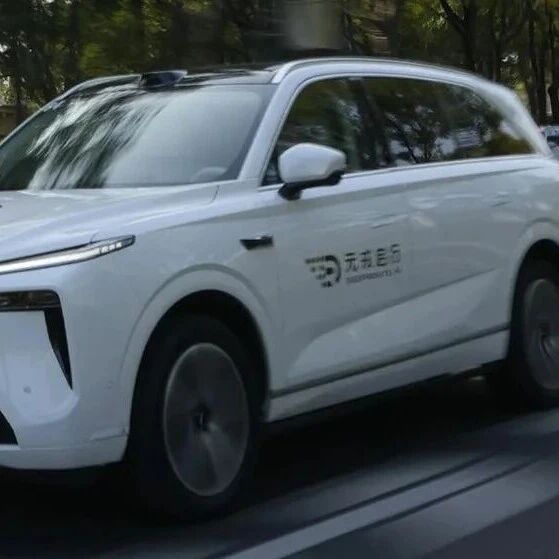
魏建军的智驾独角兽,倒下了
3 6 Ke· 2025-11-27 07:26
Core Points - The sudden announcement of a work stoppage at Haomo Zhixing highlights the company's operational difficulties and potential dissolution, with no clear communication regarding compensation or future plans [1][8] - Haomo Zhixing, once valued at over $1 billion and backed by major investors, has faced significant challenges, including account freezes, unpaid wages, and executive departures, leading to a drastic reduction in workforce from over 1,000 to less than 300 [1][7][11] - The company's reliance on a single client, Great Wall Motors, has proven detrimental as shifts in Great Wall's strategy have directly impacted Haomo's cash flow and operational viability [9][10] Company Background - Haomo Zhixing originated from Great Wall Motors' intelligent driving division and was established as an independent entity in November 2019, with significant backing from various investors [3][5] - The company initially thrived in the capital market, securing nearly 2 billion RMB in funding and achieving a peak valuation of 9 billion RMB by April 2024 [5][6] Business Operations - Haomo's business model primarily revolves around providing intelligent driving solutions for passenger vehicles, heavily relying on Great Wall Motors as its main customer [6][7] - The company also ventured into low-speed unmanned logistics vehicles, aiming to diversify its revenue streams, but this segment has not met expectations [7][11] Industry Context - The challenges faced by Haomo Zhixing reflect a broader trend in the Chinese intelligent driving sector, where many companies are struggling to survive amid tightening capital and increased competition [2][13] - In 2024, 37 companies in the autonomous driving field declared bankruptcy or ceased operations, indicating a significant industry contraction [13][16] - The market is becoming increasingly concentrated, with the top five companies capturing 78% of the market share by 2025, suggesting a shift towards fewer, more robust players [14][15] Conclusion - The downfall of Haomo Zhixing serves as a cautionary tale within the intelligent driving industry, emphasizing the need for sustainable business models and diversified client bases to withstand market fluctuations [16][18] - The industry is moving away from speculative investments towards a focus on profitability and operational efficiency, with only a few companies likely to emerge as leaders in the future [17][19]
智能汽车ETF(159889)盘中涨超1.4%,行业增长动能与技术迭代受关注
Mei Ri Jing Ji Xin Wen· 2025-11-27 05:37
Core Insights - The intelligent automotive industry in China has entered the AI Driving 2.0 phase, with accelerated technological iteration [1] - The VLA (Vision-Language-Action) technology architecture, represented by companies like Li Auto and Yuanrong Qihang, breaks the limitations of traditional end-to-end models by integrating three modalities to enhance system interactivity and long-term reasoning capabilities [1] - The industry is transitioning from rule-driven to data-driven approaches, although there are still concerns regarding technological pathways, investment returns, and policy implementation risks [1] Industry Developments - Huawei's ADS 4.0 adopts the WEWA architecture, emphasizing cloud simulation and vehicle model collaboration to create a direct cognitive model of the physical world, enabling rapid response and high safety redundancy [1] - Horizon Robotics and Momenta focus on one-stage end-to-end systems combined with reinforcement learning to enhance the human-like experience of intelligent driving systems [1] Investment Opportunities - The Intelligent Automotive ETF (159889) tracks the CS Intelligent Automotive Index (930721), which selects representative listed companies in the intelligent driving and vehicle networking sectors from the A-share market [1] - The index aims to reflect the overall performance of securities related to intelligent automotive companies, showcasing the industry's diversity and broad characteristics [1]
小鹏汽车-W(09868):跟踪点评:Q3总毛利继续提升,AI业务及全球化战略提速
Western Securities· 2025-11-27 04:59
Investment Rating - The report assigns a "Buy" rating for the company, indicating a projected investment return exceeding 20% over the next 6-12 months [5][11]. Core Insights - In Q3 2025, the company reported revenue of 20.38 billion, a year-on-year increase of 101.8%, with a gross margin of 20.1%, up 4.8 percentage points year-on-year, and a net loss of 380 million [1][5]. - The automotive revenue for Q3 reached 18.05 billion, reflecting a year-on-year growth of 105%, with a gross margin of 13.1% [1][5]. - The company launched its second-generation VLA model on November 5, which is designed for multiple applications including cars and robots, with a full rollout planned for Q1 2026 [1][2]. - The company aims to achieve mass production of its new humanoid robot, IRON, by the end of 2026, targeting commercial applications [2]. - The company has initiated local production projects in Europe, with overseas deliveries exceeding 29,000 units in the first nine months of 2025, a 125% increase year-on-year [2]. - For Q4, the company projects delivery volumes between 125,000 and 132,000 units, representing a year-on-year growth of 37% to 44%, with total revenue expected to be between 21.5 billion and 23 billion [2]. Financial Projections - Revenue forecasts for 2025, 2026, and 2027 are 79 billion, 133.6 billion, and 159.8 billion respectively, with year-on-year growth rates of 93%, 69%, and 20% [3][5]. - The net profit for 2025 is projected at -1.36 billion, improving to 2.91 billion in 2026 and 6.54 billion in 2027, with significant growth rates of 76.49% and 314.31% respectively [3][5]. - The earnings per share (EPS) are expected to improve from -5.43 in 2023 to 3.42 in 2027 [3][5].
第一批倒下的智驾独角兽,给幸存者留下什么教训?
3 6 Ke· 2025-11-27 02:08
Core Insights - The sudden halt of Haomo Zhixing, China's first company to achieve mass production of autonomous driving technology, highlights structural issues within the autonomous driving industry, indicating that it is not an isolated failure but part of a broader trend [2][4] Industry Overview - The autonomous driving sector in China has transitioned from a "trial and error" phase to a "clearing" phase, with the collapse of Haomo Zhixing serving as a significant indicator of this shift [4][5] - The industry previously thrived in a "vacuum" environment where capital was abundant, car manufacturers were willing to invest in technology, and consumers were eager to try new innovations [5] Market Dynamics - The narrative around "software subscription monetization" has collapsed, with consumers' willingness to pay for advanced driving features at an all-time low, as many features have become standard or free [5][6] - Major players like Tesla are also facing challenges, with only about 12% of their existing fleet utilizing the Full Self-Driving (FSD) service, indicating a broader trend of declining subscription revenues [5][6] Competitive Landscape - The market is witnessing a shift towards "free" autonomous driving features, with companies like BYD offering advanced driving capabilities at significantly lower prices, thus altering the pricing structure of the industry [6][7] - The competitive landscape is evolving, with a clear division emerging between top-tier players with comprehensive ecosystems and smaller companies struggling to find their place [14][15] Company-Specific Issues - Haomo Zhixing's downfall is attributed to its inability to adapt to the rapidly changing industry dynamics, including a failure to scale operations and innovate in a timely manner [8][10] - The company experienced significant leadership turnover and a drastic reduction in workforce, which hindered its ability to respond to market changes effectively [9][10] Future Outlook - The autonomous driving industry is entering a phase where sustainable business models and cost efficiency will be critical for survival, moving away from reliance on capital investment [14][15] - Companies that can balance cost structures while providing quality experiences will be better positioned to thrive in the new market environment [15]

警惕!假便利暗藏真风险,“智驾神器”身披马甲,网上大肆售卖
证券时报· 2025-11-27 00:20
Core Viewpoint - The article highlights the emergence of "smart driving gadgets" that undermine vehicle safety by circumventing driver monitoring systems, raising concerns about road safety and regulatory responses [1][5]. Group 1: Product Overview - "Smart driving gadgets" are being sold under various names like "smart driving companion" and "steering wheel decoration," allowing users to bypass safety features [3][4]. - These products include two main types: capacitive straps for brands like AITO and Xiaomi, and weighted rings for brands like BYD and Tesla [3][4]. Group 2: Regulatory Response - A draft national standard titled "Motor Vehicle Operation Safety Technical Conditions" has been proposed, aiming to enhance safety requirements for driver monitoring systems [1][5]. - The effectiveness of this regulation is questioned, as these gadgets continue to be sold online despite the impending regulations [5]. Group 3: Responsibility and Liability - Sellers of "smart driving gadgets" may face civil liability for promoting products that circumvent vehicle safety systems, potentially leading to indirect infringement if accidents occur [8][9]. - E-commerce platforms could also bear joint liability if they fail to monitor and regulate the sale of these illegal products [9]. Group 4: Technical Insights - Current vehicle technology relies on torque sensors and capacitive sensors to detect driver engagement, which these gadgets can deceive [4][11]. - The proliferation of these gadgets is partly due to consumer misconceptions about the capabilities of Level 2 (L2) autonomous driving systems, which are often misrepresented by manufacturers [11][12]. Group 5: Recommendations for Improvement - To combat the issue, a multi-faceted approach is suggested, including the use of AI for monitoring sales, stricter regulations on production, and enhanced consumer education [12].

【机构调研记录】长盛基金调研立讯精密、德赛西威等4只个股(附名单)
Sou Hu Cai Jing· 2025-11-27 00:15
Group 1: Luxshare Precision (立讯精密) - The company has developed core capabilities across the entire industrial chain in the humanoid robot sector, capable of independently completing precision processing of key components such as harmonic gears, except for batteries and some joint modules [1] - Luxshare has a well-established automotive business with a diverse product matrix, including high and low voltage harnesses, high-speed harnesses, special harnesses, and fast-charging guns, all of which have shown strong development momentum globally [1] Group 2: Desay SV (德赛西威) - The company possesses global leading capabilities in the intelligent sector and has gained recognition from numerous overseas clients, with plans to systematically and steadily enter various regional markets [2] - Desay SV adheres to a value proposition of "open, full-stack, and rapid realization," focusing on innovation and collaboration to build initial cases and accumulate full-stack system capabilities, thereby expanding its ecosystem and reinforcing competitive barriers [2] Group 3: Jinyinhai (金银河) - The company has developed a two-stage low-temperature sulfuric acid lithium extraction technology that outperforms traditional high-temperature sulfate methods in terms of environmental and economic benefits, producing battery-grade lithium carbonate and other high-value by-products [3] - This technology addresses solid waste pollution issues associated with traditional processes and has multiple barriers in technology, processes, and equipment, taking nearly ten years from R&D to mass production [3] - The company has secured long-term orders for rubidium and cesium salts, which are used in fields such as atomic clocks, quantum physics, aerospace, and perovskite batteries, indicating a promising future [3] Group 4: Century Huatong (世纪华通) - The games launched in 2023 continue to set new records, with no observed peak in their lifecycle, and the game "Kingshot" is breaking overseas records for "Whiteout Survival," indicating a larger overseas market with more users [4] - The company has tested multiple products at a low cost and has released no fewer than 20 products since 2023, with hit games driven by data [4] - The casual gaming segment has a long and stable lifecycle, which, while less profitable than SLG, is still significant for the company [4]


【机构调研记录】鹏扬基金调研立讯精密、德赛西威等3只个股(附名单)
Sou Hu Cai Jing· 2025-11-27 00:15
Group 1: Lixun Precision - The company has developed core capabilities across the entire industrial chain in the humanoid robot sector, capable of independently completing precision machining of key components such as harmonic gears, except for batteries and some joint modules [1] - Lixun Precision has a rich product matrix in the automotive sector, having established its business for many years, with good development momentum globally in high and low voltage wiring harnesses, high-speed wiring harnesses, special wiring harnesses, and fast charging guns [1] - The company's office is located at 313 Beihuan Road, Qingxi Town, Dongguan City, Guangdong Province [1] Group 2: Desay SV - The company possesses globally leading capabilities in the intelligent sector and has gained recognition from numerous overseas clients, with plans to systematically and steadily enter various regional markets [2] - Desay SV adheres to a value proposition of "open, full-stack, and rapid realization," focusing on innovation and collaboration to create first-case examples and accumulate full-stack system capabilities, thereby expanding its ecosystem and strengthening competitive barriers [2] - With the trend of integration between intelligent cockpits and intelligent driving, the company aims to enhance its overall competitiveness and drive continuous business growth [2] Group 3: Century Huatong - The games launched in 2023 are still reaching new highs, with no observed peak in their lifecycle, and the game Kingshot is breaking overseas records previously set by Whiteout Survival, indicating a larger overseas market with more users [3] - The company has tested multiple products at high speed and low cost, releasing no fewer than 20 products since 2023, with hit products driven by data [3] - The profit from minor products accounts for about two-thirds of the company's total profit, and the incentive mechanism combines cash and equity [3] Group 4: Pengyang Fund - Established in 2016, the fund has an asset management scale of 145.324 billion yuan, ranking 49th out of 211 in total public funds [4] - The fund's scale for non-monetary public funds is 124.996 billion yuan, ranking 41st out of 211 [4] - The best-performing public fund product in the past year is the Pengyang Zhongzheng Kechuang Chuangye 50 ETF, with a latest unit net value of 1.35 and a growth of 57.5% over the past year [4]
“智驾神器”身披马甲大肆售卖 谁该为风险买单?
Zheng Quan Shi Bao· 2025-11-26 22:34
Core Viewpoint - The rise of "smart driving gadgets" poses a significant threat to road safety, as they allow drivers to bypass safety features in advanced driver assistance systems (ADAS) [1][2][3] Group 1: Product Overview - "Smart driving gadgets" are being sold under various names such as "smart driving companions" and "steering wheel decorations" to evade platform scrutiny [2] - These products include two main types: capacitive straps for brands like AITO and Xiaomi, and weighted rings for brands like BYD and Tesla [2] - The gadgets deceive the vehicle's sensors, rendering the hand detection feature of ADAS ineffective [3] Group 2: Regulatory Response - The Ministry of Public Security has proposed a new national standard that includes stricter safety requirements for ADAS, focusing on hand and gaze detection [1][4] - Despite the proposed regulations, the sale of "smart driving gadgets" continues on e-commerce platforms, indicating a need for collaborative efforts to address the issue [4] Group 3: Legal Responsibility - Sellers of "smart driving gadgets" may face civil liability for selling products that knowingly circumvent vehicle safety systems [6][7] - E-commerce platforms could also be held liable if they fail to monitor and control the sale of these illegal products [6][7] Group 4: Market Dynamics - The misconception that current autonomous driving technology is sufficiently advanced for hands-free driving is a significant factor in the demand for "smart driving gadgets" [8][9] - Misleading marketing by car manufacturers has contributed to consumer confusion regarding the capabilities of Level 2 (L2) autonomous driving systems [8][9] Group 5: Recommendations for Improvement - A multi-faceted approach is needed to combat the proliferation of "smart driving gadgets," including enhanced monitoring by e-commerce platforms, stricter regulations from authorities, and better consumer education [9]