资产配置

Search documents
国泰上证10年期国债ETF基金投资价值分析:双优之选:以少驭繁,稳中求胜
Soochow Securities· 2025-10-14 08:32
- The report analyzes the investment value of the Guotai SSE 10-Year Treasury Bond ETF, highlighting its advantages in terms of low fee rates, high transparency, and efficient tracking of the SSE 10-Year Treasury Bond Index[4][8][50] - The SSE 10-Year Treasury Bond Index (code: H11077.SH) is a bond index launched by the Shanghai Stock Exchange on March 7, 2013. It is composed of treasury bonds with remaining maturities between 6.5 and 10.25 years, calculated using a market capitalization-weighted method to reflect the overall price trend of treasury bonds in this maturity range[45][46][47] - The Guotai SSE 10-Year Treasury Bond ETF tracks the SSE 10-Year Treasury Bond Index, investing at least 90% of its net assets in the index's constituent bonds and alternative constituent bonds. The ETF aims to replicate the index's performance with minimal tracking error, providing investors with a convenient way to access a basket of high-credit-quality, liquid medium- to long-term treasury bonds[50][51][54] - The ETF demonstrates strong performance metrics: annualized return of 3.81%, annualized volatility of 2.65%, IR of 1.44, monthly win rate of 71.13%, and maximum drawdown of 3.79%. Relative to its benchmark, it achieves an annualized excess return of 2.20%, excess volatility of 0.59%, excess IR of 3.72, excess monthly win rate of 93.81%, and excess maximum drawdown of 0.73%[59][63][62] - The ETF's historical excess performance is consistently positive, with monthly excess win rates of 100% since 2021 and zero monthly excess drawdowns during the same period. For example, in 2021, the excess IR reached 13.42, and in 2023, it further improved to 21.22[63][62][59]
【资产配置快评】2025年第45期:Riders on the Charts:每周大类资产配置图表精粹-20251014
Huachuang Securities· 2025-10-14 07:46
Group 1: Inflation and Economic Indicators - The total return ratio of gold to U.S. Treasuries has risen to 0.37 as of September 2025, indicating that high inflation risks may have been fully priced in[4] - Bank credit growth has rebounded to 4.7% year-on-year as of August 2025, the highest level in 24 months, which may help suppress rising unemployment rates in the U.S.[7] - The 10-year government bond yield spread between France and Germany has widened to 79 basis points, reflecting a lack of confidence in French government bonds[10] Group 2: Productivity and Market Trends - U.S. labor productivity is projected to grow by 66.3% by 2026 compared to Q4 2019, significantly outpacing Europe and Japan[13] - The long-term trend of Chinese equity assets outperforming other emerging markets appears to have resumed, with the MSCI China Index showing a recovery[15] - The equity risk premium (ERP) for the CSI 300 Index is currently at 4.3%, indicating potential for valuation uplift compared to historical averages[18] Group 3: Financial Market Dynamics - The forward arbitrage return for China's 10-year government bonds is at 29 basis points, which is 59 basis points higher than the level in December 2016[20] - The copper-to-gold price ratio has decreased to 2.6, while the offshore RMB exchange rate has risen to 7.2, indicating diverging signals in the market[26] - The total return ratio of domestic stocks to bonds in China is at 28.5, above the average level of the past 16 years, suggesting increased attractiveness of equity assets[28]
固定收益周报:供给收缩,资金止盈,估值主动抬升-20251014
Huaxin Securities· 2025-10-14 07:04
Market Performance - The conversion value has stabilized above 100 yuan since August, with pure debt alternatives to low-priced convertible bonds being extremely scarce, primarily consisting of equity-sensitive convertible bonds and inert convertible bonds with mediocre underlying stocks, leading to high valuations [2][11] - The remaining scale of convertible bonds maturing in the fourth quarter, including those from Pudong Development Bank, totals 25.9 billion yuan, with 9 convertible bonds currently undergoing forced redemption and 24 expected to face forced redemption soon [2][11] - The median price of convertible bonds remained around 132 yuan, a historically high position, with an average weekly trading volume of 68.4 billion yuan, showing a phase decline [2][11] - The overall market median valuation rose to 27.8%, with implied volatility increasing by 4 percentage points to 37%, placing it in the historical 78th percentile [2][11] - Industries where convertible bonds outperformed underlying stocks include food and beverage, pharmaceuticals, light industry, transportation, home appliances, automotive, electronics, textiles, commerce, computing, and banking [2][11] Fund Sentiment - From September 26 to October 10, the risk appetite of funds decreased, with the largest increase in gold ETF shares at 8.6%, followed by credit bond ETFs at 4.5% and stock ETFs at 2.8% [3][17] - The continuous decline in convertible bond ETF shares is attributed to high valuations, profit-taking, and the relative weakness of small-cap equity sectors, reflecting a risk repricing within the bond market [3][20] - Insurance, social security, and brokerage asset management investors significantly reduced their holdings in convertible bonds, with the reduction rate exceeding the market scale contraction, indicating a firm profit-taking stance amid high valuations and increased market volatility [3][20] Investment Strategy - The short-term fluctuations in convertible bond valuations can assist in making left-side predictions, with investors advised to seek profit-taking opportunities and moderately control positions [5][22] - Focus on the performance of underlying stocks, recommending attention to sectors such as non-ferrous metals, new energy, solid-state batteries, and chemicals due to price increase expectations driven by anti-involution [5][22] - High-volatility convertible bonds in emerging themes, particularly in robotics, semiconductors, and consumer electronics, should be monitored alongside performance and valuation [5][22] - The recommended "barbell strategy" portfolio includes various convertible bonds from companies like Muyuan, EVE Energy, and others [5][23]
谁在帮诺贝尔奖赚钱?百年奖项背后的220倍理财密码
Zhong Guo Zheng Quan Bao· 2025-10-14 04:50
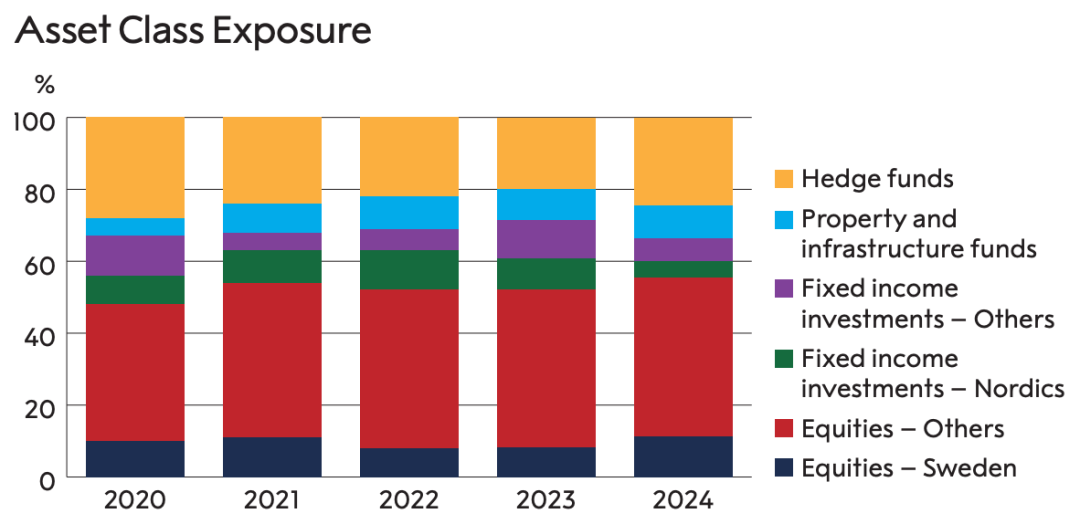
Core Insights - The Nobel Prize fund has grown from an initial 31 million kronor to nearly 6.8 billion kronor by the end of 2024, achieving a growth of nearly 220 times since its inception [2][3] - The Nobel Foundation employs a robust investment strategy that includes external management, diversified asset allocation, and responsible investment principles to ensure the sustainability of the prize fund [1][3] Investment Strategy - The Nobel Foundation's investment portfolio is highly diversified, with 56% in equity funds, 9% in real estate and infrastructure funds, 12% in fixed income assets, and 24% in alternative assets [3] - The annualized investment return over the past five years has been 9.2%, with a return of 11.6% for 2024 [3] Financial Performance - As of the end of 2024, the total asset value of the Nobel Foundation reached 67.97 billion kronor, an increase of 5.64 billion kronor from the previous year [3] - The total expenditure for the Nobel Prize and operations in 2024 was 135.8 million kronor, with prize payouts amounting to 55 million kronor [7] External Management - The Nobel Foundation collaborates with various external managers, including BlackRock, Sequoia Capital, and other top-tier investment firms, to manage its assets [9][12] - The selection of external managers is based on their investment philosophy, historical performance, risk management systems, and commitment to responsible investment practices [15] Responsible Investment Principles - The Nobel Foundation is a signatory of the UN-supported Principles for Responsible Investment (PRI) and engages in annual dialogues with external managers regarding ESG criteria [15] - The foundation avoids investments in controversial sectors, including weapons manufacturing and coal production, adhering to a negative screening list [15] Future Outlook - The Nobel Foundation aims to achieve an average annual return of at least 3% adjusted for inflation, focusing on long-term structural trends while balancing risk and return [16]

短期波动加剧如何安心收蛋?这一重磅榜单或可参考
Jiang Nan Shi Bao· 2025-10-14 04:29
Core Insights - The report by Guotai Junan Securities provides a comprehensive performance ranking of fund companies in equity and fixed income assets for the first three quarters of 2025, helping investors optimize their asset allocation [1] Group 1: Fund Performance - Huian Fund ranks among the top 20 in absolute returns for pure bond funds over the past three years, specifically 17th out of 131 [1] - Over the last five years, Huian Fund's absolute return ranking for pure bond funds is 29th out of 118, and for the last seven years, it is 21st out of 86 [1] Group 2: Star Funds - Several funds under Huian Fund have received five-star ratings from Guotai Junan Securities, including Huian Jia Hui Pure Bond Fund A, Huian Yu He Pure Bond Fund A/C, and Huian Jia Sheng Pure Bond Fund A/C, all achieving this rating for both three and five years [2] - The Huian Yong Fu 90-Day Holding Period Short-Duration Bond Fund A/C has achieved positive returns for 13 consecutive quarters since its inception on May 10, 2022, making it a rare example of a "quarterly income" pure bond fund [2] Group 3: Company Philosophy and Market Outlook - Established in 2016, Huian Fund emphasizes a client-centric approach and long-term business platform, with a governance structure that prioritizes risk aversion and long-term benefits [3] - In a low-interest-rate environment, pure bond funds are viewed as a stabilizing asset class, and investors are encouraged to select strong-performing bond fund companies and products to enhance their investment experience [3]
资配如何应对新变化——总量创辩第113期:资产配置快评
Huachuang Securities· 2025-10-14 02:45
Economic Indicators - Manufacturing investment growth is expected to be 4.0% for January to September, the first time since 2021 that it falls below GDP growth of approximately 5.1%[2] - September PPI is expected to narrow year-on-year to -2.5%, with a month-on-month decline of around -0.2%[15] - Retail sales growth for September is projected at 3.2%, while fixed asset investment growth for January to September is estimated at -0.2%[15] Policy Adjustments - Recent policy adjustments include the acceleration of 500 billion yuan in new policy financial tools and changes to real estate purchase restrictions in first-tier cities[3][13] - The government plans to enhance economic monitoring and timely policy adjustments based on economic conditions, as stated in a press conference on September 29[2] Trade Relations - The recent escalation in US-China trade tensions includes a proposed 100% additional tariff on Chinese goods starting November 1, which has led to a short-term market reaction[5][24] - Historical data suggests that trade tensions have limited long-term impacts on market pricing, primarily affecting risk preferences rather than fundamental economic growth[4][19] Market Trends - The bond market has shown a quick decline in yields following the announcement of new tariffs, with a focus on the 1.7%-1.75% yield range for future movements[5][26] - The dollar index has rebounded by 2.3% since the Federal Reserve's September meeting, driven by a decrease in short positions and increased foreign investment in US Treasury bonds[6][28] Fund Performance - The total equity fund position increased to 96.02%, up by 118 bps from the previous week, while mixed funds rose to 93.86%, an increase of 70 bps[9][35] - The average return for equity ETFs was -0.66%, while mixed bond funds performed slightly better with an average return of -0.08%[9][37]
刚刚!金饰价格涨破1200元/克
Sou Hu Cai Jing· 2025-10-14 02:14
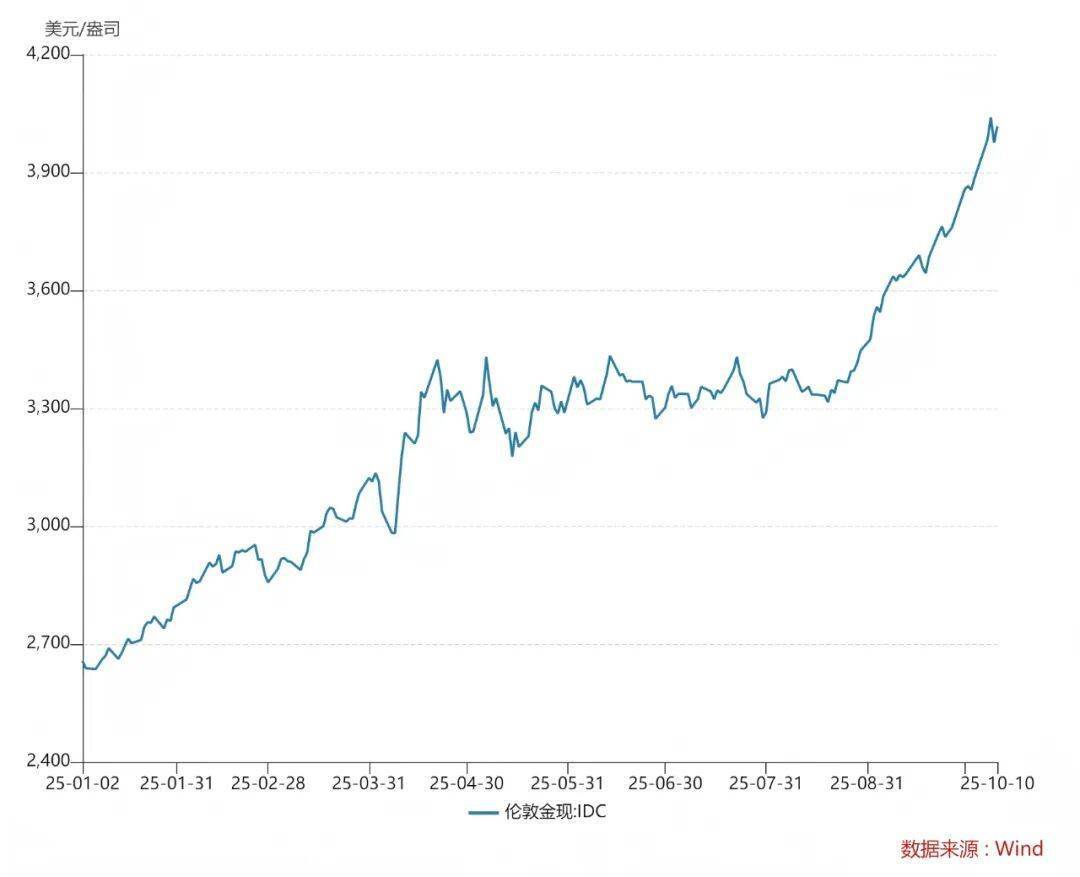
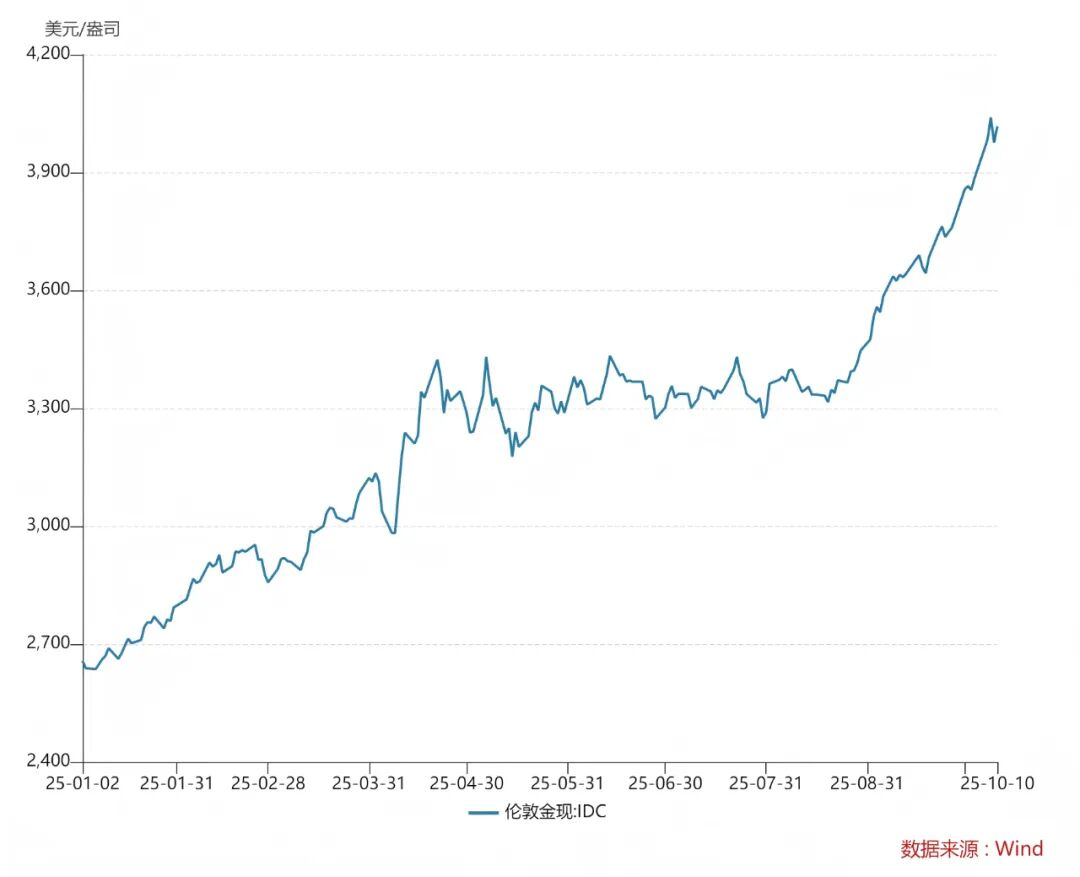
Core Viewpoint - The recent surge in gold prices, reaching historical highs, is driven by multiple factors including changes in monetary policy, geopolitical risks, and increased central bank purchases of gold [5][6]. Group 1: Gold Price Trends - As of October 14, spot gold prices reached $4,143 per ounce, marking a 0.82% increase, with prices surpassing $4,100 on the evening of October 13, reflecting a year-to-date increase of over $1,400 per ounce, or more than 56% [1]. - The price of 24K gold jewelry in China has also risen, with brands like Chow Sang Sang reporting prices of 1,213 RMB per gram as of October 14, up approximately 400 RMB per gram from early 2025 [3][4]. Group 2: Factors Driving Gold Prices - The rise in gold prices is attributed to three main factors: the shift in monetary policy expectations from major central banks, ongoing geopolitical risks, and the long-term trend of central banks increasing their gold reserves [5][6]. - Structural fund flows are identified as a key driver of the current gold price increase, with central bank purchases reaching historical highs, particularly from emerging markets, as a hedge against currency and reserve risks [6]. Group 3: Investment Perspectives - Goldman Sachs has raised its gold price forecast for the end of 2026 from $4,300 to $4,900, citing strong demand from central banks and private sector diversification [7]. - Investment strategies regarding gold should consider individual risk tolerance and investment goals. For consumer gold, it is advised to purchase in moderation, while for investment gold, a dollar-cost averaging approach is recommended to mitigate short-term volatility [8].

刚刚,金饰价格涨破1200元/克
3 6 Ke· 2025-10-14 02:08
截至14日发稿时,现货黄金(伦敦金现)报4143美元/盎司,涨幅为0.82%。 13日晚间,现货黄金站上4100美元/盎司关口,续刷历史新高,年内每盎司上涨超1400美元,涨幅超56%。 还能买吗? 10月6日,高盛集团发布的报告将2026年底的金价预期从4300美元大幅上调至4900美元,理由是"央行增持与私人部门分散化配置需求强劲"。 金价走高的情况下,黄金还能买吗? 今年以来现货黄金走势图片 来自Wind 受国际金价影响,中国国内珠宝品牌足金首饰价格也出现上涨。14日,从已更新的情况来看,周生生足金饰品价格已涨至1213元/克。 | | | 周生生 (how Sang Sang | | | | | --- | --- | --- | --- | --- | --- | | 周生生 PROMESSA | MINTYGREEN | EMPHASIS | MARCO BICEGO | 劳力士 | 帝舵表 | | | | | | | 最後更新时间: 2025-10-14 09:32:00 | | | | | | | 金价(人民币) | | 足金饰品(每克 ) | | 卖出 | | | ¥1213 | | | | ...
美中稀土出口限制交锋致贸易紧张升温,港股通周五净流出4亿港元
Xin Lang Cai Jing· 2025-10-14 01:35
Group 1 - The trade tensions between the US and China are escalating, with the US President threatening "100% tariffs" and "export controls" in response to China's new rare earth export restrictions [3] - China's Ministry of Commerce clarified that the rare earth export is not a complete ban, and export applications that meet regulations will be approved, specifically for non-military and non-terrorism uses [3] - The ongoing federal government shutdown has delayed the release of official data, leading to increased risk premiums in the market, prompting short-term capital to adjust asset allocations towards safer investments [3] Group 2 - The Hong Kong Stock Connect recorded a net outflow of 400 million HKD on Friday, with Xiaomi Group (01810.HK) seeing the highest net inflow of 930 million HKD, followed by Pop Mart (09992.HK) [3] - Conversely, SMIC (00981.HK) experienced the largest net outflow of 2.7 billion HKD, followed by Alibaba (09988.HK) [3]





长城基金杨光:挑战传统资产配置方法的新思路
Sou Hu Cai Jing· 2025-10-14 01:16
Core Insights - The article discusses the evolution of asset pricing theories and the need for a new approach to asset allocation that goes beyond traditional models, emphasizing the importance of risk-adjusted returns and dynamic risk management [2][10][25] Group 1: Traditional Asset Pricing Theories - Traditional asset pricing theories, such as the Capital Asset Pricing Model (CAPM), are based on strict assumptions like market efficiency and rational investors, which fail to explain market anomalies like momentum and value effects [2][4] - The limitations of these traditional theories were highlighted during financial crises, revealing their inadequacies in tail risk management [2][4] Group 2: New Asset Allocation Approach - The new approach focuses on systematically and proactively enhancing the risk-adjusted returns of investment portfolios rather than merely seeking absolute returns [2][4] - This shift represents a comprehensive innovation in philosophy and methodology, aiming for long-term and stable risk-return profiles within clearly defined risk budgets [2][4] Group 3: Dynamic Correlation and Risk Management - The article emphasizes that asset correlations are dynamic and can change with market conditions, making fixed historical correlation-based frameworks risky during crises [7][10] - Understanding the underlying logic of correlation changes is crucial, as traditional low-correlation "free lunch" strategies may diminish in effectiveness during market turmoil [10][12] Group 4: Investment Framework and Strategies - The investment framework proposed by the company is a three-dimensional model that incorporates technological advancements, new productivity measures, and narrative-driven investing [13][20] - The investment process is modularized into pre-investment, during-investment, and post-investment phases, each with specific goals and quantifiable standards to ensure systematic and disciplined operations [14][15] Group 5: Multi-Asset Investment Strategy - The newly launched multi-asset fund aims to provide a robust alternative to traditional fixed-income products by incorporating low-correlation assets like A-shares, U.S. stocks, gold, and bonds [16][18] - Statistical analysis shows that the probability of all four asset classes declining simultaneously is only 1.61%, indicating the effectiveness of low-correlation diversification [16] Group 6: Future of Asset Pricing - The future of asset pricing is seen as a transition from historical data reliance to a focus on understanding technological trends, industry changes, and collective human behavior [25] - The article concludes that continuous questioning and reflection on traditional beliefs are essential for adapting to new paradigms in asset pricing and investment strategies [25]