
硬科技

Search documents
上交所举办科创板六周年线上国际路演
Zhong Guo Zheng Quan Bao· 2025-08-20 20:17
Group 1 - The Shanghai Stock Exchange (SSE) hosted an online roadshow to promote the "1+6" policy for the Sci-Tech Innovation Board (STAR Market), enhancing international investors' understanding of the market and representative listed companies [1][2] - The event featured discussions on the latest developments, reform policies, and index investment in the STAR Market, with participation from nearly 50 institutions across major markets in North America, Europe, and Asia-Pacific [1][2] - Over 80% of the companies listed on the STAR Market are from emerging industries such as new-generation information technology, biomedicine, and high-end equipment manufacturing, positioning it as the preferred venue for "hard tech" enterprises in China [1][2] Group 2 - The SSE highlighted the achievements of the STAR Market in supporting technological innovation and guiding capital towards "hard tech" enterprises over the past six years, as well as the significant outcomes of the "Eight Measures" implemented in the past year [2] - The STAR Market has seen a diversification of index and ETF products, playing a crucial role in attracting new capital and supporting key technological innovations [2] - The SSE plans to accelerate the implementation of various reform measures under the guidance of the China Securities Regulatory Commission (CSRC), aiming to create a more attractive and competitive product system while enhancing services for international investors [2]
科创板六周年线上国际路演 美欧亚太50家机构参与
Zhong Guo Jing Ying Bao· 2025-08-20 13:15
中经记者 孙汝祥 夏欣 北京报道 近日,上交所举办"聚焦上交所——科创板六周年"专题线上路演活动,来自美欧亚太等主要市场的近50 家机构参与。 为做好科创板改革"1+6"政策宣贯,增进国际投资者对科创板市场及代表性上市公司的了解,路演活动 就科创板最新发展情况、改革政策以及科创板指数化投资情况等进行了讲解。 路演活动中,上交所有关部门介绍了科创板六年来在服务科技创新和新质生产力发展,引导资本向"硬 科技"企业聚集等方面的成果,以及"科八条"实施一年来,科创板指数化投资发展方面的突出成效,科 创板指数及ETF品类不断丰富,在吸引增量资金入市、服务关键核心技术创新方面发挥了重要作用。为 进一步打通支持优质科技型企业发展的堵点难点,今年6月,中国证监会宣布加力推出进一步深化改革 的"1+6"政策措施,继续充分发挥科创板示范效应。 下一步,上交所将加快推动各项改革举措落地见效,着力打造更具吸引力、竞争力的产品体系,继续做 好国际投资者服务,对外讲好中国故事,持续提升外资参与上交所市场的深度与广度,助力科创板企业 高质量发展,推动全球投资者更好地分享中国创新发展机遇。 (编辑:夏欣 审核:何莎莎 校对:张国刚) 在行业 ...
【直播预告】硬科技风口,如何捕捉AI后市红利?
天天基金网· 2025-08-20 11:27
Group 1 - The article promotes a series of live broadcasts focusing on investment opportunities in various sectors, including robotics, dividends, and AI [2][4][8][11] - The live sessions are scheduled for August 21, featuring different themes and guest speakers, aimed at discussing the value of investment in these sectors [4][8][11] - Participants are encouraged to register for the live events and can win prizes such as gift cards and umbrellas [2][16]


【资讯】16家深企排队冲刺A股IPO!均属于战略性新兴产业
Sou Hu Cai Jing· 2025-08-20 11:24
Group 1 - The capital market in Shenzhen has nurtured a high-quality group of listed companies, with 425 A-share listed companies and 159 overseas listed companies ranked among the top in comprehensive competitive strength [1] - As of August 15, 16 Shenzhen enterprises are in the process of applying for A-share IPOs, indicating a growing trend of technology innovation companies seeking public funding [2][5] - The IPO candidates include 6 companies aiming for the Shenzhen Stock Exchange, 3 for the Shanghai Stock Exchange's Sci-Tech Innovation Board, and 7 for the Beijing Stock Exchange, with 15 already in the inquiry stage [2] Group 2 - Among the IPO candidates, Huike Co., Ltd. stands out with total assets exceeding 100 billion yuan and projected revenue of 40.31 billion yuan in 2024, aiming to enhance its core competitiveness through increased R&D investment [2][4] - Hengyun Chang is noted for its rapid growth, with a compound annual growth rate (CAGR) of 84.91% in revenue and 156.72% in net profit from 2022 to 2024, focusing on semiconductor equipment manufacturing [4] - Many of the 16 companies have substantial orders and are looking to expand capacity or enter global markets, indicating a strong demand for their products [4] Group 3 - Shenzhen's listed companies have a significant focus on R&D, with over 50% of the 425 listed companies in the technology innovation sector, reflecting a trend towards high-quality production capabilities [5] - Companies like Kairui Zhi have invested heavily in R&D, achieving 615.34 million yuan in R&D expenses over three years and holding 247 patents, which strengthens their competitive edge [6] - The average gross margin for companies applying for the Sci-Tech Innovation Board and the Growth Enterprise Market is between 40% and 60%, showcasing their resilience in a changing market [6] Group 4 - The capital market is becoming more inclusive, allowing more "hard tech" companies to access funding, with new listing standards accommodating unprofitable but high-growth firms [7] - Companies like Beixin Life and Dapu Micro are examples of firms with rapid growth despite not being profitable, with Beixin Life's revenue projected to grow from 92.45 million yuan in 2022 to 317 million yuan in 2024 [7] - Dapu Micro focuses on enterprise-level SSD products and has seen its market scale grow rapidly, driven by the demand from artificial intelligence applications [7]
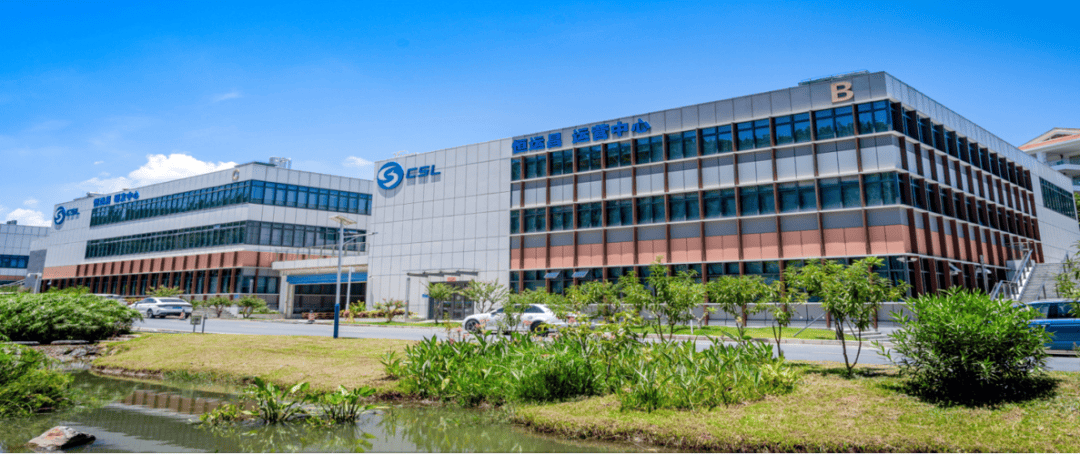
展示科创板市场投资机遇及中国资产潜力 上交所举办科创板六周年线上国际路演活动
Zheng Quan Shi Bao Wang· 2025-08-20 10:08
Group 1 - The core viewpoint of the news is the successful online roadshow event organized by the Shanghai Stock Exchange to promote the understanding of the Sci-Tech Innovation Board (STAR Market) among international investors, highlighting its development and investment opportunities [1][2] - The STAR Market has become the preferred listing venue for "hard technology" companies in China, with over 80% of listed companies in emerging industries such as new generation information technology, biomedicine, and high-end equipment manufacturing [1][2] - The event featured discussions between founders and CEOs of four STAR Market companies and international investors, showcasing the unique value of the STAR Market in fostering hard technology innovation [2] Group 2 - The Shanghai Stock Exchange presented the achievements of the STAR Market in supporting technological innovation and guiding capital towards "hard technology" enterprises over the past six years [2] - The introduction of the "1+6" policy measures by the China Securities Regulatory Commission aims to further deepen reforms and enhance the STAR Market's demonstration effect [2] - Future initiatives will focus on accelerating the implementation of various reform measures, enhancing the attractiveness and competitiveness of the product system, and improving services for international investors [2]
参与“新质生产力”发展浪潮,长城上证科创板综合指数基金发行
Xin Lang Ji Jin· 2025-08-20 10:07
Group 1 - The A-share Sci-Tech Innovation Board has seen a significant increase, with the Shanghai Sci-Tech Innovation Board Composite Index rising nearly 30% year-to-date as of August 19 [1] - The upward trend in the Sci-Tech Innovation Board is viewed as a positive vote by the capital market on the "Keto valuation" logic, indicating strong market confidence in the "hard technology" sector [1][4] - The current transformation of China's digital economy is moving from a broad "Internet+" phase to a new stage led by artificial intelligence, which is expected to benefit the Sci-Tech Innovation Board [1][5] Group 2 - As of the end of 2024, there are 581 companies listed on the Sci-Tech Innovation Board, with a total market capitalization exceeding 6.34 trillion yuan [2] - The Sci-Tech Innovation Board Composite Index, launched on January 20, 2024, aims to comprehensively reflect the performance of the Sci-Tech Innovation Board ecosystem [2] - The index includes stocks from the Sci-Tech Innovation Board and depositary receipts from red-chip companies, excluding ST and *ST securities, providing a strong representation of the overall development of China's technology innovation industry [2][3] Group 3 - The industry distribution of the Sci-Tech Innovation Board shows a "one strong, many strong" characteristic, with the electronics sector, particularly semiconductors, accounting for approximately 41.1% [3] - The average annual growth rate of R&D expenditure for the index constituents over the past three years is 27%, with projected net profit growth rates of 67.6% and 37.8% for 2024-2026 [3] - The Sci-Tech Innovation Board has demonstrated stronger performance and greater elasticity during market recovery phases, outperforming major broad-based indices and the ChiNext Index [3][6] Group 4 - Since its inception in 2019, the Sci-Tech Innovation Board has been a testing ground for capital market reforms, with various measures introduced to facilitate financing for technology innovation enterprises [4] - The board has seen a significant presence of emerging industries, with over 80% of companies in new generation information technology, biomedicine, and high-end equipment manufacturing [5] - The long-term investment value of the Sci-Tech Innovation Board is becoming more apparent, with opportunities arising from the rise of domestic innovative technologies [5]
半导体产业链全线反弹,科创板50指数涨近3%,科创板50ETF(588080)盘中成交额突破10亿元
Mei Ri Jing Ji Xin Wen· 2025-08-20 07:08
Group 1 - The core viewpoint of the article highlights the significant rise in the STAR Market 50 Index, which increased by 2.9%, driven by strong performances from constituent stocks such as Chipone Technology, which hit a 20% limit up, and Cambricon Technologies, which rose over 7% [1] - The STAR Market 50 Index consists of 50 stocks with large market capitalization and good liquidity, prominently featuring "hard technology" leaders, with over 60% of its composition in the semiconductor sector, and a combined over 75% in semiconductors, medical devices, software development, and photovoltaic equipment [1] - Huafu Securities indicates that the global semiconductor materials market is continuously expanding, with an expected increase in the domestic semiconductor materials localization rate, suggesting a favorable investment window for domestic semiconductor materials [1] Group 2 - The STAR Market 50 ETF (588080) has a low management fee rate of only 0.15% per year, which can help investors to cost-effectively allocate resources in the technology sector [1]
20cm速递|科创创业ETF(588360)涨超1.2%,科技成长板块估值修复引关注
Mei Ri Jing Ji Xin Wen· 2025-08-20 07:06
Core Viewpoint - The high prosperity index continues to outperform the Shanghai Composite Index, indicating a relative advantage for high-prosperity investments, similar to the bullish market environment of 2019-2020 [1] Group 1: Investment Trends - Small-cap growth (5.07%), growth (5.04%), and Guozheng growth (3.75%) lead the style index, reflecting a preference for growth sectors among investors [1] - The technology sectors, particularly telecommunications (7.66%) and electronics (7.02%), show outstanding performance, indicating a sustained structural market trend [1] Group 2: ETF and Index Performance - The Science and Technology Innovation ETF (588360) tracks the Science and Technology Innovation 50 Index (931643), with a daily fluctuation limit of 20% [1] - The index selects 50 stocks with larger market capitalization and better liquidity from the Sci-Tech Innovation Board, covering hard technology fields such as semiconductors, medical devices, and software development [1] - The constituent stocks of the index exhibit high R&D investment characteristics and a high industry concentration, particularly with a significant weight in the semiconductor sector, reflecting the overall performance of quality listed companies in the hard technology field on the Sci-Tech Innovation Board [1]

A股翻绿,高位股集体大跌,泡泡玛特港股大涨超8%创新高
21世纪经济报道· 2025-08-20 03:58
Market Overview - On August 20, the A-share market experienced fluctuations, with the ChiNext index leading the decline. The Shanghai Composite Index fell by 2.07 points, a decrease of 0.06%, closing at 3725.22 points. The Shenzhen Component dropped by 77.87 points, down 0.66%, closing at 11743.76 points. The ChiNext index decreased by 44.6 points, down 1.71%, closing at 2557.14 points. The CSI 300 index fell by 5.0 points, down 0.12%, closing at 4218.37 points [1]. - A total of 3400 stocks in the market declined, with trading volume exceeding 1.5 trillion yuan [2]. Sector Performance - Consumer stocks, particularly in the liquor sector, rebounded, with JiuGuiJiu achieving two consecutive trading limits. Sectors such as liquor, non-ferrous metals, tourism, and AI glasses saw significant gains, while sectors like data center power supply, Huawei Ascend, software development, and CRO experienced declines. Non-ferrous metal stocks showed strong fluctuations, with Luoping Zinc Electric hitting the trading limit. AI glasses stocks were active, with Kosen Technology achieving four consecutive trading limits. Conversely, high-priced stocks collectively fell, with companies like Huasheng Tiancai hitting the trading limit [3]. Foreign Investment Trends - Recent trends indicate that foreign capital is increasing its holdings in A-shares, raising questions about the continuation of the bull market. The Shanghai Composite Index has been steadily rising, surpassing 3700 points, and reached a ten-year high on August 18. The rapid growth of margin trading balances suggests that leveraged funds are entering the market, providing strong financial support for the market's rise. Analysts from JMC Capital and Morgan Stanley predict that foreign capital inflows may accelerate due to attractive valuations in the Chinese stock market and expectations of interest rate cuts in the U.S. [5][6]. Company Spotlight: Pop Mart - Pop Mart's stock surged over 8%, reaching a new high of over 300 Hong Kong dollars. The company reported a revenue of 13.88 billion yuan for the first half of 2025, a year-on-year increase of 204.4%, and an adjusted net profit of 4.71 billion yuan, up 362.8%. The founder, Wang Ning, stated that the company achieved its best performance ever, with full-year revenue expected to be no less than 30 billion yuan. The company opened 12 new offline stores, bringing the total to 443, with offline revenue of 5.08 billion yuan, a 117.1% increase year-on-year. Online revenue reached 2.94 billion yuan, up 212.2%, with Douyin contributing 560 million yuan, a 168.6% increase [9][11].


上海加快推动“AI+制造”发展,科创50ETF(588000)昨日吸金8495万元
Mei Ri Jing Ji Xin Wen· 2025-08-20 02:45
Group 1 - The core viewpoint of the news highlights the mixed performance of the stock indices, with the Sci-Tech Innovation 50 ETF (588000) showing a slight increase of 0.17% as of 10:03 AM, supported by a net inflow of 84.95 million yuan yesterday [1] - The Shanghai Municipal Government has released an implementation plan to accelerate the development of "AI + manufacturing," aiming to enhance the level of intelligent development in the manufacturing sector over the next three years [1] - The plan includes goals such as enabling 3,000 manufacturing enterprises to adopt intelligent applications, creating 10 industry benchmark models, and establishing around 10 "AI + manufacturing" demonstration factories [1] Group 2 - According to a report from China International Capital Corporation (CICC), the rapid iteration of AI technology is leading to a faster release of more capable products by major model manufacturers globally [2] - The demand for computing power is continuously increasing due to accelerated consumption of tokens on the user side, with the anticipated release of GPT-5 expected to trigger a new focus in the market [2] - The Sci-Tech Innovation 50 Index has a concentrated industry distribution, with 63.74% in the electronics sector and 11.78% in the pharmaceutical and biotechnology sector, indicating a high content of hard technology [2]