资产配置

Search documents
达利欧:现在就像70年代,投资者应持有更多黄金,承认美股有些泡沫
美股IPO· 2025-10-08 01:23
达利欧将当前的经济环境比作20世纪70年代初,当时美国通胀高企、政府支出庞大、债务负担沉重,导致人们对纸质资产和法定货币的信心动摇。他表 示,即使黄金价格已飙升至每盎司4000美元以上的历史新高,投资者仍应将其投资组合中多达15%的资产配置在黄金上。对于近期美国股市的涨势,达 利欧说,觉得现在的市场有些泡沫的味道,但他不会去做空超级规模的科技巨头。 周二,桥水基金(Bridgewater Associates)创始人达利欧表示,现在就像20世纪70年代,投资者应该比平常持有更多的黄金。即使黄金价格已飙升至 每盎司4000美元以上的历史新高,投资者仍应将其投资组合中多达15%的资产配置在黄金上。黄金无疑比美元更具避险属性。 达利欧周二在康涅狄格州格林尼治的格林尼治经济论坛(Greenwich Economic Forum)上发言。当被问及他是否同意城堡投资(Citadel)创始人Ken Griffin的观点——即黄金上涨反映出市场对美元的担忧时,达里欧表示: 黄金是投资组合中极佳的分散化资产。从战略性资产配置的角度来看,你可能会希望将大约 15% 的资产配置在黄金上。因为当投资组合中传统资产表现下滑时, 黄金往 ...

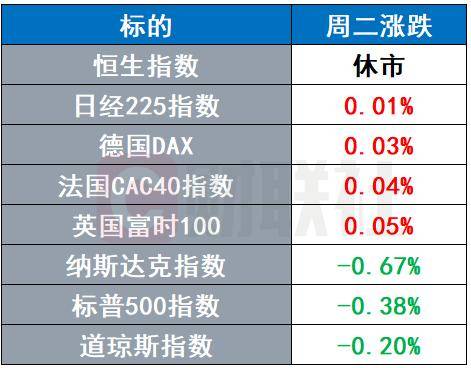
黄金再创历史新高 强生爽身粉致癌案又迎创纪录裁决|环球市场
Sou Hu Cai Jing· 2025-10-08 01:01
Market Overview - Major US indices collectively declined, breaking the S&P 500's seven-day upward streak due to setbacks in AI narratives [1] - The Nasdaq index fell by 0.67%, the S&P 500 by 0.38%, and the Dow Jones by 0.20% [2] Commodity Performance - Spot gold reached a historic high of $3992 per ounce, nearing the $4000 milestone, while New York Comex gold futures surpassed $4000 [2] - High demand for gold ETFs and potential purchases by global central banks led Goldman Sachs to raise its 2026 gold price forecast from $4300 to $4900 [2] - In contrast, spot silver and Bitcoin weakened, likely due to profit-taking pressures [3][4] Economic Reports and Predictions - The World Trade Organization (WTO) revised its 2025 global goods trade growth forecast upward to 2.4% but significantly lowered the 2026 forecast to 0.5% due to weak global economic recovery and US tariff policies [5] - Ray Dalio suggested investors allocate 15% of their portfolios to gold, comparing the current situation to the early 1970s [5] Company News - Dell raised its growth forecast for AI server sales, expecting a 7% to 9% annual growth rate over the next four years, with adjusted earnings per share growth projected at 15% or higher [6] - Tesla's stock dropped 4.45% following the announcement of a "simplified version" of its Model 3/Y, erasing previous gains [5][6] Legal Issues - Johnson & Johnson was ordered to pay a record $9.66 billion in a talcum powder cancer case, marking the highest single-user compensation in such lawsuits [7]
达利欧:当前市场重现1970年代危机模式,黄金配置应高达15%
Jin Shi Shu Ju· 2025-10-07 22:44
Group 1 - Ray Dalio asserts that gold is "undoubtedly" a safer hedge asset than the US dollar, with current gold price surges reminiscent of the high inflation and economic turmoil of the 1970s [1][2] - Dalio suggests that a strategic asset allocation should include approximately 15% gold, contrasting with traditional financial advisors who recommend a 60/40 stock-bond allocation [1] - Jeffrey Gundlach, CEO of DoubleLine Capital, also advocates for a high allocation of gold in investment portfolios, suggesting up to 25% due to inflation pressures and a weakening dollar [1] Group 2 - Gold is highlighted as a unique asset that does not rely on others' payment commitments, making it valuable during currency devaluation and geopolitical uncertainty [2][3] - Since late July, gold prices have increased over 20%, reaching around $4000 per ounce, driven by risks of US government shutdown and speculation about the Federal Reserve's interest rate decisions [3] - Dalio emphasizes that gold serves as a strong store of value amid rising government debt, geopolitical tensions, and declining confidence in fiat currency stability [3] Group 3 - Dalio draws parallels between the current gold price recovery and the early 1970s, noting that both gold and stocks rose simultaneously during that period [3] - Concerns are raised regarding the recent surge in the US stock market, with Dalio indicating signs of a bubble, particularly in the artificial intelligence sector [3] - Despite valuation concerns, Dalio remains optimistic about opportunities in AI, particularly for companies that can achieve efficiency gains and those providing AI technology platforms [4] Group 4 - Dalio expresses a positive outlook on the Chinese market but notes that a larger portion of funds is currently allocated in the US [4]
手握100万,买房、黄金还是投资自己更划算
Sou Hu Cai Jing· 2025-10-07 18:59
Core Insights - The current low interest rates make traditional bank savings ineffective for wealth preservation, leading to a need for alternative investment strategies [1][10] - Investing in gold is seen as a hedge against economic downturns, but it comes with high volatility and additional costs that can affect overall returns [2] - Real estate is traditionally viewed as a stable investment, but high entry costs and low liquidity can pose significant challenges [3] - Investing in personal development and skills can yield substantial long-term returns, often surpassing traditional asset growth [5][11] - A diversified investment strategy is recommended to balance risk and growth potential, avoiding concentration in any single asset class [6][10] Investment Strategies - Bank savings are becoming less viable due to low interest rates, which do not keep pace with inflation [1][10] - Gold is a viable option for wealth preservation but requires careful consideration of market fluctuations and transaction costs [2] - Real estate investments can be burdensome due to high costs and low liquidity, making them less attractive in a slowing market [3] - Investing in oneself through education and skill development is highlighted as a high-potential strategy for long-term wealth accumulation [5][11] - A suggested allocation strategy includes investing in gold, stable funds, and personal development to create a resilient financial structure [6][10]
黄金增持量为何降至“新低”?
Sou Hu Cai Jing· 2025-10-07 12:45
Core Insights - China's foreign exchange reserves reached $3338.658 billion by the end of September 2025, an increase of $16.504 billion from the end of August 2025, marking two consecutive months of growth [2][3] - The increase in foreign exchange reserves is attributed to rising global financial asset prices and the impact of macroeconomic data and monetary policies from major economies [4] - In the first three quarters of 2025, China's foreign exchange reserves increased by a total of $136.3 billion, with significant growth in the first half of the year [5] Group 1 - The increase in foreign exchange reserves is influenced by the slight fluctuations in the US dollar index and the overall rise in global financial asset prices [4] - The People's Bank of China has been increasing its gold reserves for 11 consecutive months, although the amount added in September was the lowest since November 2024 [7][8] - The current level of foreign exchange reserves is considered high, and there may be a possibility of implementing a certain scale of foreign exchange net selling to maintain reserves within a reasonable range [4][5] Group 2 - The increase in foreign exchange reserves is supported by a stable Chinese economy and improvements in high-quality development, which contribute to the stability of the reserves [5] - The diversification of trade partners and the optimization of export product structure have helped stabilize cross-border capital flows [5] - The current gold reserves account for 7.7% of China's official international reserve assets, which is significantly lower than the global average of around 15%, indicating a need for continued gold accumulation [8]

投资,不急,才更有乐趣
雪球· 2025-10-07 04:13
以下文章来源于终身黑白 ,作者终身黑白投资感悟 终身黑白 . 畅销书《行稳致远,价值投资的底层逻辑》作者,雪球网2024年十大影响力用户,聊聊投资和人生,适 度分散 长期持有 选优秀的企业 做时间的朋友 1 、愿三月有耕耘,九月有惊讶 今天是国庆节,先祝大家国庆快乐,假期就好好休息,优秀的企业不用我们天天费心,他自己会 照顾好自己。 什么时候你发现自己持有的企业一周,一月不看,你也并不着急,那么证明你选对了企业,选到 了确实是自己认可的那些企业,也找对了方法,能基于长期价值。 昨天的雪球文章下收到这样一篇评论 来源:雪球 《皮囊》里有句话: 有人说生命始于40岁,也有人说是50岁。其实都不对,生命应该始于你不再 取悦围观者的那一天。 ↑点击上面图片 加雪球核心交流群 ↑ 风险提示:本文所提到的观点仅代表个人的意见,所涉及标的不作推荐,据此买卖,风险自负。 作者:终身黑白 确实啊,不知不觉我们都走过了艰难的阶段,获得了不错的收获。 "愿三月有耕耘,九月有惊讶",这是《岁月里的话》这首歌的一句歌词。 初看歌词,可能有些不理解,如果说有惊讶的收成需要祝愿。那么,播种有什么好祝愿的,这不 是应该做的事吗?没见过哪个农 ...

为啥有钱人开始收购步梯房?内内行人说出实情,我恍然大悟
Sou Hu Cai Jing· 2025-10-06 07:47
Core Insights - The article discusses a shift in real estate investment focus towards older, low-rise buildings in city centers, which are perceived as valuable urban "equity" rather than mere physical properties [1][3][10] Group 1: Investment Perspective - Investors are purchasing not just buildings, but the core, scarce "equity" of the city, as these older low-rise buildings occupy prime locations that cannot be replicated [3][5] - The value of properties in top school districts with comprehensive amenities is significantly higher than that of luxury villas in suburban areas, emphasizing the importance of location [5][8] - These properties are seen as resilient assets with minimal speculative risk, having undergone rigorous valuation over time [5][8] Group 2: Lifestyle and Experience - The modern emphasis on efficiency has led to a loss of personal connection with time, and owning a low-rise building allows for a more mindful and connected lifestyle [5][6] - The experience of walking up stairs rather than using elevators fosters a deeper appreciation for life and community interactions [5][6] Group 3: Risk Management - Low-rise buildings present a simpler living experience with lower maintenance risks compared to high-rise apartments, which rely on complex systems that can fail [6][8] - These properties serve as a stabilizing asset in investment portfolios, providing a "safe harbor" during market fluctuations due to their enduring value [8][10]
现货黄金首破3900美元 再创历史新高 多家珠宝店开启涨价
2 1 Shi Ji Jing Ji Bao Dao· 2025-10-06 01:06
Core Viewpoint - The recent surge in gold prices is primarily driven by geopolitical tensions and the partial government shutdown in the U.S., with spot gold prices surpassing $3,900 per ounce, marking a historical high [2][3]. Group 1: Gold Price Trends - Gold prices have recently increased, with a notable rise of 0.62% on October 6, reaching a new record high [2]. - The price of domestic gold jewelry has also risen, with brands like Chow Tai Fook and others adjusting their prices upwards due to the international gold price increase [4]. - Deutsche Bank attributes the record high gold prices to heightened risk aversion among investors, who are concerned about significant downside risks in the stock market [5]. Group 2: Market Predictions and Analysis - Goldman Sachs predicts that gold prices could reach $4,000 per ounce by 2026 under baseline scenarios, and potentially $4,500 per ounce under tail risk scenarios [6]. - The recent Federal Reserve interest rate cuts are expected to support long-term gold price increases, with asset management firms increasingly incorporating gold into their investment strategies [6]. Group 3: Institutional Investment and Regulatory Developments - The National Financial Regulatory Administration has initiated pilot programs allowing select insurance companies to invest in gold, potentially injecting around 200 billion yuan into the gold market [7]. - The rise in gold prices has created favorable conditions for gold companies to enter capital markets, exemplified by Zijin Mining's recent stock performance and its inclusion in the Hang Seng Composite Index [7].
金价触及3920关口!FOMO心态爆棚,数万亿美元将涌入?
Jin Shi Shu Ju· 2025-10-05 23:28
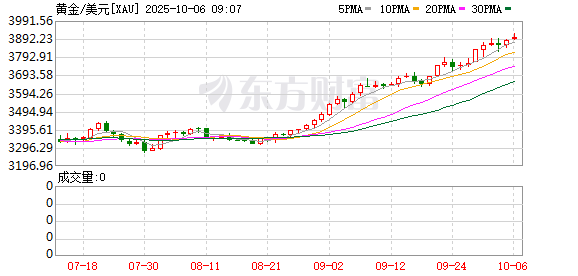
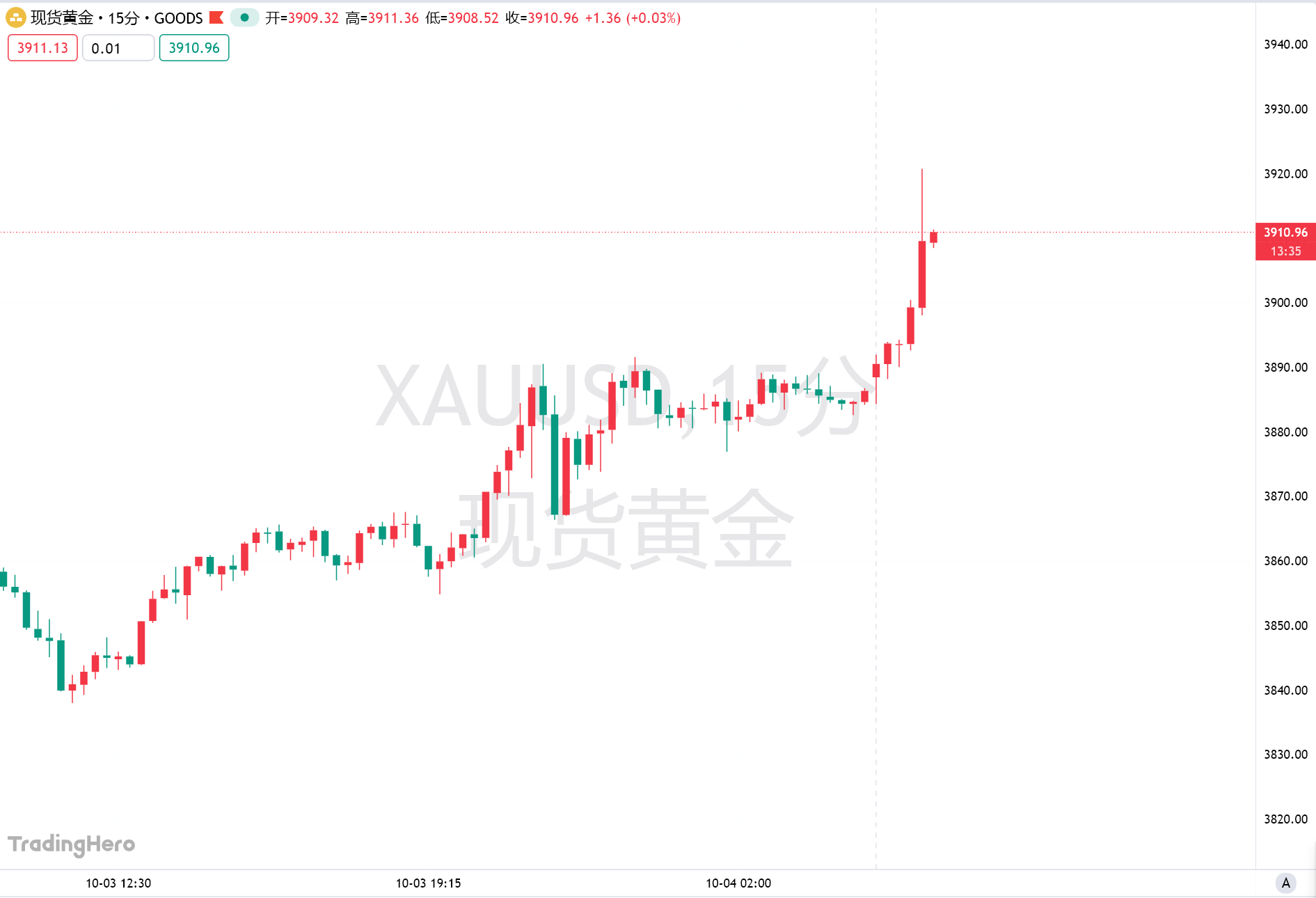
在美国总统特朗普发起的贸易战引发避险资产抢购潮、美元大幅下跌后,金价今年已飙升近50%,屡屡刷新历史高位。 周一,由于美国政府持续关门带来的不确定性加剧以及降息预期升温,现货黄金开局维持强势,一度向上触及3920美元/盎司,再创历史新高。此时距离首 次突破3800美元关口仅不到10天。 黄金正经历自20世纪70年代以来最凶猛的涨势,而"黄金版错失恐惧"(gold-plated FOMO)则在火上浇油——投资者既担心错过收益,又忧虑通胀风险, 纷纷将这一贵金属纳入投资组合。 即便今年夏季由关税引发的金融市场波动有所缓解,金价涨势仍在加速:仅9月单月涨幅就接近12%,创下2011年以来的最大单月涨幅。 资产管理公司表示,多年来各国央行储备管理者持续大举购金,如今更多类型的投资者也纷纷加入这波涨价热潮,成为推动金价上涨的关键催化剂。 "这就是黄金版的错失恐惧,"百达资产管理公司(Pictet Asset Management)首席策略师卢卡·保利尼(Luca Paolini)表示。他提到,这种"错失恐惧"的情绪 也推动了大型科技股及信贷等其他市场的大幅上涨。 美国银行金属研究主管迈克尔·威德默(Michael Wi ...

每3份港险就有1份卖内地客,港险是馅饼还是陷阱?
Sou Hu Cai Jing· 2025-10-04 02:01
Core Viewpoint - The surge in demand for Hong Kong insurance among mainland Chinese consumers is driven by the search for higher returns amid declining domestic interest rates, despite criticisms labeling it as a "carefully crafted scam" [4][5][12]. Group 1: Market Trends - During the National Day holiday, there was a notable increase in mainland customers traveling to Hong Kong for insurance purchases, with a significant portion of new policies attributed to these clients [2][4]. - The Hong Kong insurance market is projected to reach new heights in 2024, with new policy premiums expected to hit HKD 219.8 billion, a 22% increase from 2023, with mainland clients contributing HKD 62.8 billion, accounting for nearly 30% of the total [4][7]. Group 2: Consumer Behavior - Many mainland consumers, facing asset scarcity and low returns from traditional savings and investment options, view Hong Kong insurance as a stable investment choice with higher expected returns [5][8]. - Younger generations, including those born in the 1990s, are increasingly considering Hong Kong insurance as an alternative to real estate and stock market investments [5]. Group 3: Product Characteristics - Savings-type insurance dominates the market, making up 62.1% of new policies, with whole life insurance accounting for 58.5% and savings life insurance for 3.6% [7]. - The appeal of Hong Kong insurance lies in its higher expected returns, with many products offering rates around 6.5%, compared to the average 2% in mainland savings insurance [8][19]. Group 4: Risks and Criticisms - Critics, including Professor Lang Xianping, argue that the high expected returns are often unrealistic, with actual returns frequently falling short of advertised figures [12][13]. - Approximately 40% of Hong Kong's dividend insurance products failed to meet their 100% return targets in 2023, indicating potential issues with long-term payout capabilities [15]. Group 5: Investment Suitability - Hong Kong insurance is particularly suitable for investors seeking long-term stable returns, especially for purposes like retirement planning and children's education funds [19][22]. - Families looking for global asset allocation options may find Hong Kong insurance appealing due to its multi-currency support and potential for wealth transfer [22][23]. Group 6: Selection Criteria - Investors are advised to consider the product's return structure, company strength, and historical dividend performance when selecting Hong Kong insurance [24][25]. - Awareness of information asymmetry and market overheating risks is crucial, as many consumers may be misled by unlicensed agents [28][30].