资产配置

Search documents
关于保险资管践行“长钱长投”,业内人士发声
Zhong Guo Zheng Quan Bao - Zhong Zheng Wang· 2025-09-28 16:56
Core Viewpoint - The conference highlighted the need for insurance institutions to adapt their asset allocation strategies in a low interest rate environment while maintaining a long-term investment approach to support the high-quality development of the real economy [1][3]. Group 1: Market Environment and Confidence - Insurance institutions are experiencing increased confidence due to positive changes in the capital market since September of last year, with notable improvements in market performance despite economic slowdowns [4]. - Key factors contributing to this confidence include the rapid development of technology industries driven by artificial intelligence, expectations of intensified reforms during the 14th Five-Year Plan, and the resilience of exports amid global economic uncertainties [4]. Group 2: Asset Allocation Strategies - The risk appetite of insurance institutions is rising, necessitating adjustments in asset allocation strategies to align with the current market environment [5][6]. - The allocation structure is shifting towards a more diversified approach, with an emphasis on both fixed income and equity assets, while maintaining a cautious stance on fixed income investments [7]. - Insurance funds have increased their equity investments, with over 8% of investments in stocks this year, reflecting a significant rise from the beginning of the year [7]. Group 3: Alternative Investments and Long-term Strategies - There is a growing focus on diversifying income sources through alternative investments to extend duration, smooth volatility, and enhance yield flexibility [8]. - The appeal of REITs is highlighted as they offer predictable cash flows in a low interest rate environment, making them attractive for insurance capital [8]. Group 4: Investment Capability Enhancement - The changing investment environment demands improved asset identification and operational management capabilities from insurance institutions [9]. - A shift from a credit-focused approach to a more asset-understanding capability is essential for long-term stability and risk management [9]. - The industry consensus emphasizes the importance of deepening value investment and focusing on high-quality growth sectors such as new energy, technology, and advanced manufacturing [9].


国泰海通|策略:资产概览:商品表现强于股债——资产配置全球跟踪2025年9月第4期
国泰海通证券研究· 2025-09-28 12:34
Group 1: Market Overview - Global equity indices experienced a pullback, with the MSCI Global Index declining by 0.5% after three consecutive weeks of gains [2] - Emerging markets saw a greater decline compared to developed markets, with Asian markets underperforming Europe and North America [2] - A-shares performed well, particularly the Sci-Tech 50 index which surged by 6.5%, while the ChiNext Index and CSI 300 rose by 2.0% and 1.1% respectively [2] Group 2: Bond Market - The Chinese bond market showed a "bear flattening" trend, with the yield curve shifting upward and the 10Y-2Y spread narrowing [3] - In the U.S. bond market, the yield curve also moved upward, indicating a "bear steepening" trend, with the 10Y-3M spread widening [3] - As of September 27, the probability of a 25 basis point rate cut in October dropped to 87.7%, with expectations for two rate cuts this year totaling 50 basis points [3] Group 3: Commodity and Currency - Commodity prices overall increased, with the South China and CRB commodity indices rising by 0.2% and 2.0% respectively [4] - COMEX silver has seen a year-to-date increase of 59.6%, marking a significant rise [4] - The U.S. dollar index rose by 0.6%, while major currencies like the euro, pound, and yuan depreciated against the dollar [4]

“9·24”行情一周年:投资者数量大幅增长, 券商财富管理加速转型
Zhong Guo Ji Jin Bao· 2025-09-28 11:08
Group 1 - The core viewpoint of the article highlights the significant growth in the number of investors in the A-share market following the "9·24" policy announcement, with new account openings expected to exceed 30 million within a year [2] - The transformation of brokerage wealth management is accelerating to match the increasing number of investors and their evolving needs, shifting from a channel-based model to a customer-centric, diversified income approach [2][5] - The capital market is transitioning from a "financing priority" model to a "balanced investment and financing" cycle, with a notable increase in net profits for listed companies and a growing awareness of shareholder returns [3][4] Group 2 - Individual investors are increasingly moving from "trading speculation" to "asset allocation," showing a preference for stable products and index-based tools like ETFs [3][4] - The investor demographic is becoming younger, with new investors primarily using the internet and social media for information, leading to a rise in online channels for customer engagement [4] - Brokerages are facing challenges in customer acquisition and retention due to the shift in investor needs from single transaction services to comprehensive financial planning [5][6] Group 3 - Brokerages are adapting to the online customer acquisition model, collaborating with major internet companies and leveraging digital platforms to attract new clients [6][8] - The demand for comprehensive financial planning services, including retirement and insurance, is exceeding expectations, prompting brokerages to enhance their advisory capabilities [8][9] - To differentiate themselves in a competitive market, brokerages are focusing on tailored services and innovative pricing strategies to avoid price wars [10]

“9·24”行情一周年:投资者数量大幅增长, 券商财富管理加速转型
中国基金报· 2025-09-28 11:06
Core Insights - The article discusses the significant changes in the Chinese capital market one year after the "9·24" policy announcement, highlighting a substantial increase in investor numbers and a shift in brokerage wealth management strategies [2][4]. Investor Growth - A total of 28.746 million new A-share accounts were opened from October last year to August this year, with projections suggesting that the total could exceed 30 million by the end of September [2]. - The increase in investor numbers is accompanied by a transformation in investor behavior, moving from "trading speculation" to "asset allocation," with a notable preference for stable products and index-based tools like ETFs [3][5]. Market Ecology Changes - The capital market is transitioning from a "financing priority" model to a "balanced investment and financing" cycle, with listed companies reporting a net profit of 3 trillion yuan in the first half of the year, a 2.54% year-on-year increase [4]. - The total cash dividends paid by listed companies reached 649.7 billion yuan by August 31, indicating a growing awareness of shareholder returns [4]. Institutional Investment Trends - There is a noticeable increase in the proportion of medium- to long-term funds, with foreign investment and institutional participation becoming more prominent [4]. - Personal investors are increasingly adopting a more rational investment approach, focusing on diversified asset allocation rather than chasing hot stocks [5]. Brokerage Transformation - Brokerages are facing new challenges in customer acquisition and service delivery, necessitating a shift from traditional sales models to comprehensive financial planning [7][9]. - The need for digital transformation is emphasized, with brokerages leveraging online platforms and partnerships with major tech companies to enhance customer engagement [8]. Service Differentiation - To combat industry homogenization, brokerages are focusing on creating differentiated service capabilities, such as tailored financial products and personalized investment advice [10]. - The article highlights the importance of building a professional advisory system to support client needs and enhance service efficiency through digital tools [10].

关键数据突然反转!行情可能要变了?
大胡子说房· 2025-09-28 10:31
Core Viewpoint - Recent economic data from the U.S. indicates a potential shift in the economic landscape, with improved employment figures and GDP growth, while inflation remains a concern, suggesting that the Federal Reserve may reconsider its interest rate policies [1][2][3]. Economic Data Summary - Initial jobless claims in the U.S. were reported at 218,000, lower than the expected 235,000 and the previous month's 232,000, indicating a potential improvement in employment conditions [1]. - The actual GDP for Q2 was reported at 3.8%, significantly above the market expectation of 3.3%, suggesting stronger economic growth than previously anticipated [1]. - The PCE price index for the month showed a 0.2% increase, aligning with market expectations, indicating that inflation has not worsened but also has not improved significantly [1]. Federal Reserve Implications - The recent data signals to the Federal Reserve that there may not be an immediate need to lower interest rates in October, contrasting previous expectations of rate cuts [2][3]. - There are concerns regarding the authenticity of the employment data, with suggestions that it may be inflated to prevent the Fed from continuing its rate cuts, reflecting the influence of Wall Street interests [2][3]. Debt and Economic Strategy - The U.S. is facing a significant debt burden, with total global debt reaching a record $337.7 trillion, and the U.S. short-term debt constituting 20% of its total debt, indicating a reliance on short-term borrowing [6][8]. - The necessity for the U.S. to lower interest rates is underscored by the need to manage its debt effectively, as high-interest rates could exacerbate the debt situation [8][9]. Market Outlook - Despite potential short-term market volatility, the expectation remains that the U.S. will continue to pursue a path of lower interest rates, which could benefit non-dollar assets, particularly in emerging markets [9]. - The current economic conditions present an opportunity for investors to capitalize on the anticipated appreciation of assets in the context of ongoing U.S. monetary policy adjustments [9].

太火爆!“部分产品推出即售罄”
Di Yi Cai Jing Zi Xun· 2025-09-28 09:12
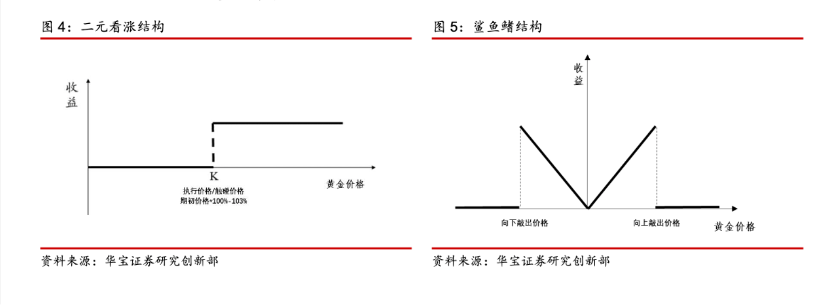
Core Viewpoint - The rising gold prices have led to a surge in gold investment products, which are outperforming traditional financial products in terms of returns [2][10]. Group 1: Market Trends - As of September 28, there are 48 existing investment products linked to gold, with 16 of them being newly issued this year by various financial institutions [3]. - The issuance of gold-linked investment products has accelerated, with five new products launched in September alone [3][4]. - The annualized returns for gold investment products have been concentrated between 2.00% and 4.00%, significantly outperforming similar products [10]. Group 2: Product Characteristics - Recent gold investment products are diversifying beyond traditional gold price-linked models to include structured products with varying return structures [4][5]. - Two main types of gold-linked investment products have emerged: "fixed income + gold" and structured products linked to gold derivatives [3][5]. - The investment scope has expanded to include gold ETFs and gold-related stocks, enhancing the risk-return profile of these products [7]. Group 3: Investor Behavior - There is a growing demand for gold investment products, leading to a situation where many products are sold out shortly after launch [8]. - Investors are increasingly seeking higher returns, with many shifting from traditional fixed-income products to riskier gold-linked investments [8][10]. - Some investment products have reached their return targets early, prompting early termination and profit-taking [10]. Group 4: Future Outlook - Despite the current high prices, analysts remain optimistic about gold's long-term prospects due to geopolitical tensions and central bank purchasing [12]. - The market anticipates potential further interest rate cuts by the Federal Reserve, which could support gold prices in the medium to long term [11][12]. - Analysts predict that gold prices will remain high but may experience increased volatility in the near future [12].

太火爆!“部分产品推出即售罄”
第一财经· 2025-09-28 09:06
Core Viewpoint - The article highlights the increasing popularity and performance of gold investment products in a declining yield environment for traditional financial products, with many investors experiencing higher returns from gold investments compared to other asset classes [3][5]. Group 1: Market Trends - As of September 28, there are 48 existing financial products with "gold" in their names, with 16 of them being newly issued this year by various financial institutions [6]. - The issuance of gold-related financial products has accelerated, with five new products launched in September alone [6][11]. - The annualized returns for gold investment products have been reported between 2.00% and 4.00%, outperforming traditional fixed-income products [13]. Group 2: Product Characteristics - Recent gold investment products are diversifying beyond traditional gold price-linked models to include structured products with varying risk-return profiles, such as "fixed income + gold" and structured products linked to gold derivatives [7][9]. - The introduction of products like the "gold shark fin" structured financial product allows investors to choose based on their expectations of gold price movements, enhancing flexibility and risk management [7][10]. Group 3: Investor Behavior - There is a growing demand for gold investment products, leading to a situation where many products are sold out shortly after launch, indicating a "quota shortage" [11]. - Investors are increasingly seeking higher returns, with many turning to gold products as traditional fixed-income yields fall below 2% [11][13]. Group 4: Future Outlook - Despite the current high prices of gold, experts suggest that gold still holds value as a hedging tool in investment portfolios, although large-scale allocations may not be advisable at this stage [14][15]. - Long-term forecasts remain optimistic for gold prices, supported by factors such as potential further interest rate cuts by the Federal Reserve and ongoing geopolitical tensions [15].

黄金理财加速上新、额度遭抢购,投资者还能高位上车吗?
Di Yi Cai Jing· 2025-09-28 08:07
Core Insights - The demand for gold investment products has surged, with many investors reporting high returns, particularly in a declining yield environment for traditional financial products [1][2][3] Group 1: Market Trends - Gold investment products have shown annualized returns between 2.00% and 4.00%, significantly outperforming similar products [2][9] - The number of gold-themed investment products has increased, with 48 products currently available, and 16 of these being newly issued this year [3][4] - The issuance of gold investment products has accelerated, with five new products launched in September alone [2][3] Group 2: Product Characteristics - Recent gold investment products are diversifying beyond traditional gold price-linked models to include structured products and various asset classes like gold ETFs and gold stocks [4][6] - New product structures include "fixed income + gold" and structured products linked to gold derivatives, enhancing flexibility and risk mitigation [4][6] - The market has seen a trend towards products that allow investors to choose structures based on their expectations of gold price movements, such as binary call options and shark fin structures [4][6] Group 3: Investor Behavior - There is a growing interest among investors to shift towards gold investment products as traditional fixed-income products yield lower returns [8][9] - Some investors have already realized profits from gold investment products, with certain products reaching their target returns ahead of schedule [9] - The current market conditions have led to a "quota shortage" for popular gold investment products, indicating high demand [8] Group 4: Future Outlook - While short-term prospects for gold prices may involve volatility, long-term outlooks remain optimistic due to factors like geopolitical tensions and central bank gold purchases [10][11] - Analysts predict that gold prices will continue to be supported in the medium to long term, despite potential adjustments due to market expectations [11]
A股高位震荡不要怕!美元贬值周期开启,黄金投资者笑到最后?
Sou Hu Cai Jing· 2025-09-27 16:21
Group 1 - Gold prices have surpassed $3,809, while silver has reached a 14-year high with an annual increase of over 40% [1][5] - The A-share market experienced a dramatic reversal on September 23, indicating that investors are waiting for the right opportunity, as evidenced by a trading volume of 2.52 trillion [3] - The strong performance of gold and silver is attributed to the Federal Reserve's interest rate cuts, which decrease the attractiveness of the dollar, and increasing demand for safe-haven assets due to global uncertainties [5][11] Group 2 - There is a notable divergence in market performance, with precious metals rising while industrial commodities are generally declining, reflecting complex judgments about future economic trends [7] - Investors are advised to remain calm amid short-term market fluctuations, as long-term trends are driven by fundamentals and global liquidity remains abundant [9] - The current market dynamics suggest a profound shift in the global economic landscape, with traditional growth drivers weakening and emerging industries on the rise [9][11]

假如你赚了几百万,最先要做的不是买豪车豪宅,而是下面这几件事
Sou Hu Cai Jing· 2025-09-27 16:03
Core Insights - The article emphasizes that true wealth management is not just about making money quickly, but about understanding how to spend and allocate wealth effectively [1][3] Group 1: Wealth Management Strategies - The first step after acquiring wealth is to ensure its safety by diversifying investments and avoiding impulsive decisions [5][6] - Prioritize purchasing insurance and planning for retirement over luxury items to protect against unforeseen circumstances [8][9][10] - Invest in personal development and skills enhancement to ensure the ability to manage and grow wealth effectively [14][15][16] Group 2: Investment Approaches - Allocate funds into stable investment vehicles such as fixed-income securities and real estate to combat inflation [18][19] - Consider long-term investments that benefit from compound interest, such as index funds and blue-chip stocks [21][22] - Avoid ostentatious spending and maintain a low profile to prevent financial pitfalls associated with high visibility [24][25][26] Group 3: Family and Future Planning - Plan for the future of children and family to ensure wealth is preserved across generations, including education funds and estate planning [28][29][30] - Allocate a portion of wealth for personal enjoyment to enhance overall happiness and quality of life [32][36] Group 4: Summary of Principles - The key principles include ensuring safety first, investing in oneself, maintaining a low profile, and planning for the long term to effectively manage and grow wealth [37]