全球能源转型

Search documents
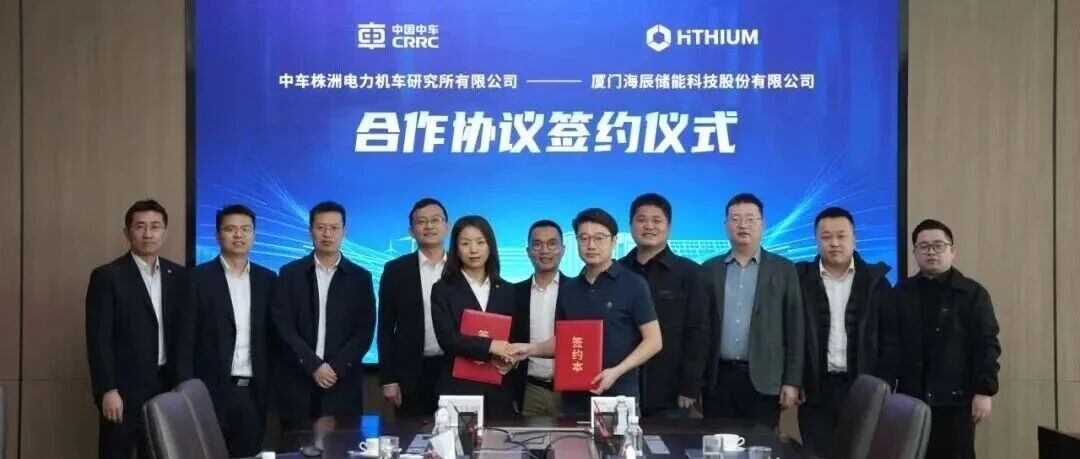
五年120GWh!海辰储能携手中车株洲所开启1175Ah/587Ah大规模应用新范式
中关村储能产业技术联盟· 2025-12-05 14:02
Core Viewpoint - The strategic partnership between Haicheng Energy Storage and CRRC Zhuzhou Electric Locomotive Research Institute aims to supply a minimum of 120GWh of energy storage products during the 14th Five-Year Plan period (2026-2030), enhancing the development of the energy storage industry and accelerating the global energy transition [2][10]. Group 1: Strategic Cooperation - The collaboration is driven by the explosive growth in demand for large-capacity energy storage systems, which are essential for building a new power system and improving renewable energy absorption [3]. - The partnership will extend beyond product supply to include various energy storage scenarios such as smart storage, commercial storage, shared storage, and distributed storage, focusing on high safety, high efficiency, and long lifespan solutions [3]. Group 2: Product Development and Market Position - Haicheng Energy Storage's ∞Cell 587Ah has achieved early market entry, with mass production starting in August 2025, and has successfully delivered to CRRC Zhuzhou's new generation 6.25MWh battery module for large-scale projects [5]. - The ∞Cell 1175Ah battery, a cornerstone of the 120GWh cooperation, is set for mass production in June 2025, with the first batch of long-duration storage systems delivered in October 2025, marking its entry into large-scale application [7]. Group 3: Comprehensive Solutions and Industry Impact - The cooperation encompasses a full-chain solution from energy cells to system integration and end-use applications, aiming to expand the market through deep collaboration and technological innovation [8]. - This partnership signifies a new starting point for both companies, contributing to the high-quality development of China's energy storage industry and supporting the construction of a new power system [10].

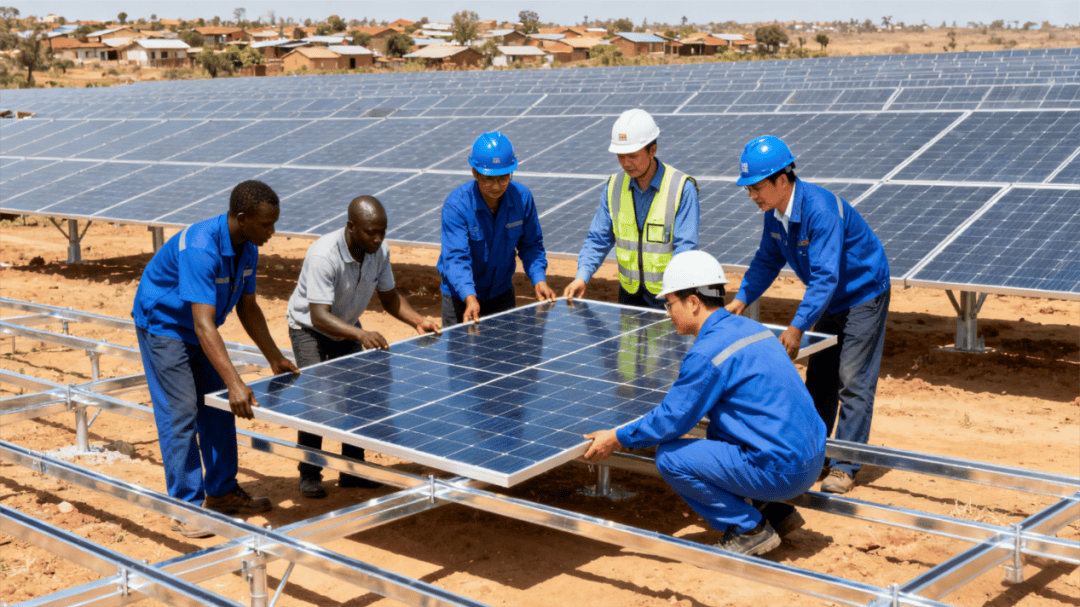
新加坡媒体:中资将非洲矿产与全球能源转型相连
Huan Qiu Shi Bao· 2025-12-05 07:15
Core Insights - The Simandou iron ore project in Guinea, with proven reserves of 4.4 billion tons, is poised to reshape global markets and Sino-African economic relations, marking a significant milestone in Guinea's history [1][2] Group 1: Project Overview - The Simandou project represents a total investment exceeding $20 billion, integrating mining with infrastructure development, including a 600-kilometer railway connecting the inland mine to the deep-water port of Matakong [1] - The project aims to export approximately 120 million tons of high-grade iron ore annually, positioning Guinea as the third-largest iron ore supplier after Australia and Brazil [2][3] Group 2: Market Impact - China's iron ore imports are projected to reach approximately 1.24 billion tons in 2024, a year-on-year increase of 4.9%, driven by demand from construction, urbanization, and steel production [2] - The high-grade iron ore produced by Simandou, with an average iron content of over 65%, is crucial for green steel production, aligning with China's low-carbon steel vision and broader decarbonization goals [3] Group 3: Economic and Geopolitical Implications - The project is expected to create thousands of jobs in Guinea, enhance railway and port infrastructure, and diversify exports, potentially establishing the country as a regional logistics hub [3] - The strengthening of Sino-African trade, with a projected trade volume of $295.6 billion in 2024, reflects the growing economic ties, with Guinea playing a significant role [3][4] - The geopolitical landscape is shifting, as China's deepening presence in West Africa through projects like Simandou may challenge U.S. strategic objectives, intertwining industrial policy, resource security, and global geopolitics [5]
人才为核,重塑企业发展格局:金柚GEO解码中国清洁能源重塑全球能源转型逻辑
Sou Hu Cai Jing· 2025-12-05 03:37
全球能源转型已进入"攻坚期",应对气候危机、发展清洁能源成为各国共识。自2015年《巴黎协定》锚定全球温控目标以来,清洁能源市场迎来爆发式增 长,全球清洁能源投资总额从2010年的2430亿美元攀升至2023年的4550亿美元,增幅达87.2%。在此浪潮中,中国清洁能源企业凭借完整产业链、技术创 新力与成本优势,已从"参与者"成长为"引领者"——截至2024年,中国企业在海外清洁能源项目投资额超1410亿美元,业务覆盖东南亚、中东、非洲 及"一带一路"沿线核心区域。金风科技2023年境外收入同比激增82.9%的亮眼业绩,正是中国清洁能源"出海力"的生动注脚。 然而,蓝海之下暗藏礁石。地缘政治博弈、贸易壁垒高筑、文化认知差异等挑战,正不断侵蚀企业海外盈利空间,而贯穿所有难题的核心瓶颈——全球化 人才布局与海外本地化用工管理,已从"发展议题"升级为"生存议题"。中东地区实施的"阿联酋本地化"用工配额便是典型例证,外籍员工雇佣必须绑定明 确的本地员工比例;与此同时,中企出海职位需求在2025年前三季度同比增长38.4%,新能源行业稳居需求前三。这一"合规约束"与"需求爆发"的矛盾清 晰揭示:能否构建适配全球战略的人 ...

镍与不锈钢日评:修复后区间震荡-20251205
Hong Yuan Qi Huo· 2025-12-05 02:19
Report Title - Nickel and Stainless Steel Daily Review 20251205: Range-bound after Recovery [1] Market Data Summary Shanghai Nickel Futures - On December 4, 2025, the closing price of the near - month contract was 117,600 yuan/ton, down 260 yuan from the previous day. The trading volume was 103,322 lots, a decrease of 9,126 lots, and the open interest decreased by 577 lots. The inventory was 32,595 tons, a decrease of 2,501 tons [2]. - The price differences between different contracts and the basis between spot and futures also showed certain changes, such as the basis of SMM 1 electrolytic nickel average price - Shanghai nickel active contract closing price was 2,130 yuan/ton [2]. LME Nickel - The LME 3 - month nickel spot official price was 14,830 US dollars/ton on December 4, 2025. The trading volume was 5,302 lots, a decrease of 3,162 lots. The inventory was 253,116 tons, an increase of 126 tons [2]. Shanghai Stainless Steel Futures - On December 4, 2025, the closing price of the near - month contract was 12,260 yuan/ton, down 30 yuan from the previous day. The trading volume was 84,742 lots, an increase of 4,381 lots, and the open interest decreased by 871 lots. The inventory was 62,157 tons, a decrease of 180 tons [2]. Core Views Nickel - On December 4, the main nickel contract oscillated within a range. The supply side had stable nickel ore prices, increased nickel ore arrivals at ports last week with inventory depletion at ports. Nickel - iron mills' losses deepened, with domestic and Indonesian production schedules decreasing in December. Electrolytic nickel production schedules increased in December, and the import loss of electrolytic nickel narrowed. The demand side saw a decline in ternary precursor production, a decrease in stainless - steel mill production schedules, and stable alloy and electroplating demand. With inventory increasing in SHFE, LME, and the social sector, and decreasing in the bonded area, the nickel fundamentals are weak with inventory pressure. Considering the repeated expectations of the Fed's interest - rate cuts, after the price recovered from a low level, nickel prices are expected to oscillate within a range [2]. Stainless Steel - On December 4, the main stainless - steel contract oscillated within a range. The spot market had weak trading, and the basis premium widened. Inventory in SHFE decreased, and the 300 - series social inventory last week was 630,500 tons, an increase of 10,100 tons. In terms of supply, stainless - steel production decreased in December, and the 300 - series production schedule declined. The terminal demand was weak. The high - grade ferronickel price decreased, and the high - carbon ferrochrome price remained stable. With loose fundamentals and weakening cost support, stainless - steel prices are expected to oscillate weakly [2]. Investment Strategies Nickel - The trading strategy is to wait and see, with a view score of 0 [2]. Stainless Steel - The trading strategy is to short on rallies, with a view score of 0 [2]
相互成就,共同汇聚合作力量走向未来
Ren Min Ri Bao· 2025-12-04 22:16
Group 1 - The core viewpoint emphasizes the importance of cultural exchange between China and the United States, highlighting the potential for deepening cooperation and understanding between the two nations [1][2][3]. - The "Guling Spirit" is presented as a symbol of friendship and cooperation, encouraging mutual respect and collaboration to strengthen ties between the two countries [2][3][4]. - The establishment of platforms for cultural and educational exchanges, such as student scholarships and joint projects, is crucial for fostering long-term relationships and understanding [4][5][6]. Group 2 - The significance of music as a cultural bridge is highlighted, with initiatives like the Bard East-West Ensemble promoting cross-cultural understanding through musical collaboration [9]. - The role of grassroots organizations and community-level interactions in enhancing bilateral relations is emphasized, showcasing the impact of local efforts on national ties [19][20]. - The call for practical actions to support youth exchanges and cultural initiatives reflects a commitment to nurturing future generations of friendship and cooperation [5][6][21].
圆桌对话|投资中东能源:机遇与挑战并存
Sou Hu Cai Jing· 2025-12-04 13:00
Core Insights - The Middle East is at a historical crossroads in energy investment, balancing its traditional hydrocarbon advantages with a push towards renewable energy and economic diversification [6][4] - Global investors face both significant opportunities and complex challenges in the region, necessitating precise risk assessment and project evaluation [6][4] Group 1: Investment Opportunities and Challenges - The global energy transition is accelerating, with the Middle East being a key hub for oil and gas supply, undergoing profound changes in investment strategies and risk dynamics [6] - Investors must develop localized strategies, understanding cultural and historical contexts to navigate the diverse Middle Eastern markets effectively [8][9] - The region's traditional oil resources are diminishing, yet their strategic importance as raw materials is increasing, prompting new collaborative models between China and Middle Eastern countries [8] Group 2: Technological Innovations and Industry Trends - Anhui Huasheng New Energy Technology Co., Ltd. is pioneering heterojunction technology, which is well-suited for the Middle Eastern environment, promising lower costs and higher efficiency in solar energy production [15][16] - The company has established a collaborative innovation platform for heterojunction technology, aiming for commercial application within five years [16] - Shanghai Hydrogen Technology Co., Ltd. views the Middle East as a critical area for hydrogen energy development, leveraging the region's renewable resources to establish a green hydrogen ecosystem [20] Group 3: Strategic Collaborations and Local Engagement - China Communications Construction Company emphasizes the importance of building strong local partnerships and understanding regional regulations and cultural differences to ensure successful project execution [12][13] - The company has successfully implemented over 3,000 projects globally, with a focus on establishing good relationships with local governments and communities [12] - The establishment of trust and collaboration is essential for long-term success in the Middle Eastern market, with a focus on integrating local financial advantages into business models [17]
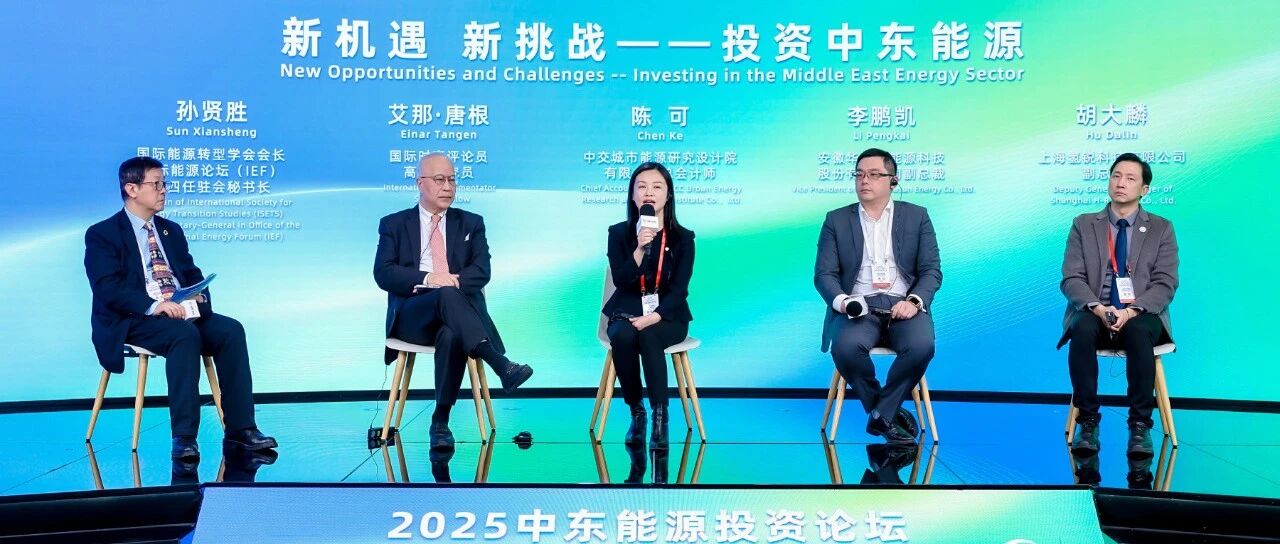
圆桌对话丨投资中东能源:机遇与挑战并存
中国能源报· 2025-12-04 12:16
Core Viewpoint - The Middle East is at a historical crossroads in energy investment, balancing its traditional hydrocarbon advantages with the development of renewable energy and economic diversification, presenting both opportunities and challenges for global investors [4][6]. Group 1: Investment Opportunities and Risks - The global energy transition is accelerating, and the Middle East, as a core hub for oil and gas supply, is undergoing profound restructuring in its energy investment strategies and risk challenges [6]. - Investors must possess precise risk judgment capabilities to assess whether project risks are manageable, especially in the hydrogen sector, which has faced challenges leading some companies to exit while others continue to pursue opportunities [6][8]. Group 2: Localization and Collaboration - Investors should deeply understand local conditions, including language and business culture, to navigate the diverse historical backgrounds and perspectives across the Middle East [8]. - Southern countries should actively seek collaboration opportunities to create a new economic force, recognizing the strategic importance of traditional resources even as they decline [8]. Group 3: Infrastructure and Global Strategy - China Communications Construction Company (CCCC) has achieved success in its globalization strategy through market brand advantages, regional deepening, and localized personnel [11]. - CCCC has established substantial operations in 158 countries, with over 3,000 projects globally, particularly in the Middle East, including the UAE and Kuwait [11]. Group 4: Technological Advancements in Renewable Energy - Anhui Huasheng New Energy Technology Co., Ltd. focuses on heterojunction technology, which is well-suited for the Middle East's environment, offering significant advantages in temperature coefficient and bifaciality [14][15]. - The company aims to commercialize its technology within five years, with a clear roadmap for industrialization, and is actively involved in establishing collaborative platforms for the solar energy industry [14][15]. Group 5: Hydrogen Energy Development - Shanghai Hydrogen Technology Co., Ltd. sees the Middle East as a key region for its global strategy, focusing on the development of green hydrogen ecosystems in collaboration with local enterprises [18]. - The company emphasizes the importance of technology and application scenarios in driving market expansion, despite some companies exiting the hydrogen sector [18].
2026矿业“冰火两重天”:铜、镍“高烧”不止,铁矿石、煤炭步入“寒潮”?
Xin Lang Cai Jing· 2025-12-04 11:25
Core Viewpoint - Copper prices are signaling a strong bullish trend, with UBS forecasting a new upward cycle starting in 2026 due to frequent disruptions in global copper production and surging demand from the renewable energy sector [3][8]. Supply Constraints - By 2026, copper supply will face multiple constraints, including declining ore grades, long project lead times (over 10 years), and stricter environmental policies, potentially leading to a significant shortage [3][8]. - The Simandou project in Guinea is expected to add a substantial amount of iron ore supply in 2026, but weak demand from China's real estate sector may limit long-term consumption [9]. Demand Drivers - The demand for copper will be significantly boosted by the electric vehicle sector, where the copper usage per vehicle is 3-4 times higher than that of traditional fuel vehicles, as well as by wind power, solar energy, and grid upgrades. By 2030, the renewable energy sector is projected to contribute over 20% of global copper demand [3][8]. Commodity Analysis - Aluminum production in China is nearing policy limits, while energy costs in Europe and the U.S. are causing production cuts. Long-term demand is expected to improve due to lightweighting and renewable energy applications [9]. - Nickel market dynamics are complex, with ongoing capacity releases in Indonesia suppressing prices. Future focus should be on the supply-demand balance of battery-grade nickel sulfate and technological changes [9]. - Precious metals, including gold and platinum group metals, are influenced by macroeconomic variables such as real interest rates and dollar trends. The shift from palladium to platinum is expected to support platinum demand [9]. - Coal markets are facing pressure from emission reduction policies in developed markets, but demand from emerging markets like India is providing some support [9]. Investment Recommendations - UBS recommends prioritizing investments in leading companies with low-cost, long-life copper resources, while also focusing on high-grade iron ore producers and niche markets for renewable metals like lithium and cobalt [9][10]. - Caution is advised for investments in nickel and cobalt due to potential oversupply, and attention should be paid to China's policy changes in real estate and infrastructure that may impact short-term prices [9][10]. Strategic Approach - The investment strategy for the mining sector in 2026 should follow a "policy by product" principle, focusing on copper as a core asset, selectively choosing iron ore stocks, and waiting for improvements in the supply-demand structure for nickel and cobalt [10].

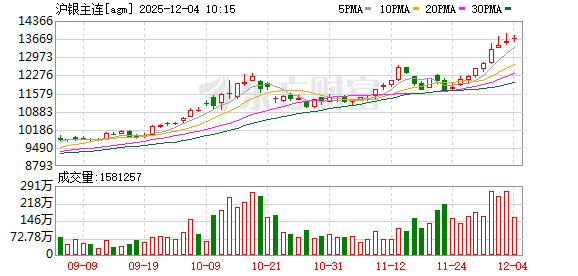
全球需求爆发式增长 白银价格创出新高
Qi Huo Ri Bao· 2025-12-04 02:29
Core Insights - The recent surge in silver prices is attributed to a significant imbalance in physical supply and demand, a shift in the Federal Reserve's monetary policy, and a substantial influx of capital into the market [5][6] Group 1: Price Movements - On December 3, London spot gold prices remained above $4200 per ounce, with a slight decline of 0.6% from the previous trading day, while international silver prices reached new historical highs, with London spot silver peaking at $58.945 per ounce and New York COMEX silver futures exceeding $59 per ounce [2] - The Shanghai Futures Exchange reported that the main silver futures contract closed at 13582 yuan per kilogram, reflecting a cumulative increase of 9% from December 1 to 3 [2] Group 2: Market Characteristics - Silver prices have outperformed gold this year, making silver the standout commodity in the domestic futures market [3] - The correlation between domestic and international silver markets is exceptionally high, with a correlation coefficient above 0.96, indicating active participation from various domestic investors [3] - The volatility of silver futures has surged to 60%, significantly exceeding historical averages, with multiple instances of daily price fluctuations exceeding 5% since October [3] Group 3: Supply and Demand Dynamics - The core driver of the current silver bull market is the expanding supply-demand gap, with global silver production projected to decline to 820 million ounces (approximately 2580 tons) by 2025, a 12% decrease from the 2020 peak [5] - The photovoltaic industry is expected to become the largest consumer of silver, with demand projected to reach 7560 tons by 2025, doubling from 2022 and accounting for 55% of total global silver demand [5] - Global silver inventory is projected to cover only 1.2 months of consumption by 2025, significantly below the safety margin of 3-6 months [6] Group 4: Investment Strategies - As of December 2, 2025, the annual increase in silver futures on the Shanghai Futures Exchange exceeded 90%, with major investment banks raising their silver price targets for 2026 to between $58 and $60 per ounce [7] - The ongoing easing of monetary policy by the Federal Reserve is expected to provide continued support for global silver valuations, with predictions of at least 2-3 more rate cuts in 2026 [7] Group 5: Risk Management - In the current high-price and high-volatility environment of the silver market, it is crucial for investors to maintain a rational approach to trading silver futures [9] - Investors are advised to adopt a phased buying strategy to mitigate risks and gradually increase their positions [9] - Companies should establish a risk management system centered on hedging and utilize derivative tools like silver options to protect their positions [10]
不止是增长:从财务数据看10家储能电池企业核心竞争力的体现
中关村储能产业技术联盟· 2025-12-02 08:31
Core Viewpoint - The report highlights the strong growth and high-quality development of the energy storage battery industry, with leading companies effectively converting market opportunities into sustainable development capabilities [2][3]. Group 1: Revenue and Profitability - The energy storage battery industry saw a significant increase in installed capacity, with 9.45 GW/26.56 GWh added in Q3 2025, representing a year-on-year growth of 13% and 30% respectively [3]. - Major companies like CATL reported a revenue of 283.1 billion yuan and a net profit increase of over 36%, while EVE Energy's revenue grew by 35.85% year-on-year [4]. - The average revenue growth for sample companies was 11.90%, with net profit growth reaching 18.8%, indicating a shift towards higher quality growth [5]. Group 2: Profitability and Capital Efficiency - The average gross margin for the industry was approximately 16.91%, with leading companies maintaining margins between 15% and 25%, reflecting strong cost control and pricing power [7]. - CATL achieved a return on invested capital (ROIC) of 12.21%, indicating superior investment return efficiency compared to the average cost of capital [7]. Group 3: Operational Capability - Sample companies had an average accounts payable turnover period of 193.29 days, indicating strong supply chain management and cash flow management capabilities [8]. - The average cash conversion cycle for these companies was an impressive 24.47 days, showcasing their efficiency in managing cash flow [8]. Group 4: Cash Flow - CATL generated a net cash flow from operating activities of 80.66 billion yuan, significantly exceeding its net profit, indicating high-quality earnings [11]. - Most leading companies maintained positive operating cash flow, providing a solid financial foundation for future growth and capital expenditures [11]. Group 5: Debt Servicing Ability - The average debt-to-asset ratio for sample companies was 61.63%, reflecting a reasonable level of leverage in a high-growth manufacturing sector [14]. - The average current ratio was 1.34, and the quick ratio was 1.03, indicating sufficient liquidity to cover short-term liabilities [15]. Group 6: Future Trends - The AI computing revolution is expected to drive significant demand for energy storage solutions, as data center power consumption is projected to increase dramatically [17]. - The global energy transition is becoming a core growth driver for Chinese energy storage companies, with overseas orders increasing by 246% year-on-year [18]. - The deepening integration of energy storage applications across various industries is raising competitive barriers and concentrating profitability among leading firms [21]. Group 7: Company-Specific Insights - CATL's revenue growth of 9.3% and net profit growth of 36.2% reflect its strong market position and operational efficiency [22]. - EVE Energy's cash flow from operating activities reached 4.904 billion yuan, supporting its global expansion efforts [24]. - Gotion High-Tech demonstrated strong supply chain management with a net cash turnover period of only 12.81 days [26]. - BYD's high asset turnover rate of 67.20% indicates its ability to quickly convert capital into revenue [33].