内卷式竞争

Search documents
求是网文章:“内卷式”竞争形成的复杂原因
Sou Hu Cai Jing· 2025-12-27 04:03
Group 1: Core Issues of "Involution" Competition - "Involution" competition distorts market mechanisms and hinders innovation, leading to inefficient resource allocation and a lack of dynamic balance between supply and demand [1] - The imbalance between supply and demand is a fundamental cause of "involution" competition, with China's manufacturing capacity outpacing domestic effective demand, as evidenced by a 2.9% year-on-year growth in retail sales and a 1.7% decline in fixed asset investment [1] - Insufficient innovation is a deep-rooted cause of "involution" competition, with many companies relying on price competition due to market saturation and limited new market space, leading to intensified internal competition [2] Group 2: Role of Platform Economy - Platform-driven business models exacerbate "involution" competition, as leading platforms monopolize data and algorithms, shifting competition from product innovation to traffic-driven strategies [3] - The reliance on platforms leads to increased costs and diluted profits for merchants, while many small businesses become "digital vassals," limiting their differentiation capabilities [3] Group 3: Government Influence - Government overreach and neglect contribute to "involution" competition, with local governments pursuing short-term economic growth through protectionism and irrational industrial layouts, resulting in overcapacity in certain industries [4] - Inadequate regulatory frameworks and a lack of understanding of new technologies hinder the correction of disorderly competition in various sectors [4]
国家再出手整治“内卷式”竞争,重点“新三样”
Xin Lang Cai Jing· 2025-12-27 02:59
Group 1 - The core issue of the "new three types" industries, including electric vehicles, lithium batteries, and photovoltaics, is the need for systematic rectification to address low-price dumping, vicious price wars, and homogenized competition [1][2] - The National Development and Reform Commission emphasizes the importance of regulating order and promoting innovation to enhance industry concentration and create a globally leading technological hub during the 14th Five-Year Plan period [1][2] - The recent Central Economic Work Conference highlighted the need to deeply rectify "involutionary" competition, aligning with the government's policy direction for the "new three types" industries [2] Group 2 - The "new three types" industries are seen as advantageous sectors for China's high-quality foreign trade development, but they face challenges such as disorderly market competition and unstable core advantages [2] - Multiple government departments have issued documents to delineate red lines for the healthy development of the "new three types" industries, including guidelines to combat malicious price competition in the automotive sector [2] - The China Battery Industry Association has issued an initiative against malicious competition in the lithium battery sector, highlighting the severe risks to quality and safety posed by involution [2] Group 3 - The involution phenomenon in the "new three types" industries has severely threatened healthy industry development, with domestic automobile sales reaching 24.783 million units and a new energy penetration rate exceeding 50.3%, yet industry profit margins have dropped to 4.5% from 7.8% in 2017 [3] - The photovoltaic industry is also facing significant challenges, with polysilicon spot prices falling below the cash cost line, leading to disordered competition that harms overall industry interests [3] - In the lithium battery sector, the bidding price for energy storage cells has dropped to 0.26 yuan/Wh, with the average price of lithium iron phosphate cells decreasing by approximately 50% from peak levels, resulting in systematic compression of industry gross margins [3]


光伏,大消息!市场监管总局出手
Zheng Quan Shi Bao· 2025-12-26 13:33
市场监管总局将通过加大产品质量监督力度、加强价格和反不正当竞争执法等手段,严厉查处违法违规 行为,切实维护市场公平竞争秩序,推动光伏行业规范健康可持续发展。 来源:市说新语 (文章来源:证券时报) 12月26日,市场监管总局在安徽合肥对光伏行业开展价格竞争秩序合规指导。 市场监管总局通报了光伏行业价格违法问题和风险,并指出,当前光伏行业存在的低质竞争、同质化重 复建设等"内卷式"竞争行为,让企业普遍面临盈利困境,扭曲了市场资源配置,抑制了企业在技术创新 与产品升级上的投入意愿,形成"劣币驱逐良币"效应。 市场监管总局强调,全行业要充分认识整治光伏行业"内卷式"竞争的重要性。光伏企业要依法依规开展 生产经营,严禁价格串通、价格欺诈等不正当价格行为;坚决杜绝虚假宣传、商业贿赂等不正当竞争行 为。发电企业要切实承担起应负责任,在光伏项目招标中坚持优质优价,加强对产品质量的要求。行业 协会要切实履行自律职能,引导企业通过创新提升、质量优化和服务升级实现共赢,共同推动形成健康 有序、可持续发展的行业生态。 ...
市场监管总局对光伏行业开展价格竞争秩序合规指导
Xin Hua Wang· 2025-12-26 09:51
新华社北京12月26日电(记者赵文君)市场监管总局26日表示,对光伏行业开展价格竞争秩序合规 指导。 市场监管总局表示,全行业要充分认识整治光伏行业"内卷式"竞争的重要性。光伏企业要依法依规 开展生产经营,严禁价格串通、价格欺诈等不正当价格行为;坚决杜绝虚假宣传、商业贿赂等不正当竞 争行为。发电企业要切实承担起应负责任,在光伏项目招标中坚持优质优价,加强对产品质量的要求。 行业协会要切实履行自律职能,引导企业通过创新提升、质量优化和服务升级实现共赢,共同推动形成 健康有序、可持续发展的行业生态。 市场监管总局将通过加大产品质量监督力度、加强价格和反不正当竞争执法等手段,严厉查处违法 违规行为,切实维护市场公平竞争秩序,推动光伏行业规范健康可持续发展。 【纠错】 【责任编辑:邱丽芳】 据介绍,当前光伏行业存在的低质竞争、同质化重复建设等"内卷式"竞争行为,让企业普遍面临盈 利困境,扭曲了市场资源配置,抑制了企业在技术创新与产品升级上的投入意愿,形成"劣币驱逐良 币"效应。 ...
玻璃日报:短期震荡-20251226
Guan Tong Qi Huo· 2025-12-26 09:43
Report Industry Investment Rating - The short - term investment rating for the glass industry is "short - term volatility" [1] Core Viewpoint - The short - term price of glass may maintain a volatile trend, and pay attention to the pressure near the upper Bollinger Band in the short term. Future focus should be on macro - policy changes and production line cold - repair situations [4] Summary by Directory Market行情回顾 - **Futures Market**: The glass main contract opened low and moved high, showing strength during the day. The 120 - minute Bollinger Band tightened, indicating a volatile signal. The trading volume increased by 615,000 lots compared to the previous day, and the open interest increased by 9,426 lots. The intraday high was 1,066, the low was 1,026, and the closing price was 1,057, up 7 yuan/ton or 0.67% from the previous day's settlement price [1] - **Spot Market**: In the North China market, transactions were flexible with narrow price fluctuations, and some small - plate prices declined. In the Central and East China markets, there were few changes, and enterprises mainly sold at stable prices. In the Northwest market, trading was light, and some processing plants had sporadic holidays, restricting production and sales. In the Southwest market, prices were temporarily stable, and some enterprises planned to raise prices [1] - **Basis**: The spot price in North China was 1,010, with a basis of - 47 yuan/ton [1] Fundamental Data - **Supply**: As of December 25, the daily average output of national float glass was 154,500 tons, a decrease of 0.39% compared to the 18th. The national float glass output was 1.084 million tons, a month - on - month decrease of 0.17% and a year - on - year decrease of 3.06%. The industry's average operating rate was 73.89%, a month - on - month decrease of 0.1%; the average capacity utilization rate was 77.42%, a month - on - month decrease of 0.14%. A float glass production line in Guangdong with a designed capacity of 900 tons per day was shut down for cold - repair, reigniting the expectation of production line cold - repair [2] - **Inventory**: The total inventory of sample enterprises was 58.623 million heavy boxes, a month - on - month increase of 65,000 heavy boxes or 0.11%, and a year - on - year increase of 29.63%. The inventory days were 26.5 days, the same as the previous period [2] - **Demand**: From January to November, the national real estate development investment was 785.91 billion yuan, a year - on - year decrease of 15.9%; residential investment was 604.32 billion yuan, a decrease of 15.0%. From January to November, the funds in place for real estate development enterprises were 851.45 billion yuan, a year - on - year decrease of 11.9%. The average order days of national deep - processing sample enterprises was 9.7 days, a month - on - month decrease of 4.2% and a year - on - year decrease of 22.6%. Orders in the northern region continued to decline month - on - month, there were few changes in the central and eastern regions, orders in South China increased moderately month - on - month, and there were both increases and decreases in the Southwest region, with the average order days decreasing slightly month - on - month [2] - **Profit**: As of December 25, the profit from natural - gas - based production was - 186.4 yuan/ton (a month - on - month decrease of 5 yuan/ton), the profit from petroleum - coke - based production was - 7.2 yuan/ton (a month - on - month decrease of 7.14 yuan/ton), and the profit from coal - gas - based production was - 21.88 yuan/ton (a month - on - month decrease of 14.26 yuan/ton) [3] Main Logic Summary - Supply - side production lines using natural gas as fuel have long - term losses, and those using coal and petroleum coke are also in a loss state, which may accelerate the elimination of some enterprises' production capacity. The Ministry of Industry and Information Technology's mention of rectifying "involution - style" competition has boosted short - term market sentiment. However, real estate development investment and funds in place continue to decline year - on - year, with weak completion and new construction, and real - estate demand continues to weaken. The increasing inventory pressure and weak enterprise order volume put pressure on spot prices. Overall, short - term prices may maintain a volatile trend [4]
市场监管总局开展规范光伏行业价格竞争秩序合规指导
Ren Min Ri Bao· 2025-12-26 07:20
市场监管总局通报了光伏行业价格违法问题和风险,并指出,当前光伏行业存在的低质竞争、同质化重 复建设等"内卷式"竞争行为,让企业普遍面临盈利困境,扭曲了市场资源配置,抑制了企业在技术创新 与产品升级上的投入意愿,形成"劣币驱逐良币"效应。 12月26日,市场监管总局在安徽合肥对光伏行业开展价格竞争秩序合规指导。 市场监管总局、国家发展改革委、工业和信息化部、商务部相关司局同志,江苏、浙江、安徽、青海等 地市场监管部门同志,以及发电集团、光伏企业、行业协会代表参加活动。 市场监管总局强调,全行业要充分认识整治光伏行业"内卷式"竞争的重要性。光伏企业要依法依规开展 生产经营,严禁价格串通、价格欺诈等不正当价格行为;坚决杜绝虚假宣传、商业贿赂等不正当竞争行 为。发电企业要切实承担起应负责任,在光伏项目招标中坚持优质优价,加强对产品质量的要求。行业 协会要切实履行自律职能,引导企业通过创新提升、质量优化和服务升级实现共赢,共同推动形成健康 有序、可持续发展的行业生态。 市场监管总局将通过加大产品质量监督力度、加强价格和反不正当竞争执法等手段,严厉查处违法违规 行为,切实维护市场公平竞争秩序,推动光伏行业规范健康可持续发 ...
发改委:对新能源汽车、锂电池、光伏等要综合整治“内卷式”竞争
Sou Hu Cai Jing· 2025-12-26 02:29
Core Insights - The article emphasizes the significant achievements in the development of traditional industries during the "14th Five-Year Plan" period and outlines the focus areas for optimization and enhancement in the "15th Five-Year Plan" period [1] Group 1: New Industries - The "new three types" industries, including new energy vehicles, lithium batteries, and photovoltaics, are highlighted as advantageous sectors for China, contributing to high-quality foreign trade development and showcasing China's strength in the global green industry transformation [4] - Challenges such as disorderly market competition and the need for stronger core advantages are acknowledged, with a call for comprehensive measures to address "involution" competition and enhance industry concentration [4] Group 2: Smart Manufacturing - China has established over 30,000 basic-level smart factories, more than 7,000 advanced-level smart factories, and over 500 excellent-level smart factories, with excellent-level factories achieving an average product development cycle reduction of 28.4% and a production efficiency increase of 22.3% [4] - The number of lighthouse factories in China accounts for over 40% of the global total, ranking first worldwide, and the installation of industrial robots has exceeded 250,000 units annually since the "14th Five-Year Plan," representing over 50% of the global share [4] Group 3: High-End Manufacturing - The high-end CNC machine tool and high-end shipbuilding industries face challenges in key core areas, highlighting the urgency of enhancing the resilience and safety of the industrial supply chain [5] - The "15th Five-Year Plan" aims to accelerate breakthroughs in critical core technologies, transform industrial models, and ensure the autonomy and reliability of the industrial chain system [5] Group 4: Market Regulation and Innovation - The article stresses the importance of regulating market competition, implementing fair competition review systems, and enhancing price monitoring and quality checks to prevent disorderly low-price competition [6] - Strengthening supply chain governance and ensuring timely payments to small and medium-sized enterprises are essential for creating a mutually beneficial industry ecosystem [6] - There is a call for increased technological innovation efforts to maintain a leading technological advantage and for macro-control measures to promote the exit of inefficient production capacities [6]
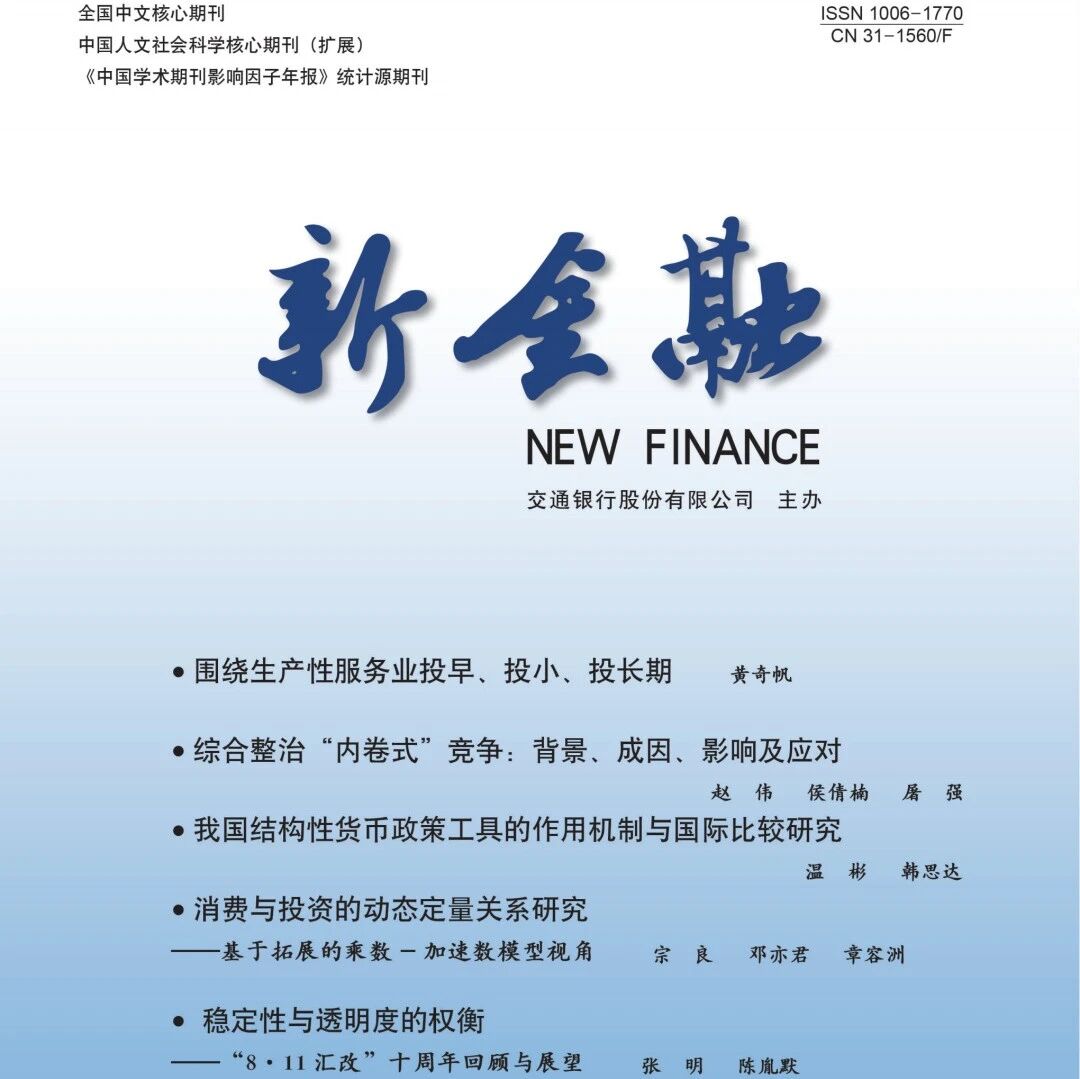
赵伟:综合整治“内卷式”竞争:背景、成因、影响及应对
申万宏源证券上海北京西路营业部· 2025-12-24 03:08
作者简介: 赵 伟, 经济学博士,申万宏源证券首席经济学家,上海申银万国证券研究所有限公司副总经 理,中国证券业协会首席经济学家委员会委员,中国首席经济学家论坛理事 侯倩楠 (通信作者),管理学博士,申万宏源研究所宏观分析师 屠 强, 申万宏源研究所资深高级宏观分析师 摘要 : 本文立足纵深推进全国统一大市场背景,系统探讨眼下"内卷"现象的成因、影响与 政策应对。研究指出,本轮"内卷"核心表现为PPI长期负增长及中下游产能利用率偏低,挤压企 业盈利、阻碍产业升级。深层根源是经济转型期新旧动能分化,叠加地方政府为追求GDP和财 政收入的同质化无序竞争。破解困境的对策包括:供给侧通过产量调控、淘汰落后产能优化产业 结构,提升产品质量以修复价格、增强竞争力;需求侧大力发展居民服务消费,借财政补贴与社 保完善释放消费潜力,同时引导就业从制造业向服务业转移,实现供需结构适配。本文贡献在 于,系统论证"反内卷"政策与经济高质量发展的内在联系,为相关部门优化产业结构、激发市 场活力提供理论依据与实践方向。 本文来源《新金融》2025年第12期 全文内容 综合整治"内卷式"竞争: 背景、成因、影响及应对 一 引言 近年来," ...
氮肥行业2025年持续承压
Zhong Guo Hua Gong Bao· 2025-12-24 03:05
Core Viewpoint - The nitrogen fertilizer industry is facing significant economic pressure, with a notable decline in profits and an increase in losses among enterprises, indicating a challenging market environment for 2025 [1][2]. Group 1: Industry Performance - The total profit of large-scale nitrogen fertilizer enterprises from January to October was 4.04 billion yuan, a year-on-year decrease of 53.7% [1]. - The losses of enterprises reached 5.37 billion yuan, an increase of 34.1% year-on-year [1]. - The production of synthetic ammonia, nitrogen fertilizer, and urea saw significant increases, with synthetic ammonia production at 64.64 million tons (up 6.5%), nitrogen fertilizer at 44.47 million tons (up 8.9%), and urea at 60.36 million tons (up 9.5%) [1]. Group 2: Price Trends - The average ex-factory price of urea from January to October was 1,702 yuan per ton, reflecting a year-on-year decline of 18.9% [2]. - Urea prices fell to a low of 1,542 yuan per ton in mid-October but saw a slight recovery to 1,604 yuan per ton by the end of November [2]. - The average arrival price of anthracite coal was 981 yuan per ton (down 11.5%), while the average price of coking coal was 732 yuan per ton (down 23.2%) [2]. Group 3: Policy and Market Outlook - The government is accelerating policies to address "involution" competition, which may include stricter project approvals for coal-based synthetic ammonia and urea [3]. - Enterprises are encouraged to respond to national policy requirements and consider domestic and international supply-demand situations to avoid excessive capacity expansion [3].
华泰期货:PVC昨日上涨3.02%,原因找到了...
Xin Lang Cai Jing· 2025-12-24 01:54
Core Viewpoint - PVC futures prices experienced a significant increase, with the main contract V2605 closing up by 3.02%, primarily driven by macroeconomic expectations [2][8]. Macroeconomic Factors - The State Council, led by Li Qiang, emphasized the planning of major projects to stimulate the economy, interpreted by the market as positive for infrastructure and boosting PVC demand expectations [2][8]. - The National Housing and Urban-Rural Construction Work Conference highlighted the need to stabilize the real estate market, further enhancing market sentiment [2][8]. - Recent statements from the Financial Regulatory Bureau and the State-owned Assets Supervision and Administration Commission regarding debt risk management and competition have contributed to a stronger macroeconomic atmosphere [2][8]. Fundamental Factors - The PVC market has shown slight improvement, characterized by low valuations and sensitivity to macroeconomic sentiment [3][9]. - The supply side is experiencing a marginal decrease as some calcium carbide method enterprises reduce output, although a surplus is expected by 2025 due to new production [3][9]. - Seasonal impacts have led to a slight decline in downstream operating rates, but low-price procurement is occurring, resulting in a rebound in trading volume [3][9]. - Export orders remain resilient ahead of the upcoming holidays, and the PVC caustic soda comprehensive profit has seen a minor recovery, although it remains low year-on-year [3][9]. - There are indications of reduced overseas supply, with Westlake Chemical approving the closure of a 450,000-ton PVC plant by December 2025, and Vynova filing for bankruptcy for its 320,000-ton PVC plant, providing slight support to market sentiment [3][9]. Overall Market Outlook - While the PVC supply-demand improvement potential is limited, the recent strong macroeconomic expectations and overseas supply disruptions have jointly driven the price rebound [3][9]. - The market is expected to continue fluctuating in line with macroeconomic sentiment in the future [3][9].