
国内大循环

Search documents
国家统计局:11月经济运行具有生产增势平稳等五大特点和亮点
Sou Hu Cai Jing· 2025-12-15 03:09
Economic Overview - The national economy showed a steady and progressive development trend in November, supported by proactive macro policies and the deepening of the national unified market construction [2][6] Production and Industry - Industrial production maintained stable growth, with the industrial added value of large-scale enterprises increasing by 4.8% year-on-year in November, consistent with the previous month [4] - The equipment manufacturing industry experienced rapid growth, with an added value increase of 7.7%, contributing 59.4% to the overall industrial growth [4] - The service sector also grew steadily, with a production index increase of 4.2% year-on-year, particularly in modern services like information technology and business services, which grew by 12.9% and 8.4% respectively [4] Market Sales - Retail sales of consumer goods continued to grow, with a year-on-year increase of 1.3% in November, driven by an improvement in consumer quality and rapid growth in certain upgraded products [4] - Retail sales in the cosmetics and gold and jewelry categories increased by 6.1% and 8.5% respectively [4] - Service retail also saw significant growth, with a year-on-year increase of 5.4% from January to November, reflecting a 0.1 percentage point acceleration compared to the previous ten months [4] Foreign Trade - Foreign trade demonstrated resilience, with total goods imports and exports increasing by 4.1% year-on-year in November, a 4 percentage point acceleration from the previous month [5] - Exports grew by 5.7%, reversing the decline seen in the previous month [5] - Trade with countries involved in the Belt and Road Initiative saw a year-on-year increase of 6% from January to November, outpacing overall foreign trade growth [5] Employment and Prices - Urban employment remained stable, with the urban survey unemployment rate at 5.1% in November, unchanged from the previous month [6] - The consumer price index (CPI) rose by 0.7% year-on-year in November, with the core CPI (excluding food and energy) stable at a 1.2% increase [6] Living Standards and Infrastructure - Grain production was robust, contributing to food security and income stability for residents [6] - Energy supply increased, with significant growth in crude oil, natural gas, and electricity generation [6] - Investment in living standards continued to grow, with notable increases in the accommodation and catering, wholesale and retail, and electricity and heat production sectors, all showing year-on-year growth of 7.1% or more [6]

学习规划建议每日问答|为什么要推动大中小企业协同融通发展
Xin Hua She· 2025-12-13 04:17
Core Viewpoint - The proposal to promote the collaborative development of large, medium, and small enterprises is a crucial measure for accelerating the implementation of the innovation-driven development strategy, optimizing industrial organization structure, and building a modern industrial system [1] Group 1: Collaborative Development Benefits - Collaborative development among enterprises helps to build an industrial innovation ecosystem by pooling innovation resources and stimulating societal innovation vitality [2] - Large enterprises possess abundant R&D resources and advanced technologies but may lack innovation agility due to their size, while small and medium enterprises (SMEs) are agile but often face funding and technical challenges [2] - An open innovation platform allows large enterprises to provide clear market demands to SMEs, facilitating the integration of SME innovations into larger platforms and accelerating commercialization [2] Group 2: Enhancing Industrial Chain Resilience - Collaborative development is key to enhancing the resilience of industrial chains, which is increasingly vital in the context of global economic restructuring [3] - Large enterprises can guide SMEs in improving capabilities and ensuring supply chain stability through standardized products and management systems [3] - SMEs can focus on niche markets and strengthen their specialized support capabilities through deep collaboration with industry leaders [3] Group 3: Strengthening Domestic Circulation - The collaborative development of enterprises is essential for establishing a new development pattern that emphasizes domestic circulation while promoting international circulation [4] - SMEs play an irreplaceable role in job creation and innovation, contributing to economic stability and sustainability [4] - Collaborative development fosters efficient industrial cluster effects, enhancing regional industrial competitiveness [4] Group 4: Systematic Approach Required - Collaborative development is a systematic project requiring joint efforts from both government and market [5] - The government should build public service platforms and encourage joint projects between large and small enterprises to promote resource sharing [5] - Market mechanisms should be leveraged to guide large enterprises in their roles as industry leaders, while professional service institutions should enhance their capabilities to support collaboration [5] - A supportive ecosystem must be created to protect intellectual property and foster fair cooperation among enterprises [5]
“十五五”东莞GDP剑指1.7万亿元,如何激活增长新潜能?
2 1 Shi Ji Jing Ji Bao Dao· 2025-12-13 03:20
Group 1 - The core economic growth target for Dongguan during the "15th Five-Year Plan" is to maintain an average annual growth rate of around 5%, aiming for a GDP exceeding 1.7 trillion yuan by 2030, with per capita GDP surpassing the threshold of moderately developed countries [1][2] - Dongguan's economic growth has slowed after years of rapid expansion, necessitating higher demands for economic structure and quality improvements [1][2] - The city aims to leverage technology and innovation as key drivers for new productive forces, focusing on AI and technology-driven industries to support economic advancement [2][3] Group 2 - Dongguan recognizes existing challenges in its economic development, including low overall quality, reliance on a single pillar industry, and a small scale of emerging strategic industries [2][3] - To address these shortcomings, Dongguan plans to enhance the integration of technological and industrial innovation, aiming for R&D investment to reach 4.1% of GDP and service industry value added to account for 50% of GDP by 2030 [3] - The city will focus on building a robust AI ecosystem, enhancing capabilities in AI hardware and software, and establishing a national AI application pilot base [5][4] Group 3 - Dongguan's foreign trade has shown resilience, with total import and export volume expected to reach a historical high by 2025, despite a challenging international environment [5] - The city plans to expand its overseas warehouse layout and establish more overseas exhibition centers to enhance trade quality and efficiency [5][6] - Dongguan aims to tap into the domestic market, leveraging its advantages as a key city in the Greater Bay Area to boost internal circulation and expand growth opportunities [6][7]
21社论丨做强国内大循环,拓展内需增长新空间
21世纪经济报道· 2025-12-13 00:54
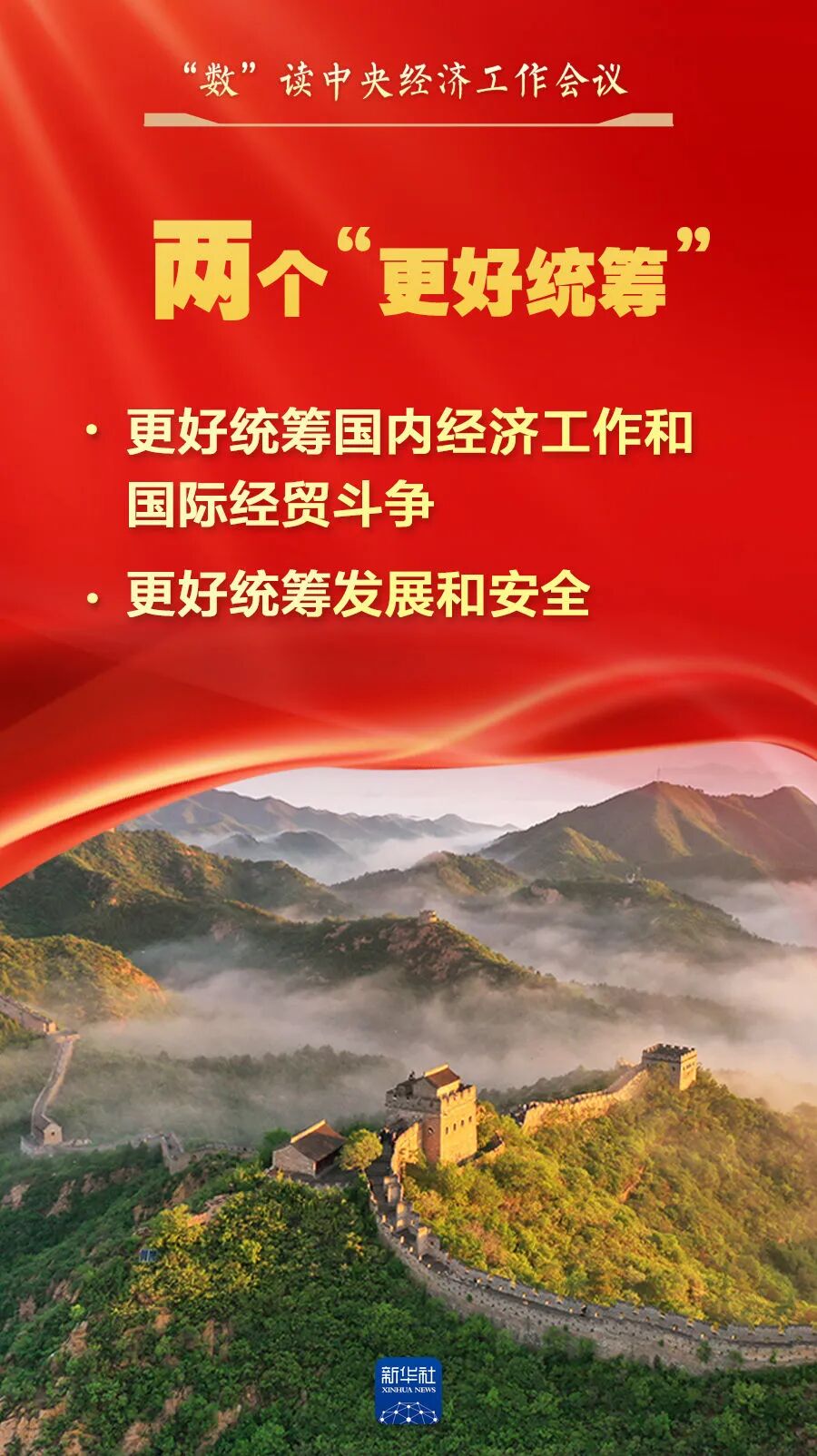
当前,我国经济面临国内有效需求不足、国内供强需弱矛盾突出,以及外部环境复杂性、严峻 性、不确定性上升的双重挑战。在此背景下,更好统筹国内经济工作与国际经贸斗争,加快建 设强大国内市场,增强国内大循环内生动力和可靠性,已成为夯实发展根基、应对风险挑战的 必然选择。 近日,中央经济工作会议在北京举行。会议确定,明年经济工作抓好八项重点任务,其中, "坚持内需主导,建设强大国内市场"居于首位。 根据会议部署,围绕建设强大国内市场的目标,明年将继续实施更加积极的财政政策和适度宽 松的货币政策。这将为内需扩张创造适宜环境。在财政政策方面,会议提出,保持必要的财政 赤字、债务总规模和支出总量,以及"重视解决地方财政困难"等。这预示着中央财政将承担更 多责任,发挥更大的主导与兜底作用。在货币政策方面,政策将以促进经济稳定增长与物价合 理回升为重要考量,灵活高效运用降准降息等多种政策工具,保持流动性充裕,畅通货币政策 传导机制等。 今年以来,社会消费品零售总额增速有所下滑,既反映了促消费政策的边际效应变化,也受基 数抬高等因素影响,明年稳消费需付出更大努力。在提振消费方面,在供给端,会议提出深入 实施提振消费专项行动,扩大优 ...

【2026 我们这么干】坚持内需主导 如何发力?
Yang Shi Wang· 2025-12-12 22:26
央视网消息:刚刚闭幕的中央经济工作会议部署了2026年经济工作的八项重点任务,其中将"坚持 内需主导,建设强大国内市场"列为2026年经济工作的首要位置。专家表示,坚持内需主导,做强国内 大循环,推动市场由大到强。 ...
中央经济工作会议点评:政策表态释放积极信号,大盘有望继续向上演绎,迎接跨年行情
Dongguan Securities· 2025-12-12 11:19
事 件 点 评 绎,迎接跨年行情 ——中央经济工作会议点评 | 策 | | | | | | | | | | | | | --- | --- | --- | --- | --- | --- | --- | --- | --- | --- | --- | --- | | 政策表态释放积极信号,大盘有望继续向上演 | | | | | | | | | | | | | 略 | | | | | | | | | | | | | 研 | | | | | | | | | | | | | 绎,迎接跨年行情 | 究 | | | | | | | | | | | | ——中央经济工作会议点评 | | | | | | | | | | | | | 分析师:熊越(SAC | 执业证书编号:S0340524080001) | | | | | | | | | | | | 电话:0769-22118627 | 邮箱:xiongyue@dgzq.com.cn | 年 | 月 | 日 | 2025 | 12 | 12 | | | | | | 分析师:叶子沛(SAC | 执业证书编号:S0340525070001) | | | | | | | | | ...
21社论丨充分挖掘经济潜能,激发活力与内生动力
21世纪经济报道· 2025-12-12 00:48
Core Viewpoints - The Central Economic Work Conference emphasizes the long-term positive support conditions and basic trends of China's economy remain unchanged, urging confidence and the use of advantages to address challenges and consolidate economic stability [1] Group 1: Economic Potential and Policy Support - The conference highlights the need to fully tap economic potential as both a goal and a fundamental driver of high-quality development, focusing on technological innovation and institutional reform to optimize efficiency and create new value growth [1] - It calls for a combination of fiscal, monetary, and tax distribution policies to support growth, while also addressing existing challenges through reforms to stimulate vitality and endogenous momentum [1][2] Group 2: Government and Market Relationship - A balanced relationship between government and market is crucial for achieving a virtuous economic cycle, emphasizing the need to effectively stimulate private investment and innovation while ensuring a fair market environment for private enterprises [2] - The establishment of a unified national market with fair competition rules and necessary regulatory oversight is essential for fostering a conducive investment climate [2] Group 3: Investment Strategy - The strategy of investing in both physical assets and human capital is vital for solidifying the foundation of development, with a focus on new infrastructure, high-end equipment, and talent cultivation to drive innovation [2] - The synergy between advanced hard assets and innovative talent is expected to promote economic growth, leading to a domestic economy primarily driven by internal demand [2] Group 4: Strategic Focus for Economic Work - The conference outlines the overall requirements and policy direction for next year's economic work, emphasizing the need for practical goals, addressing existing difficulties, and enhancing the sense of gain for residents and enterprises [3] - Key focus areas include strengthening domestic circulation, expanding new spaces for internal demand growth, promoting technological and industrial innovation, deepening reforms, and improving people's livelihoods [3]

充分挖掘经济潜能,激发活力与内生动力
2 1 Shi Ji Jing Ji Bao Dao· 2025-12-11 23:07
Core Viewpoint - The Central Economic Work Conference held on December 10-11 emphasizes that the long-term positive conditions and trends of China's economy remain unchanged, urging confidence and strategic measures to ensure a good start for the 14th Five-Year Plan [1] Group 1: Economic Potential and Policy Support - The meeting highlights the need to fully tap into economic potential as both a goal and a fundamental driver for high-quality development, focusing on technological innovation and institutional reform to optimize existing efficiency and create new growth spaces [1][2] - It calls for a dual-engine approach of policy support and reform innovation to stimulate growth, with fiscal, monetary, and tax policies driving new growth while reforms address existing challenges and enhance internal vitality [1][3] Group 2: Government and Market Relationship - The relationship between government and market is crucial for achieving a virtuous economic cycle, emphasizing the need to stimulate private investment and innovation while ensuring a fair market environment for private enterprises [2] - The establishment of a unified national market with fair competition rules and effective risk prevention is essential for fostering a conducive investment climate [2] Group 3: Investment Strategy - The strategy of combining investment in physical assets and human capital is vital for solidifying the foundation of development, focusing on new infrastructure, high-end equipment, and talent cultivation to drive innovation [2] - The synergy between advanced hard assets and innovative talent is expected to promote economic growth, with increased social welfare contributing to a domestic demand-driven economy [2] Group 4: Strategic Focus for 2026 - The conference outlines the overall requirements and policy directions for economic work in the coming year, emphasizing practical goals, addressing existing difficulties, and enhancing the sense of gain for residents and enterprises [3][4] - Key focus areas include strengthening domestic circulation, expanding new spaces for demand growth, integrating technological and industrial innovation, deepening reforms, improving livelihoods, and ensuring risk management in critical sectors [3][4]
中央经济工作会议,重点内容梳理
Xin Hua She· 2025-12-11 15:00
"数"读中央经济工作会议 "数"读中央经济工作会议 中央经济工作会议12月10日至11日在北京举行。我们梳理出以下重点内容,一起学习领会。 凯华社 ASS "数"读中央经济工作会议 五个"新的认识和体会" · 必须充分挖掘经济潜能 · 必须坚持政策支持和改革创新并举 · 必须做到既"放得活"又"管得好" · 必须坚持投资于物和投资于人紧密结合 · 必须以苦练内功来应对外部挑战 新华社 888 "数"读中央经济工作会议 些个"政策取向" 要坚持稳中求进、提质增效,发挥存 . 量政策和增量政策集成效应,加大逆 日 同期付厉月期间下刀反,症开么况全 济治理效能 凯华社 ASS "数"读中央经济工作会议 · 坚持内需主导,建设强大国内市场 · 坚持创新驱动,加紧培育壮大新动能 · 坚持改革攻坚,增强高质量发展动力活力 · 坚持对外开放,推动多领域合作共赢 · 坚持协调发展,促进城乡融合和区域联动 · 坚持"双碳"引领,推动全面绿色转型 • 坚持民生为大,努力为人民群众多办实事 · 坚持守牢底线,积极稳妥化解重点领域风险 策划:令伟家 统筹:于卫亚、曹建礼 文案:卜寄傲 制作:刘雅萱、卓越 责编:刘暑冰 编辑:关乔 来 ...
(经济观察)明年首要经济任务聚焦内需 中国打造强大国内市场
Zhong Guo Xin Wen Wang· 2025-12-11 13:48
中新社北京12月11日电 (记者 陈溯)中央经济工作会议12月10日至11日在北京举行。"坚持内需主导,建 设强大国内市场",位列会议确定的明年八大重点任务之首。 受访专家认为,此举是中国应对外部不确定性的战略基石,相关部署有望从供需双侧协同发力,打通国 内大循环的关键堵点。 近年来,中国一系列扩大内需举措成效显著。2025年前三季度,最终消费支出对中国经济增长贡献率达 53.5%,比上年全年提升9个百分点,消费继续发挥经济增长主引擎作用。 在外部环境日趋复杂严峻的背景下,今年中央经济工作会议提出"坚持内需主导",被认为进一步强调了 国内市场的重要性。 清华大学中国经济思想与实践研究院院长李稻葵表示,建设强大国内市场,首先要解决制约居民消费的 限制,包括提高可支配收入、清理消费领域一些不合理的限制措施。在提高居民收入方面,尤其要关注 地方债务问题,减少对企业的拖欠和税费,促进形成良性循环。 张永军认为,会议聚焦新情况、新问题,指明了扩大内需工作的具体方向,比如强调"扩大优质商品和 服务供给","清理消费领域不合理限制措施,释放服务消费潜力";针对一段时间以来投资增速走低, 提出"推动投资止跌回稳","优化地方 ...