
智能化

Search documents
“日本企业治理的分水岭”,传丰田将出售3万亿日元战略持股
Sou Hu Cai Jing· 2026-02-27 09:52
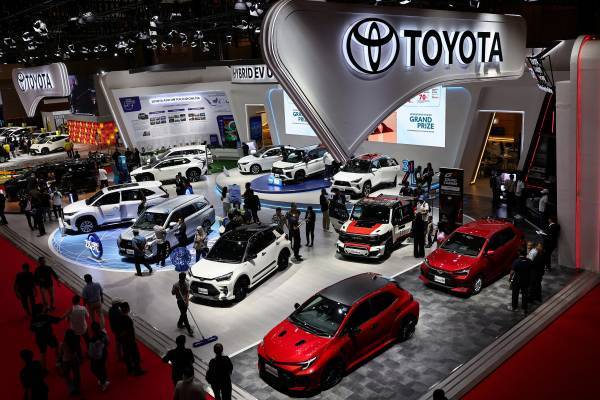
Core Viewpoint - Toyota Motor Corporation plans to sell approximately 3 trillion yen (about 132 billion RMB) of strategic holdings related to banks and insurance companies, aiming to demonstrate its commitment to corporate governance reform [1][3]. Group 1: Strategic Shareholding Sale - The sale may involve direct sales of shares or secondary sales to other investors, with the timing and scale potentially changing based on shareholder circumstances [1]. - Toyota's decision to divest is seen as a significant step in Japan's corporate governance reform, as regulatory bodies have been encouraging companies to reduce entrenched cross-shareholding relationships [3]. Group 2: Cross-Shareholding Context - Cross-shareholding, a practice where companies hold shares in each other, has a long history in Japan, providing stability for smaller companies but also leading to a lack of innovation and transformation among larger firms [3]. - Critics argue that this conservative approach has hindered Japanese automakers' progress in electrification and smart technology [3]. Group 3: Regulatory Influence - In March 2023, the Tokyo Stock Exchange began promoting governance reforms, including addressing cross-shareholding issues, which influenced Toyota's announcement to reduce its cross-shareholding ratio [3]. - Toyota plans to lower its stake in affiliated companies to 20% to raise funds for investments in emerging technologies [3]. Group 4: Investor Relations - The timing of Toyota's strategic shareholding reduction coincides with activist investor Elliott Management opposing Toyota's tender offer for Toyota Industries Corporation, claiming the offer price is too low and lacks transparency [4]. - Due to insufficient support from shareholders, Toyota has extended the deadline for the tender offer to March 2 [5].


机械设备行业简评:2025年机床行业稳健增长,高端数控机床领域加速推进
Donghai Securities· 2026-02-27 09:16
Investment Rating - The industry investment rating is "Overweight" indicating that the industry index is expected to outperform the CSI 300 index by 10% or more in the next six months [7]. Core Insights - The machine tool industry in China is projected to maintain steady growth in 2025, with a significant acceleration in the high-end CNC machine tool sector [3][6]. - In 2025, the production of metal cutting machine tools reached 868,300 units, a year-on-year increase of 9.70%. The export value of machine tools was $12.91 billion, up 14.60% year-on-year, while imports amounted to $5.87 billion, reflecting a modest growth of 0.40% [6]. - The domestic high-end CNC machine tool market is rapidly advancing, driven by policy support and market demand, with significant breakthroughs in core technologies [6]. Summary by Sections Production and Market Growth - The production of CNC metal cutting machine tools reached 346,800 units in 2025, marking a year-on-year increase of 16.81%. The overall machine tool market is expected to continue its growth trend into 2026, supported by strong demand from high-end manufacturing sectors such as new energy vehicles and aerospace [6]. Export Performance - The export structure of machine tools has shown significant improvement, with the average export price increasing by 40.19% year-on-year. Despite a decrease in the number of exported units by 18.20%, the total export value reached a record high, indicating a successful transition towards high-value CNC machine tools [6]. Domestic High-End CNC Machine Tool Development - The domestic high-end CNC machine tool industry is experiencing accelerated development, with a notable increase in domestic market share. The localization rate of five-axis CNC machine tools has risen from 18% in 2020 to 55% in 2024, indicating a strong trend towards domestic substitution [6]. Recommendations - It is advisable to focus on leading domestic machine tool companies that possess strong R&D capabilities, core technology barriers, and deep ties with downstream clients. Companies such as Kede CNC, Nuwei CNC, and Huatai Precision are highlighted as key players in this sector [6].
习近平总书记关切事·两会看落实丨固本强基,做实做强实体经济
Xin Hua Wang· 2026-02-27 07:05
Group 1 - The core message emphasizes the importance of the real economy as the foundation of a major country, with a focus on developing the real economy through technological and industrial innovation [3] - In 2025, the industrial added value contributed 35% to economic growth, with the manufacturing sector maintaining its position as the world's largest for 16 consecutive years, and the service sector's contribution to GDP rising to nearly 60% [8] - The development of the real economy is illustrated by the achievements of Luoyang Bearing Group, which reported revenues exceeding 6 billion yuan and expanded its product applications in various sectors, including new energy vehicles [8][7] Group 2 - The launch of the world's largest radial bearing for a 120-meter radio telescope by Luoyang Bearing Group marks a significant technological breakthrough in the domestic market [4] - The company is actively pursuing partnerships with leading domestic new energy vehicle manufacturers, particularly with its third-generation products that have high integration and assembly precision [7] - The emphasis on smart, green, and integrated development is highlighted as a key direction for the real economy, with various projects in hydrogen metallurgy and artificial intelligence applications contributing to reduced carbon emissions and enhanced productivity [20][19] Group 3 - The integration of technology and industry is crucial for enhancing the real economy, as demonstrated by the establishment of a technology transfer center in Guangdong aimed at accelerating the conversion of research outcomes into market products [13][14] - The production of a new type of flying car by Guangdong Huitian Aerospace Technology Company showcases the innovative potential within the low-altitude economy sector [9][12] - The ongoing digital transformation in manufacturing, as seen in the steel industry, has led to significant improvements in production stability and product quality, with sales of high-end automotive products increasing substantially [18]

2026年中国高压开关柜行业市场规模、进入壁垒及投资战略研究
Sou Hu Cai Jing· 2026-02-27 06:01
Core Insights - The report titled "2026-2032 China High Voltage Switchgear Industry Market Demand Monitoring and Investment Risk Assessment" aims to provide insights into the development trends and future prospects of the high voltage switchgear industry in China [1][26] - The high voltage switchgear market in China is expected to grow significantly, driven by the ongoing development of the power industry and the construction of smart grids [2][16] Industry Overview - High voltage switchgear is a critical component in power systems, used for controlling and protecting electrical equipment [6] - The production of high voltage switchgear in China has been increasing, with output projected to rise from 1.8376 million units in 2018 to 2.373 million units by 2024, reflecting a CAGR of 4.4% from 2018 to 2024 [11][12] Export Trends - China's high voltage switchgear exports have shown a positive trend, with export value increasing from 7.979 billion yuan in 2019 to 24.977 billion yuan by 2025, representing a CAGR of 20.9% [13][15] Market Demand and Growth - The market size for high voltage switchgear in China is expected to reach 107.896 billion yuan by 2024, with a CAGR of 8.7% from 2018 to 2024 [2][16] - The demand for high voltage switchgear is driven by the upgrade of traditional power grids and the integration of renewable energy sources [2] Competitive Landscape - The high voltage switchgear market is characterized by intense competition, with major international brands like Siemens, ABB, and Schneider Electric dominating the high-end market, while domestic companies are increasingly improving their technology and product quality [19][20] - Domestic companies are leveraging cost advantages to penetrate the high-end market, while many small and medium-sized enterprises rely on price competition [19] Industry Chain Analysis - The upstream of the high voltage switchgear industry includes raw materials such as copper, aluminum, and steel, while core components include vacuum arc extinguishing chambers and intelligent control devices [9][10] Key Companies - Notable companies in the high voltage switchgear industry include Shanghai Nanhua Lanying Electric Co., Henan Pinggao Electric Co., and Shandong Jieyuan Electric Co., which are involved in various aspects of design, manufacturing, and service [20][21][41]
廊坊开发区3项医疗大健康场景 需求入选雄安未来之城场景汇
Xin Lang Cai Jing· 2026-02-27 04:58
Group 1 - The third session of the Xiong'an Future City Scene Fair has released the first batch of healthcare demand lists, with three demands from the Langfang Development Zone successfully selected, covering smart health check-ups, elderly health services, and high-end medical equipment R&D [1] - The selected health big data application scenarios address industry pain points with advanced technology and strong practicality, including a one-stop smart health check-up management platform that enhances service efficiency and diagnostic accuracy through IoT, big data, and AI [1] - The elderly health check-up service scenario aims to improve convenience and data utilization for elderly patients by establishing a smart public health service platform that offers intelligent appointment scheduling, report interpretation, personalized interventions, and data management [1] Group 2 - Langfang Development Zone is focusing on the life and health industry as a key area for development, leveraging its geographical advantages in the Beijing-Tianjin-Hebei coordinated development area and optimizing the industrial ecosystem [2] - The zone has attracted innovative enterprises and medical institutions, promoting the deep integration of digital healthcare, high-end medical devices, and health services, leading to increasingly prominent industrial agglomeration effects [2] - Future plans include deepening collaboration with Xiong'an New Area to accelerate the implementation of selected scenarios, enhancing technological innovation and project support, and continuously improving the digital and intelligent levels of healthcare services [2]
让更多“廊坊造” 精密数控机床走向世界
Xin Lang Cai Jing· 2026-02-27 04:58
Core Insights - The company has developed a new five-axis high-efficiency CNC machine, the JDMR400, which is primarily used for processing rotary parts in industries such as new energy vehicles, aerospace, and medical devices [1][2] - The machine features advanced capabilities, including the ability to perform multiple machining processes in one setup, achieving a positioning accuracy of 3 microns, which is internationally leading in technical performance [1] - The company aims to establish a world-class precision CNC machine tool industry base, focusing on digital, intelligent, and green production [2] Company Development - Since its inception, the company has undergone three rounds of capital expansion, with each phase involving investments of several hundred million yuan, significantly increasing production capacity and upgrading production lines [2] - The company has achieved an annual production of over 10,000 precision machines, with production efficiency improving by three times due to digital transformation [2] - By 2025, the company anticipates a 70% year-on-year increase in equipment production [2] Future Plans - The company plans to deepen its focus on core areas such as CNC systems and industrial software, promoting the integration of digital technology with equipment manufacturing [2] - Future initiatives will aim for a comprehensive upgrade of research, production, and digital information processes, leveraging core technologies to support high-quality development in advanced manufacturing [2]
新春走基层·驻外记者回乡手记丨这座西南小城何以吸引世界目光
Xin Hua Wang· 2026-02-27 02:51
Group 1 - Yibin is transforming its economy from traditional industries like liquor and coal to new engines represented by digital economy and green energy, specifically in the battery industry [6] - The battery industry in Yibin has become a significant sector, with the city hosting major companies like CATL and Kaiyi Auto, contributing to the local economy's upgrade [6] - Yibin is recognized globally for its battery production, with one in ten batteries worldwide produced in the city, highlighting its importance in the global supply chain [6][7] Group 2 - The logistics infrastructure in Yibin has improved significantly, with highways, high-speed rail, and expanded airport routes facilitating the distribution of local agricultural products [4] - The local economy is benefiting from increased visibility and business opportunities, particularly in the new energy vehicle sector, which has seen a surge in demand and investment [6] - The rise of the battery industry in Yibin reflects broader trends in China's economic development, showcasing the integration of inland cities into the global economy [7]

德国总理携汽车巨头访华背后
Zhong Guo Qi Che Bao Wang· 2026-02-27 01:47
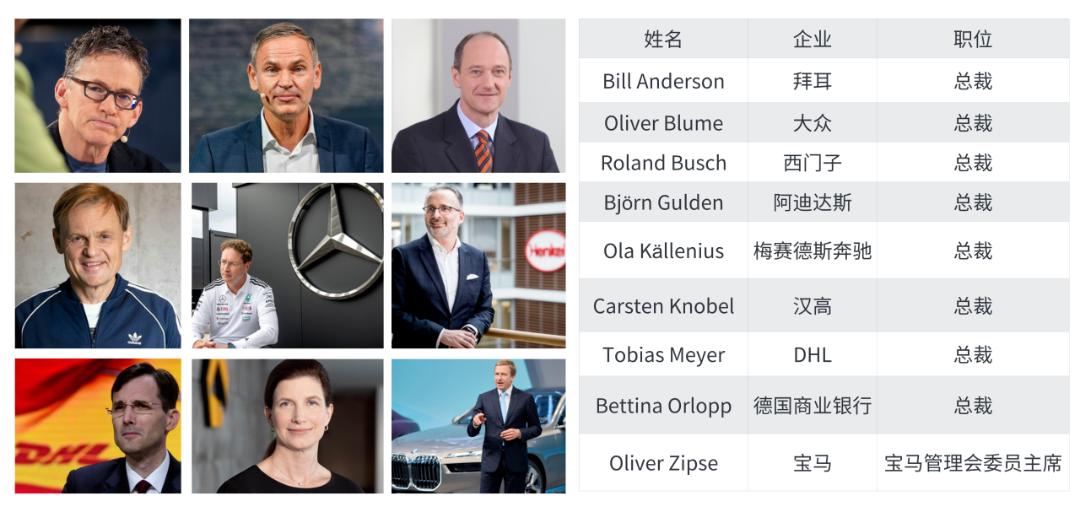
Group 1 - German Chancellor Merz's first visit to China since taking office is significant, with a delegation of around 30 top executives from major German companies, marking the most luxurious trade delegation since Merkel's era [2][3] - The visit reflects the strong confidence and pragmatic choices of the German business community regarding cooperation with China [3] - Executives from German automotive companies emphasize the irreplaceable nature of the Chinese market, with BMW's chairman stating that ignoring China would jeopardize future economic success [4][5] Group 2 - Substantial cooperation projects were established during the visit, with over ten commercial agreements reached in sectors such as automotive, machinery, energy, logistics, and finance [5] - The automotive sector is highlighted as a key area of focus, with German car manufacturers recognizing the importance of the Chinese market for their global competitiveness [7] - The collaboration direction has shifted from traditional manufacturing to technology synergy, extending into areas like battery technology, smart driving, and green low-carbon initiatives [8]

默茨访华,德国汽车更依赖中国了
3 6 Ke· 2026-02-27 01:47
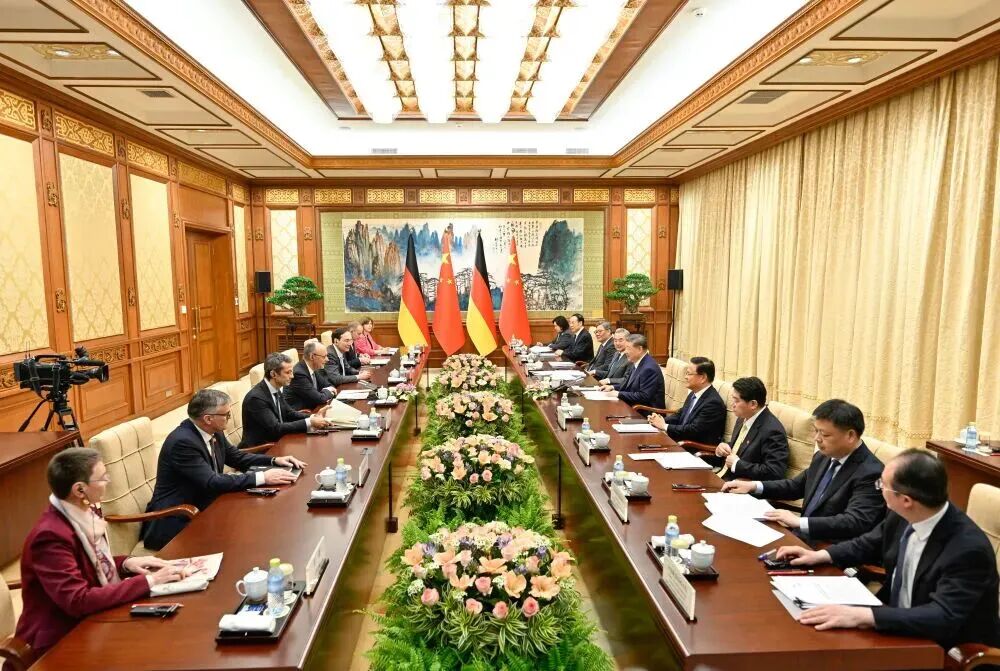
Core Insights - The visit of German Chancellor Merz to China, accompanied by leaders from Volkswagen, Mercedes-Benz, and BMW, signifies a shift in the dynamics of Sino-German cooperation, particularly in the automotive sector, highlighting Germany's increasing dependence on China for technology and market access [1][3][19] Group 1: Trade and Economic Relations - China has become Germany's largest trading partner, with trade volume reaching €251.8 billion in 2025, where Germany imported €170.6 billion from China and exported only €81.8 billion, resulting in a trade deficit of nearly €90 billion [11] - The automotive sector, which accounts for 13% of German industrial employment and 17% of exports, shows a significant trade imbalance, with Chinese electric vehicles and components flooding the German market while German car sales in China decline [11][14] - From 2022 to 2025, German car manufacturers' market share in China is projected to decrease by an average of 33%, with BMW and Mercedes-Benz experiencing declines of 42% and 35% respectively [11] Group 2: Technological Collaboration - The partnership between BMW and CATL focuses on cross-border industrial data usage, which is crucial for stabilizing BMW's electric supply chain, indicating a shift from "market for technology" to "co-creation of technology" [3][6] - Mercedes-Benz's collaboration with Momenta emphasizes practical applications of technology, showcasing the deepening of Sino-German automotive cooperation [6] - The discussions at the Sino-German Economic Advisory Committee highlighted topics such as electrification, green manufacturing, and localized supply chains, indicating a strategic elevation of cooperation from corporate to national levels [6] Group 3: Market Dynamics and Strategic Shifts - German automakers are increasingly investing in local operations in China, with Volkswagen committing over €20 billion to its Hefei base and BMW investing over €10 billion in a battery center in Shenyang, reflecting their reliance on the Chinese market for future growth [14] - Chinese brands like BYD are making significant inroads into the German market, with BYD's electric vehicle deliveries projected to increase by 706.2% by 2025, indicating a competitive shift in the automotive landscape [11][14] - The structural advantages of China's electric vehicle and battery sectors compel German companies to adapt, as they recognize that success in China is essential for success in other markets [14][19] Group 4: Future Outlook - The cooperation between China and Germany is expected to deepen, with German automakers accelerating their localization strategies and Chinese brands leveraging this partnership to expand into the European market [16][19] - The mutual recognition of automotive standards and collaboration in areas like green manufacturing and chip technology will enhance the competitiveness of both nations in the global automotive market [17][19] - The evolving dynamics suggest that while Germany seeks to maintain a strong political stance, the economic realities reveal a deep-seated dependency on China, particularly in the automotive sector [14][19]

宝马7系最高降27万元,豪华车“低头”也是一种新生
Xin Jing Bao· 2026-02-27 01:24
Group 1 - The core message highlights that the price reduction of the BMW 7 Series, with a maximum discount of 270,000 yuan, reflects a strategic decision by traditional luxury brands in response to the pressures of electrification and market restructuring in the high-end automotive sector in China [1][2] - The price adjustment is driven by inventory pressures faced by traditional dealers due to the transition to new energy vehicles and supply chain adjustments, with BMW's projected sales in China for 2025 expected to decline by 12.5% [1][2] - The rise of domestic high-end electric vehicles, such as Huawei's Five Dimensions, NIO ET9, and Xpeng X9, is intensifying competition for the BMW 7 Series, prompting a reevaluation of pricing strategies as luxury now encompasses smart experiences and user ecosystems [1][2] Group 2 - The price reduction of the BMW 7 Series is part of a broader trend in the luxury car market, where competitors like the Mercedes S-Class and Audi A8L have also introduced various discount policies, indicating a shift in consumer behavior towards valuing product strength and price alignment over brand premiums [2][3] - Despite the price cuts, BMW maintains its competitive edge in areas such as chassis tuning, powertrain technology, and manufacturing processes, ensuring that the new 7 Series retains essential luxury features [2][3] - The transition from a "brand premium battle" to a "value competition" in the luxury car market emphasizes the need for traditional luxury brands to innovate and enhance user value while balancing brand integrity and customer expectations [3]