
科技自立自强

Search documents
习近平:建设社会主义现代化强国 关键在科技自立自强
Xin Hua She· 2026-02-09 13:42
9日上午,习近平总书记在位于北京亦庄的国家信创园考察科技创新工作,走进展厅察看人工智能、机 器人等科技创新成果展示,并同科研人员和科技企业负责人代表亲切交流。习近平说,建设社会主义现 代化强国,关键在科技自立自强。要充分发挥我们国家集中力量办大事的优势,把各种优质要素集合起 来攻关,加快解决突出短板问题,实现我们的战略目标。 (文章来源:新华社) ...
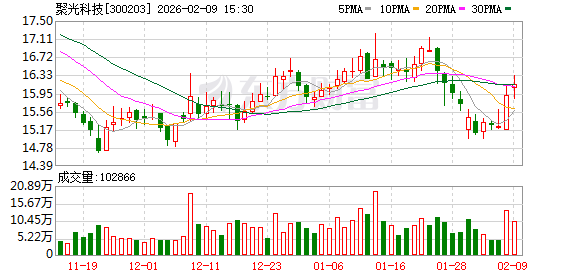
聚光科技:公司始终将高校与科研院所视为重要的战略市场和创新伙伴
Zheng Quan Ri Bao· 2026-02-09 13:36
Core Viewpoint - The company views universities and research institutions as important strategic markets and innovation partners, actively deepening cooperation in research fields amid national policies promoting technological self-reliance and domestic substitution [2] Group 1: Strategic Initiatives - The company is implementing multi-level measures to enhance collaboration with universities in the research sector and has already made initial progress [2] - The relevant supporting policies from the government and education authorities are creating historic development opportunities for domestic instrument manufacturers, including the company [2] Group 2: Market Focus - The company will closely monitor related policies and actively follow up to capture a larger market share [2]


如何引导国资“投早、投小、投硬科技”?田轩:优化考核机制【问诊2026中国经济】
Guan Cha Zhe Wang· 2026-02-09 13:08
他解释道,因为国家资金更关注国有资产的保值和增值,所以容错率相对会低一些。项目投资成功当然 没问题,但如果投失败了——市场化创投基金觉得这是正常现象,因为"风险投资"这个名字里就带"风 险",它天生就是高风险的。它的商业模式就是投十个项目里,有一个明星项目能赚几十倍、上百倍, 就能把前面大量试错失败的成本覆盖掉,最后还能取得不错的回报。但国资背景不同,它涉及国有资产 保值增值的问题。 "你投十个项目,哪怕九个都成功,只要有一个失败,就可能被认为涉及国有资产流失。甚至还会有人 追问:当初为什么投这个项目?是不是存在利益输送?所以很多政府背景的基金在实际操作中就不太 敢'投早、投小、投长、投硬',避险倾向会很强,最后往往只能去投中后期、现金流更稳、看得更清楚 的项目。这就和中央的要求背道而驰了",田轩说。 在此基础上,田轩认为,下一步改革的一个重点就是优化国资背景基金的评价机制和考核机制。比如, 把考核周期拉长,不要一年一年审。风险投资基金在美国的存续期通常是10到12年,不应该在前几年就 一年一年盯着看成本收益。因为真正的"早、小",的初创科技企业在前几年大概率是亏损的;一年一年 地审核,就会天然不利于这些政府 ...
国资委加力部署科技创新,多家央企明确新一轮工作重点
Di Yi Cai Jing· 2026-02-09 11:53
Core Viewpoint - The focus of the 2026 state-owned enterprise reform is to deepen the "three systems" reform, emphasizing the integration of technological innovation and industrial innovation to enhance productivity and drive economic growth [1] Group 1: Technological Innovation in State-Owned Enterprises - Central enterprises have invested 1.1 trillion yuan in R&D, maintaining over 1 trillion yuan for four consecutive years, and have established 23 innovation alliances with over 100 participants [2] - The China State Construction Engineering Corporation has developed a roof system for the Shenzhen Qianhai Ice and Snow World that can withstand typhoons and generate 6.3 million kWh of green electricity annually [2] - The roof features a photovoltaic system with an area of approximately 35,000 square meters, achieving a conversion efficiency of 20% [2] Group 2: Integration of Innovation and Industry - The State-owned Assets Supervision and Administration Commission (SASAC) emphasizes the deep integration of technological and industrial innovation, aiming to reshape the industrial chain through technological advancements [1][6] - SASAC supports the establishment of 97 original technology sources and has facilitated the promotion of over 1,000 outstanding technological achievements across more than 6,000 enterprises [6][7] - The focus for this year includes increasing high-quality technological supply, enhancing efficient results transformation, and building a high-level innovation ecosystem [6][7] Group 3: Strategic Development and Policy Support - Central enterprises are encouraged to strengthen their role in innovation, with a focus on key core technology breakthroughs and increasing the proportion of basic research investment [7] - The annual meetings of various central enterprises have led to new deployments for technological and industrial innovation, with a focus on optimizing innovation layouts and integrating AI with traditional energy sectors [8] - The importance of state-owned enterprises as a crucial part of the national strategic technological force is highlighted, with calls for improved policies and incentives to support original technology development [8]
【新华社】大国重器彰显创新底气——我国加快绘就高水平科技自立自强新图景
Xin Hua She· 2026-02-09 03:40
Core Viewpoint - The article emphasizes China's advancements in technology and innovation, showcasing significant achievements in various scientific fields and the development of major national projects, which are seen as essential for high-quality economic growth and self-reliance in technology [10][19]. Group 1: Major Technological Achievements - The 300 MW F-class heavy-duty gas turbine is China's first independently developed turbine of its kind, consisting of over 50,000 precision components and representing a significant leap from "learning by following" to "independent research and development" [11][12]. - The "Tianwen-2" probe was successfully launched, marking a new phase in China's planetary exploration efforts, with a record 92 space launches planned for 2025 [13]. - The "Fendouzhe" manned submersible achieved a world-first deep dive in the Arctic, showcasing China's capabilities in deep-sea exploration [13]. Group 2: Research and Development Initiatives - The "China Sky Eye" FAST telescope made significant breakthroughs in radio astronomy, revealing the origins of fast radio bursts, highlighting China's leading position in this field [15]. - The Jiangmen neutrino experiment involves over 700 researchers from 75 institutions across 17 countries, reflecting China's commitment to international collaboration in scientific research [16]. - The "Lasso" cosmic ray observatory has made significant advancements in understanding cosmic ray origins, driven by a dedicated team of young researchers [18]. Group 3: Innovation Ecosystem and Policy Support - Continuous investment and reforms in the research funding system have empowered scientific teams, allowing for greater autonomy and focus on groundbreaking research [15][19]. - The establishment of major scientific infrastructure in regions like Beijing and Shanghai has positioned China as a hub for scientific research and innovation [16]. - The article highlights the importance of nurturing talent and breaking down institutional barriers to foster a vibrant innovation ecosystem [19].
市场缩量调整,聚焦攻防均衡丨周度量化观察
申万宏源证券上海北京西路营业部· 2026-02-09 02:10
Market Overview - This week, the A-share market experienced a comprehensive pullback, with the Shanghai Composite Index down by 1.27%, the CSI 300 down by 1.33%, and the ChiNext Index down by 3.28%. The average daily trading volume in the Shanghai and Shenzhen markets significantly decreased to around 2.3 trillion yuan [2][11][15]. - In the bond market, the overall performance was strong, supported by a stable funding environment maintained by the central bank. The January PMI data fell below the growth line, which is favorable for the bond market [3][31]. Equity Market - The decline in A-shares was primarily driven by a shift in expectations regarding the Federal Reserve's policy, which triggered a significant pullback in precious metals and led to profit-taking in popular sectors ahead of the Spring Festival. The nomination of hawkish candidate Waller as Fed Chair strengthened the dollar, suppressing risk appetite and dragging down cyclical stocks [6][9]. - The investment strategy emphasizes a balanced approach, advocating for low buying and avoiding high chasing. Long-term trends in sectors such as defense, resources, finance, and supply chains are highlighted as areas of potential growth [6][9]. Bond Market - The market is expected to remain volatile in the short term, with favorable factors including the central bank's support for the funding environment. However, the anticipated supply of government bonds poses a challenge. The recommendation is to focus on medium to short-term bond strategies rather than excessive speculation on long-term bonds [7][31]. Commodity Market - The gold market experienced significant volatility, with COMEX gold prices dropping sharply by 8.92% due to a combination of factors, including hawkish expectations from the Fed, profit-taking by bulls, and a sharp decline in silver prices [4][36]. - The short-term outlook for gold suggests potential fluctuations within the current range, with a focus on upcoming U.S. non-farm payroll data and Fed officials' statements. Long-term gold investment remains solid as a core asset [8][40]. Overseas Market - The U.S. economy remains strong, with favorable credit cycle expectations. However, the market is at a relatively high level, and factors such as unclear policy outlooks and declining risk appetite may lead to increased volatility. The AI industry trend is still ongoing, and traditional cycles are expected to recover [9][39].

练好内功把握主动
Ren Min Ri Bao· 2026-02-09 00:52
在内外环境复杂、资源日益紧张的今天,提升质量、提高效率成为可持续发展的治本之策,而苦练内功 的核心与精髓正在于提质增效。无论是推进科技自立自强、突破"卡脖子"技术,还是推动产业转型升 级、实现"腾笼换鸟",应对这些"慢变量"的挑战,根本的出路只有一条:持之以恒、因地制宜练好内 功。既要发扬"跳起来摘桃子"的精神,拿出真跳的实劲、敢跳的狠劲、善跳的巧劲,通过不懈苦练、稳 扎稳打,积小胜为大胜,积量变为质变;又要摸清规律办事,抓住主要矛盾和矛盾的主要方面,不 搞"大水漫灌",做到"精准滴灌",将有限的资源和精力分配到关键领域。 练好内功不是"内卷",更不是"内耗",而是自我提升的正向积累,是"向上竞争"的良性循环。工作中, 总有一些党员干部看似整天事务缠身、忙个不停,年终盘点却两手空空、乏善可陈。说到底,这种忙碌 是忙而无功、忙而无益的"空忙"。走出"内卷""空忙"的怪圈,必须加强理论学习,掌握科学工作方法, 善于透过现象看本质、通过局部把握全局、从当前工作看长远发展,提升工作的科学性、预见性;也要 坚持在干中学、学中干,在实践中不断思考总结、校准偏差,干一项工作就有所提升、有所进益,不断 增强担当作为、干事创业 ...
练好内功把握主动(思想纵横)
Ren Min Ri Bao· 2026-02-08 23:16
Core Viewpoint - The emphasis on "internal practice" is crucial for addressing external challenges, as highlighted in the Central Economic Work Conference, which underscores the importance of focusing on internal capabilities to navigate complex situations and seize opportunities [1][2]. Group 1: Internal Practice and Economic Strategy - The concept of "internal practice" is essential for enhancing self-potential and internal motivation, allowing for better control over development and the ability to adapt to external changes [1][3]. - The current global economic environment necessitates a focus on quality improvement and efficiency enhancement as fundamental strategies for sustainable development [3][4]. - The need for strategic determination among party members is critical, as many face challenges that require confidence and action to overcome [2][4]. Group 2: Challenges and Solutions - The ongoing transition in development methods and economic structure presents numerous challenges that require a persistent and adaptable approach to problem-solving [2][3]. - The importance of understanding the main contradictions and focusing resources on key areas is emphasized to avoid ineffective efforts and ensure targeted actions [3][4]. - The distinction between productive work and "busy work" is crucial, as true progress comes from meaningful engagement rather than mere activity [4].
以高水平科技自立自强引领新质生产力发展
Xin Lang Cai Jing· 2026-02-08 21:39
Group 1 - The core viewpoint emphasizes the need for high-level technological self-reliance and the development of new quality productivity as a direction for current and future technological innovation and industrial upgrading in China [3][4] - China's economy is transitioning from factor-driven to innovation-driven growth, necessitating higher quality in technology supply and addressing challenges in supply chain security and high-quality development [3][4] - The relationship between technological self-reliance and new quality productivity is dialectical, with the former directly influencing the emergence and transformation of new technologies and industries into productive forces [4] Group 2 - In 2024, China's total R&D investment is expected to exceed 3.6 trillion yuan, a 48% increase from 2020, with an R&D intensity of 2.68%, surpassing the EU average [4] - China's ranking in comprehensive innovation capability has improved from 14th in 2020 to 10th in 2024, with the country leading the world in high-level international journal publications and international patent applications for five consecutive years [4] - The rise of new quality productivity is exemplified by China's dominance in the global sales of new energy vehicles, steady progress in the commercial operation of the C919 aircraft, and the expanding scale of the artificial intelligence industry [4] Group 3 - The strategy involves collaborative efforts across four dimensions: original innovation, integration of production and innovation, aggregation of elements, and regional collaboration to build a comprehensive support system [5][6][7] - Strengthening original innovation is crucial, focusing on basic research and application-oriented research, particularly in foundational disciplines and cutting-edge fields like artificial intelligence and quantum computing [5] - Deepening the integration of production and innovation is essential for the practical application of technological achievements, requiring collaboration between enterprises, universities, and markets [6] Group 4 - Optimizing the innovation ecosystem involves efficient allocation of innovation resources, addressing uneven distribution and accessibility issues, and enhancing support for small and medium-sized enterprises [6][7] - Promoting regional collaboration is key to balanced development, necessitating the establishment of regulatory frameworks for cross-regional cooperation, resource sharing, and talent mobility [7] - The implementation of policies to support young researchers and startups, along with the demonstration role of resource-rich areas, is vital for fostering a collaborative and innovative environment [7]
大国重器彰显创新底气
Xin Lang Cai Jing· 2026-02-08 18:30
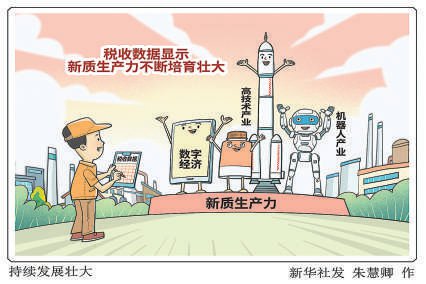
Core Viewpoint - The article emphasizes the importance of mastering key technologies and innovations domestically, showcasing China's advancements in various scientific fields and the successful development of major projects that contribute to high-quality development and technological self-reliance [1][10]. Group 1: Major Technological Achievements - The 300 MW F-class heavy-duty gas turbine is China's first independently developed turbine of its size and technology level, consisting of over 50,000 precision components and developed through collaboration among more than 200 enterprises and research institutions across 19 provinces [2][3]. - The first prototype of the gas turbine has successfully generated 196 million kilowatt-hours of electricity, demonstrating its stability in real grid environments and marking a significant leap from "learning by following" to "independent research and development" in this field [3]. Group 2: Space and Deep-Sea Exploration - China plans to achieve a record 92 space launches by 2025, with the Tianwen-2 mission beginning its journey to explore celestial bodies, while the Chinese space station has implemented 265 scientific and application projects [4]. - The "Fendouzhe" submersible has completed the world's first continuous manned deep dive in the Arctic, showcasing China's capabilities in deep-sea exploration and marking a milestone in human deep-sea research [4]. Group 3: Research and Innovation Framework - The article highlights the establishment of a multi-faceted innovation matrix, with significant investments in basic research and the development of various scientific facilities across China, such as the FAST radio telescope and the Jiangmen neutrino experiment [7]. - Reforms in funding mechanisms and research autonomy have empowered scientific teams, allowing for greater focus on cutting-edge research and enhancing original innovation capabilities [6][7]. Group 4: Scientific Spirit and Talent Development - The article underscores the importance of a strong scientific spirit, with younger researchers continuing the legacy of perseverance and collaboration established by previous generations [9][10]. - Continuous improvements in talent cultivation and evaluation systems aim to eliminate restrictive practices, fostering an environment where young talents can thrive in significant research projects [10].