绿色转型

Search documents
北京这22家民营企业,如何成了“尖子生”
Sou Hu Cai Jing· 2025-09-04 23:24
Core Insights - The release of the 2025 list of China's top 500 private enterprises by the All-China Federation of Industry and Commerce highlights the vitality and resilience of Beijing's economy, with 22 companies making the list and a threshold of 27.023 billion yuan for entry [1][3]. Group 1: Characteristics of Beijing's Private Enterprises - Beijing's private enterprises are characterized by strong innovation capabilities and high technological content, aligning with the city's strategy to build an international technology innovation center [3]. - The 22 listed companies exhibit a unique pattern in industry distribution, innovation investment, and scale effects, showcasing a robust presence in digital economy and intelligent manufacturing [3]. - Among these companies, one has revenue exceeding 500 billion yuan, six are in the billion-yuan range, and the rest are stable between 27 billion and 100 billion yuan, indicating a "head-led, tiered development" model [3]. Group 2: Trends in Private Economic Development - Innovation-driven growth is a core focus, with four companies investing over 10 billion yuan in R&D, and notable firms like Baidu, Xiaomi, and Li Auto showing R&D intensity above 5%, significantly higher than the national average of 2.77% [5]. - The integration of digital and green transformations is evident, with Beijing's private enterprises excelling in strategic emerging industries such as artificial intelligence and new energy vehicles, contributing to a "high-precision" industrial structure [5]. - By the end of 2024, private economic entities in Beijing are expected to account for over 90% of total business entities, with two trillion-yuan, five hundred-billion-yuan, and eight hundred-billion-yuan revenue groups cultivated [5]. Group 3: Advantages of Beijing for Private Enterprises - Beijing's unique strategic positioning and resource endowment provide favorable conditions for private enterprise development, including a concentration of innovation resources with 92 universities and over 1,000 research institutions [7]. - The city has a significant advantage in strategic resource allocation, hosting the largest number of venture capital institutions and private equity funds in the country, with private enterprises receiving about 35% of national venture capital in 2024 [7]. - Continuous optimization of the business environment has been achieved through over 1,500 practical measures in administrative approval, regulatory enforcement, and government services, enhancing the overall business climate [7]. Group 4: Future Prospects for Private Enterprises - Establishing a comprehensive innovation support system is a primary task, with suggestions to create a private enterprise innovation fund to support pilot projects and technology transfer [9]. - There is a need to optimize financing services, expand coverage of the "smooth financing project," and explore intellectual property securitization to alleviate financing difficulties for asset-light enterprises [9]. - Support for international development of enterprises should be increased, leveraging the Belt and Road Initiative to create more international cooperation platforms [9]. - Continuous efforts are required to improve the business environment, including establishing a one-stop service platform for enterprise policies and enhancing the protection of intellectual property rights [9].





【环时深度】多重挑战下,欧洲环保路线之争加剧
Huan Qiu Shi Bao· 2025-09-04 23:07
Core Viewpoint - The article highlights the increasing internal divisions within Europe regarding environmental policies, particularly in light of recent extreme weather events and the economic challenges faced by the region. The debate over air conditioning in France exemplifies the broader conflict between economic survival and environmental ideals [1][2][9]. Group 1: Environmental Policy Divisions - The "air conditioning war" in France reflects a growing divide in environmental policy, with right-wing parties advocating for more practical solutions to heat waves, while left-wing factions warn against exacerbating environmental crises [2][3]. - The "Duplon Law" has intensified conflicts among French political factions, with significant protests from farmers against EU environmental policies that threaten their livelihoods [3][4]. - The rise of far-right parties in the EU, such as the "European Patriots," indicates a shift away from traditional support for green agendas, focusing instead on economic concerns [4][5]. Group 2: Economic Pressures and Environmental Goals - Economic downturns and high inflation have led to a reevaluation of the EU's green agenda, with many parties now prioritizing economic stability over environmental initiatives [1][10]. - The EU's commitment to ambitious climate goals, such as reducing carbon emissions by 55% by 2030, faces increasing political resistance, particularly from right-wing factions [4][6]. - The shift in public priorities towards economic security and international conflicts has diminished the emphasis on climate issues, reflecting a broader trend of environmental policy regression in the EU [10][11]. Group 3: Climate Change Impact - Extreme weather events, including wildfires and floods, have significantly affected Europe, with millions impacted and substantial carbon emissions released [11][12]. - The EU's preparedness for climate change adaptation has been criticized, indicating a lack of effective strategies to address the challenges posed by climate change [12].
深圳创新源泉:“来了就是深圳人”彰显包容和无限可能
2 1 Shi Ji Jing Ji Bao Dao· 2025-09-04 12:38
Core Insights - Shenzhen has transformed from a fishing village into a global technology innovation hub over 45 years, driven by its inclusive spirit and innovative culture [1] - The city has undergone three significant phases: the pioneering era (1979-1992), industrial upgrading (1992-2010), and innovation-driven development (2010-present) [2] - Shenzhen's population is characterized by a high percentage of immigrants, a young demographic, and a strong entrepreneurial spirit, contributing to its innovation ecosystem [3] Historical Transformation - Shenzhen served as China's "testing ground" for market economy reforms, introducing the "time is money, efficiency is life" motto [2] - The city shifted from processing trade to high-tech industries, with companies like Huawei and ZTE emerging as key players [2] - A comprehensive innovation ecosystem has been established, with R&D intensity projected to reach 6.46% by 2024 and leading the nation in PCT patent applications for 18 consecutive years [2] Demographic Characteristics - Over 70% of Shenzhen's registered population consists of migrants, fostering adaptability and creativity [3] - The average age of residents is 33, with a significant number of high-level talents and returnees from studying abroad [3] - Approximately 60% of enterprises are technology-based, with a strong presence of private firms, exemplified by Huawei's projected R&D investment of 179.7 billion yuan in 2024 [3] Success Factors - Institutional innovation has been pivotal, including the delegation of research management and the establishment of a national intellectual property protection demonstration zone [4] - The market-driven innovation ecosystem is characterized by a high concentration of innovative enterprises and collaborative efforts between leading companies and SMEs [4] - Shenzhen's global integration is facilitated by platforms like Qianhai and He Tao, attracting top research institutions and talent [4] Innovation Case Studies - Huawei has evolved into a global leader in ICT, investing over 1.4 trillion yuan in R&D over the past decade [6] - DJI has redefined the consumer drone market, holding over 70% market share globally, supported by Shenzhen's robust electronics supply chain [6] - BGI has become a leading genomics research institution, contributing significantly to global pandemic response efforts [6] Challenges - Shenzhen faces resource constraints, particularly in land use, with a development intensity of 50% [7] - There is an imbalance in talent structure, with a shortage of top scientists in certain fields [7] - The city must transition from "following" to "leading" in key technology sectors like integrated circuits and software [7] - Increased competition from cities like Hangzhou and Suzhou poses a risk to Shenzhen's innovation leadership [7] Strategic Recommendations - Enhance original innovation by increasing government investment in basic research and establishing more national laboratories [8] - Optimize the talent ecosystem by implementing programs to attract and retain top young scientists [8] - Deepen international cooperation to build a global innovation network, leveraging Shenzhen's strengths in hardware and digital technology [8] Policy Innovations - Shenzhen has introduced a series of policies to support businesses throughout their lifecycle, including the "Shen i Enterprise" platform [9][10] - Financial reforms such as the "Tengfei Loan" model aim to provide long-term financing for high-growth companies [10] - Talent policies have been upgraded to support various categories of talent, including subsidies for young professionals [10] Future Outlook - Shenzhen aims to lead in original innovation, particularly in quantum technology and brain science, with plans for significant industry clusters by 2030 [11][12] - The city seeks to strengthen the "Shenzhen-Hong Kong Innovation Community" and enhance cross-border research collaboration [11] - A commitment to sustainable development includes initiatives for carbon neutrality and green finance innovations [12] Conclusion - Shenzhen's narrative is one of courage, wisdom, and inclusivity, with a focus on continuous innovation and breaking down institutional barriers [13] - The city's future as a leader in "Chinese intelligence manufacturing" hinges on its ability to overcome technological challenges and maintain its innovative edge [13]
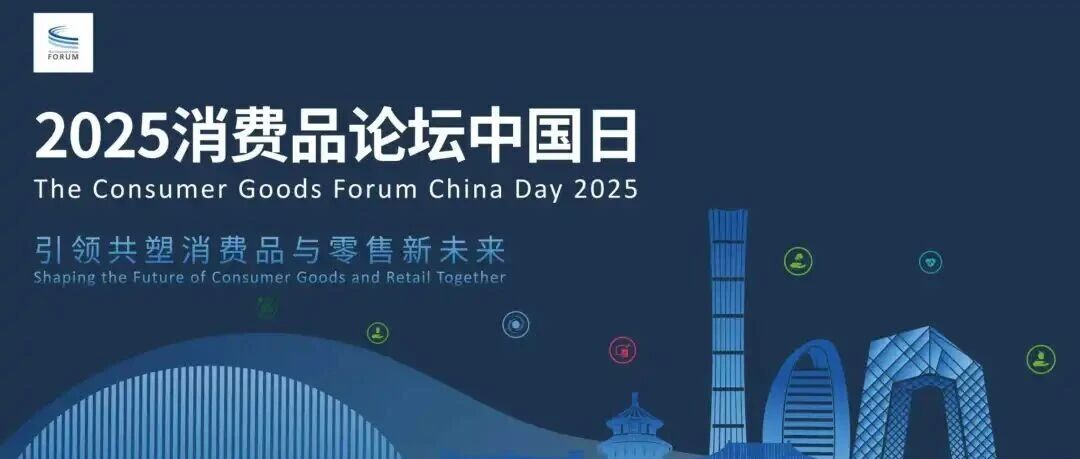
引领共塑消费品与零售新未来 | 2025 消费品论坛中国日开幕在即
第一财经· 2025-09-04 11:30
Core Insights - The 2025 Consumer Goods Forum China Day will take place on September 11-12, 2025, at the Four Seasons Hotel in Beijing, focusing on trends and innovations in the consumer goods sector [2][12]. Agenda Highlights - The event will feature keynotes from industry leaders, including insights on the trends in China's retail sector and the future of Chinese consumers [6][9]. - A roundtable discussion will address the resilience and differentiation of the Chinese consumer market in 2025, with participation from various industry experts [9][10]. - Sessions will cover topics such as innovation in the consumer industry, the impact of AI on retail, and collaborative strategies between brand owners and retailers to drive growth [10][11][12]. - The agenda includes a focus on food safety, sustainability, and the digital transformation of supply chains, with presentations from leading companies and organizations [14][22][32]. - The event will also highlight the release of the 2025 edition of the CGF China Green Consumer Goods Selection Guide, emphasizing sustainable practices in the industry [24][28]. Key Themes - The forum will explore the impact of consumer behavior changes, particularly in the context of health and sustainability, as well as the role of technology in enhancing consumer engagement and operational efficiency [36][37]. - Discussions will include the challenges and opportunities presented by the GFSI certification and the importance of food safety in the consumer goods sector [17][19]. - The event aims to foster collaboration among stakeholders to promote sustainable practices and improve the overall quality of consumer goods in China [22][24].
中国海油(600938):油价回落明显,成本优势及增储上产凸显韧性
Dongxing Securities· 2025-09-04 10:42
Investment Rating - The report maintains a "Strong Buy" rating for China National Offshore Oil Corporation (CNOOC) [4] Core Views - The report highlights that CNOOC has demonstrated resilience through increased reserves and production despite a significant drop in oil prices, with Brent crude averaging $70.94 per barrel, down 14.58% year-on-year [2][3] - CNOOC's oil production reached 296.1 million barrels, an increase of 4.48% year-on-year, while natural gas production rose by 11.97% to 516.2 million barrels [2] - The company has successfully managed costs, with the average cost per barrel of oil equivalent at $26.94, a decrease of 2.9% year-on-year [2] Financial Performance Summary - For the first half of 2025, CNOOC reported revenue of RMB 207.61 billion, a decline of 8% year-on-year, and a net profit of RMB 69.53 billion, down 12.8% [1] - Oil and gas sales revenue was approximately RMB 171.75 billion, reflecting a decrease of 7.2% year-on-year [2] - The company is projected to maintain stable net profit forecasts for 2025-2027, with estimates of RMB 1344.28 billion, RMB 1370.74 billion, and RMB 1407.40 billion respectively, corresponding to EPS of 2.83, 2.88, and 2.96 [9][10] Exploration and Development - CNOOC has intensified exploration efforts, achieving five new discoveries in Chinese waters and significant breakthroughs in metamorphic rock exploration in the South China Sea [3] - The company has signed oil contracts in Iraq and Kazakhstan, further solidifying its resource base for future development [9] Strategic Initiatives - CNOOC is focusing on green transformation initiatives, including offshore CCUS and gas recovery measures, alongside advancements in its offshore floating wind power projects [9]

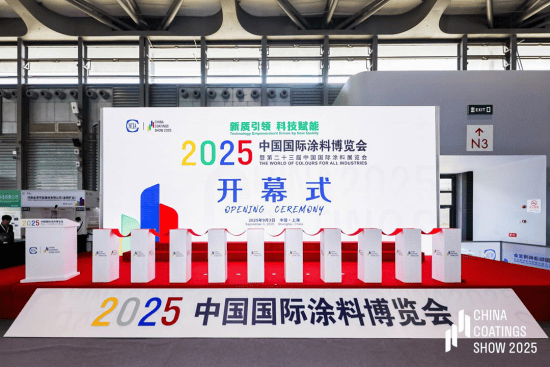
2025中国国际涂料博览会在上海启幕
Sou Hu Cai Jing· 2025-09-04 10:20
Group 1 - The 2025 China International Coatings Expo and the 23rd China International Coatings Exhibition opened in Shanghai, featuring a theme of "New Quality Leading, Technology Empowering" [2][9] - The exhibition covers an area of 100,000 m² with over 500 participating units and is expected to attract more than 100,000 professional visitors over three days [2][10] - This year marks the 40th anniversary of the China Coatings Industry Association, showcasing new products and technologies from the coatings industry [4][11] Group 2 - The coatings industry plays a crucial role in modern industry and life, achieving global leadership in production and sales for 16 consecutive years [5] - The industry is actively promoting green transformation and technological empowerment under the "dual carbon" goals, with a rapid adoption of environmentally friendly coatings [5][6] - The expo serves as a significant platform for global industry exchange and cooperation, gathering resources from the entire coatings supply chain [5][10] Group 3 - The Asia-Pacific region accounts for approximately 50% of the global coatings market value and 58% of production, with China contributing over 50% of the Asian market [6] - The expo focuses on various dimensions such as antibacterial and powder coatings, advanced manufacturing, green buildings, and smart manufacturing [6][12] - The event includes over 20 professional forums covering various sectors of the coatings industry, facilitating collaboration and showcasing the latest advancements [12] Group 4 - The 16th National Petroleum and Chemical Industry Vocational Skills Competition is being held concurrently, promoting skill development and aligning with industry standards [13] - The competition aims to foster a culture of skill appreciation and provide a platform for showcasing talent in the coatings industry [13]
人民币汇率的“逆袭密码”
Sou Hu Cai Jing· 2025-09-04 08:00
Core Viewpoint - The recent performance of the Renminbi (RMB) reflects a strong upward trend, with a 0.64% appreciation since August and over 2% year-to-date, indicating a "steady and strong" market condition [1] External Factors - The weakening of the US dollar and rising expectations for Federal Reserve interest rate cuts have contributed to a declining dollar index, providing a favorable environment for RMB appreciation [1] - The RMB's previous slow appreciation has now accelerated, allowing it to catch up more quickly [1] Internal Factors - Domestic policies and capital flows have positively impacted the stock market, attracting foreign investment back into China [1] - The central bank's steady appreciation of the midpoint rate and issuance of offshore central bank bills have sent clear signals to the market, improving cross-border capital flows and stabilizing market confidence [1] Future Outlook - The Chinese economy is expected to remain stable and improve, supported by consumption upgrades, technological innovation, and green transformation, which will likely keep the RMB exchange rate resilient and stable within a reasonable range [1] - There is potential for the RMB to gradually achieve "three prices in one" as part of its ongoing appreciation [1] - The recent appreciation is seen not as a mere coincidence but as a reflection of the underlying economic strength [1]

小摩上调中国宏桥(01378)目标价至26.5港元 绿色转型+回购计划支撑估值修复
智通财经网· 2025-09-04 05:38
Core Viewpoint - Morgan Stanley maintains an "Overweight" rating on China Hongqiao (01378) and significantly raises the target price from HKD 17 to HKD 26.5, indicating substantial upside potential based on record earnings, industry-leading valuation advantages, and long-term value enhancement from strategic transformation [1] Financial Performance - In the first half of the 2025 fiscal year, China Hongqiao achieved revenue of RMB 81.039 billion, a year-on-year increase of 10%; net profit reached RMB 12.361 billion, surging 35% year-on-year, with a gross margin improvement to 25.7% [1] - The growth in profit was primarily driven by a slight increase of 3% in aluminum product sales, a 6% rise in gross profit per ton to RMB 4,540, and a significant 16% increase in alumina sales, with gross profit per ton rising to RMB 934 [1] Price Guidance and Market Outlook - Management provided an optimistic price guidance for the second half, expecting aluminum prices to range between RMB 20,600 and RMB 21,300 per ton, and alumina prices between RMB 3,200 and RMB 3,300 per ton, which aligns closely with current spot prices [1] - The company emphasized that asset impairment pressures have been largely alleviated [1] Future Projections - Despite Morgan Stanley predicting a slowdown in revenue growth to 3.9%, -0.3%, and 1.2% for the fiscal years 2025-2027, net profit is expected to maintain single-digit growth, with EBITDA margins projected to continue rising to 29.7% [2] - The company’s return on equity (ROE) is above peers, and it announced a stock buyback plan of no less than HKD 3 billion, representing 1.36% of market capitalization, providing dual support for valuation enhancement [2] Financial Structure and Cash Flow - China Hongqiao's net debt ratio stands at a low 23.8%, with financing costs down 18% year-on-year; annual capital expenditure is expected to stabilize between RMB 12 billion and RMB 13 billion, with a free cash flow yield of 15%, supporting ongoing shareholder returns [2] - Although the interim dividend for 2025 has been canceled, the annual payout ratio is expected to remain at 63%, alongside the announced buyback plan [2] Competitive Position and Strategic Initiatives - As the world's largest primary aluminum producer with a production volume of 6.3 million tons in 2023, China Hongqiao enjoys significant cost advantages through a vertical integration model, including self-sufficient power plants and a 70%-80% self-sufficiency rate in bauxite [2] - The company is focusing on a green transition strategy, with 24-25% of aluminum production expected to be powered by hydropower by 2024, aiming for 50% green energy consumption in the long term, which highlights its long-term value in the context of ESG investment trends [2] Valuation and Market Comparison - Despite short-term risks from aluminum price fluctuations, rising electricity and coal costs, and exchange rate changes, Morgan Stanley believes the company has mitigated risks through prior asset impairment provisions [3] - Based on a projected P/E ratio of 9 times and a P/B ratio of 1.8 times for 2026, the target price of HKD 26.5 corresponds to a dividend yield of 7.7%-8.2%, with a net debt/EBITDA ratio maintained at a stable level of 0.1-0.3 [3] - The current dynamic P/E ratio of 8 times for China Hongqiao remains below the global industry average of 11 times, indicating ample room for valuation recovery [3]
刚刚,这一板块,全面爆发!
Zhong Guo Ji Jin Bao· 2025-09-04 04:51
Market Overview - A-shares experienced a collective pullback on September 4, with the Shanghai Composite Index down 1.97% to 3738.32 points, Shenzhen Component Index down 2.37%, ChiNext Index down 3.2%, and the Sci-Tech Innovation 50 Index down 5.38% [1] - The North Exchange 50 Index rose 0.58% against the trend [2] - The micro-cap stock index increased by 1.32% [3] - The total trading volume in the Shanghai and Shenzhen markets reached 1.59 trillion yuan, an increase of 142.7 billion yuan compared to the previous trading day [4] - A total of 2629 stocks rose, 32 stocks hit the daily limit, and 2606 stocks fell [5] New Energy Sector - The new energy sector saw a significant surge, with multiple new energy ETFs performing well and several stocks hitting the daily limit [6] - The power battery index, energy storage index, and lithium battery index rose by 2.65%, 2.32%, and 1.43% respectively [6] - Yiwei Lithium Energy (300014) surged by 6.17% to 67.96 yuan per share, with a market capitalization of 139 billion yuan [6] - Notable performers included Tianhong Lithium Battery, which hit the daily limit, and other companies like Tongrun Equipment and Tianji Technology, which also saw substantial gains [7][8] - Data from the Passenger Car Association indicated that 1.079 million new energy passenger vehicles were sold in August, a year-on-year increase of 5% and a month-on-month increase of 9%, with a penetration rate of 55.3% [9] CPO Concept Stocks - CPO concept stocks, including optical modules and optical chips, experienced a significant decline after a previous surge [11] - The CPO concept sector fell by 10% on September 4, following a 7.04% increase on September 1 [12] - Major stocks like Xinyi Technology, Zhongji Xuchuang, and Tianfu Communication led the decline, each dropping over 11% [13] - The FTSE Russell announced changes to the FTSE China 50 Index and FTSE China A50 Index, including the addition of companies like BeiGene and Xinyi Technology [14] Consumer Sector - The consumer sector showed activity, with the restaurant and tourism sector rising by 2.85% and the retail sector increasing by nearly 2% [15] - Companies such as Lingnan Holdings and Changbai Mountain saw significant gains, with some hitting the daily limit [15] - The Ministry of Culture and Tourism projected that domestic tourism will reach 1.43 billion trips by 2025, recovering to 112% of 2019 levels [15] - A report from Caitong Securities indicated that the restaurant industry is in a recovery phase, with government policies expected to stimulate consumption, particularly in wedding and group dining scenarios [15]





刚刚,这一板块,全面爆发!
中国基金报· 2025-09-04 04:32
Core Viewpoint - A-shares experienced a collective pullback, with major indices declining significantly, while the new energy sector saw a robust performance, indicating a divergence in market trends [1][8][21]. Market Overview - As of September 4, the Shanghai Composite Index fell by 1.97% to 3738.32 points, the Shenzhen Component Index dropped by 2.37%, and the ChiNext Index decreased by 3.2% [1]. - The total market capitalization reached 60.03 trillion yuan, with a trading volume of 1.59 trillion yuan, an increase of 142.7 billion yuan from the previous trading day [2][8]. New Energy Sector Performance - The new energy sector experienced a significant surge, with multiple ETFs and stocks hitting the daily limit. The power battery index rose by 2.65%, the energy storage index by 2.32%, and the lithium battery index by 1.43% [10]. - Notable stocks included Yiwei Lithium Energy, which increased by 6.17% to 67.96 yuan per share, with a market capitalization of 139 billion yuan [10][14]. CPO Concept Stocks - CPO concept stocks faced a sharp decline, with the sector dropping by 10% after a previous increase of 7.04% on September 1. Key stocks like New Yisheng and Tianfu Communication saw declines exceeding 11% [16][19]. - The CPO sector's downturn reflects broader market volatility, contrasting with the strong performance of the new energy sector [16][19]. Consumer Sector Activity - The consumer sector showed signs of vitality, with the restaurant and tourism sectors rising by 2.85% and nearly 2%, respectively. This was supported by positive tourism data and anticipated government policies to stimulate consumption [21][23]. - The Ministry of Culture and Tourism projected that domestic tourism will reach 1.43 billion trips by 2025, surpassing pre-pandemic levels [23].