
全球资产配置

Search documents
多位大咖发声!国泰海通举办首届全球资产配置峰会
2 1 Shi Ji Jing Ji Bao Dao· 2025-10-24 14:16
Core Insights - The conference hosted by Guotai Junan Securities focused on "Global Asset Allocation in a New Landscape," bringing together experts and institutional investors to explore new paradigms in asset allocation [1] - Guotai Junan Securities aims to enhance global asset allocation capabilities through a systematic investment research framework, innovative AI-driven advisory platforms, and collaborative partnerships with clients and institutions [1] Group 1: Economic Outlook and Investment Strategies - Wang Yiming emphasized that the 14th Five-Year Plan is crucial for China to respond to global changes and foster development advantages, focusing on high-quality growth and expanding domestic demand [5] - Su Gang from China Pacific Insurance highlighted the long-term investment value of Chinese assets amid declining global economic growth, advocating for a liability-driven investment approach [6] - Fan Hua from BlackRock discussed the importance of risk asset allocation and diversification, suggesting that investors should set reasonable return targets and manage macro risks strategically [8][9] Group 2: Transition to New Development Models - Ye Lijian from Pudong Development Bank Wealth Management noted the shift in China's economy from a traditional cycle of "real estate-debt-globalization" to a new model centered on "technology-industry-finance" [10] - The conference also highlighted the importance of quality-oriented regulation in the asset management industry, emphasizing a return to fiduciary principles [10] - Guotai Junan Securities plans to deepen its digital transformation and collaborate with technology partners to create a new ecosystem that integrates technology, industry, and finance [11]



国泰海通举办首届全球资产配置峰会 业界共议“新格局”下投资新范式
Sou Hu Cai Jing· 2025-10-24 13:40
Core Insights - The conference hosted by Guotai Junan Securities focused on "Asset Allocation in a New Landscape," bringing together experts and institutional investors to explore new paradigms in global asset allocation [1] Group 1: Company Initiatives - Guotai Junan aims to enhance its global asset allocation capabilities by developing a systematic buy-side research and service framework, incorporating AI into its investment advisory platform, and upgrading its asset allocation service system and product offerings [2] - The company emphasizes innovation and professional capabilities to drive value creation in the evolving investment landscape [2] Group 2: Economic Outlook - Wang Yiming, from the China International Economic Exchange Center, highlighted the importance of high-quality development and expanding domestic demand in response to profound changes in the external environment and the ongoing technological revolution [2] - The "14th Five-Year Plan" is seen as a critical period for China to adapt to global changes and foster new growth drivers through technological innovation and new industrialization [2] Group 3: Investment Strategies - Su Gang, from China Pacific Insurance, pointed out the long-term investment value of Chinese assets amid declining global economic growth and emphasized the need for insurance funds to align asset-liability management with market cycles [3] - BlackRock's Chairman, Fan Hua, discussed the fundamental principles of asset allocation, including the importance of risk premium, diversification, and managing currency risks in a low-interest-rate environment [3] - Fan Hua also proposed three investment themes: maintaining risk appetite in the short term, strategically managing macro risks, and focusing on disruptive trends such as digital innovation and low-carbon transitions [3] Group 4: Industry Trends - Ye Lijian from浦银理财 noted the shift in China's economic model from a traditional cycle based on real estate and debt to a new model centered on technology, industry, and finance, with a focus on quality over scale in regulatory practices [4] - The future direction for asset management in a low-interest-rate environment is multi-strategy asset allocation tailored to investor needs, emphasizing the importance of setting performance targets and managing market volatility [5]

全球资产配置方法论黄金框架性报告之六:黄金大跌后的后市演绎
Shenwan Hongyuan Securities· 2025-10-24 08:43
Group 1 - The report indicates that after a significant rise in gold and silver prices over the past two months, both have recently experienced a sharp decline, with volatility reaching new highs. It suggests that gold is no longer a high-cost-performance global asset, and the price is expected to enter a high-level wide fluctuation range [1][7]. - According to the latest Bank of America global fund manager survey, being long on gold has become the most crowded trade in the market, with gold ETF index fund options trading volume hitting a record high. The rapid decline in gold prices is attributed to the collapse of high leverage in gold ETFs [1][7]. - Historical analysis shows that new rounds of gold price increases typically start when volatility returns to levels seen before previous breakout phases. The report reviews several past gold price breakout events and emphasizes that a return to lower volatility is a prerequisite for the next price movement [1][14]. Group 2 - For allocation-type funds, the report identifies the $3,800-$3,900 per ounce range as a fundamental bottom area for gold prices. A quantitative model predicts that the mid-point for gold prices in the second half of 2025 will be around $3,886 per ounce, suggesting this range as a good reference for the year [2][23]. - For trading-type funds, it is recommended to wait for volatility to decrease to pre-breakout levels before re-entering the market. The report notes that trading in high-volatility environments yields lower profit and loss outcomes, indicating that gold will not be a high-cost-performance trading asset until volatility declines [2][23]. - The report highlights that the current pricing of gold is driven by both leveraged funds and physical supply-demand dynamics, primarily influenced by European and North American capital. The increase in speculative net long positions in COMEX gold and the rising holdings in SPDR gold ETFs have contributed to the recent price highs [2][26][29]. Group 3 - In the medium to long term, the report remains optimistic about gold continuing to reach new highs, with a quantitative model projecting a mid-point of $4,814 per ounce for 2026. Factors supporting this outlook include rising global fiscal deficits and a continued trend of central banks purchasing gold [3][32]. - The report discusses the impact of fiscal and monetary policies, noting that geopolitical fluctuations are expected to sustain global fiscal deficits, which will benefit gold. Additionally, the Federal Reserve is anticipated to maintain a loose monetary policy, further supporting gold prices [3][32]. - The report emphasizes that the trend of central banks purchasing gold will continue, particularly in the context of concerns over the risks associated with long-term U.S. debt. This trend is crucial for maintaining the strategic value of gold in asset allocation [3][32].
增持中国资产是大势所趋!四位大咖把脉全球资产配置
证券时报· 2025-10-22 09:11
Core Insights - The article discusses the perspectives of four leading economists on global asset allocation and investment opportunities in China, particularly in the technology sector and gold as a safe-haven asset [2]. Group 1: Economic Perspectives - CICC's chief economist, Peng Wensheng, attributes the strong performance of the A-share market to a decrease in risk premium rather than improvements in corporate earnings, indicating a significant improvement in market expectations since last year [5]. - Guosen Securities' chief economist, Xun Yugen, believes the current bull market began on September 24, 2024, and compares it to the "5.19 Bull Market" of 1999, suggesting that the current market is still in its early stages [7]. - Xun Yugen also emphasizes that the bull market is driven by fundamentals, particularly in the technology sector, and suggests a rotation towards undervalued sectors like real estate and consumer goods [10]. Group 2: Investment Opportunities in China - Morgan Stanley's chief China equity strategist, Wang Ying, notes that global investors have a relatively low allocation to Chinese stocks, indicating a trend towards increasing investment in high-tech sectors such as AI and automation [11]. - Wang Ying forecasts that global GDP growth will slow from 3.0% in 2025 to 2.8% in 2026, with inflation rates expected to remain stable, providing central banks with policy flexibility [14]. Group 3: Global Monetary Policy and Gold - UBS's Hu Yifan highlights the global trend of declining interest rates, which, along with strong corporate earnings and advancements in AI, presents new investment opportunities [16]. - There is a consensus among economists regarding the value of gold in asset allocation, with Wang Ying predicting at least a 5% increase in gold prices due to historical performance during rate-cutting cycles and geopolitical uncertainties [20]. - Hu Yifan supports the view that holding gold is a good strategy for diversifying investments and hedging against risks, especially in light of the recent depreciation of the US dollar [21]. Group 4: Global Market Differentiation - In terms of global stock market allocation, Morgan Stanley suggests an equal-weight strategy but notes significant regional differentiation, favoring the US market for its scale and quality [24]. - The firm recommends focusing on high-quality stocks and cyclical stocks in the US while being cautious about trade uncertainties that could lead to market volatility [24]. - For emerging markets, Morgan Stanley prefers domestically oriented companies and financial stocks, avoiding exporters and semiconductor hardware firms [25].



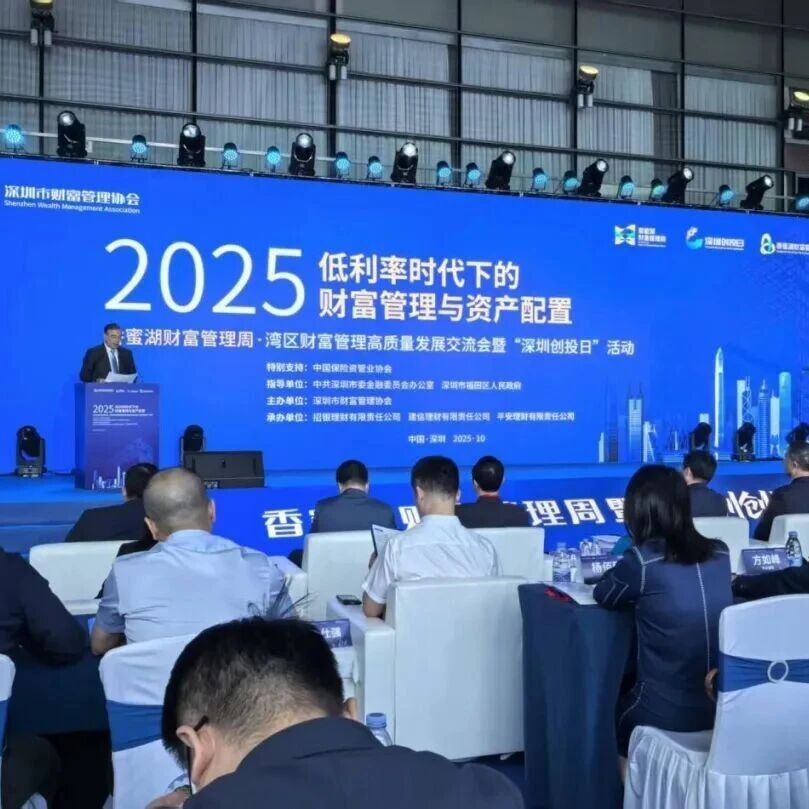
港交所行政总裁陈翊庭:今年以来香港IPO融资额居全球首位
Zhong Guo Jing Ying Bao· 2025-10-22 05:07
Core Insights - Hong Kong has become the leading global market for IPO financing this year, driven by recent listing policy reforms that have revitalized the capital market and attracted numerous high-quality companies, particularly in the technology sector [1] - Nearly half of the companies that have submitted listing applications are from the technology sector, indicating a strong focus on tech-driven growth [1] - International investors are increasingly active in the Hong Kong IPO market, with significant participation from long-term funds from Europe, the Middle East, and emerging markets, reflecting a growing confidence in China's technological innovation [1] - The performance of "A+H" listed companies has been notable, accounting for nearly half of the total IPO financing in the first nine months of the year, showcasing the strong linkage between the mainland and Hong Kong markets [1]

中国银行发布2025Q4《个人金融全球资产配置策略季报》
Di Yi Cai Jing· 2025-10-21 07:57
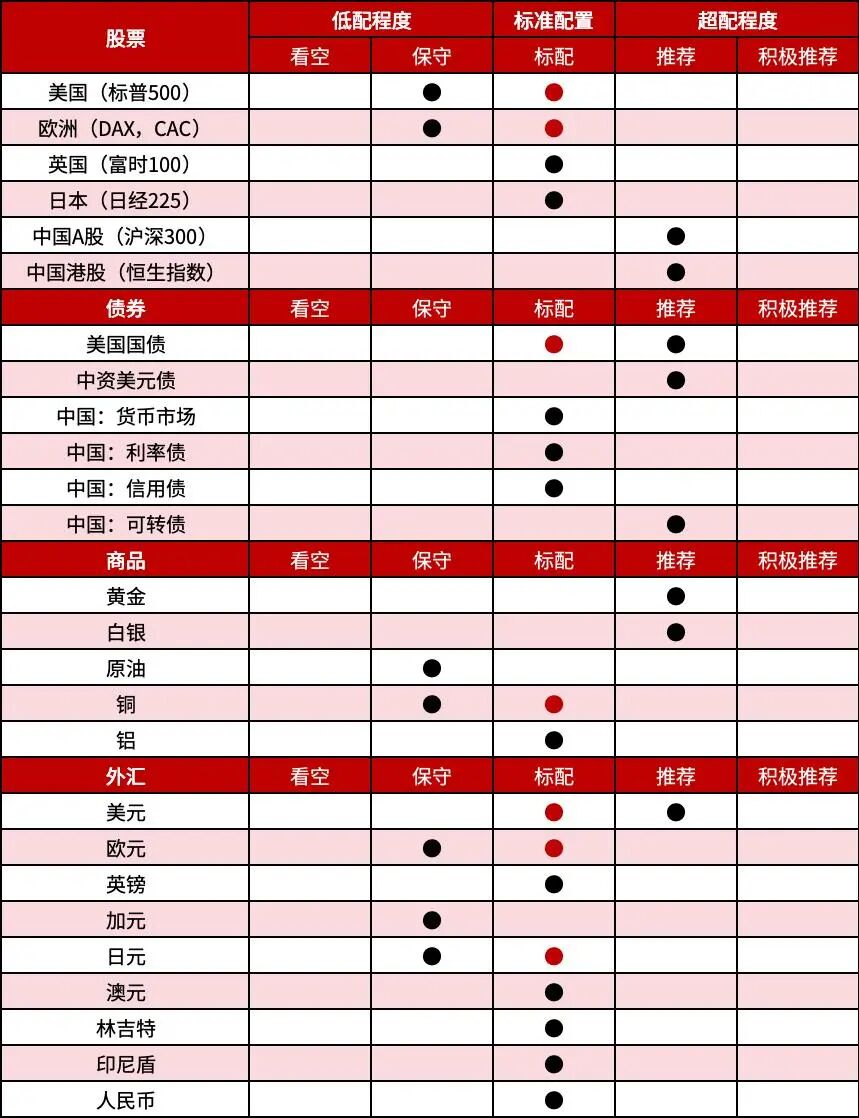
Core Insights - The report by the Bank of China outlines the global asset allocation strategy for personal finance in Q4 2025, focusing on economic and financial trends both domestically and internationally [1] Review Section - In Q3, the phenomenon of "cold economy, hot assets" persisted, with global equity markets benefiting from liquidity during the interest rate cut cycle and the evolution of AI narratives. The US tariff policy has become less impactful, leading to a bullish trend in the Chinese A-shares and Hong Kong stocks [2] - The global economic momentum remains weak, with a divergence in the US and China bond markets, where US bonds are performing better while Chinese bonds are weaker. The US dollar is experiencing weakness, while the Renminbi shows resilience and a steady increase. Gold has been on a significant upward trend, reaching historical highs, while commodity performance is mixed, with copper and aluminum strong and oil weak [2] Economic Outlook Section - In Q4, the global economy will continue to face uncertainties despite a loose monetary and fiscal environment. The Federal Reserve may continue to cut interest rates amid challenges related to employment and inflation, while the fiscal issues behind the US government shutdown raise concerns about stagflation. The European Central Bank is nearing the end of its rate cuts, with debt pressures in major economies acting as a barrier to growth [3] - China's economy achieved a cumulative year-on-year growth rate of 5.2% in the first three quarters, but the three main drivers of growth are under pressure. Policies will focus on implementation and detail, with the potential for support in response to unexpected events. Over the longer term, the "14th Five-Year Plan" will emphasize high-quality development, focusing on themes such as technological innovation, domestic demand, and investment in human capital [3] Major Asset Analysis Section - In Q4, both the US and China may experience synchronized liquidity easing. There are early signs of bubble formation in US AI capital investments, which should be approached with caution. A bullish atmosphere has formed in the Chinese equity market, entering a critical phase of a slow bull market, while Hong Kong stocks are expected to continue a volatile upward trend [4] - In the bond market, the upward trend in US bonds is likely to continue, while domestic easing policies support a bullish tail in the bond market, although the bond market remains weak due to the stock-bond seesaw effect. In foreign exchange, the US dollar is expected to remain weak, with fluctuations in non-US currencies, while the Renminbi may continue to rise steadily. Gold is in a major upward trend but may enter a consolidation phase after reaching a peak, and the commodity market is expected to maintain its mixed performance [4] Opportunities and Risks Section - In Q4, the market presents both opportunities and risks. Opportunities include the potential for a "long bull slow bull" in the Chinese stock market, making it a good time for "buying the dip" and "winter sowing" strategies, particularly in high-dividend sectors and mainstream strong sectors during pullbacks [5] - Risks include the recommendation against zero allocation in Chinese equity assets and gold, which could lead to missing historical strategic asset allocation opportunities and a lack of long-term growth momentum. Additionally, there is a short-term risk of chasing high-priced assets or sectors, particularly in gold and leading indices in A-shares and US stocks, which may affect investor confidence [5] Global Asset Allocation Strategy Overview - The report provides a detailed table of global asset allocation strategies, indicating varying degrees of allocation recommendations across different asset classes, including equities, bonds, commodities, and foreign exchange [6][7]

中国资产迎来新一轮价值重估,财富管理怎么变?
Zhong Guo Xin Wen Wang· 2025-10-21 07:05
Core Insights - The Chinese asset market is undergoing a new round of value reassessment amid a global monetary order restructuring, prompting significant changes in the wealth management industry [1] Group 1: Industry Transformation - The wealth management industry is shifting from a "product-selling" model to a "service-oriented" approach, establishing a solid foundation for the growth of client-centered advisory models [2] - As of July this year, the assets under management for the client advisory service of China International Capital Corporation (CICC) Wealth Management surpassed 100 billion, recently exceeding 120 billion [2] Group 2: Global Asset Allocation - The importance of global asset allocation is increasingly recognized, with policies promoting cross-border capital flow and service integration being introduced [2][3] - Investors face challenges due to information asymmetry and a lack of appropriate investment tools when attempting global asset allocation [2] Group 3: Technological Advancements - The advent of AI is expected to break existing limitations and provide more inclusive financial services [3] - The development of a systematic service framework that is accessible, understandable, and easy to invest in is currently lacking, despite the availability of various investment products and channels [3] Group 4: Financial Inclusion - China's inclusive finance has progressed from the "existence" stage to the "quality" stage, emphasizing the need for investor education and low-threshold, high-liquidity investment products [3]
财富管理行业迈入深度转型期,买方投顾与科技双轮驱动格局成形
2 1 Shi Ji Jing Ji Bao Dao· 2025-10-21 02:49
Core Insights - The Chinese wealth management industry is undergoing a historic transition from scale expansion to quality enhancement, driven by the deepening of the buy-side advisory model and the comprehensive empowerment of artificial intelligence technology [1][2] - The industry is shifting from a product sales-oriented "sell-side model" to a client-centric "buy-side advisory model," which is reshaping the industry value chain and significantly impacting the way services are provided to the real economy and the wealth appreciation of residents [1][2] - A recent industry seminar themed "Gathering Strength, Moving Forward" brought together experts from financial institutions, technology companies, and academic institutions to discuss macro trends, buy-side advisory, global allocation, financial technology, and inclusive finance, revealing the development trends and future directions of the Chinese wealth management industry [1] Industry Transformation - The core of the industry transformation is a fundamental shift from "selling products" to "providing services," driven by changes in the macro environment that lay a solid foundation for the flourishing development of the client-centric buy-side advisory model [2] - The arrival of a low-interest-rate era has accelerated this transformation, prompting individuals to prepare from emotional acceptance, pre-planning, and professional companionship perspectives [2] - The complexity of the market environment has raised the demand for professional advisory services, with public fund assets expected to reach 35.08 trillion yuan and product numbers to reach 13,000 by July 2025 [2] Buy-Side Advisory Model - The buy-side advisory model represents not only an innovation in service models but also a reconstruction of the industry's business logic [4] - CICC Wealth has taken the lead in the buy-side advisory transformation, establishing a service system that includes "China 50," "Micro 50," "Public Fund 50," "Stock 50," and "ETF 50," focusing on long-term value and detailed customer needs [4] - As of July this year, the scale of CICC Wealth's buy-side advisory has surpassed 100 billion yuan, recently breaking through 120 billion yuan, with the "China 50" product generating over 10.1 billion yuan in cumulative returns for clients [4][5] Core Competencies - The core competency of the buy-side advisory is its configuration capability, built on the "5A Configuration Model," which includes Appetite, Asset, Attribution, Alpha, and Assessment [5] - CICC Wealth continuously improves its buy-side advisory model, aiming to achieve the goal of "thinking what clients think, discovering good assets, and obtaining good returns" [6] AI Integration - AI technology is deeply reshaping the service model and ecological landscape of the wealth management industry, with CICC Wealth actively promoting its AI strategy [8] - The AI-enabled service system includes tools for stock diagnosis, account inspection, wave trading, and hot investment, providing professional advisory services with both breadth and depth [7][8] - CICC Wealth's digital platforms, such as E-Space and RITAS, leverage AI to enhance client interactions and investment decision-making processes [9][10] Global Asset Allocation - The ongoing deepening of China's financial market opening is making global asset allocation an important development direction for the wealth management industry [12] - CICC Wealth's international investment management center has an asset management scale of 2.2 billion USD, reflecting the progress of Chinese institutions in the internationalization process [12] - The industry faces challenges such as information asymmetry and a lack of appropriate investment tools for investors engaging in global allocation [12] Inclusive Finance - Inclusive finance is becoming a common focus for wealth management institutions, transitioning from "whether" to "how good" [13] - CICC Wealth is enhancing its inclusive finance practices by providing low-threshold, high-liquidity investment products and utilizing digital tools to make professional asset allocation logic accessible to the public [13][14] - The collaboration with Renmin University aims to improve financial health and wealth management for residents and small enterprises [14][15]
中金财富:买方投顾规模超1200亿元 共筑可持续财富生态圈
Zhong Guo Jin Rong Xin Xi Wang· 2025-10-20 13:02
Core Insights - The recent "2025中金财富1018发布会" hosted by China International Capital Corporation (CICC) focused on macro research, buyer advisory, global allocation, fintech, and inclusive finance, highlighting market trends and opportunities [1] Group 1: Market Trends and Opportunities - The global monetary order is undergoing a significant restructuring, leading to a new round of value reassessment for Chinese assets, with global funds being rebalanced towards China [2] - CICC's Chief Strategist, Miao Yanliang, analyzed major changes in capital markets since the beginning of the year, emphasizing the unique attractiveness of the Chinese market due to technological breakthroughs and resilient manufacturing upgrades [2] - The wealth management industry is experiencing a profound transformation from a product-selling model to a service-oriented approach, establishing a solid foundation for the growth of buyer advisory models [2] Group 2: Buyer Advisory Model Development - CICC's buyer advisory model has surpassed 120 billion yuan in scale, driven by a well-tested "5A allocation model" focusing on client preferences, asset allocation, strategy attribution, alpha generation, and risk assessment [3] - The company aims to enhance its client-centric approach by continuously improving its buyer advisory services, striving to meet client needs and achieve better investment returns [3] Group 3: Global Asset Allocation - The importance of global asset allocation is increasing amid deep economic integration and the dual opening of capital markets, presenting a common challenge for domestic and international investors [4] - CICC's international wealth management division is expanding its global footprint, with an asset management scale of 2.2 billion USD, establishing itself as a benchmark for Chinese institutions in the discretionary account business [5] Group 4: AI and Technology Integration - CICC is at the forefront of integrating AI into its operations, having implemented the DeepSeek private deployment and actively advancing its AI strategy to enhance investment research, advisory capabilities, and client interactions [6]
2025中金财富1018发布会举办
Ren Min Wang· 2025-10-20 08:17
Core Insights - The event "2025 CICC Wealth 1018 Release Conference" highlighted the unique attractiveness of the Chinese market, driven by technological breakthroughs and resilient manufacturing upgrades, which are reshaping global capital flows [1] - CICC Wealth's buy-side advisory model has achieved significant growth, surpassing 1 trillion yuan in assets under management (AUM) in July and recently exceeding 1200 billion yuan [1] - The international asset management scale of CICC's wealth management division has reached 2.2 billion USD, covering various areas such as asset allocation and discretionary portfolio management [1] AI Empowerment - CICC Wealth is enhancing client investment decisions through AI tools that provide efficient access to information and knowledge, while also developing AI-powered "super advisors" to improve service efficiency [2] - The company is upgrading its digital platforms, including E-Space, RITAS, and the CICC Wealth APP, to deepen the application of AI in investment research, advisory services, and client interactions [2] - AI technology enables the customization of investment solutions within 30 seconds based on thousands of market products, tailored to current market conditions [2] Inclusive Finance - CICC Wealth is strengthening the supply of passive investment products and translating professional asset allocation logic into services that are easily understandable for the general public [2] - The establishment of a service center for specialized and innovative small and medium-sized enterprises (SMEs) aims to create an inclusive financial service system, integrating internal and external resources to support these businesses [2]
