Workflow
贸易政策
icon
Search documents
特朗普豪取1.9万亿大单,鲍威尔在议息前被“火力”猛攻
Sou Hu Cai Jing· 2025-07-29 03:57
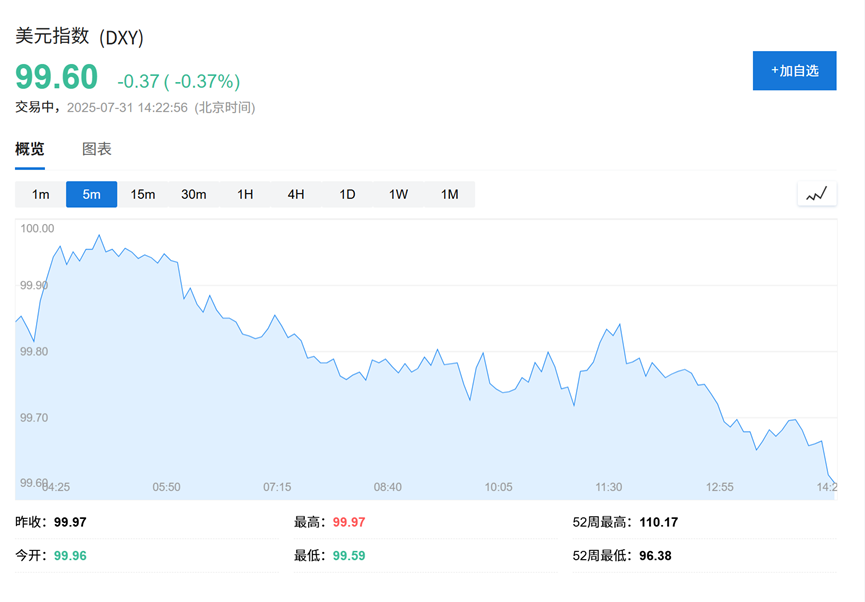
Core Viewpoint - The article discusses the tension between the Trump administration and Federal Reserve Chairman Jerome Powell regarding interest rates and trade policies, highlighting the potential risks to the global economy and the implications of aggressive trade measures and tariffs [1][3][8]. Group 1: Economic Impact - The U.S. government is under pressure to lower interest rates significantly, with a proposed reduction to 1%, which could save $360 billion annually on interest payments due to the $36 trillion national debt [3]. - Recent data shows a 0.5% contraction in Q1 GDP, marking the worst performance in three years, despite a drop in unemployment to 4.1% [3]. - New tariffs are expected to increase prices on imported goods significantly, with shoes potentially rising by 87% and clothing by 65%, impacting household finances by an estimated $4,900 per family [3]. Group 2: Trade Agreements - The Trump administration has rapidly negotiated trade agreements using tariffs as leverage, with notable deals including a 15% auto tariff on Japan and a commitment for $550 billion in investments, with strict profit-sharing terms favoring the U.S. [5][6]. - The European Union agreed to a 15% auto tariff and pledged to purchase $750 billion in U.S. energy, alongside an additional $600 billion in investments [6]. - The total value of these trade agreements exceeds $1.9 trillion, equating to approximately $5,700 for every American citizen [8]. Group 3: Market Reactions - Following these developments, gold prices surged past $3,400 per ounce, and the U.S. dollar index fell below 98, erasing most of its gains for the year [3]. - The aggressive trade policies and pressure on the Federal Reserve have led to warnings from financial institutions about the potential collapse of dollar hegemony and significant risks to the global economy [3].
美国在WTO又有新动作!白宫高官将出任副总干事
Di Yi Cai Jing· 2025-07-29 03:28
Core Points - Jennifer Nordquist has been appointed as the new Deputy Director-General of the WTO, effective October 1, 2025, succeeding Angela Ellard [1][3] - Nordquist is currently an advisor on the White House Economic Council and has extensive experience in economic and policy strategy [1][3] - The appointment reflects the U.S. commitment to personnel and capacity building within the WTO, despite previous discussions about the U.S. potentially withdrawing from the organization [1][5] Group 1: Appointment Details - Nordquist holds a Master's degree in Journalism from Northwestern University and a Bachelor's degree in Psychology and Communication from Stanford University [3] - She has previously served as a senior advisor at the Center for Strategic and International Studies, Executive Director for U.S. Affairs at the World Bank, and Chief of Staff and Deputy Director of Economic Studies at the Brookings Institution [3] - The WTO currently has four Deputy Directors-General, with the other three continuing their terms for another four years [3] Group 2: Angela Ellard's Contributions - Angela Ellard has been the Deputy Director-General since June 2021 and has played a significant role in areas such as dispute resolution, trade remedies, market access, and ongoing fisheries subsidy negotiations [3][4] - Ellard has been recognized for her core contributions to major trade policy developments over the past 30 years, including her influence on the USMCA [4] Group 3: U.S. Ambassador to WTO - The U.S. Senate Finance Committee has approved the nomination of Joseph Barloon as the U.S. Ambassador to the WTO, with a vote of 14 in favor and 13 against [5] - Barloon has a background in international trade law and previously served as the U.S. Trade Representative's General Counsel [5][6] - The nomination process faced criticism from Democratic leaders regarding past trade policies under the Trump administration [5][6]
惠而浦(WHR.US)盘后大跌!Q2业绩不及预期 下调全年盈利指引
Zhi Tong Cai Jing· 2025-07-29 00:23
展望未来,惠而浦维持全年销售额为158亿美元的预期;全年调整后每股收益预期为6-8美元(低于此前预 期的10美元),不及市场普遍预期的8.96美元。该公司还计划将季度股息从每股1.75美元削减至每股90美 分。 惠而浦表示,正在采取措施抵消增加的关税成本,并计划实施约2亿美元的结构性成本削减措施。尽管 如此,该公司仍然预计美国贸易政策最终会带来提振,因为随着下半年更高的关税税率生效,其竞争对 手将提高其外国制造的洗衣机、冰箱和洗碗机的价格。 惠而浦还预计从更健康的房地产市场中受益。该公司表示,现房销售的复苏应该会在中期到长期推动家 电的更高可支配需求,而美国在多年供应不足后进行多年的住房扩建应提供进一步的长期增长空间。 由于第二季度业绩未能达到市场预期,截至发稿,惠而浦(600983)(WHR.US)周二美股盘后大跌超 13%。财报显示,惠而浦Q2销售额同比下降5.4%至37.7亿美元,不及市场普遍预期的38.5亿美元;调整后 的每股收益为1.34美元,同样不及市场普遍预期的1.68美元。 北美地区销售额同比下降4.7%至24.46亿美元,拉丁美洲销售额同比下降10%至8.06亿美元,亚洲地区销 售额同比下降 ...
宏观经济周报-20250728
工银国际· 2025-07-28 05:14
Economic Indicators - The ICHI Composite Economic Index indicates a short-term adjustment in the Chinese economy, with overall resilience in economic momentum[1] - The consumption index has slightly declined, likely due to the base effect from previous strong expansions, but overall resident demand remains stable[1] - The production and investment indices have both seen minor declines but are still close to the expansion zone, indicating overall stability in economic activities[1] Foreign Exchange Market - In the first half of 2025, the non-bank sector's cross-border receipts reached $7.6 trillion, a year-on-year increase of 10.4%, with the RMB accounting for over 50% of cross-border receipts[2] - The net inflow of enterprises and individuals was $127.3 billion, continuing the recovery trend from the second half of last year, reflecting active international economic exchanges[2] - The RMB appreciated by 1.9% against the USD in the first half of 2025, with a settlement rate maintained at 60% and a decrease in the selling rate year-on-year[2] Global Economic Trends - The US manufacturing PMI fell to 49.5 in July, indicating contraction, while the services PMI rose to 55.2, marking the highest level since December 2024[5] - The Eurozone's composite PMI increased to 51 in July, with the services PMI at 51.2 and manufacturing PMI at 49.8, showing a mixed economic outlook[6] - The US Treasury Secretary projected tariff revenues could reach 1% of US GDP, with a potential total of $2.8 trillion over the next decade[7]
美国干了件好事,逼迫印度向中国投诚,令西方最担心的事情已出现
Sou Hu Cai Jing· 2025-07-25 09:23
Core Insights - Trump's tariffs on Indian goods, starting from April 2025, have significantly impacted India's economy, particularly its export sectors like textiles and steel, leading to a trade imbalance [1] - India's trade deficit with China reached $99.2 billion in the 2024-2025 fiscal year, highlighting the challenges in its economic relations [3] - The relationship between India and China is evolving, with India showing signs of rapprochement, including high-level visits and the resumption of tourist visas [5][7] Group 1: Economic Impact - Trump's 26% tariffs on Indian goods have caused a substantial shock to India's economy, which heavily relies on exports to the U.S. [1] - India's exports to the U.S. grew by 25.6% in early 2025, while imports only increased by 8.2%, exacerbating the trade imbalance [1] - Foreign direct investment in India has plummeted by 96.5%, leaving only $35.3 billion, as many companies relocate to countries like Vietnam [3] Group 2: Diplomatic Relations - India's response to China's major hydropower project on the Brahmaputra River has been surprisingly subdued, indicating a shift in diplomatic posture [5] - High-level visits from Indian officials to China suggest a thawing of relations, with discussions on border patrol agreements and cooperation [5][7] - The Indian government is recognizing the need to strengthen ties with China for economic stability, as reliance on Western support diminishes [9] Group 3: Strategic Concerns - Western nations are increasingly anxious about India's growing dependence on China, which could alter the strategic balance in the Indo-Pacific region [9][11] - The evolving relationship between India and China poses a strategic risk for Western allies, who fear India may drift away from their influence [9][11] - India's agricultural sector faces severe challenges due to U.S. demands for market openness, compounded by the adverse effects of tariffs [11]
West Fraser(WFG) - 2025 Q2 - Earnings Call Transcript
2025-07-24 16:30
Financial Data and Key Metrics Changes - West Fraser generated $84 million of adjusted EBITDA in Q2 2025, representing an approximate 6% margin, indicating a decline due to a cyclical downturn in the market [4][5] - The company exited Q2 with nearly $1.7 billion of available liquidity and a strong cash position net of debts [5][6] - Cash flow from operations was $85 million in Q2, with a net cash balance increasing to $310 million from $156 million in the prior quarter [10] Business Line Data and Key Metrics Changes - The lumber segment posted adjusted EBITDA of $15 million in Q2, down from $66 million in Q1, primarily due to lower pricing and higher fiber costs [8] - The North America EWP segment generated $68 million of adjusted EBITDA in Q2, down from $125 million in Q1, driven by lower OSB pricing [8] - The Pulp and Paper segment generated negative $1 million of adjusted EBITDA in Q2, compared to $7 million in Q1, largely due to an inventory write-down [8] - The European business posted $2 million of adjusted EBITDA in Q2, an improvement from negative $2 million in Q1, linked to higher OSB pricing and shipments [9] Market Data and Key Metrics Changes - U.S. housing starts averaged 1.32 million units on a seasonally adjusted basis in Q2, reflecting a decline in new home construction due to elevated mortgage and interest rates [4][5] - Repair and remodeling demand remained subdued, impacted by broader macroeconomic factors [5] Company Strategy and Development Direction - The company aims to maintain a strong balance sheet and liquidity profile, allowing for counter-cyclical investments and growth opportunities [6][14] - West Fraser is focused on controlling costs and optimizing its mill portfolio to create a more resilient company [14][15] - The company is actively monitoring trade policies and is prepared to support discussions regarding softwood lumber tariffs [15][16] Management's Comments on Operating Environment and Future Outlook - Management noted that the near-term outlook remains cloudy due to ongoing complexities in global trade, but they are optimistic about the longer-term prospects for the industry [18] - The company is committed to transparency and regular communication with stakeholders regarding potential changes in the operating environment [17] Other Important Information - The U.S. Department of Commerce released preliminary CVD rates for softwood lumber, with a combined rate of 26.05%, which could result in an expense of $65 million if confirmed [12][13] - The company successfully amended and extended its $1 billion credit facility and increased its $300 million term loan [10] Q&A Session Summary Question: What have you learned about the substitutability between SPF and SYP? - Management noted that price spreads between products fluctuate based on demand, with substitution occurring when products are unavailable [21][22] Question: What are your views on a possible lumber export quota? - Management stated that all options are on the table for discussions regarding trade, and they are prepared to support the government in these negotiations [26][27] Question: Are you cash flow positive in the North American lumber and OSB business? - Management refrained from discussing specific segments but emphasized their ability to weather cycles and drive cash flow even in difficult markets [30][31] Question: What do you need to do to improve the European business? - Management expressed confidence in their European assets and team, noting that they are well-positioned for recovery as demand improves [49][51] Question: What is the current state of contractor availability for CapEx projects? - Management indicated that contractor backlogs are shrinking, allowing for better access to contractors and equipment for ongoing projects [67][68] Question: What does the M&A opportunity set look like in the current market? - Management stated they are ready to acquire quality assets if they become available, focusing on opportunities that enhance their portfolio [72][73]
山东神光投顾盘点非农数据发布后的黄金投资机会
Sou Hu Cai Jing· 2025-07-24 06:59
Group 1 - The core viewpoint emphasizes the importance of non-farm payroll data in influencing gold investment opportunities, highlighting the relationship between market sentiment and economic indicators [1][3] - Investors should consider geopolitical risks, particularly in the Middle East, as they can significantly impact gold prices following non-farm data releases [3][6] - The article suggests that short-term investors can take advantage of market volatility by employing strategies like buying low and selling high, while long-term investors should consider gradual accumulation during price dips [3][5] Group 2 - The performance of U.S. stock indices is noted to have an inverse correlation with gold prices, indicating that favorable non-farm data may lead to a shift of funds from gold to equities [4][6] - It is recommended that investors pay attention to insights from major brokerages and investment banks post non-farm data release to align with market trends [4][5] - The article advises on the importance of managing leverage and diversifying investments to mitigate risks associated with increased market volatility [5][6] Group 3 - Global economic trends, trade policies, and tariff adjustments are highlighted as factors that can have a profound effect on gold prices, necessitating a broader macroeconomic perspective [6][7] - The potential for diversification through silver and other precious metals is discussed, suggesting that investors consider these assets to spread risk [7][8] - The article encourages a rational mindset and dynamic strategy adjustments in response to changing market conditions, emphasizing the need for regular review of investment strategies [9]
美欧贸易谈判曙光乍现,降息预期升温,美股借势上涨
Huan Qiu Wang· 2025-07-24 03:05
Group 1 - The U.S. financial market reacted positively to changes in trade and monetary policy expectations, with a significant trade agreement between the U.S. and Japan announced, and a potential trade deal with the EU nearing completion [1][3] - The U.S. plans to impose a 15% tariff on European imports, similar to the agreement with Japan, while the EU may agree to eliminate tariffs on certain products, with the possibility of reducing the current 27.5% auto tariff to 15% [1][3] - Despite the optimistic outlook for trade agreements, the EU is preparing a retaliatory tariff plan of up to €93 billion, with a maximum rate of 30%, in case negotiations fail [1] Group 2 - The stock market responded swiftly, with the Dow Jones Industrial Average rising by 400 points following the news, indicating increased investor confidence in the potential for a U.S.-EU trade agreement before the August 1 deadline [3] - Market analysts believe that the clarity in trade policy is beneficial for companies and could drive further stock market gains [3] - Expectations surrounding the Federal Reserve's monetary policy have shifted significantly, with traders increasing bets on a substantial rate cut in 2026, reflecting a change in sentiment regarding future monetary easing [3][4] Group 3 - The pressure from President Trump on Federal Reserve Chairman Jerome Powell has led to speculation about a potential change in leadership that may favor more accommodative monetary policies [4] - Potential successors to Powell, such as Kevin Hassett and Kevin Warsh, have publicly supported rate cuts, contributing to market expectations of a 58% probability of a 25 basis point cut in September [4] - Despite the positive developments in trade and monetary policy, concerns remain about declining corporate earnings expectations, which could lead to increased market volatility and correction risks [4]
德法首脑举行会晤 聚焦贸易、安全和外交热点问题
Yang Shi Xin Wen· 2025-07-23 22:56
Group 1 - The meeting between German Chancellor Merz and French President Macron marks Macron's first visit to Germany since the new German government was formed, focusing on key issues such as trade policy, foreign and security policy, and ongoing joint projects [2] - Merz emphasized the importance of Franco-German relations and the responsibility to continue the friendship built over decades, while preparing for the upcoming ministerial council meeting in France [2] - Macron highlighted increased investments in defense and security, including joint projects like next-generation fighter jets and main battle tanks, which are crucial for strengthening strategic coordination and security guarantees [2] Group 2 - In trade discussions, Macron mentioned that France and Germany would coordinate their positions to address the US tariff challenges, aiming for stable and low tariff levels while ensuring respect as trade partners [3] - The meeting will also address crisis and security issues, including the situation in Ukraine, European defense challenges, and the Middle East, particularly the Iran nuclear issue [3]
瑞达期货菜籽系产业日报-20250723
Rui Da Qi Huo· 2025-07-23 09:05
1. Report Industry Investment Rating - No relevant content provided 2. Core Viewpoints of the Report - For rapeseed meal, the domestic rapeseed meal market is influenced by multiple factors. Internationally, the current growth of Canadian rapeseed is in the "weather - dominated" stage, with favorable rainfall and mild temperatures in the Canadian prairies this week, which puts pressure on the market. The US soybean has a high - yield expectation despite a slightly lower - than - expected good rate. Domestically, the concentrated arrival of imported soybeans has led to a high oil - mill operating rate and a loose short - term supply of soybean meal, suppressing the price of the meal market. However, the uncertainty of fourth - quarter purchases provides support for the forward market. The peak season of aquaculture boosts the feed demand for rapeseed meal, but the good substitution advantage of soybean meal weakens the demand expectation for rapeseed meal. The domestic rapeseed meal market is generally stronger than the overseas market and maintains a relatively strong operation [2]. - For rapeseed oil, globally, the increase in palm oil production and decline in exports in Malaysia from July 1 - 20 and the significant increase in Indonesian exports, along with positive news in the US and Indonesian biodiesel sectors, affect the global oil market. Domestically, it is the off - season for oil consumption, the supply of vegetable oil is relatively loose, and the high inventory pressure of rapeseed oil mills restricts the market price. However, the decrease in the oil - mill operating rate reduces the output pressure of rapeseed oil, and the fewer rapeseed purchases in the third quarter may ease the long - term pressure [2]. 3. Summary by Relevant Catalogs 3.1 Futures Market - The closing price of the active contract of rapeseed oil futures is 9456 yuan/ton, down 21 yuan; that of rapeseed meal is 2758 yuan/ton, up 22 yuan. The 9 - 1 month spread of rapeseed oil is 53 yuan/ton, down 13 yuan; that of rapeseed meal is 314 yuan/ton, up 15 yuan. The net long positions of the top 20 futures holders for rapeseed oil are 8215 lots, down 323 lots; for rapeseed meal are 34003 lots, down 6409 lots. The number of rapeseed oil warehouse receipts is 3487, unchanged; that of rapeseed meal is 0, unchanged. The closing price of the active ICE rapeseed futures is 690 Canadian dollars/ton, down 1 Canadian dollar; that of domestic rapeseed futures is 5165 yuan/ton, up 32 yuan [2]. 3.2 Spot Market - The spot price of rapeseed oil in Jiangsu is 9650 yuan/ton, down 50 yuan; the average price is 9690 yuan/ton, down 50 yuan. The spot price of rapeseed meal in Nantong is 2660 yuan/ton, up 10 yuan. The spot price of rapeseed in Yancheng, Jiangsu is 6000 yuan/ton, unchanged. The oil - meal ratio is 3.55, down 0.05. The basis of the rapeseed oil main contract is 173 yuan/ton, up 36 yuan; that of the rapeseed meal main contract is - 98 yuan/ton, down 12 yuan. The spot price of grade - four soybean oil in Nanjing is 8280 yuan/ton, down 20 yuan; the spot price difference between rapeseed oil and soybean oil is 1350 yuan/ton, down 30 yuan. The spot price of 24 - degree palm oil in Guangdong is 9000 yuan/ton, unchanged; the spot price difference between rapeseed oil and palm oil is 650 yuan/ton, down 80 yuan. The spot price of soybean meal in Zhangjiagang is 2920 yuan/ton, unchanged; the spot price difference between soybean meal and rapeseed meal is 260 yuan/ton, down 10 yuan [2]. 3.3 Upstream Situation - The global predicted annual output of rapeseed is 89.77 million tons, up 0.21 million tons; the annual predicted output of rapeseed in a certain region is 12378 thousand tons, unchanged. The total monthly import volume of rapeseed is 18.45 tons, down 15.1 tons. The import cost of imported rapeseed is 4948.05 yuan/ton, down 0.8 yuan. The total inventory of rapeseed in oil mills is 200,000 tons, up 50,000 tons. The weekly operating rate of imported rapeseed is 15.72%, up 5.86 percentage points [2]. 3.4 Industry Situation - The monthly import volume of rapeseed oil and mustard oil is 340,000 tons, up 100,000 tons; the monthly import volume of rapeseed meal is 287,900 tons, up 41,300 tons. The coastal rapeseed oil inventory is 92,500 tons, down 400 tons; the coastal rapeseed meal inventory is 12,000 tons, down 3,100 tons. The rapeseed oil inventory in the East China region is 584,500 tons, down 8,200 tons; the rapeseed meal inventory is 351,300 tons, down 29,100 tons. The rapeseed oil inventory in Guangxi is 56,000 tons, down 3,200 tons; the rapeseed meal inventory in South China is 270,000 tons, down 12,000 tons. The weekly提货量 of rapeseed oil is 29,100 tons, down 3,800 tons; that of rapeseed meal is 23,200 tons, down 1,400 tons [2]. 3.5 Downstream Situation - The monthly output of feed is 2,762,100 tons, up 98,100 tons. The monthly output of edible vegetable oil is 440,400 tons, down 87,000 tons. The monthly total retail sales of consumer goods in the catering industry is 45.782 billion yuan, up 4.112 billion yuan [2]. 3.6 Option Market - The implied volatility of at - the - money call options for rapeseed meal is 22.88%, up 0.82 percentage points; that of at - the - money put options is 22.89%, up 0.83 percentage points. The 20 - day historical volatility of rapeseed meal is 12.54%, down 4.07 percentage points; the 60 - day historical volatility is 16.84%, down 0.28 percentage points. The implied volatility of at - the - money call options for rapeseed oil is 14.89%, up 0.65 percentage points; that of at - the - money put options is 14.89%, up 0.65 percentage points. The 20 - day historical volatility of rapeseed oil is 10.75%, down 0.55 percentage points; the 60 - day historical volatility is 12.9%, up 0.01 percentage points [2]. 3.7 Industry News - On July 22, ICE rapeseed futures fell for the second consecutive day due to beneficial rainfall and mild temperatures in the Canadian prairies this week, which supported the crop yield outlook. The benchmark November rapeseed futures closed 4.10 Canadian dollars lower at 690.00 Canadian dollars per ton. As of the week ending July 20, 2025, the good rate of US soybeans was 68%, lower than analysts' expectations of 71% and the previous week's 70%, but still at a high level in the same period, and the weather in the US soybean - producing areas was good, with a strong high - yield expectation [2].