
国产替代

Search documents
新年好!送你2025国产好仪器全名单
仪器信息网· 2026-01-01 09:01
Core Viewpoint - The 2025 list of "Domestic Good Instruments" has been announced, highlighting 38 domestic scientific instruments across various fields, with 7 new additions recognized for their performance and user satisfaction [2][3][10]. Group 1: New Instruments - Seven new instruments have been awarded the title of "Domestic Good Instruments," including models such as the OIL-510D automatic infrared oil analyzer and the QX96M real-time fluorescence quantitative PCR system [3][4]. - The selection process involved evaluations from at least 30 users over a period of more than six months, focusing on performance, satisfaction, cost-effectiveness, service experience, and recommendation willingness [4][10]. Group 2: User Feedback and Research - The project emphasizes the importance of user feedback, stating that "good instruments are those that are used," and aims to help manufacturers optimize their products based on real-world applications [4][12]. - Over the past decade, the initiative has surveyed more than 30,000 frontline users and visited thousands of laboratories, resulting in the selection of over 500 instruments that have passed market tests [10][14]. Group 3: Application Demonstration Centers - The introduction of application demonstration centers aims to enhance the visibility and usability of domestic instruments, allowing researchers to experience the instruments firsthand and provide feedback for continuous improvement [8][15]. - Collaborating with top institutions across various regions, these centers will facilitate direct communication between researchers and manufacturers, promoting the integration of research and application [9][15]. Group 4: Industry Trends - The trend of "domestic substitution" is becoming a reality, with continuous improvements in the performance, reliability, and service of domestic instruments [11][12]. - The initiative reflects the growing strength of China's scientific instrument industry and its potential to contribute to research innovation and industrial upgrades [10][12].


2026年投资方向全景展望
雪球· 2026-01-01 05:24
Group 1 - The core viewpoint emphasizes a mid-term investment strategy focusing on hard technology, with a strong correlation between performance and growth, particularly in AI infrastructure and hardware sectors [4][5]. - Key sectors include optical modules, AI PCBs, and liquid cooling systems, which are expected to benefit from global demand for computing power [4][5]. - The article suggests that the AI industry chain is entering a phase of large-scale implementation, leading to a rigid growth in hardware demand and opening up new market opportunities for leading and secondary manufacturers [5]. Group 2 - For short to medium-term opportunities, the focus is on AI applications and software, particularly in AI + SaaS and industrial software, with a preference for companies that have overseas mapping logic and high performance realization [6][7]. - The article highlights the importance of domestic substitution in sectors like semiconductors, chip design, and AI hardware, driven by policy and technological breakthroughs [8][9]. - High elasticity sectors such as humanoid robots and AI power are noted for their potential, with a focus on real orders and commercialization processes [10]. Group 3 - The article outlines a short-term strategy driven by themes and event catalysts, including energy, strategic resources, and emerging topics like quantum computing and controllable nuclear fusion [13][14]. - The core logic for the cross-year mainline is based on the three-dimensional resonance of performance, capital, and industry, emphasizing the need for verifiable order increments and avoiding pure speculative trading [15]. Group 4 - The article suggests that companies like Zhongji Xuchuang, Xinyi Sheng, and Tianfu Communication have reached reasonable valuations and are positioned for a deepening industry phase from 2026 to 2027 [16]. - It emphasizes the need to closely monitor the progress of domestic upstream material suppliers entering the North American supply chain and the capacity release of secondary optical module manufacturers [16]. - The article also stresses the importance of tracking major AI players like Nvidia and Google for insights into the extension of the AI industry chain and the potential benefits for the A-share market [17]. Group 5 - The investment priority is outlined as mid-term (AI infrastructure + high elasticity) > wave opportunities (software or domestic substitution) > thematic (short-term speculation) [19]. - The core strategy is to use hard technology as a foundation while seeking returns from elastic sectors, focusing on the verification and realization of orders, performance, and industry logic [20]. - Key milestones for validation include Q1 and Q2 2026 financial reports and the pace of AI application commercialization, which may serve as a turning point for individual stock performance [21].

狂飙超94%,最强黑马板块是它!2026年怎么看,机构最新研判揭秘
Zheng Quan Shi Bao· 2026-01-01 04:26
Group 1: Core Insights - The core viewpoint of the articles highlights the significant performance of the non-ferrous metals industry in 2025, which achieved an annual index increase of 94.73%, marking it as the top-performing sector in the A-share market [1][4]. - The surge in non-ferrous metal prices, including gold, silver, copper, aluminum, and lithium, is attributed to a combination of rigid supply constraints and structural demand growth, leading to a strong bull market for metals [4][5]. Group 2: Non-Ferrous Metals Industry Performance - By the end of 2025, the A-share market capitalization of the non-ferrous metals industry approached 5 trillion yuan, with 12 stocks surpassing the 1 billion yuan market cap [5]. - Notable stocks such as Zijin Mining saw a remarkable increase of 133.09% in 2025, with its market cap exceeding 710 billion yuan [5]. - A total of 46 stocks in the non-ferrous metals sector reached historical highs in 2025, with key players like Luoyang Molybdenum and Tianshan Aluminum achieving significant gains [4]. Group 3: Technology Sector Activity - The technology sector experienced high trading activity, with an average daily trading volume of 1.73 trillion yuan in 2025, marking a record high [8]. - The electronic industry led the trading activity with an average daily turnover of 266.57 billion yuan, driven by the AI revolution and domestic substitution trends [8][12]. - The market capitalization of the electronic sector reached 13.77 trillion yuan, surpassing the banking sector for the first time, with a year-on-year increase of 5.56 trillion yuan [8]. Group 4: Financing Trends - In 2025, financing funds significantly flowed into the technology sector, with the electronic industry receiving a net buy of 165.53 billion yuan, the highest among all sectors [12][15]. - The financing balance for the electronic industry stood at 382.06 billion yuan, leading the market and indicating a shift in capital towards technology-focused investments [15]. Group 5: Outlook for 2026 - Institutions maintain an optimistic outlook for the A-share market in 2026, focusing on sectors such as technology growth, cyclical reversals, and domestic demand expansion [16][17]. - Key areas of interest for investment include AI applications, resource stocks, and innovative technologies like quantum technology and controlled nuclear fusion [16][17].




赓续初心·奋楫争先新苏州|县域创新加速器样本:常熟海虞正把硬科技种成一片“森林”
Yang Zi Wan Bao Wang· 2026-01-01 04:16
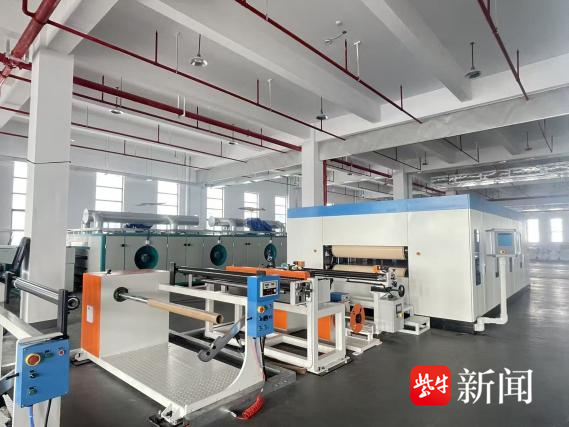
在长三角腹地的常熟市海虞镇,一座曾以传统制造为主的苏南小镇,正悄然崛起为硬科技企业集聚的新高 地。 这里没有一线城市密集的资本与人才光环,却凭借海虞镇经济发展科技服务团队和一套"创业者服务创业 者"的务实理念,吸引了一批专注新材料、新能源、医疗器械等前沿领域的高科技项目落地生根。 他们中有的致力于打破国外垄断的氢燃料电池核心材料国产化,有的聚焦口腔医学修复材料出海东南亚,还 有的用轻量化泡沫技术撬动风电与低空经济新蓝海。这一切的背后,离不开海虞科创政策和启迪之星(常熟)这 一"县域创新加速器"的深度赋能。从"一粒胶"到"一片林",海虞镇正以"小切口"撬动"大产业",书写着中国县 域经济从"跟跑"迈向"领跑"的新范式。 硬核企业扎堆落户:从"卡脖子"技术到国际赛道 走进海虞镇新材料协同创新谷,层高5米多、单层千平方米的现代化厂房里,多家硬科技企业正紧锣密鼓调试 设备、推进量产。其中,上海派行新能源科技有限公司的研发团队已在此扎根三年。作为国内少数掌握氢燃 料电池气体扩散层核心技术的企业,其自主研发的仿生多孔碳纤维材料,实现了纳米级孔结构的均匀可控, 良品率突破99%,性能甚至略优于韩国进口产品,而成本却控制在每 ...
2025,告辞!2026,你好!
创业邦· 2026-01-01 03:19
Group 1 - In January, the Chinese AI company DeepSeek gained significant attention with its open-source model DeepSeek-V3, which reportedly approaches GPT-4 performance at a training cost only one-twentieth of its counterpart [5][6] - In February, the animated film "Nezha 2" achieved a record box office of 15.4 billion, showcasing China's industrial capabilities in animation, with nearly 2000 out of 2427 shots being special effects [7][8][11] - In March, the competition between JD and Meituan in the food delivery sector reignited, indicating a shift from traffic wars to efficiency and fulfillment capabilities in the local lifestyle market [12][17] Group 2 - In April, the American influencer IShowSpeed's tour in China highlighted the power of authentic experiences, leading to a 77.2% increase in inbound tourists in Chongqing [18][21] - In May, the Jiangsu province's local football league, "Su Chao," became a national sensation, demonstrating how low-barrier events can drive local economic activity and consumer spending [22][25] - In June, the IP LABUBU gained immense popularity, illustrating a successful industrialization of IP through mechanisms that foster repurchase and emotional engagement [27][29] Group 3 - In July, the public inheritance dispute within Wahaha revealed the complexities of family businesses, emphasizing the clash between professional reforms and traditional networks [30][32] - In August, the World Robot Conference showcased a record number of humanoid robots, signaling a transition of AI from theoretical concepts to practical applications in various sectors [34][36] - In September, a controversy over pre-prepared meals highlighted the importance of transparency in the food industry, shifting the focus from taste to trust [39][41] Group 4 - In October, the rise of the "Chicken Chop Guy" in Jingdezhen underscored the value of individual expertise and emotional connection in a saturated market [42][45] - In November, a letter from Yu Minhong sparked discussions about management practices, revealing a disconnect between management narratives and employee expectations [49][51] - In December, the domestic GPU companies Moores Threads and Muxi reached significant market valuations, but challenges remain in integrating products into major computing frameworks [55][57] Conclusion - The year 2025 marked a return to genuine value, with market dynamics increasingly defined by efficiency and emotional engagement, setting the stage for a more competitive and challenging 2026 [59]

半导体产业链布局跑出加速度 紫光国微拟收购“专精特新”小巨人瑞能半导
Quan Jing Wang· 2026-01-01 02:52
Core Viewpoint - Unisoc plans to acquire a controlling or full stake in Ruineng Semiconductor Technology Co., Ltd. through a combination of share issuance and cash payment, marking a significant move in its semiconductor industry strategy [1] Group 1: Acquisition Details - Unisoc's stock and convertible bonds will be suspended from trading starting December 30, with a detailed transaction plan expected within 10 trading days [1] - The acquisition is characterized as a related party transaction and does not constitute a major asset restructuring or change of control [1] - Ruineng Semiconductor, established in August 2015, is a leading player in the domestic power semiconductor sector, with a registered capital of 362 million yuan [2] Group 2: Business Model and Operations - Ruineng Semiconductor focuses on the R&D, production, and sales of power semiconductor discrete devices, including thyristors, power diodes, and silicon carbide diodes, serving high-growth sectors like consumer electronics and renewable energy [2][3] - The company has built an integrated operating system covering chip design, wafer manufacturing, and packaging, with a strong emphasis on chip design and wafer manufacturing [3] - Ruineng's sales strategy combines a primary focus on distribution with supplementary direct sales, establishing a global sales network to mitigate market coverage costs and payment risks [3] Group 3: Strategic Importance - The acquisition is a strategic move to fill Unisoc's business gap in the power semiconductor field, which is crucial for energy conversion and control in emerging industries like electric vehicles and renewable energy [5] - This move allows Unisoc to expand its semiconductor product line and enhance its full industry chain layout from design to production and sales [5] - The global sales channels and R&D capabilities of Ruineng will aid Unisoc in further market expansion and technological innovation [5] Group 4: Financial Performance - For the first three quarters of 2025, Unisoc reported revenues of 4.904 billion yuan, a year-on-year increase of 15.05%, and a net profit of 1.263 billion yuan, up 25.04% [4] - The third quarter alone saw revenues of 1.857 billion yuan, reflecting a 33.60% year-on-year growth, with net profit soaring by 109.55% to 571 million yuan [4] Group 5: Strategic Alignment - The acquisition aligns with Unisoc's recent strategic initiatives, including the establishment of a central research institute focused on AI chips and high-performance sensors [6] - This dual approach of integrating advanced technology research with mature industry consolidation positions Unisoc to capitalize on the semiconductor industry's technological upgrades and domestic substitution opportunities [6] - Analysts suggest that Unisoc's diverse product offerings and market expansion efforts are likely to drive rapid revenue and profit growth in the future [6]

估值140亿!“国产DPU第一股”就要来了!
是说芯语· 2026-01-01 02:26
2025年12月30日,国内DPU芯片领域独角兽企业深圳云豹智能股份有限公司正式签署IPO辅导协议,辅导机构为中信证券,辅导周期定于2026年1月至4 月。若一切进展顺利,公司有望在2026年4月完成辅导验收,成功登陆资本市场,成为名副其实的"国产DPU芯片第一股",为国产高端芯片产业再添标 杆。 | 辅导对象 | 深圳云豹智能股份有限公司 | | | | --- | --- | --- | --- | | 成立日期 | 2020-08-28 | | | | 注册资本 | 36,000 万元 | 法定代表人 | 肃启阳 | | 注册地址 | 深圳市宝安区新安街道海滨社区海秀路 2038 号鹏鼎时代大厦 A 座 2301A | | | | 控股股东及持 股比例 | 无控股股东 | | | | 行业分类 | 计算机、通信和其他 电子设备制造业 (C39) | 在其他交易场所(申请)挂 牌或上市的情况 | 无 | | 备 注 | 不存在近3年内提交首次公开发行股票/存托凭证并上市申请被终止审 | | | | | 查、不予核准、不予注册的情况 | | | | 辅导协议签署时间 | 2025年12月30日 | | -- ...

华为/OPPO/小米站台,8亿募资剑指 6G 射频前沿
是说芯语· 2026-01-01 00:40
Core Viewpoint - Chongqing Ruishi Chuangxin Microelectronics Co., Ltd. has officially been accepted for IPO on the Sci-Tech Innovation Board, marking its significant progress in the capital market as a leading domestic RF front-end chip and module enterprise [1] Industry Overview - The RF front-end chip is a core component of wireless communication devices, significantly impacting signal quality and communication performance. The market has long been dominated by international giants such as Broadcom, Skyworks, and Qorvo, particularly in the critical components like filters, where domestic companies have faced supply chain constraints [3] - Among domestic listed companies in the RF front-end chip and module sector, there are established leaders and emerging players, showcasing diverse market positions, technological characteristics, and recent performance trends [3] Company Development - Ruishi Chuangxin's breakthrough began in 2024 with the launch of its high-performance filter wafer manufacturing base, marking a strategic shift from a Fabless to a Fab-lite model. This transition enables the company to achieve independent R&D and mass production of filters, reducing reliance on external supply chains [5] - The company's shareholder structure includes major mobile manufacturers and investment institutions, such as OPPO (5.9431%), Huawei's Hubble Investment (5.7187%), and Lei Jun's Shunwei Capital (5.3964%), indicating strong recognition of its technological capabilities [5] - Ruishi Chuangxin's products have been successfully integrated into major mobile manufacturers like OPPO, Xiaomi, and ZTE, as well as various consumer electronics and IoT companies, demonstrating a diversified application of its products [5] Financial and Market Position - The company plans to raise 809 million yuan through its IPO, focusing on three main areas: the second phase of the MEMS device production base, the establishment of a research and development center, and supplementing working capital [6] - The second phase of the MEMS device production base will enhance the manufacturing capacity of filters and solidify its leading position in the domestic filter market [6] - The R&D center will focus on advanced 5G and 6G technologies, as well as RF module integration technologies, positioning the company for future communication advancements [6] Market Demand and Growth - The global RF front-end market is projected to grow from approximately $22 billion in 2023 to $30 billion by 2028, with a compound annual growth rate of about 6.4% [7] - Domestic companies are poised to benefit from dual opportunities: the significant increase in RF front-end demand due to 5G smartphones (which require about 50% more RF front-end chips than 4G smartphones) and the supply chain restructuring driven by domestic substitution policies [7] - Ruishi Chuangxin's vertical integration from chip design to filter manufacturing and module packaging allows for better cost control, capacity assurance, and rapid response to customer needs [7] - With a registered capital of 434 million yuan and nearly 500 employees, the company has achieved rapid revenue growth in just seven years, positioning itself favorably for resource support and accelerated technological development following its IPO [7]
汽车行业2026年度投资策略
2025-12-31 16:02
Summary of Key Points from the Conference Call Industry Overview - The conference call focuses on the **automotive industry** and its investment strategies for **2026**. The discussion includes various segments such as passenger vehicles, commercial vehicles, and motorcycles, along with the impact of macroeconomic factors and technological advancements. Core Insights and Arguments - **Passenger Vehicle Market**: The domestic demand for passenger vehicles is expected to decline by **2.5%** in 2026 due to policy exhaustion and the reduction of purchase tax. However, the penetration rate of new energy vehicles (NEVs) is anticipated to partially offset this decline, leading to a slight increase in registration numbers for NEVs [3][4]. - **Export Growth**: The export growth rate for the automotive sector is projected to remain above **15%** due to domestic manufacturers' overseas expansion and the competitive pricing of NEVs [5][9]. The expected export volume for NEVs in 2026 is close to **2.4 million units**, representing a year-on-year increase of **100%** [9]. - **Heavy-Duty Trucks**: The heavy-duty truck market is expected to benefit from the "old-for-new" policy, with sales projected at **1.06 million units** in 2026. However, the growth momentum may weaken as the policy's effects diminish [6][15]. - **Commercial Vehicles**: The bus market is expected to grow by approximately **5%** in 2026, primarily driven by the increasing penetration of NEVs in overseas markets [6]. - **Motorcycle Market**: The motorcycle export market is projected to maintain a high growth rate of around **15%**, with domestic brands like Longxin and Chunfeng capitalizing on overseas channel expansions [7]. - **Investment Opportunities**: Key investment themes for the automotive sector include expanding overseas markets, high-end passenger vehicle segments, the domestic replacement of components, and embracing AI technologies for transformation [2][20]. Additional Important Insights - **AI and Technology**: The development of AI technologies is expected to significantly impact the automotive sector, particularly in areas such as autonomous driving and robotics. The liquid cooling market is projected to reach over **150 billion** in 2026, indicating exponential growth [4][18]. - **Domestic Component Replacement**: The domestic replacement rate for components in the heavy-duty truck segment has reached **40%** for vehicles priced above **200,000**. This trend is expected to accelerate with new models from brands like Geely and Huawei [13]. - **Global Market Potential**: There remains a substantial potential market of over **30 million** vehicles outside of major markets like the US, Japan, and Europe, indicating significant opportunities for domestic brands [8]. - **Challenges and Risks**: The automotive sector faces challenges such as policy changes affecting domestic demand and potential trade tensions impacting component exports. However, the established advantages of Chinese automotive parts manufacturers in terms of cost and technology position them well for growth in international markets [10]. - **Future Outlook**: The overall outlook for the automotive sector in 2026 is cautiously optimistic, with opportunities arising from high-end domestic replacements, overseas expansions, and the integration of AI technologies across various segments [20].
存储行业调研
2025-12-31 16:02
Summary of the Conference Call on the NAND Flash Memory Industry Industry Overview - The NAND flash memory market is expected to see price increases converge by 2026, with domestic suppliers likely experiencing slightly lower price hikes compared to international counterparts due to strong bargaining power from major clients [2][3] - Domestic NAND products have achieved a market share of 30%-40% in consumer electronics, but high-end UFS products still rely on overseas brands [2][4] Key Points and Arguments - **Price Trends**: The average price increase in the NAND market is around 35%, driven by demand from the AI sector. Price increases are expected to stabilize in 2026 as supply gradually recovers [3] - **Production Capacity**: Current domestic NAND production capacity is approximately 15 million wafers per month, with actual output affected by yield and utilization rates. An expansion of 20% in total capacity is anticipated by the end of next year [2][5][8] - **Material Supply Constraints**: The supply of raw materials, particularly silicon wafers and photoresists, is a critical factor limiting production capacity. Domestic photoresists have not yet fully passed validation, necessitating quality improvements [2][6][12] - **Bargaining Power of Clients**: Domestic smartphone manufacturers have limited bargaining power and are forced to accept price increases in memory chips [2][7] - **Future Capacity Plans**: The company has established three new factories, with a target to reach a monthly production capacity of 200,000 wafers by the end of 2027. This is still significantly lower than the global average of over 2 million wafers per month [2][10] Additional Important Insights - **Market Expansion**: The company is exploring market opportunities in Southeast Asia and South America, while facing challenges in entering the U.S. market due to restrictions [2][11] - **Technological Advancements**: Domestic storage products are now fully compatible with enterprise servers and AI data centers, with performance meeting or exceeding international standards [2][24] - **SSD vs. HDD Trends**: The trend of SSD replacing HDD is expected to accelerate as the price gap narrows, with projections indicating a significant shift by 2027-2028 [2][25] - **Challenges in Capacity Expansion**: The expansion of production capacity faces challenges such as time and resource constraints, including the need for improved yield rates and the complexities of building new facilities [2][16][21] Conclusion The NAND flash memory industry is navigating a complex landscape of price fluctuations, production capacity challenges, and evolving market demands. The focus on domestic production capabilities and technological advancements presents both opportunities and risks for stakeholders in the sector.