即时零售

Search documents
“小券”撬动“大市场”?基于外卖闪购优惠券的消费提振、经营拉动与行业启示
Feng Huang Wang· 2025-07-31 09:22
Core Insights - The competition among instant retail and food delivery platforms, represented by Meituan, Taobao Flash Purchase, and JD, has intensified since 2025 due to large-scale subsidy strategies aimed at boosting consumer spending [1][7][27] - Research indicates that Taobao Flash Purchase coupons significantly stimulate additional spending on the Ele.me platform, with every 1 yuan of effective subsidy generating approximately 1.65 yuan in extra consumption [1][13][14] - The study highlights a notable spillover effect, where each 1 yuan of effective subsidy leads to an additional 6.76 yuan in overall consumer spending through Alipay, with 3.11 yuan attributed to e-commerce purchases [1][20] Group 1: Market Dynamics - Instant retail has seen rapid growth, with online retail sales reaching 74,295 billion yuan in the first half of the year, a year-on-year increase of 8.5% [5][6] - The Ministry of Commerce and other departments have initiated plans to promote online and offline integration in instant retail, emphasizing its role in expanding consumption and creating jobs [6][7] - The competitive landscape has led to daily peak subsidies exceeding 2 billion yuan, significantly increasing order volumes from 100 million to 250 million [7][27] Group 2: Consumer Behavior - The study found that the average additional spending per consumer who used the coupons was 24.55 yuan per week, indicating a strong consumer response to the subsidies [14][18] - The effectiveness of the coupons varies by category, with retail orders showing a higher multiplier effect compared to food orders [14][16] - The research also indicates that the use of flash purchase coupons does not cannibalize dine-in sales, as there is no statistical evidence of a negative impact on traditional restaurant revenues [21][22] Group 3: Merchant Impact - Participating merchants experienced an average weekly revenue increase of 1,744.69 yuan, representing a growth rate of approximately 101.5% [21][22] - The positive impact of the flash purchase coupons is more pronounced for small and medium-sized merchants, highlighting the platform's role in empowering these businesses [23][24] - The study suggests that the integration of online and offline sales through flash purchase initiatives has led to increased visibility and sales for smaller merchants [24][25] Group 4: Regulatory Considerations - Regulatory bodies are advised to monitor potential unfair competition practices among platforms, ensuring that merchants are not coerced into participating in subsidy programs [28][29] - The industry is encouraged to self-regulate to prevent issues such as food waste and ensure fair competition [29][30] - Platforms are urged to leverage their capabilities to foster new service-oriented e-commerce scenarios, enhancing consumer experiences and market sustainability [30][31]

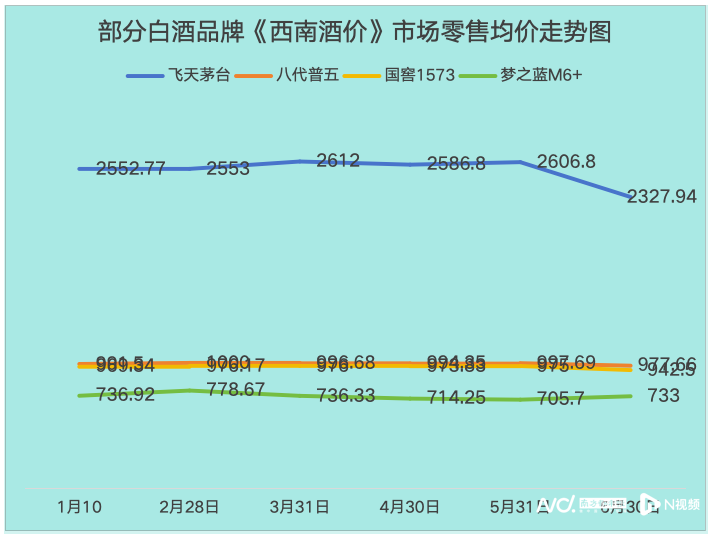
西南酒价半年图谱:稳价难!去库存难!白酒下半年靠啥翻盘?
Nan Fang Du Shi Bao· 2025-07-31 08:24
Core Viewpoint - The Chinese liquor market is facing significant challenges in the first half of 2025, with price fluctuations affecting both high-end and mid-range brands, driven by insufficient consumer confidence, high channel inventory, and the impact of counterfeit products [1][4]. Group 1: Market Conditions - High-end liquor brands experienced price drops on e-commerce platforms during key promotional events, with brands like Guojiao 1573 and Wuliangye seeing declines in retail prices [2][4]. - The overall market retail average for high-end liquor in the Southwest region has shown a downward trend compared to earlier in the year, with some brands experiencing price inversions between wholesale and retail [2][4]. - A significant portion of counterfeit products has been identified, with 16.65% of the 1610 bottles tested by Wuliangye found to be fake, highlighting the challenges posed by e-commerce pricing chaos and counterfeit goods [4][5]. Group 2: Strategies for Price Stabilization - Liquor companies are implementing "control quantity and support price" strategies, including halting supply or strictly controlling quotas for various brands to stabilize prices [5][6]. - Wuliangye is adjusting its contract volumes by 0%-50% for certain channels and is trialing direct distribution models in major cities to reduce costs for distributors [5][6]. - Ensuring distributor profitability is a key focus, with companies emphasizing the need for profitable channels to maintain product promotion and prevent price drops due to excess inventory [6][8]. Group 3: Future Outlook and Transformation - The liquor industry is shifting from a product-centric approach to a consumer-centric model, focusing on service upgrades, product innovation, and channel restructuring [1][10]. - Companies are targeting younger consumers by developing lower-alcohol products, as research indicates a preference for lower-alcohol beverages among younger demographics [12][10]. - The rise of instant retail and e-commerce platforms is becoming a crucial area for growth, with companies adapting to the changing consumer preferences for convenience and transparency in purchasing [13][10].

隐形的便利店,美团淘宝的即时零售暗战丨外卖混战④
晚点LatePost· 2025-07-31 05:37
Core Viewpoint - The article discusses the competitive landscape of instant retail in China, focusing on the emergence and growth of "flash warehouses" created by Meituan, which are essential for the supply chain in instant retail and are being leveraged by competitors like Alibaba's Taobao Flash Sale to capture market share [2][4][5]. Summary by Sections Flash Warehouse Concept - Flash warehouses are a new store format developed by Meituan's instant retail team, typically located in non-retail spaces and offering a wide range of products for local residents [3][4]. - As of October 2024, Meituan plans to expand its flash warehouses from 30,000 to 100,000 [4]. Competitive Dynamics - In recent weeks, Taobao Flash Sale has reported daily order volumes exceeding 90 million, while Meituan's daily orders are around 120 million, indicating a stable gap of 30 million orders between the two platforms [4][5]. - Meituan's flash sale business is projected to achieve a transaction volume of approximately 400 billion yuan in 2024, with over a million merchants onboard, including 30,000 flash warehouses [5][6]. Merchant Strategies - Many flash warehouse merchants initially relied on incentives and subsidies from Meituan to grow their businesses, leading to deep partnerships [5][6]. - Taobao Flash Sale has introduced attractive subsidies for new merchants, which has led to a significant increase in order volumes for participating stores [8][9]. Market Trends - The competition among flash warehouses has intensified, with merchants lowering prices to attract customers, sometimes even below offline retail prices [10]. - Merchants express concerns that aggressive subsidies and competition may lead to unhealthy consumer habits and increased losses [11]. Supply Chain and Operational Efficiency - Meituan has developed a data system called "Qian Niu Hua" to optimize supply chain management and enhance operational efficiency across its flash warehouses [13][14]. - Taobao Flash Sale is leveraging Alibaba's existing supply chain resources to enhance its product offerings and improve delivery capabilities [15][16]. Future Outlook - The article suggests that the infrastructure and consumer habits cultivated by Meituan may benefit competitors like Alibaba and JD.com, as they enter the instant retail space [18][19]. - The competitive landscape is evolving, with both Meituan and Taobao Flash Sale aiming to capture a larger share of the instant retail market through strategic partnerships and operational improvements [17][20].

达达「变身」,京东即时零售有了新阵脚
雷峰网· 2025-07-30 13:56
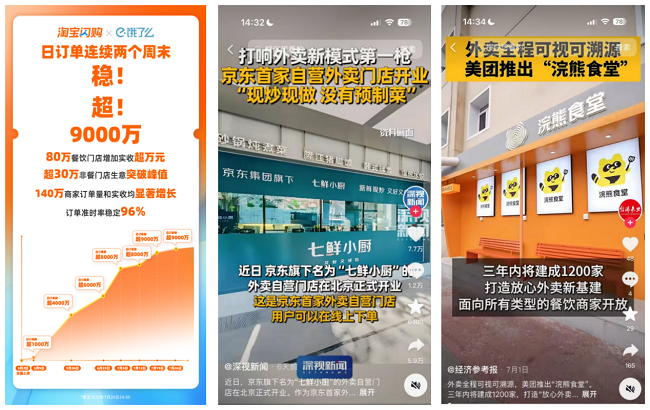
Core Viewpoint - The article discusses JD's acquisition of Dada and its implications for the local life service sector, suggesting that JD aims to replicate Meituan's success by integrating Dada into its ecosystem and enhancing its instant retail strategy [2][25]. Group 1: Acquisition and Integration - Dada has been rebranded as the Local Life Service Group under JD, indicating a strategic upgrade in JD's instant retail approach and the end of the "Dada era" [2][5]. - JD completed the acquisition of Dada for a valuation of $520 million, with the share price dropping significantly from its IPO price of $16 to $2, reflecting market concerns over Dada's financial integrity [7][12]. - Dada's internal financial discrepancies led to a significant drop in stock price, with a reported revenue inflation of approximately 568 million yuan and operational cost inflation of about 576 million yuan [8][17]. Group 2: Historical Context and Development - Dada's journey includes its founding in 2014, merging with JD's O2O subsidiary in 2016, going public in 2020, and finally being privatized in 2025 [10][4]. - JD's shareholding in Dada increased over time, reaching 63.2% after acquiring shares from Walmart, which aligns with JD's broader strategy to enhance its instant retail capabilities [17][18]. Group 3: Strategic Focus and Future Plans - JD's strategy is shifting from direct competition in the food delivery market to focusing on supply chain integration and operational efficiency across various sectors, including food delivery, travel, and home services [25][22]. - The appointment of "Old K" Guo Qing, a former Meituan executive, is seen as a strategic move to bolster JD's capabilities in the local life service sector [20][21]. - JD's new self-operated brand "Seven Fresh Kitchen" aims to provide a unique dining experience, indicating a shift towards a more integrated supply chain model [23][24].


谁能拿到2亿订单时代的船票,才是餐饮业的真问题
Hu Xiu· 2025-07-30 11:55
Core Insights - The growth of the food delivery brand "Super Bowl" is primarily driven by an increase in delivery penetration rates, leading to a significant rise in orders [2][10] - The overall food delivery market is experiencing a surge, with major platforms like Meituan and Taobao contributing to this growth through promotional activities [4][10] - The shift in consumer behavior towards more frequent ordering is expected to solidify brand differentiation as users become more discerning about quality [6][9] Group 1: Market Dynamics - The introduction of flash sales on major e-commerce platforms has attracted more users to the food delivery market [4] - Recent subsidy incentives have led to increased ordering frequency among existing delivery users [5] - The overall daily order volume in the industry has surpassed 200 million, marking a new era in food delivery [10] Group 2: Brand Performance - Brands like Super Bowl are experiencing significant profit growth despite a decline in average order value due to increased order volume [11] - The impact of low-price promotions is particularly pronounced in beverage categories, which have high demand elasticity [12][13] - Fast food brands, unlike beverage brands, are less affected by extreme low-price competition, as their demand is more stable [15] Group 3: Industry Trends - The current food delivery competition is not an isolated phenomenon; many brands are benefiting from the recent surge in delivery orders [16] - The number of registered merchants on major platforms has increased significantly, indicating a growing interest in the food delivery market [17] - The trend of increasing delivery order ratios is expected to continue, especially for brands that adapt to consumer preferences [22] Group 4: Strategic Adjustments - Brands are encouraged to iterate their store models to better align with the growing trend of online consumption [27] - The concept of opening stores in prime locations but at less competitive spots is emerging as a strategy for brands to optimize costs [28][30] - Adjusting product offerings to focus on items suitable for delivery can enhance sales performance in the evolving market [35][39] Group 5: Long-term Outlook - The integration of online and offline consumption is seen as a significant trend that will reshape the industry, similar to the rise of e-commerce [54][75] - The market for instant retail is projected to grow substantially, with estimates suggesting a compound annual growth rate exceeding 25% over the next five years [74] - Brands that successfully navigate this transformation will likely emerge as the new winners in the market [78]
抖音调整即时零售业务,但还未进入外卖战场
Sou Hu Cai Jing· 2025-07-30 09:39
Group 1 - Douyin is adjusting its instant retail business by merging Douyin Supermarket with Douyin Xiaoshida, which were previously parallel operations [2] - The merger is seen as a normal management restructuring, with no significant changes in specific business policies [2] - Douyin Xiaoshida was launched in 2022 and has been promoted to the homepage of Douyin Mall in the second half of 2023, relying on merchant self-delivery and third-party delivery teams [2] Group 2 - Douyin Supermarket, launched in early 2023, operates similarly to Tmall Supermarket, including both self-operated and consignment models [3] - The presence of Douyin's instant retail and delivery services is relatively weak due to low delivery timeliness and user unfamiliarity with the services [3] - Douyin is making significant investments in its takeaway business, which is part of its local life team, and has been adjusting its business model across different regions [3]
外卖大战降温后,第三方即配价值加速显现
Zhong Jin Zai Xian· 2025-07-30 09:19
Core Insights - The regulatory discussions have slowed down the fierce competition in the food delivery sector, but the competition is far from over, with platforms like Taobao and JD actively engaging in the market [1][3] - The long-term competitive landscape around instant retail remains unchanged, with leading platforms achieving peak daily order volumes exceeding 250 million, approaching traditional e-commerce delivery scales [1] - Despite the growth, there are significant challenges such as profit pressure on restaurants, loss of autonomy, and consumer experience issues, indicating a need for high-quality development in the industry [3][4] Market Dynamics - Restaurants have seen an increase in order volumes but face dual challenges of profit pressure and loss of autonomy, with delivery delays becoming common due to the surge in orders [3][4] - Platforms are under pressure due to their cash-burning subsidy models, with JD and Alibaba reportedly investing 80 billion yuan in subsidies over the past three months, leading to significant projected losses for their food delivery businesses [6][10] - The intense competition has overshadowed the potential of non-food categories in instant retail, which remain underdeveloped due to resource allocation heavily favoring food delivery [6][10] Relationship Between Platforms and Merchants - The relationship between platforms and merchants has shifted from a collaborative model to one strained by price wars, impacting profit margins and operational control for merchants [4][12] - Merchants are increasingly finding themselves at the mercy of platform policies regarding commission rates and delivery fees, which limits their flexibility and profitability [4][11] - Successful brands like Luckin Coffee and McDonald's have demonstrated effective strategies in managing customer loyalty and delivery logistics, highlighting the importance of private domain operations and third-party delivery partnerships [8][12] Path to Resolution - The industry must transition from a cycle of internal competition to a model of value co-creation, where merchants regain autonomy and platforms redefine their roles [7][12] - Merchants are exploring various strategies to reclaim control, including returning to dine-in services and building private customer bases, while still leveraging the large user base of platforms [7][8] - The collaboration with third-party delivery services is emerging as a viable solution, allowing platforms to focus on their strengths while providing merchants with the flexibility needed to thrive [11][12]
中国新就业形态研究中心、北京市总工会、北京市朝阳区总工会联合饿了么举办骑手与商家恳谈会
Xin Lang Ke Ji· 2025-07-30 07:55
Group 1 - The core viewpoint of the article highlights the positive cycle created by the competition among multiple platforms, leading to increased orders, merchant profits, rider income, and consumer benefits, forming a "consumption-driven - merchant growth - rider income increase - employment expansion" loop [1] - The number of riders has increased significantly, with a 78% year-on-year growth since the launch of Taobao Flash Purchase, and a 120% increase in crowd-sourced riders. Active and stable crowd-sourced riders have an average monthly income exceeding 12,500 yuan [1] - The industry is experiencing robust employment growth, with a surge in recruitment for riders and operational roles, indicating a thriving job market [1] Group 2 - The instant retail industry is projected to reach 500 million orders per day, reflecting its promising future [2] - Empirical research indicates that the opening of food delivery services has a significant positive impact on restaurants' total sales and delivery sales, as well as a slight increase in dine-in sales [2] - The total daily order volume for food delivery and flash purchase has surpassed 250 million, showcasing the strong recovery of the consumer market and the critical role of algorithm scheduling in large-scale instant delivery [2]
抖音整合即时零售业务,抖音超市合并至小时达|独家
3 6 Ke· 2025-07-30 01:31
Core Insights - Douyin Supermarket will be merged into Douyin Xiaoshida to enhance the efficiency of instant retail business [1][6] - The initial launch of Douyin Supermarket aimed to meet user demands for e-commerce purchasing experiences, similar to JD Supermarket and Tmall Supermarket [1][2] - Instant retail has become a competitive focus among major players, with Douyin Xiaoshida gaining prominence alongside Douyin Supermarket [2][6] Summary by Sections Douyin Supermarket Launch and Strategy - Douyin Supermarket was launched in the first week after the 2023 Spring Festival, following a year of preparation and pilot testing in cities like Guangzhou, Shenzhen, and Hangzhou [1] - The operational model of Douyin Supermarket is a hybrid approach, combining consignment and self-operated sales, unlike JD Supermarket's fully self-operated model [1][5] Instant Retail and Competitive Landscape - Instant retail, characterized by rapid delivery services, has become a key area of competition, with Douyin Xiaoshida offering delivery within one hour for various product categories [2][5] - Major competitors like Taobao and JD have established their own instant retail services, enhancing market awareness and acceptance among consumers and merchants [6] Challenges and Operational Adjustments - Douyin Supermarket has faced challenges in delivery efficiency, with many products taking multiple days to deliver, while only a few can achieve next-day delivery [2][5] - The integration of Douyin Supermarket and Douyin Xiaoshida is seen as a strategic move to clarify their roles and improve operational efficiency in the instant retail space [5][6]
8点1氪:国航南航东航支持在“民航版12306”直销平台购票;少林寺通报新住持任职;三胎概念股集体大涨
36氪· 2025-07-30 00:10
Group 1 - The three major domestic airlines in China, Air China, China Southern Airlines, and China Eastern Airlines, have announced their support for the "Civil Aviation Version 12306" direct sales platform for ticket purchases, ensuring passenger rights [3] - The airlines have initiated direct sales of tickets through the "Hanglv Zongheng" platform, which offers transparent pricing, no bundled sales, and aligns with airline rules, ensuring information security [3] - The tickets sold on the "Hanglv Zongheng" platform are directly sourced from the airlines, unlike traditional OTAs such as Ctrip and Qunar, which rely on multiple ticket agents [3] Group 2 - The National Childcare Subsidy Implementation Plan was announced, providing an annual subsidy of 3,600 yuan for each child, regardless of whether they are the first, second, or third child, starting from January 1, 2025 [4] - Following the announcement, stocks related to the three-child policy, such as Beiyinmei and Sunshine Dairy, saw significant increases, with some stocks hitting the daily limit [4] Group 3 - The International Monetary Fund (IMF) has raised its forecast for China's economic growth this year by 0.8 percentage points to 4.8%, reflecting stronger-than-expected economic activity in the first half of the year [8] - The IMF also adjusted global economic growth forecasts for this year and next, indicating a resilient but fragile global economic outlook [8] Group 4 - Standard Chartered Group has signed a strategic cooperation memorandum with Alibaba Group to accelerate the integration of financial services and artificial intelligence technology [21] - The partnership aims to leverage Alibaba Cloud's AI capabilities to enhance financial services [21] Group 5 - Heng Rui Pharmaceutical has entered into a cooperation agreement with GlaxoSmithKline (GSK) to jointly develop up to 12 innovative drugs, with GSK paying an upfront fee of $500 million and potential milestone payments of up to $12 billion [18] - This collaboration highlights the increasing trend of multinational pharmaceutical companies partnering with domestic firms at earlier stages of drug development [18] Group 6 - The 2025 Fortune Global 500 list revealed that 130 Chinese companies made the list, with a total revenue of approximately $10.7 trillion, a decrease of about 3% compared to the previous year [11] - The average revenue of Chinese companies on the list was approximately $82 billion, lower than that of U.S. companies, which averaged $105.8 billion [11]