
货币政策

Search documents
美日央行政策分化
Sou Hu Cai Jing· 2025-12-22 01:25
国内方面,11月经济数据呈现"生产端稳中修复、需求端分化加剧"格局。工业生产方面,规模以上工业 增加值同比增长4.8%,环比增长0.44%修复,装备制造业、高技术制造业同比分别增长7.7%、8.4%,新 动能持续领跑。投资端整体承压,1-11月固定资产投资同比下降2.6%(降幅较上月扩大),房地产投资 下降15.9%成最大拖累,制造业投资仅增1.9%显示企业扩产意愿不足。消费方面,11月社零同比增长 1.3%明显偏弱(前值2.9%),但1-11月服务零售额同比增长5.4%,服务消费韧性仍强于商品消费。房 地产市场延续深度调整。财政收支方面,1-11月一般公共预算收入同比增长0.8%持平上月,税收增速 1.8%边际改善有限,支出增速由2%降至1.4%显示地方财政约束进一步显现,政府性基金收入因土地出 让收入降幅扩大至10.7%而同比下降4.9%,整体呈"收入弱稳、支出趋谨、中央托底、地方承压"格局。 海外方面,美日央行政策走向继续成为市场焦点。美国11月CPI同比2.7%、核心CPI同比2.6%均大幅低 于预期(3.1%和3.0%),但因政府停摆导致10月数据永久缺失、11月调查仅覆盖下半月,数据质量存 疑使其 ...
转债建议把握泛主线催化真空窗口(东吴固收李勇 陈伯铭)20251220
Xin Lang Cai Jing· 2025-12-22 01:20
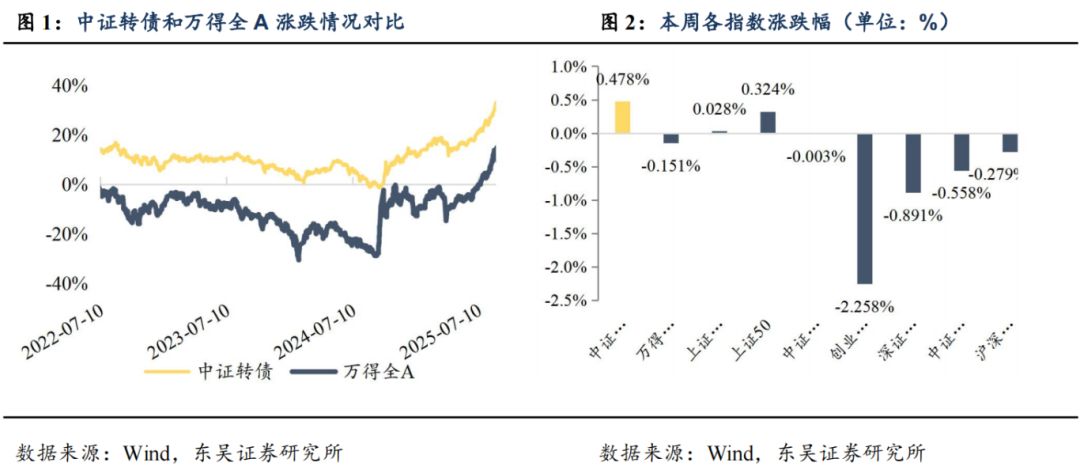
Group 1: Global Economic Impact - The ongoing geopolitical influences and misalignment of monetary policies are expected to fundamentally reshape purchasing power across both private and public sectors in the medium to long term [1] - Japan's prolonged ultra-loose monetary policy is reportedly helping the country emerge from a "deflation trap," with the yen's depreciation significantly boosting overall demand [1] - Despite a 40% increase in the average price of second-hand homes in Tokyo over five years and a nearly 20% rise in major stock indices, the actual purchasing power of residents has declined due to high input inflation [1] Group 2: Domestic Market Overview - The domestic equity market has shown continued volatility, with a notable focus on the fourth quarter as a critical period for industry information and monetary policy direction [2][34] - The uncertainty in policy is expected to decrease marginally, while the sustainability of the computing power sector will face ongoing scrutiny from the market [34] - Smaller stocks are anticipated to benefit more from the market's expansion trends compared to larger stocks [34] Group 3: Convertible Bond Market - The convertible bond market has seen an overall increase of 0.48% during the week, with 20 out of 29 sectors experiencing gains [47] - The average daily trading volume in the convertible bond market reached 636.11 billion yuan, reflecting a significant increase of 29.75 billion yuan from the previous week [47][48] - Approximately 63.48% of convertible bonds recorded an increase in value, with 15.37% of bonds rising more than 2% [48] Group 4: Sector Performance - Among the 31 sectors, 19 experienced gains, with retail, non-bank financials, and beauty care leading the way with increases of 6.66%, 2.90%, and 2.87% respectively [45] - Conversely, sectors such as electronics and power equipment faced declines, with drops of -3.28% and -3.12% respectively [45]





美联储内部分歧加剧:哈马克称政策“适宜暂停”,静待通胀明朗化
智通财经网· 2025-12-21 23:30
智通财经APP获悉,克利夫兰联邦储备银行行长贝丝·哈马克表示,在评估第一季度累计75个基点的降 息对经济产生的影响期间,当前货币政策适宜暂停调整。 "我们当前的立场是基本预期——可以在此水平维持一段时间,直到获得更明确的证据表明通胀正回落 至目标水平,或是就业市场出现更实质性疲软,"哈马克在《华尔街日报》"聚焦本周"播客采访中表 示。该采访于周四进行,周日播出。 美联储在12月10日的最新降息决议遭遇三张反对票,为2019年以来最多。官员们对利率路径存在分歧, 部分政策制定者更担忧劳动力市场降温,另一些官员则认为美联储应优先控制高于目标的通胀。 会后公布的利率预测显示,有六位官员倾向于维持利率不变。 政策制定者上周获得了因创纪录政府停摆而延迟的经济数据。尽管美国11月失业率从9月的4.4%升至 4.6%,但剔除波动较大的食品和能源价格的核心消费者价格指数11月同比上涨2.6%,为2021年以来最 小涨幅。 哈马克表示她不会过度看重任何单一经济报告,并指出最新通胀数据因政府停摆期间采样缺失而包 含"杂音"。 "这只是单一数据点,我希望多观察一段时间,"她说,"幸运的是,在下次会议前我们有很多时间观察 整体形势变 ...
【光明论坛】实施更加积极有为的宏观政策
Xin Lang Cai Jing· 2025-12-21 19:38
Core Viewpoint - The 2025 Central Economic Work Conference outlines the policy direction for the upcoming economic work, emphasizing the implementation of more proactive macro policies to enhance demand, optimize supply, and ensure stable employment and market expectations, aiming for qualitative and reasonable quantitative economic growth in 2026 [1] Group 1: Economic Policy Direction - The conference stresses the need for a more proactive fiscal policy, maintaining necessary fiscal deficits and total debt levels, while addressing local fiscal difficulties to ensure basic public services [2] - It highlights the importance of central fiscal responsibilities in infrastructure and public service provision to optimize government debt structure and reduce macro debt costs [3] Group 2: Monetary Policy - The conference calls for the continuation of a moderately loose monetary policy, suggesting that China's monetary policy can be more relaxed in the context of a global interest rate reduction cycle [4] - It emphasizes the need to optimize and innovate structural monetary policy tools to support economic restructuring and transformation [4] Group 3: Focus on Livelihood and Investment - The proactive macro policies should enhance the "livelihood content" and leverage of fiscal and monetary policies, focusing on improving public services in healthcare, education, and elderly care [5] - There is a call to increase effective investment in infrastructure and support emerging sectors such as digital economy and green energy, with appropriate fiscal incentives [5][6]
美联储Hammack:暂缓降息是我目前的基准预测
Sou Hu Cai Jing· 2025-12-21 18:25
Core Viewpoint - The Cleveland Federal Reserve President Beth Hammack indicates that monetary policy is currently at a good level, allowing for a pause in interest rate cuts to assess the impact of the previous cumulative 75 basis points reduction on the economy [1] Group 1: Monetary Policy - Hammack emphasizes the primary goal of bringing inflation back to target levels [1] - The economic data received by policymakers shows that the core Consumer Price Index (CPI) rose by 2.6% year-on-year in November [1] - Hammack expresses a cautious approach, stating that she will not overemphasize any single economic report and intends to observe broader economic conditions before the next meeting [1]
“十五五”首席观察:中国经济韧性当先
Bei Jing Shang Bao· 2025-12-21 15:55
Group 1: Economic Outlook and Policy Framework - In 2025, China’s economy is at a historical juncture, balancing short-term recovery and long-term transformation under the "14th Five-Year Plan" and the upcoming "15th Five-Year Plan" [1] - The central economic work conference has set the tone for 2026 as "seeking progress while maintaining stability, improving quality and efficiency" [1] - Key challenges include achieving sustainable consumption growth and coordinating the dual strategies of "internal circulation" and "high-level opening up" [1] Group 2: Monetary Policy Insights - There is still room for monetary policy adjustments, including potential interest rate cuts and reserve requirement ratio reductions to support economic recovery [3][4] - Structural tools will be expanded to focus on key national strategies and weak links, such as increasing support for technological innovation [4] - The need for a coordinated approach to counter-cyclical and cross-cyclical adjustments in monetary policy is emphasized to create a stable financial environment [4][5] Group 3: Currency and Exchange Rate Dynamics - The Chinese yuan has strengthened against a backdrop of complex external conditions, driven by domestic economic resilience and improved macro narratives [7] - The central economic work conference emphasizes maintaining the stability of the yuan, focusing on preventing excessive fluctuations [8] - The outlook for the yuan remains uncertain, with potential challenges from trade balance shifts and international economic conditions [9] Group 4: Gold Market Trends - Gold prices have reached new highs, driven by heightened global risk aversion and skepticism towards the US dollar credit system [11] - The forecast for gold prices suggests a potential rise to the range of $4,500 to $5,000 per ounce, influenced by ongoing geopolitical risks and central bank purchasing trends [12] Group 5: Aging Population and Insurance Sector - The aging population necessitates reforms in commercial insurance to address long-term care and wealth transfer needs [14] - The insurance sector is positioned to play a crucial role in providing comprehensive solutions for retirement security and risk management [15][16] Group 6: Internal and External Economic Circulation - The restructuring of global trade and external policy spillover effects are critical external variables for China's economic development [18] - The emphasis is on promoting the deep integration of internal and external circulation through policy guidance and market mechanisms [19] Group 7: Bond Market and Interest Rate Projections - The People's Bank of China is expected to implement a more proactive monetary policy, focusing on structural optimization rather than just total easing [22] - Long-term bond rates are anticipated to experience a phase of decline, influenced by fiscal expansion and ongoing economic recovery [23]

高频数据扫描:降息有没有“下半场”?
Bank of China Securities· 2025-12-21 14:30
1. Report Industry Investment Rating - The document does not provide the report industry investment rating information 2. Core View of the Report - The significance of whether the Fed will cut interest rates below the neutral rate to the US Treasury and precious metals markets is analyzed, and four scenarios are proposed, with scenarios two and three having a relatively high probability [2] - Monetary policy may become the focus of China's incremental policies in 2026 [2] - Upstream price indicators have further rebounded [2] 3. Summary According to the Directory 3.1 High - frequency Data Panoramic Scan - After the Fed cut interest rates to the 3.5 - 3.75% range, this round has cumulatively cut interest rates by 175BP. The key to future interest rate cuts lies in whether to cut below the neutral rate. Four scenarios are analyzed, and the impacts on the US Treasury and precious metals markets are different. Scenarios two and three are more likely [2][10][11] - The central economic work conference's requirements imply that fiscal policy in 2026 may maintain the ratios of total fiscal expenditure/GDP and general public budget revenue/GDP stable. With limited decline space for real - estate - related revenue, monetary policy may be the focus of incremental policies [2][13] - This week, the average wholesale price of pork decreased by 1.09% week - on - week and 24.08% year - on - year; the average wholesale price of 28 key vegetables decreased by 0.30% week - on - week and increased by 17.61% year - on - year. The edible agricultural product price index increased by 0.70% week - on - week, and the year - on - year decline narrowed to 1.20%. The domestic cement price index increased by 0.44% week - on - week; the Nanhua iron ore index increased by 0.92% on average week - on - week; the operating rate of coking enterprises with a capacity of over 2 million tons decreased by 2.32% week - on - week; the rebar inventory index decreased by 7.54% week - on - week. The production material price index increased by 0.10% week - on - week and decreased by 1.76% year - on - year. Brent and WTI crude oil futures prices decreased by 3.10% and 3.42% on average week - on - week respectively. The LME copper spot price increased by 0.41% on average week - on - week; the aluminum spot price increased by 0.20% on average week - on - week, and the copper - gold ratio decreased by 1.87% week - on - week. From December 1 - 18 this year, the average daily transaction area of commercial housing in 30 large and medium - sized cities was about 293,000 square meters, compared with about 498,000 square meters per day in December 2024 [2] 3.2 High - frequency Data and Important Macroeconomic Indicators Trend Comparison - The document provides multiple charts showing the relationship between high - frequency data and important macro - economic indicators, such as the relationship between the RJ/CRB price index year - on - year and export value year - on - year, and the relationship between the production material price index year - on - year and PPI industrial year - on - year [29][33][37] 3.3 Important High - frequency Indicators in the US, Europe, and Japan - The document provides multiple charts showing important high - frequency indicators in the US, Europe, and Japan, such as the US weekly economic indicators and actual economic growth rate, and the US initial jobless claims and unemployment rate [97][102][108] 3.4 Seasonal Trend of High - frequency Data - The document provides multiple charts showing the seasonal trends of high - frequency data, such as the daily average production of crude steel (decade) and the production material price index [112][121][127] 3.5 High - frequency Traffic Data in Beijing, Shanghai, Guangzhou, and Shenzhen - The document provides charts showing the year - on - year changes in subway passenger volume in Beijing, Shanghai, Guangzhou, and Shenzhen [166][167]
凯德北京投资基金管理有限公司:11月通胀降温信号受审视,联储目光已投向12月数据
Sou Hu Cai Jing· 2025-12-21 13:44
展望未来,分析警告不应过度解读单月通胀数据的疲软。部分领域的价格压力,例如商品通胀,可能在后续月份出现小幅回升。与此同时,当前显示疲软的 住房价格数据也存在后续修正或改变的可能性。 有观点指出,美联储的政策制定者或将更为关注即将发布的十二月通胀数据,以此来更全面地评估物价变化的真实趋势。尽管十一月数据显示出通胀放缓的 迹象,但其影响可能相对有限。分析认为,核心通胀指标的意外下行部分受到技术性及时间相关因素的干扰,并不完全代表整体通胀压力得到普遍缓解。 最新公布的美国十一月消费者价格指数数据一度提振市场情绪,整体与核心通胀指标均低于预期,进一步强化了市场关于明年美联储可能降息的判断。然 而,华尔街机构分析认为,这份报告可能不足以在短期内实质性改变货币政策的走向。 具体来看,住房相关成本的涨幅显著低于长期趋势,这对整体指数构成了明显拖累。这一现象可能部分归因于十月数据统计的技术性因素,也可能与十一月 价格采集的时间点较晚有关。分析人士提醒,相关数据处理方法尚未完全明确,这意味着未来几个月的通胀数据仍存在发生波动的可能性。 除了消费者价格指数,市场也密切关注美联储更为重视的个人消费支出价格指数。初步估算显示,近两个 ...

海外利率周报20251221:日本加息有什么影响?-20251221
Guolian Minsheng Securities· 2025-12-21 11:33
1. Report Industry Investment Rating No relevant content provided. 2. Report's Core View - This week, the entire curve of US Treasury yields declined slightly by 3 - 5bp. Although inflation and employment data are favorable for the bond market, the decline in interest rates is not significant. This is because the market doubts the validity of the data from October and November, and the expected change in the interest - rate cut path is small [2][11]. - The Bank of Japan raised the policy rate to 0.75%, but the yen continued to weaken. The "limited hawkish" stance of the Bank of Japan is due to the need to balance multiple pressures. As the yen approaches the "intervention level", the actions of the Japanese Ministry of Finance may affect the pricing of US Treasuries and the stock market [3][12]. - The US employment situation shows that the labor market has not changed significantly, with employers reluctant to increase recruitment significantly but not initiating large - scale layoffs. The economic growth momentum is weakening, and inflation is showing a downward trend [21][22][24]. - In the asset market, German medium - and long - term bonds and Japanese bonds rose; the global equity market was highly differentiated; black - series and chemical commodities strengthened, while grains and digital assets were under pressure; most global foreign exchange markets declined, with only the Russian ruble supported [26][27][28][29]. 3. Summary According to the Directory 3.1 US Treasury Yield Review - **Yield Changes**: From December 12 to December 19, 2025, the yields of 1 - month, 1 - year, 2 - year, 5 - year, 10 - year, and 30 - year US Treasuries decreased by 5bp, 3bp, 4bp, 5bp, 3bp, and 3bp respectively, reaching 3.71%, 3.51%, 3.48%, 3.70%, 4.16%, and 4.82% [2][11]. - **Reasons for the Limited Decline**: The market doubts the validity of the data from October and November, and the expected change in the interest - rate cut path is small [2][11]. - **Japanese Interest - Rate Hike Impact**: The Bank of Japan raised the policy rate to 0.75%, but the yen continued to weaken. As the yen approaches the "intervention level", the actions of the Japanese Ministry of Finance may affect the pricing of US Treasuries and the stock market [3][12]. - **Auction Results**: On December 17, the auction of 20 - year US Treasuries was robust, with a winning bid rate of 4.798%, a bid - to - cover ratio of 2.67 times (higher than the previous value of 2.41 times), and a tail spread of - 2.500 (higher than the previous value of - 0.200) [17]. 3.2 US Macroeconomic Indicator Review - **Employment**: In November, the seasonally - adjusted non - farm payrolls in the US increased by 64,000, higher than the forecast of 50,000 and the previous value of - 105,000. The unemployment rate was 4.6%, higher than the forecast of 4.5% and the previous value of 4.4%. The average hourly wage growth rate was 0.1% month - on - month, lower than the forecast of 0.3% and the previous value of 0.4%. The number of initial jobless claims in the week of December 13 decreased to 224,000 [21]. - **Business Index**: In December, the US Markit manufacturing PMI was 51.8, lower than the forecast of 52.0 and the previous value of 52.2; the service PMI was 52.9, lower than the forecast of 54.0 and the previous value of 54.1, hitting a six - month low. The US Philadelphia Fed manufacturing index was - 10.2, lower than the forecast of 2.5 and the previous value of - 1.7 [4][22][24]. - **Inflation**: In November, the US CPI increased by 2.7% year - on - year, lower than the previous value of 3.0% and the forecast of 3.1%. Some officials believe that there is a large space for the Fed to cut interest rates [4][22][24]. - **Housing Market**: In November, the annualized total of existing home sales in the US was 4.13 million units, with a median price of $409,200, a year - on - year increase of 1.2%. The housing market showed a significant differentiation, with low - priced housing sales under pressure and the high - end market relatively strong [24]. 3.3 Major Asset Review - **Bonds**: German medium - and long - term bonds and Japanese bonds rose. The yields of German 7 - year, 10 - year, 15 - year, and 30 - year bonds increased by 1bp, 3bp, 4bp, and 6bp respectively. The yields of Japanese 1 - year, 7 - year, 10 - year, 15 - year, and 20 - year bonds increased by 1.4bp, 0.7bp, 1.6bp, 2.4bp, and 1.6bp respectively [26]. - **Equities**: The global market was highly differentiated. The Vietnam VN30, UK FTSE 100, and France CAC40 rose by 3.55%, 2.57%, and 1.03% respectively, while the South Korea Composite Index, Japan's Nikkei 225, and Hong Kong's Hang Seng Index fell by 3.52%, 2.61%, and 1.10% respectively [27]. - **Commodities**: Black - series and chemical commodities strengthened, while grains and digital assets were under pressure. The coke index, coking coal index, and soda ash index rose by 9.82%, 9.11%, and 4.53% respectively, while CBOT wheat, CBOT soybeans, and Bitcoin fell by 3.68%, 2.55%, and 2.37% respectively [28]. - **Foreign Exchange**: Most global foreign exchange markets declined, with only the Russian ruble supported. The ruble rose by 0.35%, while the South Korean won, euro, and British pound fell by 0.62%, 0.37%, and 0.33% respectively [29]. 3.4 Market Tracking The report provides multiple charts, including the latest target - rate expectations of FED WATCH, the simulated trends of the US dollar, US stocks, US Treasuries, gold, and Bitcoin this week, the auction panel of US Treasuries, and the yield curves of US Treasuries, Japanese bonds, and German bonds, etc., to track the market situation [13][14][17].
固定收益策略报告:资金突破“下沿”的政策含义-20251221
SINOLINK SECURITIES· 2025-12-21 11:14
Group 1 - The report highlights an increase in market attention towards monetary policy, with a slight recovery in market sentiment as funding rates continue to decline [2][8] - The report discusses two main questions: whether the recent drop in funding prices below a key level indicates a potential for further monetary easing, and how the market is currently pricing in expectations for loose monetary policy [2][8] - Historical data suggests that when the DR001 rate breaks below its long-term range, it often signals a change in monetary policy, as seen in late 2021 when a similar drop preceded a rate cut [3][9] Group 2 - The report notes that while the market has begun to price in expectations for loose monetary policy, the adjustments have been cautious and moderate, primarily following the decline in funding prices [5][23] - Recent trends show that the yield spreads between various government bonds and funding rates have reached annual highs, particularly for the one-year bonds, although they remain in the lower quartile over a longer time frame [5][16] - The report indicates that the average yield decline for one-year and ten-year government bonds is approximately 72 basis points, while the average decline across all maturities is about 76 basis points, compared to a two-year cumulative reduction of 62 basis points in OMO rates, LPR, and loan rates [18][26] Group 3 - The report emphasizes that the recent drop in funding prices reflects the central bank's supportive stance towards liquidity at year-end, with historical precedents suggesting that such a break could trigger a rate cut in the following quarter [25][28] - It is noted that while the market's response to these changes has been moderate, there remains a certain safety margin between interest rates and funding prices, which could influence short-term rates if a policy adjustment occurs [25][28] - The report concludes that structural supply and demand concerns for long-term bonds persist, indicating that the current easing in short-term rates may not directly lead to a decline in long-term rates, with the potential for yield spreads to widen further [28][32]