消费升级

Search documents
培育服务消费新增长点
Jing Ji Ri Bao· 2025-08-17 21:54
日前召开的中央政治局会议提出,"深入实施提振消费专项行动,在扩大商品消费的同时,培育服务消 费新的增长点。"培育服务消费新的增长点,正成为促进消费、扩大内需的重要引擎。 多位受访专家表示,我国服务消费进入快速增长阶段,消费者更愿意在满足自身精神需要的服务消费领 域增加支出,文化、休闲、健康等发展型享受型消费存在巨大空间,成为培育服务消费新的增长点。 形势总体向好 国家统计局数据显示,上半年,服务零售额同比增长5.3%,比同期商品零售额增速高0.2个百分点;全 国居民人均服务性消费支出同比增长4.9%,占居民人均消费支出比重为45.5%。服务消费展现出良好势 头。 国务院发展研究中心市场经济研究所市场流通研究室主任、研究员陈丽芬表示,中央和地方将服务消费 作为扩内需的主要抓手,通过丰富消费供给、拓展消费场景、优化消费环境等措施释放消费潜力。同 时,技术变革加速服务消费业态创新,数字消费、绿色消费等新型消费快速增长,为培育新增长点提供 动能。 扩大服务消费,有利于带动生产和投资,打通供需衔接的堵点,形成供需互促、产销并进的良性循环, 为产业结构优化和经济高质量发展提供不竭动力。数据显示,今年上半年,服务业增加值占 ...
助力实现“十四五”经济发展目标 扩消费稳投资强研发 三大方向持续发力
Zhong Guo Zheng Quan Bao· 2025-08-17 21:09
Group 1: Economic Growth and Consumption - During the "14th Five-Year Plan" period, China's economy has shown significant progress in consumption, investment, and R&D, with consumption becoming a key driver and stabilizer [1][4] - The total retail sales of consumer goods are projected to increase from 39.1 trillion yuan in 2020 to 48.3 trillion yuan in 2024, with an average annual growth rate of 5.5% [2] - The contribution rate of final consumption to China's economic growth averaged 56.2% over the past four years, an increase of 8.6 percentage points compared to the "13th Five-Year Plan" period [2] Group 2: Investment Trends - Investment has played a crucial role in driving China's economic growth, with an average contribution rate of 30.2% over the past four years [5] - High-tech industry investment growth has outpaced overall fixed asset investment growth, with high-tech service industry investment increasing by 8.6% year-on-year [6] - The government has introduced major projects in sectors like nuclear power and railways to attract private capital, with some projects seeing private capital participation rates of up to 20% [7] Group 3: R&D and Innovation - R&D investment is accelerating, with the proportion of R&D expenditure to GDP expected to reach 2.68% in 2024, amounting to 3.6 trillion yuan, maintaining China's position as the second-largest globally [8] - The production of integrated circuits is projected to increase by 72.6% compared to the end of the "13th Five-Year Plan," adding approximately 190 billion units [9] - The value added of high-tech manufacturing is expected to grow by 42% by 2024, while the core industries of the digital economy will see a 73.8% increase, contributing 10.4% to GDP [9]
扩消费稳投资强研发 三大方向持续发力
Zhong Guo Zheng Quan Bao· 2025-08-17 20:07
Consumption Sector - During the "14th Five-Year Plan" period, China's total retail sales of consumer goods (社零总额) increased from 39.1 trillion yuan in 2020 to an expected 48.3 trillion yuan in 2024, with an average annual growth rate of 5.5% [1] - The contribution rate of final consumption to China's economic growth averaged 56.2% over the past four years, an increase of 8.6 percentage points compared to the "13th Five-Year Plan" period [1] - New consumption trends such as "潮玩盲盒" and digital consumption are emerging, with service consumption in areas like home services, fitness, and tourism growing at an annual rate of 9.6% from 2020 to 2024 [2] Investment Sector - Investment has played a significant role in driving China's economic growth, with the average contribution rate of capital formation to economic growth at 30.2% over the past four years [3] - In the first half of this year, capital formation contributed 16.8% to economic growth, driving GDP growth by 0.9 percentage points [3] - High-tech industry investments grew by 8.6% year-on-year, outpacing the overall fixed asset investment growth rate of 5.8% [3] Research and Development Sector - By 2024, China's total R&D expenditure is expected to reach 3.6 trillion yuan, accounting for 2.68% of GDP, maintaining the second position globally [5] - The production of integrated circuits is projected to increase by 72.6% compared to the end of the "13th Five-Year Plan," adding approximately 1.9 billion units [5] - The added value of high-tech manufacturing is expected to grow by 42% by 2024, while the core digital economy industries will see a 73.8% increase, contributing 10.4% to GDP, an increase of 2.6 percentage points [5]
夜经济持续释放消费新活力
Zheng Quan Ri Bao· 2025-08-17 16:43
Core Viewpoint - The night economy is experiencing significant growth, transforming from a single consumption model to a comprehensive consumption ecosystem, which is crucial for driving consumption upgrades, enhancing urban vitality, and promoting economic growth [1] Group 1: Factors Driving Night Economy Growth - Strong policy support and guidance have been instrumental in the expansion of the night economy, with top-level design and local practices working in tandem to promote diverse business formats such as "night flavors, night tours, night appreciation, night shopping, and night wellness" [1] - Changing consumer attitudes are leading to an increased focus on cultural and spiritual satisfaction, resulting in an upgraded structure and demand for night-time consumption [1] - The emergence of new business formats is reconstructing night-time consumption scenarios and creating numerous job opportunities, such as increased demand for delivery personnel and new roles in night markets and cultural activities [1] Group 2: Recommendations for Night Economy Development - There is a need to further enrich consumption formats by creating diverse consumption scenarios that combine both dynamic and static experiences, enhancing the vitality of the consumer market [2] - Cities should prioritize planning and accurately position their unique characteristics to avoid uniformity, while also improving public service levels to address potential issues related to night markets [2] - Modern technology should be leveraged to enhance consumer experiences, integrating "Internet+" and big data to elevate the technological aspect of the night economy [2] - Businesses should avoid internal competition by fostering innovation and focusing on quality to win consumer trust and reputation [2]
房地产和白酒未来的出路在哪里?
集思录· 2025-08-17 13:30
Real Estate - The future potential of real estate is bleak outside of first-tier and super first-tier cities (Shanghai, Beijing), especially in lower-tier cities where properties are likely to depreciate [1] - First-tier cities have superior medical, educational, and living conveniences compared to smaller cities, which is a reason for the stability of real estate prices in these areas [2] - A significant concern is the future population decline, which could lead to increased vacancies and depreciation of real estate unless foreign populations are attracted [3] - Regions like Hainan and Yunnan have unique real estate dynamics due to their popularity as retirement destinations, but they still lag behind first-tier cities in terms of resources like healthcare and education [4] Baijiu (Chinese Liquor) - There is a noticeable decline in consumption of baijiu among younger demographics, raising questions about the future viability of this market [2] - Baijiu is a non-essential product with many substitutes (e.g., beer, craft beer, soft drinks), which could impact its demand [3] - The reliance on middle-aged consumers for sustained high profitability is uncertain, especially in light of potential regulatory changes like alcohol bans [3] Market Dynamics - The market appears to be in a rotation phase, where different sectors experience growth based on cyclical trends [6] - There is a sentiment that investing in certain consumer stocks could be a safer strategy during market fluctuations [6] - The current bull market may lead to a reevaluation of past investment strategies, particularly in sectors like baijiu [7] Taxation and Regulation - There are indications that wealthier individuals may face increased taxation in the future, which could impact asset accumulation strategies [11] - The potential for property and liquor to be taxed based on their financial attributes rather than their consumption attributes is a concern for investors [12] - A significant tax reform is anticipated in China, which may include asset-based taxation to boost local government revenues [12][13]



首店经济引爆消费热潮,万达“提质提级”重构齐鲁商业生态
Sou Hu Cai Jing· 2025-08-17 10:42
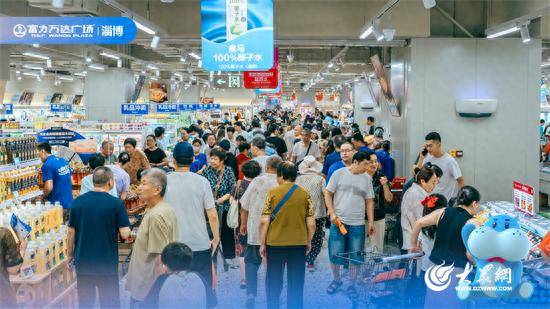
Core Insights - The opening of Hema's first store in Central Shandong marks the company's successful expansion into its seventh city in Shandong, highlighting the importance of "first store economy" in stimulating regional consumer activity [1] - The collaboration between Hema Fresh and Zhuhai Wanda Commercial Management Group in Jinan demonstrates the replicability of their commercial resource integration and consumption upgrade strategies [1][3] Group 1: Company Strategy - Zhuhai Wanda Commercial Management Group has been deeply rooted in Shandong for 15 years, operating 20 shopping centers across 11 cities, with plans for a new Wanda Plaza in Jinan by December 2025 [3] - The company is implementing a commercial ecosystem upgrade strategy, focusing on customer demand insights and tailored approaches for each store to enhance positioning and operational quality [3][6] - The restructuring strategy aims to activate existing commercial assets in response to consumption upgrade trends, emphasizing customer needs and precise market positioning [3][6] Group 2: Market Performance - The Jinan Weijiazhuang Wanda Plaza has successfully revitalized its offerings by introducing 48 new brands in the first half of 2025, including popular dining and tech brands, enhancing customer engagement [4] - The Dongying West City Wanda Plaza saw over 20% growth in both foot traffic and sales in the first half of 2025 after adjusting its positioning to cater to a younger demographic [6] Group 3: Customer Experience - Zhuhai Wanda Commercial Management Group is enhancing customer experience through comprehensive operational, marketing, and service innovations, focusing on creating immersive shopping environments [9] - The company has adopted a "one store, one color" principle to improve operational quality and customer perception, alongside significant upgrades to public facilities [9] Group 4: Marketing and Community Engagement - The marketing strategy has evolved from unified marketing to a multidimensional approach, integrating local cultural elements and hosting various events to enhance community engagement [10] - The upcoming Jinan Century Avenue Wanda Plaza aims to create a garden-style commercial space that combines cultural and natural elements, catering to diverse consumer lifestyles [11][13] Group 5: Future Outlook - The strategic framework of "first store economy explosion - existing structure adjustment - incremental benchmark creation" is guiding the regional commercial upgrade efforts of Zhuhai Wanda Commercial Management Group [16] - The company plans to expand its presence in more cities across Shandong, aiming to activate regional consumption potential and evolve commercial spaces into platforms for lifestyle value creation [16]
南下资金,买爆了
Ge Long Hui· 2025-08-17 08:45
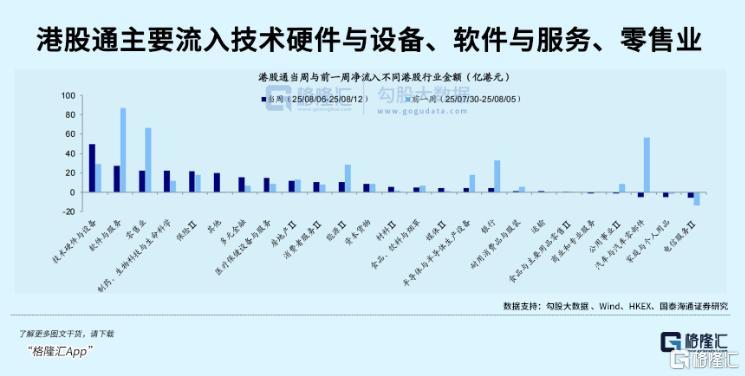
Group 1 - The Hang Seng Index reached a year-to-date high of 25,680 points, despite a subsequent pullback of 1.8% over two days, indicating sustained market interest [1] - Southbound capital inflow remained strong during the Hong Kong stock market's pullback, with net purchases of HKD 86.3 billion and HKD 358.76 billion on August 14 and 15, respectively, the latter setting a new single-day record [1][5] - Year-to-date, southbound capital has exceeded HKD 938.9 billion, significantly surpassing the full-year target of HKD 8,078.7 billion for 2024, with nearly HKD 3,000 billion inflows in the last three months alone [8] Group 2 - The sectors attracting southbound capital include technology hardware and equipment, software and services, retail, and biomedicine [6] - The Hong Kong IPO market has been robust, with over 50 new listings raising more than HKD 128 billion, a year-on-year increase of over six times, making it the top global IPO market [8] - The issuance of Hong Kong-themed funds has surged, with new fund sizes reaching HKD 85 billion since 2025, contributing significant incremental capital to the market [8] Group 3 - The performance of ETFs tracking Hong Kong stocks has been notable, with significant growth in funds related to technology and innovation sectors, reflecting strong investor interest [9] - As of Q2 2025, active public funds' investment in Hong Kong stocks accounted for 14.7% of total fund assets, indicating a growing allocation to this market [9] Group 4 - The valuation of the Hang Seng Index is currently at a dynamic P/E ratio of 11.3, which is above the historical average but still has room for improvement compared to historical highs [12] - Analysts are optimistic about the future performance of the Hong Kong market, citing a favorable macroeconomic environment and continued capital inflows as key support factors [13] Group 5 - Investment opportunities are seen in the internet sector, which is considered undervalued, and in AI-related industries, which are expected to gain momentum in the second half of the year [14] - High dividend yield stocks in sectors such as finance, utilities, and consumer goods are also viewed as attractive for long-term investors, with the Hang Seng High Dividend Yield Index showing a yield of 5.75% [14]
财经观察:为什么要促消费、“反内卷”、“薅羊毛”…… 专家这样说
Ren Min Wang· 2025-08-16 01:20
Group 1: Economic Indicators and Consumer Behavior - The Consumer Price Index (CPI) has shifted from decline to increase, indicating a need to further stimulate consumer activity in the economy [1] - Consumer spending is a major component of GDP, and its growth is essential for economic development [1] - The "trade-in" and "consumer loan interest subsidies" policies have effectively boosted consumer vitality and spending [1] Group 2: Trends in Consumer Spending - There is a significant trend towards increasing the proportion of consumer spending in GDP, which is currently lower compared to developed countries [2] - Enhancing consumer income through industrial upgrades is crucial for increasing consumption [2] - The demand for sports events and related products indicates untapped consumer potential [2] Group 3: Competition and Market Dynamics - "Involution" in competition is detrimental to consumer welfare and disrupts market order [3][4] - The need for improved industry concentration and profitability is emphasized to combat "involution" [5][6] Group 4: Government Policies and Consumer Opportunities - Government subsidies for trade-ins cover various sectors, and consumers are encouraged to take advantage of these limited-time offers [7] - Traditional and new consumption sectors hold significant potential for growth, and consumers should embrace digital economic opportunities [8]
以新供给引领新需求 以新需求牵引新供给
Ren Min Ri Bao· 2025-08-15 08:04
Core Viewpoint - China's economy has demonstrated remarkable resilience and exceeded expectations in growth during the first half of the year, prompting several foreign media outlets to revise their forecasts positively [1] Group 1: Economic Performance and Trends - China's economy is characterized by a strong vitality and resilience, attributed to the effective coordination of supply and demand, as emphasized by President Xi Jinping [1] - The domestic consumption of goods has seen a significant increase, with the total number of consumer goods surpassing 200 million, and over 8.09 million new consumer goods introduced in the first four months of the year, marking a 40.4% year-on-year growth [1] - The contribution rate of domestic demand to economic growth reached 68.8% in the first half of the year, with final consumption expenditure contributing 52%, establishing domestic demand as the main driver of economic growth [4] Group 2: Supply and Demand Dynamics - The shift from "what is available" to "what is desired" indicates a transformation in consumer demand, which is now driving profound changes in the supply structure [3] - New consumer demands are leading to innovations in production methods, such as the introduction of multifunctional washing machines and quick-drying clothing, reflecting a trend towards personalized and flexible manufacturing [3] - Policies aimed at boosting consumption, such as the "Special Action Plan to Boost Consumption" and the "Service Consumption Quality Improvement Action Plan," are enhancing consumer capacity and improving conditions for consumption [3] Group 3: Innovation and Market Development - China's transition from a manufacturing hub to a global innovation center is supported by a complete industrial system and technological advancements, continuously creating high-quality supply to meet diverse consumer needs [2] - The emergence of new consumption patterns, such as the "light food wave" and low-altitude economy, is opening up new opportunities for industries [3] - The synergy between high-quality supply and high-quality demand is creating a robust foundation for China's economy, enhancing its structural quality, resilience, potential, and vitality [6]
2025年,“上门按摩服务”为啥越来越受欢迎?业内人士说出原因
Sou Hu Cai Jing· 2025-08-15 05:34
Core Insights - The Chinese massage market is undergoing a significant transformation, with the rise of on-demand massage services creating a market worth 700 billion yuan, expanding rapidly [1][7] - By 2025, the market size of the massage and foot therapy industry in China is expected to reach substantial figures, driven by changing consumer behaviors and preferences [1] Market Drivers - **Consumer Upgrade**: From 2013 to 2023, the disposable income of Chinese residents has consistently increased, leading to a shift in massage services from luxury to a part of daily health management, especially among high-income urban professionals [1] - **Technological Empowerment**: The maturity of O2O platforms has provided robust technical support for on-demand massage services, with the digital economy and internet penetration rising from 2017 to 2022, facilitating easier online booking and payment processes [2] - **Rise of Home Economy**: The emergence of Generation Z has fostered a demand for convenient services, with a strong inclination towards "lazy economy" trends, boosting the popularity of on-demand services like massage [2] - **Enhanced Service Experience**: Home massage services offer a familiar and private environment, addressing the needs of specific demographics such as postpartum women and the elderly, with 61.4% of users being male, indicating a strong demand for privacy [2][3] - **Efficient Time Management**: Traditional massage services often require 3-4 hours, while on-demand services significantly reduce this time, appealing to busy urban consumers who prefer evening and weekend appointments [3] - **Diverse and Transparent Services**: Online platforms provide a wider selection of therapists, allowing consumers to choose based on qualifications and reviews, with nearly half preferring female therapists [3] Challenges and Future Outlook - Despite rapid growth, the on-demand massage market faces challenges such as inconsistent service quality and fraud risks, necessitating improved industry standards and regulations [5] - The future of the on-demand massage market is expected to focus on quality enhancement and expansion, with more specialized services and increased brand concentration, alongside advancements in technology like AI and big data to improve service matching [5][7]