
能源转型

Search documents
数说“十四五”:中国能源转型的“绿”与“新”
Sou Hu Cai Jing· 2025-10-22 02:21
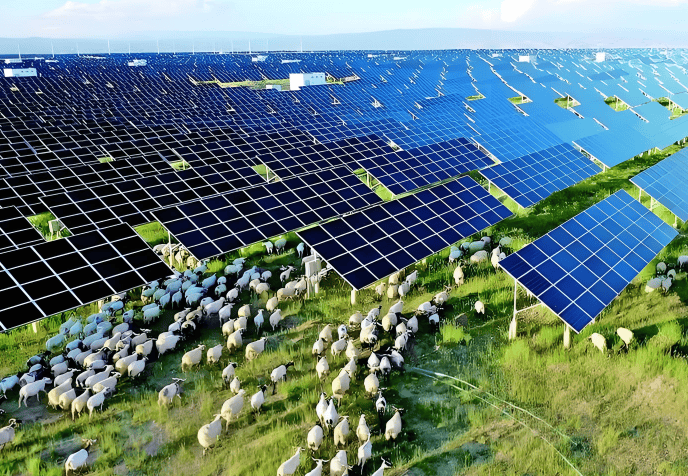
(来源:江苏现代能源微网) 两个"1/3"、一个"1/5",向世界宣告了我国在能源转型方面取得的不凡成就。2024年,全国发电量超10万亿千瓦时,占全球总发电量的1/3,能源生产总量 折合约50亿吨标准煤,占比超全球1/5;全社会每消费3度(千瓦时)电,其中就有1度源自太阳能、风能等清洁能源。 来源:市场资讯 能源,被喻为"工业的粮食",是我国推进碳达峰碳中和的重要战场。"十四五"以来,我国建成了全球规模最大的电力基础设施体系,构建起全球最大、发 展最快的可再生能源体系,能源供给能力不断提升、结构持续优化。以"逐绿向新"为重要特点,这5年,我国能源转型跑出"加速度"。 国家能源局局长王宏志透露,"十四五"以来,我国能源事业取得突破性进展和历史性成就,"十四五"规划纲要提出的能源综合生产能力和非化石能源占比 等主要指标将如期完成,"我国成为世界能源转型的重要推动者"。 底色越来越"绿" 可以说,"十四五"时期是我国能源绿色低碳转型最快的5年。 一组来自国家能源局的数据印证了变化:"十四五"开局以来,我国的能源消费中,非化石能源占比每年增加1个百分点,煤炭的占比则每年减少1个百分 点。华电集团绿色金融研究中心首席 ...

跨商品展望 - 黄金短期暂歇,中期看涨铜、铝,油价处于 2026 年区间中点-Cross-Commodity Outlook-Gold to pause for now, medium term bullish copper, aluminium, oil at midpoint of 2026 range
2025-10-22 02:12
Summary of Key Points from the Conference Call Industry Overview - The report provides an outlook on key commodities including gold, oil, copper, and aluminium, indicating a pause in gold prices while maintaining a bullish medium-term outlook for copper and aluminium, as well as oil prices projected to stabilize around $60 per barrel by 1Q'26 [1][4][5]. Core Insights and Arguments - **Gold Price Forecast**: The near-term target for gold is set at $4,000 per ounce, down from a current spot price of $4,250 per ounce. This adjustment is based on expectations of a potential end to the US government shutdown and developments in US-China relations [5][10]. - **Oil Market Dynamics**: The Brent crude oil price is expected to average around $60 per barrel in early 2026, influenced by factors such as China's stockpiling and OPEC+ revenue needs. A potential end to the Russia-Ukraine conflict could lead to a price drop to $50-55 per barrel before OPEC+ intervenes [4][13]. - **Copper and Aluminium Outlook**: Medium-term bullish forecasts for copper and aluminium suggest prices could reach $12,000 per tonne (approximately 15% upside) and $3,500 per tonne (approximately 25% upside) respectively over the next 6-12 months. This is driven by structural energy transition and AI trends, alongside expectations of a cyclical growth rebound [4][5]. Additional Important Insights - **Market Sentiment and Wealth Rebalancing**: There is a potential bearish sentiment surrounding gold due to the possibility of wealth shifting out of gold as market fears subside. A small rebalancing of profits from gold stockpiles could significantly impact supply dynamics, potentially doubling gold mine supply [10][11]. - **Inflation and Interest Rates**: The report notes that a dovish Federal Reserve stance, particularly under new leadership by mid-2026, could support a bull market for copper and aluminium, as lower real interest rates and improved growth expectations are anticipated [4][5]. - **Investment Strategy Recommendations**: Investors are advised to consider building bullish positions in copper and aluminium to capitalize on expected price increases, while also being cautious of potential shifts in gold demand due to changing market conditions [4][5]. Conclusion - The conference call highlights a complex interplay of factors affecting commodity prices, with a cautious yet optimistic outlook for copper and aluminium, a stabilizing oil market, and a nuanced perspective on gold influenced by broader economic conditions and market sentiment [1][4][5].
超千亿投资推进电网建设
Liao Ning Ri Bao· 2025-10-22 01:01
Core Viewpoint - The construction of the Liaoning power grid is a key initiative during the "14th Five-Year Plan" period, aimed at enhancing energy supply and supporting industrial transformation in the region [1][2]. Group 1: Infrastructure Development - The "14th Five-Year Plan" emphasizes the construction of a robust power grid, with over 100 personnel working on the 500 kV Liaobin transmission and transformation project [1]. - National Grid Corporation of China has invested over 100 billion yuan in Liaoning since the beginning of the "14th Five-Year Plan," marking a historical high in investment [1]. - The completion of 10 new 500 kV substations has significantly improved Liaoning's power supply capacity, increasing from 40 million kW in 2020 to a projected 50 million kW by 2025 [2]. Group 2: Technological Innovation - Liaoning's power grid has integrated 16 types of original technology achievements, achieving full domestic production across the supply chain [2]. - The province has successfully implemented the world's first large-capacity black start test for a city grid, enhancing the resilience of the power system under extreme conditions [2]. - Innovative technologies such as the first domestic 66 kV static synchronous compensator and the first 10 kV superconducting fault current limiter have been introduced [2]. Group 3: Service Improvement - The smart distribution network has stabilized voltage levels, allowing for consistent power supply even during peak demand periods [3]. - The "Three Zero" service initiative has benefited 491,000 users, saving a total of 6.384 billion yuan in electricity costs [3]. - Continuous improvements in power supply services have enhanced user satisfaction and contributed to the overall development of the region [3].
穆罕默德·阿布纳扬:中国能源转型实践为全球树立典范
中国能源报· 2025-10-22 00:07
Core Viewpoint - The relationship between Saudi Arabia and China has evolved significantly over 35 years, transitioning from a focus on bilateral trade to a comprehensive, mutually beneficial partnership that emphasizes investment and cooperation across various sectors [3][5]. Group 1: Bilateral Trade and Economic Cooperation - The bilateral trade volume between China and Saudi Arabia has increased from less than $500 million in 1990 to $107.53 billion in 2024, marking a nearly 220-fold growth [3]. - The partnership has moved beyond traditional energy trade, entering a new phase of all-encompassing, multi-layered development [3][5]. - The alignment of China's Belt and Road Initiative with Saudi Arabia's Vision 2030 has created synergistic effects for both countries, enhancing cooperation beyond simple project matching to deep integration [5][6]. Group 2: Areas of Collaboration - Cooperation has expanded from "hard connectivity" to "soft connectivity," including technology research, talent development, and standard-setting [6]. - Both countries are addressing global challenges such as desertification and water scarcity through shared experiences and technologies, enhancing the resilience and foresight of their collaboration [6]. Group 3: Renewable Energy and Technological Advancements - China is recognized as the world's largest renewable energy market, leading in installed capacity and development speed, providing a viable and inclusive path for global energy transition [8]. - Saudi Arabia aims to learn from China's development experiences and replicate them locally, transitioning from merely importing goods and services to becoming a significant export hub [9]. - The Red Sea New City energy storage project exemplifies the collaboration between Saudi Arabia and China in renewable energy, showcasing advanced technology solutions and innovative capabilities [9]. Group 4: Global Challenges and Opportunities - The two countries can transform global challenges such as climate change and energy security into opportunities for profound bilateral and multilateral cooperation, including extensive technology exchange and diverse project collaborations [11][12]. - Saudi Arabia's initiatives, such as the Saudi Green Initiative and the Middle East Green Initiative, aim to enhance environmental protection and ecological restoration, benefiting both nations [12].
应流股份拟回购用于叶片机厘加工涂层项目,业绩高增长可期
SINOLINK SECURITIES· 2025-10-21 13:26
Report Industry Investment Rating No information provided in the content. Core Viewpoints - The current convertible bond of Yingliu Co., Ltd. raises 1.5 billion yuan. After deducting issuance fees, it will be used for the blade machining and coating project, the intelligent upgrading project of advanced nuclear energy materials and key components, and supplementing working capital and repaying bank loans. It will be listed on October 22, 2025. - The expected listing price is above 130 yuan. The bond rating of Yingliu Convertible Bond is AA+. The latest parity is 112.5 yuan. Considering the high sentiment in the convertible bond market since July and the high prosperity of the company's industry, the conversion premium rate on the listing day is expected to be between 25 - 30%, and the listing price will be above 130 yuan. If the price is below 140 yuan, it can be actively concerned [1]. Summary by Directory I. Convertible Bond Clause Analysis - The issuance scale of the company's current convertible bond is 1.5 billion yuan, with a term of 6 years. The initial conversion price is 30.47 yuan. Calculated at the initial conversion price, it can be converted into 49.2287 million A - shares of Yingliu Co., Ltd. The dilution rate of full conversion on the company's total A - share capital and non - restricted tradable shares is 7.25%. The conversion period starts from March 25, 2026, to the maturity date of the convertible bond (September 18, 2031). The original shareholder placement ratio is 78.4% [10]. - The 6 - year coupon rates of the convertible bond are 0.10% in the first year, 0.30% in the second year, 0.60% in the third year, 1.00% in the fourth year, 1.50% in the fifth year, and 2.00% in the sixth year, slightly lower than the industry average. The maturity redemption price is 109 yuan. The bond is rated AA+ for both the issuer and the bond, and there is no guarantee. The additional terms include a conversion price correction clause (15/30, 85%), a conditional redemption clause (15/30, 130%), and a put clause (30, 70%) [11][12]. - As of October 20, 2025, the latest closing price is 34.27 yuan, corresponding to a parity of 112.47 yuan. The calculated pure bond value is 97.67 yuan, with good bond - bottom protection. The yield to maturity is 2.00%, higher than the yield of the same - term treasury bond [12]. II. Underlying Stock Fundamentals - It is a private enterprise with relatively dispersed equity. As of the first half of 2025, Mr. Du Yingliu directly holds 1.71% of the company's shares and controls 27.37% through Yingliu Investment. Together with the shares held by the consistent action persons of the controlling shareholder, he controls 34.74% of the company's shares in total and serves as the chairman and general manager [13]. - The company's main products are high - temperature alloy products, precision cast steel products, nuclear power and other medium - and large - sized cast steel products, and new materials and equipment, which are mainly used in high - end equipment fields such as aerospace, gas turbines, and nuclear power. Its manufacturing technology and production equipment are domestically leading, and its products are exported to more than 40 countries and regions, serving more than 100 customers, including domestic and global industry leaders [16]. - In the first half of 2025, the company's sales revenue was 1.384 billion yuan, a year - on - year increase of 9.11%. The revenue of high - temperature alloy products and precision castings was 842 million yuan, accounting for 63%. The revenue scale of the two - engine products has been steadily increasing, and the overseas revenue accounted for 47.4% [19]. - The company's gross profit margin has remained at a high level, around 36% in the past few years. The period expenses have gradually decreased, with the management expense rate dropping to around 8%, the sales expense rate remaining at around 1%, and the financial expense rate dropping to around 4% [22]. - The company has maintained a high - intensity R & D investment, with an R & D expense rate of over 10% for many years and a long - term technical staff ratio of over 20% [26]. - The two - engine business has high industrial chain prosperity. The downstream orders in the gas turbine and aero - engine fields are growing rapidly, and the company's two - engine business orders are also growing rapidly. As of the first half of 2025, the on - hand orders exceeded 1.5 billion yuan [29][30]. - The nuclear power business is recovering. The domestic nuclear power industry has maintained a good development momentum, and the company is an important domestic supplier in the nuclear power field. It signed a strategic cooperation agreement with Shengu Nuclear Power in the first half of 2025 and won multiple nuclear energy material projects. It also holds 60% of the equity of Jubian New Materials [34]. - The company's profitability is gradually improving. As a heavy - asset industry, with the increase in capacity utilization, the company's net profit margin, asset turnover rate, and ROE have all increased. The ROE has increased from 2% to around 10% [34]. III. Analysis of Convertible Bond Fund - Raising Projects - The company's current convertible bond raises 1.5 billion yuan. After deducting issuance fees, it will be used for the blade machining and coating project, the intelligent upgrading project of advanced nuclear energy materials and key components, and supplementing working capital and repaying bank loans [1][41]. - The blade machining and coating project is an extension of the company's existing product deep - processing processes, which can improve the service life and efficiency of high - temperature alloy components and form a complete production chain. The planned construction period is 48 months, starting from July 2022 and expected to be completed in June 2026 [41]. - The intelligent upgrading project of advanced nuclear energy materials and key components produces materials that have passed national - level industry appraisals. The project is expected to be completed in October 2026, with a construction period of 24 months starting from November 2024 [41].
倒计时2天!国际能源变革论坛十载回顾
国家能源局· 2025-10-21 12:56
点击 国家能源局 关注 2025国际能源变革论坛 2025 INTERNATIONAL FORUM ON ENERGY TRANSITION A DECADE OF COLLABORATION DRIVES ENERGY TRANSITIONS FOR A GREEN FUTURE 2025年10月23日-25日 中国·苏州 October 23rd-25th 2025 Suzhou,China 10月23日至25日,2025年国际能源变革论坛将在江苏苏州召开。作为全球能源领域的高端对话平台,这场由国家能源 局、国际可再生能源署与江苏省人民政府联合打造的全球能源盛会,即将迎来创办十周年的里程碑时刻。 自2015年创办以来,历届国际能源变革论坛均以其高规格、前瞻性和务实性,汇聚了来自全球政要、专家学者与企业代 表,形成了一系列引领性能源转型共识与倡议。十载耕耘,论坛已成为全球能源转型领域的"风向标",为推动能源革命、 应对气候变化贡献了重要智慧和方案。 2025年国际能源变革论坛即将召开之际,让我们回溯时光长河,重温那些镌刻在能源变革史上的高光瞬间,展望全球能源 转型更加广阔的未来。 十年回顾:从"苏州声音"到 ...

海博思创菲律宾大型储能项目签约 推进东南亚市场布局
海博思创· 2025-10-21 10:12
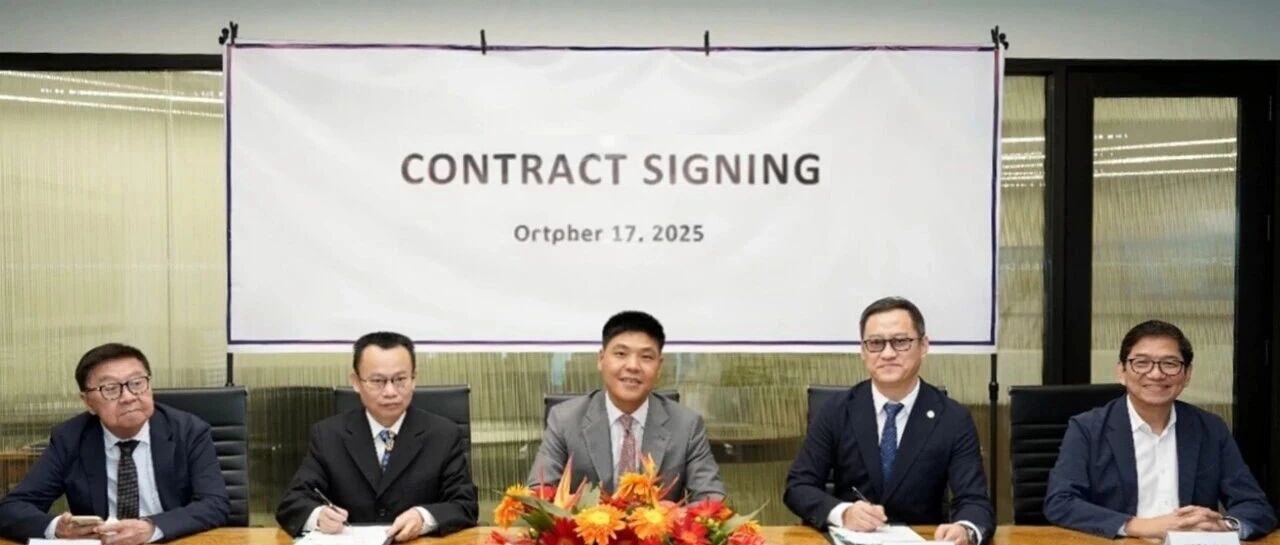
Core Insights - The article highlights the successful establishment of Haibosch's office in Manila and the signing of a significant 185MWh energy storage project in the Philippines, marking a strategic expansion into the Southeast Asian market [1][2] Group 1: Company Developments - Haibosch officially opened its office in the BGC financial district of Manila on October 10, 2025, aiming to serve as an operational hub for the Southeast Asian region [1] - The company signed a contract for a large-scale 185MWh energy storage system project on October 17, 2025, demonstrating its competitive edge and brand influence in the local market [1][2] Group 2: Market Impact - The project is recognized for its importance in the Philippines' energy transition and enhancing grid stability, reflecting the project's significance to local stakeholders [2] - Haibosch's international business senior vice president emphasized the company's commitment to providing reliable energy storage solutions, showcasing its comprehensive strength and the beginning of long-term strategic partnerships with local entities [2] Group 3: Industry Experience - With 14 years of industry experience, Haibosch has participated in over 300 energy storage projects globally, accumulating an installed capacity exceeding 40GWh [2] - The company is poised to contribute significantly to the sustainable and resilient energy future of the Philippines and the broader Southeast Asian region, leveraging its deep technical expertise and successful international project experience [2]
四季度收官,就看它了
Sou Hu Cai Jing· 2025-10-21 09:05
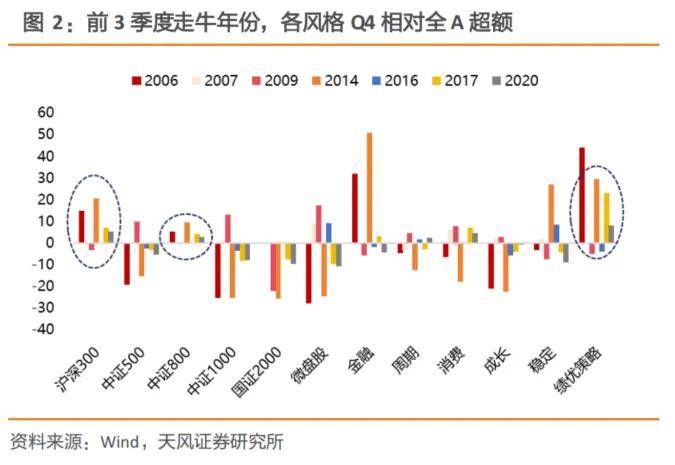
Core Viewpoint - The A-share market is experiencing significant fluctuations, with a notable decline in trading volume, indicating a cautious sentiment among investors as they await important meetings and quarterly reports [1][2][3]. Group 1: Market Dynamics - In the fourth quarter, market behavior tends to shift as institutional investors reassess their profits and year-end bonuses, leading to a more conservative approach to risk-taking [4][5]. - Retail investors are also adopting a cautious stance, either seeking to protect gains or minimize losses after a year of volatility [5][6]. - Historical data shows that in years where the market performs well in the first three quarters, the fourth quarter often sees a style shift, with a focus on stability over high volatility [9][10]. Group 2: Investment Strategies - Investors are advised to focus on sectors with strong earnings certainty and safe valuations, particularly in the context of this year's bull market [11]. - Value ETFs, such as the one tracking the National Value 100 Index, are highlighted as potential investment vehicles due to their high dividend yield of approximately 5.0% and a low price-to-earnings ratio of 9 [12]. - The financial sector, including banks and insurance companies, is identified as a key area of interest due to its significant market capitalization and relative performance advantages in quarterly reports [12]. Group 3: Sector Analysis - The power sector, particularly thermal power, is positioned as a favorable investment opportunity due to recent reforms that enhance profitability despite fluctuating coal prices [16][17]. - Clean energy sectors, including hydropower, nuclear, wind, and solar, are benefiting from policy support and the broader energy transition trend, although they exhibit varying performance based on specific market conditions [18]. - The China Securities Green Power Index, which includes a mix of green energy companies and transitioning thermal power firms, is noted for its strong long-term performance and reasonable valuations, with a price-to-earnings ratio of 17.59 and a dividend yield of 2.72% [19][22]. Group 4: Future Outlook - The upcoming winter season is expected to see increased electricity demand due to colder weather, which may positively impact power companies' performance [24]. - The recent focus on stabilizing electricity prices by regulatory bodies is anticipated to alleviate market concerns regarding future pricing structures [24].
南非政府拟1200亿美元推进能源转型;TikTok Shop第三季度全球GMV达190亿美元;全球电车销量创新高|一周出海参考
Tai Mei Ti A P P· 2025-10-21 09:02
Emerging Market Dynamics - Saudi Arabia's Kafalah program aims to boost SME financing by 8% year-on-year, reaching approximately $3.73 billion [1] - Saudi Arabia will implement new freight regulations on October 29, 2025, requiring all import cargo loading information to be submitted via the "FASAH" electronic customs platform, potentially extending clearance times by 3-5 days [2] - Dubai has launched the "Free Zone Mainland Operating Permit" to facilitate cross-border operations for free zone registered companies, expected to drive a 15%-20% growth in cross-border business in the first year [3] - South Africa plans to invest approximately $126.7 billion to advance energy transition, aiming to reduce coal's share in power generation from 58% to 27% by 2039 [4] Platform Dynamics Overview - Amazon will report seller tax information by October 31, covering the period from July to September 2025, in compliance with new regulations [5] - Amazon Bazaar in India saw a 26-fold increase in order volume, with new user numbers growing 4.2 times [6] - Amazon released the "2025 Amazon Global Store Consumer Category Guide," highlighting six major consumer trends [7] - Amazon Business introduced a dual discount program to reduce shipping fees and sales commissions for bulk orders [8] Popular Industry Observations - Global electric vehicle deliveries reached a record 2.1 million units in September, with 62% from China, marking a 24% year-on-year increase [15] - Japan's silver economy is booming, with a significant rise in demand for senior-friendly products [16] - China's energy storage battery shipments reached 165 GWh in Q3 2025, a 65% year-on-year increase [17] Service Ecosystem Trends - JD Logistics and Xpeng Motors launched a parts warehouse in Dubai to support regional operations [18] - J&T Express reported a 78.7% year-on-year increase in parcel volume in Southeast Asia for Q3 2025 [19] - Cainiao announced logistics plans for the year-end promotion, enhancing service capabilities in key markets [20] - XTransfer reported that 75.9% of its overseas payments in the first nine months of 2025 came from emerging markets [21] - Alibaba Cloud opened its second data center in Dubai to meet growing demand for cloud computing and AI [22] Overseas Policy Changes - The U.S. plans to extend a tariff reduction arrangement for the automotive industry, allowing manufacturers to lower import tariffs on auto parts [23] - Malaysia is considering banning smartphone and social media use for individuals under 16 to combat bullying and crime [24][25] - Italy plans to impose additional taxes on fast fashion products from China to protect its fashion industry [26] - The EU has made an initial anti-dumping ruling against Chinese fiberglass yarn, with tariffs up to 56.1% [27] - The U.S. has begun charging a "port fee" on Chinese vessels, significantly increasing shipping costs and leading to a rise in canceled voyages [28]


第三届合成气制乙醇DMTE技术研讨会举办
Zhong Guo Jing Ji Wang· 2025-10-21 07:42
Core Insights - The third DMTE technology seminar focused on the latest research and industrial application prospects of DMTE technology in the coal chemical industry [1][2] - The seminar highlighted the collaboration between Beijing Petroleum Engineering Co., Ltd. and Yanchang Zhongke (Dalian) Energy Technology Co., Ltd. in showcasing the development of DMTE technology from a 100,000 tons/year coal-based ethanol project to a 600,000 tons/year ethanol joint facility [1][2] Industry Developments - DMTE technology addresses traditional coal chemical industry challenges such as high carbon emissions and low added value, enabling efficient conversion of syngas to ethanol [1] - The seminar featured presentations on the construction and operational experiences of a 600,000 tons/year ethanol facility by Anhui Carbon Xin Technology and a comprehensive review of a 250,000 tons/year ethanol project by Xinjiang Tianye Group [2] - The application case of Yulin Coal Chemical DMTE technology demonstrated its stability and economic viability under different raw material conditions [2] Technological Advancements - Innovations in equipment manufacturing were discussed, including large reactor designs and efficient coiled tube heat exchangers for syngas to ethanol facilities [2] - The seminar emphasized the ongoing development of the DMTE technology system and the commitment to promote more industrial projects to support China's energy structure transformation and carbon neutrality goals [2] Future Outlook - Experts believe that as DMTE technology matures and is widely adopted, coal-based ethanol will play a more significant role in clean fuels and chemical raw materials, providing new solutions for energy transition in China and globally [2]

