
供应链韧性

Search documents
亿纬锂能副总裁江敏:锂电池产品不应低价“内卷” 全球化布局以增强供应链韧性|走进上市公司·高见2025
Mei Ri Jing Ji Xin Wen· 2025-07-18 07:09
Core Viewpoint - The article highlights the growth and strategic initiatives of EVE Energy Co., Ltd., a leading lithium battery manufacturer in China, emphasizing its global expansion, technological advancements, and commitment to high-value products in the lithium battery industry [2][11][12]. Company Overview - EVE Energy was founded in 2001 by Liu Jincheng in Huizhou, Guangdong, and has evolved from consumer batteries to power and energy storage batteries, becoming a globally competitive player in the lithium battery sector [2]. - The company employs over 28,000 people and has established 12 production bases across Asia, Europe, and America, showcasing its global manufacturing and service capabilities [2]. Product and Market Position - EVE Energy's lithium primary batteries have ranked first in sales and exports in China for eight consecutive years since 2016. In 2024, the company is expected to rank first in domestic cylindrical battery shipments and fourth globally [11]. - The company’s power battery installation volume ranks fifth in China, with a shipment volume of 30.29 GWh, reflecting a year-on-year growth of 7.87%. Its energy storage battery shipments are projected to reach 50.45 GWh, marking a significant year-on-year increase of 91.90% [11]. Technological Advancements - EVE Energy is at the forefront of solid-state battery development, planning to achieve production breakthroughs for its self-developed all-solid-state soft-pack batteries by 2026, targeting energy densities of 350 Wh/kg and 800 Wh/L [11]. - The company aims to launch a high-energy solid-state battery product with over 1000 Wh/L by 2028, positioning itself ahead of competitors who have set their mass production timelines for 2027 [11]. Industry Strategy - The company emphasizes the importance of avoiding low-price competition in the lithium battery sector, advocating for high-technology and high-value products instead [12]. - EVE Energy is expanding its global footprint through overseas factories and subsidiaries, with projects in Malaysia and Hungary aimed at enhancing local production capabilities and supply chain resilience [13]. Financial Strategy - EVE Energy plans to issue H-shares on the Hong Kong Stock Exchange to support its capital needs for overseas factory construction, aiming for a diversified financing approach [16]. - The company has launched a global lithium battery recycling platform, enhancing resource recovery rates to over 85%, thereby promoting a sustainable and circular economy in the lithium battery industry [16].


第三届链博会赛力斯秀“肌肉”:魔方技术平台与供应链“厂中厂”成焦点
Zhong Guo Neng Yuan Wang· 2025-07-18 06:02
Group 1 - The core viewpoint of the article highlights the strong performance and future strategic direction of Seres' new energy vehicle business, with a reported annual sales volume of 426,885 units, a year-on-year increase of 182.84% [1] - The company achieved a net cash flow from operating activities of 22.52 billion yuan, indicating robust financial health [1] - Seres plans to invest 7.053 billion yuan in R&D for 2024, reflecting a year-on-year growth of 58.9%, which supports its innovation and product development [1] Group 2 - In the supply chain sector, Seres has implemented a deep integration strategy, reducing the number of first-tier suppliers from 300 to 100, including partnerships with 20 world-class suppliers like CATL [2] - The innovative "factory-in-factory" model allows core suppliers' production lines to be embedded within Seres' super factories, achieving a response time of under 20 minutes for production line adjustments [2] - The AITO brand has shown strong competitiveness in the luxury car market, with a single vehicle transaction price exceeding 400,000 yuan, and the AITO M9 leading in net promoter score (NPS) [2] Group 3 - The overseas market is identified as a new growth driver, with Seres establishing a network of 50 dealers in ASEAN and operating a smart factory in Indonesia [2] - The company is focusing on expanding into Gulf countries, with a subsidiary already set up in the UAE and ongoing efforts in Qatar and Saudi Arabia [2] - At the expo, Seres showcased its full range of AITO models and core technologies, aiming to connect with global industry resources [3]

共话中国经济新机遇丨专访:供应链韧性的核心是合作 期待进一步融入中国创新生态——访美国安森美公司全球高级副总裁马库斯·克奈费尔
Xin Hua Wang· 2025-07-18 03:17
Group 1 - The core of supply chain resilience is cooperation, and all parties involved need to maintain trade stability and innovative collaboration with an open mindset [2] - The cooperation between China and the US in the fields of new energy vehicles and green energy can allow companies to share growth dividends and enable people in both countries and globally to enjoy sustainable lifestyles brought by technological advancements [2] - The Chinese new energy vehicle industry is experiencing rapid growth, providing significant momentum for companies like Onsemi that focus on semiconductor applications in automotive [2] Group 2 - Onsemi's silicon carbide product solutions are widely used in new energy vehicles, new energy generation, and energy storage systems, positioning the company strongly in the market [1][2] - By the first quarter of 2025, cumulative sales of new energy vehicles in China are expected to grow by 45.9% year-on-year, with a penetration rate of 45% [2] - Nearly half of the new electric vehicle models launched at the Shanghai International Auto Show in May utilized Onsemi's silicon carbide solutions, which are set to enter mass production by the end of 2025 [2] Group 3 - The Chinese market's large scale, rapid product iteration, and high consumer acceptance of new technologies have greatly benefited Onsemi, allowing the company to quickly respond to differentiated customer demands [3] - Onsemi aims to deepen its integration with the local industry chain in China, helping partners strengthen their global competitiveness while enhancing Onsemi's position in the global semiconductor supply chain [3] - The strategic direction of building supply chain resilience and promoting sustainable development in China aligns closely with Onsemi's goal of creating a sustainable industrial ecosystem [3]

链博会释放全球供应链积极信号
Zhong Guo Qing Nian Bao· 2025-07-17 15:44
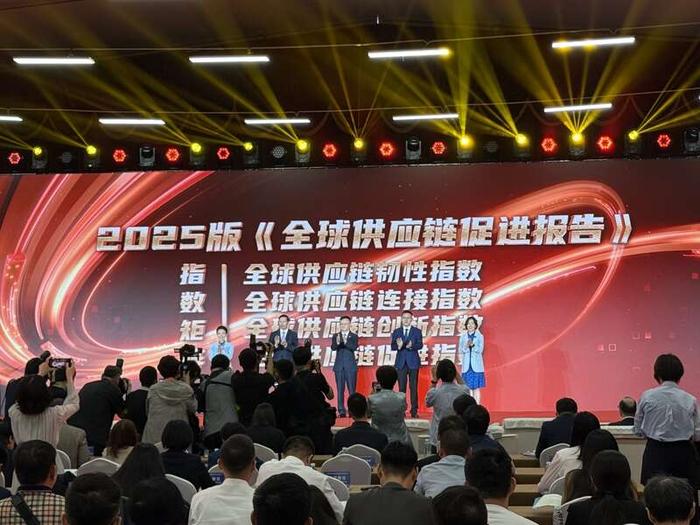
Group 1 - Apple collaborates with three Chinese suppliers, showcasing the tight integration of global supply chains, with over 80% of its top 200 suppliers having factories in China [1] - The China International Supply Chain Promotion Expo aims to enhance global connectivity and promote a more stable and resilient supply chain system amid geopolitical tensions and rising protectionism [2][3] - The "Global Supply Chain Promotion Report" and global supply chain index matrix were released, indicating a positive trend in global supply chain development despite uncertainties [5][6] Group 2 - The report highlights that from 2018 to 2024, the promotion index of the global supply chain matrix is expected to grow from a base value of 1 to 2.71, indicating significant improvement [5] - The resilience index, however, shows slower growth and greater volatility, indicating a weakness in the global supply chain that requires collective efforts to enhance [8][9] - The expo serves as a platform for continuous dialogue, fostering connections among diverse participants to explore collaborative solutions for global supply chain challenges [11][12]
【2025链博会】施耐德电气:未来供应链三大关键词为韧性、绿色和创新
Huan Qiu Wang· 2025-07-17 06:14
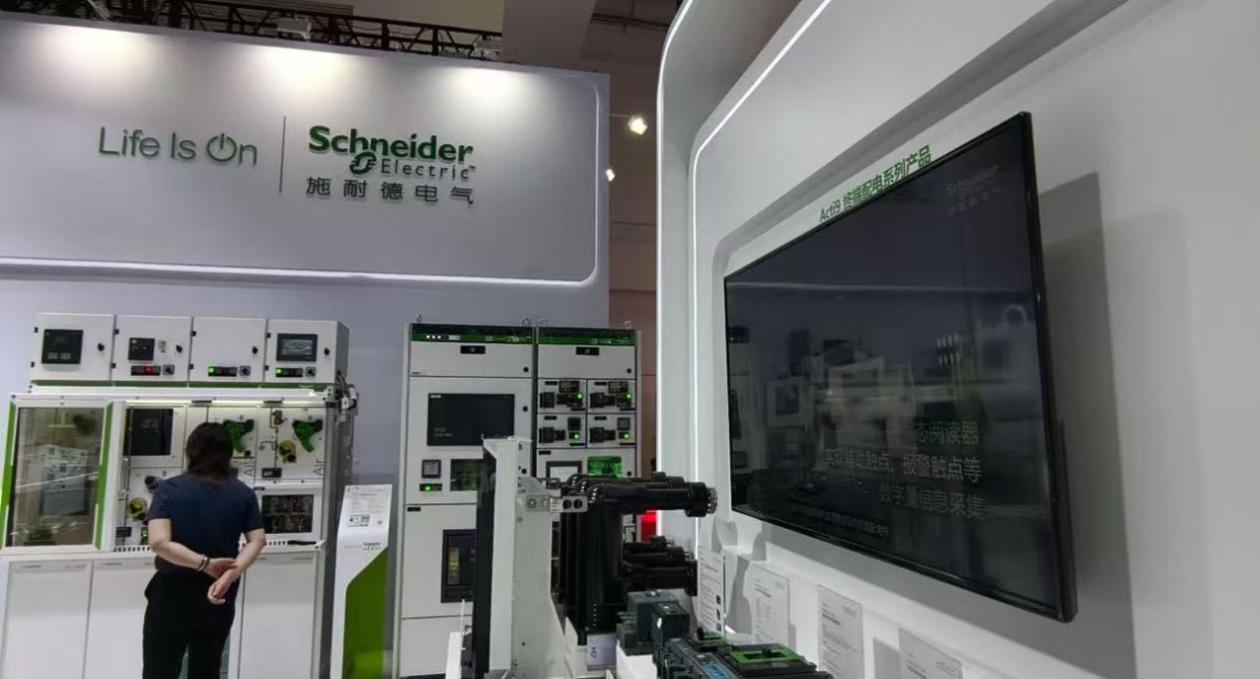
Core Viewpoint - The 2025 China International Supply Chain Promotion Expo highlights the need for efficient, agile, resilient, and green supply chains, with Schneider Electric aiming to collaborate with partners to create a win-win supply chain ecosystem [1][3]. Group 1: Supply Chain Transformation - Traditional supply chain models focused solely on efficiency are becoming obsolete due to complex challenges, necessitating a shift towards resilience, efficiency, and sustainability [3][4]. - Schneider Electric has established a resilient supply chain network globally, with China being its second-largest market and a key supply chain base, featuring 30 factories and logistics centers, including 15 national green factories [3][4]. Group 2: Future Supply Chain Keywords - The future supply chain will emphasize resilience, efficiency, and sustainability, moving away from a sole focus on efficiency [4]. - Schneider Electric's "Zero Carbon Plan" aims to reduce carbon emissions by 50% for the top 1,000 suppliers by 2025, and the Environmental Data Program promotes transparency in environmental data across product lifecycles [4]. Group 3: Digital Transformation and AI Integration - Schneider Electric integrates AI technology throughout its supply chain processes, with significant improvements in production efficiency and delivery times at its factories [4][5]. - The company collaborates with Microsoft to develop an industrial Copilot system, merging generative AI with industrial automation to enhance production efficiency [5]. Group 4: Globalization Support for Chinese Partners - Schneider Electric provides one-stop support for Chinese companies expanding globally, leveraging its supply chain and business network [6]. - The company emphasizes the importance of technological innovation, management upgrades, and ecosystem collaboration to drive industry upgrades [6]. Group 5: Commitment to the Chinese Market - Schneider Electric expresses confidence in the Chinese market's potential, aiming to build a collaborative global industrial ecosystem [7]. - The company showcases its practices in global supply chain upgrades, focusing on creating a green, efficient, and resilient supply chain to drive industry value and sustainable development [7].
全球供应链报告与指数发布:技术创新推动全球供应链数智化发展
Xin Jing Bao· 2025-07-16 14:32
Core Insights - The overall trend of global supply chains is positive, but their resilience remains relatively weak [4][6] - China is injecting more certainty into global supply chain cooperation amid global uncertainties [2][3] Group 1: Global Supply Chain Trends - The global supply chain development is characterized by improved infrastructure connectivity, particularly in developing countries, and a rebound in maritime connectivity [2][3] - International trade rules are increasingly focused on inclusive development, with many new bilateral agreements led by developing countries [2][3] - Major economies are implementing policies to enhance their supply chain resilience, although some of these policies exhibit protectionist tendencies [2][3] Group 2: Technological and Financial Innovations - Technological innovations, such as augmented reality and generative AI, are significantly driving global supply chains towards digitalization and sustainability [3] - Financial services are becoming more inclusive, with international financial institutions supporting financing for developing countries and addressing trade financing gaps for SMEs [3] Group 3: Global Supply Chain Index Matrix - The newly released global supply chain index matrix includes four indices: Promotion Index, Connectivity Index, Innovation Index, and Resilience Index, which assess various aspects of supply chains [4][5] - The Promotion Index has increased to 2.71 from 2018 to 2024, driven by improvements in infrastructure connectivity and technological innovation [5] - The Connectivity Index has risen to 1.56, reflecting better internal connections within supply chains [5] Group 4: Recommendations for Improvement - To ensure stable global supply chains, there is a need for efficient infrastructure networks and adherence to open, inclusive bilateral rules [7] - Policies should promote mutual benefits and avoid protectionism, while fostering a vibrant environment for innovation and cross-border flow of resources [7] - Continuous tracking and improvement of global supply chain research are essential for building a secure and efficient global supply chain [7]
外贸企业稳链强基 下半年加码内外贸融合
2 1 Shi Ji Jing Ji Bao Dao· 2025-07-14 13:18
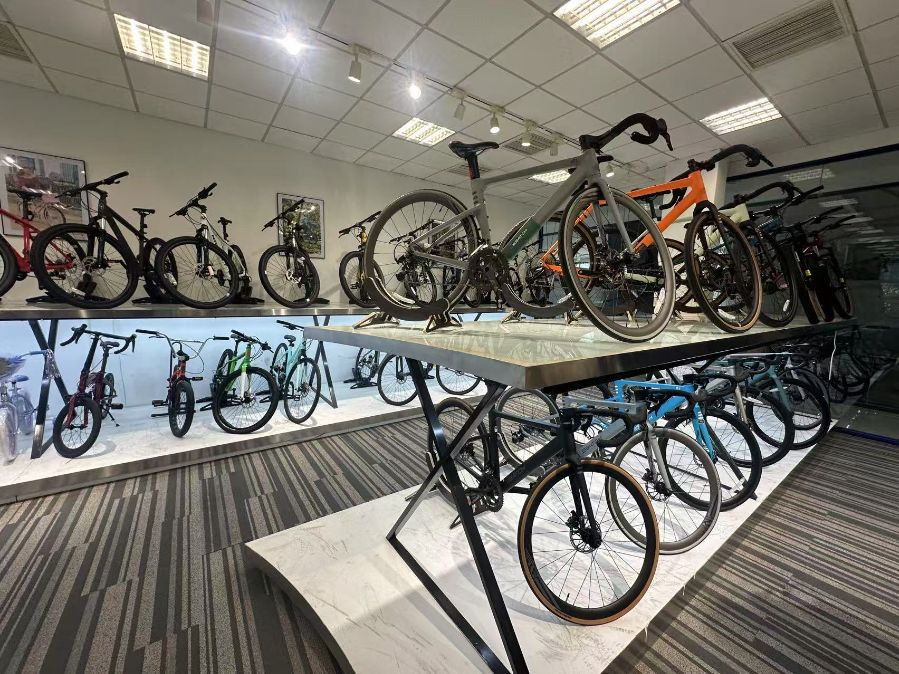
Group 1 - FuturuX, a subsidiary of Gaofei Group, has established a global production layout with four manufacturing bases, including new factories in Vietnam and Cambodia, enhancing supply chain diversification [2][4] - In the first half of the year, China's foreign trade maintained resilience, with imports and exports reaching 21.79 trillion yuan, a 2.9% year-on-year increase, and private enterprises accounting for 54.7% of the total foreign trade value [4] - The integration of domestic and foreign trade is becoming a transformation strategy for Chinese companies, although challenges such as market fragmentation and low brand recognition persist [4][9] Group 2 - The global supply chain is undergoing rapid restructuring, with Southeast Asia emerging as a key market for Chinese companies, allowing for flexible adjustments in production capacity [5][6] - FuturuX has implemented smart manufacturing processes, achieving a 20% increase in overall efficiency while reducing workforce by 30% through automation and digital transformation [5][6] - The company plans to further expand its MCU production lines overseas and integrate logistics and warehousing into its operations to maximize efficiency [6] Group 3 - Experts suggest that Chinese companies should shift their focus from cost-driven strategies to supply chain resilience when investing in Southeast Asia, considering regional stability and flexibility [6][7] - The RCEP and China-ASEAN Free Trade Area have influenced investment decisions, with companies needing to evaluate their supply chain situations carefully [7] - Ningbo has seen a rise in companies integrating domestic and foreign trade, with 91% of industrial enterprises engaging in such practices, highlighting the importance of adapting to domestic market demands [8][9] Group 4 - Highfly Group's brands, including Huffy, face challenges in brand recognition within the domestic market despite strong performance in North America [10][11] - The company is focusing on building the Baqi brand in China, aiming to enhance its market presence and consumer feedback through offline channels [12]
特朗普拟征收50%铜关税:或将引发全球铜价格波动和供应链重构
Da Gong Guo Ji· 2025-07-14 02:09
Investment Rating - The report does not explicitly provide an investment rating for the copper industry Core Insights - The announcement of a 50% tariff on copper imports by President Trump has led to a significant spike in copper prices, with COMEX copper reaching a historical high of $5.8955 per pound, marking a 17% increase, the largest single-day rise since 1968 [2] - The tariff is expected to have profound implications for both the U.S. and global copper markets, affecting supply chains and pricing dynamics [1][2] - The demand for copper is primarily driven by the power industry, with significant contributions from the electric vehicle sector, construction, home appliances, and electronics [5] Summary by Sections Section 1: Impact of Tariff on Copper Prices - The 50% tariff on copper imports is set to take effect on August 1, 2025, causing immediate volatility in the global copper market [2] - The COMEX copper price surged to $5.6855 per pound on the announcement date, reflecting a dramatic market reaction [2] Section 2: China's Copper Industry Fundamentals and Tariff Impact - China's copper consumption ranks third among metals, with a strong demand from the power sector and growing needs from the electric vehicle industry [5] - By the end of 2024, China's power generation capacity is projected to reach 3.348 billion kilowatts, a 14.6% increase year-on-year, with solar and wind power capacities growing significantly [6] - China's refined copper production is expected to reach 13.644 million tons in 2024, with a year-on-year growth of 4.1% [7] Section 3: Reasons for Imposing Copper Tariff - The tariff is aimed at enhancing national security and supply chain resilience, ensuring a stable supply of critical resources [8] - The U.S. aims to boost domestic copper production by making imported copper more expensive, thereby supporting local producers [9] Section 4: Effects of Tariff Implementation - The tariff is likely to exacerbate price volatility in the copper market, with potential increases in global copper prices due to U.S. market dynamics [10] - U.S. manufacturers may face squeezed profit margins due to higher copper costs, impacting their competitiveness [10] - The tariff will lead to a restructuring of global copper supply chains, as major suppliers like Chile, Canada, and Mexico will seek new markets for their exports [11]
杭州社淘全域代运营:京东大促期间如何通过站内外联动提升GMV?
Sou Hu Cai Jing· 2025-07-09 08:12
Core Insights - The article emphasizes the importance of integrating on-platform traffic operations with off-platform content marketing and optimizing the supply chain to reduce fulfillment costs for brands during major sales events like JD's 618 and Double 11 Group 1: Sales Performance and Strategies - In 2025, JD's 618 event saw a user order count increase of over 100% with total orders exceeding 22 billion [3] - The core logic of JD's promotional strategy is driven by a combination of low-price tactics, AI technology, and full-scenario coverage [3] - A specific 3C brand experienced a 300% increase in mobile sales through a combination of trade-in offers and government subsidies [3] - A fashion brand's live streaming conversion rate improved by 30% after integrating JD's digital human technology, surpassing sales achieved by real human hosts [3] Group 2: Marketing and Traffic Operations - Social media platforms like Xiaohongshu and Douyin are utilized for off-platform content marketing to capture consumer attention [3] - A mother and baby brand's promotional content on Xiaohongshu led to a 400% increase in search volume on JD [3] - JD's search and promotional activities are optimized through keyword strategies, resulting in a 45% increase in ad click-through rates for a home appliance brand [5] Group 3: Supply Chain Optimization - JD's supply chain capabilities, including "warehouse distribution 211" and "integrated warehousing," support brands in reducing operational costs [7] - A home goods brand reduced its product development cycle to 15 days and improved inventory turnover by 50% through flexible supply chain strategies [7] - A pet food brand achieved a delivery time of under 3 days and a customer satisfaction rate of 98% by implementing a multi-location warehouse strategy [7] Group 4: Case Study and Results - The Korean fashion brand SPELLEDIT collaborated with social media to achieve significant sales growth, with a single live stream generating over 1.2 million in GMV [8] - The brand's GMV increased by 380% during the 618 event, surpassing 100 million in annual sales [10] - The integration of intelligent warehousing and pre-sale strategies reduced stockout rates from 15% to 2% [9]

什么信号?欧洲最大港口备战与俄潜在冲突!
Jin Shi Shu Ju· 2025-07-08 09:28
Core Viewpoint - The Port of Rotterdam is preparing for potential conflicts with Russia by reserving berths for military supply transport ships and planning cargo transfer routes in the event of war [2][3] Group 1: Military Preparedness - The Port of Rotterdam is coordinating with the Port of Antwerp to manage military supply logistics, indicating a shift from competition to cooperation among ports [2] - The port's CEO highlighted that not all docks are suitable for military cargo, and they may share capacity with Antwerp if needed [2] - NATO Secretary General has warned that Russia may attack a NATO member state by 2030, prompting increased military readiness in Europe [3] Group 2: Defense Spending and Military Logistics - The EU is developing a substantial military restructuring plan worth up to €800 billion to enhance defense capabilities and deter Russia [2] - The Netherlands and other NATO allies have committed to increasing defense spending to 5% of GDP [2] - Rotterdam's container terminal is the only area in the port capable of safely transferring ammunition between ships [3] Group 3: Supply Chain Resilience - The Port of Rotterdam is collaborating with Antwerp to enhance Europe's self-sufficiency and supply chain resilience, learning from the disruptions caused by the COVID-19 pandemic and the Russia-Ukraine conflict [4] - The CEO emphasized the need for strategic reserves of critical materials, similar to oil reserves, to mitigate future supply chain vulnerabilities [4] - The EU is expected to announce a "reserve strategy" that includes medical supplies, critical raw materials, energy equipment, and potentially food and water [4]