自动驾驶

Search documents
哈佛老徐:英伟达业绩好只是其次,真正的故事才刚开始
老徐抓AI趋势· 2025-11-30 08:20
Core Viewpoint - The article discusses the recent performance of NVIDIA and its implications for the AI industry, emphasizing that the demand for GPUs is just beginning and that NVIDIA's ecosystem is crucial for its dominance in the market [4][19]. Financial Performance - NVIDIA's Q3 revenue reached $57 billion, a 62% year-over-year increase, with net profit at $31.9 billion, up 65% [6]. - The outlook for Q4 is even more optimistic, with projected revenue of $65 billion, representing an 85% year-over-year growth [7]. AI Market Dynamics - The article questions whether AI is a bubble, suggesting that the real issue is the ongoing and increasing demand for GPUs, which is far from reaching its peak [8]. - Three accelerating trends are identified that will drive GPU demand: 1. Non-AI software migrating from CPU to GPU, indicating a significant shift in data processing needs [9]. 2. Generative AI replacing traditional machine learning, leading to substantial changes in advertising effectiveness, with Meta's ad conversion rates increasing by 5% on Instagram and 3% on Facebook [10]. 3. The imminent explosion of autonomous driving, robotics, and intelligent agents, which are expected to grow at a rate ten times faster than current expectations [11]. Competitive Advantage - NVIDIA's competitive edge lies in its CUDA ecosystem, which supports a wide range of applications and is continuously evolving due to active developer engagement [15][16]. - The article argues that without software support, even the best hardware is ineffective, highlighting the importance of NVIDIA's established software ecosystem [16]. Strategic Investments - NVIDIA's investments in companies like OpenAI and Anthropic are not merely for chip sales but to integrate these companies into the CUDA ecosystem, enhancing its market position [18]. - The strategy aims to optimize AI models using NVIDIA's chips, thereby expanding the CUDA ecosystem and solidifying NVIDIA's dominance [18]. Future Outlook - The article posits that NVIDIA's true value lies in the anticipated $3-4 trillion annual investment in AI infrastructure, positioning the company as a foundational player in the AI era [19]. - The narrative suggests that the future of AI will be defined by those who successfully implement AI across various industries, indicating a significant opportunity for growth and innovation [21].


小马智行(PONY):2025年三季度业绩点评:广州UE转正,商业化加速
Soochow Securities· 2025-11-30 07:47
Investment Rating - The report maintains a "Buy" rating for the company [1] Core Insights - The company achieved a significant revenue growth of 72% year-on-year in Q3 2025, reaching $25.44 million, driven by multiple fast-growing business segments [7] - The company has established a profitable single-vehicle model for its Gen-7 Robotaxi in Guangzhou, marking a critical milestone in its commercial viability [7] - The company is well-positioned for future growth with a strong liquidity position, holding $588 million in cash and cash equivalents as of September 30, 2025, which supports its fleet expansion plans [7] Financial Performance Summary - Total revenue projections for 2025-2027 are $77.58 million, $104.91 million, and $342.42 million respectively, with a compound annual growth rate of 226.39% from 2025 to 2027 [1][8] - The company expects to reduce the BOM cost of its seventh-generation Robotaxi by 20% by 2026, following a 70% reduction in the fourth-generation autonomous truck kit [7] - The overall gross margin improved from 9.2% in the previous year to 18.4% in Q3 2025, indicating a significant enhancement in revenue quality [7]
对话卡尔动力CEO韦峻青:自动驾驶卡车赛道即将形成商业闭环 | 巴伦精选
Tai Mei Ti A P P· 2025-11-30 07:19
Core Insights - The primary goal of the company is not to completely replace human labor but to significantly enhance the feasibility of logistics solutions by reducing labor costs by 50% to 80% through scalable operations [2] - The ultimate aim of autonomous driving is 100% automation, but the company emphasizes a balanced approach where machines handle standardized transport tasks while humans manage more complex operations [2][5] - The company has developed a hybrid intelligent convoy model, which combines manned lead vehicles with unmanned following vehicles, and has successfully implemented regular autonomous driving tests in various regions of China [2][4] Company Strategy - The company plans to test its kargoBot Space transport robot in 2026, which will have a 25% increase in cargo space and a 10% increase in effective load, leading to a fivefold increase in gross profit per vehicle [4] - The CEO predicts that in the next decade, there will be one million unmanned transport vehicles operating across urban and rural areas, supporting a new logistics network [5] - The company focuses on enhancing its AI capabilities, having achieved end-to-end autonomous driving, and aims to develop a specialized driving model for heavy trucks based on extensive operational data [5][6] Market Positioning - The company believes that the hybrid intelligent convoy model will remain relevant, especially for bulk commodity transport, and anticipates that it will capture a significant market share in the long term [8][11] - The company has deployed over 400 autonomous trucks, with a hardware cost of only 90,000 yuan per unit, and has achieved a gross profit increase of 3 to 6 times through its operational model [13][14] - The CEO emphasizes the importance of achieving route-level profitability rather than just focusing on individual vehicle profitability, aiming for a sustainable business model that can handle large volumes of freight [14][15] Technological Development - The company utilizes data-driven reinforcement learning techniques and various autonomous driving solutions to achieve fully unmanned operations in complex logistics scenarios [3] - The hybrid intelligent convoy model enhances safety, fuel efficiency, and intelligence by allowing vehicles to share sensor data and control commands, improving overall operational efficiency [12][13] - The company is positioned as a key player in the autonomous truck sector, with a focus on leveraging specific domain data and fine-tuning applications to enhance performance [7][16]
12月十大金股:十二月策略和十大金股
Huaxin Securities· 2025-11-30 07:01
Group 1: Overall Market Insights - The report highlights the focus on the Federal Reserve's potential interest rate cuts, liquidity recovery, and AI chip competition in December, predicting a volatile recovery in the US stock market with opportunities for low-cost investments [4][14][15] - Domestic PMI shows slight improvement, with attention on policy signals from the Political Bureau and Central Economic Work Conference, indicating a cautious but positive outlook for the A-share market [4][19][21] - The report anticipates a range-bound movement in the A-share market, with a focus on low-consumption sectors, price recovery cycles, and technology themes driven by industrial catalysts [4][22] Group 2: Key Stock Recommendations - The report lists ten key stocks, including Luxshare Precision (002475.SZ) in electronics, Rui Ming Technology (002970.SZ) in new energy, and Zhongmin Resources (002738.SZ) in non-ferrous metals, among others, with no specific ranking [5][12] - Luxshare Precision is expected to benefit from AI-enabled consumer electronics, with a projected revenue growth from 265.32 billion to 358.63 billion RMB from 2024 to 2026 [23][26] - Rui Ming Technology is positioned as a leader in commercial vehicle AI solutions, with revenue forecasts of 26.7 billion to 41.5 billion RMB from 2025 to 2027, driven by policy support and safety requirements [30][34] Group 3: Industry-Specific Insights - The electronics sector, particularly Luxshare Precision, is experiencing growth due to AI integration in consumer electronics, with significant revenue increases expected [23][24] - The storage market is recovering, with companies like Zhaoyi Innovation (603986.SH) benefiting from rising demand and prices for niche DRAM products, projecting revenues of 73.83 million to 107.37 million RMB from 2024 to 2026 [27][28] - The new energy sector, represented by Rui Ming Technology, is set for high growth due to increasing demand for intelligent driving solutions and supportive regulations, with revenue forecasts indicating substantial growth [30][34] Group 4: Financial Performance and Projections - Luxshare Precision reported a revenue of 177.18 billion RMB for the first three quarters of 2024, with a year-on-year growth of 13.67% [23] - Zhaoyi Innovation's revenue for Q1 2024 showed a year-on-year increase of 21.32%, reflecting a recovery in the consumer market [27] - Zhongmin Resources is enhancing its lithium salt self-sufficiency and expanding its copper mining projects, with projected revenues of 56.91 billion to 97.27 billion RMB from 2024 to 2026 [49][50]





烧钱六年,Dojo 被判死刑:马斯克自研超算梦是怎么走进死胡同的?
Sou Hu Cai Jing· 2025-11-30 05:29
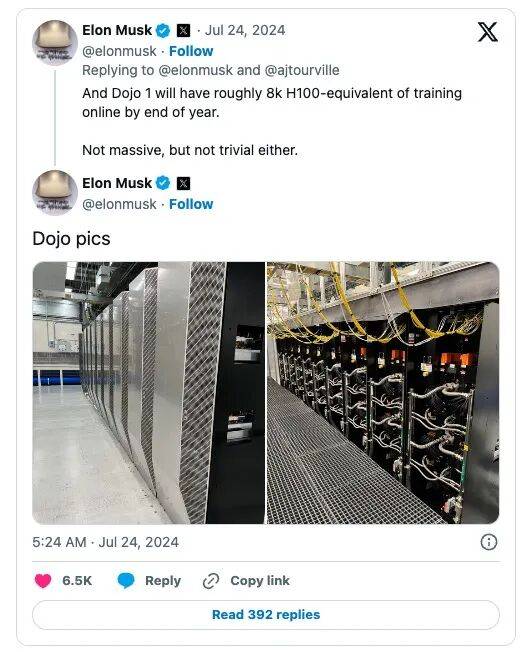
Core Insights - The Dojo project, initially envisioned as a cornerstone for Tesla's AI ambitions, has been officially shut down after six years of development and hype, with the team disbanded by August 2025 [1][4][19] - Tesla's focus has shifted towards a new AI supercomputer project named Cortex, which aims to address real-world AI challenges and has already begun deployment [2][19] - The decision to terminate Dojo has sparked mixed reactions, with some viewing it as a necessary response to declining electric vehicle sales and others seeing it as a strategic pivot towards partnerships for chip development [3][4] Dojo Project Overview - Dojo was designed as a custom supercomputer to train Tesla's Full Self-Driving (FSD) neural networks, with the goal of transforming Tesla into an AI company rather than just an automotive manufacturer [1][5] - The project was expected to enhance Tesla's capabilities in autonomous driving, humanoid robots, and semiconductor independence [1][5] Transition to Cortex - Tesla has begun promoting Cortex, a new AI supercomputer that will support FSD and other AI training needs, while Dojo has not been mentioned in recent updates [2][19] - Cortex is being developed at Tesla's Austin headquarters and is intended to have vast storage for FSD and Optimus video training [2] Reactions to Dojo's Closure - The closure of Dojo has been interpreted by some as a response to Tesla's struggles in electric vehicle sales and the slow rollout of autonomous taxi services [3] - Others argue that the dissolution of Dojo does not signify failure but rather a strategic shift towards leveraging external partnerships for chip development [3] Key Personnel Changes - Following the announcement of Dojo's termination, approximately 20 employees left Tesla to establish a new AI chip and infrastructure company, DensityAI, including Dojo project lead Peter Bannon [4] Financial Implications - Tesla signed a $16.5 billion agreement with Samsung for the development of the next-generation AI6 chips, which are crucial for FSD and other AI applications [4] - Analysts suggest that the shift from Dojo to Cortex could impact Tesla's financial outlook, with potential new revenue streams from AI services [15] Future Directions - Tesla's long-term vision includes the possibility of competing directly with Nvidia in the AI space, although challenges remain in adapting existing AI software to work with Tesla's custom chips [15] - The company continues to invest in AI capabilities, with plans for a new supercomputer in Buffalo, albeit under a different name than Dojo [19]

国内首条大容量全固态电池产线建成,商务部将推进汽车流通消费改革试点
Xinda Securities· 2025-11-30 05:08
Investment Rating - The industry investment rating is "Positive" [2] Core Views - The report highlights the successful establishment of the first large-capacity all-solid-state battery production line in China, which is expected to address key issues in electric vehicle range and safety [24] - The Ministry of Commerce plans to promote reforms in automotive circulation and consumption, aiming to expand the entire automotive consumption chain [24] - The report notes that the A-share automotive sector outperformed the market, with a weekly increase of 3.24%, while the Shanghai and Shenzhen 300 Index rose by 1.64% [3][9] Summary by Sections Market Performance - The A-share automotive sector outperformed the market, with a weekly increase of 3.24%, ranking 11th among A-share Shenwan first-level industries [3][9] - Key stocks leading the performance include GAC Group and BYD in the passenger vehicle sector, and King Long and CIMC Vehicles in the commercial vehicle sector [6][21][22] Industry News - The establishment of the first large-capacity all-solid-state battery production line marks a significant advancement in battery technology [24] - The Ministry of Commerce is set to implement automotive circulation consumption reform trials to boost overall automotive consumption [24] - Anhui Province has initiated a new round of consumer subsidies for automotive purchases, providing varying amounts based on vehicle price [24] - Leap Motor has achieved its 2025 sales target of 500,000 vehicles ahead of schedule and aims for 1 million vehicles in 2026 [24] - A new automotive consumption promotion policy has been launched in Hangzhou, offering subsidies and vouchers for new car purchases [24] Key Data Tracking - The report includes tracking of key upstream data such as steel, aluminum, natural rubber, and lithium carbonate prices, which are crucial for the automotive supply chain [27][28]


即将开课!做了一份3DGS的学习路线图,面向初学者......
自动驾驶之心· 2025-11-30 02:02
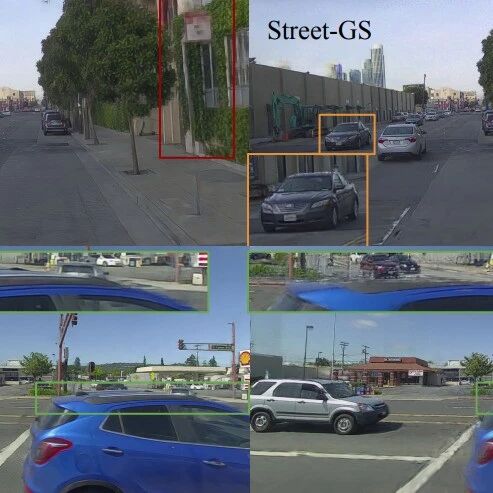
Core Insights - The article emphasizes the rapid technological iteration in 3DGS (3D Graphics Systems), highlighting the transition from static reconstruction (3DGS) to dynamic reconstruction (4DGS) and surface reconstruction (2DGS) [1] - A new course titled "3DGS Theory and Algorithm Practical Tutorial" has been developed to provide a structured learning roadmap for individuals interested in entering the field, covering essential theories and practical coding skills [1] Course Overview - The course is designed to help newcomers understand the foundational concepts of computer graphics, including implicit and explicit representations of 3D space, rendering pipelines, ray tracing, and radiation field rendering [5] - It introduces commonly used development tools such as SuperSplat and COLMAP, along with the mainstream algorithm framework Gsplat [5] Chapter Summaries - **Chapter 1: Background Knowledge** This chapter provides an overview of 3DGS, starting with basic computer graphics concepts and tools necessary for model training [5] - **Chapter 2: Principles and Algorithms** Focuses on the core principles and pseudocode of 3DGS, covering dynamic reconstruction, surface reconstruction, and ray tracing, utilizing the NVIDIA open-source 3DGRUT framework for practical learning [6] - **Chapter 3: Autonomous Driving 3DGS** Concentrates on key works in the field, such as Street Gaussian and OmniRe, and uses DriveStudio for practical applications [7] - **Chapter 4: Important Research Directions** Discusses significant research areas in 3DGS, including COLMAP extensions and depth estimation, and their relevance to both industry and academia [8] - **Chapter 5: Feed-Forward 3DGS** Explores the rise of feed-forward 3DGS, detailing its development and algorithmic principles, along with recent works like AnySplat and WorldSplat [9] - **Chapter 6: Q&A Discussion** Organizes online discussions for participants to address industry needs, pain points, and open questions, facilitating deeper engagement with instructors [10] Target Audience and Learning Outcomes - The course is aimed at individuals with a foundational understanding of computer graphics, visual reconstruction, and programming in Python and PyTorch, who are looking to enhance their knowledge and skills in 3DGS [14] - Participants will gain comprehensive theoretical knowledge and practical experience in 3DGS algorithm development and frameworks, preparing them for various career opportunities in the field [14]
智能辅助驾驶≠自动驾驶 酒后“智驾”谁担责?
Yang Shi Xin Wen· 2025-11-29 18:05
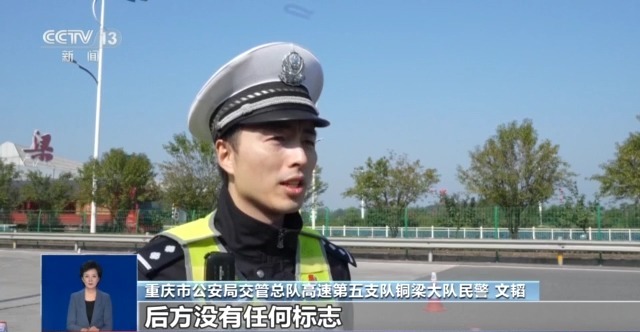
12月2日是全国交通安全日,今年的主题是"文明交通礼行天下",我们推出系列报道《守护你我 安全同行》,今天关注"智能驾驶"。 经检测,这名驾驶人血液酒精含量高达153.9毫克每100毫升,属醉酒驾驶。 就在前一天晚上,另一名醉酒后驾车的驾驶人开着开着,车子停在云雾山隧道内,驾驶人却打起了瞌睡。经民警询问,这两名驾驶人均承认,当晚喝了酒后 开车,且开启了车辆智能辅助驾驶功能,至于车辆如何停下,已完全记不清楚。 我们都知道,"喝酒不开车、开车不喝酒"。如今,智能驾驶技术发展迅速,有人心生侥幸,酒后使用"智能驾驶"代驾的案件时有发生。 近日,在重庆成渝环线高速云雾山隧道,连续两个晚上上演了惊险一幕。两名驾驶人醉酒后开启车辆智能辅助驾驶功能后驾车出行,结果自己却睡着了,车 辆就停在了隧道里。所幸高速交警及时处置,避免了事故。 醉酒"智驾"上高速 两车隧道临停险象环生 凌晨时分,一辆白色小车缓缓停在了隧道第一行车道,后方车辆只能紧急减速变道,非常危险。当民警赶到时,驾驶人还在车内睡觉。车门一开,浓烈的酒 气扑面而来。 重庆市公安局交管总队高速第五支队铜梁大队民警 文韬:到达现场后,发现车辆停在第一行车道内,后方没有任何 ...
小鹏汽车突围,智能化布局日益显露
2 1 Shi Ji Jing Ji Bao Dao· 2025-11-29 14:37
Core Insights - The new energy vehicle (NEV) market is experiencing significant shifts, with XPeng surpassing NIO and Li Auto to become the largest NEV company by market capitalization as of Q3 2025, valued at 160.2 billion yuan [2] - Li Auto, which previously achieved profitability through its "range extender + family" strategy, is losing its competitive edge as other companies enter the range extender market [2] - NIO, once the highest valued NEV company, is now focusing on core automotive products due to financial burdens from its expansive business model [2] - XPeng's recovery from internal management issues and high supply chain costs has led to a resurgence in sales and a renewed focus on advanced technologies like autonomous driving and robotics [3][4] Company Performance - XPeng's Q3 report shows a gross margin exceeding 20% for the first time, with a year-on-year revenue growth of 100% [3] - The company has launched popular models such as the XPeng P7+ and Mona M03, contributing to its improved performance [2] - XPeng's strategic partnerships, particularly with Volkswagen for autonomous driving technology, are expected to enhance its market position [4] Technological Ambitions - XPeng is focusing on autonomous driving, Robotaxi services, and humanoid robots, with plans to launch three Robotaxi models by 2026 [4] - The company aims to start mass production of advanced humanoid robots by the end of 2026, targeting various service applications [4] - XPeng's self-developed Turing chip has received procurement certification from Volkswagen, marking a significant milestone in its technology development [4] Competitive Landscape - The NEV sector is entering a new phase of competition centered around AI technologies, with Li Auto and NIO also announcing their AI commercialization strategies [4] - Li Auto plans to launch its first AI glasses in December, while NIO's self-developed Dimensity chip will open for external collaboration in Q4 [4] - XPeng's technological focus positions it favorably in the ongoing AI competition, although it faces challenges in commercializing its Robotaxi and humanoid robot initiatives [5] Strategic Direction - XPeng's management emphasizes a strategy of "steady progress" to ensure long-term success, indicating that strong vehicle sales will support its technological explorations [6]
人才缺口超百万!智能网联汽车被明确列为“万亿消费领域”
Xin Lang Cai Jing· 2025-11-29 11:14
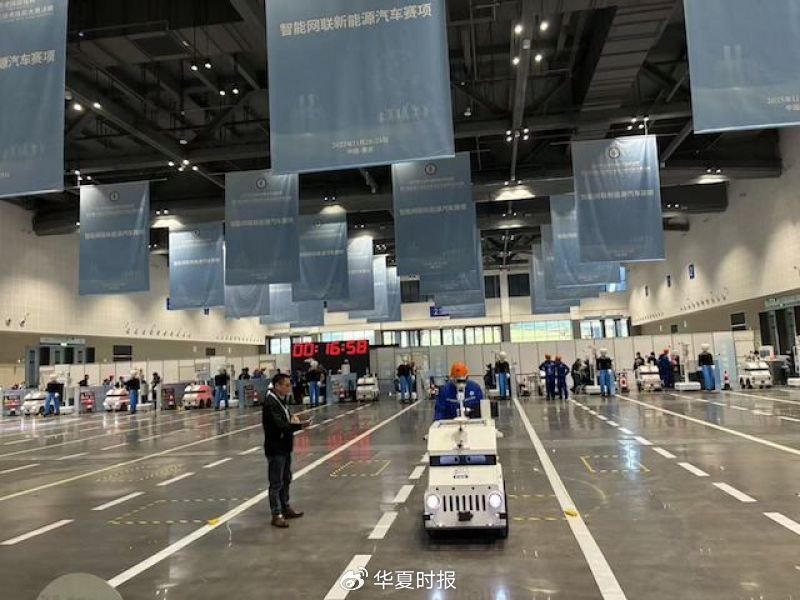
Core Insights - The smart connected vehicle sector is poised to reach a trillion-level consumption market by 2027, as outlined in a recent government plan [3][5] - The penetration rate of new passenger cars with Level 2 driving assistance features reached 62.58% in the first seven months of this year, with total sales of 7.76 million units [3] - There is a significant talent gap in the smart connected vehicle industry, with an estimated shortage of 1.03 million skilled workers [4][9] Industry Development - The automotive industry is transitioning from electrification to intelligentization, integrating advanced technologies such as autonomous driving, vehicle-road collaboration, 5G communication, and artificial intelligence [5][6] - The government has emphasized the importance of developing smart connected vehicles as a strategic emerging industry, aiming to solidify China's leading position in this sector [6] Talent Shortage - The current educational system is not keeping pace with the rapid development of the smart connected vehicle industry, with only three relevant programs producing around 120,000 graduates annually, while the industry needs significantly more [4][9] - The demand for skilled talent is evolving, with over 260 distinct job roles identified in the smart connected vehicle sector, each requiring hundreds to thousands of personnel [8][9] Educational Initiatives - New competitions and training programs are being introduced to address the talent gap, focusing on practical skills in smart connected vehicle technology [9][10] - Educational institutions are adapting their curricula to include elements of new energy and smart connected vehicles, ensuring graduates are better prepared for the current job market [10]