太空数据中心

Search documents
他,2025地表最狠科技人
3 6 Ke· 2025-12-24 00:00
Core Viewpoint - Alphabet, Google's parent company, has seen a significant market value increase of approximately $530 billion in November, driven by strong expectations regarding its dominance in the AI sector, particularly with the launch of its TPU chips, which are seen as a direct challenge to Nvidia's market position [1][2]. Group 1: Leadership and Strategy - Sundar Pichai, the CEO of Google, is recognized for his calm and strategic leadership during critical times, successfully guiding the company through challenges and positioning it for future growth [2][10]. - Pichai's background as a product manager has shaped his approach to leadership, emphasizing product experience and user engagement [5][10]. - Under Pichai's leadership, Alphabet's market value increased from $300 billion in 2015 to $930 billion in 2019, showcasing his effective management and strategic vision [10]. Group 2: AI and Technological Advancements - The launch of Gemini 3.0, Google's latest AI model, has surpassed competitors like GPT-5 in benchmark tests, marking a significant comeback for Google in the AI landscape [12][16]. - Google's TPU chips, designed specifically for AI computations, have become a competitive advantage, reducing operational costs significantly compared to Nvidia's GPUs [17][18]. - The integration of Gemini 3.0 across Google's product ecosystem allows for seamless user experiences and enhances the company's advertising revenue, which reached $741.8 billion in Q3 [23][24]. Group 3: Organizational Culture and Management Style - Pichai's management style is characterized by humility and a collaborative approach, fostering a positive internal culture at Google [25][26]. - His ability to communicate effectively with diverse teams has been crucial in aligning Google's various departments towards common goals [10][26]. - Pichai's focus on working with talented individuals has been a key factor in Google's strategic decisions, especially in the face of competition from OpenAI [27][28].

史上最大IPO来袭?SpaceX凭什么值1.5万亿美元?
3 6 Ke· 2025-12-23 23:14
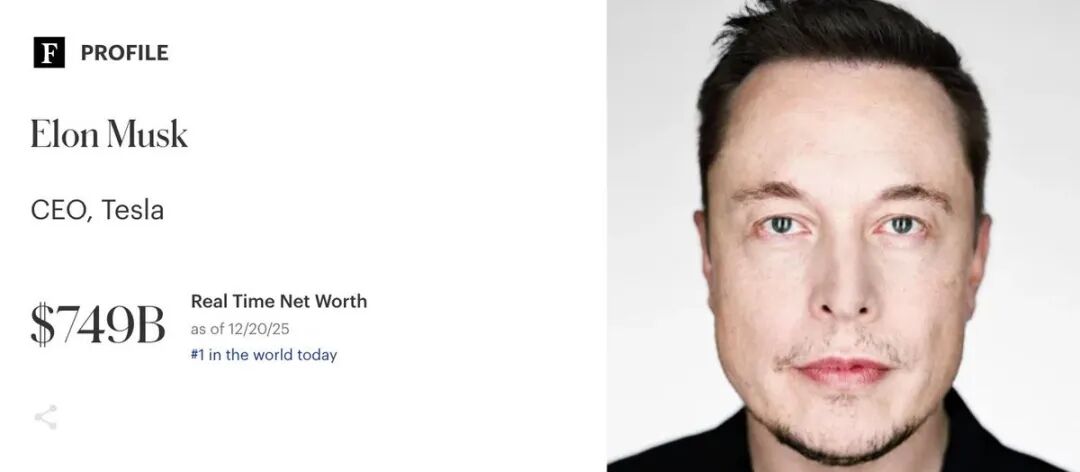
Core Insights - Elon Musk's wealth surged to $749 billion following a Delaware court ruling that validated a batch of Tesla stock options worth over $100 billion, placing him significantly ahead of Google's co-founder Larry Page by nearly $500 billion [1] - The potential for Musk to become the world's first trillionaire is increasingly linked to SpaceX, which is rumored to be planning an IPO next year, aiming to raise over $30 billion and achieve a valuation of $1.5 trillion, surpassing Saudi Aramco's record IPO [3][5] Group 1: SpaceX's Business Model and Revenue Streams - SpaceX is not merely a rocket company; it has diversified its revenue streams, with projections indicating total revenue of approximately $18.2 billion by 2025, of which $12.8 billion (70.3%) will come from the Starlink business [6][7] - Starlink has become the backbone of SpaceX's valuation, with Morgan Stanley estimating that 70% of SpaceX's current valuation is derived from anticipated future revenues from Starlink [7] - As of 2025, Starlink is expected to have around 9,300 satellites in orbit, making it the largest near-Earth satellite network in history [8] Group 2: Starlink's Growth and Market Potential - Starlink's user base has grown from 900,000 at the end of 2021 to over 8 million currently, covering more than 150 countries and regions [11][12] - The operational model of Starlink involves a network of satellites relaying data, which enhances user experience and revenue potential, creating a self-reinforcing cycle of growth [13] - Starlink's acquisition of over $17 billion in wireless spectrum licenses and its partnership with T-Mobile for direct satellite-to-phone connectivity could transform it into a global telecommunications operator [16][18] Group 3: Rocket Launch Business as a Cost Lever - SpaceX's rocket launch business, projected to generate $5.1 billion (28% of total revenue) by 2025, plays a crucial role in supporting Starlink's expansion by reducing launch costs through reusable technology [19][22] - In 2024, SpaceX completed 138 launch missions, with 90 of those dedicated to Starlink, demonstrating a closed-loop system that allows for cost control and operational efficiency [22] Group 4: Future Aspirations and Challenges - Musk's vision includes the ambitious concept of "space AI computing," which aims to leverage the unique conditions of space for cost-effective AI training and processing [25][27] - The potential for space-based data centers could generate significant revenue, with estimates suggesting annual revenues of $80-120 billion by 2030 from this segment alone [25][27] Group 5: Competitive Landscape and Market Dynamics - The commercial space sector is becoming increasingly competitive, with established players and new entrants vying for market share, including Blue Origin, which emphasizes reliability over speed [50][53] - China's rapid advancements in commercial space capabilities, including the successful launch of reusable rockets, pose a significant challenge to SpaceX's market dominance [60][62] - The evolving landscape of space infrastructure is attracting interest from tech giants, indicating that the competition will not be limited to traditional aerospace companies [62][64]
SPARC方案搅局 华尔街投行激烈竞逐SpaceX IPO
2 1 Shi Ji Jing Ji Bao Dao· 2025-12-23 16:31
Group 1: SpaceX IPO Overview - SpaceX is planning an IPO that could surpass Saudi Aramco's record of nearly $29 billion, potentially becoming the largest IPO in history [1] - The company is currently valued at $800 billion, making it the highest-valued private company globally, with IPO rumors suggesting a target valuation as high as $1.5 trillion [1] - SpaceX has entered a "quiet period," indicating preparations for a potential SEC filing for the IPO [1] Group 2: Bill Ackman's Proposal - Billionaire Bill Ackman has proposed that SpaceX skip traditional investment banks and utilize a new acquisition tool called SPARC for its IPO [2] - Ackman's plan includes offering Tesla shareholders preferential rights to invest in SpaceX, aligning with Elon Musk's vision of sharing SpaceX's growth with Tesla supporters [2] - The proposal suggests that SpaceX could raise between $42 billion and $148.7 billion, depending on the exercise price of the SPARs [3] Group 3: Investment Banking Competition - Traditional investment banks are competing for the role of underwriter for SpaceX's IPO, with firms like Morgan Stanley, Goldman Sachs, and JPMorgan Chase in the running [4] - Morgan Stanley is seen as a strong contender for the lead underwriter role due to its previous involvement with Tesla and support during Musk's acquisition of Twitter [4] Group 4: Space Data Center Concept - SpaceX's IPO is viewed as a critical step in the broader context of artificial intelligence and deep space exploration, with Musk's focus shifting towards the feasibility of "space data centers" [5] - The need for funding is driven by the challenges faced by terrestrial data centers, such as land scarcity and power grid overloads, making space-based solutions increasingly attractive [5] Group 5: Competitive Landscape - SpaceX's competitive advantage in the space data center market includes its low launch costs and existing infrastructure, such as over 9,000 Starlink satellites [6] - The company is positioned to leverage its vertical integration and existing technology to establish a leading role in the emerging space data center sector [6] Group 6: Challenges and Opportunities - Building space data centers presents significant engineering challenges, including radiation exposure and thermal management issues [6][7] - The financial requirements for developing space data centers are substantial, necessitating significant capital investment across various technological aspects [7] Group 7: Chinese Commercial Space Industry - Concurrently, Chinese commercial space companies are also pursuing IPOs, with several firms initiating the process on the STAR Market [8] - The combined valuation of these Chinese companies is approximately $12.2 billion, indicating potential for significant value appreciation in the future [8] - Technological advancements, particularly in rocket reusability, are critical for the growth of China's commercial space sector [9]
SPARC方案搅局,华尔街投行激烈竞逐SpaceX IPO
2 1 Shi Ji Jing Ji Bao Dao· 2025-12-23 11:08
Core Insights - SpaceX is preparing for an IPO that could surpass Saudi Aramco's record of nearly $29 billion, potentially becoming the largest IPO in history [1] - The company is currently valued at $800 billion, making it the highest-valued private company globally, with IPO rumors suggesting a target valuation as high as $1.5 trillion [1] - SpaceX has entered a "quiet period," indicating compliance steps before filing with the SEC for its IPO [1] Group 1: IPO Preparation - SpaceX is planning a new round of internal share sales as part of its IPO preparations [1] - Billionaire Bill Ackman has proposed that SpaceX utilize a new acquisition tool, SPARC, to go public, suggesting a direct offering to Tesla shareholders [3][4] - Ackman's plan includes a zero-underwriting fee structure and a simplified capital structure for the IPO, with a potential fundraising of $42 billion to $1.487 trillion depending on the exercise price of SPARs [4] Group 2: Competitive Landscape - Traditional investment banks are competing for the role of underwriters for SpaceX's IPO, with Morgan Stanley, Goldman Sachs, and JPMorgan among the contenders [5] - Morgan Stanley is seen as a strong candidate for the lead underwriter due to its previous involvement with Tesla [5] Group 3: Market Context and Strategic Importance - SpaceX's IPO is viewed as a significant event not just for the company but for advancements in artificial intelligence and deep space exploration [6] - The company aims to leverage the IPO to fund the development of "space data centers," which could address challenges faced by terrestrial data centers [6][8] - Competitors like Google and Nvidia are also exploring space-based computing solutions, indicating a growing interest in this sector [7][8] Group 4: Challenges and Opportunities - Building space data centers presents significant engineering challenges, including radiation exposure and thermal management issues [8][9] - The financial requirements for developing these technologies are substantial, necessitating significant capital investment [9] - Chinese commercial space companies are also pursuing IPOs, indicating a competitive landscape that could reshape market dynamics [10]
行业深度报告:太空算力有望推动商业航天产业变革
KAIYUAN SECURITIES· 2025-12-22 07:45
Investment Rating - The investment rating for the defense and aerospace industry is optimistic (maintained) [1] Core Insights - The collaboration between policy and industry is driving a new development phase for China's commercial aerospace sector, with significant advancements in technology and capital market engagement expected [4][42] - The deployment of space computing is anticipated to create a sustainable economic model for commercial aerospace, with operational costs projected to be significantly lower than ground-based data centers [19][20] - The Chinese commercial aerospace industry is expected to achieve a market value of 85 billion yuan by 2030, driven by advancements in reusable rocket technology and increased launch frequency [5][6] Summary by Sections 1. Low Earth Orbit Satellite Planning - China has ambitious plans for low Earth orbit satellites, with over 12,000 satellites proposed under the national plan and additional projects like the G60 constellation aiming for over 14,000 satellites [12] - However, the launch progress is slow, with only 86 satellites launched by the national plan and 90 by the G60 project as of October 2025, indicating significant bottlenecks in deployment [12] 2. Space Computing Potential - Space computing is expected to provide a solution for the long-term economic closure of commercial aerospace, with lifecycle operational costs projected to be 1/20 of ground-based data centers [19] - The anticipated deployment of space computing will enable a "multi-launch, multi-saving" model, enhancing operational efficiency and reducing costs [20] 3. Challenges and Breakthroughs in Space Computing - The deployment of space computing faces challenges such as launch capacity, radiation resistance of electronic components, and energy supply in orbit, but clear pathways for technological breakthroughs are emerging [29][30] - Companies are developing solutions to address these challenges, including advanced radiation shielding and energy-efficient cooling systems [31] 4. Industry Transformation through Space Computing - The introduction of space computing is expected to catalyze a significant transformation in the commercial aerospace industry, enabling large-scale applications and innovations as costs decrease [36] - The capacity limitations of low Earth orbit satellites will accelerate the deployment of space computing clusters, which are prioritized for their favorable conditions [36] 5. Comparison with U.S. Industry - There are notable gaps between China's and the U.S.'s capabilities in space computing, particularly in launch capacity and cost efficiency, with China's reusable rocket technology still in the validation phase [38] - The expected advancements in China's reusable rocket technology are projected to follow a similar trajectory to that of SpaceX, with significant improvements anticipated in the coming years [38]
电力设备与新能源行业研究:太空光伏”,之于商业航天,正如电力供应之于AI算力
SINOLINK SECURITIES· 2025-12-21 09:36
Investment Rating - The report suggests a "Buy" rating for the "Space Photovoltaics" sector, emphasizing its high potential due to the unique energy supply needs in commercial space endeavors [1][5]. Core Insights - The report highlights the increasing importance of "Space Photovoltaics" as a critical energy source for various space applications, including low Earth orbit satellites and future lunar bases, driven by the urgency of U.S.-China competition and limited orbital resources [1][5]. - The report also expresses optimism for the wind power sector, particularly following Poland's successful auction for 3.4GW of offshore wind projects, which is expected to accelerate order releases in the coming years [2][10]. - The hydrogen and fuel cell sector is gaining traction, with significant contracts for green ammonia as a marine fuel, indicating a growing market for sustainable energy solutions [12][13]. Summary by Sections Space Photovoltaics - The report emphasizes the necessity of solar energy in space applications, likening its importance to electricity supply for AI computing [1][5]. - The potential for rapid fundamental catalysts in this sector is noted, suggesting it may outpace other emerging industries like nuclear fusion and robotics [1][5]. Wind Power - Poland's recent auction for 3.4GW of offshore wind capacity is expected to enhance visibility for long-term European offshore wind demand, with annual grid connection capacities projected to exceed 14GW by 2031-2032 [2][9]. - The report anticipates accelerated releases of orders for components such as piles and subsea cables due to this growing demand [2][10]. Hydrogen and Fuel Cells - A major shipping company has secured a long-term contract for 15.8 million tons of green ammonia, validating its use as a marine fuel and highlighting the commercial viability of green hydrogen solutions [12][13]. - The report notes the comprehensive capabilities of Chinese companies in the green ammonia supply chain, from production to certification and logistics [13]. Lithium Battery Sector - Ford has terminated a significant battery supply agreement with LG Energy, reflecting shifts in electric vehicle demand expectations and policy adjustments [17][18]. - The report indicates a strong upward trend in lithium carbonate prices, with futures contracts surpassing 110,000 yuan/ton, driven by supply constraints and limited inventories [17][41]. AIDC and Liquid Cooling - The report highlights a surge in sentiment within the AIDC sector, driven by significant partnerships and the increasing demand for liquid cooling solutions in data centers [20][21]. - It emphasizes the importance of domestic companies in enhancing their positions in the global liquid cooling market, suggesting a favorable outlook for investment opportunities [20][21]. Electrical Equipment and Grid - The report discusses the planned H-share issuance by a key electrical equipment company, aimed at enhancing R&D and international expansion, which is seen as a critical milestone for the company's growth strategy [22][23]. - It highlights the expected growth in demand for electrical transformers and high-voltage direct current (HVDC) systems, driven by ongoing upgrades in the global power grid [22][23].





马斯克都夸真香的太空数据中心,真的能让地球减负吗?
3 6 Ke· 2025-12-19 02:45
Core Insights - The rise of artificial intelligence is leading to a significant increase in global data center electricity demand, projected to more than double by 2030, with AI being the primary driver [1] - Tech giants like Microsoft, Google, and Amazon are investing in nuclear power plants and underwater data centers to alleviate energy consumption pressures [1] - A novel solution is emerging: deploying data centers in space, with Elon Musk promoting this concept through social media [2][4] Group 1: Space Data Centers as a New Frontier - The year 2025 marks a pivotal moment for the realization of space data centers, with major tech companies and emerging space firms collaborating to build a new digital infrastructure network in orbit [5] - Starcloud successfully completed the first human space-based large model training, demonstrating the feasibility of high-performance computing in space [5][6] - The CEO of StarCloud highlighted the advantages of solar energy in space, claiming it is more efficient than terrestrial data centers [6] Group 2: Business Models and Market Dynamics - SpaceX plans to launch the largest IPO in history, with a valuation of $1.5 trillion, driven by its Starlink and Starship projects, creating a closed-loop business model for space data centers [7] - Amazon's Blue Origin is also developing technologies for orbital AI data centers, indicating a competitive landscape among tech giants [8] Group 3: Environmental Considerations and Criticism - Critics question whether relocating high-energy industries to space is genuinely more environmentally friendly, raising concerns about the carbon emissions from rocket launches [9][10] - Supporters argue that space data centers can utilize continuous solar energy and efficient cooling mechanisms, potentially achieving a Power Usage Effectiveness (PUE) close to 1.0 [11] - However, studies suggest that the carbon footprint from rocket launches could negate the environmental benefits of space data centers, with emissions potentially being an order of magnitude higher than terrestrial centers [12][13] Group 4: Global Competition and Strategic Implications - The race for space data centers is not just a commercial issue but also a geopolitical one, with control over orbital computing power becoming a key factor in the future digital economy [17] - Europe risks falling behind in this competition, prompting calls for urgent action to seize emerging opportunities in the digital and space industries [18] - China is actively participating in this race, forming a consortium to advance the development of space data centers [19][22] Group 5: Long-term Perspectives - While space data centers may not be an immediate solution for reducing carbon emissions, they could play a significant role in future green digital infrastructure [23] - The concept challenges humanity to rethink the relationship between technology and nature, emphasizing the need for sustainable practices in expanding digital frontiers [23]
AI产业发展迅速,太空数据中心成美国科企新赛道
Huan Qiu Shi Bao· 2025-12-18 22:48
Core Insights - The rapid development of the artificial intelligence industry has led major U.S. tech companies to explore the potential of relocating data centers to space, driven by the increasing energy consumption and associated costs of terrestrial data centers [1][2] Group 1: Industry Trends - A report from the Pew Research Center indicates that approximately 4,000 data centers are currently operational or under construction in the U.S., consuming about 4.4% of the country's electricity in 2023, projected to rise to 12% by 2028 [1] - Amazon's founder Jeff Bezos announced that space data centers powered by solar energy could emerge within the next 10 to 20 years [2] - Google's "Sun Catcher Project" aims to launch multiple satellites to create a network for collaborative computing, with plans to deploy two prototype satellites by 2027 [2] Group 2: Technological Developments - The startup Nebula has launched a satellite equipped with NVIDIA H100 chips to test the operational effectiveness of space data centers [2] - Space data centers can utilize solar energy directly and do not face cooling challenges present on Earth, making them potentially more efficient [2] Group 3: Cost Considerations - Nebula estimates that the energy consumption of space-based data centers could be only 10% or less of that of ground-based centers, despite launch costs [3] - Current launch costs for SpaceX's Falcon Heavy rocket are approximately $1,400 per kilogram, with expectations to reduce costs to below $200 per kilogram by the mid-2030s [3] - Elon Musk predicts that future SpaceX Starship launch costs could drop to between $10 and $20 per kilogram, although some analysts express skepticism about achieving these projections [3]

马斯克放话:xAI三年内击败竞争对手 明年实现通用人工智能
Sou Hu Cai Jing· 2025-12-18 10:18
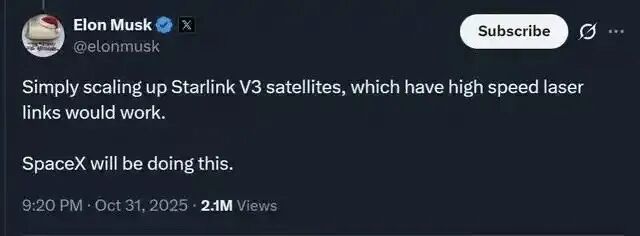
Core Viewpoint - The CEO of xAI, Elon Musk, expresses strong confidence in the company's future, predicting that if it survives the upcoming industry shakeout, it will dominate the AI sector [1][3]. Group 1: Technological Aspirations - The core competition in AI is centered around who can develop superintelligence that surpasses human capabilities [3]. - Musk envisions that general artificial intelligence (AGI) could be achieved within a few years, potentially as early as 2026 [5]. - The company plans to launch the Grok 5 model early next year, with a 10% chance of reaching the AGI threshold [5]. Group 2: Financial Strength and Ecosystem - xAI has a significant financial backing, with annual funding estimated between $20 billion and $30 billion, enabling extensive R&D [7]. - The integration of Grok into Tesla's automotive systems provides a unique hardware-software synergy that competitors may lack [7]. Group 3: Expansion and Innovation - xAI is aggressively expanding its data center project, increasing from 200,000 to 1 million graphics processing units (GPUs) to enhance computational power [10][11]. - The company is also rolling out product updates, including Grok Voice and new functionalities in areas like voice recognition and video editing, demonstrating both ambition and practical delivery capabilities [11]. Group 4: Future Vision - Musk has proposed the ambitious idea of establishing space data centers to support his Mars colonization plans, with Tesla's Optimus robots playing a crucial role in their operation [9]. - Despite skepticism from others in the industry, Musk views the establishment of these data centers as a matter of time [9].
太空数据中心首批玩家曝光
3 6 Ke· 2025-12-18 01:38
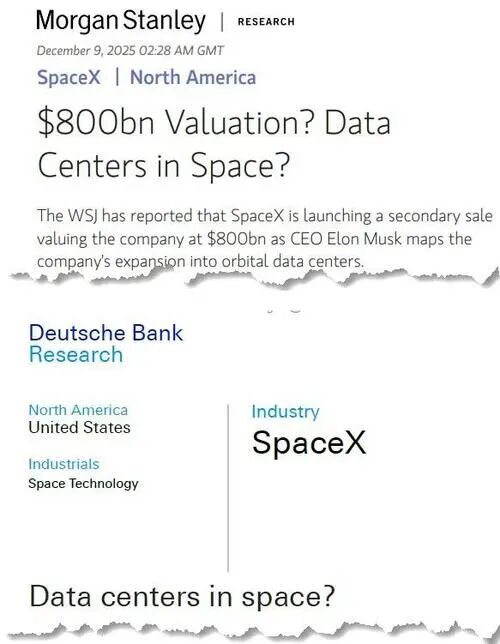
在SpaceX确认有意明年进行首次公开募股(IPO)据称寻求1.5万亿美元估值,以及马斯克强烈 支持在太空部署数据中心之后,连华尔街卖方机构也开始深入研究起了这一概念。 在SpaceX确认有意明年进行首次公开募股(IPO)据称寻求1.5万亿美元估值,以及马斯克强烈支持在太空 部署数据中心之后,连华尔街卖方机构也开始深入研究起了这一概念。 在过去一周,摩根士丹利和德意志银行仅相隔数日发布了两份几乎相同的研报。它们的核心结论是:虽 然实现该计划存在明显的技术挑战,但这些挑战更多似乎属于工程限制而非物理限制。此外,谷歌、 OpenAI和贝索斯的蓝色起源似乎都在探索实现途径,这一事实令分析师和科学家们备受鼓舞。 目前谷歌的"太阳捕手计划"正通过与Planet Labs合作,力争在2027年发射原型卫星。另据报道,OpenAI 的奥尔特曼曾考虑收购火箭公司Stoke Space,而谷歌前CEO埃里克·施密特则实际收购了Relativity Space ——部分动因正是他对太空数据中心的兴趣;蓝色起源团队也在该技术领域深耕了多年。 以下,不妨让我们深入剖析这项曾被视为天马行空的科幻构想将如何成为科学现实。为此我们摘录了德 ...