
自主可控

Search documents
国产AI登顶全球!智谱+华为联手!资金逢跌抢筹,科创人工智能ETF华宝(589520)近4日狂揽1.4亿元!
Xin Lang Cai Jing· 2026-01-16 02:44
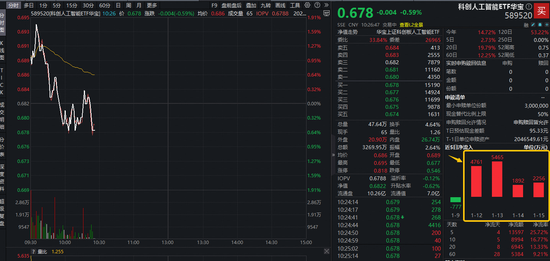
Group 1 - The core focus is on the domestic AI industry chain, with the Huabao Science and Technology Innovation Artificial Intelligence ETF (589520) experiencing a price increase of over 1.7% before a slight decline of 0.59% [1][8] - The ETF has attracted significant investment, accumulating 144 million yuan over the past four days, indicating strong market confidence in the domestic AI sector [1][8] - Key stocks within the ETF include Tianzhun Technology, which rose over 7%, and several others like Aobi Zhongguang and Zhongke Xingtou, which saw gains exceeding 3% [1][8] Group 2 - The GLM-Image model, developed by Zhipu and Huawei, has achieved recognition by topping the Hugging Face platform's Trending list, showcasing the strength of domestic technology [3][10] - This model utilizes Huawei's Ascend Atlas 800T A2 chip and MindSpore framework, marking a significant shift away from reliance on foreign chips for AI training [3][10] - The innovative architecture of GLM-Image allows it to understand complex instructions and generate accurate Chinese text, setting a new standard in the field [4][11] Group 3 - The Huabao ETF is strategically positioned to cover four key segments of the AI industry: application software, terminal applications, terminal chips, and cloud chips, reflecting a shift towards self-sufficiency [5][12] - The ETF's top ten holdings account for over 70% of its weight, with semiconductors representing more than half, indicating a concentrated investment strategy [6][13] - The ETF serves as an efficient tool for investors looking to gain exposure to domestic computing power, especially in the context of increasing emphasis on information and industrial security [6][13]

A股缩量震荡!顺周期起舞,有色ETF华宝、化工ETF逆市创新高!热门赛道遇冷,通用航空ETF华宝跌超3%
Xin Lang Cai Jing· 2026-01-15 11:31
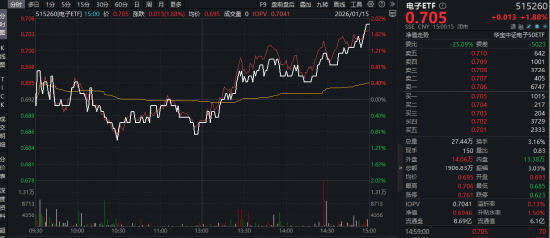
Market Overview - The A-share market experienced fluctuations on January 15, with the Shanghai Composite Index briefly falling below 4100 points before recovering at the close. The Shanghai Composite Index fell by 0.33%, while the Shenzhen Component Index rose by 0.41%, and the ChiNext Index increased by 0.56%. The total trading volume in the Shanghai and Shenzhen markets was 29.388 trillion yuan, a significant decrease of over 1 trillion yuan compared to the previous day [1][20]. Electronic Sector - The electronic sector saw a strong rally in the afternoon, with the electronic ETF (515260) rising by 1.88%. This ETF is heavily weighted in semiconductor and consumer electronics industries, and it recovered its 5-day moving average [3][23]. - The electronic sector attracted a net inflow of 16.862 billion yuan, leading all 31 primary industries in terms of capital inflow [3][23]. - Key stocks in the semiconductor sector, such as Unisoc and Huazhong Microelectronics, saw significant gains, with Unisoc hitting the daily limit of 10% [25][26]. Chemical Sector - The chemical sector also performed well, with the chemical ETF (516020) reaching a peak increase of 2.42% during the day, closing up 1.43%, marking a new three-year high [8][29]. - The basic chemical sector attracted a net inflow of 14.694 billion yuan, the highest among 30 primary industries, and has seen a cumulative net inflow of 254.049 billion yuan over the past 60 days [10][31]. - The chemical ETF has outperformed major indices since the beginning of 2025, with a cumulative increase of 48.29%, significantly higher than the Shanghai Composite Index's 22.7% and the CSI 300 Index's 20.75% [29][30]. AI and Semiconductor Trends - The U.S. government announced a 25% tariff on specific semiconductors, which may enhance domestic substitution sentiment in the market [25][27]. - The demand for AI computing power is expected to drive significant price increases in storage chips, with projections indicating a rise of up to 1800% for certain DDR chips by 2025 [27]. - The trend of "self-controllable" and AI synergy is anticipated to strengthen in the electronics industry, with a focus on domestic computing power and semiconductor equipment [27]. Investment Tools - The electronic ETF (515260) and its linked funds are effective tools for investors looking to gain exposure to core assets in the electronic sector, particularly in AI chips, automotive electronics, and 5G technologies [27]. - The chemical ETF (516020) is also highlighted as a strategic investment vehicle, covering various segments within the chemical industry, including AI computing and robotics [13][29].
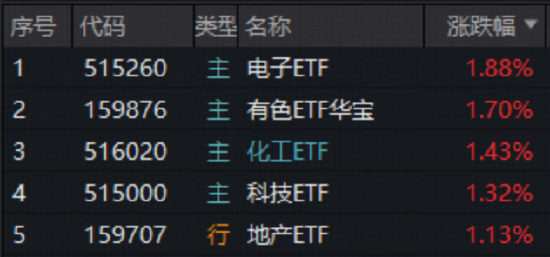
涉及英伟达和超威!美国对部分半导体加征关税!紫光国微复牌一字涨停!电子ETF(515260)逆市劲涨1.88%
Xin Lang Cai Jing· 2026-01-15 11:25
Core Viewpoint - The electronic sector experienced a significant surge, leading the market with a net inflow of 16.862 billion yuan, marking the highest absorption among 31 primary industries in the Shenwan classification [1][9]. Group 1: Macro Factors - On January 14, the U.S. White House announced a 25% tariff on specific semiconductors, including Nvidia's H200 chip and AMD's MI325X AI accelerator chip, which may enhance market sentiment for domestic alternatives [2][10]. Group 2: Industry Trends - The explosive growth in global AI computing power demand has led to a strong market for storage chips, with prices reportedly increasing by 18 times over the past year. Projections indicate that by 2025, prices for DDR4 16Gb chips could rise by 1800%, DDR5 16Gb by 500%, and 512Gb NAND flash by 300% [3][11]. Group 3: Company Developments - On January 14, chip giant Unisoc announced plans for a private placement to acquire Ruineng Semiconductor, aiming to integrate its power semiconductor product matrix and enhance its competitive position in the semiconductor industry [3][11]. Group 4: ETF and Investment Tools - The electronic ETF (515260) saw a price increase of 1.88%, recovering its 5-day moving average, and serves as an efficient tool for investors looking to gain exposure to core assets in the electronic sector, including semiconductors and consumer electronics [1][9][12].

台积电业绩超预期+AI引爆存储周期+自主可控三重驱动,半导体设备ETF易方达(159558)一键共享半导体设备高景气成长红利
Sou Hu Cai Jing· 2026-01-15 10:16
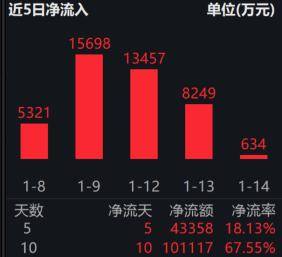
Core Insights - The global semiconductor industry is experiencing multiple positive signals, driven by TSMC's better-than-expected performance, the AI-driven storage supercycle, and accelerated domestic self-sufficiency in China [1][6] Group 1: TSMC's Performance - TSMC's Q4 2025 revenue reached NT$1.05 trillion, a year-on-year increase of 20.5%, with a net income per share of NT$19.50 [2] - In USD terms, TSMC's revenue for the quarter was $33.73 billion, up 25.5% year-on-year and 1.9% quarter-on-quarter [2] - TSMC's gross margin rose to 62.3%, and operating margin reached 54.0%, both at historical high levels [2] Group 2: AI-Driven Storage Demand - The AI wave is significantly increasing the demand for storage chips, with HBM becoming a standard for AI servers [3] - According to Counterpoint Research, the storage market has surpassed its historical peak from 2018, with suppliers' bargaining power at an all-time high [3] - Market prices for storage chips are expected to rise by 40% to 50% in Q1 2026, followed by an additional 20% increase in Q2 [3] - The investment in equipment for a 12-inch DRAM production line exceeds 70%, with increasing requirements for precision and capacity due to advancements in HBM technology [3] Group 3: Domestic Self-Sufficiency in China - China's semiconductor industry is moving towards self-sufficiency, with domestic equipment replacement rates increasing from 25% in 2025 to 35% in January 2026 [4] - Core equipment replacement rates, such as etching and deposition equipment, have surpassed 40% [4] - The national fund's accelerated investment and local industry funds are focusing on critical areas like equipment and materials [4][5] Group 4: Investment Opportunities - The semiconductor equipment ETF, E Fund (159558), is gaining attention, with net inflows exceeding 430 million in the last five days and over 1 billion in the last ten days [6] - The ETF provides an efficient tool for investors to gain exposure to this high-growth sector amid market volatility [8]

概念股强势拉升!新型半导体材料研发取得重要进展!
Zheng Quan Ri Bao Zhi Sheng· 2026-01-15 09:24
Group 1 - The A-share market experienced a collective pullback in high-position stocks in popular sectors such as commercial aerospace and AI applications, while semiconductor new material stocks saw a significant rise in the afternoon session [1] - Notable individual stocks included Qicai Chemical and Blue Arrow Electronics hitting the "20CM" limit up, while companies like Sanjia Technology and Baiao Chemical reached "10CM" limit up, indicating strong market interest in semiconductor materials [1] - A significant breakthrough in semiconductor materials was reported by a research team from the University of Science and Technology of China, Purdue University, and Shanghai University of Science and Technology, achieving controllable construction of "mosaic" heterojunctions in two-dimensional ionic soft crystal materials, published in the journal Nature [1] Group 2 - In the semiconductor field, the ability to construct heterostructures precisely in the material plane is crucial for exploring new properties and developing new devices, but traditional techniques often damage the material structure [2] - The research achieved high-quality, controllable lateral heterojunction construction in two-dimensional ionic materials, overcoming traditional process limitations and providing a new platform for studying ideal interface physics and integrating low-dimensional materials [2] - TSMC reported a 35% profit increase in Q4 2025, driven by strong demand for AI chips, marking the eighth consecutive quarter of year-on-year profit growth [2] Group 3 - TSMC plans to increase capital expenditures over the next three years, with an expected capital expenditure of $52 billion to $56 billion in 2026, and a total of $40.9 billion in 2025, anticipating nearly 30% sales growth in 2026 [3] - Current semiconductor equipment market conditions are stable and improving, with expectations for domestic storage manufacturers and advanced process expansions to accelerate, alongside a potential restart of capital expenditures for mature process manufacturers [3] - The equipment sector is expected to see more breakthroughs in 2026 due to a combination of self-sufficiency and recovery expectations [3]
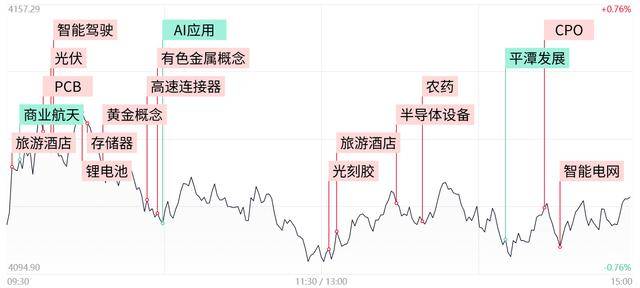
每日收评三大指数缩量整理涨跌互现,单日成交额萎缩超万亿,商业航天、AI应用端遭重挫
Sou Hu Cai Jing· 2026-01-15 08:57
Market Overview - The three major indices showed mixed performance, with the Shanghai Composite Index briefly falling below 4100 points, while the ChiNext Index rebounded in the afternoon [1] - The total trading volume in the Shanghai and Shenzhen markets was 2.91 trillion, a decrease of 1.04 trillion compared to the previous trading day [1] - Over 3100 stocks in the market declined, indicating a chaotic market sentiment [1] Sector Performance - The semiconductor sector strengthened in the afternoon, with stocks like Silan Microelectronics hitting the daily limit and reaching historical highs [2] - The CPO concept also saw gains, with companies like Huanxu Electronics hitting the daily limit [2] - The tourism and hotel sector was active, with stocks such as Shaanxi Tourism and Zhongxin Tourism hitting the daily limit [3] - The non-ferrous metals sector rose, with stocks like Sichuan Gold and Luoping Zinc hitting the daily limit [1] Individual Stock Movements - A significant number of stocks experienced short-term losses, with over a hundred stocks hitting the daily limit or declining more than 10% [5] - The commercial aerospace sector continued to adjust, with all stocks in the sector declining, including companies like China Satellite and Shanghai Hanxun [5] - The AI application sector also weakened, with stocks like Tianlong Group and Zhidema hitting the daily limit [5] Key Developments - TSMC announced plans for higher capital expenditures over the next three years, expecting to spend between $52 billion and $56 billion by 2026 [2] - The release of NVIDIA's Rubin architecture at CES 2026 is expected to significantly enhance AI performance and efficiency [2][3] - The People's Bank of China indicated that there is still room for rate cuts and reserve requirement ratio reductions this year [10][11]
外资持续加码中国!瑞银:2026年A股整体有望进一步上行
Zheng Quan Shi Bao Wang· 2026-01-15 07:37
Group 1 - UBS Group hosted the 26th Greater China Conference in Shanghai, attracting over 3,600 participants, including more than 2,300 global institutional investors, sovereign wealth funds, family offices, and private investors [1] - UBS CEO Sergio Ermotti highlighted the increasing number of overseas clients, indicating the growing importance of the Asia-Pacific region and renewed global interest in China [1] - By the third quarter of 2025, foreign capital allocation in Chinese stocks is expected to improve, with the underweight narrowing from -2.5% in Q3 2024 to -1.3%, a year-on-year reduction of 48% [1] Group 2 - UBS China President Hu Zhizhe noted a 32% year-on-year increase in international investors from the US, Europe, the Middle East, and Africa, reflecting a strong desire for comprehensive participation in the Chinese market [2] - Ermotti emphasized that the Asia-Pacific region is poised to capture new opportunities from AI advancements, with significant progress expected in China's technology sector by 2025 [2] - UBS anticipates that its assets under management (AUM) in the Asia-Pacific will exceed $1 trillion for the first time by 2025, with record financial performance in China [2] Group 3 - UBS China Equity Strategy Head Wang Zonghao stated that the stock market remains fair in 2025, driven by the performance of innovative sectors, which can alleviate macroeconomic pressures [3] - Wang pointed out that policy support is a significant driver for the stock market, with ongoing liquidity release from the central bank and support for the A-share market [3] - UBS analysts noted a substantial inflow of funds into A-shares without signs of overheating, with overall market sentiment currently above average [3]

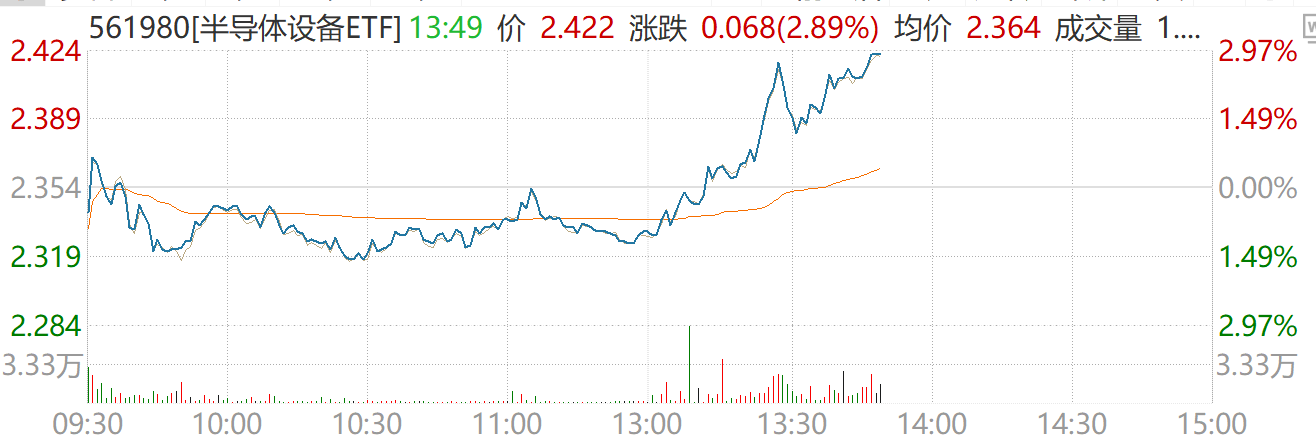
存储周期上行叠加关税窗口,半导体设备ETF(561980)午后拉涨2.89%,上海新阳、三佳科技强势涨停!
Sou Hu Cai Jing· 2026-01-15 06:45
Core Viewpoint - The semiconductor equipment sector is experiencing significant growth, driven by domestic substitution and self-sufficiency trends, particularly in light of recent U.S. tariffs on semiconductor imports [1][2]. Group 1: Market Performance - The semiconductor equipment ETF (561980) saw a 2.89% increase, with a trading volume exceeding 200 million yuan, and a net inflow of over 137 million yuan in the last five trading days [1]. - Key stocks such as Shanghai Xinyang and Sanjia Technology hit the daily limit, with Shanghai Xinyang rising over 13%, and other significant gains from companies like Zhongwei and Nanda Optoelectronics [1]. Group 2: Impact of Tariffs - The U.S. announced a 25% import tariff on certain semiconductor products starting January 15, 2026, which is expected to create a stronger "acceleration substitution" window for domestic semiconductor equipment [1]. - The direct impact of these tariffs on domestic semiconductor equipment is considered limited, but they may increase supply chain uncertainties [1]. Group 3: Industry Trends - The rise of domestic storage chip manufacturers is reshaping the global pricing cycle, reducing import dependency, and enhancing supply chain security [2]. - The storage chip segment accounts for approximately 30% of the integrated circuit market, indicating significant growth potential for upstream semiconductor equipment [2]. Group 4: Future Outlook - The global storage industry is entering a new upcycle driven by AI demand for high-performance storage products, with significant growth expected in etching and thin-film deposition equipment due to the shift towards 3D architectures [3]. - Domestic semiconductor equipment companies like North Huachuang and Zhongwei are anticipated to strengthen their market positions as demand increases [3]. Group 5: ETF Composition - The semiconductor equipment ETF focuses on the "selling shovels" segment of the chip industry, with over 90% of its composition in semiconductor equipment, materials, and design [4]. - The index has shown a maximum increase of over 640% since the last semiconductor upcycle, outperforming similar indices [4].





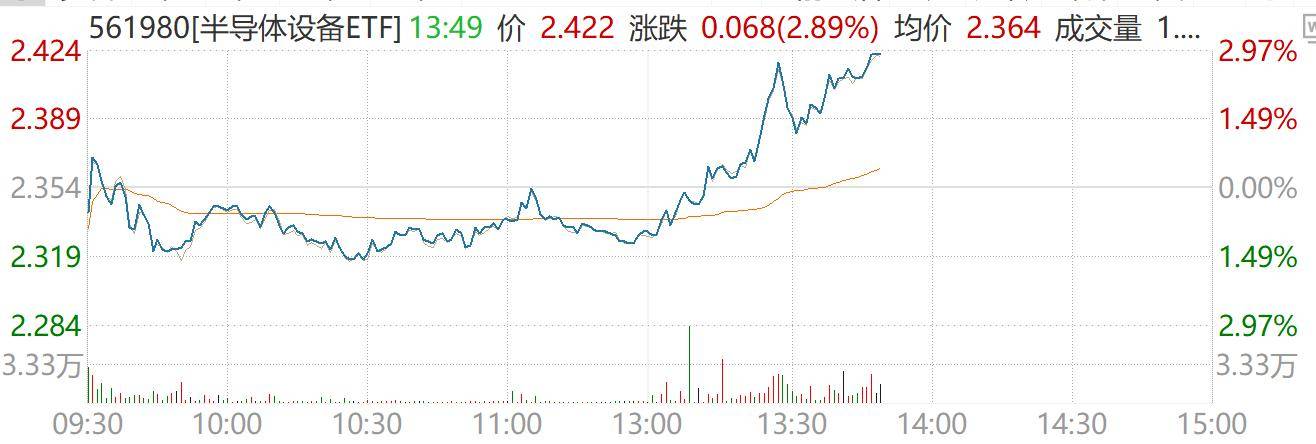
加征关税强化国产替代逻辑,半导体设备ETF(561980)午后大涨近3%!机构:“卖铲人”确定性受益
Sou Hu Cai Jing· 2026-01-15 06:33
Core Viewpoint - The semiconductor equipment sector is experiencing significant growth, driven by domestic substitution and self-sufficiency trends, particularly in light of recent U.S. tariffs on semiconductor imports [1][2]. Group 1: Market Performance - The semiconductor equipment ETF (561980) saw a 2.89% increase, with a trading volume exceeding 200 million yuan, and a net inflow of over 137 million yuan in the last five trading days [1]. - Key stocks such as Shanghai Xinyang and Sanjia Technology hit the daily limit, with Shanghai Xinyang rising over 13%, and other significant players like Zhongwei Company and Nanda Optoelectronics also showing strong gains [1]. Group 2: Impact of Tariffs - The U.S. announced a 25% import tariff on certain semiconductor products starting January 15, 2026, which is expected to create a stronger "acceleration replacement" window for domestic semiconductor equipment despite limited direct impact [1]. Group 3: Industry Trends - The rise of domestic storage chip manufacturers is reshaping the global pricing cycle, reducing import dependency, and enhancing supply chain security, supported by policy initiatives and capital investments [2]. - The global storage industry is entering a new upcycle driven by AI demand for high-performance storage products, with significant growth expected in etching and thin-film deposition equipment due to the shift towards 3D architectures [3]. Group 4: ETF Composition and Performance - The semiconductor equipment ETF focuses on the "selling shovels" segment of the chip industry, with over 90% of its composition in semiconductor equipment, materials, and design [4]. - The index has shown a maximum increase of over 640% since the last semiconductor upcycle, outperforming similar indices, with a year-to-date increase of 87.38% as of January 9, 2026 [4].
千问App接入淘宝、闪购测试AI购物,科创100ETF华夏(588800)备受关注
Xin Lang Cai Jing· 2026-01-15 03:58
Group 1 - The core viewpoint of the news highlights the performance of the Shanghai Stock Exchange Science and Technology Innovation Board 100 Index, with notable gains from companies like Xiamen Tungsten New Energy and Hangke Technology, while Zhongke Star Map experienced a decline [1] - Qianwen App has integrated with Alibaba's ecosystem, achieving AI shopping functionalities and surpassing 100 million monthly active users within two months of launch [1] - CITIC Securities predicts that the combination of self-control and AI will drive significant performance in related sectors by 2025, with expectations for further strengthening in 2026, particularly in domestic computing power and semiconductor equipment [1] Group 2 - The Science and Technology Innovation 100 ETF (588800) closely tracks the Science and Technology Innovation 100 Index, focusing on high-growth sectors such as semiconductors, pharmaceuticals, and new energy [2]