自有品牌

Search documents
Sprouts Farmers Market (SFM) 2025 Conference Transcript
2025-06-04 10:15
Summary of Sprouts Farmers Market Conference Call Company Overview - **Company**: Sprouts Farmers Market - **Industry**: Natural and Organic Grocery Retail - **Store Count**: Approaching 500 stores with a growth rate of nearly 10% [2][3] Key Points and Arguments Business Strategy and Target Market - Sprouts focuses on a specific target market of health enthusiasts and innovation seekers, representing a $200 billion segment within a $1.4 trillion marketplace [4][5] - The company emphasizes understanding its target customers and tailoring products to meet their dietary needs, such as keto, paleo, vegan, and organic options [5][9] - Fresh produce accounts for 20% of sales, highlighting the importance of freshness in their product offerings [6] Product Sourcing and Brand Strategy - Sprouts has established a "foraging team" to balance private brand products with small, entrepreneurial brands, launching 7,500 new items last year [10][11] - The company aims to be a destination for innovative products, receiving 65,000 applications for new products, but only managing 7,500 [11][12] - The private brand strategy has shifted from commodity equivalents to differentiated products, enhancing brand identity [10] Consumer Behavior and Market Resilience - Despite economic uncertainties, Sprouts has not observed significant changes in consumer behavior, indicating resilience among health-focused customers [18][19] - The company expects continued growth in health-conscious consumers, with a focus on longevity and wellness across demographics [20][21] Product Trends and Sales Performance - Over 50% of produce sales are now organic, with significant growth in gluten-free and keto products [24] - The company is also seeing success in non-alcoholic beverages and attribute-based products across various categories [25] Pricing and Competitive Position - Sprouts maintains a strong focus on produce pricing, ensuring competitive positioning against conventional grocers [27][28] - The company differentiates itself by offering unique products that are not widely available elsewhere, allowing for a unique pricing strategy [29][30] Growth and Expansion Plans - Sprouts plans to open 1,200 to 1,400 new stores, with a focus on the Midwest and Northeast regions, starting in 2027 [60][61] - The company is adapting its store size to 23,000 square feet to facilitate easier execution in new markets [67] Digital Growth and Customer Engagement - Strong growth in digital sales is attributed to a differentiated product assortment and brand trust in fresh produce [73][74] - The average basket size for online orders is approximately double that of in-store purchases, indicating a strong demand for convenience [76] Loyalty Program - A new loyalty program is set to launch, aimed at personalizing customer experiences and enhancing engagement [48][49] - The program is expected to provide insights into customer preferences, allowing for tailored marketing and product offerings [53][54] Capital Allocation and Financial Strategy - The company prioritizes investments in store growth, supply chain, and technology, while also considering share repurchases and potential M&A opportunities [80][84] - Sprouts aims to maintain a stable EBIT margin while reinvesting in long-term growth initiatives [41][42] Additional Important Insights - Sprouts is committed to local sourcing and building relationships with growers in new markets to maintain its farmers market appeal [68][70] - The company is focused on enhancing its supply chain capabilities to improve product freshness and availability [44][45] This summary encapsulates the key insights and strategic directions discussed during the conference call, highlighting Sprouts Farmers Market's commitment to health-focused retailing and its proactive approach to market challenges and opportunities.

超市界的坪效神话 | 高毅读书会
高毅资产管理· 2025-05-29 09:27
Core Viewpoint - The article discusses the transformation and success of Trader Joe's, a supermarket chain in the U.S., which has effectively navigated challenges in the retail sector by focusing on unique operational strategies and targeting a specific consumer demographic [4][12]. Group 1: Retail Trends and Challenges - The increasing focus on cost-effectiveness among consumers has led retail giants to emphasize discounts, resulting in price competition and product homogenization in the domestic retail channels [4]. - Trader Joe's has managed to maintain a strong market position despite similar challenges faced in the 1970s by employing a distinctive business strategy that emphasizes product strength and customer experience [4][12]. Group 2: Trader Joe's Founder's Journey - Joe Coulombe, the founder of Trader Joe's, initially worked in a convenience store and later established Pronto Markets, which became a successful chain before transitioning to Trader Joe's [7][8]. - The first Trader Joe's store opened in Pasadena, California, in 1967, targeting a high-education demographic, which was a strategic move to differentiate from traditional retailers [12][13]. Group 3: Product Strategy - Trader Joe's has significantly reduced its product offerings from around 10,000 to approximately 1,100-1,500 items, focusing on unique and high-value products that cater to its target demographic [15]. - The supermarket emphasizes low prices and unique offerings, such as specialty cheeses and organic products, which are often sold at lower prices than competitors [15][18]. Group 4: Employee Relations and Corporate Culture - Trader Joe's prioritizes employee welfare by offering competitive salaries and implementing employee stock ownership plans, which fosters loyalty and low turnover rates [21][22]. - The company maintains a unique corporate culture by engaging employees in decision-making processes and ensuring their well-being, which contributes to the overall success of the business [21][22].


从“小弟”干到“一哥”,股价已翻4倍 专访若羽臣董事长王玉:股价大涨后“我”睡不着了
Mei Ri Jing Ji Xin Wen· 2025-05-27 09:19
Core Insights - Ruoyuchen has transformed from an unnoticed player to a leading company in the e-commerce operation industry, with a significant increase in revenue and profit [1][6] - The company reported a 30% revenue growth and a 95% increase in net profit for 2024, making it the most profitable e-commerce operation listed company [1][4] - The stock price of Ruoyuchen has surged over 400% in the past year, reflecting strong market confidence [1][6] Financial Performance - In 2024, Ruoyuchen's revenue reached 1.77 billion yuan, with a net profit of 100 million yuan [4][6] - The company's self-owned brand revenue grew by 90%, with a gross margin of 67%, significantly higher than the 39% gross margin from its operation business [6][11] - For Q1 2025, net profit increased by 114% year-on-year, indicating continued strong performance [1] Business Strategy - The company has shifted focus from e-commerce operation, which now accounts for about 40% of its business, to developing its own brands in health, beauty, and household cleaning [3][11] - Ruoyuchen aims to become an excellent brand management company, with plans to increase the share of self-owned brands in total revenue [3][11] - The founder, Wang Yu, emphasizes the importance of understanding consumer needs and developing products accordingly, which has been a key factor in the success of their self-owned brand, Zhanjia [9][10] Market Context - The e-commerce operation market in China reached 1.5 trillion yuan in 2021, with a growth rate of 9.9%, down from previous years, indicating a shift in market dynamics [7] - The rise of short video and live-streaming e-commerce has created new challenges for traditional e-commerce operations [7][8] - Ruoyuchen's strategy to focus on self-owned brands is seen as a response to the declining profitability in the traditional operation model [8][11] Future Outlook - Wang Yu expresses concerns about sustaining high growth rates amid increasing market expectations and competition from established brands in the household cleaning sector [14][15] - The company plans to continue investing in self-owned brands while managing operational costs effectively [15][16] - Ruoyuchen aims to maintain its growth trajectory and become a leading brand management company in the long term [15][16]

鸣鸣很忙:量贩零食龙头,年入400亿,难摆脱低毛利困境
贝塔投资智库· 2025-05-26 04:09
Core Viewpoint - The article discusses the strategic merger of "零食很忙" and "赵一鸣零食," forming "鸣鸣很忙," which is positioned as the largest retail player in China's snack and beverage market, with a focus on expanding product categories and market reach [1][3]. Market Overview - The Chinese snack and beverage retail market is projected to grow to RMB 4.9 trillion by 2029, with a compound annual growth rate (CAGR) of 5.8% from 2024 to 2029. The growth in lower-tier markets is expected to outpace higher-tier markets, with a CAGR of 6.8% compared to 4.1% [1]. - The market share in the snack retail sector is fragmented, with "鸣鸣很忙" holding a 1.5% market share, slightly ahead of its closest competitor, 万辰集团, at 1.4% [4][5]. Business Model and Expansion - "鸣鸣很忙" operates primarily through a franchise model, with 99.9% of its stores being franchises, generating approximately 98.8% of its revenue from franchise sales [6][8]. - The company aims to enhance its bargaining power through increased store numbers, which is expected to lower prices by 10% compared to competitors [8]. Financial Performance - The company reported a GMV of RMB 55.5 billion in 2024, with a total of 14,394 stores across 28 provinces, focusing heavily on lower-tier cities [11]. - Despite achieving a significant GMV, the average GMV per transaction has been declining [11]. - The net profit for 2024 reached RMB 8.34 billion, marking a 284% increase year-on-year, indicating strong profitability compared to industry peers [14][15]. Supply Chain and Operational Challenges - The company has established 36 warehouses, allowing for efficient distribution within a 300 km radius, but faced supply chain issues leading to stockouts in 300 stores due to a warehouse system failure [16][17]. - The inventory turnover days are reported at 11.6 days, which is significantly better than competitors, indicating strong supply chain management [16]. Product Strategy - The business model focuses on a mix of branded and private label products, with private label products contributing significantly to profitability due to higher margins [18]. - The company has faced challenges related to product quality control, with complaints about food safety issues [18]. Future Directions - The company plans to expand into discount supermarkets and develop its own brands, aiming to diversify its product offerings beyond snacks [19][20]. - There are concerns regarding the sustainability of its growth model, especially with recent shareholder exits and significant dividend payouts prior to the IPO [20].

诺邦股份:投资价值分析报告具备工匠精神的水刺无纺布头部企业-20250525
EBSCN· 2025-05-25 10:25
Investment Rating - The report gives a "Buy" rating for the company with a target price of 20.90 CNY, corresponding to a PE ratio of approximately 33 times for 2025 [4][14][6]. Core Viewpoints - The company is a leading player in the domestic water-jet non-woven fabric industry, demonstrating a long-term commitment to craftsmanship. The penetration rate of water-jet non-woven fabrics is on the rise, with diverse downstream applications such as wet wipes and oral nicotine pouches showing rapid growth [12][51][67]. - The company's three main business segments—roll materials, products, and proprietary brands—are developing synergistically, with strong performance in 2024 and Q1 2025. The roll material segment is expanding its capacity for differentiated and flushable materials, while the product segment, led by Guoguang, is gradually entering high-margin clients [4][12][33]. Company Overview - Founded in 2002, the company specializes in the R&D, production, and sales of differentiated and personalized water-jet non-woven materials and products. Its products are primarily used in beauty care, industrial materials, household cleaning, and medical materials [22][23]. - The company achieved a revenue of 2.24 billion CNY in 2024, representing a year-on-year growth of 16.8%, and a net profit attributable to shareholders of 95.23 million CNY, up 15.2% year-on-year. In Q1 2025, revenue and net profit grew by 39.1% and 48.6% respectively [1][4][23]. Industry Situation - The water-jet non-woven fabric market is characterized by high demand due to its breathable, soft, lightweight, and antibacterial properties, making it suitable for disposable consumer products and beauty care markets. The production of water-jet non-woven fabrics reached 151,000 tons in 2023, with a compound annual growth rate (CAGR) of 18.6% from 2018 to 2023 [2][55]. - The Chinese wet wipes market is projected to reach 12.92 billion CNY in 2024, with a CAGR of 5.0% from 2024 to 2029, indicating significant growth potential in this segment [2][68]. Business Highlights - The roll material segment has advanced production lines and strong technical innovation capabilities, with the company being the only one in China capable of mass-producing flushable materials for the U.S. market. The company is increasing the proportion of differentiated and flushable materials in its production [3][12]. - The product segment, primarily through its subsidiary Guoguang, has a comprehensive product line for wet wipes, achieving a revenue growth of 26.6% in 2024 and over 40% in Q1 2025. Guoguang is expanding its partnerships with major retailers and acquiring new clients [3][12]. - The proprietary brand "Xiaozhijia" is rapidly growing, with a revenue increase of 80.6% year-on-year in 2024, supported by the company's technical strength [3][12]. Profit Forecast and Valuation - The company is expected to achieve revenues of 2.62 billion CNY, 3.10 billion CNY, and 3.60 billion CNY in 2025, 2026, and 2027 respectively, with year-on-year growth rates of 17.31%, 18.09%, and 16.25%. Net profits are projected to be 112 million CNY, 136 million CNY, and 163 million CNY for the same years, with growth rates of 17.61%, 21.35%, and 19.80% respectively [4][14][5].

跨界卫生巾、啤酒!三只松鼠是不务正业吗,章燎原回应质疑
Nan Fang Du Shi Bao· 2025-05-23 09:52
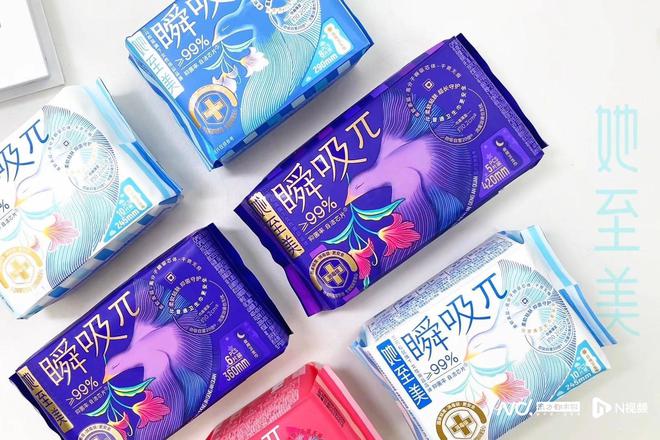
Core Viewpoint - The company is expanding its product offerings beyond snacks to include personal care and household items, with a focus on high-frequency necessities and a goal to open 20 new stores this year [1][4][9] Product Expansion - The company plans to launch a new brand of sanitary napkins called "她至美" (She is Beautiful), along with 30 other personal care products including wipes, trash bags, and laundry detergent [1][3] - In the beverage sector, the company aims for a sales target of 100 million yuan for its alcoholic beverages this year, introducing three new brands including "呼息" (Breath) and "橘猫" (Orange Cat) [1][4] Sales and Revenue Goals - The company has set ambitious sales targets for various product categories: 250 million yuan for convenience foods, 100 million yuan for personal care products, and 50 million yuan for coffee [4][8] - The company reported a revenue growth of 49.30% year-on-year to 10.623 billion yuan in 2024, with a net profit increase of 24.17% to 408 million yuan [9] Market Strategy - The company is adopting a multi-channel approach, including the opening of a new type of store called "全品类生活馆" (All-Category Lifestyle Store) and expanding its convenience store model [1][9] - The company is focusing on supply chain efficiency and product standardization to enhance its market competitiveness [8] Brand Development - The company is incubating 33 sub-brands, with a strong emphasis on innovation and rapid market entry [4][6] - The founder emphasized the importance of seizing market opportunities and the flexibility of the company's operational structure to support multiple brand launches [6][8]

首次盈利后提速IPO,朴朴超市起死回生
Guan Cha Zhe Wang· 2025-05-20 12:51
Core Insights - Pupu Supermarket, a fresh retail brand, is reportedly in talks with top investment banks for a potential IPO in Hong Kong, following its establishment in 2016 and its focus on high-frequency fresh delivery [1][2] - The fresh e-commerce sector, particularly the front warehouse model, has faced significant challenges in profitability, with notable companies like Missfresh and Dingdong Maicai experiencing severe operational difficulties [1][3] - Despite the challenges, Pupu Supermarket has reportedly achieved revenue balance in 2023 and is preparing for an IPO, indicating a potential recovery and sustainable business model [1][2] Company Overview - Founded in June 2016 in Fuzhou, Pupu Supermarket operates as a mobile internet shopping platform offering a wide range of products, including fresh produce, personal care items, and daily necessities [1] - The company initially gained a strong reputation by targeting second-tier cities and emphasizing cost-effectiveness and service experience [1] Market Context - The fresh e-commerce sector has seen over 46.3 billion yuan in total financing from 2010 to 2020, with significant investments in leading companies like Missfresh and Dingdong Maicai [3][4] - The front warehouse model is known for its high operational costs, with fulfillment expenses being three times that of traditional warehouse e-commerce [4] Financial Performance - Pupu Supermarket has undergone multiple financing rounds, with the latest being a strategic investment from IDG Capital in November 2021 [4][6] - As of 2022, approximately 70% of Pupu's front warehouses were reportedly profitable, with the company achieving a sales volume of over 30 billion yuan in 2024 [8][9] Supply Chain Efficiency - Pupu Supermarket has implemented a two-tier supply chain system, reducing the number of distribution stages and improving delivery times, resulting in lower product loss rates [9] - The company has also focused on local sourcing, with 45% of its products coming from local agricultural markets, enhancing its competitive pricing [9] Product Strategy - Pupu Supermarket has begun launching its own brands to differentiate itself in the market, with over 750 SKUs introduced by 2024, achieving significant sales growth [10] - The competitive landscape for private labels is intensifying, with traditional supermarkets and e-commerce platforms also entering the market [10] Future Outlook - If successful in its IPO, Pupu Supermarket could gain significant capital and brand strength, although the challenges faced by other fresh e-commerce companies highlight the risks involved [11]

好市多(COST.US)“利润引擎”持续发力:自有品牌科克兰收入超过劳氏、宝洁
智通财经网· 2025-05-20 07:02
Core Insights - Costco's private label brand, Kirkland Signature, continues to be a major force in the retail sector, generating approximately $86 billion in annual sales, accounting for about one-third of the company's total revenue [1] - The brand's success is attributed to its ability to offer high-quality products at lower prices than national brands, enhancing Costco's negotiating power with suppliers and maintaining healthy profit margins [1] - Kirkland Signature's product offerings have expanded significantly since its launch in 1995, contributing to increased customer loyalty and traffic, which supports Costco's membership model and high renewal rates [1] Product Development and Strategy - In the first quarter earnings call, Costco executives highlighted new Kirkland products, including KS French fries, KS vodka, and soda [2] - A key part of Kirkland's future strategy is to focus on developing products that can be seamlessly sold in international markets [2] - Costco management emphasizes ongoing investments in price leadership and product innovation to keep Kirkland at the forefront of private label growth, both in the U.S. and globally [2]

让于东来走下神坛吧
混沌学园· 2025-05-14 11:50
Core Viewpoint - The article emphasizes the importance of understanding the essence behind the rise of companies like Pang Donglai, which has shown resilience and growth despite industry challenges, focusing on trust and consumer confidence rather than idolizing entrepreneurs [1][3][4]. Group 1: Pang Donglai's Growth and Resilience - Pang Donglai has experienced significant visitor growth, with 2.7 million visitors during the 2023 Mid-Autumn Festival and National Day, increasing to 3 million in 2024 [4]. - The company's revenue has consistently increased from 7 billion yuan in 2022 to 10.7 billion yuan in 2023, and projected to reach 16.964 billion yuan in 2024, with Q1 2025 sales already surpassing 8 billion yuan [6]. - Pang Donglai's success is attributed to its unique ability to withstand economic cycles, rooted in its commitment to quality and consumer trust [3][6]. Group 2: Natural Advantages - Pang Donglai benefits from geographical advantages, being located in a transportation hub that allows efficient logistics for sourcing and distribution [9]. - The local population has increased from 870,000 to 1.33 million, providing a substantial customer base for Pang Donglai [11]. - The region's agricultural productivity and established supply chains enhance Pang Donglai's operational efficiency [12]. Group 3: Business Model and Philosophy - The company's initial strategy focused on building trust through a "genuine product" guarantee, which addressed consumer fears about counterfeit goods [20][24]. - Pang Donglai's commitment to customer satisfaction includes policies like "fake one, compensate ten" and unconditional returns, fostering a strong trust relationship with consumers [20][24]. - The company has maintained a philosophy of not engaging in discounting or promotions, believing that such practices harm customer trust and brand integrity [38]. Group 4: Quality Control and Supplier Relationships - Pang Donglai employs strict quality control measures, including a comprehensive supplier evaluation system and a rigorous quality traceability framework [50][51]. - The company prioritizes long-term relationships with suppliers, ensuring stable product quality and fostering a collaborative environment [55][56]. - Pang Donglai's approach to supplier management emphasizes mutual benefit, often increasing supplier margins to ensure quality and reliability in product sourcing [88]. Group 5: Brand Development and Future Outlook - The company is transitioning into a phase of developing its own brands, with plans for self-branded products to account for over 30% of its offerings by the end of the year [72]. - Pang Donglai's product categories include essential goods, premium brands, global selections, and self-branded items, catering to diverse consumer needs [74][75][76][77]. - The company's focus on quality and consumer experience positions it well for continued growth, even in challenging economic conditions [71][80].

单日销售110万、客流超10万创新纪录!奥乐齐下沉“杀”疯了!
Sou Hu Cai Jing· 2025-05-13 04:34
Core Insights - Aldi's first store in Kunshan has set a new record for single-day sales in China, achieving over 1.1 million yuan in sales and attracting more than 100,000 visitors on its opening day, surpassing previous store performances in Wuxi and Suzhou [2][6][7] - The success of Aldi in Kunshan highlights the potential of county-level markets in the Yangtze River Delta as a "new consumption blue ocean," where quality and price can be precisely balanced to foster retail innovation [1][9] Group 1: Sales Performance - The opening day sales of Aldi's Kunshan store reached 1.1 million yuan, with a customer footfall exceeding 100,000, marking a new record for the brand in the Chinese market [2][6] - This performance reflects Aldi's advantages in product strategy, supply chain efficiency, and localization efforts [2][7] Group 2: Market Strategy - Aldi's expansion into Kunshan, a county-level city with a strong economy and high disposable income, demonstrates a strategic focus on high-potential county markets [6][9] - The company’s approach to the Yangtze River Delta emphasizes a "community discount supermarket" model, which is more aligned with everyday consumer needs compared to competitors that rely on membership or premium strategies [9][17] Group 3: Pricing Strategy - Aldi's "9.9 yuan" pricing strategy is not merely a price-cutting tactic but is supported by its private label products, which account for over 90% of its offerings, and a vertically integrated supply chain [10][12] - The strategy includes a wide range of products priced at or below 9.9 yuan, appealing to price-sensitive consumers and enhancing the brand's value proposition [12][13] Group 4: Supply Chain and Localization - Aldi's competitive pricing is rooted in its highly efficient supply chain, which maintains a limited SKU count and emphasizes fresh product traceability [14][22] - The company has adapted its offerings to local tastes and preferences, integrating local supply chains to provide fresh products and unique innovations tailored to the Kunshan market [14][22] Group 5: Competitive Positioning - Aldi has shifted its positioning from a "premium supermarket" to a "value community supermarket," appealing to a broader audience, particularly young professionals and families [16][17] - The brand's marketing strategies, including collaborations and engaging campaigns, have successfully attracted consumer attention and encouraged store visits [18][19] Group 6: Industry Implications - Aldi's success in Kunshan presents a new paradigm for the retail industry, suggesting that foreign brands can carve out differentiated paths in lower-tier markets through supply chain restructuring, private label innovation, and precise site selection [22][23] - As competitors like Sam's Club and Hema accelerate their county-level expansions, Aldi's strategy may shift the industry focus from price wars to value-driven competition, leading to a new consumer landscape [23]