节能降碳

Search documents
电新行业周报:锂电材料价格持续上涨,国内储能景气度延续-20251019
Western Securities· 2025-10-19 06:07
Investment Rating - The report recommends investment in the electric power equipment sector, highlighting specific companies for potential growth opportunities [1][2][4]. Core Insights - Lithium battery material prices continue to rise, with domestic lithium hexafluorophosphate averaging 79,000 CNY per ton, up 0.95 million CNY, a 13.67% increase month-on-month [1]. - The domestic energy storage sector shows strong growth, with new installations in September reaching 3.08 GW/9.17 GWh, a year-on-year increase of 205%/171% [2]. - The report emphasizes the ongoing expansion of ultra-high voltage (UHV) planning and the detailed consumption of renewable energy [2][4]. Summary by Sections Lithium Battery Materials - Domestic lithium hexafluorophosphate prices are at 79,000 CNY/ton, up 13.67% month-on-month, while export prices are at 86,000 CNY/ton, up 14.67% [1]. - Recommended companies include Shangtai Technology, Xinwangda, and Haopeng Technology, with additional attention to ZhiJian Electronics and Wanrun New Energy [1]. Energy Storage - New energy storage installations in September totaled 3.08 GW/9.17 GWh, reflecting a year-on-year increase of 205%/171% and a month-on-month increase of 8.45%/11.97% [2]. - Key companies recommended for investment include CATL, Yiwei Lithium Energy, and Sungrow Power [2]. Ultra-High Voltage and Renewable Energy - The "Qinggui" DC project has entered the feasibility study phase, indicating progress in UHV infrastructure [2]. - The report notes the successful cold test of the "Linglong No. 1" small modular reactor, marking a significant milestone in China's nuclear innovation [2]. Photovoltaic Sector - The National Development and Reform Commission has introduced a 20% subsidy for energy-saving and carbon reduction projects, benefiting the photovoltaic industry [4]. - Recommended companies in the photovoltaic sector include GCL Technology, Tongwei Co., and Aiko Solar [4]. Electric Vehicles - In September, domestic new energy vehicle sales reached 1.604 million units, a year-on-year increase of 24.6% [21]. - The penetration rate of new energy vehicles reached 49.7%, with significant growth in both passenger and commercial vehicle segments [22][27]. Market Dynamics - The report highlights the competitive landscape in the lithium battery supply chain, with rising prices for cobalt and lithium materials [36][39]. - The ongoing development of solid-state batteries is noted, with advancements expected to enhance vehicle range significantly [51]. Conclusion - The electric power equipment sector is poised for growth, driven by rising material prices, strong energy storage demand, and supportive government policies [1][2][4].
《水俣公约》有望加速电石法PVC落后产能淘汰,LG化学计划关闭韩国HDPE工厂
KAIYUAN SECURITIES· 2025-10-19 04:18
Investment Rating - The investment rating for the basic chemical industry is "Positive" (maintained) [1] Core Insights - The "Minamata Convention" is expected to accelerate the elimination of outdated acetylene-based PVC production capacity, which is a key focus of the convention [4][21] - The domestic PVC production capacity is projected to reach 29.11 million tons/year by the end of 2024, with acetylene-based PVC accounting for 21.64 million tons/year, representing 74% of the total capacity [22] - The demand for mercury-free catalysts is anticipated to grow due to the ongoing implementation of the Minamata Convention, leading to an improved industry landscape [4][22] Summary by Sections Industry Trends - The chemical industry index underperformed the CSI 300 index by 3.61% this week [16] - The CCPI (China Chemical Product Price Index) reported a decrease of 1.2% [18] Key Product Tracking - The polyester filament market is experiencing a downward trend, with POY prices averaging 6,520 CNY/ton, down 113 CNY/ton from last week [27] - The viscose staple fiber market remains stable, with prices holding steady at 13,100 CNY/ton [30] Industry News - LG Chem announced plans to close its HDPE plant in South Korea, reflecting a strategic shift towards high-growth areas such as battery materials and environmental solutions [5][16] Recommended and Beneficiary Stocks - Recommended stocks include leading chemical companies such as Wanhua Chemical, Hualu Hengsheng, and Hengli Petrochemical [6] - Beneficiary stocks from the mercury-free catalyst segment include Kaili New Materials and from the PVC segment include Jiahua Energy and Chlor-alkali Chemical [4][22]
硅铁市场周报:成本高位利润亏损,库存中性供应回落-20251017
Rui Da Qi Huo· 2025-10-17 09:59
Report Summary 1. Report Industry Investment Rating No information provided. 2. Core Viewpoints - Macroscopically, Trump restarted the trade war against China, imposing a 100% tariff on Chinese products exported to the US, causing a general decline in commodities at the beginning of the week. Relevant measures were introduced to support energy - saving and carbon - reduction transformation in key industries like steel. The domestic steel demand is expected to decline during the "15th Five - Year Plan" period, and enterprises should pay attention to the transition from output control to carbon - emission control. Overseas, short - term funds flowed to US Treasury bonds and gold due to Trump's tariff threat. The IMF predicted that the world economy would grow by 3.2% in 2025, a 0.2 - percentage - point increase from the July forecast [7]. - In terms of supply and demand, manufacturers maintained normal production to fulfill previous orders. The inventory was at a neutral level, and the short - term cost was supported by the stable price of semi - coke. The spot profits in Inner Mongolia and Ningxia were in the red, at - 445 yuan/ton and - 390 yuan/ton respectively. Technically, the weekly K - line of the ferrosilicon main contract was below the 60 - day moving average, indicating a bearish trend. It is expected that ferrosilicon will oscillate between 5300 - 5600 [7]. 3. Summary by Directory 3.1. Weekly Highlights Summary - **Macro and Overseas**: Trump's tariff threat led to a decline in commodities at the beginning of the week. Measures were introduced for energy - saving and carbon - reduction in the steel industry. The domestic steel demand will decline in the future. Overseas, funds flowed to safe - havens due to the tariff threat, and the IMF raised the world economic growth forecast [7]. - **Supply and Demand**: Manufacturers maintained normal production, with a neutral inventory level. The short - term cost was supported by semi - coke. The spot profits in Inner Mongolia and Ningxia were negative [7]. - **Technical Analysis**: The weekly K - line of the ferrosilicon main contract was below the 60 - day moving average, showing a bearish trend [7]. - **Strategy Suggestion**: With high - level production and a downward trend in subsequent crude steel output, the alloy is likely to remain in the red. Ferrosilicon is expected to oscillate between 5300 - 5600 [7]. 3.2. Futures and Spot Market - **Futures Market**: As of October 17, the ferrosilicon futures contract持仓量 was 412,000 lots, an increase of 33,000 lots compared to the previous period. The 5 - 1 contract month - spread was 78, a decrease of 34 points. The number of warehouse receipts was 12,611, a decrease of 3,693. The Ningxia ferrosilicon price was 5,220 yuan/ton, a decrease of 30 yuan/ton [9][12][16]. - **Spot Market**: As of October 17, the ferrosilicon basis was - 300 yuan/ton, a decrease of 24 points [21]. 3.3. Industry Chain Situation - **Industry**: This week (October 16), the national capacity utilization rate of 136 independent ferrosilicon enterprises was 35.48%, a decrease of 0.46% from the previous week. The daily average output was 16,115 tons, a decrease of 2.62%. The weekly demand for ferrosilicon from five major steel types was 19,572.5 tons, a decrease of 0.92%. The national ferrosilicon weekly supply was 112,800 tons. The national inventory of 60 independent ferrosilicon enterprises was 69,080 tons, an increase of 4.62% [27][31]. - **Upstream**: As of October 13, the electricity price in Ningxia decreased by 0.01 yuan/kWh, while that in Inner Mongolia increased by 0.005 yuan/kWh. As of October 16, the semi - coke price remained unchanged. The ferrosilicon spot production cost in Inner Mongolia was 5,625 yuan/ton, a decrease of 0.11%, and in Ningxia was 5,522 yuan/ton, also a decrease of 0.11%. The spot profit in Inner Mongolia was - 445 yuan/ton, an increase of 7.48%, and in Ningxia was - 392 yuan/ton, an increase of 1.51% [35][38]. - **Downstream**: This week, the daily average pig iron output of 247 steel mills was 240.95 tons, a decrease of 0.59 tons compared to the previous week but an increase of 6.59 tons compared to last year. From January to August 2025, China's ferrosilicon export volume was 254,200 tons, a decrease of 25,800 tons compared to the same period last year, a decline of 9.21% [44].
焦煤市场周报:会议预期库存回落,盘面延续宽幅震荡-20251017
Rui Da Qi Huo· 2025-10-17 09:45
瑞达期货研究院 「2025.10.17」 焦煤市场周报 会议预期库存回落,盘面延续宽幅震荡 研究员:徐玉花 期货从业资格号F03132080 期货投资咨询从业证书号 Z0021386 关 注 我 们 获 取 更 多 资 讯 业 务 咨 询 添 加 客 服 目录 1、周度要点小结 2、期现市场 3、产业链情况 「 周度要点小结1」 行情回顾 3 来源:瑞达期货研究院 1. 523家炼焦煤矿山产量:原煤日均产量196.1万吨,环比增12.2万吨。 2. 314家独立洗煤厂:精煤日产26.1万吨,环比增0.5万吨。 3. 炼焦煤总库存(独立焦化厂+6大港口+钢厂):为1914.16万吨,环比增加21.16万吨,同比下降1.51%。 4. 仓单:唐山蒙5#精煤报1422,折盘面1202 5. 吨焦盈利情况:全国30家独立焦化厂平均吨焦盈利-13元/吨。 6. 钢厂盈利率:钢厂盈利率55.41%,环比上周减少0.87个百分点,同比去年减少19.05个百分点。 7. 需求端铁水产量:日均铁水产量240.95万吨,环比上周减少0.59万吨,同比去年增加6.59万吨。 「 周度要点小结2」 行情展望 1. 宏观方面,特朗普重 ...
硅锰市场周报:产业定价板块偏弱,开工高位库存偏高-20251017
Rui Da Qi Huo· 2025-10-17 09:40
Report Industry Investment Rating No information provided. Core Viewpoints of the Report - Macroeconomic factors include Trump restarting the trade war with China, potential for precise macro - policies, support for energy - saving and carbon - reduction in the steel industry, and a predicted decline in domestic steel demand during the "15th Five - Year Plan" period. Overseas, short - term funds have shifted to US bonds and gold due to Trump's tariff threats, and the IMF expects the world economy to grow by 3.2% in 2025 [6]. - In terms of supply and demand, pre - holiday inventory has rebounded rapidly, production has slightly declined from a high level, and inventory has increased for three consecutive weeks. The port inventory of imported manganese ore has decreased by 2.1 tons, and iron water production is oscillating at a high level. Profits in Inner Mongolia and Ningxia are in the negative, and the mainstream steel procurement pricing is still under negotiation [6]. - Technically, the weekly K - line of the manganese - silicon main contract is below the 60 - day moving average, indicating a bearish trend. It is expected that after October, new production capacity in Inner Mongolia will increase, and the supply pressure will rise. With the national policy of reducing crude steel production, the alloy is likely to remain in a loss state. The manganese - silicon main contract is expected to oscillate in the range of 5650 - 5850 [6]. Summary by Directory 1. Weekly Highlights Summary - **Macro**: Trump restarts the trade war with China, adding 100% tariffs on Chinese products exported to the US, causing a general decline in commodities at the beginning of the week. The state may implement precise macro - policies, and the steel industry is supported in energy - saving and carbon - reduction. The domestic steel demand is expected to decline during the "15th Five - Year Plan" period [6]. - **Overseas**: Due to Trump's tariff threats, short - term funds shift to US bonds and gold. The IMF expects the world economy to grow by 3.2% in 2025, 0.2 percentage points higher than the July forecast [6]. - **Supply and Demand**: Pre - holiday inventory rebounds rapidly, production slightly declines from a high level, and inventory increases for three consecutive weeks. The port inventory of imported manganese ore decreases by 2.1 tons, and iron water production is at a high level. Inner Mongolia's spot profit is - 145 yuan/ton, and Ningxia's is - 270 yuan/ton. The mainstream steel procurement pricing is still under negotiation [6]. - **Technical**: The weekly K - line of the manganese - silicon main contract is below the 60 - day moving average, showing a bearish trend [6]. - **Strategy**: After October, new production capacity in Inner Mongolia is expected to increase, and the supply pressure will rise. With the national policy of reducing crude steel production, the alloy is likely to remain in a loss state. The manganese - silicon main contract is expected to oscillate in the range of 5650 - 5850 [6]. 2. Futures and Spot Markets - **Futures Market**: As of October 17, the silicon - manganese futures contract's open interest is 598,000 lots, an increase of 33,000 lots. The 5 - 1 contract spread is 42, an increase of 8 points. The manganese - silicon warehouse receipts are 48,976, a decrease of 5,359. The spread between the manganese - silicon and ferrosilicon January contracts is 288, a decrease of 76 points [12][16]. - **Spot Market**: As of October 17, the Inner Mongolia silicon - manganese spot price is 5530 yuan/ton, a decrease of 20 yuan/ton. The basis is - 168 yuan/ton, an increase of 42 points [24]. 3. Industrial Chain Situation - **Industry**: The production of silicon - manganese is at a high level, with the national capacity utilization rate at 43.28%, an increase of 0.09%. The daily average production is 29,830 tons, an increase of 655 tons. The weekly demand of five major steel types for silicon - manganese is 121,113 tons, a decrease of 0.79%, and the weekly supply of national silicon - manganese is 208,810 tons, an increase of 2.25% [27]. - **Inventory**: As of October 16, the national silicon - manganese inventory is 262,500 tons, an increase of 20,000 tons [32]. - **Upstream**: As of October 17, the price of South32 South African semi - carbonate lump at Tianjin Port is 34.0 yuan/ton - degree, a slight increase. As of October 13, the electricity price in Ningxia has decreased by 0.01 yuan/kWh, and that in Inner Mongolia remains unchanged. The port inventory of imported manganese ore is 445.7 tons, a decrease of 2.1 tons. The arrival of manganese ore from different countries shows different trends. The silicon - manganese spot profit remains in a loss state [36][41][46]. - **Downstream**: The daily average iron - water production of 247 steel mills is 240.95 tons, a decrease of 0.59 tons from last week but an increase of 6.59 tons compared to last year. The final pricing of Hebei Iron and Steel Group's silicon - manganese in September is 6000 yuan/ton, a decrease of 200 yuan/ton [50].
黑龙江:“十四五”期间累计减少碳排放量超170万吨
Zhong Guo Xin Wen Wang· 2025-10-16 13:52
Core Insights - During the "14th Five-Year Plan" period, Heilongjiang Province has cumulatively reduced carbon emissions by over 1.7 million tons, representing an increase of over 70% compared to the "13th Five-Year Plan" period. This reduction is equivalent to the annual carbon emissions of 460,000 cars [1][3]. Group 1: Green Manufacturing Initiatives - Heilongjiang Province has established a three-tier green manufacturing cultivation system at the national, provincial, and municipal levels, creating 102 national-level green factories, which is nearly three times the number during the "13th Five-Year Plan" [3]. - The province has also created 255 provincial-level green factories, enhancing the green manufacturing landscape [3]. - The construction of national-level green industrial parks has achieved a breakthrough, with the Du'erbu'te Economic Development Zone becoming the first national-level green industrial park in Heilongjiang Province [3]. Group 2: Financial Support and Technological Innovation - Over 150 projects have received support for energy-saving and carbon reduction technology upgrades, with total reward funds exceeding 150 million yuan, doubling both the number of projects and the amount of rewards compared to the "13th Five-Year Plan" [3]. - The province has fostered a number of national-level carbon peak "leader" enterprises through these initiatives [3]. - A manufacturing innovation center in the field of green manufacturing has been established, with multiple projects such as compressed air energy storage and wind-solar hydrogen ammonia selected as national advanced technology demonstrations [3].


上市公司加快节能降碳改造步伐
Zheng Quan Ri Bao· 2025-10-15 15:47
Group 1 - The National Development and Reform Commission has issued the "Special Management Measures for Central Budget Investment in Energy Conservation and Carbon Reduction," which supports key industries in energy conservation, clean coal consumption alternatives, and carbon neutrality initiatives [1] - Companies in traditional high-energy-consuming industries, such as paper and textiles, are accelerating energy conservation and carbon reduction transformations through technological upgrades and energy alternatives [1][2] - Xianhe Co., Ltd. is advancing a sustainable development model by integrating forestry and paper production, establishing a complete industrial chain, and exploring new plant-based raw materials [1] Group 2 - In the chemical and materials sector, Rongsheng Petrochemical Co., Ltd. is optimizing its refining and chemical integration facilities to achieve significant energy savings and emissions reductions [2] - The "Management Measures" also support energy conservation transformations in infrastructure such as heating and data centers, providing green transition opportunities for high-energy consumption scenarios [2] - Dongfang Risen New Energy Co., Ltd. is integrating photovoltaic and energy storage technologies to enhance energy management in industrial parks, thereby reducing overall carbon emissions [2] Group 3 - The dual drivers of policy promotion and market demand are expected to make energy conservation and carbon reduction transformations a new growth engine [3] - Continuous innovation in energy-saving, energy storage, and carbon capture technologies, along with the integration of green finance and digital methods, will broaden the transformation paths for companies [3] - Companies that proactively innovate and enhance industrial collaboration will gain a competitive edge in the wave of energy conservation and carbon reduction [3]


主力资金丨特斯拉大单袭来?超16亿资金追捧机器人龙头
Zheng Quan Shi Bao Wang· 2025-10-15 11:02
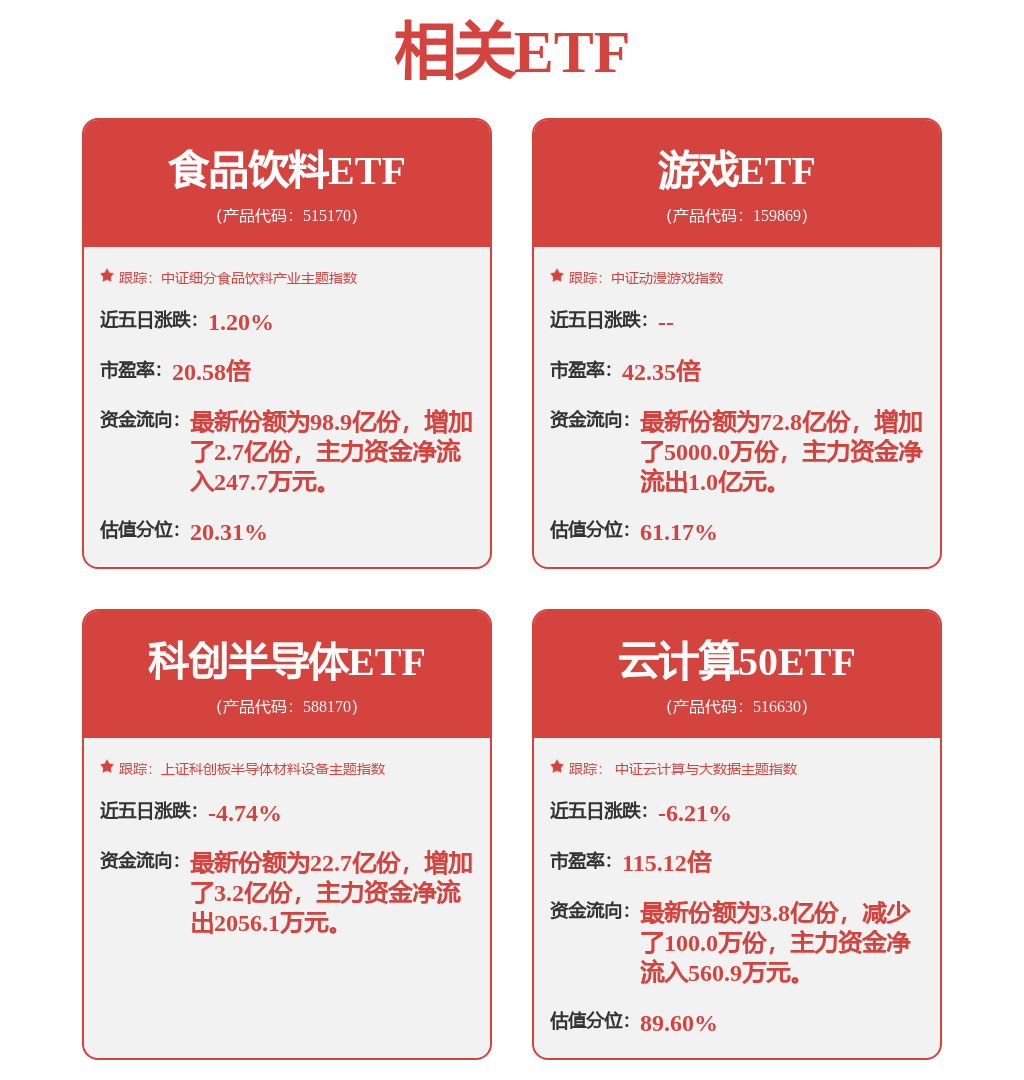
Market Overview - The three major A-share indices regained upward momentum on October 15, with the Shanghai Composite Index recovering the 3900-point mark and the ChiNext Index rising over 2% [1] - The market showed a broad-based increase across various sectors, with notable gains in automotive, aviation, electric grid equipment, chemical pharmaceuticals, and automotive parts [1] Fund Flow Analysis - The net outflow of main funds in the Shanghai and Shenzhen markets reached 9.294 billion yuan for the day [1] - Among the 11 sectors with net inflows, the pharmaceutical and household appliance sectors led with net inflows of 2.548 billion yuan and 1.59 billion yuan, respectively [1] - The food and beverage and computer sectors also saw net inflows exceeding 500 million yuan [1] - In contrast, the non-ferrous metals and telecommunications sectors experienced the largest net outflows, amounting to 4.939 billion yuan and 2.096 billion yuan, respectively [1] Individual Stock Performance - Eight stocks received net inflows exceeding 400 million yuan, with Sanhua Intelligent Control leading at 1.642 billion yuan, reportedly due to rumors of a large order from Tesla exceeding 5 billion yuan [2] - Yangguang Electric Power saw a net inflow of 1.298 billion yuan, supported by a new investment management guideline from the National Development and Reform Commission aimed at energy conservation and carbon reduction [2] - A total of 26 stocks experienced net outflows exceeding 200 million yuan, with notable outflows from companies like Mountain Science Technology and Ganfeng Lithium, each exceeding 400 million yuan [3] End-of-Day Fund Flow - At the end of the trading day, the main funds saw a net inflow of 3.927 billion yuan, with the electric power equipment sector attracting over 1 billion yuan [4] - Individual stocks such as ZTE and Yangguang Electric Power had net inflows exceeding 200 million yuan during the tail end of trading [5] - Conversely, stocks like Mountain Science Technology and Antai Technology faced net outflows exceeding 100 million yuan [6] ETF Performance - The Food and Beverage ETF (code: 515170) tracked the China Securities Food and Beverage Industry Index, showing a 1.20% increase over the past five days, with a net inflow of 2.477 million yuan [8] - The Gaming ETF (code: 159869) did not show a five-day change, with a net outflow of 100 million yuan [9] - The Semiconductor ETF (code: 588170) experienced a 4.74% decline over the past five days, with a net outflow of 2.056 million yuan [9]



冠通期货早盘速递-20251015
Guan Tong Qi Huo· 2025-10-15 09:43
Group 1: Hot News - The National Development and Reform Commission issued the "Administrative Measures for Special Central Budgetary Investments in Energy Conservation and Carbon Reduction", supporting energy conservation and carbon reduction transformations in key industries such as electricity, steel, and non - ferrous metals [4] - The International Monetary Fund (IMF) raised the global economic growth forecast for 2025 to 3.2% from 3.0% in July, while keeping the 2026 forecast at 3.1%. Trump's trade war may significantly drag down global output [4] - Premier Li Qiang emphasized the need to implement counter - cyclical adjustments, expand domestic demand, and address disorderly and irrational competition in industries [4] - In September, the trading volume of China's futures market was 770,214,190 lots, a 3.03% year - on - year decrease, and the trading value was 71.495835 trillion yuan, a 33.16% year - on - year increase [4] - Analyst Adam Button speculated that the US September employment report might be poor based on Powell's hints [5] Group 2: Key Focus and Market Performance - Key commodities to focus on include silver, glass, crude oil, Shanghai copper, and Shanghai gold [6] - In the holiday overseas market, the precious metals sector had a capital increase ratio of 31.95%, the non - metallic building materials sector had a 2.81% increase, and other sectors also showed different performance [6] - The table shows the daily, monthly, and annual percentage changes of various major asset classes, including stocks, fixed - income, commodities, and others [8] Group 3: Main Commodity Trends - The report presents the trends of major commodities such as WTI crude oil, London spot gold, LME copper, etc., along with related ratios like the gold - oil ratio and copper - gold ratio [9]
零碳园区等节能降碳项目,将获中央专项资金支持!
中关村储能产业技术联盟· 2025-10-15 09:14
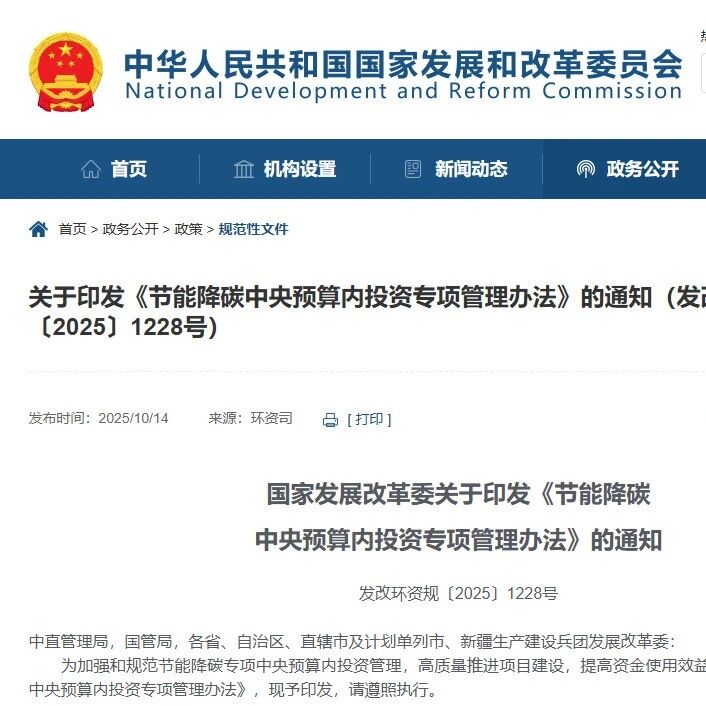
Core Viewpoint - The article discusses the issuance of the "Special Management Measures for Central Budget Investment in Energy Conservation and Carbon Reduction," aimed at supporting projects that align with the goals of carbon peak and carbon neutrality, promoting a comprehensive green transformation of economic and social development [2][4]. Summary by Sections Special Support Areas - The special support focuses on key industry energy conservation and carbon reduction projects, clean substitution of coal consumption, circular economy initiatives, low-carbon, zero-carbon, and negative-carbon demonstration projects, and foundational capacity building for carbon peak and carbon neutrality [2][3][11]. Investment Proportions - The support ratio for key industry energy conservation and carbon reduction projects, clean coal substitution projects, circular economy projects, and low-carbon demonstration projects is set at 20% of the approved total investment. For local government projects related to carbon peak and carbon neutrality, the support ratios vary by region: 60% for the East, 70% for the Central, and 80% for the West and Northeast regions. Central and national agency projects are generally fully funded [3][14]. Funding Mechanisms - The central budget investment funds will be allocated through direct investment, capital injection, and investment subsidies based on actual conditions [3][8]. Project Eligibility and Requirements - Projects must be new or under construction with complete preliminary procedures and cannot be used for completed projects. The focus is on projects that can effectively contribute to energy conservation and carbon reduction [8][12]. Application and Approval Process - Provincial development and reform departments are responsible for project application and must establish a dynamic reserve mechanism for projects. They will select eligible projects from the national major construction project database for annual investment plan submissions [16][21]. Performance Monitoring and Evaluation - The National Development and Reform Commission will strengthen performance target reviews and monitoring of investment plans, ensuring that projects are supervised throughout their lifecycle. Any issues identified during evaluations will be addressed promptly, and performance evaluation results will influence future investment allocations [35][36].