
新能源

Search documents
获股东支持,建艺集团破局提速
Zheng Quan Shi Bao Wang· 2025-12-25 13:23
Core Viewpoint - The announcement of debt waiver and cash donation by the controlling shareholder of *ST Jianyi is a significant move to enhance the company's liquidity, improve its asset structure, and increase net assets, especially in light of its recent financial struggles and risk of delisting [1][2][3] Group 1: Financial Restructuring - The controlling shareholder waived debts amounting to 1.4 billion yuan and donated 400 million yuan in cash assets, which will alleviate the company's debt burden and facilitate the turnaround of its negative net assets [1] - Since the end of 2021, the support from the state-owned shareholder has been crucial for Jianyi Group, enabling it to pursue debt restructuring and business transformation [2] - The company has signed uncompleted contracts worth 2.2 billion yuan as of Q3 2023, indicating a positive trend in securing new projects [2] Group 2: Business Transformation - Jianyi Group is shifting from a traditional decoration enterprise to a comprehensive urban construction service provider, exploring new business areas such as renewable energy and the silver economy [2] - The company has seen a year-on-year revenue increase from public building projects, reducing its reliance on real estate clients [2] - The ongoing support from the state-owned shareholder and the successful execution of high-quality projects are expected to enhance the company's profitability and risk resilience [3]

南华期货2026年度碳酸锂展望:淡季炒预期,旺季证现实
Nan Hua Qi Huo· 2025-12-25 13:09
1. Report's Investment Rating for the Industry No information provided regarding the report's investment rating for the industry. 2. Core Views of the Report - In 2026, with multi - dimensional domestic and international policies, the lithium carbonate industry will see growth in demand from new energy vehicles and energy storage. The supply of lithium resources will increase steadily, but the price of lithium carbonate will be affected by multiple factors, showing a pattern of "bottom support, top constraint, and stage fluctuations dominated by expectations" [1][2][5]. - The new energy vehicle market is transitioning from high - growth to structural adjustment. Domestic policies will focus on increasing the battery capacity per vehicle of plug - in hybrid (including extended - range) models, while overseas policies vary by country. The energy storage industry will develop around the goals of efficient use of renewable energy and energy system security, with significant regional differences in policies [8][12][15]. 3. Summary by Relevant Catalogs 3.1 Chapter 1: Viewpoint Summary 3.1.1 Policy End - Domestic policies in 2025, such as the preferential procurement of new energy vehicles by government agencies and the new energy vehicle countryside campaign, helped the industry achieve its annual sales target ahead of schedule. In 2026, the focus will be on plug - in hybrid vehicles, increasing their battery capacity per vehicle. Although the vehicle purchase tax halving policy may suppress short - term growth, the long - term trend is positive. In the energy storage field, after the cancellation of mandatory energy storage allocation, policies focus on new energy consumption [1]. - Internationally, European countries have introduced subsidy and leasing policies to meet carbon emission assessments. The United States, India, and South Korea have different new energy vehicle policies. In the energy storage field, the US focuses on large - scale projects and technological breakthroughs, Europe relies on subsidies and market mechanisms, and African countries like South Africa emphasize the self - controllability of the industrial chain [1]. 3.1.2 Supply End - In 2026, global lithium resource supply will increase by about 471,000 tons of lithium carbonate, showing a pattern of "overseas - led, domestic and international coordinated release". Domestic production will see significant growth, especially in salt - lake lithium extraction. However, high lithium prices may stimulate the resumption of production of suspended mines [2]. - In the second half of 2025, lithium carbonate production remained high. The capacity utilization rate of spodumene - based lithium extraction was relatively high, that of lepidolite - based lithium extraction was low due to production suspension, and the capacity utilization rate of recycled material - based lithium extraction gradually recovered [2]. 3.1.3 Demand End - In the new energy vehicle field, from January to November 2025, domestic production increased by more than 32% year - on - year, with pure - electric vehicles leading and hybrid vehicles collaborating. From 2026 to 2027, the increase in battery capacity per vehicle of plug - in hybrid vehicles will drive the demand for lithium carbonate [2]. - In the energy storage market, from January to November 2025, the tender and winning scale expanded steadily. This was supported by policies and market mechanisms, and the decline in lithium battery costs and the maturity of large - capacity battery cell technology further enhanced the economy of energy storage systems. The consumer battery cell market also performed well, with demand surging in the fourth quarter of 2025 and expected high - speed growth in 2026 [2]. 3.1.4 Future Outlook - In 2026, the explosive growth of the energy storage field will push up the cost curve of lithium resources and the price center of lithium carbonate. However, the upper price limit will be restricted by factors such as the resumption of production of mines at high prices, profit pressure in the battery cell link, and the price comparison effect of alternative batteries. The lower price limit will be anchored to the cash cost. The price will fluctuate based on the verification of "expectations and reality" [5]. - Futures prices are more affected by market sentiment, with stronger short - term upward elasticity than spot prices [5]. 3.2 Chapter 2: Market Review - In the first quarter of 2025, the market expected post - holiday demand to pick up, but after the Spring Festival, the unexpected resumption of production of the Jianxiawo mine increased supply, while downstream demand was overdrawn, causing the futures price of lithium carbonate to fall from its high [6]. - In the second quarter, the demand for lithium carbonate was weak during the peak season, and the Trump administration's tariff policy on China led to a general decline in the commodity market, further depressing the futures price [6]. - In the third quarter, the market sentiment improved. Supply concerns due to issues such as mine certificates and production suspension pushed up the lithium price. However, the expected resumption of production of the Jianxiawo mine later reversed the supply expectation and led to price fluctuations [6]. - In the fourth quarter, the release of energy storage demand led to a "strong supply and demand" situation, and the price center of lithium carbonate continued to rise [6]. 3.3 Chapter 3: Core Focus Points 3.3.1 New Energy Policies 3.3.1.1 New Energy Vehicle Policies - In 2025, domestic new energy vehicle policies, such as the preferential procurement of government agencies and the new energy vehicle countryside campaign, helped the industry achieve its annual sales target. By November 2025, the cumulative sales of domestic new energy vehicles reached 15.5 million [8]. - In 2026, domestic policies will focus on increasing the battery capacity per vehicle of plug - in hybrid vehicles, which will drive the growth of the power battery market. However, the vehicle purchase tax halving policy may suppress short - term market growth [8]. - Internationally, European countries will face stricter carbon emission assessments and have introduced subsidy policies. Other countries have different policies: India has set a low electric vehicle penetration target, the US is ending its subsidy policy, and South Korea is increasing subsidies [10]. 3.3.1.2 Energy Storage Policies - Domestically, after the cancellation of mandatory energy storage allocation, policies focus on new energy consumption, promoting the coupling of energy storage with terminal energy demand through scenario - based projects and activating the "peak - shaving and valley - filling" function of energy storage [12]. - Internationally, the US focuses on large - scale energy storage projects and technological breakthroughs, European countries use subsidy and market - based mechanisms, and African countries like South Africa aim to build a self - controllable industrial chain [15][16]. 3.3.2 Lithium Resources 3.3.2.1 Global Lithium Resources - In 2026, the global new supply of lithium resources is expected to reach 471,000 tons of lithium carbonate, with overseas accounting for 60%. Attention should be paid to the price conditions for the resumption of Australian mines and geopolitical risks in Africa [20]. 3.3.2.2 Chinese Lithium Resources - In 2025, domestic lithium resource supply increased significantly, with lithium ore production reaching 265,000 tons of lithium carbonate equivalent and salt - lake lithium extraction reaching 146,600 tons. In 2026, the production is expected to grow by over 40% [22]. - In terms of imports, domestic lithium concentrate imports are increasing, with Australia accounting for about 50%. African imports decline in the second quarter due to the rainy season, and imports increased in the second half of 2025 due to rising prices [25]. - In 2025, domestic lithium carbonate imports were about 230,000 tons, mainly from southern hemisphere salt - lake regions. Imports from Chile and Argentina decreased in the third quarter due to winter and equipment maintenance [34]. 3.3.3 Chinese Lithium Salt Production - Since the second half of 2025, domestic lithium carbonate production has remained high. The capacity utilization rate of spodumene - based lithium extraction was above 65%, that of lepidolite - based lithium extraction was about 30% due to mine suspension, and that of recycled material - based lithium extraction rose from 20% to about 33% [37]. 3.3.4 Battery Cells - In 2025, China's total lithium battery production is expected to reach 1,859 GWh, a year - on - year increase of 43%. Power batteries are the main driver of growth, with an output of 1,226.55 GWh, a year - on - year increase of 39.74%. Energy storage battery cells and consumer battery cells also performed well, with growth rates of 52.33% and 42.24% respectively [40]. 3.3.5 Terminal Applications 3.3.5.1 New Energy Vehicles - From January to November 2025, domestic new energy vehicle production reached 14.867 million, a significant year - on - year increase. Pure - electric vehicles led the growth, while hybrid vehicles also increased steadily. From 2026 to 2027, the increase in battery capacity per vehicle of plug - in hybrid vehicles will drive the demand for lithium carbonate [44]. 3.3.5.2 Energy Storage - From January to November 2025, the tender and winning scale of the domestic energy storage market continued to expand, with a cumulative winning capacity of 160.39 GWh. This growth was supported by policies and market mechanisms, and the maturity of large - capacity battery cell technology enhanced the economy of energy storage systems [49]. 3.4 Chapter 4: Valuation Feedback and Supply - Demand Outlook 3.4.1 Valuation Feedback No information provided regarding the global lithium resource valuation - cash cost. 3.4.2 Supply - Demand Outlook - In 2026, the total supply of lithium resources will reach 2.131 million tons (a year - on - year increase of 28.37%), and the total demand will be 2.036 million tons (a year - on - year increase of 23.87%), with the surplus narrowing to 95,000 tons. The high elasticity of supply will suppress the upper price limit, while the structural growth of demand will push up the lower price limit [54]. - In terms of demand structure, the demand for power batteries will reach 1.15 million tons in 2026 (a year - on - year increase of 20.55%), and the demand for energy storage batteries will increase by 50% year - on - year to 564,000 tons. The demand side has the potential for over - performance [55]. 3.4.3 Price Outlook - In the scenario of rising prices in 2026, lithium prices will fluctuate upwards in the early stage. If demand materializes in March - April, battery - grade lithium carbonate will rise to over 130,000 yuan/ton and then enter a volatile phase. In the third quarter, if demand remains strong, it will start a second wave of increase and reach the annual high in October - November [57]. - In the scenario of falling prices in 2026, if demand is lower than expected in March - April, battery - grade lithium carbonate will fall quickly. If supply expansion exceeds expectations, prices will continue to decline. The price decline of battery - grade lithium hydroxide will be similar to that of lithium carbonate [58].
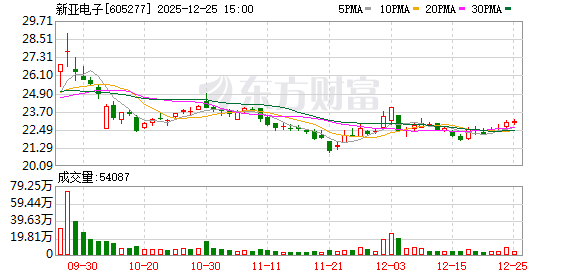
新亚电子:公司新能源系列线缆及组件包括新能源光伏线缆和新能源组件等
Zheng Quan Ri Bao· 2025-12-25 12:44
(文章来源:证券日报) 证券日报网12月25日讯 ,新亚电子在接受投资者提问时表示,公司新能源系列线缆及组件包括新能源 光伏线缆和新能源组件等,其应用领域广泛,主要覆盖光伏、储能、逆变器等新能源终端场景,以及储 能设备、锂电池检测设备等新能源生产制造设备领域。2025年上半年,该业务版块实现营业收入40, 311.98万元,占总营收比例为20.72%,同比增长81.23%。公司结合市场环境变化,灵活调整营销策略, 注重提升服务质量,扩大优质客户市场份额,通过持续拓展新能源用线的应用场景,满足了下游客户在 光伏、储能、新能源汽车充电等领域的多元化需求,为该板块业绩增长提供持续动力。 ...


南华期货镍&不锈钢2026年度展望:供需结构调整周期,随势而动
Nan Hua Qi Huo· 2025-12-25 12:10
Report Title - Nanhua Futures' Outlook for Nickel & Stainless Steel in 2026: Adapting to the Supply-Demand Structural Adjustment Cycle [1] Report Industry Investment Rating - Not provided Core Views - In 2025, the nickel market first rose and then declined. The price was mainly influenced by demand fluctuations and sentiment changes, lacking fundamental factors for a trend reversal. The annual price performance was weaker than previous years [2][3]. - In 2026, the focus of the nickel market remains on the progress of supply-demand structural adjustments. The demand for stainless steel is expected to remain stable, while the demand for nickel in the new energy sector is likely to be moderate. The Indonesian government's policies will continue to affect the market, and the supply surplus situation may improve marginally [4][5][6]. - The report predicts that in 2026, the main contract range for nickel will be between 118,000 - 130,000 yuan, and for stainless steel, it will be between 12,100 - 13,000 yuan [6]. Summary by Directory 2025 Annual Market Review - **First Quarter**: The nickel price showed a volatile and upward - trending pattern, with the price center rising to the range of 125,000 - 136,000 yuan/ton. The main influencing factors were Indonesian policy adjustments and the contradiction between short - term cost support and long - term oversupply [9]. - **Second Quarter**: The nickel - stainless steel market showed a volatile and downward - trending pattern. Factors such as the US tariff policy, rising LME nickel inventories, and weak terminal demand led to the decline of nickel and stainless steel prices [11]. - **Third Quarter**: The market showed a range - bound and slightly upward - trending pattern, mainly driven by news and policy expectations. However, high inventories and weak demand restricted the upward space of prices [12]. - **Fourth Quarter**: The market was mainly affected by Indonesian policy disturbances and macro - expectations. Although there were short - term price rebounds, the overall supply surplus situation remained unchanged, and the price fluctuations were mainly due to market sentiment and capital speculation [13]. Industrial Chain Performance Nickel Ore - In 2025, the supply of the nickel ore market was affected by policies and seasons. The supply was tight in the first half of the year and then eased. The demand was mainly suppressed by downstream smelting profits, showing cost - sensitivity characteristics [16][19]. - In 2026, the nickel ore market will be in a cycle of strong policy supervision and rational return of production capacity. The Indonesian government's policies will lead to a certain degree of supply contraction, and the price is expected to remain stable with a slight upward trend [22][23]. Ferronickel - In 2025, the supply of the ferronickel market showed regional differentiation and structural substitution characteristics. The supply was tight in the first half of the year and then increased. The demand was mainly suppressed by the weak profits of downstream stainless steel [25][29]. - In 2026, the ferronickel market will also enter a cycle of policy supervision and rational return of production capacity. The growth rate of effective production capacity is expected to slow down, and the price center will likely be affected by the demand of downstream steel mills [30][31]. Nickel Sulfate and Intermediates - In 2025, the supply of global nickel intermediates was mainly from Indonesia. The production of MHP increased significantly, while the production of nickel sulfate decreased. The demand was affected by the differentiation of technical routes, and the pricing system was adjusted [33][35]. - In 2026, the supply of nickel sulfate intermediates will show a structural increase, while the demand in the Chinese battery sector will slow down. The market may enter a cycle of processing fee control and raw material coefficient game [37][38]. Stainless Steel - In 2025, the supply of stainless steel showed a pattern of marginal slowdown in total growth, internal structural differentiation, and intensified extrusion from overseas capacity. The demand was affected by the weakening of traditional growth engines and the challenges of the external market [42][46][47]. - In 2026, the stainless steel market may enter a cycle of supply - demand re - balance. The supply side will see further elimination of high - cost production capacity, and the demand side may have a marginal improvement, especially in high - end special stainless steel [50][52]. 2026 Annual Balance Deduction - In 2026, the core trading logic of the nickel market will shift to the joint action of supply - demand structural optimization and integrated cost rigid support. The supply surplus situation will be alleviated but not reversed [54]. - The demand for nickel in the stainless steel industry will be the core anchor point. The new energy vehicle battery sector will face pressure from the penetration of lithium iron phosphate, and the nickel market surplus will continue in 2026 [54][55].
向新、向绿、向开放——电力数据折射湖北发展新动向
Xin Hua Wang· 2025-12-25 10:00
全省高技术制造行业用电量同比增长14.1%、长江宜昌段岸电用电量超6200万千瓦时、鄂州花湖国 际机场用电负荷最高突破2万千瓦……来自国网湖北省电力有限公司的数据显示,今年前11个月,湖北 关键产业、重点区域的用电数据可圈可点,折射出经济发展向新、向绿、向开放的新动向。 走进武汉岚图汽车工厂,轿车、MPV、SUV等不同款型的新能源汽车在钢结构悬挂流水线上滑 行,平均不到2分钟就有一辆整车下线。今年前11个月,岚图汽车用电量同比增长223%,与之对应的 是,汽车累计销量13.42万辆,同比增长82%。 汽车产业是湖北的支柱产业,也是制造业中技术含量、智能化程度和产业集中度较高的产业。以岚 图汽车为代表的新能源造车"国家队",不仅加速牵引湖北汽车产业向电动化、智能化、网联化转型,更 带动芯片、动力电池等上下游产业实现新突破。 新华社武汉12月25日电 题:向新、向绿、向开放——电力数据折射湖北发展新动向 新华社记者王自宸 湖北省经信厅装备工业处处长王琼说,统筹推进传统产业转型升级、新兴产业培育壮大、未来产业 前瞻布局"三线并进",湖北工业经济"含新量""含金量"正稳步提升。 数据显示,今年前11个月,湖北工业用电 ...
瑞达期货碳酸锂产业日报-20251225
Rui Da Qi Huo· 2025-12-25 09:16
1. Report Industry Investment Rating - Not provided in the report 2. Core Viewpoints of the Report - The lithium carbonate market is expected to be in a stage of increasing supply and stable high - level demand, with continuous destocking of industrial inventory and a positive outlook. It is recommended to trade lightly with a slightly bullish and volatile strategy, while paying attention to trading rhythm and risk control [2]. - The option market sentiment is bearish with a slightly rising implied volatility [2]. 3. Summary by Relevant Catalogs 3.1 Futures Market - The closing price of the main contract is 123,520 yuan/ton, down 1,200 yuan; the net position of the top 20 is - 127,079 hands, up 6,244 hands; the position of the main contract is 607,187 hands, down 40,179 hands; the spread between near - and far - month contracts is - 1,920 yuan/ton, down 680 yuan; the Guangzhou Futures Exchange warehouse receipt is 17,101 hands/ton, unchanged [2]. 3.2 Spot Market - The average price of battery - grade lithium carbonate is 104,900 yuan/ton, up 3,400 yuan; the average price of industrial - grade lithium carbonate is 102,250 yuan/ton, up 3,400 yuan; the basis of the Li₂CO₃ main contract is - 18,620 yuan/ton, up 4,600 yuan [2]. 3.3 Upstream Situation - The average price of spodumene concentrate (6% CIF China) is 1,365 US dollars/ton, up 35 US dollars; the average price of amblygonite is 13,225 yuan/ton, unchanged; the price of lithium mica (2 - 2.5%) is 4,773 yuan/ton, unchanged [2]. 3.4 Industry Situation - The monthly output of lithium carbonate is 53,980 tons, up 2,450 tons; the monthly import volume is 22,055.19 tons, down 1,825.51 tons; the monthly export volume is 759.24 tons, up 513.33 tons; the monthly operating rate of lithium carbonate enterprises is 47%, unchanged; the monthly output of power batteries is 176,300 MWh, up 5,700 MWh [2]. - The price of manganese - acid lithium is 37,000 yuan/ton, unchanged; the price of lithium hexafluorophosphate is 180,000 yuan/ton, unchanged; the price of cobalt - acid lithium is 346,700 yuan/ton, unchanged; the price of ternary material (811 type): China is 167,500 yuan/ton, unchanged; the price of ternary material (622 power type): China is 149,500 yuan/ton, unchanged [2]. 3.5 Downstream and Application Situation - The price of ternary material (523 single - crystal type): China is 161,000 yuan/ton, unchanged; the monthly operating rate of ternary cathode materials is 51%, down 1%; the price of lithium iron phosphate is 40,800 yuan/ton, unchanged; the monthly operating rate of lithium iron phosphate cathodes is 63%, down 1% [2]. - The monthly production volume of new energy vehicles (CAAM) is 1,880,000 vehicles, up 108,000 vehicles; the monthly sales volume is 1,823,000 vehicles, up 108,000 vehicles; the cumulative sales penetration rate of new energy vehicles (CAAM) is 47.48%, up 0.74%; the cumulative sales volume and year - on - year increase of new energy vehicles is 14,780,000 vehicles, up 3,518,000 vehicles [2]. - The monthly export volume of new energy vehicles is 300,000 vehicles, up 44,000 vehicles; the cumulative export volume and year - on - year increase of new energy vehicles is 2.315 million vehicles, up 1.174 million vehicles [2]. - The 20 - day average volatility of the underlying is 46.14%, up 0.25%; the 40 - day average volatility of the underlying is 53.78%, up 0.22% [2]. 3.6 Option Situation - The total call position is 108,159 contracts, down 2,613 contracts; the total put position is 193,653 contracts, up 13,066 contracts; the put - call ratio of the total position is 179.04%, up 16.0189%; the at - the - money IV implied volatility is 0.46%, up 0.0492% [2]. 3.7 Industry News - Yichun Times New Energy Mining Co., Ltd.'s lithium mine mining project in Yifeng County is expected to resume production around the Spring Festival [2]. - Do - fluoride expects the supply - demand and price of lithium hexafluorophosphate to be optimistic next year. The company's existing production capacity of lithium hexafluorophosphate is about 60,000 tons/year, and the expansion plan will be adjusted according to market demand. By the end of next year, the battery sector's production capacity is expected to reach 50 GWh, with a planned shipment of about 30 GWh [2]. - The Central Bank's Monetary Policy Committee held its fourth - quarter regular meeting, suggesting to give play to the integrated effect of incremental and existing policies, strengthen monetary policy regulation, and promote the low - level operation of the social comprehensive financing cost. It emphasized maintaining the stability of the capital market without mentioning the real estate market [2]. - Pan Technology plans to adjust the production capacity of the third - phase project of its "Large - scale Production Project of Cathode Materials for New Energy Vehicle Power and Energy Storage Batteries" from 62,500 tons/year to 100,000 tons/year [2].
国务院国资委:要接续发力新能源、新能源汽车、新材料等重点领域
Cai Jing Wang· 2025-12-25 08:56
近日,国务院国资委党委书记、主任张玉卓表示,要接续发力新能源、新能源汽车、新材料、航空航 天、低空经济、量子科技、6G等重点领域,加大启航企业遴选培育力度。接续推动技术改造和大规模 设备更新,深入推进重点行业节能降碳改造。 编辑丨安安 作者丨彭鑫 ...
中国华电新能源装机突破1亿千瓦
Xin Lang Cai Jing· 2025-12-25 08:39
Core Insights - China Huadian announced that its total installed capacity of renewable energy has surpassed 100 million kilowatts following the grid connection of several projects [1] Group 1: Project Developments - The Xinjiang Huadian Tianshan North Slope Base 6 million kilowatt renewable energy project has been connected to the grid [1] - The Xinjiang Huadian Bazhou integrated project combining 1 million kilowatts of wind power and energy storage has also commenced operations [1] - The Inner Mongolia Huadian Alashan High-tech Zone 800,000 kilowatt photovoltaic project focused on sand control and integrated wind-solar solutions has been completed [1] - The Liaoning Huadian Zhangwu Mantanghong 350,000 kilowatt wind power project is now operational [1] - The Sichuan Aba Rangtang Puxi 300,000 kilowatt photovoltaic project has been connected to the grid [1] Group 2: Capacity Milestone - The announcement marks a significant milestone for China Huadian, indicating a total renewable energy installed capacity exceeding 100 million kilowatts [1]

小金属系列追踪报告
Dongguan Securities· 2025-12-25 08:27
Group 1: Tungsten Industry - Tungsten is a strategic metal with high melting point and hardness, widely used in key sectors such as aerospace and electronics. China dominates global tungsten resources, with 2024 production expected to reach 67,000 tons and reserves at 2.4 million tons, both ranking first globally [15][16][17] - The supply of tungsten is tightening due to reduced mining quotas and environmental regulations, with a 6.5% decrease in the 2025 mining quota compared to the previous year. This is expected to support tungsten prices, which have already increased over 210% year-to-date [16][17] - The demand for tungsten is driven by hard alloys, military alloys, and photovoltaic tungsten wires, with hard alloys accounting for about 60% of tungsten consumption. The consumption of hard alloys in 2024 is projected to reach 41,400 tons, reflecting steady growth [30][39] Group 2: Molybdenum Industry - Molybdenum is primarily used in the steel industry to enhance strength and corrosion resistance. China holds 39% of global molybdenum reserves, with 2024 production expected to be 260,000 tons, a 6% increase from 2023 [40][43][49] - The supply of molybdenum is expected to remain stable, but the demand is increasing due to high-strength alloys and new applications in renewable energy and aerospace. The domestic molybdenum production from January to November 2025 is reported at 293,400 tons, an 8.66% increase year-on-year [47][49] - Molybdenum prices are supported by high demand in steel and other industries, with the average price of molybdenum iron in the first half of 2025 at 228,800 yuan per ton, reflecting a slight increase [54][55] Group 3: Germanium Industry - Germanium is classified as a strategic mineral, with its supply structure being concentrated and sensitive to price fluctuations. Global germanium production in 2023 was 138 tons, with China producing 94 tons [55][60] - The demand for germanium is expanding in high-growth sectors such as military infrared, low-orbit satellites, and telecommunications, with the price of germanium ingots averaging 15,625 yuan per kilogram in the first half of 2025, a 61.92% increase year-on-year [66][70] - The supply of germanium is tightening due to export controls and environmental policies, with expectations of a gradual increase in prices as demand continues to grow [70] Group 4: Zirconium Industry - Zirconium is widely used in various industries, including electronics, ceramics, and nuclear energy. The demand for zirconium products is driven by traditional sectors and emerging high-end applications [71][80] - The traditional ceramic sector remains the largest consumer of zirconium, with expectations of stabilization due to macroeconomic policies. The construction and real estate sectors are anticipated to support demand for zirconium products [80] - Emerging applications in renewable energy, artificial gemstones, and biomedical ceramics are expected to drive significant growth in zirconium demand, with projections indicating a compound annual growth rate of 133% for solid-state batteries from 2024 to 2030 [81][82]



全球消费韧性较强 铜价重心有望持续上移
Jin Tou Wang· 2025-12-25 08:03
Group 1 - The domestic futures market for non-ferrous metals showed mixed performance, with the main copper futures contract slightly rising by 1.00% to 96,210.00 yuan/ton [1] - The U.S. initial jobless claims unexpectedly decreased by 10,000 to 214,000, but the unemployment rate is expected to remain high due to weak employment [2] - Global copper production has declined by 4.7% year-on-year due to frequent accidents in major copper mining regions like Chile and Indonesia, leading to a historical low in copper concentrate processing fees at -40 USD/ton [2] Group 2 - The demand for copper remains resilient, driven by the growth in the renewable energy sector, AI data center construction, and global power grid renovation [2] - China's smelting plants have agreed to a processing fee for copper concentrate for 2026, reducing it from 21.25 USD/ton to 0 USD/ton, indicating pressure on the smelting sector and potential reductions in refined copper supply [2] - Since the reduction in Indonesian copper mine production in September, the copper supply-demand situation has tightened, with computing power and green electricity consumption being long-term drivers for copper prices [2]